Business Insurance
Automotive Electrician Insurance
★★★★★ 150+ Five-Star Reviews · Google & Facebook
A single misdiagnosed wiring fault on a customer's vehicle can trigger a fire, a lawsuit, and an insurance claim that exposes every gap in your coverage. Automotive electricians face a risk profile that generic contractor policies weren't designed to handle: you're working on other people's property, dealing with high-voltage systems, storing expensive diagnostic equipment, and increasingly interfacing with vehicle software. The average general liability policy for this trade runs between $57 and $95 per month, but that number tells you almost nothing about whether you're actually protected. What matters is how the policy components fit together, which endorsements you carry, and whether your carrier even wants to insure your specific operations. This guide covers the insurance framework automotive electricians actually need: the core policies, specialty coverages, emerging EV risks, and the underwriting factors that determine whether you get competitive rates or end up in surplus lines paying double.
Core Insurance Requirements for Automotive Electricians
Every automotive electrical shop needs a foundation of three policies before anything else. Miss one, and you're either breaking the law or leaving yourself open to a claim that could close your doors. These aren't optional extras; they're the baseline.
General Liability for Third-Party Bodily Injury and Property Damage
General liability covers you when a customer slips on your shop floor, when a passerby is injured by a sign that falls off your building, or when your work causes property damage to a third party. For automotive electricians, the property damage side is where claims get expensive. If you rewire a trailer harness and it shorts out, causing a cargo fire two states away, your GL policy is the first line of defense.
Most carriers write GL for automotive electrical work on an occurrence basis with $1 million per occurrence and $2 million aggregate limits. That said, some underwriters get nervous about automotive electrical work because the completed operations exposure is high: your work leaves the shop and can cause damage weeks or months later. Make sure your policy includes products-completed operations coverage, not just premises liability.
Commercial Auto and Mobile Service Unit Coverage
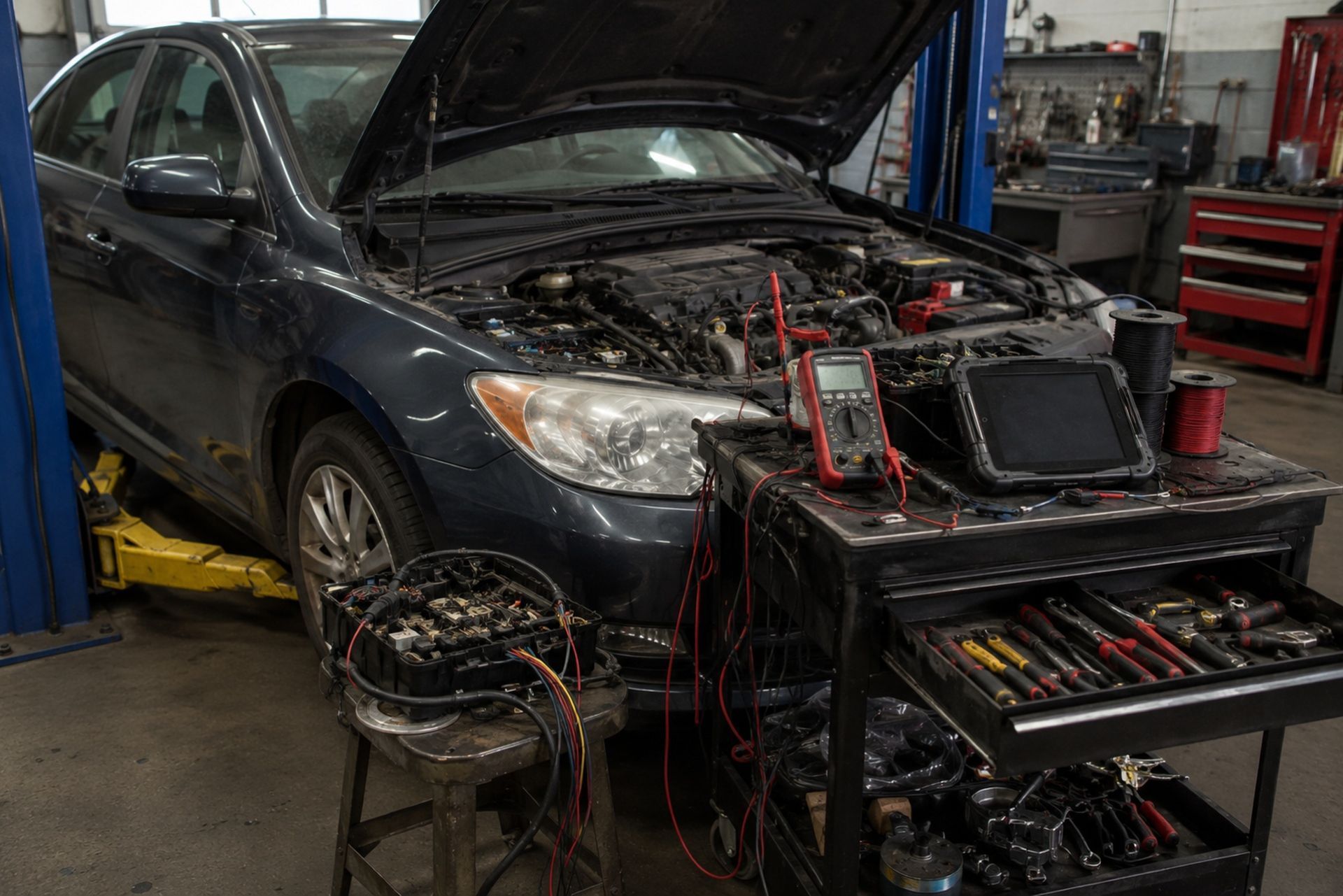
If you run a mobile diagnostic van or send technicians out in company vehicles, personal auto insurance won't cover you. Commercial auto policies cover liability for accidents involving business vehicles, plus physical damage to the vehicles themselves. Mobile service units deserve special attention because they're essentially rolling workshops. The tools, diagnostic computers, and parts inside the van may not be covered under a standard commercial auto policy: you'll likely need a separate inland marine endorsement or a scheduled equipment floater.
Workers' Compensation for Shop and Field Employees
Workers' comp is mandatory in nearly every state the moment you hire your first employee. For automotive electricians, the classification codes matter. Shop-based employees and field technicians may fall under different class codes with different rates. Workers' comp is typically the single largest insurance expense for small electrical shops, with premiums driven by payroll, claims history, and the specific work being performed. A clean experience modification rate (EMR) below 1.0 can save you thousands annually, so investing in safety training pays for itself quickly.

By: Michael Fusco
President of Joule Pro
INDEX
Joule Pro is a specialty insurance and risk program of Fusco Orsini & Associates Insurance Services, built exclusively for electrical contractors and licensed in 31 states.
We work with electrical firms across the country — from California, Texas, Florida, New York, and coast to coast — placing General Liability, Workers' Compensation, Commercial Auto, Inland Marine, Surety Bonds, Excess Liability, and full specialty coverage stacks for commercial, industrial, service, residential, and low-voltage electrical contractors. Joule Pro is not a separate licensed entity. It is a dedicated program structure inside Fusco Orsini, giving electrical contractors access to specialty carriers, in-house claims advocacy, and trade-specific risk engineering under one program.
Specialized Garagekeepers and Bailee Coverages
Here's where automotive electricians diverge sharply from general electrical contractors. You regularly take physical possession of vehicles worth $30,000 to $100,000 or more. Standard GL policies exclude damage to property in your care, custody, and control. Without garagekeepers coverage, you're personally liable for every vehicle sitting in your shop.
Legal Liability vs. Direct Primary Options
Garagekeepers insurance comes in two forms. Legal liability coverage only pays when you're found legally responsible for the damage: if a hailstorm damages cars in your lot, that's not your fault, and legal liability won't pay. Direct primary coverage acts more like first-party insurance: it pays regardless of fault, covering fire, theft, vandalism, and weather damage to customer vehicles on your premises. Direct primary costs more but eliminates arguments about who caused the damage.
Protecting Customer Vehicles Under Care, Custody, and Control
The care, custody, and control exclusion in standard GL policies is the single most common coverage gap I see in automotive electrical shops. A technician accidentally drops a battery on a customer's hood: that's not covered under GL. A fire in your shop destroys three customer vehicles: also excluded. Garagekeepers coverage fills this gap, but you need to verify that the per-vehicle limit and aggregate limit are high enough. If you regularly work on luxury or specialty vehicles, a $50,000 per-vehicle limit won't cut it.
Addressing Trade-Specific Risks and Errors
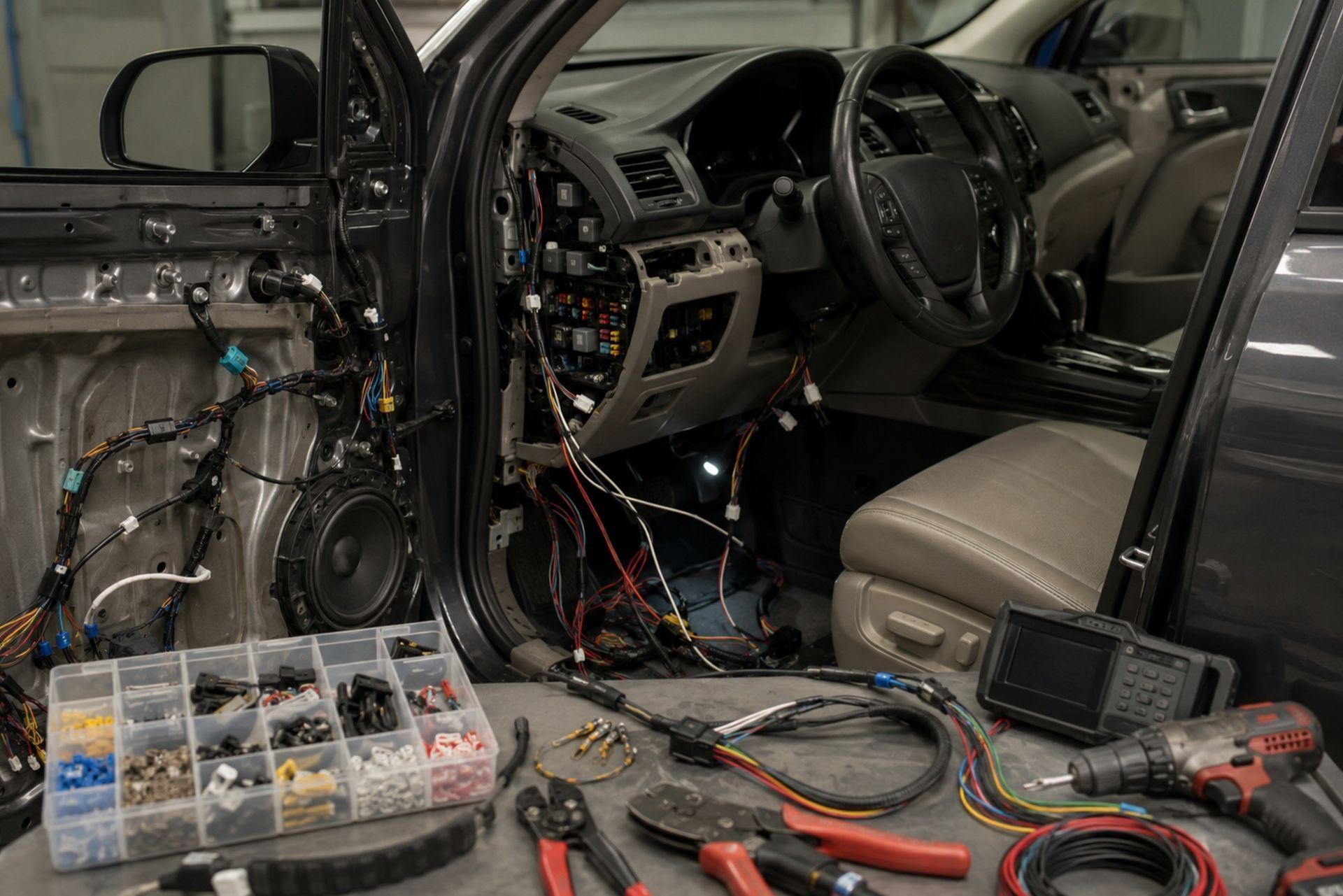
Automotive electrical work creates exposures that don't fit neatly into standard policy forms. Diagnostic errors, tool theft, and faulty workmanship each require specific coverage solutions.
Professional Liability for Diagnostic and Programming Errors
Modern automotive electrical work involves significant diagnostic judgment. You're reading fault codes, interpreting wiring schematics, and programming control modules. If a diagnostic error leads to an engine failure or a safety system malfunction, the customer may allege professional negligence. Professional liability (errors and omissions) insurance covers defense costs and damages from these claims. This is especially relevant for shops that perform ADAS calibration, ECU programming, or emissions system work.
Inland Marine Coverage for Specialized Diagnostic Tools
A quality automotive oscilloscope runs $3,000 to $8,000. Factory-level scan tools can cost $10,000 or more. Inland marine coverage protects portable tools and equipment whether they're in your shop, in a service van, or at a customer's location. Standard property insurance typically covers equipment only at your listed premises, so if a technician's van is broken into at a job site, you need inland marine to recover the loss. Programs like those offered through Joule Pro are built specifically for electrical trade contractors and include inland marine options designed around the types of equipment you actually use.
Faulty Workmanship and Product Completed Operations
Faulty workmanship claims are the bread and butter of automotive electrical disputes. A harness you installed fails. An alternator conversion you performed causes a voltage spike that fries a vehicle's computer. Products-completed operations coverage within your GL policy handles third-party damage caused by your completed work. But here's the catch: most GL policies exclude the cost of redoing your own work. You won't get reimbursed for the labor to reinstall a harness; you'll only be covered for the consequential damage that harness caused to other vehicle systems.
Emerging Risks in EV and Hybrid Systems
The shift toward electric and hybrid vehicles is creating entirely new risk categories for automotive electricians. These aren't theoretical concerns: they're showing up in claims data right now.
High-Voltage Battery Handling and Storage Risks
Working on EV and hybrid battery systems means handling components that operate at 400 to 800 volts. A punctured lithium-ion battery can cause thermal runaway, and the resulting fire is extraordinarily difficult to extinguish. If you store damaged or salvaged batteries on your premises, your property insurer needs to know about it. Some carriers exclude battery storage entirely, while others require specific safety protocols: fireproof storage cabinets, minimum clearance distances, and staff certification. Failing to disclose battery storage can void your property coverage entirely.
Cyber Liability for Vehicle Software and Fleet Management
This one surprises a lot of shop owners. If you connect to vehicle networks for diagnostic or programming purposes and inadvertently introduce malware, corrupt firmware, or expose customer data, you face potential cyber liability claims. Fleet management clients are particularly sensitive to this risk because their vehicles may contain GPS data, driver behavior logs, and customer information. A cyber liability policy covers defense costs, notification expenses, and damages from data breaches or system disruptions caused by your operations.
Understanding Carrier Appetite and Underwriting Factors
Not every insurance company wants to write automotive electrical risks. Carrier appetite varies widely, and understanding what underwriters look for can save you months of frustration and thousands in premium.
Impact of Shop Safety Protocols on Premium Rates
Underwriters evaluate your shop based on specific safety factors: fire suppression systems, electrical panel maintenance, ventilation for battery work, and employee training documentation. A shop with OSHA-compliant lockout/tagout procedures, annual fire extinguisher inspections, and documented safety meetings will consistently get better rates than one without. Your EMR for workers' comp also signals your overall safety culture. An EMR above 1.2 will limit your carrier options significantly.
| Factor | Favorable to Underwriters | Unfavorable / Red Flag |
|---|---|---|
| EMR | Below 1.0 | Above 1.2 |
| Fire suppression | Automatic sprinklers, extinguishers | No suppression system |
| EV/battery protocols | Certified techs, fireproof storage | No documented procedures |
| Claims history | Clean 3-5 year record | Multiple frequency claims |
| Subcontractor management | COI verification on file | No sub requirements |
Preferred Carrier Profiles for Niche Automotive Trades
The best rates and broadest coverage come from carriers that specialize in garage and automotive trade risks. Generalist carriers often apply restrictive endorsements or decline the risk altogether. Specialty programs, like those managed through Joule Pro and backed by Fusco Orsini & Associates Insurance Services (CA Lic. 0H16057), maintain underwriter relationships specifically designed for electrical trade contractors. Working with a producer who understands your classification codes, your completed operations exposure, and your equipment values makes a measurable difference in both coverage quality and premium.
Strategic Policy Management and Risk Mitigation
Getting the right policies in place is only half the job. Managing those policies proactively keeps your coverage current and your premiums under control. Review your policy annually, not just at renewal. If you've added EV services, hired new technicians, purchased expensive diagnostic equipment, or started mobile operations, your coverage needs have changed.
Document everything. Safety training records, customer vehicle intake forms, subcontractor certificates of insurance, and equipment inventories all serve double duty: they help you manage risk and they give your underwriter reasons to offer better terms. A shop that can demonstrate a systematic approach to risk management is a shop that carriers want to insure.
One practical step: schedule a mid-term policy review with your producer. Joule Pro offers direct producer access, meaning you're talking to a licensed insurance professional who can evaluate whether your current coverage still matches your operations. That 30-minute conversation can prevent a six-figure gap from going unnoticed until it's too late.
FAQ
Do I need garagekeepers insurance if I only work on vehicles for a few hours? Yes. Even brief possession of a customer's vehicle creates care, custody, and control exposure. If a fire, theft, or accidental damage occurs while the vehicle is at your shop, your GL policy won't cover it.
Is cyber liability really necessary for an auto electrical shop? If you connect to vehicle computer systems, program ECUs, or handle any customer data, yes. A single corrupted firmware update on a fleet vehicle can generate a significant claim.
Can I bundle all my coverages into one policy? Many carriers offer a Business Owners Policy (BOP) that combines GL, property, and business income coverage. But garagekeepers, inland marine, and workers' comp are typically written separately or added as endorsements.
How does my claims history affect my ability to get coverage? Carriers look at your past 3-5 years of claims. Frequent small claims (even if total payouts are low) are often worse than a single large claim because they suggest operational problems.
What happens if I don't disclose EV battery storage to my insurer? Material misrepresentation on your application can void your policy entirely. If a fire starts from stored batteries and you never disclosed the exposure, your carrier can deny the claim.

Founder & CEO
The Force Behind the Program
About the Author:
Michael Fusco.
Fusco Orsini & Associates
Joule Pro exists because Mike Fusco saw electrical contractors getting boilerplate insurance — and built a program designed for the way the trade actually works.
Mike is the CEO and co-founder of Fusco Orsini & Associates, the San Diego–based independent agency he launched in 2010. Under his leadership FOA has grown into a nationwide partner serving clients across 31 states, with a personal, client-first approach to commercial insurance and risk.
With over 20 years in insurance and risk management, he specializes in tailored programs spanning general liability, workers' compensation, surety bonding, and employee benefits — helping owners confidently manage risk and pursue growth.
Mike holds a B.S. in Business from the University of Maryland — Robert H. Smith School of Business, and the Certified Insurance Counselor (CIC) designation, held by fewer than 3% of insurance professionals nationwide.
What Our Clients Say
Trusted by Electrical Contractors Across the Country.
5.0
★★★★★
Google reviews
Core Commercial Coverage
Business Insurance for Electrical Contractors.
The fundamentals — written, structured, and priced for electrical risk. Each line is reviewed annually by an underwriter who only writes our trade.
01
General Liability
Premises & completed-operations coverage with electrical-specific endorsements and full pollution carve-back options.
02
Workers' Compensation
Class-code optimization, experience-mod review, and return-to-work programs designed for energized-work exposures.
03
Commercial Auto
Fleet, hired & non-owned auto, and tools-in-transit coverage written for service vans and bucket trucks.
04
Tools & Equipment
Scheduled and blanket coverage for tools, test equipment, scissor lifts, and contractor's equipment on-site or in-transit.
05
Surety Bonds
Bid, performance, and payment bonds — single-job and aggregate programs for commercial & public-works contracts.
06
Commercial Property
Layered limits up to $50M with carrier panels covering your shop, warehouse, yard, and on-premises tools, materials, and equipment.
Who We Serve
Electrical Contractors We Specialize In.
From $5M service shops to $250M industrial primes — every Joule Pro program is shaped to the contractor's revenue mix and project profile.
01 / Industrial
Commercial & Industrial Electrical Contractors
High-voltage, substation, and plant electrical work. Pollution, builder's risk, and large-deductible WC programs.
02 / Service
Service & Residential Electrical Contractors
Service-call shops, panel upgrades, and EV charging installers. Auto-fleet, GL, and tool-coverage programs.
03 / Low-Voltage
Specialty & Low-Voltage Contractors
Data, fire-alarm, security, and BMS controls. Cyber, professional liability, and follow-form excess.
Frequently Asked Questions
Common
Questions From
Electrical Contractors.
What size electrical contractors do you write?
Joule Pro is built for licensed electrical firms from roughly $2M in revenue to $250M+. Below $2M we typically refer to our small-business desk; above $250M we underwrite individually with our industrial practice team.
Do I need to be licensed in multiple states?
No. We license you wherever you work. Joule Pro is admitted in 31 states and our compliance team handles multi-state filings, prevailing-wage endorsements, and certificate-of-insurance requirements.
How is Joule Pro different from a generic contractor program?
Generic programs use a contractor's questionnaire that treats you like a roofer. We use forms written for energized work, arc-flash exposures, and design-build risk — and our carriers price accordingly.
What does the claims process actually look like?
Every Joule Pro client is assigned a named claims advocate at bind. They take the FNOL, set strategy with your assigned attorney, and serve as your single point of contact through close.
Can you bond large public-works contracts?
Yes. Through our surety partners we write single-job bonds up to $75M and aggregate programs to $300M, with expedited turnarounds for school district, federal, and DOT work.
What happens at renewal?
Your producer and claims advocate jointly run a renewal review 90 days out — covering loss trends, exposure changes, and market alternatives — so renewal day is a confirmation, not a surprise.
From the Blog
Insights for Electrical Contractors.
Risk briefings, claim post-mortems, and program updates — written by our underwriters and risk engineers.


Get Started
Get a Quote on a Program Built Around Your Trade.
A 30-minute discovery call is the only commitment. You'll leave with a written gap analysis of your current program — yours to keep, whether you bind with us or not.