Business Insurance
Wyoming Electrician Insurance
★★★★★ 150+ Five-Star Reviews · Google & Facebook
Wyoming's electrical contracting market is small but fiercely competitive. With roughly 2,800 licensed electricians spread across a state that covers nearly 98,000 square miles, you're often driving hours between job sites - from residential panels in Cheyenne to industrial work at wind farms near Casper. That geographic spread, combined with Wyoming's extreme weather and unique regulatory structure, creates insurance challenges you won't find in most other states. If you're shopping for an electrician insurance quote in Wyoming, you need to understand how coverage requirements, licensing rules, surety bonds, and carrier appetite all interact before you sign anything. Too many contractors grab the cheapest policy they can find and discover the gaps only after a claim gets denied. This guide breaks down exactly what Wyoming electrical contractors need to carry, what the state demands for licensing, and how insurers actually evaluate your risk profile when setting premiums. Whether you're a one-person shop or running a crew of twenty, the details here will save you from expensive surprises.
Essential Insurance Coverages for Wyoming Electrical Contractors
General Liability and Property Damage
Wyoming electrical contractors are required to carry a minimum of $300,000 in general liability insurance to maintain state licensure. That's the floor, not the ceiling. Most commercial clients and general contractors will demand $1 million per occurrence and $2 million aggregate before they'll let you on a job site. If you're bidding on municipal projects or school work, expect even higher requirements.
General liability covers third-party bodily injury and property damage claims. Think: a homeowner trips over your cord and breaks a wrist, or you accidentally damage a client's existing wiring during a panel upgrade. It also includes completed operations coverage, which protects you after you've finished a job. If a connection you made six months ago causes a fire, completed operations is what stands between you and financial ruin.
One common mistake: assuming your GL policy covers faulty workmanship itself. It doesn't. GL covers the resulting damage from faulty work, not the cost to redo the work. That distinction matters when you're filing a claim.
Workers' Compensation Requirements in Wyoming
Wyoming handles workers' comp differently than most states. The state operates an exclusive fund through the Wyoming Department of Workforce Services, meaning you can't buy workers' comp from a private insurer. Every employer in the state must participate in this state fund, and there are no exceptions for electrical contractors.
Your premium rates are based on classification codes specific to electrical work, and Wyoming calculates them using your payroll figures. Electrical contractors typically fall under higher-risk classifications, so expect rates that reflect the inherent dangers of the trade. The state adjusts rates annually, and your experience modification factor (your claims history compared to industry averages) directly impacts what you pay.
Sole proprietors can technically exempt themselves, but doing so is risky. If you're injured on a job and have no coverage, you're absorbing 100% of the medical costs and lost income. For the relatively modest premium, opting in is almost always the smarter financial move.
Inland Marine and Tools Coverage
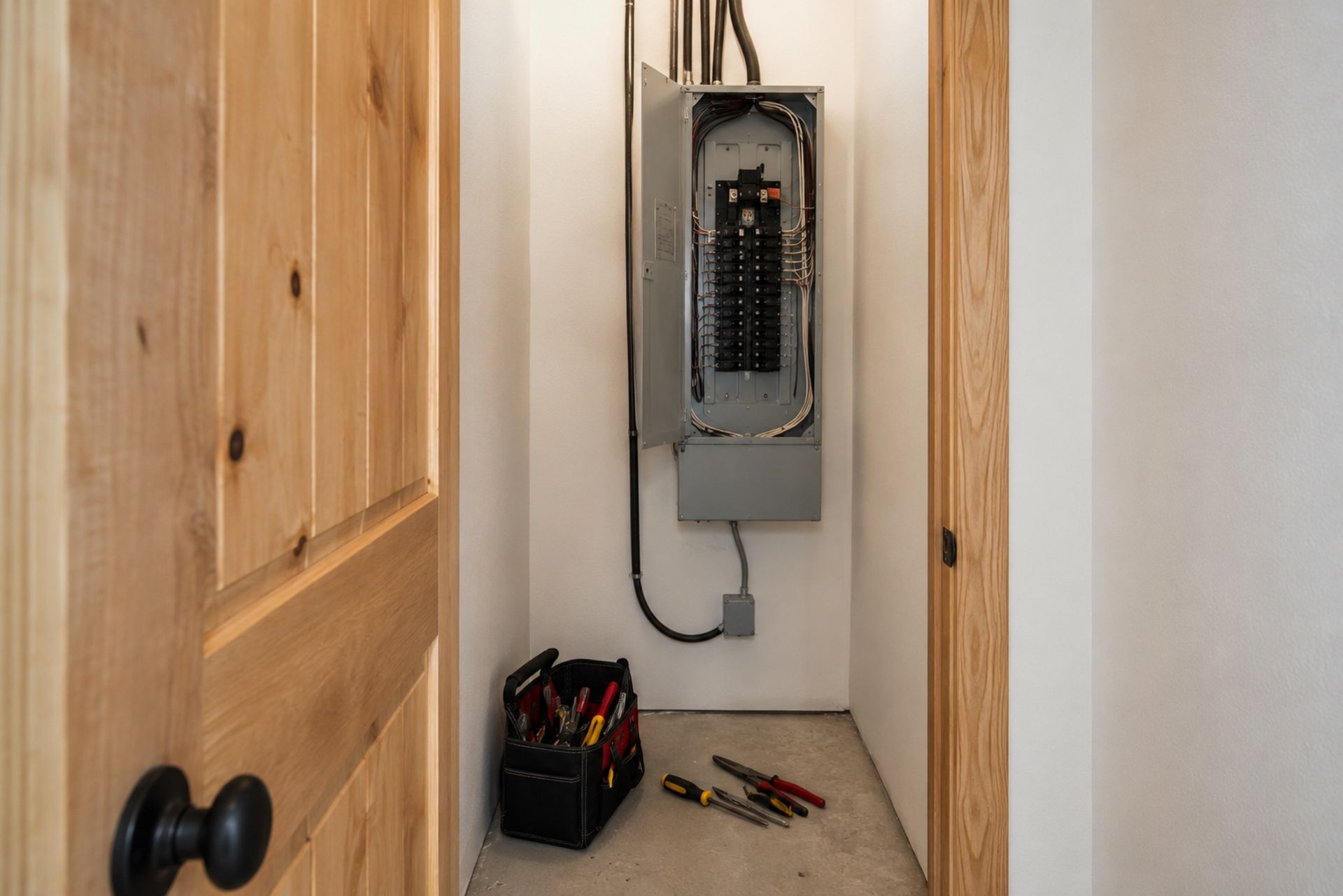
Your tools and equipment travel with you constantly, and a standard commercial property policy won't cover items in transit or at job sites. That's where inland marine insurance fills the gap. It protects wire pullers, conduit benders, meters, power tools, and diagnostic equipment whether they're in your van, at a customer's home, or locked in a trailer overnight.
A single theft from an unlocked truck can easily cost $5,000 to $15,000 in replacement tools. Specialty programs like those offered through Joule Pro bundle inland marine with your other contractor coverages, which simplifies the process and often reduces the total cost compared to buying standalone policies. Make sure your policy covers replacement cost rather than actual cash value - depreciated tool values won't come close to what you'll spend replacing them.

By: Michael Fusco
President of Joule Pro
INDEX
Joule Pro is a specialty insurance and risk program of Fusco Orsini & Associates Insurance Services, built exclusively for electrical contractors and licensed in 31 states.
We work with electrical firms across the country — from California, Texas, Florida, New York, and coast to coast — placing General Liability, Workers' Compensation, Commercial Auto, Inland Marine, Surety Bonds, Excess Liability, and full specialty coverage stacks for commercial, industrial, service, residential, and low-voltage electrical contractors. Joule Pro is not a separate licensed entity. It is a dedicated program structure inside Fusco Orsini, giving electrical contractors access to specialty carriers, in-house claims advocacy, and trade-specific risk engineering under one program.
Electrician Insurance By City
Electrician Insurance Coverage
Wyoming Licensing and State Bonding Requirements
Department of Fire Prevention and Electrical Safety Standards
Wyoming's Department of Fire Prevention and Electrical Safety oversees all electrical contractor licensing in the state. To obtain your license, you need to pass a state exam, demonstrate proof of insurance meeting minimum thresholds, and submit to ongoing compliance checks. The state adopted the 2023 National Electrical Code with Wyoming-specific amendments, and inspectors enforce these standards on both residential and commercial work.
Licensing renewals happen on a set cycle, and you must show current insurance certificates at renewal. If your policy lapses, even briefly, the state can suspend your license. This creates a real operational risk: a gap in coverage doesn't just leave you uninsured, it can shut down your business entirely until you reinstate both the policy and the license.
Securing Electrical Contractor License Bonds
Wyoming requires electrical contractors to carry a surety bond as part of the licensing process. This bond isn't insurance for you - it's a financial guarantee to the state and consumers that you'll follow applicable codes and regulations. If you violate licensing laws or fail to meet contractual obligations, a claim can be filed against your bond.
Bond amounts vary based on your license type and scope of work, but most Wyoming electricians need a bond in the range of $5,000 to $15,000. Your personal credit score heavily influences the premium you'll pay. Contractors with credit scores above 700 typically pay 1% to 3% of the bond amount annually, while lower scores can push that to 5% or higher.
| Requirement | Details |
|---|---|
| Minimum GL Coverage | $300,000 (state minimum) |
| Common Client Requirement | $1M per occurrence / $2M aggregate |
| Workers' Comp | Mandatory through Wyoming state fund |
| Surety Bond Range | $5,000 - $15,000 |
| Bond Premium (good credit) | 1% - 3% of bond amount |
| Bond Premium (fair/poor credit) | 5% - 10% of bond amount |
Understanding Insurance Carrier Appetite for Wyoming Electricians
Residential vs. Commercial Risk Profiles
Not every insurance carrier wants to write policies for electricians, and among those that do, appetite varies dramatically based on what type of work you perform. Residential electricians doing panel upgrades, rewiring, and new construction generally find broader carrier interest. The claims frequency is lower, the job values are smaller, and the exposure is more predictable.
Commercial and industrial electricians face a tighter market. If you're doing high-voltage work, solar installations, or industrial controls, fewer carriers will quote you, and those that do will price the risk accordingly. Specialty programs designed specifically for electrical contractors - like Joule Pro's program backed by Fusco Orsini & Associates Insurance Services - tend to have better access to underwriters who actually understand these risk distinctions rather than lumping all electricians into one bucket.
Impact of Project Scope on Premium Costs
A contractor wiring single-family homes in Laramie operates in a completely different risk universe than one installing electrical systems in oil field facilities near Gillette. Carriers evaluate project scope carefully: maximum job size, contract values, whether you do any work above three stories, and whether you perform hot work or work in hazardous environments.
Taking on a single large commercial project can shift your entire risk profile. If you typically handle $50,000 residential jobs but land a $500,000 commercial contract, your insurer needs to know. Failing to disclose changes in scope is one of the fastest ways to get a claim denied. Your policy was rated for one type of work, and performing substantially different work without updating your coverage creates a gap that can leave you exposed.
Factors Influencing Your Wyoming Electrician Insurance Quote
Claims History and Safety Records
Your loss history over the past three to five years is the single biggest factor in your premium. Carriers pull your claims data from industry databases, and even a single liability claim over $25,000 can significantly increase your rates or limit which insurers will offer coverage. Two or more claims in a five-year window puts you in a difficult spot where standard markets may decline to quote entirely.
On the positive side, a clean claims record opens doors. Many carriers offer loss-free credits that can reduce premiums by 5% to 15%. Maintaining documented safety programs, holding regular toolbox talks, and keeping OSHA logs current all signal to underwriters that you take risk management seriously. These aren't just paperwork exercises - they directly affect your bottom line.
Annual Revenue and Payroll Projections
Insurance premiums for electrical contractors are calculated using your annual revenue (for GL) and payroll (for workers' comp) as the primary rating bases. Underestimating these figures to get a lower initial premium is a common and costly mistake. At audit time, your insurer will review your actual numbers, and if revenue or payroll came in higher than projected, you'll owe additional premium - sometimes thousands of dollars - in a lump sum.
Be honest with your projections. If you expect growth, build that into your estimates. A good insurance producer will help you set realistic figures that avoid both overpayment upfront and painful audit adjustments later. Working with a producer who handles quotes, proposals, and binders directly - rather than routing everything through an automated portal - gives you the flexibility to adjust mid-term when your business changes.
Risk Management and Maintaining Compliance
Staying compliant in Wyoming means keeping several balls in the air simultaneously: active insurance certificates, current licensing, valid surety bonds, and workers' comp participation through the state fund. Missing any one of these can trigger license suspension, project disqualification, or worse.
Build a compliance calendar. Mark your license renewal dates, insurance policy expiration dates, bond renewal dates, and workers' comp reporting deadlines. Set reminders 60 days before each one. This sounds basic, but a surprising number of contractors let something lapse simply because they lost track of a date.
Invest in loss prevention. Arc flash training, proper lockout/tagout procedures, and regular equipment inspection reduce both your injury risk and your insurance costs over time. Carriers reward contractors who demonstrate consistent safety practices with better rates and broader coverage options.
If you're ready to get a quote tailored specifically to your electrical contracting business, reach out to Joule Pro. As a specialty program built exclusively for licensed electrical contractors and backed by Fusco Orsini & Associates Insurance Services (CA Lic. 0H16057, NPN 15979499), the team can match your specific risk profile with carriers that actually want to write your coverage - and handle the entire process through a licensed professional.
Frequently Asked Questions
Do I need insurance before I can get my Wyoming electrical contractor license? Yes. Wyoming requires proof of at least $300,000 in general liability coverage as part of the licensing application. You cannot receive or renew your license without active coverage.
Can I buy private workers' compensation insurance in Wyoming? No. Wyoming operates an exclusive state workers' comp fund. All employers must participate through the state program, and private carriers cannot write workers' comp policies in Wyoming.
How much does electrician insurance typically cost in Wyoming? Costs vary widely based on your revenue, payroll, claims history, and type of work. A small residential shop might pay $2,500 to $5,000 annually for GL, while a larger commercial operation could pay $10,000 or more.
What happens if my insurance lapses? The state can suspend your electrical contractor license. You'll also be unable to pull permits or bid on projects until coverage is reinstated and proof is submitted to the Department of Fire Prevention and Electrical Safety.
Does my general liability policy cover damage to my own tools? No. GL only covers third-party claims. You need inland marine or tools and equipment coverage to protect your own property.

Founder & CEO
The Force Behind the Program
About the Author:
Michael Fusco.
Fusco Orsini & Associates
Joule Pro exists because Mike Fusco saw electrical contractors getting boilerplate insurance — and built a program designed for the way the trade actually works.
Mike is the CEO and co-founder of Fusco Orsini & Associates, the San Diego–based independent agency he launched in 2010. Under his leadership FOA has grown into a nationwide partner serving clients across 31 states, with a personal, client-first approach to commercial insurance and risk.
With over 20 years in insurance and risk management, he specializes in tailored programs spanning general liability, workers' compensation, surety bonding, and employee benefits — helping owners confidently manage risk and pursue growth.
Mike holds a B.S. in Business from the University of Maryland — Robert H. Smith School of Business, and the Certified Insurance Counselor (CIC) designation, held by fewer than 3% of insurance professionals nationwide.
Trusted by Electrical Contractors Across the Country.
Select your state for electrical contractor insurance. Get requirements, cost ranges, and more information for your business.
Alabama
Arkansas
Louisiana
Kentucky
New Hampshire
Vermont
Rhode Island
Massachusetts
N. Dakota
S. Dakota
Oklahoma
Delaware
What Our Clients Say
Trusted by Electrical Contractors Across the Country.
5.0
★★★★★
Google reviews
Core Commercial Coverage
Business Insurance for Electrical Contractors.
The fundamentals — written, structured, and priced for electrical risk. Each line is reviewed annually by an underwriter who only writes our trade.
01
General Liability
Premises & completed-operations coverage with electrical-specific endorsements and full pollution carve-back options.
02
Workers' Compensation
Class-code optimization, experience-mod review, and return-to-work programs designed for energized-work exposures.
03
Commercial Auto
Fleet, hired & non-owned auto, and tools-in-transit coverage written for service vans and bucket trucks.
04
Tools & Equipment
Scheduled and blanket coverage for tools, test equipment, scissor lifts, and contractor's equipment on-site or in-transit.
05
Surety Bonds
Bid, performance, and payment bonds — single-job and aggregate programs for commercial & public-works contracts.
06
Commercial Property
Layered limits up to $50M with carrier panels covering your shop, warehouse, yard, and on-premises tools, materials, and equipment.
Who We Serve
Electrical Contractors We Specialize In.
From $5M service shops to $250M industrial primes — every Joule Pro program is shaped to the contractor's revenue mix and project profile.
01 / Industrial
Commercial & Industrial Electrical Contractors
High-voltage, substation, and plant electrical work. Pollution, builder's risk, and large-deductible WC programs.
02 / Service
Service & Residential Electrical Contractors
Service-call shops, panel upgrades, and EV charging installers. Auto-fleet, GL, and tool-coverage programs.
03 / Low-Voltage
Specialty & Low-Voltage Contractors
Data, fire-alarm, security, and BMS controls. Cyber, professional liability, and follow-form excess.
Frequently Asked Questions
Common
Questions From
Electrical Contractors.
What size electrical contractors do you write?
Joule Pro is built for licensed electrical firms from roughly $2M in revenue to $250M+. Below $2M we typically refer to our small-business desk; above $250M we underwrite individually with our industrial practice team.
Do I need to be licensed in multiple states?
No. We license you wherever you work. Joule Pro is admitted in 31 states and our compliance team handles multi-state filings, prevailing-wage endorsements, and certificate-of-insurance requirements.
How is Joule Pro different from a generic contractor program?
Generic programs use a contractor's questionnaire that treats you like a roofer. We use forms written for energized work, arc-flash exposures, and design-build risk — and our carriers price accordingly.
What does the claims process actually look like?
Every Joule Pro client is assigned a named claims advocate at bind. They take the FNOL, set strategy with your assigned attorney, and serve as your single point of contact through close.
Can you bond large public-works contracts?
Yes. Through our surety partners we write single-job bonds up to $75M and aggregate programs to $300M, with expedited turnarounds for school district, federal, and DOT work.
What happens at renewal?
Your producer and claims advocate jointly run a renewal review 90 days out — covering loss trends, exposure changes, and market alternatives — so renewal day is a confirmation, not a surprise.
From the Blog
Insights for Electrical Contractors.
Risk briefings, claim post-mortems, and program updates — written by our underwriters and risk engineers.


Get Started
Get a Quote on a Program Built Around Your Trade.
A 30-minute discovery call is the only commitment. You'll leave with a written gap analysis of your current program — yours to keep, whether you bind with us or not.