Business Insurance
Sign Installer Insurance
★★★★★ 150+ Five-Star Reviews · Google & Facebook
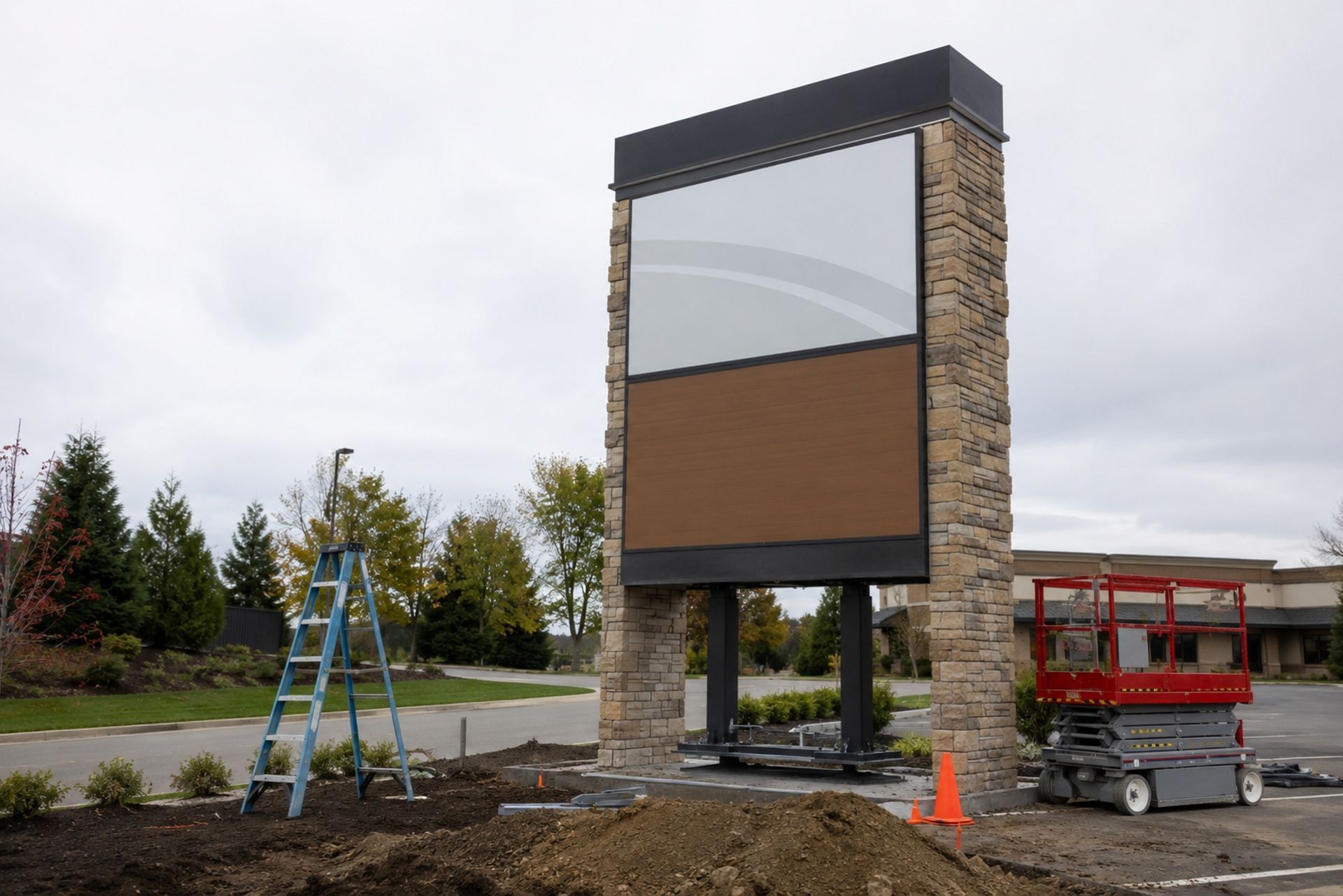
A single gust of wind during a billboard installation can turn a routine Tuesday into a six-figure liability claim. Sign installers work at height, handle heavy materials, operate specialized vehicles, and wire electrical components - sometimes all on the same job. That combination of risks makes insurance not just a smart business move, but a survival requirement. Small sign companies with fewer than 20 employees already face roughly $50,100 per employee in federal regulatory compliance costs alone, and an uninsured accident can push a small operation past the breaking point.
This guide to sign installer insurance covers the full stack of coverage you actually need: general liability, workers comp, tools and equipment, commercial auto, and the trade-specific endorsements that generic policies miss. Whether you're a one-truck operation hanging channel letters or a mid-size crew erecting highway pylons, understanding these policies - and how they work together - is the difference between recovering from a bad day and closing your doors.
Essential Liability Protection for Sign Installation Projects
Liability coverage is the foundation of any sign installer's insurance program. Without it, you're one ladder incident or one cracked storefront window away from a lawsuit that eats your entire annual revenue.
General Liability for Third-Party Property Damage and Bodily Injury
General liability (GL) insurance covers claims when your work injures someone or damages their property. Think about a pedestrian hit by a falling bracket, or a storefront window shattered during installation. GL policies typically cover medical expenses, legal defense costs, and settlements or judgments.
Most sign installers carry $1 million per occurrence and $2 million aggregate limits, though larger commercial contracts often require higher limits or an umbrella policy on top. Your GL premium depends heavily on your annual revenue, payroll, and the types of signs you install. A company focused on ground-level monument signs will pay less than one doing high-rise pylon installations.
One thing to keep in mind: GL policies exclude damage to your own work. If your crew drops a sign and destroys it before it's mounted, that's not a GL claim. That's a different coverage entirely.
Products and Completed Operations Coverage
This is the part of your GL policy that covers you after you've left the job site. If a sign you installed six months ago falls and injures a customer, products and completed operations coverage responds. Many sign installers underestimate this exposure, but it's one of the most common claim types in the trade.
Courts have held sign companies liable years after installation when mounting hardware fails or electrical components cause fires. Make sure your policy doesn't sunset this coverage prematurely. Some cheaper policies reduce completed operations limits or exclude them after a short window - read the fine print.
Personal and Advertising Injury Protection
This coverage handles claims like defamation, copyright infringement, or wrongful eviction. For sign installers, the most relevant scenario involves accidentally reproducing copyrighted logos or designs on signage. It's not your most likely claim, but it's included in standard GL policies and worth understanding.

By: Michael Fusco
President of Joule Pro
INDEX
Joule Pro is a specialty insurance and risk program of Fusco Orsini & Associates Insurance Services, built exclusively for electrical contractors and licensed in 31 states.
We work with electrical firms across the country — from California, Texas, Florida, New York, and coast to coast — placing General Liability, Workers' Compensation, Commercial Auto, Inland Marine, Surety Bonds, Excess Liability, and full specialty coverage stacks for commercial, industrial, service, residential, and low-voltage electrical contractors. Joule Pro is not a separate licensed entity. It is a dedicated program structure inside Fusco Orsini, giving electrical contractors access to specialty carriers, in-house claims advocacy, and trade-specific risk engineering under one program.
Protecting Your Physical Assets: Tools and Commercial Vehicles
Your tools, trucks, and the signs themselves represent serious capital. Standard property insurance doesn't cover mobile assets, and personal auto policies exclude commercial use entirely. You need purpose-built coverage for each category.
Inland Marine Insurance for Tools and Mobile Equipment
Inland marine insurance covers tools and equipment that move between job sites. For sign installers, this includes everything from power drills and welding rigs to scissor lifts and portable generators. A standard commercial property policy only covers items at your listed business location, so anything on a truck or at a job site is unprotected without inland marine.
Policies can be written on a scheduled basis (listing specific items and values) or as a blanket covering all tools up to a set limit. Scheduled policies are better for expensive individual items like crane attachments. Blanket coverage works well for general hand tools and smaller equipment. Programs like those offered through Joule Pro, which specializes in contractor coverage stacks, can help you structure the right mix of scheduled and blanket limits for your operation.
Commercial Auto Insurance for Service Trucks and Cranes
Your service vehicles need commercial auto insurance - no exceptions. Personal auto policies exclude vehicles used for business, and if you're hauling signs, ladders, or equipment, you're clearly operating commercially.
Commercial auto covers liability if your driver causes an accident, plus physical damage to your own vehicles. If you operate boom trucks or crane-equipped vehicles, make sure your policy covers the specialized equipment mounted on the chassis. Some insurers exclude attached equipment unless you add an endorsement.
Hired and non-owned auto coverage is also worth adding if employees ever use personal vehicles for work errands. A single accident in an employee's car during a supply run can create liability for your company.
Installation Floater for Signs in Transit and at Job Sites
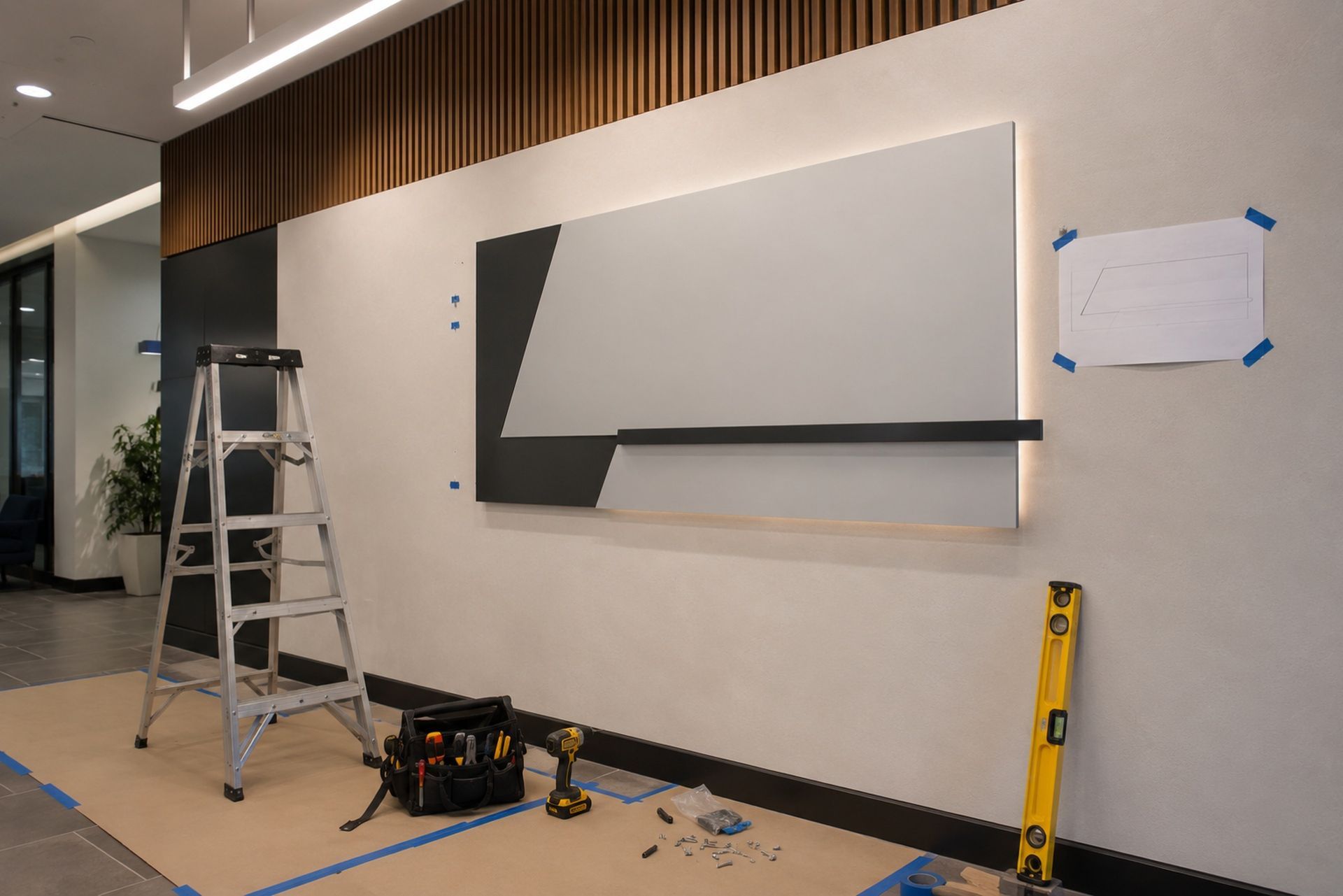
An installation floater covers signs and materials from the moment they leave your shop until they're installed and accepted by the customer. This fills a gap that GL, inland marine, and commercial property all miss. If a custom LED sign worth $15,000 gets damaged during transport or while sitting at a job site overnight, the installation floater pays for replacement or repair.
This coverage is especially important for sign companies that fabricate custom work. The materials alone on a large channel letter set or electronic message center can represent tens of thousands of dollars.
Workforce Management and Regulatory Compliance
Workers Compensation for High-Risk Installation Environments
Sign installation consistently ranks among the higher-risk trades for workers comp classification. Your crews work at elevation, handle heavy materials, operate power tools, and sometimes perform electrical work - all activities with above-average injury rates.
Workers comp is mandatory in nearly every state (Texas and a handful of others allow opt-outs under specific conditions, but even there, going without it is risky). The policy covers medical expenses, lost wages, and rehabilitation costs for employees injured on the job. It also protects you from lawsuits by injured workers, since accepting workers comp benefits generally waives the employee's right to sue.
Your experience modification rate (EMR) directly impacts your premium. An EMR above 1.0 means you've had more claims than average and you'll pay more. Investing in safety training, fall protection equipment, and proper rigging procedures can lower your EMR over time and save thousands annually.
Employer Liability Limits and State Requirements
Workers comp policies include an employer liability section (Part B) that covers situations where an injured employee sues outside the workers comp system. This can happen when gross negligence is alleged or when a spouse files a loss-of-consortium claim. Standard limits are $100,000 per accident, $500,000 policy limit, and $100,000 per employee for disease, but many contractors increase these to $500,000/$500,000/$500,000 or higher.
State requirements vary significantly. California, New York, and Illinois have some of the strictest enforcement and highest premium rates for construction trades. Working with a specialty program like Joule Pro that understands contractor classifications can help you avoid misclassification - a common and expensive mistake.
Addressing Trade-Specific Risks and Specialized Endorsements
Generic contractor policies miss risks that are specific to sign installation. These endorsements fill those gaps.
Height and Rigging Liability for Aerial Work
Most sign installation involves working above ground, whether on ladders, scaffolding, boom lifts, or suspended platforms. Height-related accidents are the leading cause of fatalities in the sign industry. Your GL policy should explicitly cover aerial work, and you should verify that exclusions for work above certain heights don't apply.
Some insurers cap coverage at specific heights (30 or 40 feet is common in standard policies). If your crews work on highway signs, building facades, or tall pylons, you need a policy without those restrictions. Ask your agent directly about height exclusions - don't assume you're covered.
Electrical and Wiring Liability for Illuminated Signs
Installing illuminated signs means performing electrical work, which introduces fire risk, shock hazards, and code compliance issues. If a sign you wired causes an electrical fire in a client's building, the resulting claim can be enormous.
Your policy needs to cover electrical work explicitly. Some GL policies exclude it or require a separate endorsement. If your company holds an electrical contractor license in addition to a sign contractor license, Joule Pro's specialty program is built specifically for licensed electrical contractors and covers these overlapping exposures.
Professional Liability for Structural Design Errors
If your company designs sign structures or specifies mounting systems, professional liability (errors and omissions) coverage protects against claims that your design was faulty. This is separate from GL, which covers physical damage. Professional liability covers the financial losses caused by your professional advice or design work.
A sign that's properly installed but improperly designed for wind loads, for example, creates a professional liability exposure. Not every sign installer needs this coverage, but if you're stamping drawings or specifying structural components, it's essential.
Strategic Risk Management and Policy Optimization
Factors Influencing Insurance Premiums for Sign Contractors
Your premiums depend on several measurable factors:
- Annual revenue and payroll: Higher numbers mean higher premiums
- Claims history and EMR: Past claims predict future risk in underwriters' eyes
- Types of work performed: High-rise installations cost more to insure than ground-level work
- Geographic location: Urban areas and states with higher litigation costs increase premiums
- Safety programs: Documented training and safety protocols can earn discounts
The single most effective way to lower your insurance costs is to reduce claims. That means investing in safety equipment, training, and supervision before incidents happen.
Bundle Options: Business Owner's Policy (BOP) vs. Standalone
| Feature | BOP | Standalone Policies |
|---|---|---|
| Cost | Lower combined premium | Higher total but more flexible |
| Customization | Limited endorsement options | Full control over each policy |
| Best for | Small shops, low-risk work | Mid-size companies, high-risk work |
| Typical includes | GL + property + business income | Each coverage purchased separately |
| Limitations | May exclude aerial work or high limits | No bundling discounts |
A BOP works well for small sign shops doing mostly ground-level installations. Once you're running boom trucks, doing high-rise work, or carrying significant payroll, standalone policies with tailored endorsements give you better protection and fewer coverage gaps.
Before You Buy a Policy
The right insurance program for a sign installer isn't a single policy - it's a coordinated set of coverages that address your specific operations. General liability protects against third-party claims. Workers comp covers your crew. Commercial auto and inland marine protect your vehicles and tools. And trade-specific endorsements fill the gaps that generic policies leave wide open.
Don't buy insurance based on price alone. A cheap policy with height exclusions or electrical work carve-outs can leave you exposed exactly when you need coverage most. Work with a producer who understands contractor risks and can build a program around how your company actually operates. If your work includes electrical components, reach out to Joule Pro for a coverage review tailored to your trade.
Frequently Asked Questions
How much does insurance cost for a sign installation company? Expect $3,000 to $12,000 annually for a small operation, depending on revenue, crew size, and work types. High-rise and electrical sign work push premiums higher.
Do I need separate insurance for boom trucks and crane vehicles? Yes. Standard commercial auto policies may not cover specialized mounted equipment. You'll need endorsements or a separate inland marine policy for the crane or boom apparatus.
Can I get sign installer insurance if I've had prior claims? You can, but your options narrow and premiums increase. Specialty programs for contractors often have more flexibility than standard market insurers.
Is professional liability required for sign installers? Only if you design sign structures or specify engineering components. If you're strictly installing signs designed by others, GL and completed operations coverage typically suffice.
What's the difference between an installation floater and inland marine? Inland marine covers your tools and equipment. An installation floater covers the client's materials (the signs themselves) while in your care, custody, or control during transit and installation.

Founder & CEO
The Force Behind the Program
About the Author:
Michael Fusco.
Fusco Orsini & Associates
Joule Pro exists because Mike Fusco saw electrical contractors getting boilerplate insurance — and built a program designed for the way the trade actually works.
Mike is the CEO and co-founder of Fusco Orsini & Associates, the San Diego–based independent agency he launched in 2010. Under his leadership FOA has grown into a nationwide partner serving clients across 31 states, with a personal, client-first approach to commercial insurance and risk.
With over 20 years in insurance and risk management, he specializes in tailored programs spanning general liability, workers' compensation, surety bonding, and employee benefits — helping owners confidently manage risk and pursue growth.
Mike holds a B.S. in Business from the University of Maryland — Robert H. Smith School of Business, and the Certified Insurance Counselor (CIC) designation, held by fewer than 3% of insurance professionals nationwide.
What Our Clients Say
Trusted by Electrical Contractors Across the Country.
5.0
★★★★★
Google reviews
Core Commercial Coverage
Business Insurance for Electrical Contractors.
The fundamentals — written, structured, and priced for electrical risk. Each line is reviewed annually by an underwriter who only writes our trade.
01
General Liability
Premises & completed-operations coverage with electrical-specific endorsements and full pollution carve-back options.
02
Workers' Compensation
Class-code optimization, experience-mod review, and return-to-work programs designed for energized-work exposures.
03
Commercial Auto
Fleet, hired & non-owned auto, and tools-in-transit coverage written for service vans and bucket trucks.
04
Tools & Equipment
Scheduled and blanket coverage for tools, test equipment, scissor lifts, and contractor's equipment on-site or in-transit.
05
Surety Bonds
Bid, performance, and payment bonds — single-job and aggregate programs for commercial & public-works contracts.
06
Commercial Property
Layered limits up to $50M with carrier panels covering your shop, warehouse, yard, and on-premises tools, materials, and equipment.
Who We Serve
Electrical Contractors We Specialize In.
From $5M service shops to $250M industrial primes — every Joule Pro program is shaped to the contractor's revenue mix and project profile.
01 / Industrial
Commercial & Industrial Electrical Contractors
High-voltage, substation, and plant electrical work. Pollution, builder's risk, and large-deductible WC programs.
02 / Service
Service & Residential Electrical Contractors
Service-call shops, panel upgrades, and EV charging installers. Auto-fleet, GL, and tool-coverage programs.
03 / Low-Voltage
Specialty & Low-Voltage Contractors
Data, fire-alarm, security, and BMS controls. Cyber, professional liability, and follow-form excess.
Frequently Asked Questions
Common
Questions From
Electrical Contractors.
What size electrical contractors do you write?
Joule Pro is built for licensed electrical firms from roughly $2M in revenue to $250M+. Below $2M we typically refer to our small-business desk; above $250M we underwrite individually with our industrial practice team.
Do I need to be licensed in multiple states?
No. We license you wherever you work. Joule Pro is admitted in 31 states and our compliance team handles multi-state filings, prevailing-wage endorsements, and certificate-of-insurance requirements.
How is Joule Pro different from a generic contractor program?
Generic programs use a contractor's questionnaire that treats you like a roofer. We use forms written for energized work, arc-flash exposures, and design-build risk — and our carriers price accordingly.
What does the claims process actually look like?
Every Joule Pro client is assigned a named claims advocate at bind. They take the FNOL, set strategy with your assigned attorney, and serve as your single point of contact through close.
Can you bond large public-works contracts?
Yes. Through our surety partners we write single-job bonds up to $75M and aggregate programs to $300M, with expedited turnarounds for school district, federal, and DOT work.
What happens at renewal?
Your producer and claims advocate jointly run a renewal review 90 days out — covering loss trends, exposure changes, and market alternatives — so renewal day is a confirmation, not a surprise.
From the Blog
Insights for Electrical Contractors.
Risk briefings, claim post-mortems, and program updates — written by our underwriters and risk engineers.


Get Started
Get a Quote on a Program Built Around Your Trade.
A 30-minute discovery call is the only commitment. You'll leave with a written gap analysis of your current program — yours to keep, whether you bind with us or not.