
Business Insurance
General Liability Insurance For Electricians in West Virginia
★★★★★ 150+ Five-Star Reviews · Google & Facebook
Running an electrical contracting business in West Virginia means dealing with risks that most other trades simply don't face. A single arc flash incident at a commercial jobsite, a house fire traced back to faulty wiring, or a homeowner who trips over your tool bag - any of these can generate a claim that threatens your livelihood. General liability insurance for electricians in West Virginia isn't just a box to check; it's the financial backstop that keeps your business solvent when something goes sideways. And the Mountain State has its own quirks: specific licensing thresholds, a relatively small insurance market, and carrier appetite that shifts depending on whether you're wiring residential basements or industrial substations. This guide covers the coverage limits, state requirements, and market realities that every West Virginia electrician should understand before signing a policy. Whether you're a one-person shop in Morgantown or running a 30-person crew out of Charleston, the details here will help you make smarter insurance decisions and avoid the gaps that sink contractors every year.
The Importance of General Liability Insurance for West Virginia Electricians
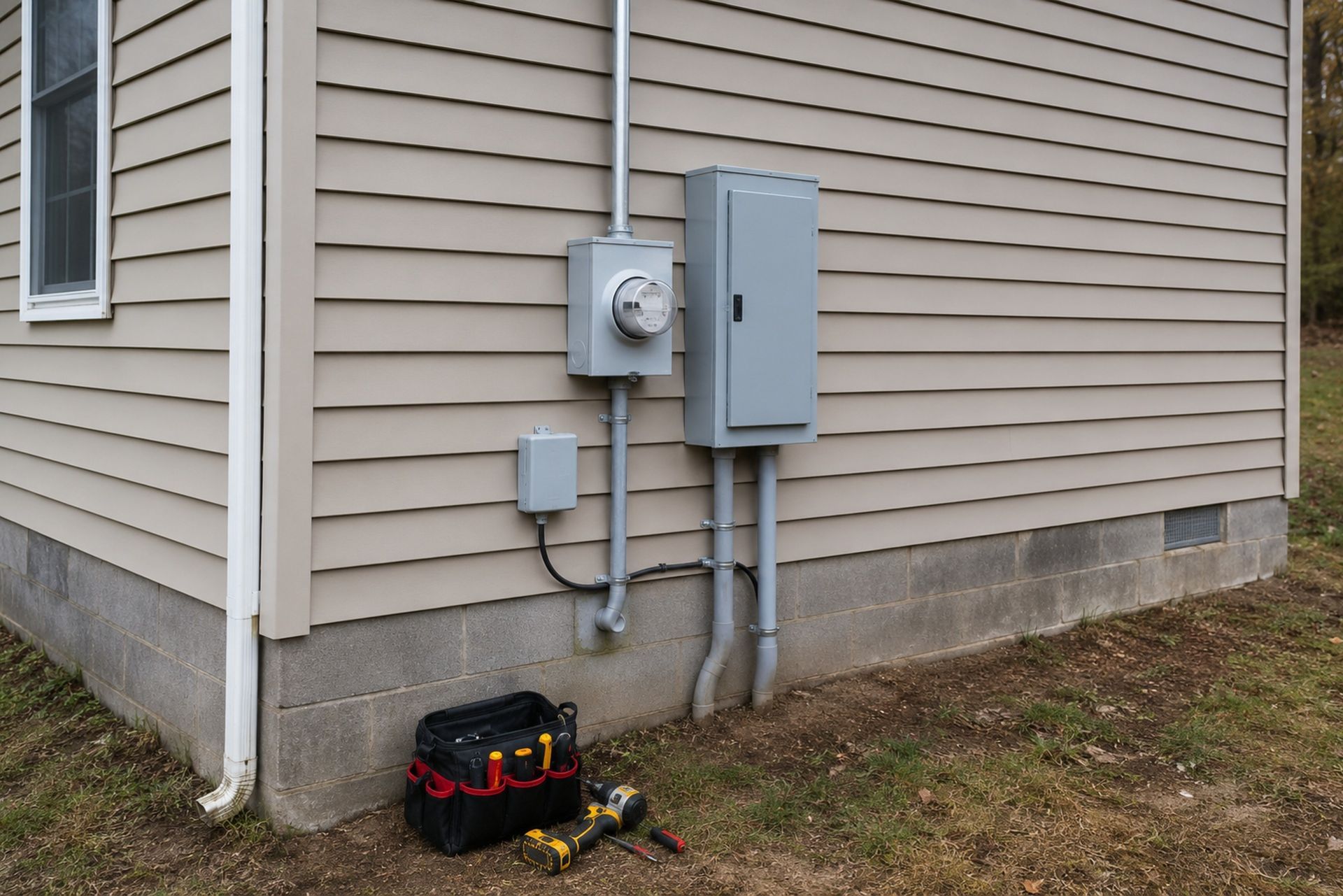
Electrical work sits near the top of the risk spectrum for contractors. The combination of fire hazard, shock potential, and property access means your exposure to third-party claims is significantly higher than, say, a painter or landscaper. A general liability policy is the first line of defense, covering claims from people or property you damage during the course of your work - or even after you leave the jobsite.
Protecting Against Third-Party Property Damage and Bodily Injury
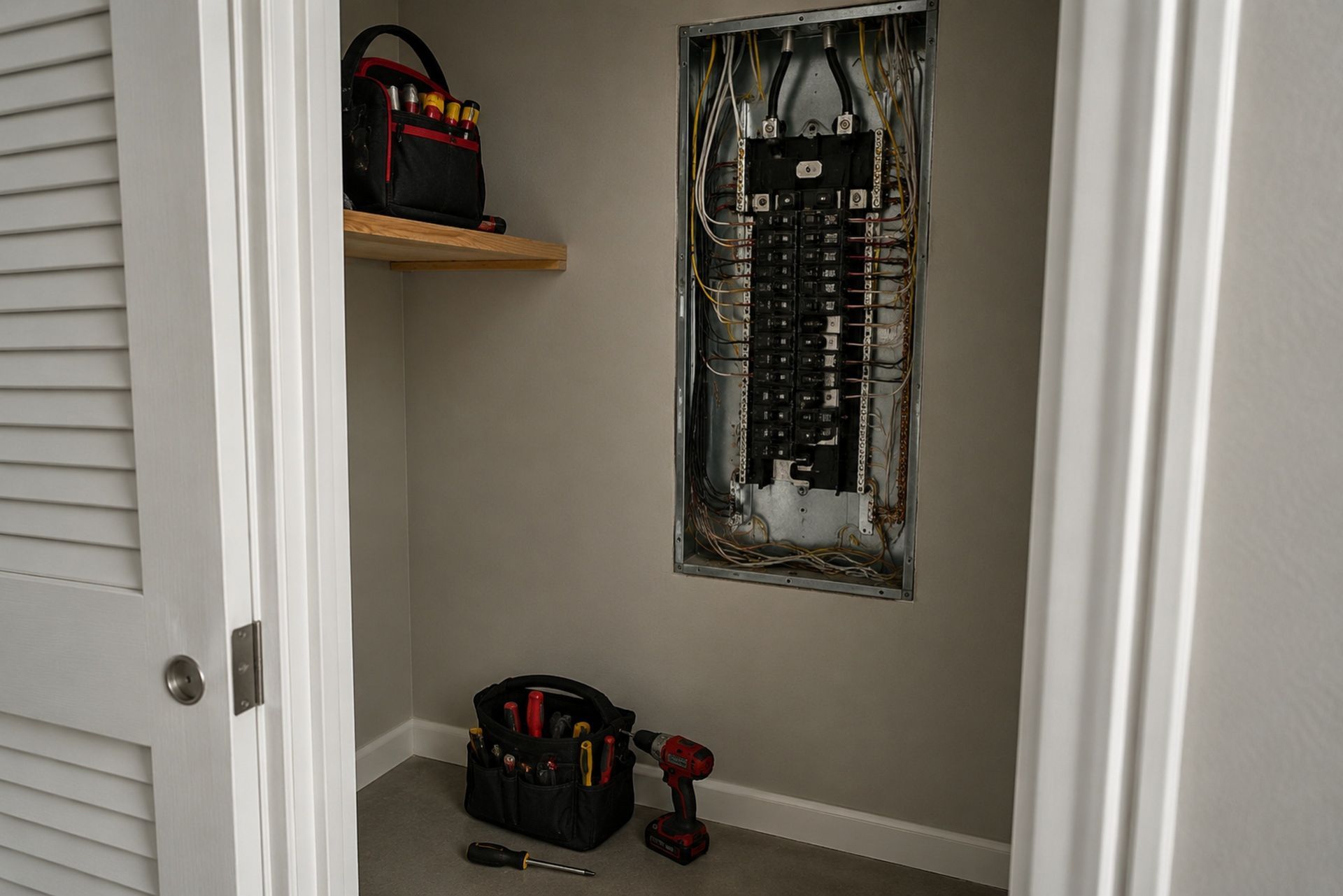
Picture this: you're installing a panel upgrade in a 1960s ranch home, and a spark ignites old insulation inside the wall. The fire department contains it, but the homeowner's kitchen is gutted. Your general liability policy covers the property damage claim and the legal defense costs if the homeowner sues. The same applies if a client's employee gets shocked by exposed wiring you left energized during a commercial tenant buildout. Bodily injury claims from electrical incidents tend to be expensive because the injuries are often severe: burns, cardiac events, and falls from ladders near live circuits. Without coverage, a single claim could easily exceed $100,000 in medical costs and legal fees before you even get to a settlement.
Managing Risks Specific to Electrical Contracting in WV
West Virginia's housing stock skews older, which means electricians frequently encounter knob-and-tube wiring, outdated panels, and aluminum branch circuits. Working around these systems increases your risk profile because any interaction with aging infrastructure raises the probability of a fire or failure down the line. The state's geography adds another layer: remote jobsites in mountainous areas can delay emergency response, potentially increasing the severity of incidents. Carriers paying attention to these factors price policies accordingly, and electricians who don't understand their own risk profile often end up either underinsured or overpaying.

By: Michael Fusco
President of Joule Pro
INDEX
The Importance of General Liability Insurance for West Virginia Electricians
West Virginia State Licensing and Insurance Requirements
Determining Appropriate Coverage Limits for Your Business
Carrier Appetite and Market Availability in the Mountain State
Essential Policy Add-ons and Endorsements
Strategies for Reducing Premiums and Maintaining Compliance
Joule Pro is a specialty insurance and risk program of Fusco Orsini & Associates Insurance Services, built exclusively for electrical contractors and licensed in 31 states.
We work with electrical firms across the country — from California, Texas, Florida, New York, and coast to coast — placing General Liability, Workers' Compensation, Commercial Auto, Inland Marine, Surety Bonds, Excess Liability, and full specialty coverage stacks for commercial, industrial, service, residential, and low-voltage electrical contractors. Joule Pro is not a separate licensed entity. It is a dedicated program structure inside Fusco Orsini, giving electrical contractors access to specialty carriers, in-house claims advocacy, and trade-specific risk engineering under one program.
West Virginia State Licensing and Insurance Requirements
West Virginia treats electrical licensing and insurance as intertwined obligations. You can't legally pull permits on most projects without both, and general contractors increasingly require proof of coverage before they'll sub you onto a job.
WV State Fire Marshal and Contractor Licensing Board Mandates
West Virginia electrical contractors must obtain a state license for any residential project exceeding $2,500 or any commercial project exceeding $5,000. The WV State Fire Marshal's office oversees electrical licensing, and applicants need to demonstrate financial responsibility, which includes carrying general liability insurance. The Contractor Licensing Board also requires proof of insurance for contractors working on larger projects. If your license lapses because your insurance policy cancels, you're effectively shut down until you reinstate both. One thing to keep in mind: municipal jurisdictions like Charleston, Huntington, and Parkersburg may impose additional insurance requirements on top of state mandates, especially for work on public buildings or infrastructure.
Proof of Coverage for Municipal Permits and Project Bidding
Most commercial general contractors in West Virginia won't even consider your bid without a current certificate of insurance. The same goes for municipal permit offices, which typically require proof of GL coverage before issuing electrical permits. If you're bidding on state-funded projects - school renovations, highway lighting, government building upgrades - expect minimum coverage requirements of $1 million per occurrence and $2 million aggregate. Missing these thresholds means your bid gets tossed before anyone reads your pricing. Programs like Joule Pro, built specifically for licensed electrical contractors, can issue certificates quickly because they understand the documentation timelines contractors face during competitive bidding.
Determining Appropriate Coverage Limits for Your Business
Choosing the right limits isn't about picking the cheapest option. It's about matching your coverage to your actual exposure, which depends on the type of work you do, the size of your projects, and the contracts you sign.
Standard vs. High-Limit Policies for Commercial Electricians
Here's a quick comparison of typical policy structures:
| Feature | Standard Policy | High-Limit Policy |
|---|---|---|
| Per-Occurrence Limit | $1,000,000 | $2,000,000+ |
| General Aggregate | $2,000,000 | $4,000,000+ |
| Typical Use Case | Residential, small commercial | Industrial, large commercial, government |
| Umbrella Option | Usually not needed | Often paired with $1M-$5M umbrella |
| Average Annual Premium | $1,200 - $3,500 | $3,500 - $8,000+ |
Most residential electricians in West Virginia can operate comfortably with a standard $1M/$2M policy. But if you're pulling wire in chemical plants along the Kanawha Valley or doing industrial work at manufacturing facilities, you'll likely need higher limits. Many facility owners require $5 million or more in combined coverage before they'll grant site access.
Understanding Deductibles and Per-Occurrence vs. Aggregate Limits
Your per-occurrence limit is the maximum your insurer will pay for any single claim. Your aggregate limit caps the total payout for all claims during the policy period, typically one year. If you carry a $1M per-occurrence / $2M aggregate policy and face three separate $800,000 claims in one year, your aggregate runs out after the second claim, leaving you exposed on the third. Deductibles for electrical contractors in West Virginia typically range from $500 to $2,500 per claim. A higher deductible lowers your premium but increases your out-of-pocket cost when a claim hits. For most small electrical shops, a $1,000 deductible strikes the right balance between affordability and risk retention.
Carrier Appetite and Market Availability in the Mountain State
Not every insurance company wants to write policies for electricians, and the ones that do have strong opinions about which types of electrical work they'll cover. Understanding carrier appetite saves you time and frustration during the quoting process.
Why Certain Insurers Specialize in Electrical Trade Risks
General-market carriers - the ones that insure everything from bakeries to yoga studios - often decline electrical contractors outright or price them out of the market. The reason is straightforward: electrical work carries fire and shock exposure that generalist underwriters struggle to evaluate. Specialty programs exist because they employ underwriters who understand the difference between a service upgrade and a medium-voltage installation. Joule Pro, for example, maintains underwriter relationships specifically tailored to electrical trade risks, which means faster quotes and more accurate pricing than you'd get from a generalist agent who writes one electrician policy a year. West Virginia's relatively small insurance market means fewer local options, making specialty programs especially valuable for contractors here.
Factors Influencing Underwriting for Residential vs. Industrial Work
Carriers segment electrical work into risk tiers, and where you fall determines both your premium and whether you'll get approved at all. Residential service and repair is the easiest class to place. New residential construction carries moderate risk. Commercial work varies widely depending on the building type and voltage levels. Industrial and high-voltage work is the hardest to place and the most expensive to insure.
Your loss history matters enormously. A clean five-year claims record can reduce your premium by 15-25% compared to a contractor with even one significant claim. Carriers also look at your annual revenue, number of employees, subcontractor usage, and whether you perform any work involving solar panel installations or EV charger wiring, which are growing segments that some carriers still treat cautiously.
Essential Policy Add-ons and Endorsements
A base GL policy covers a lot, but it doesn't cover everything. Smart electricians layer on endorsements that close the gaps most likely to cause financial pain.
Completed Operations and Products Liability Coverage
Completed operations coverage protects you after you leave the jobsite. If wiring you installed six months ago causes a fire, this is the coverage that responds. Many base GL policies include completed operations, but some limit it or exclude certain work types. Check your policy carefully. Products liability applies if you sell or install a product - like a panel, breaker, or lighting fixture - that later causes damage. Even though you didn't manufacture the product, you can be named in a lawsuit as part of the distribution chain. This endorsement is especially relevant for electricians who supply and install equipment rather than just providing labor.
Tools and Equipment Floaters for Mobile Electricians
Your GL policy doesn't cover your own tools and equipment. A separate inland marine or tools floater covers theft, damage, and loss of your gear - whether it's on a jobsite, in your van, or in storage. West Virginia electricians who travel between rural jobsites are particularly vulnerable to tool theft from vehicles parked overnight. A typical tools floater runs $300-$800 annually for $10,000-$50,000 in coverage, which is a fraction of what it costs to replace a loaded service van's worth of meters, benders, and power tools. Joule Pro offers these floaters as part of a full contractor coverage stack, so you can bundle everything under one program instead of juggling multiple carriers.
Strategies for Reducing Premiums and Maintaining Compliance
Keeping your insurance costs manageable while staying compliant requires a few deliberate choices:
- Pay your premium annually instead of monthly to avoid installment fees, which can add 10-15% to your total cost
- Maintain a formal safety program with documented training: carriers reward this with lower rates
- Bundle your GL, workers comp, commercial auto, and tools coverage through a single specialty program to qualify for package discounts
- Review your policy annually to ensure your revenue projections and employee counts are accurate: overestimating triggers higher premiums, while underestimating leads to audit surprises
- Keep your claims history clean by addressing small incidents before they become formal claims
Staying compliant means renewing your policy before it lapses, updating your certificate holders promptly, and notifying your carrier when you add new services like solar or EV charging work. A lapse in coverage can trigger license suspension through the WV State Fire Marshal's office, which creates a cascade of problems: lost permits, voided bids, and potential fines.
Your Next Steps as a West Virginia Electrician
Getting the right general liability coverage in West Virginia comes down to understanding your risk profile, matching your limits to your actual work, and placing your policy with a carrier that genuinely understands electrical trade risks. Don't settle for a generalist agent who treats your business like every other contractor. Specialty programs exist for a reason, and the difference in coverage quality and pricing is real. If you're shopping for coverage or suspect your current policy has gaps, reach out to a program like Joule Pro that works exclusively with licensed electrical contractors. A licensed insurance professional can review your operations, identify exposures you might be missing, and build a coverage package that actually fits your business.
Frequently Asked Questions
Does West Virginia require electricians to carry general liability insurance? The state doesn't mandate GL coverage by statute for all electricians, but the licensing process through the WV State Fire Marshal's office effectively requires it. Most municipal permit offices and general contractors also require proof of coverage.
How much does GL insurance cost for an electrician in West Virginia? Residential electricians typically pay between $1,200 and $3,500 annually for a standard $1M/$2M policy. Commercial and industrial electricians pay more, often $3,500 to $8,000 or higher depending on revenue and risk factors.
Can I get insured if I do both residential and commercial electrical work? Yes, but your carrier needs to know about both. Mixing work types affects your classification code and premium. Failing to disclose commercial work on a residential-only policy can result in denied claims.
What's the difference between general liability and professional liability for electricians? General liability covers bodily injury and property damage. Professional liability, sometimes called errors and omissions, covers claims arising from design mistakes or faulty recommendations. Most electricians need GL first; professional liability becomes relevant if you do design-build work.
How quickly can I get a certificate of insurance for a bid? Specialty programs like Joule Pro can often issue certificates within 24-48 hours. Generalist agencies may take longer because they need to submit your application to multiple carriers before finding one willing to write the policy.

Founder & CEO
The Force Behind the Program
About the Author:
Michael Fusco.
Fusco Orsini & Associates
Joule Pro exists because Mike Fusco saw electrical contractors getting boilerplate insurance — and built a program designed for the way the trade actually works.
Mike is the CEO and co-founder of Fusco Orsini & Associates, the San Diego–based independent agency he launched in 2010. Under his leadership FOA has grown into a nationwide partner serving clients across 31 states, with a personal, client-first approach to commercial insurance and risk.
With over 20 years in insurance and risk management, he specializes in tailored programs spanning general liability, workers' compensation, surety bonding, and employee benefits — helping owners confidently manage risk and pursue growth.
Mike holds a B.S. in Business from the University of Maryland — Robert H. Smith School of Business, and the Certified Insurance Counselor (CIC) designation, held by fewer than 3% of insurance professionals nationwide.
What Our Clients Say
Trusted by Electrical Contractors Across the Country.
5.0
★★★★★
Google reviews
Core Commercial Coverage
Business Insurance for Electrical Contractors.
The fundamentals — written, structured, and priced for electrical risk. Each line is reviewed annually by an underwriter who only writes our trade.
01
General Liability
Premises & completed-operations coverage with electrical-specific endorsements and full pollution carve-back options.
02
Workers' Compensation
Class-code optimization, experience-mod review, and return-to-work programs designed for energized-work exposures.
03
Commercial Auto
Fleet, hired & non-owned auto, and tools-in-transit coverage written for service vans and bucket trucks.
04
Tools & Equipment
Scheduled and blanket coverage for tools, test equipment, scissor lifts, and contractor's equipment on-site or in-transit.
05
Surety Bonds
Bid, performance, and payment bonds — single-job and aggregate programs for commercial & public-works contracts.
06
Commercial Property
Layered limits up to $50M with carrier panels covering your shop, warehouse, yard, and on-premises tools, materials, and equipment.
Who We Serve
Electrical Contractors We Specialize In.
From $5M service shops to $250M industrial primes — every Joule Pro program is shaped to the contractor's revenue mix and project profile.
01 / Industrial
Commercial & Industrial Electrical Contractors
High-voltage, substation, and plant electrical work. Pollution, builder's risk, and large-deductible WC programs.
02 / Service
Service & Residential Electrical Contractors
Service-call shops, panel upgrades, and EV charging installers. Auto-fleet, GL, and tool-coverage programs.
03 / Low-Voltage
Specialty & Low-Voltage Contractors
Data, fire-alarm, security, and BMS controls. Cyber, professional liability, and follow-form excess.
Frequently Asked Questions
Common
Questions From
Electrical Contractors.
What size electrical contractors do you write?
Joule Pro is built for licensed electrical firms from roughly $2M in revenue to $250M+. Below $2M we typically refer to our small-business desk; above $250M we underwrite individually with our industrial practice team.
Do I need to be licensed in multiple states?
No. We license you wherever you work. Joule Pro is admitted in 31 states and our compliance team handles multi-state filings, prevailing-wage endorsements, and certificate-of-insurance requirements.
How is Joule Pro different from a generic contractor program?
Generic programs use a contractor's questionnaire that treats you like a roofer. We use forms written for energized work, arc-flash exposures, and design-build risk — and our carriers price accordingly.
What does the claims process actually look like?
Every Joule Pro client is assigned a named claims advocate at bind. They take the FNOL, set strategy with your assigned attorney, and serve as your single point of contact through close.
Can you bond large public-works contracts?
Yes. Through our surety partners we write single-job bonds up to $75M and aggregate programs to $300M, with expedited turnarounds for school district, federal, and DOT work.
What happens at renewal?
Your producer and claims advocate jointly run a renewal review 90 days out — covering loss trends, exposure changes, and market alternatives — so renewal day is a confirmation, not a surprise.
From the Blog
Insights for Electrical Contractors.
Risk briefings, claim post-mortems, and program updates — written by our underwriters and risk engineers.


Get Started
Get a Quote on a Program Built Around Your Trade.
A 30-minute discovery call is the only commitment. You'll leave with a written gap analysis of your current program — yours to keep, whether you bind with us or not.