
Business Insurance
Low-Voltage Electrician Insurance
★★★★★ 150+ Five-Star Reviews · Google & Facebook
Underwriting Preferences for Residential vs. Industrial Projects
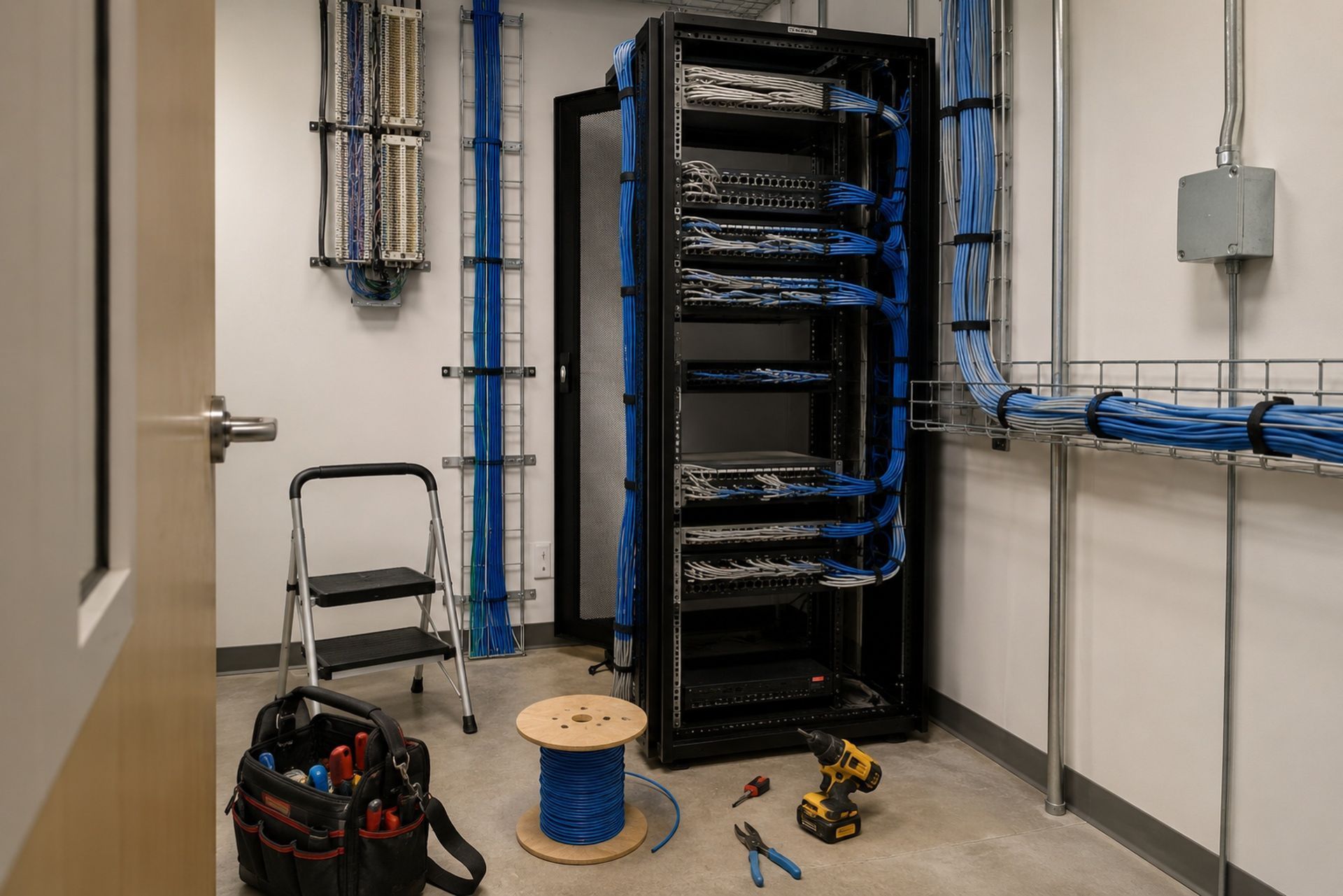
A single cable pull gone wrong can trigger a $50,000 property damage claim before lunch. Low-voltage electricians face a unique risk profile: you're working inside finished walls, running fiber through server rooms, wiring alarm panels in commercial buildings, and installing smart home systems where a mistake can cascade into serious liability. Yet many low-voltage contractors carry the same generic insurance package as a general handyman, leaving critical gaps that only surface when a claim hits. This guide covers the full insurance stack that low-voltage professionals actually need, from general liability and workers' comp to tools coverage, commercial auto, and the trade-specific exposures that most generalist agents miss entirely. Whether you're a solo tech running residential jobs or managing a crew across commercial sites, getting the right coverage in place isn't optional: it's the difference between surviving a bad claim and closing your doors.
Essential Liability Protection for Low-Voltage Contractors
General Liability for Third-Party Injury and Property Damage
General liability (GL) is the foundation of every low-voltage contractor's insurance program. It covers third-party bodily injury and property damage: think a homeowner tripping over your cable spool, or accidentally drilling through a water line while running conduit. GL insurance for small low-voltage operations averages between $57 and $95 per month, while mid-sized commercial contractors typically pay more depending on payroll, revenue, and the types of jobs they take on.
Most general contractors and property managers won't let you on-site without a certificate of insurance showing at least $1 million per occurrence and $2 million aggregate in GL coverage. If you're bidding commercial work, expect to see these minimums as non-negotiable contract requirements. Some larger projects require $5 million or more, which is where umbrella policies come into play.
One thing many low-voltage contractors overlook: your GL policy needs to be rated for your actual trade classification. A policy written for "general electrical" work may not properly cover data cabling, fire alarm installation, or security system work. Specialty programs like Joule Pro exist specifically because the underwriting for electrical trades requires precise classification to avoid coverage disputes at claim time.
Professional Liability and Errors & Omissions for System Design
If you design systems, specify equipment, or provide consulting on network architecture, professional liability (also called errors and omissions, or E&O) covers you when your professional judgment leads to a financial loss for the client. This isn't about physical damage: it's about a security system design that doesn't meet code, a network layout that can't handle the client's bandwidth needs, or a fire alarm panel configuration that fails inspection.
Standard GL policies explicitly exclude professional services claims. A separate E&O policy fills that gap. This coverage matters most for contractors who do design-build work, where you're not just installing what someone else specified but making the design decisions yourself.
Completed Operations Coverage for Faulty Installations
Your GL policy includes a "completed operations" component, but it's worth understanding what this actually covers. Once you finish a job and leave the site, completed operations protects you if that installation later causes injury or damage. A fire alarm system that fails to activate during an actual fire, a structured cabling job that shorts out and damages network equipment months later: these are completed operations claims.
Many low-voltage contractors don't realize that some policies limit or exclude completed operations coverage after a set period. Review your policy's completed operations tail carefully, especially if you install life-safety systems like fire alarms or access control where failures might not surface for years.

By: Michael Fusco
President of Joule Pro
INDEX
Joule Pro is a specialty insurance and risk program of Fusco Orsini & Associates Insurance Services, built exclusively for electrical contractors and licensed in 31 states.
We work with electrical firms across the country — from California, Texas, Florida, New York, and coast to coast — placing General Liability, Workers' Compensation, Commercial Auto, Inland Marine, Surety Bonds, Excess Liability, and full specialty coverage stacks for commercial, industrial, service, residential, and low-voltage electrical contractors. Joule Pro is not a separate licensed entity. It is a dedicated program structure inside Fusco Orsini, giving electrical contractors access to specialty carriers, in-house claims advocacy, and trade-specific risk engineering under one program.
Safeguarding Your Physical Assets and Mobile Operations
Tools and Equipment Floaters for High-Value Testing Gear
Low-voltage work demands expensive, specialized tools. Fusion splicers run $5,000 to $15,000. OTDR testers, cable certifiers, and thermal imaging cameras add up fast. A standard business property policy typically covers tools only at your shop or office: not on the job site, not in your van, and not at the supply house parking lot where theft actually happens.
An equipment floater (sometimes called an inland marine floater for tools) provides coverage wherever your gear goes. Key things to confirm with your agent:
Replacement cost vs. actual cash value: you want replacement cost so depreciation doesn't gut your payout
Whether rented or borrowed equipment is covered
Per-item limits and whether high-value items need to be individually scheduled
Coverage for equipment breakdown, not just theft or physical damage
Commercial Auto Insurance for Service Vans and Fleets
Your personal auto policy won't cover an accident that happens while you're driving to a job site in a vehicle used for business. Period. Commercial auto insurance covers your work vehicles for liability, collision, and comprehensive losses. If you have employees driving company vehicles, you also need hired and non-owned auto coverage for situations where they use personal vehicles for work errands.
Service vans loaded with tools and materials represent a double exposure: the vehicle itself and everything inside it. Make sure your commercial auto policy includes adequate coverage for tools and equipment stored in the vehicle, or pair it with a separate tools floater that extends to vehicle contents.
Inland Marine Insurance for Materials in Transit
Inland marine coverage protects materials, equipment, and supplies while they're being transported between your shop, the supply house, and the job site. If you're hauling $10,000 worth of fiber optic cable and patch panels to a commercial install and get into an accident, your commercial auto policy covers the van: inland marine covers the cargo.
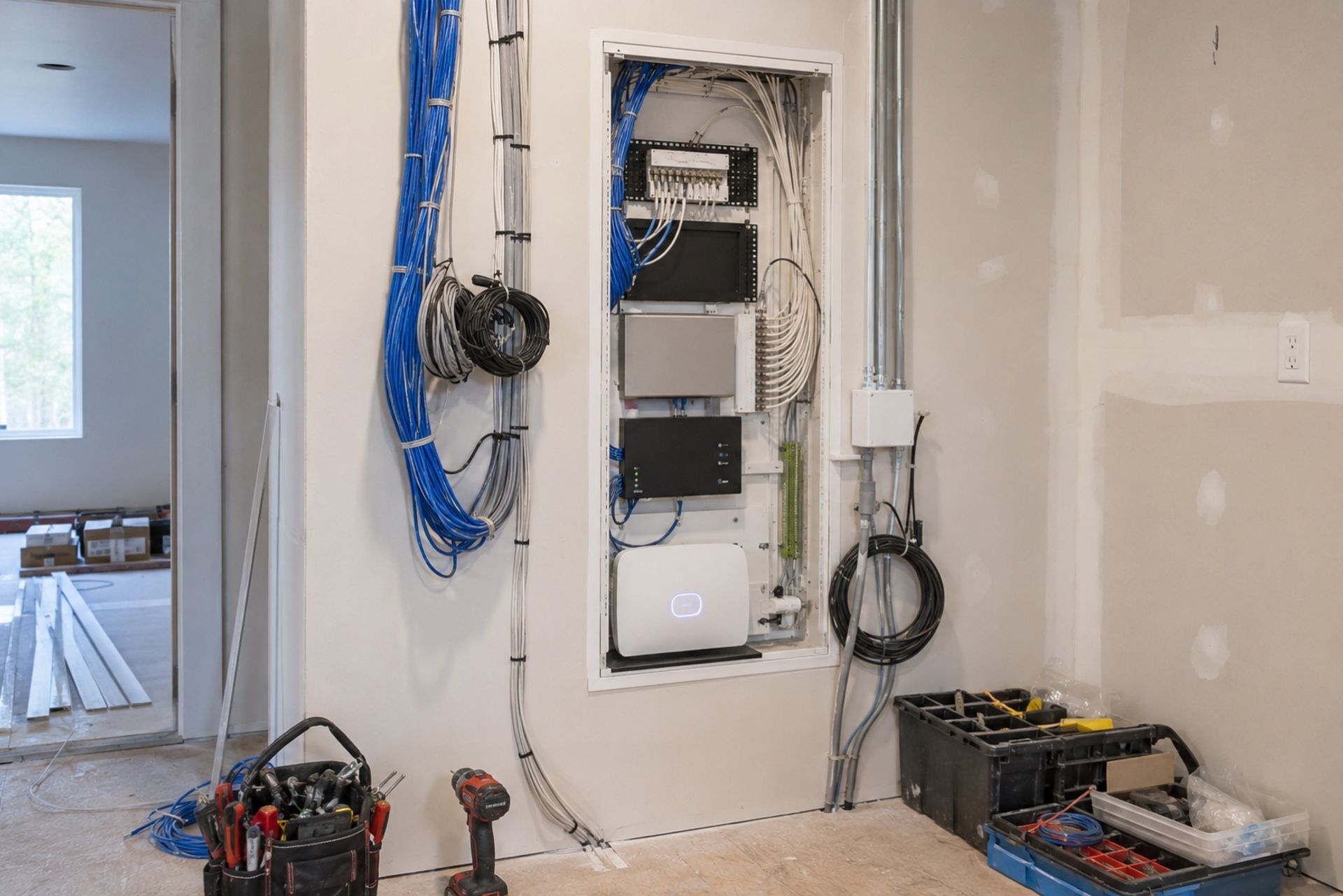
This coverage also extends to materials stored temporarily at job sites before installation. For contractors running multiple projects simultaneously with materials staged across locations, inland marine fills a gap that neither GL nor commercial property addresses.
Managing Workforce and Compliance Risks
Workers' Compensation Requirements for Small Crews
Nearly every state requires workers' compensation insurance once you have employees, and some states require it even for sole proprietors in construction trades. Workers' comp covers medical expenses and lost wages when an employee gets injured on the job. For low-voltage contractors, common claims include falls from ladders, repetitive strain injuries from pulling cable, and cuts or punctures from working in tight spaces.
The cost of workers' comp is driven by your payroll, your experience modification rate (EMR), and your state's classification codes. Low-voltage work often falls under different class codes than high-voltage electrical, which can mean lower base rates. Keeping a clean safety record directly reduces your EMR over time, which translates to real premium savings. Programs like Joule Pro that focus exclusively on electrical contractors can often access specialty workers' comp markets with more favorable rates than what you'd find through a generalist broker.
Surety Bonds for Project Bidding and Licensing
Surety bonds aren't insurance in the traditional sense: they're a guarantee to project owners or licensing boards that you'll fulfill your obligations. Most states require a contractor license bond, and many commercial projects require bid bonds and performance bonds before you can compete for the work.
Bond amounts vary by state and project size. Your bonding capacity depends on your financial statements, credit history, and track record. Building a relationship with a surety provider early, even before you need large project bonds, establishes the history that makes bigger bonds accessible later.
Addressing Trade-Specific Vulnerabilities
Cyber Liability for Smart Home and Network Security Pros
If you install network infrastructure, smart home systems, or security cameras, you're handling devices that connect to your clients' networks. A misconfigured access point or an unsecured IP camera can become an entry point for a data breach. Cyber liability insurance covers the costs of breach notification, forensic investigation, legal defense, and regulatory fines if a system you installed contributes to a cyber incident.
This is a growing exposure area. The smart home market continues to expand rapidly, and with it, the liability for contractors who install and configure connected devices. Even if you're "just running cable," if you're terminating to network switches or configuring IoT devices, your fingerprints are on that network.
Failure to Respond Coverage for Alarm and Fire Systems
This is one of the most overlooked coverages in the low-voltage space. If you install or monitor alarm systems, and the system fails to detect or communicate an intrusion or fire event, you can face enormous liability. Standard GL policies often exclude or severely limit coverage for failure of alarm or security systems.
Specialized endorsements or standalone policies exist to cover this exposure. If alarm or fire system work represents any portion of your revenue, confirm explicitly with your agent that your policy addresses failure-to-respond scenarios. This is exactly the kind of gap a specialty electrical contractor program catches that a generalist agent might miss.
Optimizing Insurance Costs and Policy Selection
Business Owner's Policy (BOP) vs. Standalone Coverage
A BOP bundles general liability, commercial property, and business interruption coverage into a single policy, often at a lower combined premium than buying each separately. For small low-voltage shops with modest revenue, a BOP can be a cost-effective starting point.
| Feature | BOP | Standalone Policies |
|---|---|---|
| Cost | Lower combined premium | Higher total but more flexible |
| Customization | Limited endorsement options | Fully tailored to your risks |
| Best for | Small operations, 1-5 employees | Growing firms with complex exposures |
| Coverage breadth | Standard GL + property + BI | Each policy selected independently |
| Specialty endorsements | Often unavailable | Available per policy |
That said, BOPs have limits. They typically cap GL coverage, exclude professional liability, and may not accommodate the specialized endorsements low-voltage contractors need. As your business grows, transitioning to standalone policies gives you more control over limits, deductibles, and endorsements.
Factors Influencing Low-Voltage Insurance Premiums
Your premiums aren't random. Insurers price your coverage based on specific, measurable factors:
- Annual revenue and payroll size
- Types of work performed (data cabling vs. fire alarm vs. smart home)
- Claims history and EMR
- Number of employees and subcontractor usage
- Geographic location and state regulatory requirements
- Contract sizes and whether you do government work
Keeping clean loss runs, maintaining proper licensing, and working with a specialty program that understands electrical trade classifications can meaningfully reduce what you pay. Joule Pro, backed by Fusco Orsini & Associates Insurance Services, provides direct access to a licensed producer who can review your specific operation and identify where you're overpaying or underinsured.
Your Next Steps
Getting insurance right as a low-voltage electrician means going beyond the basics. General liability is just the starting line: professional liability, completed operations, tools coverage, commercial auto, workers' comp, cyber liability, and failure-to-respond endorsements each address real exposures that can sink your business if left uncovered. The right coverage stack depends on your specific trade mix, crew size, and the types of contracts you pursue. Talk to a licensed professional who specializes in electrical contractor insurance, review your policies annually, and don't wait for a claim to find out what's missing.
FAQ
Do I need insurance if I only do residential low-voltage work? Yes. Residential work carries significant liability exposure, from property damage during installation to system failures after you leave. Most states also require workers' comp once you hire even one employee.
Is low-voltage electrical work cheaper to insure than high-voltage? Generally, yes. Low-voltage classifications carry lower base rates because the injury severity and property damage potential are typically lower. But specialized coverages like cyber liability and alarm failure endorsements can add costs that high-voltage contractors don't face.
Can I use my personal auto insurance for driving to job sites? No. Personal auto policies exclude business use. If you're in an accident while driving to or from a job, your personal insurer will likely deny the claim. Commercial auto coverage is essential.
What's an experience modification rate, and why does it matter? Your EMR compares your claims history to other businesses in your classification. An EMR below 1.0 means fewer claims than average and lower workers' comp premiums. An EMR above 1.0 means you're paying a surcharge.
How often should I review my insurance coverage? At least annually, or whenever you add employees, take on new types of work, purchase expensive equipment, or start bidding larger contracts. Your coverage should grow with your business.

Founder & CEO
The Force Behind the Program
About the Author:
Michael Fusco.
Fusco Orsini & Associates
Joule Pro exists because Mike Fusco saw electrical contractors getting boilerplate insurance — and built a program designed for the way the trade actually works.
Mike is the CEO and co-founder of Fusco Orsini & Associates, the San Diego–based independent agency he launched in 2010. Under his leadership FOA has grown into a nationwide partner serving clients across 31 states, with a personal, client-first approach to commercial insurance and risk.
With over 20 years in insurance and risk management, he specializes in tailored programs spanning general liability, workers' compensation, surety bonding, and employee benefits — helping owners confidently manage risk and pursue growth.
Mike holds a B.S. in Business from the University of Maryland — Robert H. Smith School of Business, and the Certified Insurance Counselor (CIC) designation, held by fewer than 3% of insurance professionals nationwide.
What Our Clients Say
Trusted by Electrical Contractors Across the Country.
5.0
★★★★★
Google reviews
Core Commercial Coverage
Business Insurance for Electrical Contractors.
The fundamentals — written, structured, and priced for electrical risk. Each line is reviewed annually by an underwriter who only writes our trade.
01
General Liability
Premises & completed-operations coverage with electrical-specific endorsements and full pollution carve-back options.
02
Workers' Compensation
Class-code optimization, experience-mod review, and return-to-work programs designed for energized-work exposures.
03
Commercial Auto
Fleet, hired & non-owned auto, and tools-in-transit coverage written for service vans and bucket trucks.
04
Tools & Equipment
Scheduled and blanket coverage for tools, test equipment, scissor lifts, and contractor's equipment on-site or in-transit.
05
Surety Bonds
Bid, performance, and payment bonds — single-job and aggregate programs for commercial & public-works contracts.
06
Commercial Property
Layered limits up to $50M with carrier panels covering your shop, warehouse, yard, and on-premises tools, materials, and equipment.
Who We Serve
Electrical Contractors We Specialize In.
From $5M service shops to $250M industrial primes — every Joule Pro program is shaped to the contractor's revenue mix and project profile.
01 / Industrial
Commercial & Industrial Electrical Contractors
High-voltage, substation, and plant electrical work. Pollution, builder's risk, and large-deductible WC programs.
02 / Service
Service & Residential Electrical Contractors
Service-call shops, panel upgrades, and EV charging installers. Auto-fleet, GL, and tool-coverage programs.
03 / Low-Voltage
Specialty & Low-Voltage Contractors
Data, fire-alarm, security, and BMS controls. Cyber, professional liability, and follow-form excess.
Frequently Asked Questions
Common
Questions From
Electrical Contractors.
What size electrical contractors do you write?
Joule Pro is built for licensed electrical firms from roughly $2M in revenue to $250M+. Below $2M we typically refer to our small-business desk; above $250M we underwrite individually with our industrial practice team.
Do I need to be licensed in multiple states?
No. We license you wherever you work. Joule Pro is admitted in 31 states and our compliance team handles multi-state filings, prevailing-wage endorsements, and certificate-of-insurance requirements.
How is Joule Pro different from a generic contractor program?
Generic programs use a contractor's questionnaire that treats you like a roofer. We use forms written for energized work, arc-flash exposures, and design-build risk — and our carriers price accordingly.
What does the claims process actually look like?
Every Joule Pro client is assigned a named claims advocate at bind. They take the FNOL, set strategy with your assigned attorney, and serve as your single point of contact through close.
Can you bond large public-works contracts?
Yes. Through our surety partners we write single-job bonds up to $75M and aggregate programs to $300M, with expedited turnarounds for school district, federal, and DOT work.
What happens at renewal?
Your producer and claims advocate jointly run a renewal review 90 days out — covering loss trends, exposure changes, and market alternatives — so renewal day is a confirmation, not a surprise.
From the Blog
Insights for Electrical Contractors.
Risk briefings, claim post-mortems, and program updates — written by our underwriters and risk engineers.


Get Started
Get a Quote on a Program Built Around Your Trade.
A 30-minute discovery call is the only commitment. You'll leave with a written gap analysis of your current program — yours to keep, whether you bind with us or not.