Business Insurance
California Generator Installer Insurance
★★★★★ 150+ Five-Star Reviews · Google & Facebook
General liability and completed operations coverage form the foundation of any generator installer's insurance program. Without these two pieces in place, you're exposed to the most common and most expensive claims in the trade.
California's generator installation market has exploded over the past few years. Between wildfire-driven power shutoffs, growing demand for backup power in commercial facilities, and the state's aggressive push toward resilient energy infrastructure, C-10 electrical contractors adding generator work to their scope are busier than ever. But that expanded scope brings expanded risk, and the insurance picture for generator installers in California is more nuanced than most contractors realize.
Getting the right coverage isn't just about checking a box for your CSLB license. It's about understanding which carriers will actually write your class of work, how wildfire exclusions could leave you exposed, and why a poorly sized generator can turn into a professional liability nightmare. This guide breaks down the trade-specific risks, licensing requirements, and carrier appetite that California generator contractors need to understand before signing their next policy.
Core Insurance Requirements for California Generator Contractors
General Liability and CSLB Licensing Bonds
Every C-10 electrical contractor in California needs a general liability policy before they can maintain an active license with the Contractors State License Board. The CSLB requires a minimum $15,000 contractor license bond, but this bond protects consumers, not your business. Your GL policy is what actually protects you when a homeowner claims your generator installation caused property damage or bodily injury.
Most carriers writing GL for electrical contractors set minimum limits at $1 million per occurrence and $2 million aggregate. For generator work specifically, you'll want to confirm your policy doesn't sublimit fuel-related incidents or exclude work involving natural gas or propane connections. These are common restrictions that can gut your coverage precisely when you need it most.
If you're doing commercial generator installations, general contractors will typically require you to carry $2 million per occurrence limits and name them as additional insureds. Programs like Joule Pro, which focus exclusively on licensed electrical contractors, structure policies to handle these common additional insured requests without the back-and-forth delays that generalist agencies often create.
Workers' Compensation Laws in the California Market
California doesn't mess around with workers' comp. As of January 1, 2026, C-10 electrical contractors are mandated to carry workers' compensation insurance regardless of employee count. That's right: even if you're a sole proprietor with zero employees, you still need a workers' comp policy if you hold a C-10 license. This is stricter than most other states, where the requirement typically kicks in at one or more employees.
The classification codes matter here. Generator installation work often falls under NCCI code 5190 (electrical wiring), but if your crew is doing concrete pad work for standby generators, that portion could be classified under a different, more expensive code. Misclassification is one of the fastest ways to trigger an audit surcharge, so make sure your policy accurately reflects the work your team actually performs.
Commercial Auto and Inland Marine for High-Value Equipment
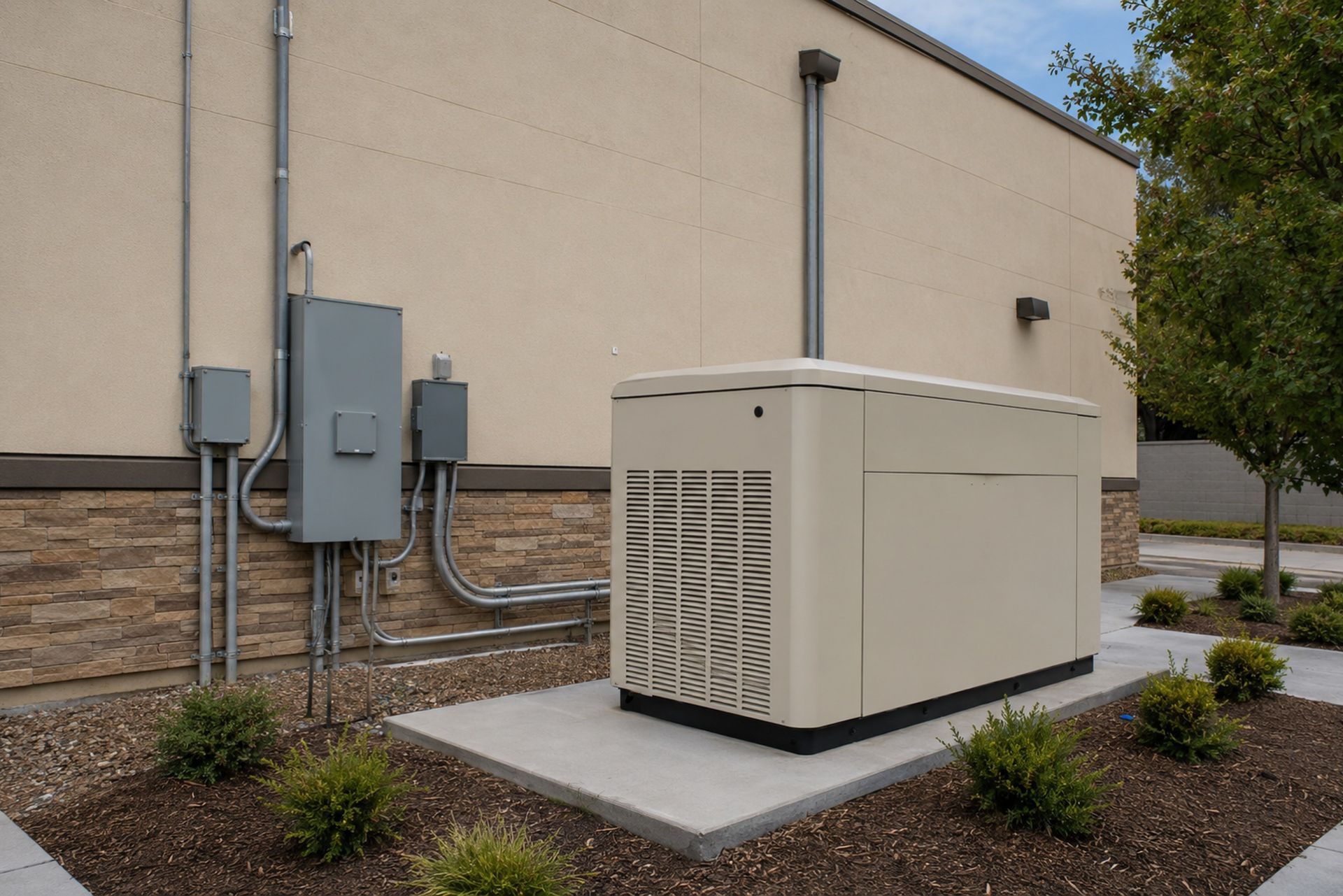
Generator contractors haul expensive equipment. A single 48kW standby generator can cost $15,000 to $25,000 before installation, and your standard commercial auto policy won't cover equipment in transit. That's where inland marine coverage fills the gap, protecting tools, materials, and equipment whether they're on your truck, at a job site, or in temporary storage.
Commercial auto is non-negotiable if you own any vehicles used for business. California requires minimum liability limits of $15,000/$30,000/$5,000, but those minimums are dangerously low for a contractor. Most insurance professionals recommend at least $1 million in combined single limit coverage. If your crew drives box trucks loaded with generators and transfer switches, you need a policy that reflects the actual value at risk, not just the state minimum.

By: Michael Fusco
President of Joule Pro
INDEX
Core Insurance Requirements for California Generator Contractors
Trade-Specific Risks in Generator Installation and Maintenance
Navigating the California Insurance Carrier Landscape
State-Specific Endorsements and Policy Exclusions
Optimizing Premiums and Risk Management Strategies
Joule Pro is a specialty insurance and risk program of Fusco Orsini & Associates Insurance Services, built exclusively for electrical contractors and licensed in 31 states.
We work with electrical firms across the country — from California, Texas, Florida, New York, and coast to coast — placing General Liability, Workers' Compensation, Commercial Auto, Inland Marine, Surety Bonds, Excess Liability, and full specialty coverage stacks for commercial, industrial, service, residential, and low-voltage electrical contractors. Joule Pro is not a separate licensed entity. It is a dedicated program structure inside Fusco Orsini, giving electrical contractors access to specialty carriers, in-house claims advocacy, and trade-specific risk engineering under one program.
Trade-Specific Risks in Generator Installation and Maintenance
Electrical Hazards and Fire Liability Mitigation
Generator installation is inherently high-risk electrical work. Transfer switch failures, improper wiring, and backfeed into utility lines have all caused fires and electrocutions. A single backfeed incident can injure a utility worker and expose your business to a seven-figure liability claim.
The most common claims in this space involve improper transfer switch installation and failure to follow NEC Article 702 requirements for optional standby systems. Your GL policy needs to cover completed operations, meaning it protects you even after you've finished the job and left the site. Fires that start weeks or months after installation are not uncommon, and without completed operations coverage, you'd be paying out of pocket.
Environmental and Fuel Storage Risks
Standby generators run on diesel, natural gas, or propane. Each fuel type carries environmental liability exposure. Diesel generators require on-site fuel storage, and a tank leak can trigger cleanup costs that run into six figures depending on soil contamination. Most standard GL policies include a pollution exclusion that would deny coverage for exactly this type of claim.
You need to ask your agent specifically about pollution liability coverage. Some carriers offer a limited pollution endorsement that covers sudden and accidental releases, while others offer standalone environmental liability policies. For contractors installing diesel generators with sub-base fuel tanks, the standalone policy is worth serious consideration.
Professional Liability for System Design and Sizing
Here's a risk most generator contractors underestimate: professional liability. If you're recommending generator sizes, designing automatic transfer switch configurations, or specifying load management systems, you're performing professional services. When a generator you specified fails to support critical loads during a PSPS event, the building owner's attorney isn't going to blame the manufacturer first. They're coming after you.
Professional liability (errors and omissions) coverage protects against claims arising from your design recommendations and system specifications. This is separate from your GL policy and typically requires its own standalone policy or endorsement.
Navigating the California Insurance Carrier Landscape
Admitted vs. Non-Admitted Carriers for Contractors
California's insurance market draws a clear line between admitted and non-admitted (surplus lines) carriers. Admitted carriers are regulated by the California Department of Insurance, participate in the state guaranty fund, and must have their rates approved. Non-admitted carriers operate through the surplus lines market and have more flexibility in pricing and coverage terms.
For generator contractors, the distinction matters because many admitted carriers have tightened their appetite for electrical work in California, particularly in wildfire-prone areas. If you're working in WUI (Wildland-Urban Interface) zones, you may find that only surplus lines carriers will quote your business. The tradeoff is that surplus lines policies don't come with guaranty fund protection if the carrier becomes insolvent.
Carrier Appetite for Residential vs. Industrial Projects
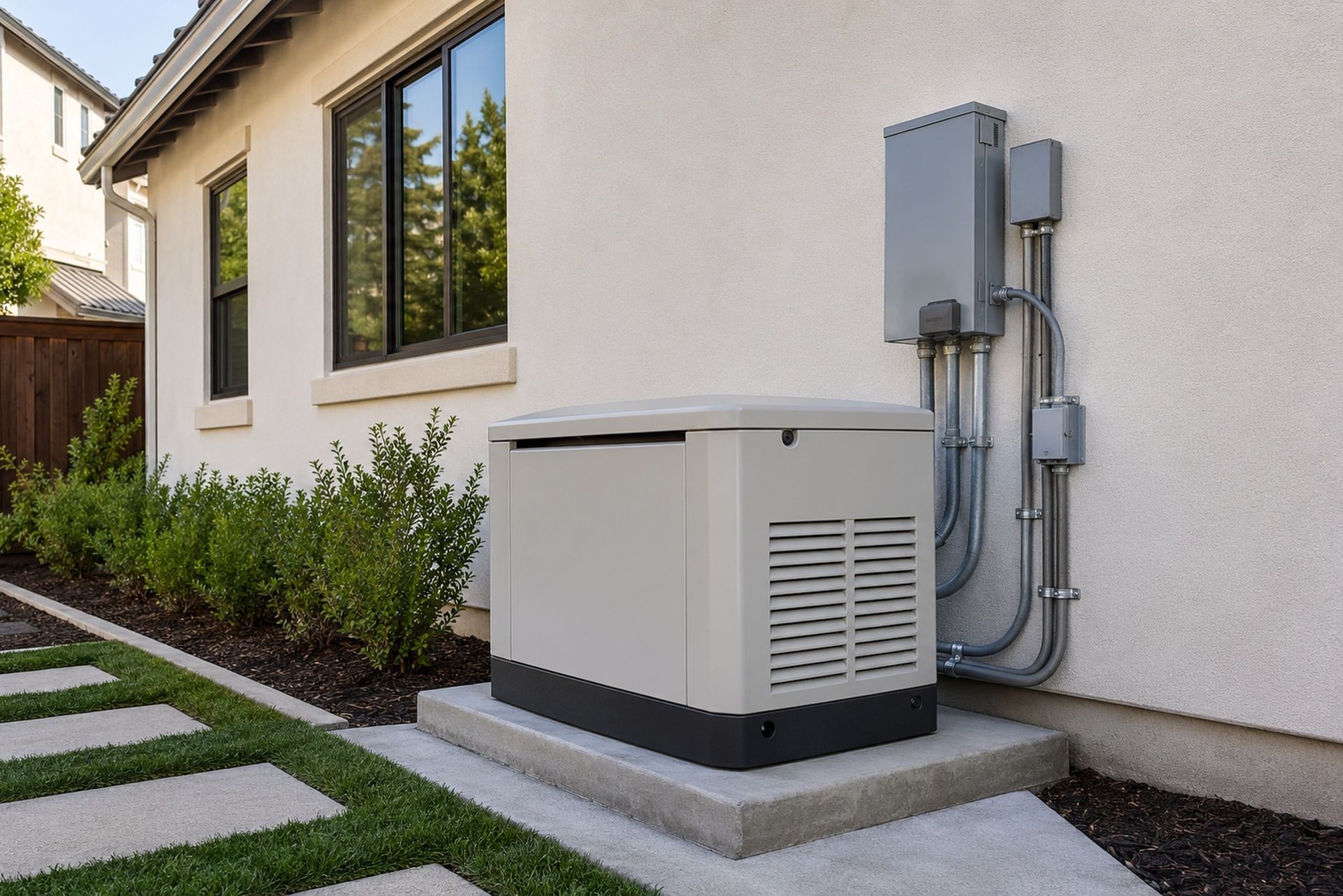
Carrier appetite varies dramatically based on your project mix. Contractors focused on residential standby generators (22kW to 48kW units) generally find more carrier options and lower premiums. The exposure per job is manageable, and the work is relatively standardized.
Industrial and commercial generator work is a different story. Projects involving paralleling switchgear, large diesel gensets, or mission-critical data center backup systems carry significantly higher exposure. Many carriers either decline this class entirely or impose strict underwriting requirements, including minimum experience thresholds and safety program documentation. A specialty program like Joule Pro, backed by Fusco Orsini & Associates, maintains underwriter relationships specifically built for these higher-risk electrical classifications, which means faster quotes and fewer declinations.
State-Specific Endorsements and Policy Exclusions
Generator installation creates risks that most general contractor policies weren't designed to cover. Fuel systems and engineering liability require specialized endorsements.
Wildfire Peril Exclusions and Buy-Back Options
California's wildfire crisis has reshaped the insurance market for every contractor working in the state. Many carriers now include wildfire exclusions in GL policies, particularly for work performed in high-risk fire zones mapped by CAL FIRE. If your generator installation triggers a wildfire, and your policy excludes wildfire perils, you're uninsured for what could be a catastrophic claim.
Some carriers offer wildfire buy-back endorsements that restore coverage for an additional premium. The cost varies widely based on your geographic service area, but expect to pay 15% to 30% more for the endorsement in high-severity zones. Given that a single wildfire liability claim can exceed $10 million, the buy-back is almost always worth the cost.
Completed Operations and Construction Defect Coverage
California's construction defect laws are among the most plaintiff-friendly in the country. SB 800 (the Right to Repair Act) governs residential construction defect claims and establishes specific standards for electrical systems. If a generator installation fails to meet these standards, the homeowner can pursue a claim even without actual property damage.
Your GL policy's completed operations coverage is your primary defense here. Make sure it extends for at least five years after project completion, and confirm that your carrier doesn't sunset this coverage at policy renewal. Some carriers quietly drop completed operations for prior work when they non-renew a policy, leaving you exposed on past projects.
Optimizing Premiums and Risk Management Strategies
Safety Programs and CSLB Compliance Documentation
Carriers reward contractors who take risk management seriously. A documented safety program that addresses electrical hazards, fuel handling procedures, and OSHA compliance can reduce your GL and workers' comp premiums by 10% to 20%. This isn't theoretical: underwriters specifically ask for safety documentation during the quoting process, and its absence can result in higher rates or outright declination.
Keep your CSLB license, bond, and workers' comp documentation current and accessible. Lapses in any of these create red flags during underwriting and can trigger policy cancellations. Joule Pro's team works directly with electrical contractors to ensure compliance documentation stays current, which keeps renewal pricing stable year over year.
The Impact of Subcontractor Management on Rates
If you sub out any portion of your generator work, whether it's concrete pads, gas piping, or trenching, your insurance carrier wants to know about it. Uninsured or underinsured subcontractors are one of the biggest premium drivers for electrical contractors because their claims flow uphill to your policy.
Require certificates of insurance from every sub before they step on your job site. Verify that their GL limits match or exceed yours, and confirm they carry their own workers' comp. Carriers that see strong subcontractor management programs consistently offer better pricing because the downstream risk is controlled.
| Coverage Type | Minimum Recommended | Common for Generator Work |
|---|---|---|
| General Liability | $1M / $2M | $2M / $4M for commercial |
| Workers' Comp | Statutory (required for all C-10) | Experience mod below 1.0 |
| Commercial Auto | $1M CSL | $1M CSL + hired/non-owned |
| Inland Marine | $50K tools/equipment | $100K-$250K for generators in transit |
| Professional Liability | $500K | $1M for design-build work |
Before You Sign Your Next Policy
Getting insurance right as a California generator contractor means understanding the specific risks your trade carries and finding carriers willing to write that risk at reasonable terms. Wildfire exclusions, pollution limitations, and professional liability gaps are the three areas where most contractors get caught off guard. Don't wait for a claim to discover your policy has holes.
Work with a producer who understands electrical contracting, not a generalist who writes your policy the same way they'd write one for a landscaper. If you want a coverage review from a team that specializes in this exact space, reach out to Joule Pro for a quote tailored to your generator installation business.
Frequently Asked Questions
Do I need professional liability insurance just to install generators? If you're recommending system sizes, specifying equipment, or designing transfer switch configurations, yes. Any design or specification work creates E&O exposure separate from your general liability.
Can I use my personal auto insurance for my work truck? No. Personal auto policies exclude business use. You need a commercial auto policy that covers vehicles used for contractor operations.
What happens if my subcontractor causes a claim and doesn't have insurance? The claim typically falls back on your GL policy. This is why verifying sub certificates before every job is critical to protecting your own rates.
How does my experience modification rate affect my workers' comp premium? Your experience mod reflects your claims history relative to similar businesses. A mod above 1.0 means you're paying more than average; below 1.0 means you're getting a discount. Keeping claims low directly reduces your premium.
Are PSPS-related generator failures covered under my policy? It depends on the claim type. If a generator you installed fails during a Public Safety Power Shutoff and causes property damage, your completed operations coverage should respond, but only if the failure resulted from your workmanship, not the equipment itself.

Founder & CEO
The Force Behind the Program
About the Author:
Michael Fusco.
Fusco Orsini & Associates
Joule Pro exists because Mike Fusco saw electrical contractors getting boilerplate insurance — and built a program designed for the way the trade actually works.
Mike is the CEO and co-founder of Fusco Orsini & Associates, the San Diego–based independent agency he launched in 2010. Under his leadership FOA has grown into a nationwide partner serving clients across 31 states, with a personal, client-first approach to commercial insurance and risk.
With over 20 years in insurance and risk management, he specializes in tailored programs spanning general liability, workers' compensation, surety bonding, and employee benefits — helping owners confidently manage risk and pursue growth.
Mike holds a B.S. in Business from the University of Maryland — Robert H. Smith School of Business, and the Certified Insurance Counselor (CIC) designation, held by fewer than 3% of insurance professionals nationwide.
What Our Clients Say
Trusted by Electrical Contractors Across the Country.
5.0
★★★★★
Google reviews
Core Commercial Coverage
Business Insurance for Electrical Contractors.
The fundamentals — written, structured, and priced for electrical risk. Each line is reviewed annually by an underwriter who only writes our trade.
01
General Liability
Premises & completed-operations coverage with electrical-specific endorsements and full pollution carve-back options.
02
Workers' Compensation
Class-code optimization, experience-mod review, and return-to-work programs designed for energized-work exposures.
03
Commercial Auto
Fleet, hired & non-owned auto, and tools-in-transit coverage written for service vans and bucket trucks.
04
Tools & Equipment
Scheduled and blanket coverage for tools, test equipment, scissor lifts, and contractor's equipment on-site or in-transit.
05
Surety Bonds
Bid, performance, and payment bonds — single-job and aggregate programs for commercial & public-works contracts.
06
Commercial Property
Layered limits up to $50M with carrier panels covering your shop, warehouse, yard, and on-premises tools, materials, and equipment.
Who We Serve
Electrical Contractors We Specialize In.
From $5M service shops to $250M industrial primes — every Joule Pro program is shaped to the contractor's revenue mix and project profile.
01 / Industrial
Commercial & Industrial Electrical Contractors
High-voltage, substation, and plant electrical work. Pollution, builder's risk, and large-deductible WC programs.
02 / Service
Service & Residential Electrical Contractors
Service-call shops, panel upgrades, and EV charging installers. Auto-fleet, GL, and tool-coverage programs.
03 / Low-Voltage
Specialty & Low-Voltage Contractors
Data, fire-alarm, security, and BMS controls. Cyber, professional liability, and follow-form excess.
Frequently Asked Questions
Common
Questions From
Electrical Contractors.
What size electrical contractors do you write?
Joule Pro is built for licensed electrical firms from roughly $2M in revenue to $250M+. Below $2M we typically refer to our small-business desk; above $250M we underwrite individually with our industrial practice team.
Do I need to be licensed in multiple states?
No. We license you wherever you work. Joule Pro is admitted in 31 states and our compliance team handles multi-state filings, prevailing-wage endorsements, and certificate-of-insurance requirements.
How is Joule Pro different from a generic contractor program?
Generic programs use a contractor's questionnaire that treats you like a roofer. We use forms written for energized work, arc-flash exposures, and design-build risk — and our carriers price accordingly.
What does the claims process actually look like?
Every Joule Pro client is assigned a named claims advocate at bind. They take the FNOL, set strategy with your assigned attorney, and serve as your single point of contact through close.
Can you bond large public-works contracts?
Yes. Through our surety partners we write single-job bonds up to $75M and aggregate programs to $300M, with expedited turnarounds for school district, federal, and DOT work.
What happens at renewal?
Your producer and claims advocate jointly run a renewal review 90 days out — covering loss trends, exposure changes, and market alternatives — so renewal day is a confirmation, not a surprise.
From the Blog
Insights for Electrical Contractors.
Risk briefings, claim post-mortems, and program updates — written by our underwriters and risk engineers.


Get Started
Get a Quote on a Program Built Around Your Trade.
A 30-minute discovery call is the only commitment. You'll leave with a written gap analysis of your current program — yours to keep, whether you bind with us or not.