Business Insurance
California EV Charger Installer Insurance
★★★★★ 150+ Five-Star Reviews · Google & Facebook
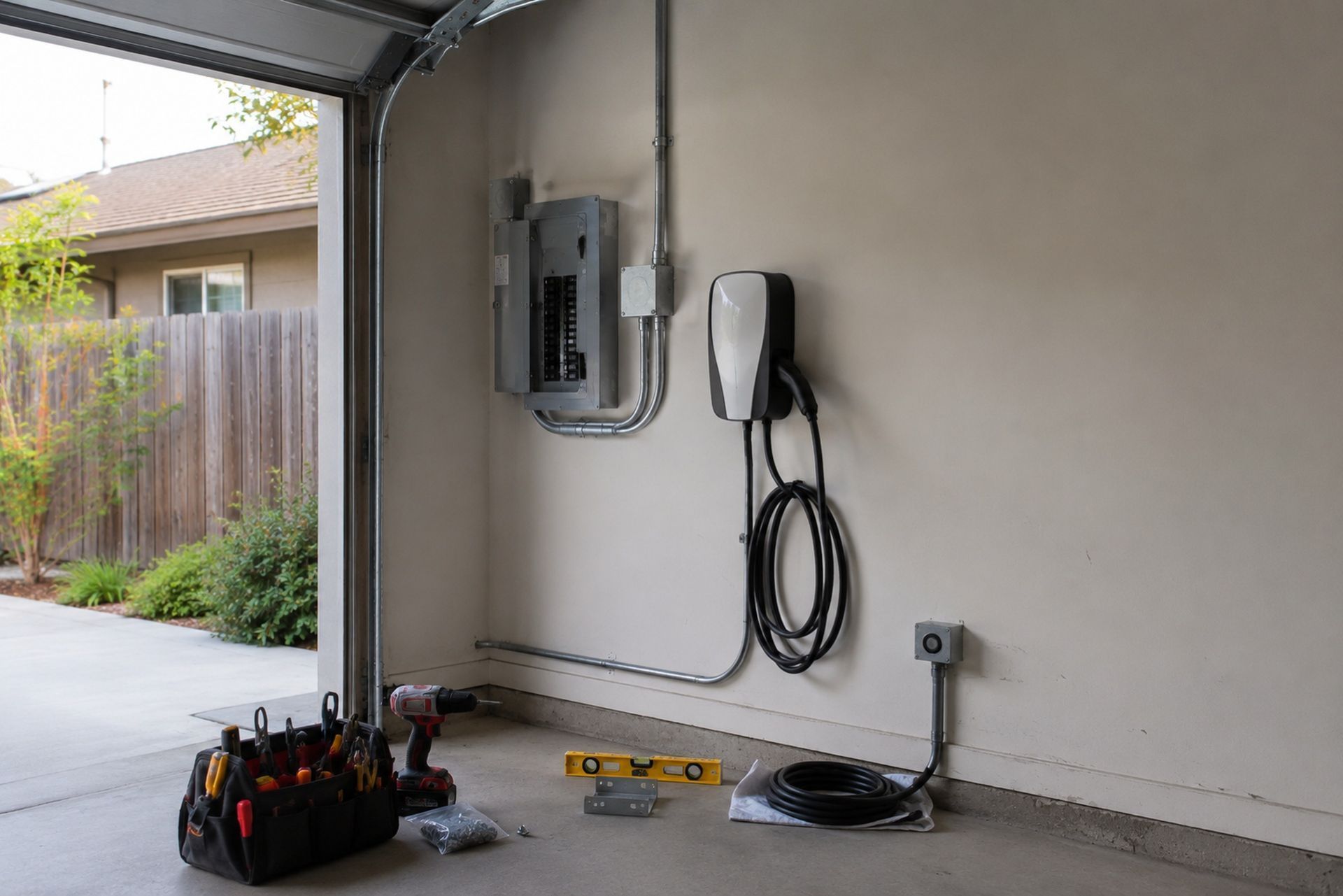
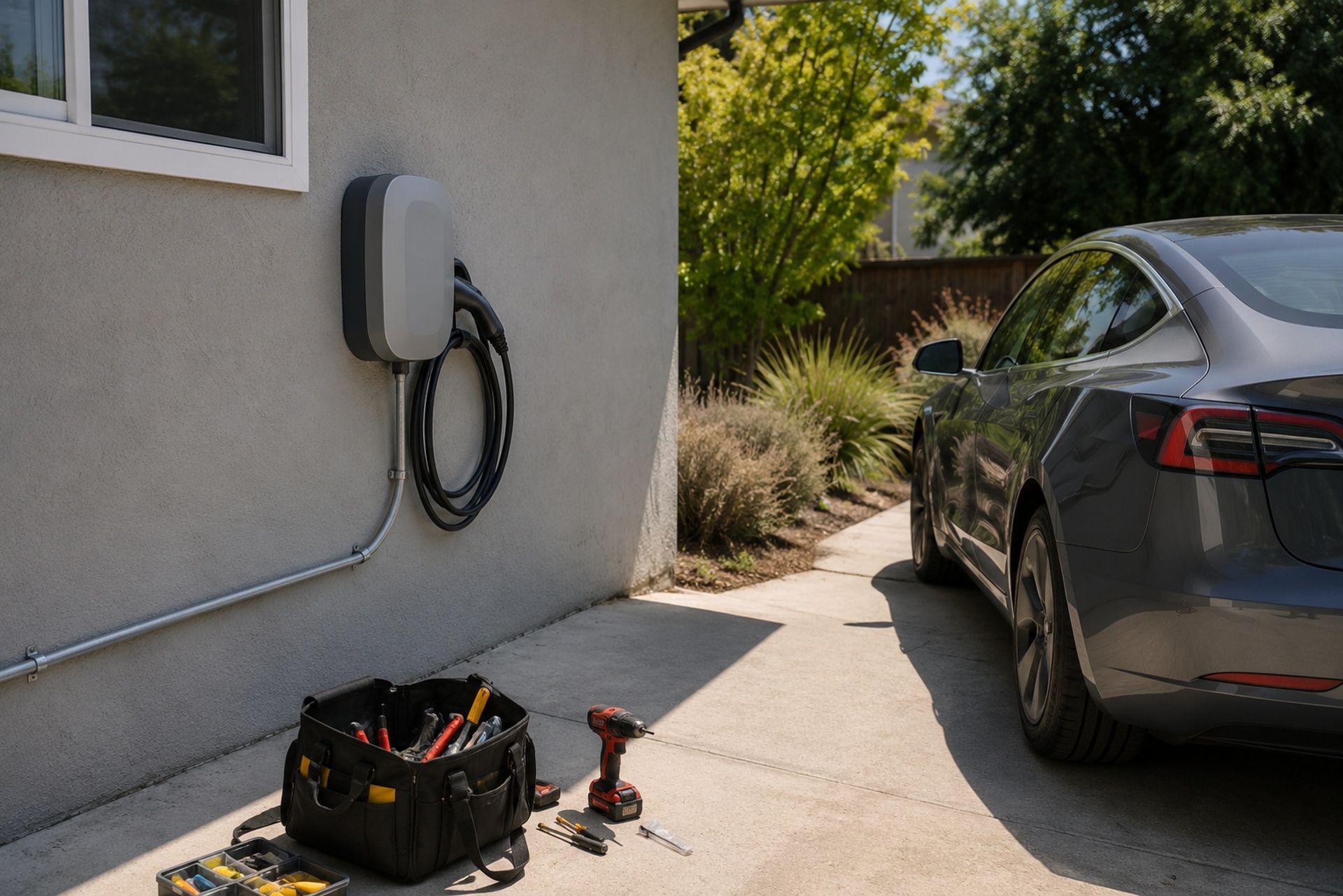
California's EV charging infrastructure is growing faster than almost any other electrical trade segment, and the insurance side hasn't fully caught up. If you're a licensed electrical contractor installing Level 2 or DC fast chargers across the state, you're dealing with a unique mix of high-voltage exposure, fire risk, software integration, and evolving building codes that most generalist insurance agents barely understand. This guide covers the insurance and risk considerations California EV charger installers actually need to think about: the coverage types, the licensing tie-ins, which carriers want your business, and how to avoid the gaps that lead to denied claims. Whether you're a two-person residential crew or running commercial fleet installations, getting this right matters more than most contractors realize.
The Evolving Landscape of EV Infrastructure and California Liability
Rising Demand and Unique Risks for California Electrical Contractors
California had over 150,000 public and shared private EV chargers installed by the end of 2025, and the state's mandate requiring all new car sales to be zero-emission by 2035 is accelerating demand for installation contractors. For electricians, this means steady work but also a risk profile that looks nothing like traditional panel upgrades or commercial wiring.
EV charger installations involve sustained high-amperage loads, battery storage integration, and often trenching or concrete work that falls outside typical electrical scope. A single residential Level 2 install might draw 40-50 amps continuously, and a commercial DC fast charger can pull 200+ amps. The thermal stress on connections, combined with outdoor weather exposure, creates fire and property damage risks that insurers are still learning to price.
The other piece most contractors miss: you're not just installing hardware. You're connecting to networked software platforms, configuring load management systems, and sometimes designing the electrical layout for multi-unit dwellings. Each of those tasks carries its own liability exposure.
Navigating State-Specific Liability and Fire Hazard Exposures
California's wildfire liability environment makes insurers especially cautious about anything involving electrical work and fire risk. If a charger you installed causes a structure fire or ignites vegetation, the liability chain leads straight back to you. California applies strict liability in many product and construction defect scenarios, meaning you can be held responsible even without proven negligence.
Completed operations claims are the big concern here. A charger might function perfectly for two years, then a connection degrades and causes an arc fault. Your general liability policy's completed operations coverage is what responds to that claim, not the products liability of the charger manufacturer. Many contractors assume the manufacturer's warranty covers them. It doesn't.
The state's aggressive consumer protection laws also mean that homeowners and commercial property owners have strong legal footing to pursue claims. Carrying adequate limits isn't optional: it's survival.

By: Michael Fusco
President of Joule Pro
INDEX
The Evolving Landscape of EV Infrastructure and California Liability
Core Insurance Policies for California EV Charger Installers
CSLB Licensing Requirements and Surety Bond Integration
Understanding Carrier Appetite for EVSE Risks
Specialized Coverage Add-ons for the Modern Installer
Joule Pro is a specialty insurance and risk program of Fusco Orsini & Associates Insurance Services, built exclusively for electrical contractors and licensed in 31 states.
We work with electrical firms across the country — from California, Texas, Florida, New York, and coast to coast — placing General Liability, Workers' Compensation, Commercial Auto, Inland Marine, Surety Bonds, Excess Liability, and full specialty coverage stacks for commercial, industrial, service, residential, and low-voltage electrical contractors. Joule Pro is not a separate licensed entity. It is a dedicated program structure inside Fusco Orsini, giving electrical contractors access to specialty carriers, in-house claims advocacy, and trade-specific risk engineering under one program.
Core Insurance Policies for California EV Charger Installers
General Liability and Completed Operations Coverage
California contractors with an LLC are required to carry a minimum of $1 million in general liability insurance as a condition of licensure. But the minimum isn't always enough for EV work. Most experienced brokers recommend $2 million per occurrence for contractors doing regular EVSE installations, especially commercial projects.
Your GL policy needs to explicitly include completed operations coverage, and you should verify that EVSE work isn't excluded under any electrical work sublimits. Some policies cap completed operations at a fraction of the per-occurrence limit, which can leave you exposed on older installations.
| Coverage Type | What It Covers | Typical Minimum for EV Installers |
|---|---|---|
| General Liability | Third-party bodily injury, property damage on-site | $1M per occurrence / $2M aggregate |
| Completed Operations | Claims from finished work (post-installation failures) | Included in GL, verify no sublimit |
| Professional Liability | Design errors, load calculation mistakes | $1M per claim |
| Workers' Compensation | Employee injuries on the job | Statutory (required in CA) |
Professional Liability for System Design and Load Calculations
Here's where many electrical contractors get caught off guard. If you're designing the electrical layout for a multi-charger installation, calculating load distribution, or recommending panel upgrades, you're performing professional services. A standard GL policy doesn't cover errors in design or engineering advice.
Professional liability (sometimes called errors and omissions) covers claims arising from your recommendations, calculations, or design work. If you spec a panel that can't handle the load and it trips repeatedly, causing the client to lose revenue from their charging stations, that's a professional liability claim. Joule Pro includes this type of coverage in its contractor-specific programs because it's exactly the kind of gap that catches electrical contractors by surprise.
Workers' Compensation Compliance in the Golden State
California requires workers' compensation for every employer, period. There's no minimum employee threshold. Even if you have one part-time helper, you need a policy. The penalties for non-compliance include criminal charges and personal liability for any workplace injuries.
EV charger installation carries specific workers' comp risks: electrical shock, falls from ladders during panel work, trenching injuries for underground conduit runs, and repetitive strain from overhead wiring. Your experience modification rate (EMR) will reflect your claims history, and a clean record can save you 20-30% on premiums over time. Invest in safety training and document everything.
CSLB Licensing Requirements and Surety Bond Integration
C-10 Electrical Contractor License Insurance Mandates
The California Contractors State License Board (CSLB) requires all C-10 electrical contractors to maintain specific insurance and bonding. You need a contractor's license bond of $25,000, and if your business is an LLC, the $1 million GL requirement applies. Sole proprietors and corporations have different thresholds, but carrying less than $1 million for EV work is risky regardless of your entity type.
Your CSLB license can be suspended if your insurance lapses. Carriers report cancellations directly to the board, and reinstatement involves fees, delays, and potential project shutdowns. Keep your certificates of insurance current and set calendar reminders for renewal dates.
Bonding for Residential vs. Commercial EVSE Projects
The $25,000 contractor bond is the baseline, but commercial EV projects often require additional performance bonds or payment bonds. A property management company installing 50 chargers across a parking structure will almost certainly require a performance bond guaranteeing project completion.
Residential work rarely triggers bond requirements beyond the CSLB minimum, but some utility rebate programs and government-funded installations require contractors to carry additional bonding. Check the specific program requirements before bidding.
Understanding Carrier Appetite for EVSE Risks
Preferred Markets for Small Residential Installers
Carrier appetite is the insurance industry's way of describing which risks a company wants to write. For small residential EV charger installers with clean loss histories and proper C-10 licensing, several admitted carriers in California are actively writing this class. They want to see annual revenue under $2 million, a focus on Level 2 residential installations, and no history of fire-related claims.
Programs like Joule Pro have built relationships with these carriers specifically for electrical trade work, which means faster quoting and fewer declinations. A generalist agent might submit your application to carriers that don't understand EVSE work and get rejected, wasting weeks of your time.
Surplus Lines for High-Voltage Commercial and Fleet Infrastructure
Once you move into DC fast charging, fleet depot installations, or projects involving battery energy storage systems, most admitted carriers step back. These risks typically land in the surplus lines market, where non-admitted carriers have more flexibility to write unusual or higher-hazard classes.
Surplus lines policies often cost 30-50% more than admitted market equivalents, and they don't come with California's guarantee fund protection. But for contractors doing $5 million+ in commercial EVSE work, surplus lines may be the only option. The key is working with a broker who knows which surplus carriers are actively writing EVSE risks and can negotiate favorable terms.
Specialized Coverage Add-ons for the Modern Installer
Inland Marine for High-Value Equipment and Materials in Transit
A single DC fast charger unit can cost $30,000-$80,000. If it falls off your truck, gets stolen from a job site, or is damaged during installation, your GL policy won't cover it. Inland marine insurance covers tools, equipment, and materials in transit or at temporary locations.
For EV installers, this means coverage for charger units awaiting installation, specialized testing equipment, wire and conduit stored on-site, and anything in your work vehicle. Joule Pro offers inland marine as part of its full contractor coverage stack, and it's one of those policies that pays for itself the first time you need it.
Cyber Liability for Smart Chargers and Networked Stations
Most modern EV chargers connect to cloud-based management platforms, process credit card payments, and collect user data. If a charger you installed gets compromised and customer payment data is exposed, you could face liability even though you didn't build the software.
Cyber liability coverage handles breach notification costs, legal defense, and regulatory fines. It's not yet standard for electrical contractors, but the exposure is real and growing. Any installer working with networked commercial stations should carry at least $500,000 in cyber coverage.
Risk Management and Premium Optimization Strategies
Keeping your premiums manageable starts with documentation. Maintain detailed records of every installation: photos of connections, torque specifications, panel load calculations, and permit sign-offs. When a claim hits three years later, this documentation is your best defense.
Train your crews specifically on EVSE installation standards, including the NEC Article 625 requirements for EV charging equipment. Carriers look favorably on contractors who can demonstrate formal safety programs and manufacturer-specific training certifications.
Get your EMR below 1.0 by preventing workers' comp claims through proper PPE, job site safety audits, and return-to-work programs. A 0.85 EMR versus a 1.15 EMR can mean thousands of dollars in annual premium savings.
Bundle your policies where possible. Carrying GL, workers' comp, commercial auto, and inland marine through a single program designed for electrical contractors typically costs less than piecing together coverage from multiple carriers. It also eliminates coverage gaps between policies, which is where denied claims most often originate.
FAQ
Do I need separate insurance for EV charger installations, or does my existing electrical contractor policy cover it? Most standard electrical contractor GL policies cover EVSE work, but you need to verify there are no exclusions for high-voltage installations or completed operations sublimits. Ask your broker to confirm in writing.
What happens if a charger I installed causes a fire two years later? Your completed operations coverage responds to claims from finished work. Make sure your policy doesn't have a sunset clause that limits completed operations to one year post-installation.
Is professional liability really necessary if I'm just installing, not designing? If you ever recommend panel sizes, calculate load distribution, or advise on charger placement, you're providing professional services. One bad recommendation can trigger a claim your GL policy won't cover.
How much does EV charger installer insurance cost in California? Residential-focused installers with clean records typically pay $3,000-$8,000 annually for a GL policy. Commercial EVSE contractors can expect $10,000-$25,000+ depending on revenue and project scope.
Can I get coverage if I'm just starting out with no installation history? Yes, but your options are more limited. New ventures typically face higher premiums and may need to start with smaller project scopes to build a track record with carriers.
Your Next Steps
The EV charging market in California isn't slowing down, and neither are the liability risks that come with it. Getting your insurance right from the start protects your license, your business, and your personal assets. Don't wait for a claim to discover you have gaps.
If you're a licensed C-10 contractor doing EVSE work, reach out to a specialty program like Joule Pro that understands the electrical trade inside and out. A licensed insurance professional who knows your risks can build a coverage program that actually fits, rather than a generic policy that looks fine until you need it. Your next install is only as secure as the coverage behind it.

Founder & CEO
The Force Behind the Program
About the Author:
Michael Fusco.
Fusco Orsini & Associates
Joule Pro exists because Mike Fusco saw electrical contractors getting boilerplate insurance — and built a program designed for the way the trade actually works.
Mike is the CEO and co-founder of Fusco Orsini & Associates, the San Diego–based independent agency he launched in 2010. Under his leadership FOA has grown into a nationwide partner serving clients across 31 states, with a personal, client-first approach to commercial insurance and risk.
With over 20 years in insurance and risk management, he specializes in tailored programs spanning general liability, workers' compensation, surety bonding, and employee benefits — helping owners confidently manage risk and pursue growth.
Mike holds a B.S. in Business from the University of Maryland — Robert H. Smith School of Business, and the Certified Insurance Counselor (CIC) designation, held by fewer than 3% of insurance professionals nationwide.
What Our Clients Say
Trusted by Electrical Contractors Across the Country.
5.0
★★★★★
Google reviews
Core Commercial Coverage
Business Insurance for Electrical Contractors.
The fundamentals — written, structured, and priced for electrical risk. Each line is reviewed annually by an underwriter who only writes our trade.
01
General Liability
Premises & completed-operations coverage with electrical-specific endorsements and full pollution carve-back options.
02
Workers' Compensation
Class-code optimization, experience-mod review, and return-to-work programs designed for energized-work exposures.
03
Commercial Auto
Fleet, hired & non-owned auto, and tools-in-transit coverage written for service vans and bucket trucks.
04
Tools & Equipment
Scheduled and blanket coverage for tools, test equipment, scissor lifts, and contractor's equipment on-site or in-transit.
05
Surety Bonds
Bid, performance, and payment bonds — single-job and aggregate programs for commercial & public-works contracts.
06
Commercial Property
Layered limits up to $50M with carrier panels covering your shop, warehouse, yard, and on-premises tools, materials, and equipment.
Who We Serve
Electrical Contractors We Specialize In.
From $5M service shops to $250M industrial primes — every Joule Pro program is shaped to the contractor's revenue mix and project profile.
01 / Industrial
Commercial & Industrial Electrical Contractors
High-voltage, substation, and plant electrical work. Pollution, builder's risk, and large-deductible WC programs.
02 / Service
Service & Residential Electrical Contractors
Service-call shops, panel upgrades, and EV charging installers. Auto-fleet, GL, and tool-coverage programs.
03 / Low-Voltage
Specialty & Low-Voltage Contractors
Data, fire-alarm, security, and BMS controls. Cyber, professional liability, and follow-form excess.
Frequently Asked Questions
Common
Questions From
Electrical Contractors.
What size electrical contractors do you write?
Joule Pro is built for licensed electrical firms from roughly $2M in revenue to $250M+. Below $2M we typically refer to our small-business desk; above $250M we underwrite individually with our industrial practice team.
Do I need to be licensed in multiple states?
No. We license you wherever you work. Joule Pro is admitted in 31 states and our compliance team handles multi-state filings, prevailing-wage endorsements, and certificate-of-insurance requirements.
How is Joule Pro different from a generic contractor program?
Generic programs use a contractor's questionnaire that treats you like a roofer. We use forms written for energized work, arc-flash exposures, and design-build risk — and our carriers price accordingly.
What does the claims process actually look like?
Every Joule Pro client is assigned a named claims advocate at bind. They take the FNOL, set strategy with your assigned attorney, and serve as your single point of contact through close.
Can you bond large public-works contracts?
Yes. Through our surety partners we write single-job bonds up to $75M and aggregate programs to $300M, with expedited turnarounds for school district, federal, and DOT work.
What happens at renewal?
Your producer and claims advocate jointly run a renewal review 90 days out — covering loss trends, exposure changes, and market alternatives — so renewal day is a confirmation, not a surprise.
From the Blog
Insights for Electrical Contractors.
Risk briefings, claim post-mortems, and program updates — written by our underwriters and risk engineers.


Get Started
Get a Quote on a Program Built Around Your Trade.
A 30-minute discovery call is the only commitment. You'll leave with a written gap analysis of your current program — yours to keep, whether you bind with us or not.