Business Insurance
New York Solar Installer Insurance
★★★★★ 150+ Five-Star Reviews · Google & Facebook
New York's solar market is booming, and every contractor working on rooftop PV installations or ground-mounted arrays across the state faces a unique collision of risk factors you won't find anywhere else. Between the state's notoriously plaintiff-friendly labor laws, strict building code enforcement in the five boroughs, and a volatile insurance market that's thinned out over the past few years, getting the right coverage as a solar installer in New York requires more than a quick online quote. This is a complete coverage guide for New York solar contractors, covering trade-specific risks, state licensing requirements, and which carriers actually want to write these policies. If you're bidding on projects without fully understanding your exposure, you're gambling with your business. The stakes are higher here than in almost any other state, and the details matter.
Navigating the New York Solar Insurance Landscape
New York has positioned itself as one of the most aggressive states for renewable energy adoption, and that trajectory directly shapes the insurance environment for solar contractors. The state's climate goals, combined with billions in incentive funding, have created a construction pipeline that's both lucrative and risky. Understanding the policy backdrop helps explain why premiums behave the way they do here.
The Growth of NY-Sun and State-Level Incentives
The NY-Sun initiative has been the primary engine behind the state's residential and commercial solar growth, distributing incentives that have made installations financially viable across all utility territories. NYSERDA's expanded program targets 10 GW of distributed solar by 2030, and the construction activity to meet that goal has been substantial. For contractors, this means a steady stream of work, but it also means more crews on more rooftops, which translates directly into more claims exposure.
Every new project you take on adds to your aggregate risk. Insurers pay close attention to annual revenue and project volume when pricing your policies, so a busy year driven by NY-Sun incentives can also mean a premium increase at renewal. Planning for that cost is part of running a profitable solar operation in this state.
Impact of NY Labor Law 240/241 on Liability Premiums
Here's the single biggest factor driving up insurance costs for any contractor working at height in New York: the Scaffold Law. Labor Law Section 240, often called the most plaintiff-friendly construction statute in the country, imposes absolute liability on property owners and general contractors for gravity-related injuries. If a worker falls from a roof during a solar installation, the property owner and GC are liable regardless of the worker's own negligence.
This law makes New York construction insurance dramatically more expensive than neighboring states. Carriers factor Scaffold Law exposure into every general liability quote for solar work, and some won't write New York construction at all because of it. Your per-project liability costs in Manhattan can be three to five times what you'd pay for the same work in New Jersey. That's not an exaggeration; it's the market reality.

By: Michael Fusco
President of Joule Pro
INDEX
Navigating the New York Solar Insurance Landscape
Essential Insurance Policies for Solar Contractors
Trade-Specific Risks and Mitigation Strategies
New York State Licensing and Compliance Standards
Understanding Carrier Appetite and Market Availability
Joule Pro is a specialty insurance and risk program of Fusco Orsini & Associates Insurance Services, built exclusively for electrical contractors and licensed in 31 states.
We work with electrical firms across the country — from California, Texas, Florida, New York, and coast to coast — placing General Liability, Workers' Compensation, Commercial Auto, Inland Marine, Surety Bonds, Excess Liability, and full specialty coverage stacks for commercial, industrial, service, residential, and low-voltage electrical contractors. Joule Pro is not a separate licensed entity. It is a dedicated program structure inside Fusco Orsini, giving electrical contractors access to specialty carriers, in-house claims advocacy, and trade-specific risk engineering under one program.
Essential Insurance Policies for Solar Contractors
A complete insurance program for a New York solar contractor isn't just general liability and workers' comp. The nature of the work, involving expensive equipment, electrical hazards, and environmental considerations, demands a broader coverage stack.
General Liability and Pollution Coverage for Solar Farms
Your commercial general liability (CGL) policy is the foundation, covering third-party bodily injury and property damage claims. For solar contractors, make sure your policy includes completed operations coverage, which protects you after the installation is done and the system is running. A roof leak that shows up six months post-install is a completed operations claim.
Pollution liability is often overlooked but matters for ground-mounted solar farm work. Battery storage systems, transformer oil, and even soil disturbance during trenching can trigger pollution exclusions on a standard CGL policy. A separate pollution liability endorsement or standalone policy fills that gap. Programs like Joule Pro, which are built specifically for electrical contractors, typically understand these nuances and can bundle pollution coverage into your program without requiring a separate application process.
Workers' Compensation and NYS Disability Requirements
New York requires workers' compensation for virtually all employees, with very few exceptions. The state's workers' comp assessment rate has been declining, which offers some relief, but solar installation classification codes still carry relatively high base rates due to the rooftop and electrical exposure involved.
You're also required to carry New York State disability benefits (DBL) and paid family leave (PFL) coverage. These are separate from workers' comp and are often purchased through the same carrier. Missing either one can result in fines and stop-work orders. One common mistake: subcontractors who think they're exempt because they have their own coverage. If their policy lapses, you can be held responsible for their injuries on your job site.
Inland Marine Insurance for High-Value PV Equipment
Solar panels, inverters, racking systems, and battery storage units are expensive, and they're often sitting on a job site or in transit before installation. A standard property policy won't cover equipment in transit or at a temporary job location. That's where inland marine insurance comes in.
| Coverage Type | What It Covers | Typical Limit Range |
|---|---|---|
| Contractors Equipment (Inland Marine) | Tools, panels, inverters in transit or on-site | $50K - $500K+ |
| Installation Floater | Materials being installed until project completion | Per-project basis |
| Builders Risk | Structure and installed components during construction | Project value |
Solar panels, inverters, racking systems, and battery storage units are expensive, and they're often sitting on a job site or in transit before installation. A standard property policy won't cover equipment in transit or at a temporary job location. That's where inland marine insurance comes in.
Trade-Specific Risks and Mitigation Strategies
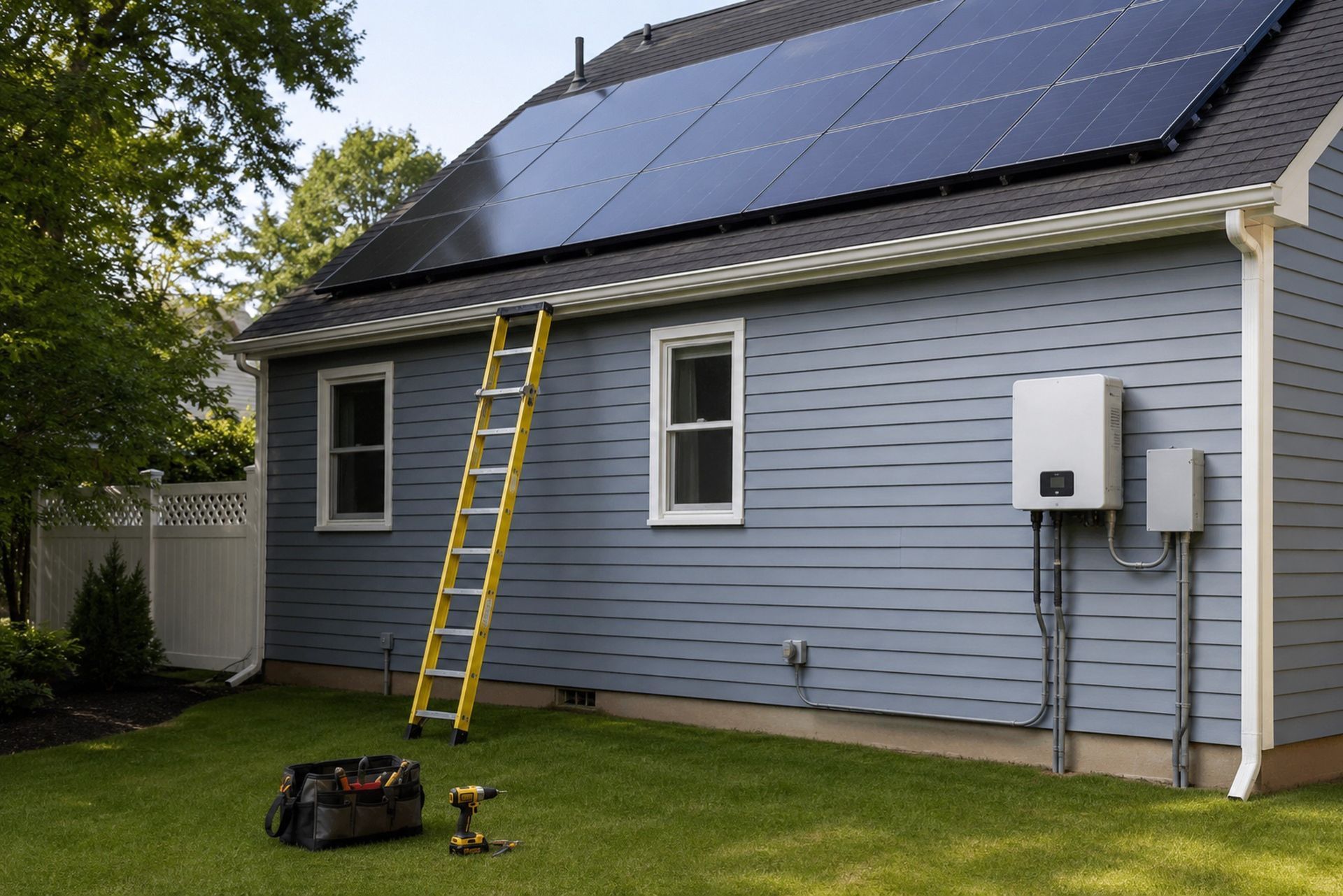
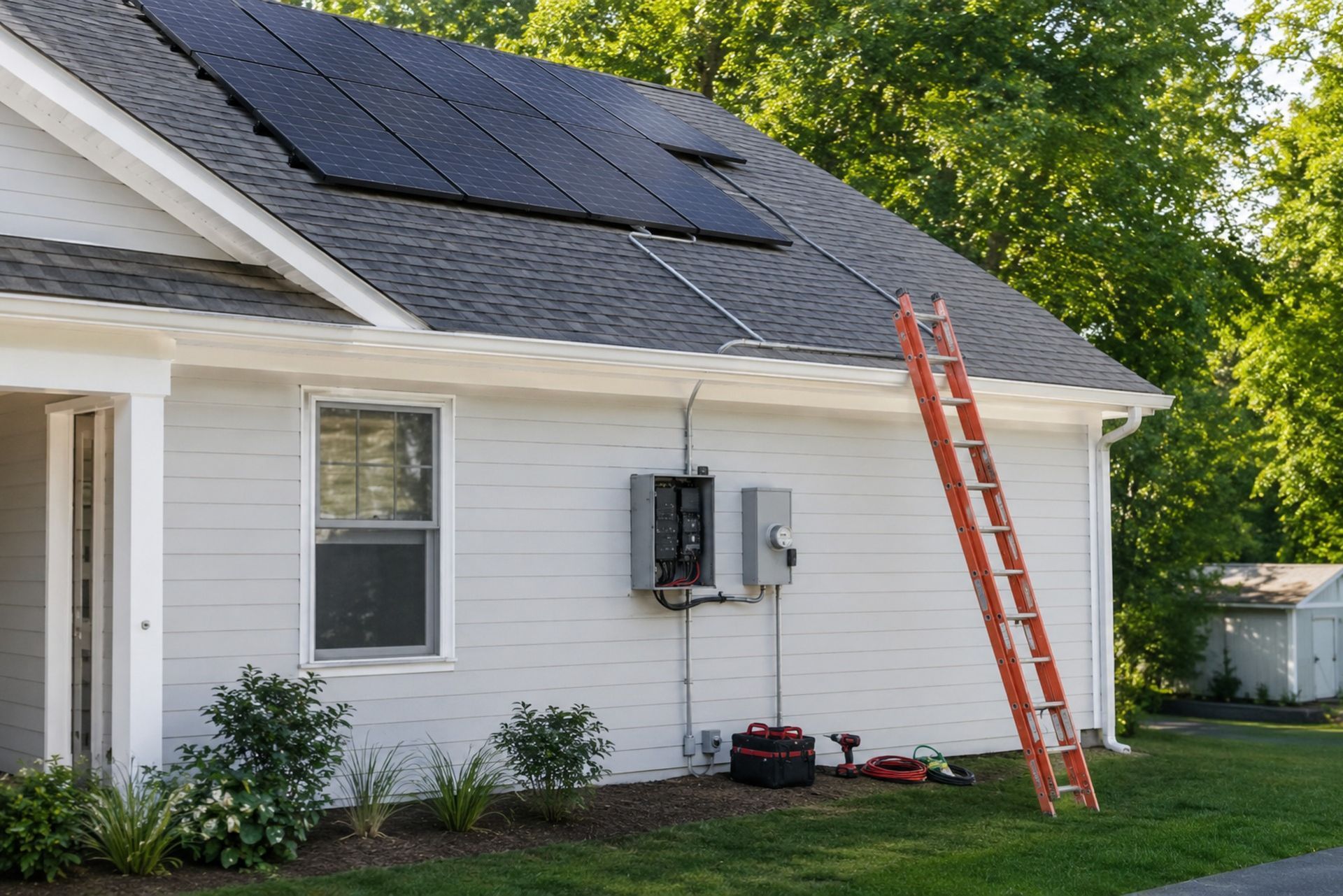
Solar installation combines roofing, electrical, and structural work into a single trade. That overlap creates risk exposures that don't fit neatly into one insurance category, and carriers know it.
Roof Penetration and Water Damage Liability
The most common claim type for residential solar installers is water intrusion caused by roof penetrations. Every lag bolt or flashing attachment is a potential leak point, and New York's freeze-thaw cycles make those penetrations even more vulnerable over time. A single water damage claim can easily exceed $30,000 once interior damage, mold remediation, and temporary housing costs are factored in.
Mitigating this risk means documenting every installation with photos, using manufacturer-approved flashing kits, and carrying completed operations coverage with sufficient limits. Some contractors also purchase a roof warranty bond to transfer that long-tail risk. Your insurer will want to see that you have quality control processes in place; it can directly affect your pricing.
Electrical Fire and Grid Interconnection Risks
Electrical fires caused by improper wiring, faulty inverter connections, or arc faults represent the highest-severity claims in solar work. A residential fire claim can reach six or seven figures when you include structural damage, personal property loss, and potential injury. Grid interconnection work adds another layer: if your installation causes a utility disruption or damages grid infrastructure, you may face claims from the utility company itself.
Carrying professional liability or errors and omissions (E&O) coverage alongside your CGL policy helps protect against design or specification errors that lead to these incidents. This is where working with a specialty program like Joule Pro matters, because generalist agencies often don't know to recommend E&O for electrical trade contractors.
New York State Licensing and Compliance Standards
New York's licensing requirements vary significantly depending on where in the state you're working. The regulatory framework in New York City is entirely different from what you'll encounter upstate.
NYC Department of Buildings (DOB) Filing Requirements
Any solar installation in the five boroughs requires a DOB work permit, and the filing process involves submitting detailed plans, electrical diagrams, and proof of insurance. The DOB requires your general liability certificate to name the property owner as an additional insured, and your workers' comp certificate must be on file before permits are issued.
NYC also requires a licensed electrician to perform or supervise all electrical connections. If your crew includes apprentices or helpers, make sure your license structure and insurance program account for their work. The DOB has been increasing enforcement on solar installations since 2024, and permit violations can result in stop-work orders that cost you thousands per day in project delays.
NYS Department of State (DOS) Contractor Regulations
Outside of NYC, New York doesn't have a statewide general contractor license, but many counties and municipalities have their own registration requirements. The NYS Department of State oversees home improvement contractor registration in certain jurisdictions, and solar installers doing residential work typically need to register.
Electrical work specifically requires a license in most New York jurisdictions. Your insurance carrier will verify your license status during underwriting, and operating without proper credentials is grounds for policy cancellation. Keep your license renewals current and make sure every entity on your insurance program matches your licensing paperwork exactly.
Understanding Carrier Appetite and Market Availability
Not every insurance company wants to write solar contractor policies in New York. The combination of Scaffold Law exposure, electrical hazards, and high litigation costs has caused several carriers to exit the New York construction market entirely over the past three years.
Admitted vs. Non-Admitted Carriers for NY Construction
Admitted carriers are licensed by the New York Department of Financial Services and participate in the state guaranty fund, which protects policyholders if the carrier becomes insolvent. Non-admitted (surplus lines) carriers aren't backed by that fund but can offer coverage that admitted carriers won't write.
For solar contractors, the practical difference is this: if your loss history is clean and your revenue is under $5 million, you'll likely find admitted market options. Once you start doing larger commercial or utility-scale work, or if you have prior claims, you may need surplus lines placement. A specialty producer with established underwriter relationships can often find admitted capacity where a generalist broker would default to surplus lines, saving you money on both premium and surplus lines taxes.
Premium Factors: Experience Modification Rates (MOD)
Your experience modification rate, or MOD, is the single most controllable factor in your workers' comp premium. A MOD of 1.0 is average; below 1.0 means fewer claims than expected, and above 1.0 means more. For a solar contractor with a $300,000 annual workers' comp premium, a MOD of 0.85 versus 1.15 represents a difference of $90,000 per year.
Keeping your MOD low requires an active safety program, prompt claims reporting, and return-to-work protocols for injured employees. Every lost-time claim stays on your MOD calculation for three years, so one bad year has a long tail. Investing in fall protection training and electrical safety certification pays for itself many times over through lower premiums.
Securing the Right Coverage for Long-Term Project Stability
Getting insurance for solar work in New York isn't about finding the cheapest quote. It's about building a coverage program that matches your actual risk profile: the types of projects you take, the jurisdictions you work in, and the subcontractors you rely on. A policy that's missing completed operations coverage or has an inadequate inland marine limit can cost you far more in a single claim than you'd ever save on premium.
Work with a producer who specializes in electrical and solar trade coverage. Joule Pro, backed by Fusco Orsini & Associates Insurance Services, focuses exclusively on licensed electrical contractors and understands the specific carrier relationships and endorsements that New York solar work demands. A direct conversation with a licensed professional who knows this market beats a self-serve portal every time.
Frequently Asked Questions
Do I need separate insurance for battery storage installations? Yes, in most cases. Battery energy storage systems carry fire and chemical exposure risks that many standard CGL policies exclude. Ask your producer about a specific endorsement or standalone pollution and fire coverage for BESS work.
How much general liability coverage do I need for NYC solar projects? Most GCs and property owners in NYC require $1 million per occurrence and $2 million aggregate as a minimum. Larger commercial projects often require $5 million or more through an umbrella or excess policy.
Can I use my electrical contractor license for solar installations? In most New York jurisdictions, a master electrician license covers the electrical portion of solar work. However, structural and roofing components may require additional licensing or subcontractor arrangements depending on the municipality.
What happens to my insurance if I lose my contractor license? Most carriers include a policy condition requiring valid licensure. If your license lapses or is revoked, your insurer can cancel your policy, often with just 10 days' notice. Keep renewals on a calendar reminder.
Is builders risk insurance required for solar projects? It's not legally required, but most project owners and lenders mandate it. If you're doing any project where the installed value exceeds $100,000, builders risk coverage protects both you and the property owner during construction.

Founder & CEO
The Force Behind the Program
About the Author:
Michael Fusco.
Fusco Orsini & Associates
Joule Pro exists because Mike Fusco saw electrical contractors getting boilerplate insurance — and built a program designed for the way the trade actually works.
Mike is the CEO and co-founder of Fusco Orsini & Associates, the San Diego–based independent agency he launched in 2010. Under his leadership FOA has grown into a nationwide partner serving clients across 31 states, with a personal, client-first approach to commercial insurance and risk.
With over 20 years in insurance and risk management, he specializes in tailored programs spanning general liability, workers' compensation, surety bonding, and employee benefits — helping owners confidently manage risk and pursue growth.
Mike holds a B.S. in Business from the University of Maryland — Robert H. Smith School of Business, and the Certified Insurance Counselor (CIC) designation, held by fewer than 3% of insurance professionals nationwide.
What Our Clients Say
Trusted by Electrical Contractors Across the Country.
5.0
★★★★★
Google reviews
Core Commercial Coverage
Business Insurance for Electrical Contractors.
The fundamentals — written, structured, and priced for electrical risk. Each line is reviewed annually by an underwriter who only writes our trade.
01
General Liability
Premises & completed-operations coverage with electrical-specific endorsements and full pollution carve-back options.
02
Workers' Compensation
Class-code optimization, experience-mod review, and return-to-work programs designed for energized-work exposures.
03
Commercial Auto
Fleet, hired & non-owned auto, and tools-in-transit coverage written for service vans and bucket trucks.
04
Tools & Equipment
Scheduled and blanket coverage for tools, test equipment, scissor lifts, and contractor's equipment on-site or in-transit.
05
Surety Bonds
Bid, performance, and payment bonds — single-job and aggregate programs for commercial & public-works contracts.
06
Commercial Property
Layered limits up to $50M with carrier panels covering your shop, warehouse, yard, and on-premises tools, materials, and equipment.
Who We Serve
Electrical Contractors We Specialize In.
From $5M service shops to $250M industrial primes — every Joule Pro program is shaped to the contractor's revenue mix and project profile.
01 / Industrial
Commercial & Industrial Electrical Contractors
High-voltage, substation, and plant electrical work. Pollution, builder's risk, and large-deductible WC programs.
02 / Service
Service & Residential Electrical Contractors
Service-call shops, panel upgrades, and EV charging installers. Auto-fleet, GL, and tool-coverage programs.
03 / Low-Voltage
Specialty & Low-Voltage Contractors
Data, fire-alarm, security, and BMS controls. Cyber, professional liability, and follow-form excess.
Frequently Asked Questions
Common
Questions From
Electrical Contractors.
What size electrical contractors do you write?
Joule Pro is built for licensed electrical firms from roughly $2M in revenue to $250M+. Below $2M we typically refer to our small-business desk; above $250M we underwrite individually with our industrial practice team.
Do I need to be licensed in multiple states?
No. We license you wherever you work. Joule Pro is admitted in 31 states and our compliance team handles multi-state filings, prevailing-wage endorsements, and certificate-of-insurance requirements.
How is Joule Pro different from a generic contractor program?
Generic programs use a contractor's questionnaire that treats you like a roofer. We use forms written for energized work, arc-flash exposures, and design-build risk — and our carriers price accordingly.
What does the claims process actually look like?
Every Joule Pro client is assigned a named claims advocate at bind. They take the FNOL, set strategy with your assigned attorney, and serve as your single point of contact through close.
Can you bond large public-works contracts?
Yes. Through our surety partners we write single-job bonds up to $75M and aggregate programs to $300M, with expedited turnarounds for school district, federal, and DOT work.
What happens at renewal?
Your producer and claims advocate jointly run a renewal review 90 days out — covering loss trends, exposure changes, and market alternatives — so renewal day is a confirmation, not a surprise.
From the Blog
Insights for Electrical Contractors.
Risk briefings, claim post-mortems, and program updates — written by our underwriters and risk engineers.


Get Started
Get a Quote on a Program Built Around Your Trade.
A 30-minute discovery call is the only commitment. You'll leave with a written gap analysis of your current program — yours to keep, whether you bind with us or not.