
Business Insurance
Cyber Liability Insurance For Electricians
★★★★★ 150+ Five-Star Reviews · Google & Facebook
DVulnerabilities in Smart Home and Industrial Control Systems
A ransomware attack shut down a three-person electrical shop in Phoenix last year. The owner lost access to every bid, invoice, and client record for eleven days. His general liability policy covered none of it. The total cost, between the ransom payment, forensic investigation, and lost contracts, exceeded $47,000. This is the kind of scenario that makes cyber liability insurance for electricians more than an abstract concept. It's a real financial exposure that most contractors don't think about until the damage is already done. If you're running an electrical contracting business and storing any client data, processing payments, or using cloud-based project management tools, you have cyber risk whether you realize it or not. This guide breaks down coverage limits, exclusions, claims examples, and what electrical contractors actually need to know before purchasing a policy.
Why Electrical Contractors Are Now Targets for Cyber Attacks
Most electricians don't picture themselves as targets for hackers. But cybercriminals aren't just going after Fortune 500 companies anymore. Small businesses with limited IT budgets and minimal security protocols are easier marks, and electrical contractors fit that profile perfectly. The shift toward connected systems, smart building technology, and cloud-based operations has expanded the attack surface for trade businesses significantly.
Vulnerabilities in Smart Home and Industrial Control Systems
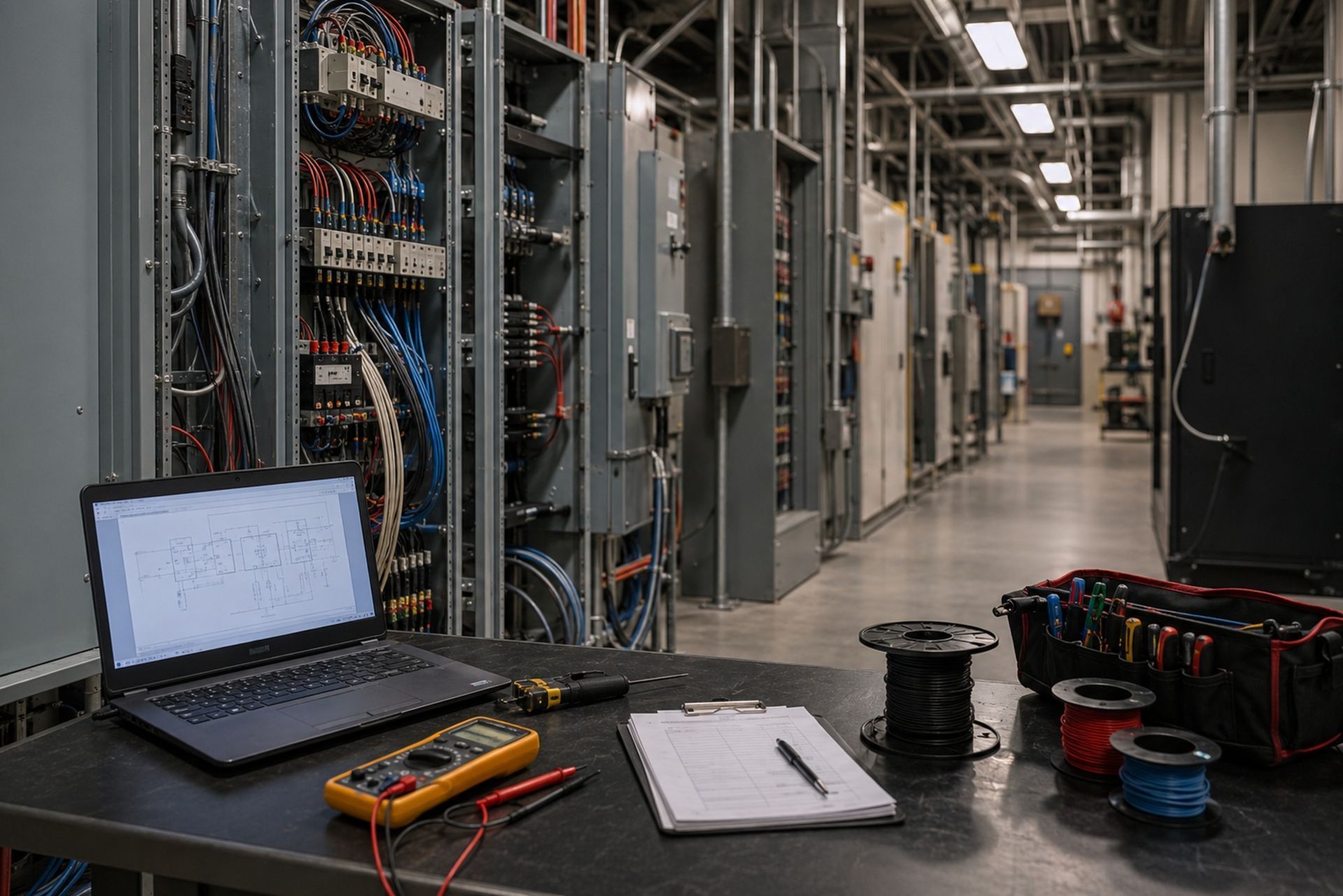
Electrical contractors working on smart home installations, building automation, or industrial control systems often have network access credentials for client properties. If a contractor's laptop or phone is compromised, an attacker can potentially reach client networks through those stored credentials. This isn't theoretical: compromised HVAC vendor credentials were behind one of the largest retail data breaches in history, and electrical contractors face the same type of exposure. Any time you're configuring IoT devices, programming lighting controls, or connecting to a building management system, you're creating a potential entry point.
The Risk of Storing Sensitive Client and Project Data
Even if you never touch a smart thermostat, you're probably storing data that has value to criminals. Client names, addresses, phone numbers, email addresses, payment card information, and project blueprints all live on your computers, phones, and cloud accounts. Small electrical contractors typically pay between $900 and $1,800 annually for a $1M cyber liability policy, which is a fraction of what a single breach could cost. Employee records with Social Security numbers add another layer of risk. A single phishing email opened by an office manager can expose all of it.

By: Michael Fusco
President of Joule Pro
INDEX
Why Electrical Contractors Are Now Targets for Cyber Attacks
Core Components of Cyber Liability Coverage
Determining Appropriate Coverage Limits and Deductibles
Common Policy Exclusions to Watch For
Real-World Cyber Claims Examples for Electricians
Joule Pro is a specialty insurance and risk program of Fusco Orsini & Associates Insurance Services, built exclusively for electrical contractors and licensed in 31 states.
We work with electrical firms across the country — from California, Texas, Florida, New York, and coast to coast — placing General Liability, Workers' Compensation, Commercial Auto, Inland Marine, Surety Bonds, Excess Liability, and full specialty coverage stacks for commercial, industrial, service, residential, and low-voltage electrical contractors. Joule Pro is not a separate licensed entity. It is a dedicated program structure inside Fusco Orsini, giving electrical contractors access to specialty carriers, in-house claims advocacy, and trade-specific risk engineering under one program.
Core Components of Cyber Liability Coverage
Cyber liability policies generally split into two main buckets: first-party and third-party coverage. Understanding the difference is critical because they protect against very different financial exposures.
First-Party Coverage: Protecting Your Own Business Assets
First-party coverage handles the direct costs your business incurs after a cyber event. This includes:
- Data recovery and restoration: paying to rebuild corrupted or encrypted files
- Business interruption: covering lost income while your systems are down
- Ransomware payments: reimbursing ransom demands (where legally permitted)
- Forensic investigation: hiring specialists to determine how the breach happened
- Notification costs: legally required notices to affected individuals
- Crisis management: public relations support to protect your reputation
For most small electrical contractors, business interruption and data recovery are the biggest financial concerns. If you can't access your estimating software or project schedules for a week, you're losing real money.
Third-Party Liability: Costs for Damages to Clients and Partners
Third-party coverage kicks in when someone else suffers harm because of a cyber incident connected to your business. If a client's personal data is exposed through your systems, you could face lawsuits, regulatory fines, and contractual penalties. This side of the policy covers legal defense costs, settlements, and judgments. General contractors and property owners increasingly require subcontractors to carry cyber liability coverage, so having third-party protection can also keep you eligible for larger projects.
Determining Appropriate Coverage Limits and Deductibles
Picking the right coverage limit isn't just about finding the cheapest premium. It's about matching your policy to your actual risk exposure.
Assessing Business Size and Revenue Impact
A solo electrician doing residential service calls has different needs than a 30-person commercial electrical contractor managing multiple active job sites. The general starting point for small contractors is a $1M aggregate limit, which covers most breach scenarios. Larger firms handling government contracts, healthcare facilities, or data center work should consider $2M to $5M limits. Think about how many client records you store, how much revenue you'd lose during a system outage, and whether you handle any regulated data like healthcare or financial information.
Balancing Premium Costs with Risk Exposure
| Factor | Lower Premium | Higher Premium |
|---|---|---|
| Annual revenue | Under $500K | Over $2M |
| Records stored | Fewer than 1,000 | More than 10,000 |
| Security measures | MFA, encryption, training | Minimal protections |
| Deductible chosen | $5,000 - $10,000 | $1,000 - $2,500 |
| Claims history | No prior claims | Previous incidents |
Higher deductibles lower your premium but increase your out-of-pocket costs when you file a claim. For most small electrical contractors, a $2,500 to $5,000 deductible strikes a reasonable balance. Programs like Joule Pro, which specialize exclusively in electrical contractor insurance, can help you find the right fit because they understand the specific risk profile of your trade rather than applying generic small business underwriting.
Common Policy Exclusions to Watch For
Every cyber policy has exclusions, and some of them can gut your coverage if you're not paying attention.
The Difference Between Cyber and General Liability
Your general liability policy almost certainly excludes cyber-related losses. The Insurance Services Office (ISO) introduced specific cyber liability exclusion endorsements years ago, and most GL policies now contain them. This means a data breach won't be covered under your existing liability policy, even if it results in a client lawsuit. The two policies address fundamentally different risks: GL covers bodily injury and property damage, while cyber liability covers digital assets, data breaches, and network security failures. You need both.
Exclusions for Unencrypted Devices and Negligent Security
Here's where contractors get burned most often. Many cyber policies exclude claims arising from:
- Unencrypted laptops, tablets, or portable storage devices
- Failure to install available security patches within a specified timeframe
- Known vulnerabilities that weren't addressed before the breach
- Acts by employees or insiders acting with criminal intent
- Infrastructure failures unrelated to a cyber attack (like a power outage)
- War, terrorism, or state-sponsored attacks (a growing exclusion category)
The negligent security exclusion is particularly dangerous. If your insurer can show you weren't following basic cybersecurity hygiene, such as using multi-factor authentication or keeping software updated, they can deny your claim entirely. Read your policy carefully and ask your producer to walk you through these exclusions before you sign.
Real-World Cyber Claims Examples for Electricians
Abstract risk discussions only go so far. These scenarios reflect the kinds of claims electrical contractors actually face.
Ransomware Attacks on Project Management Software
A mid-size electrical contractor in Texas had their cloud-based project management platform compromised through a phishing email. The attacker encrypted all project files, including active bids, material orders, and subcontractor agreements. The ransom demand was $25,000 in cryptocurrency. The contractor's cyber policy covered the ransom payment, the forensic investigation ($12,000), and ten days of business interruption losses ($18,500). Without coverage, the total exposure would have exceeded $55,000, enough to threaten the company's survival. The breach was traced to an employee clicking a link in a fake vendor invoice email.
Social Engineering and Wire Transfer Fraud Scams
Wire transfer fraud is hitting contractors hard. A common scheme involves an attacker impersonating a supplier or GC via email, requesting that payment be sent to a "new" bank account. One electrical contractor in Florida wired $32,000 to a fraudulent account after receiving what appeared to be a legitimate email from their primary electrical distributor. Social engineering coverage, which is sometimes an add-on rather than a standard inclusion, reimbursed most of the loss. Check whether your policy includes social engineering fraud coverage or whether you need to add it as an endorsement.
Best Practices for Lowering Premiums and Mitigating Risk
Insurers reward contractors who take cybersecurity seriously. Implementing even basic measures can meaningfully reduce your premium and, more importantly, reduce your actual risk.
Start with multi-factor authentication on every account your business uses, from email to accounting software. Require strong, unique passwords and use a password manager. Train your employees to recognize phishing emails at least once a year. Encrypt all portable devices. Back up critical data to an offline or air-gapped location weekly.
Working with a specialty insurance program like Joule Pro gives you access to producers who understand which security measures carriers actually care about. They can tell you exactly which steps will lower your premium and which are just nice to have. That kind of targeted advice is worth more than a generic cybersecurity checklist.
Document everything. When your renewal comes up, showing your insurer a written cybersecurity policy, training records, and incident response plan puts you in a stronger negotiating position.
Frequently Asked Questions
Do electricians really need cyber liability insurance? Yes, if you store any client data, process electronic payments, or use cloud-based software for project management or estimating. The risk is real and growing every year.
Does my general liability policy cover data breaches? Almost certainly not. Most GL policies explicitly exclude cyber-related losses through ISO endorsements.
How much does a cyber liability policy cost for a small electrical contractor? Small contractors under $2M in revenue typically pay between $900 and $1,800 per year for $1M in coverage, depending on their security posture and claims history.
What's the most common cyber claim for contractors? Ransomware and business email compromise (including wire transfer fraud) are the two most frequent claim types for trade businesses.
Can I bundle cyber liability with my other contractor insurance? Some carriers offer it as an endorsement to a business owner's policy, but standalone policies usually provide broader coverage and higher limits.
Making the Right Choice for Your Electrical Business
Cyber liability coverage isn't optional anymore for electrical contractors who use technology in any part of their operations, and that's virtually everyone in 2026. The financial exposure from a single breach can dwarf the annual premium cost by a factor of ten or more. Know your coverage limits, read your exclusions carefully, and invest in basic cybersecurity practices that protect your business and lower your costs.
If you're unsure where to start, reach out to Joule Pro for a conversation with a licensed producer who specializes in electrical contractor coverage. Getting the right policy in place before an incident happens is the only strategy that actually works.

Founder & CEO
The Force Behind the Program
About the Author:
Michael Fusco.
Fusco Orsini & Associates
Joule Pro exists because Mike Fusco saw electrical contractors getting boilerplate insurance — and built a program designed for the way the trade actually works.
Mike is the CEO and co-founder of Fusco Orsini & Associates, the San Diego–based independent agency he launched in 2010. Under his leadership FOA has grown into a nationwide partner serving clients across 31 states, with a personal, client-first approach to commercial insurance and risk.
With over 20 years in insurance and risk management, he specializes in tailored programs spanning general liability, workers' compensation, surety bonding, and employee benefits — helping owners confidently manage risk and pursue growth.
Mike holds a B.S. in Business from the University of Maryland — Robert H. Smith School of Business, and the Certified Insurance Counselor (CIC) designation, held by fewer than 3% of insurance professionals nationwide.
What Our Clients Say
Trusted by Electrical Contractors Across the Country.
5.0
★★★★★
Google reviews
Core Commercial Coverage
Business Insurance for Electrical Contractors.
The fundamentals — written, structured, and priced for electrical risk. Each line is reviewed annually by an underwriter who only writes our trade.
01
General Liability
Premises & completed-operations coverage with electrical-specific endorsements and full pollution carve-back options.
02
Workers' Compensation
Class-code optimization, experience-mod review, and return-to-work programs designed for energized-work exposures.
03
Commercial Auto
Fleet, hired & non-owned auto, and tools-in-transit coverage written for service vans and bucket trucks.
04
Tools & Equipment
Scheduled and blanket coverage for tools, test equipment, scissor lifts, and contractor's equipment on-site or in-transit.
05
Surety Bonds
Bid, performance, and payment bonds — single-job and aggregate programs for commercial & public-works contracts.
06
Commercial Property
Layered limits up to $50M with carrier panels covering your shop, warehouse, yard, and on-premises tools, materials, and equipment.
Who We Serve
Electrical Contractors We Specialize In.
From $5M service shops to $250M industrial primes — every Joule Pro program is shaped to the contractor's revenue mix and project profile.
01 / Industrial
Commercial & Industrial Electrical Contractors
High-voltage, substation, and plant electrical work. Pollution, builder's risk, and large-deductible WC programs.
02 / Service
Service & Residential Electrical Contractors
Service-call shops, panel upgrades, and EV charging installers. Auto-fleet, GL, and tool-coverage programs.
03 / Low-Voltage
Specialty & Low-Voltage Contractors
Data, fire-alarm, security, and BMS controls. Cyber, professional liability, and follow-form excess.
Frequently Asked Questions
Common
Questions From
Electrical Contractors.
What size electrical contractors do you write?
Joule Pro is built for licensed electrical firms from roughly $2M in revenue to $250M+. Below $2M we typically refer to our small-business desk; above $250M we underwrite individually with our industrial practice team.
Do I need to be licensed in multiple states?
No. We license you wherever you work. Joule Pro is admitted in 31 states and our compliance team handles multi-state filings, prevailing-wage endorsements, and certificate-of-insurance requirements.
How is Joule Pro different from a generic contractor program?
Generic programs use a contractor's questionnaire that treats you like a roofer. We use forms written for energized work, arc-flash exposures, and design-build risk — and our carriers price accordingly.
What does the claims process actually look like?
Every Joule Pro client is assigned a named claims advocate at bind. They take the FNOL, set strategy with your assigned attorney, and serve as your single point of contact through close.
Can you bond large public-works contracts?
Yes. Through our surety partners we write single-job bonds up to $75M and aggregate programs to $300M, with expedited turnarounds for school district, federal, and DOT work.
What happens at renewal?
Your producer and claims advocate jointly run a renewal review 90 days out — covering loss trends, exposure changes, and market alternatives — so renewal day is a confirmation, not a surprise.
From the Blog
Insights for Electrical Contractors.
Risk briefings, claim post-mortems, and program updates — written by our underwriters and risk engineers.


Get Started
Get a Quote on a Program Built Around Your Trade.
A 30-minute discovery call is the only commitment. You'll leave with a written gap analysis of your current program — yours to keep, whether you bind with us or not.