Business Insurance
California Solar Installer Insurance
★★★★★ 150+ Five-Star Reviews · Google & Facebook
California's solar industry isn't slowing down. With the state pushing toward 100% clean energy by 2045, thousands of electrical contractors hold or are pursuing their C-46 license to install photovoltaic systems. But the insurance side of solar work is a mess for the unprepared. Rooftop penetrations, battery storage fires, wildfire zone surcharges, and a tightening carrier market mean that getting the right coverage at a reasonable price requires more than a quick online quote. This guide breaks down the specific insurance needs, licensing requirements, trade-specific risks, and carrier appetite realities that California solar contractors face in 2026. Whether you're a solo installer or running a crew of twenty, the coverage decisions you make now will determine whether one bad claim sinks your business or stays a manageable bump in the road.
Navigating the California Solar Insurance Landscape
California regulates solar contractors more aggressively than most states, and your insurance program needs to match that regulatory intensity. Understanding what the state requires - and what smart contractors carry beyond the minimums - is the first step toward building a policy stack that actually protects your business.
The C-46 Solar Contractor License and CSLB Requirements
The Contractors State License Board (CSLB) issues the C-46 Solar license specifically for photovoltaic and thermal solar installations. You need four years of journeyman-level experience, a passing score on both the law and trade exams, and proof of financial responsibility. That financial responsibility piece is where insurance enters the picture.
The CSLB requires a $25,000 contractor's bond for all licensed contractors, but solar businesses structured as LLCs face a steeper climb: they must carry a $100,000 employee/worker bond and a minimum $1 million general liability policy. Many contractors don't realize the LLC bond requirement until renewal time, which creates a scramble for coverage.
If you also hold a C-10 (Electrical) classification - and many solar installers do - your underwriting profile changes. Dual-classified contractors often get better rates because carriers see the broader experience as a risk reducer, but only if your loss history is clean.
California-Specific Mandates: Workers' Comp and Surety Bonds
California has zero tolerance for uninsured employers. If you have even one employee, you need workers' compensation coverage. Period. The state's Division of Workers' Compensation enforces this strictly, and penalties for non-compliance include criminal charges and stop-work orders.
For solar installers, workers' comp classification codes matter enormously. Rooftop PV work typically falls under class code 5538 (sheet metal work) or 5537 (heating/air conditioning), depending on the insurer's interpretation. The wrong classification can inflate your premiums by 30% or more. Programs like Joule Pro, which specialize in electrical trade classifications, can help ensure your payroll is coded correctly from the start.
Surety bonds round out the state requirements. Beyond the CSLB contractor's bond, you may need permit bonds for specific municipal projects and performance bonds for commercial contracts. These aren't technically insurance, but they're part of the same financial responsibility ecosystem.

By: Michael Fusco
President of Joule Pro
INDEX
Joule Pro is a specialty insurance and risk program of Fusco Orsini & Associates Insurance Services, built exclusively for electrical contractors and licensed in 31 states.
We work with electrical firms across the country — from California, Texas, Florida, New York, and coast to coast — placing General Liability, Workers' Compensation, Commercial Auto, Inland Marine, Surety Bonds, Excess Liability, and full specialty coverage stacks for commercial, industrial, service, residential, and low-voltage electrical contractors. Joule Pro is not a separate licensed entity. It is a dedicated program structure inside Fusco Orsini, giving electrical contractors access to specialty carriers, in-house claims advocacy, and trade-specific risk engineering under one program.
Core Coverage Pillars for Solar Installation Businesses
General Liability: Protecting Against Property Damage and Bodily Injury
General liability is the backbone of any contractor's insurance program. For solar installers, it covers third-party bodily injury (a homeowner trips over equipment left on their driveway) and property damage (your crew drops a panel through a skylight). Standard policies carry $1 million per occurrence and $2 million aggregate limits.
Here's what catches people off guard: your GL policy's "products-completed operations" coverage is where most solar claims actually land. A system you installed three years ago causes a roof leak or electrical fire? That's a completed operations claim. Make sure your policy doesn't sunset this coverage or cap it at a sub-limit.
Professional Liability and Errors & Omissions for Design-Build Risks
If your company designs solar systems - sizing inverters, specifying panel layouts, calculating electrical loads - you have professional liability exposure that general liability won't touch. A system that underperforms because of a design error, or one that violates NEC code because of a miscalculation, falls squarely into E&O territory.
Design-build solar contractors should carry a minimum of $1 million in professional liability. This is especially true for commercial projects where performance guarantees are written into the contract. A 500kW system that produces 15% less than projected can trigger a six-figure claim fast.
Inland Marine: Securing Transit and Installation Floaters
Solar panels, inverters, racking systems, and battery units are expensive, portable, and constantly moving between your warehouse, your truck, and the job site. Your commercial property policy probably doesn't cover them once they leave your premises. That gap is what inland marine fills.
| Coverage Type | What It Covers | Typical Limit |
|---|---|---|
| Installation Floater | Materials and equipment during active installation | $100K - $500K |
| Transit Coverage | Panels and equipment in transport | $50K - $250K |
| Tools & Equipment | Hand tools, power tools, testing gear | $10K - $100K |
| Contractor's Equipment | Lifts, scaffolding, heavy equipment | $25K - $500K |
Joule Pro bundles inland marine with the broader contractor coverage stack, which simplifies administration and often reduces the total cost compared to buying standalone floaters.
Trade-Specific Risks and High-Exposure Perils
Roofing Penetrations and Water Intrusion Liabilities
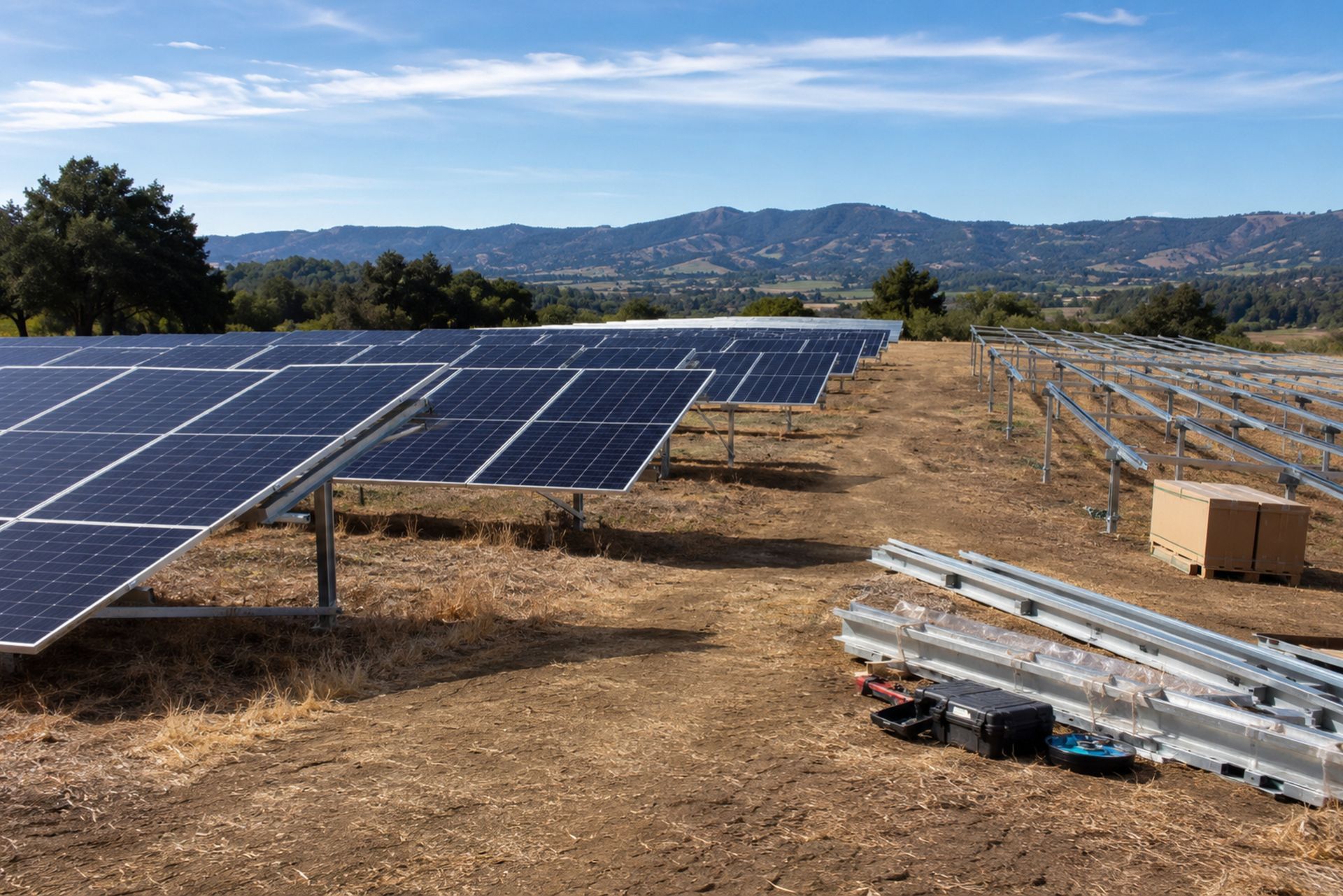
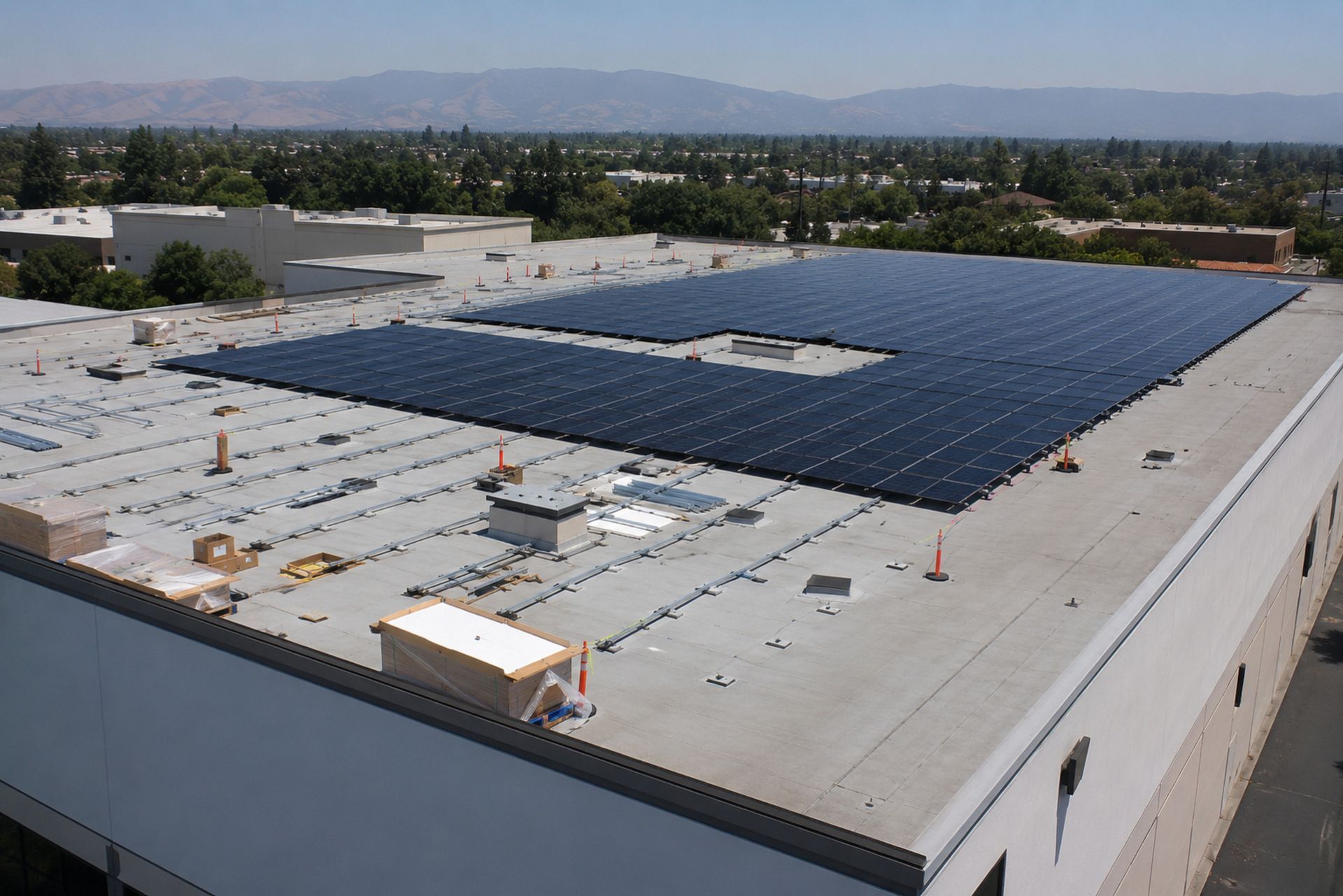
Every roof-mounted solar installation involves penetrations - lag bolts through shingles, flashing around mounts, conduit runs through the building envelope. Each one is a potential water intrusion point. And water damage claims are among the most expensive in residential construction.
The tricky part is latency. A roof leak caused by a poor flashing job might not show up for two or three years. By then, you're dealing with mold remediation, drywall replacement, and a homeowner's attorney. Your completed operations coverage handles this, but only if your policy was active when the work was performed and remains active when the claim is filed. Letting your GL lapse, even briefly, can leave you exposed to claims from past projects.
Electrical Fire Hazards and Battery Storage System Safety
Solar-plus-storage installations have exploded in popularity across California, especially after recent rate structure changes from the major utilities. But lithium-ion battery systems introduce fire and thermal runaway risks that many standard GL policies weren't designed to cover.
Carriers are paying close attention to battery storage. Some exclude it entirely. Others require proof of NFPA 855 compliance and UL 9540A testing for the specific battery products you install. If you're doing residential battery work - Tesla Powerwalls, Enphase IQ batteries, or similar - confirm that your policy explicitly covers energy storage system installations. A carrier that doesn't understand the solar trade might leave you with a coverage gap you won't discover until it's too late.
DC arc faults remain another persistent hazard. Improperly torqued connectors or damaged wiring can generate sustained arcs that ignite roofing materials. Proper rapid shutdown compliance (NEC 690.12) and regular crew training on connector installation reduce this risk significantly.
Understanding Carrier Appetite and Underwriting in California
Standard vs. Surplus Lines: Where Solar Fits in the Market
Most standard-market carriers - your typical admitted insurers - have limited appetite for solar installation risks. The combination of rooftop work, electrical exposure, and newer technology like battery storage pushes many solar contractors into the surplus lines market.
Surplus lines carriers (also called excess and surplus or E&S carriers) aren't bound by state rate filings, which gives them flexibility to write risks that admitted carriers won't touch. The trade-off is that surplus lines policies aren't backed by the California Insurance Guarantee Association (CIGA), so if your carrier goes insolvent, you're on your own.
A specialty program like Joule Pro maintains relationships with both admitted and surplus lines carriers that specifically understand electrical and solar trade risks. That carrier access matters because the difference between a well-matched carrier and a generic one can mean thousands of dollars in annual premium - and far better claims handling when something goes wrong.
The Impact of Wildfire Risk on Commercial Property and Liability Rates
California's wildfire crisis has reshaped commercial insurance pricing statewide. If your solar business operates in or near a Wildland-Urban Interface (WUI) zone, expect property and liability premiums that are 40-60% higher than comparable businesses in lower-risk areas. Some carriers have pulled out of high-fire-risk zip codes entirely.
For solar contractors, wildfire risk creates a double exposure. Your own business property (office, warehouse) faces direct fire risk, and installations you complete in WUI zones carry ongoing liability if a system malfunction contributes to an ignition event. Documenting your installation practices, maintaining detailed project records, and using fire-rated components where required by local code all help your underwriting profile.
Strategic Risk Management and Policy Procurement
Contractual Risk Transfer and Subcontractor Management
If you use subcontractors for any portion of your solar work - roofing prep, trenching, electrical panel upgrades - you need to manage their insurance as carefully as your own. Require certificates of insurance with your company listed as an additional insured. Verify their coverage is active before they set foot on your job site.
Your subcontractor agreements should include hold-harmless clauses and indemnification language that shifts liability for their negligence back to them. Without these provisions, a subcontractor's mistake becomes your GL claim. This is one of the most common and preventable coverage gaps in the solar trade.
Optimizing Premiums Through Safety Training and Certifications
Carriers reward contractors who invest in safety. OSHA 10 and OSHA 30 certifications for your crew, NABCEP certification for your installers, and a documented safety program with regular toolbox talks can reduce your experience modification rate (EMR) and your overall premium.
Track your safety metrics: incident rates, near-miss reports, vehicle accidents. An EMR below 1.0 signals to underwriters that your operation is better than average, and that translates directly to lower workers' comp and GL premiums. Some contractors save 15-20% annually just by maintaining a clean loss history and presenting it properly at renewal.
Frequently Asked Questions
Do I need separate insurance for battery storage installations? Not always a separate policy, but you need to confirm your GL policy explicitly covers energy storage systems. Some carriers exclude battery work or sub-limit it.
What happens if my subcontractor doesn't have insurance? You inherit their liability. If they cause damage or an injury on your job site, the claim hits your policy. Always verify certificates before work begins.
Can I get solar installer coverage through a standard market carrier? Some admitted carriers write solar risks, but most contractors end up in the surplus lines market due to the combined rooftop and electrical exposures.
How does my CSLB license classification affect my insurance rates? Dual C-10/C-46 holders sometimes get better rates because carriers view broader experience favorably. Your classification also determines which underwriting guidelines apply.
Is professional liability required for solar contractors in California? It's not legally mandated, but if you design systems or make performance guarantees, skipping E&O coverage is a serious financial gamble.
Making the Right Coverage Decision
Getting solar installer insurance right in California requires matching your specific risk profile - your license classifications, your project types, your geographic exposure - to carriers that actually want to write your business. Generic commercial policies leave gaps. Specialty programs designed for the electrical trades close them.
If you're shopping for coverage or approaching renewal, start by documenting your safety record, organizing your subcontractor certificates, and listing every service you perform. That preparation makes the difference between a rushed quote and a policy that genuinely fits. Reach out to Joule Pro for a coverage review tailored to licensed solar and electrical contractors - because the right insurance partner understands your trade, not just your premium.

Founder & CEO
The Force Behind the Program
About the Author:
Michael Fusco.
Fusco Orsini & Associates
Joule Pro exists because Mike Fusco saw electrical contractors getting boilerplate insurance — and built a program designed for the way the trade actually works.
Mike is the CEO and co-founder of Fusco Orsini & Associates, the San Diego–based independent agency he launched in 2010. Under his leadership FOA has grown into a nationwide partner serving clients across 31 states, with a personal, client-first approach to commercial insurance and risk.
With over 20 years in insurance and risk management, he specializes in tailored programs spanning general liability, workers' compensation, surety bonding, and employee benefits — helping owners confidently manage risk and pursue growth.
Mike holds a B.S. in Business from the University of Maryland — Robert H. Smith School of Business, and the Certified Insurance Counselor (CIC) designation, held by fewer than 3% of insurance professionals nationwide.
What Our Clients Say
Trusted by Electrical Contractors Across the Country.
5.0
★★★★★
Google reviews
Core Commercial Coverage
Business Insurance for Electrical Contractors.
The fundamentals — written, structured, and priced for electrical risk. Each line is reviewed annually by an underwriter who only writes our trade.
01
General Liability
Premises & completed-operations coverage with electrical-specific endorsements and full pollution carve-back options.
02
Workers' Compensation
Class-code optimization, experience-mod review, and return-to-work programs designed for energized-work exposures.
03
Commercial Auto
Fleet, hired & non-owned auto, and tools-in-transit coverage written for service vans and bucket trucks.
04
Tools & Equipment
Scheduled and blanket coverage for tools, test equipment, scissor lifts, and contractor's equipment on-site or in-transit.
05
Surety Bonds
Bid, performance, and payment bonds — single-job and aggregate programs for commercial & public-works contracts.
06
Commercial Property
Layered limits up to $50M with carrier panels covering your shop, warehouse, yard, and on-premises tools, materials, and equipment.
Who We Serve
Electrical Contractors We Specialize In.
From $5M service shops to $250M industrial primes — every Joule Pro program is shaped to the contractor's revenue mix and project profile.
01 / Industrial
Commercial & Industrial Electrical Contractors
High-voltage, substation, and plant electrical work. Pollution, builder's risk, and large-deductible WC programs.
02 / Service
Service & Residential Electrical Contractors
Service-call shops, panel upgrades, and EV charging installers. Auto-fleet, GL, and tool-coverage programs.
03 / Low-Voltage
Specialty & Low-Voltage Contractors
Data, fire-alarm, security, and BMS controls. Cyber, professional liability, and follow-form excess.
Frequently Asked Questions
Common
Questions From
Electrical Contractors.
What size electrical contractors do you write?
Joule Pro is built for licensed electrical firms from roughly $2M in revenue to $250M+. Below $2M we typically refer to our small-business desk; above $250M we underwrite individually with our industrial practice team.
Do I need to be licensed in multiple states?
No. We license you wherever you work. Joule Pro is admitted in 31 states and our compliance team handles multi-state filings, prevailing-wage endorsements, and certificate-of-insurance requirements.
How is Joule Pro different from a generic contractor program?
Generic programs use a contractor's questionnaire that treats you like a roofer. We use forms written for energized work, arc-flash exposures, and design-build risk — and our carriers price accordingly.
What does the claims process actually look like?
Every Joule Pro client is assigned a named claims advocate at bind. They take the FNOL, set strategy with your assigned attorney, and serve as your single point of contact through close.
Can you bond large public-works contracts?
Yes. Through our surety partners we write single-job bonds up to $75M and aggregate programs to $300M, with expedited turnarounds for school district, federal, and DOT work.
What happens at renewal?
Your producer and claims advocate jointly run a renewal review 90 days out — covering loss trends, exposure changes, and market alternatives — so renewal day is a confirmation, not a surprise.
From the Blog
Insights for Electrical Contractors.
Risk briefings, claim post-mortems, and program updates — written by our underwriters and risk engineers.


Get Started
Get a Quote on a Program Built Around Your Trade.
A 30-minute discovery call is the only commitment. You'll leave with a written gap analysis of your current program — yours to keep, whether you bind with us or not.