Business Insurance
Texas Solar Installer Insurance
★★★★★ 150+ Five-Star Reviews · Google & Facebook
Texas has become the undisputed heavyweight of the U.S. solar industry, and that growth shows no signs of slowing. The state
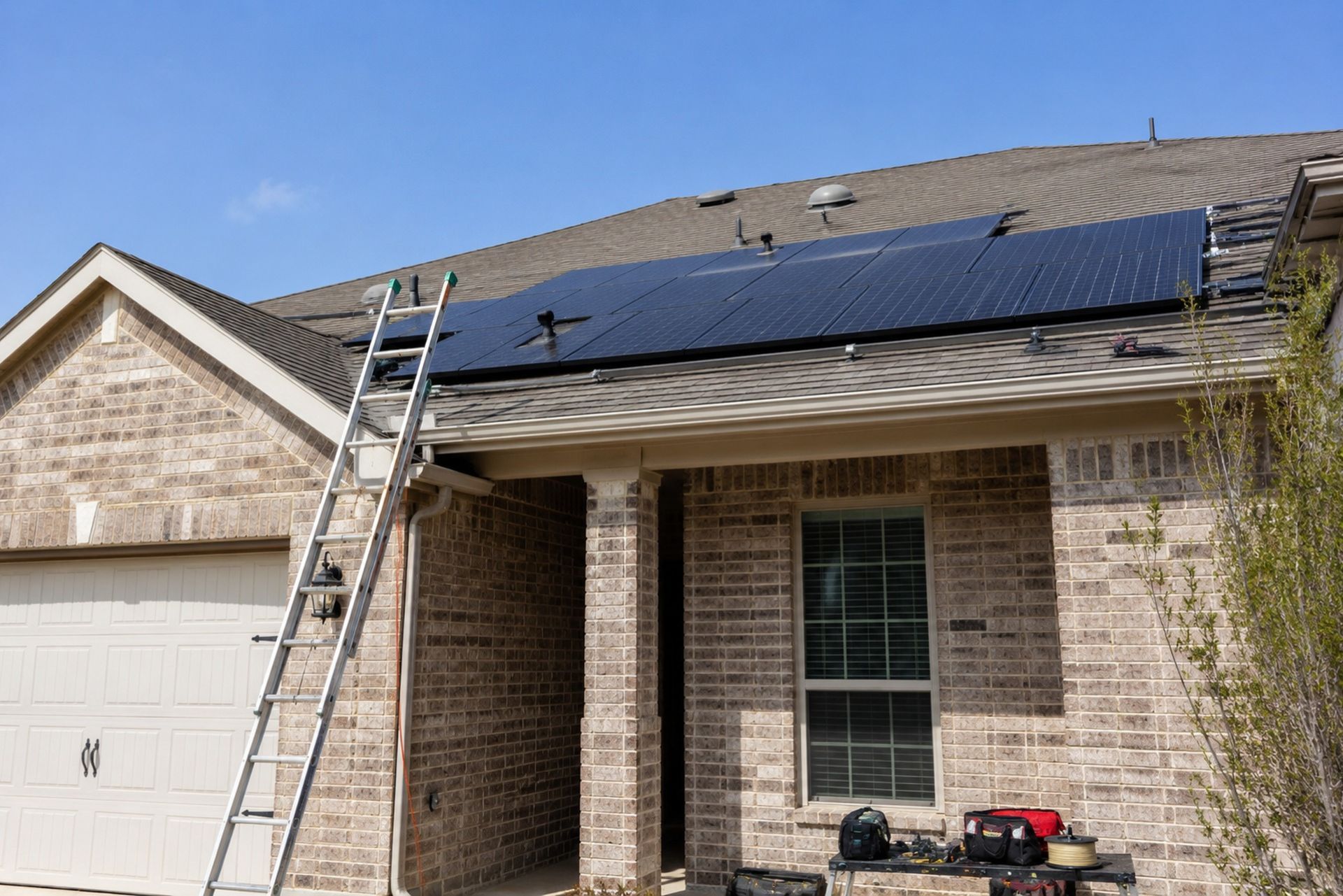
added 11,627 MW of solar capacity in 2024 alone, cementing its lead over every other market in the country. For electrical contractors expanding into or already working in solar installation, this boom means more projects, bigger crews, and significantly more exposure to risk. Getting the insurance piece right isn't optional: it's the difference between building a sustainable business and one bad claim wiping you out. This guide covers the specific coverage needs, licensing requirements, trade risks, and carrier considerations that Texas solar contractors face in 2026. If you've been quoting solar jobs with a general contractor policy and hoping for the best, it's time to get serious about building a coverage stack that actually matches what you're doing on rooftops and in the field every day.
Navigating the Texas Solar Market and Licensing Requirements
Texas doesn't have a single statewide general contractor license, which sometimes gives contractors a false sense of simplicity. The reality is more layered than that. Solar installation involves electrical work, and electrical work in Texas is regulated by the Texas Department of Licensing and Regulation (TDLR). If you're connecting panels to the grid, you need the right electrical credentials, and those credentials come with insurance mandates.
Texas Electrical Contractor License (TECL) Insurance Mandates
Any business performing electrical work in Texas must hold a Texas Electrical Contractor License (TECL), and TDLR requires proof of general liability insurance as part of the licensing process. The minimum is typically $300,000 in coverage, though most contractors carrying real project volume will need $1 million per occurrence and $2 million aggregate to satisfy commercial clients and general contractors who hire them as subs. Your TECL can be suspended or revoked if your insurance lapses, so keeping continuous coverage isn't just smart risk management: it's a licensing requirement.
Local Municipal Permitting and Bond Requirements
Beyond the state-level TECL, individual Texas cities and counties often layer on their own permitting and bonding requirements. Houston, Dallas, Austin, and San Antonio each have distinct permitting offices with varying expectations. Some municipalities require a separate electrical permit for each solar installation, and a handful require surety bonds ranging from $5,000 to $25,000. Missing a local bond or permit requirement can stall a project and expose you to fines. Check with the local authority having jurisdiction (AHJ) before pulling permits on any new project site.

By: Michael Fusco
President of Joule Pro
INDEX
Navigating the Texas Solar Market and Licensing Requirements
Core Insurance Coverages for Texas Solar Contractors
Addressing Trade-Specific Risks and Specialized Endorsements
Mitigating Severe Weather Risks in the Lone Star State
Understanding Insurance Carrier Appetite for Solar Risks
Joule Pro is a specialty insurance and risk program of Fusco Orsini & Associates Insurance Services, built exclusively for electrical contractors and licensed in 31 states.
We work with electrical firms across the country — from California, Texas, Florida, New York, and coast to coast — placing General Liability, Workers' Compensation, Commercial Auto, Inland Marine, Surety Bonds, Excess Liability, and full specialty coverage stacks for commercial, industrial, service, residential, and low-voltage electrical contractors. Joule Pro is not a separate licensed entity. It is a dedicated program structure inside Fusco Orsini, giving electrical contractors access to specialty carriers, in-house claims advocacy, and trade-specific risk engineering under one program.
Core Insurance Coverages for Texas Solar Contractors
A solar installation business faces a broader risk profile than a standard electrical contractor. You're working on roofs, hauling expensive equipment, and often employing crews that split time between warehouse staging and field installation. Your coverage stack needs to reflect all of that.
General Liability for Property Damage and Bodily Injury
General liability (GL) is the foundation. It covers third-party bodily injury and property damage claims: think a homeowner tripping over equipment in their yard, or a panel falling off a roof and damaging a vehicle. For solar contractors, the completed operations component matters just as much. If a system you installed two years ago causes a fire, your GL policy's completed operations coverage is what responds. Most commercial and residential GCs require $1M/$2M limits before they'll let you on a job site.
Workers' Compensation and Texas Non-Subscriber Options
Texas is one of the few states where workers' compensation isn't mandatory for private employers. That said, going without it is a gamble most solar contractors shouldn't take. Rooftop work, electrical connections, and heavy lifting create real injury exposure. If an employee gets hurt and you don't carry workers' comp, you lose your protection from employee lawsuits and face uncapped liability. Non-subscriber alternatives exist, but they come with strict compliance requirements and don't offer the same legal protections. For most solar contractors running crews, workers' comp is the safer path.
Commercial Auto and Fleet Coverage for Installation Crews
Your trucks and vans are on the road daily, hauling panels, inverters, racking, and tools. A standard personal auto policy won't cover commercial use, and a basic commercial auto policy may not cover the cargo inside. You need commercial auto with hired and non-owned coverage (for employees using personal vehicles), plus consider cargo coverage for the equipment in transit. Texas roads mean long distances between job sites, and one accident with an uninsured truck can create a six-figure problem fast.
Addressing Trade-Specific Risks and Specialized Endorsements
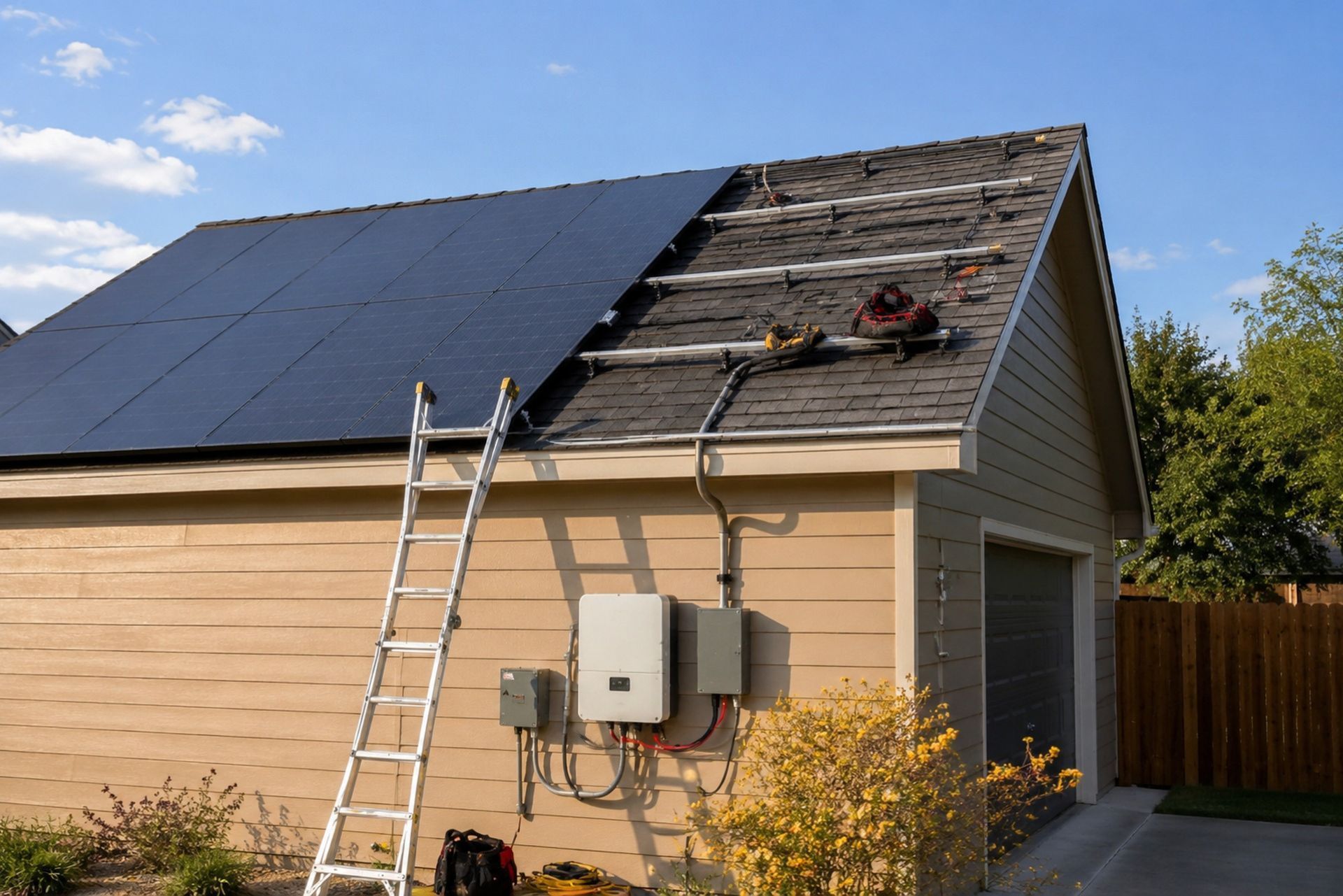
Standard policies leave gaps that solar-specific work creates. These endorsements and specialty coverages fill those gaps.
Professional Liability for System Design and Engineering Errors
If your company handles system design, energy production estimates, or engineering calculations, professional liability (errors and omissions) coverage is essential. A system that underperforms its projected output, or one designed with incorrect specifications, can trigger a claim from a commercial client expecting specific energy savings. Professional liability responds to these "failure to perform as promised" scenarios, which GL policies explicitly exclude.
Inland Marine Coverage for High-Value Equipment in Transit
Solar panels, inverters, and battery storage units are expensive and constantly moving between your warehouse, staging areas, and job sites. Inland marine coverage protects this equipment while it's in transit or temporarily stored at a location that isn't your permanent premises. A single truckload of panels can easily represent $50,000 to $100,000 in value. Without inland marine, a theft from your truck or a highway accident could mean eating that loss entirely. Joule Pro builds inland marine into its contractor coverage programs specifically because electrical and solar contractors face this exposure daily.
Installation Floaters for Work in Progress
An installation floater covers materials and equipment after they arrive at the job site but before the project is complete and handed over to the owner. This is the gap between inland marine and the customer's homeowner or commercial property policy taking over. If a storm damages panels already mounted on a roof but not yet commissioned, the installation floater is what pays for replacement.
Mitigating Severe Weather Risks in the Lone Star State
Texas weather is its own category of risk. Hailstorms, hurricanes along the Gulf Coast, and straight-line winds across the plains all create exposure that contractors in milder climates don't face.
Hail and Windstorm Coverage Considerations
Texas leads the nation in hail damage insurance claims, and solar panels sitting on rooftops are especially vulnerable. Your GL policy's completed operations coverage may respond if a system you installed fails during a storm due to improper mounting. But the real concern is during installation: panels staged on a roof or partially installed can be destroyed by a sudden hailstorm. Your installation floater and inland marine policies need to explicitly cover weather-related losses, not just theft and collision.
Roof Integrity and Construction Defect Liability
Penetrating a roof to mount solar racking creates liability that follows you for years. If a roof leaks six months after installation because of improper flashing or sealant failure, you're looking at a construction defect claim. These claims can be expensive, especially on commercial buildings where water intrusion damages inventory or equipment. Make sure your GL policy doesn't exclude construction defect or has an endorsement that adds it back. Some carriers exclude roof-related claims entirely for solar contractors, so read the fine print.
Understanding Insurance Carrier Appetite for Solar Risks
Not every insurance company wants to write solar contractor policies. Understanding which carriers are interested, and why, helps you avoid wasting time on quotes that go nowhere.
Standard vs. Surplus Lines Markets for High-Voltage Work
Standard admitted carriers (the ones regulated by the Texas Department of Insurance) are often cautious about solar risks, particularly for contractors doing commercial-scale or high-voltage work. Many will decline to quote or offer restrictive terms. Surplus lines carriers, which operate with more flexibility in pricing and coverage terms, are often where solar contractors find the best fit. Working with a specialty program like Joule Pro gives you access to surplus lines markets and underwriter relationships that generalist agencies typically don't maintain. The difference between a policy that actually covers your work and one full of exclusions often comes down to which market your agent accesses.
Factors Influencing Premiums: Experience, Volume, and Safety Records
| Factor | Lower Premium Impact | Higher Premium Impact |
|---|---|---|
| Years in business | 5+ years with clean history | New venture, less than 2 years |
| Annual revenue | Under $2M with steady growth | Rapid scaling without safety infrastructure |
| Claims history | Zero claims in 3+ years | Multiple open or recent claims |
| Safety program | Written program, documented training | No formal safety protocols |
| Work type | Residential ground-mount | Commercial rooftop, high-voltage |
| Crew size | Small, experienced crews | Large crews with high turnover |
Carriers look at these factors holistically. A contractor with $5M in revenue but zero claims and a strong safety program will often get better rates than a $500K operation with two recent losses.
Strategic Steps for Securing Comprehensive Texas Coverage
Getting the right insurance for a Texas solar installation business isn't a one-and-done task. Start by auditing your current policies against the risks outlined above. Most contractors we've seen carry GL and maybe workers' comp but are missing inland marine, installation floaters, or professional liability. Those gaps are where the painful claims happen.
Work with a producer who specializes in electrical and solar contractor risks. A generalist agent quoting you through a standard market will almost certainly leave coverage gaps or saddle you with exclusions that gut your policy when you need it most. Joule Pro exists specifically for this reason: to match licensed electrical contractors with specialty markets that understand the trade.
Get your safety documentation in order before you shop for coverage. A written safety program, documented crew training records, and a clean loss history will open doors to better carriers and lower premiums. If you're scaling your solar division, communicate that growth plan to your insurance producer so your policy limits and endorsements keep pace.
The Texas solar market rewards contractors who are properly licensed, adequately insured, and aggressive about risk management. Don't let an insurance gap turn a profitable project into a business-ending claim.
Frequently Asked Questions
Do I need a separate license to install solar panels in Texas? You need a Texas Electrical Contractor License (TECL) if you're performing any electrical connections. Some municipalities also require additional permits specific to solar installations.
Is workers' compensation required for solar contractors in Texas? Texas doesn't mandate workers' comp for private employers, but going without it exposes you to uncapped liability from employee injury lawsuits. Most solar contractors should carry it.
What does an installation floater cover that general liability doesn't? An installation floater covers your materials and equipment at the job site before the project is finished. GL covers third-party injury and property damage claims but won't replace your panels destroyed by a storm mid-install.
Why do some insurance carriers refuse to quote solar contractors? Solar work involves rooftop exposure, electrical hazards, and weather risks that many standard carriers aren't comfortable underwriting. Surplus lines markets are often more willing to write these policies with appropriate terms.
How much does solar contractor insurance cost in Texas? Premiums vary widely based on revenue, crew size, claims history, and work type. A small residential installer might pay $8,000 to $15,000 annually for a basic coverage package, while a commercial operation could pay significantly more.

Founder & CEO
The Force Behind the Program
About the Author:
Michael Fusco.
Fusco Orsini & Associates
Joule Pro exists because Mike Fusco saw electrical contractors getting boilerplate insurance — and built a program designed for the way the trade actually works.
Mike is the CEO and co-founder of Fusco Orsini & Associates, the San Diego–based independent agency he launched in 2010. Under his leadership FOA has grown into a nationwide partner serving clients across 31 states, with a personal, client-first approach to commercial insurance and risk.
With over 20 years in insurance and risk management, he specializes in tailored programs spanning general liability, workers' compensation, surety bonding, and employee benefits — helping owners confidently manage risk and pursue growth.
Mike holds a B.S. in Business from the University of Maryland — Robert H. Smith School of Business, and the Certified Insurance Counselor (CIC) designation, held by fewer than 3% of insurance professionals nationwide.
What Our Clients Say
Trusted by Electrical Contractors Across the Country.
5.0
★★★★★
Google reviews
Core Commercial Coverage
Business Insurance for Electrical Contractors.
The fundamentals — written, structured, and priced for electrical risk. Each line is reviewed annually by an underwriter who only writes our trade.
01
General Liability
Premises & completed-operations coverage with electrical-specific endorsements and full pollution carve-back options.
02
Workers' Compensation
Class-code optimization, experience-mod review, and return-to-work programs designed for energized-work exposures.
03
Commercial Auto
Fleet, hired & non-owned auto, and tools-in-transit coverage written for service vans and bucket trucks.
04
Tools & Equipment
Scheduled and blanket coverage for tools, test equipment, scissor lifts, and contractor's equipment on-site or in-transit.
05
Surety Bonds
Bid, performance, and payment bonds — single-job and aggregate programs for commercial & public-works contracts.
06
Commercial Property
Layered limits up to $50M with carrier panels covering your shop, warehouse, yard, and on-premises tools, materials, and equipment.
Who We Serve
Electrical Contractors We Specialize In.
From $5M service shops to $250M industrial primes — every Joule Pro program is shaped to the contractor's revenue mix and project profile.
01 / Industrial
Commercial & Industrial Electrical Contractors
High-voltage, substation, and plant electrical work. Pollution, builder's risk, and large-deductible WC programs.
02 / Service
Service & Residential Electrical Contractors
Service-call shops, panel upgrades, and EV charging installers. Auto-fleet, GL, and tool-coverage programs.
03 / Low-Voltage
Specialty & Low-Voltage Contractors
Data, fire-alarm, security, and BMS controls. Cyber, professional liability, and follow-form excess.
Frequently Asked Questions
Common
Questions From
Electrical Contractors.
What size electrical contractors do you write?
Joule Pro is built for licensed electrical firms from roughly $2M in revenue to $250M+. Below $2M we typically refer to our small-business desk; above $250M we underwrite individually with our industrial practice team.
Do I need to be licensed in multiple states?
No. We license you wherever you work. Joule Pro is admitted in 31 states and our compliance team handles multi-state filings, prevailing-wage endorsements, and certificate-of-insurance requirements.
How is Joule Pro different from a generic contractor program?
Generic programs use a contractor's questionnaire that treats you like a roofer. We use forms written for energized work, arc-flash exposures, and design-build risk — and our carriers price accordingly.
What does the claims process actually look like?
Every Joule Pro client is assigned a named claims advocate at bind. They take the FNOL, set strategy with your assigned attorney, and serve as your single point of contact through close.
Can you bond large public-works contracts?
Yes. Through our surety partners we write single-job bonds up to $75M and aggregate programs to $300M, with expedited turnarounds for school district, federal, and DOT work.
What happens at renewal?
Your producer and claims advocate jointly run a renewal review 90 days out — covering loss trends, exposure changes, and market alternatives — so renewal day is a confirmation, not a surprise.
From the Blog
Insights for Electrical Contractors.
Risk briefings, claim post-mortems, and program updates — written by our underwriters and risk engineers.


Get Started
Get a Quote on a Program Built Around Your Trade.
A 30-minute discovery call is the only commitment. You'll leave with a written gap analysis of your current program — yours to keep, whether you bind with us or not.