
Business Insurance
Texas EV Charger Installer Insurance
★★★★★ 150+ Five-Star Reviews · Google & Facebook
Texas is installing EV chargers at a pace that would have seemed absurd five years ago. With over 10,000 public charging ports active across the state and tens of thousands of residential units going in annually, electrical contractors are picking up EV work faster than the insurance market can keep up. That's a problem, because the risks tied to EV charger installation don't look like traditional electrical work. You're dealing with high-voltage DC systems, lithium-ion battery adjacency, networked software, and utility grid interconnections, all on top of the usual slip-and-fall and property damage exposures. If you're a licensed Texas electrical contractor adding EV infrastructure to your service mix, your current insurance program probably has gaps you haven't noticed yet. This guide breaks down the trade-specific risks, Texas licensing requirements, carrier appetite, and the coverage stack you actually need to protect your business. Getting EV charger installer insurance right in Texas means understanding how this work differs from standard panel upgrades or commercial wiring jobs, and why generic electrical contractor policies often fall short.
The Evolving EV Infrastructure Landscape in Texas
Texas ranks among the top five states for EV adoption, and the federal NEVI program is pumping hundreds of millions into charging infrastructure along Texas highway corridors through 2026 and beyond. That means commercial projects are scaling up fast: truck stops, fleet depots, multifamily housing, and municipal parking structures all need high-capacity charging installations.
For contractors, this is real revenue. But the work profile is fundamentally different from pulling wire through conduit. You're integrating with utility transformers, managing thermal loads that can exceed 350 kW per station, and installing equipment that communicates over cellular and Wi-Fi networks. Each of those elements introduces a liability vector that your insurer needs to understand.
Texas Electrical Safety and Licensing (TDLR) Requirements
The Texas Department of Licensing and Regulation (TDLR) governs electrical contractor licensing, and it ties insurance directly to your ability to hold a license. To maintain a Texas Electrical Contractor License (TECL), installers must carry specific insurance limits including $300,000 per occurrence and $600,000 aggregate for general liability. Drop below those limits and your license is at risk.
TDLR also requires that all EV charger installations comply with the National Electrical Code as adopted by Texas, which currently follows the 2023 NEC cycle. Article 625 specifically governs Electric Vehicle Power Transfer Systems, and inspectors are paying closer attention to compliance as installations increase. A code violation that leads to a fire or shock injury creates both a licensing problem and a liability nightmare.
Liability Thresholds for Residential vs Commercial Projects
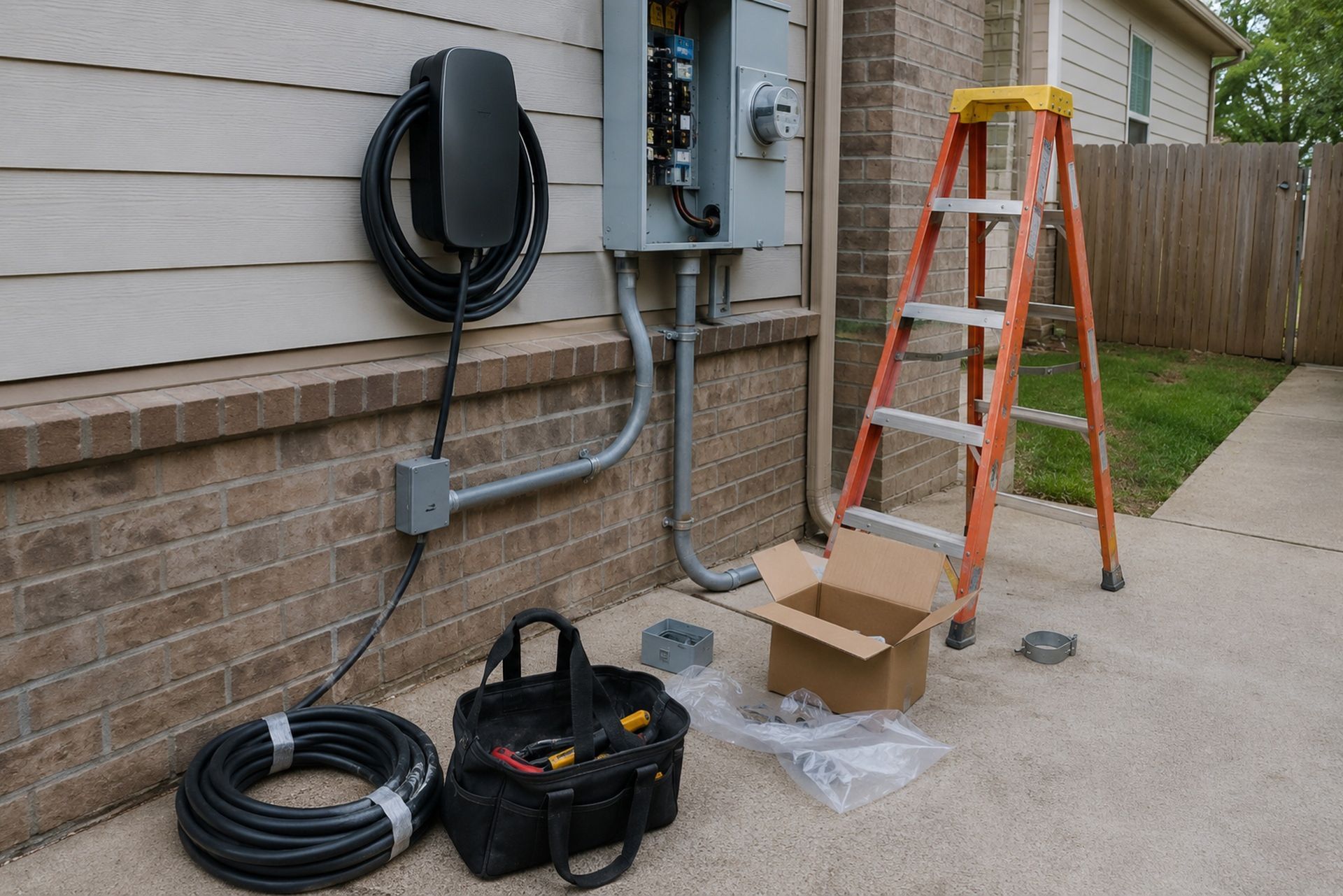
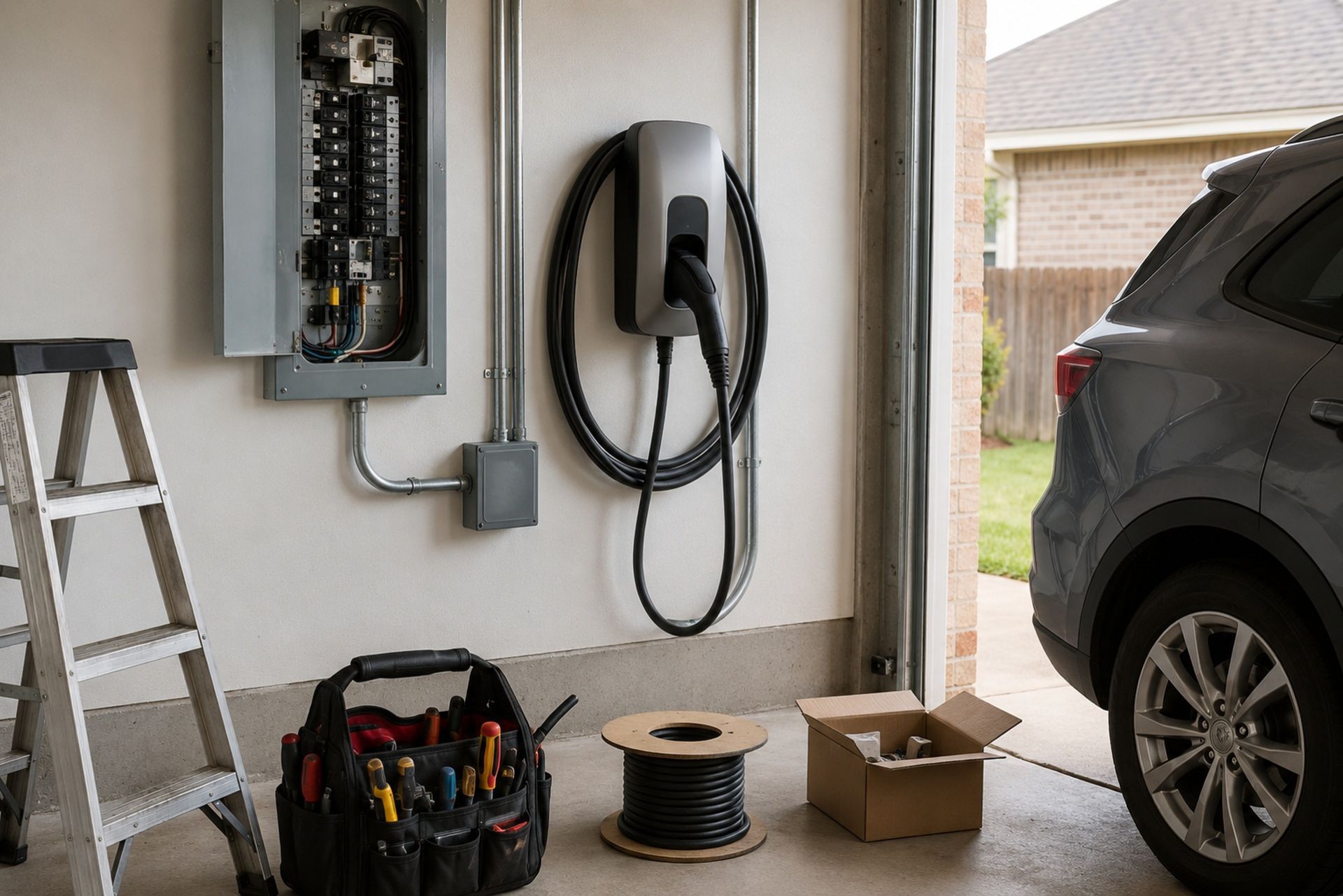
Residential Level 2 charger installs are relatively straightforward: a 240V circuit, a dedicated breaker, maybe a small panel upgrade. The liability exposure is modest, and most general liability policies handle these claims without issue.
Commercial and DC fast charging (DCFC) projects are a different animal. You're working with 480V three-phase power, custom switchgear, and equipment that costs $50,000 to $150,000 per unit. A single installation error can damage the charger, the building's electrical system, or the vehicles plugged into it. Property damage claims on commercial EV projects regularly exceed $100,000, and that's before anyone gets hurt. General contractors and property owners on these jobs typically require $2 million or more in general liability limits, plus professional liability coverage.

By: Michael Fusco
President of Joule Pro
INDEX
Joule Pro is a specialty insurance and risk program of Fusco Orsini & Associates Insurance Services, built exclusively for electrical contractors and licensed in 31 states.
We work with electrical firms across the country — from California, Texas, Florida, New York, and coast to coast — placing General Liability, Workers' Compensation, Commercial Auto, Inland Marine, Surety Bonds, Excess Liability, and full specialty coverage stacks for commercial, industrial, service, residential, and low-voltage electrical contractors. Joule Pro is not a separate licensed entity. It is a dedicated program structure inside Fusco Orsini, giving electrical contractors access to specialty carriers, in-house claims advocacy, and trade-specific risk engineering under one program.
Core Insurance Policies for Texas EV Contractors
Your coverage stack for EV work needs to go beyond a basic business owner's policy. Here's what actually matters.
General Liability and Pollution Coverage for Battery Hazards
Standard commercial general liability (CGL) covers bodily injury and property damage arising from your operations. For EV work, you need to confirm that your policy doesn't exclude high-voltage installations or battery-related incidents. Some carriers add pollution exclusions that could deny coverage if a lithium-ion battery leaks electrolyte during or after your installation.
A pollution liability endorsement or a standalone contractor's pollution policy fills this gap. Battery electrolyte is classified as a hazardous substance, and cleanup costs after a thermal event can run $25,000 to $75,000 even on a small residential job. Don't assume your CGL covers it: read the exclusions.
Professional Liability for Electrical Design and Load Calculations
If you're specifying charger models, designing circuit layouts, or performing load calculations for clients, you're providing professional services. A wiring error is a GL claim; a flawed load calculation that causes chronic overheating is a professional liability (errors and omissions) claim.
Many electrical contractors skip professional liability because they think of themselves as tradespeople, not engineers. But the moment you recommend a specific charger configuration or sign off on an electrical design, you've crossed into professional services territory. Joule Pro includes E&O options specifically structured for electrical contractors doing design-build EV work, which matters because most generalist agencies don't even know to ask about it.
Workers' Compensation in the Texas Non-Subscriber System
Texas is the only state where workers' compensation insurance is technically optional. Contractors can operate as "non-subscribers," but doing so means you lose the exclusive remedy protection that workers' comp provides. If an employee is injured on an EV installation and you're a non-subscriber, they can sue you directly in civil court for the full extent of their damages.
EV charger work involves real hazards: arc flash, electrical shock, falls from ladders during panel work, and repetitive strain from trenching conduit runs. The average cost of a workers' compensation claim in Texas varies by injury type, but electrical burns and falls consistently rank among the most expensive. Carrying workers' comp isn't just smart risk management: it's often required by general contractors before you can step onto a commercial job site.
Trade-Specific Risks and Environmental Exposures
EV charger installation creates risk categories that didn't exist in traditional electrical contracting. Carriers are still figuring out how to price these, which is why your choice of insurer matters.
Grid Connection Risks and Thermal Runaway Liability
Connecting a DC fast charger to the grid isn't like wiring a subpanel. You're interfacing with utility infrastructure, and errors can cause voltage sags, harmonic distortion, or transformer overloads that affect neighboring properties. Utility companies have been known to pursue subrogation claims against contractors whose installations damage grid equipment.
Thermal runaway, where a lithium-ion battery enters an uncontrollable self-heating cycle, is the headline risk. While the charger itself doesn't contain a massive battery, the vehicles connected to it do, and installation defects like improper grounding or inadequate ventilation can contribute to thermal events. Your GL policy needs to clearly cover completed operations, meaning claims that arise after you've finished the job and left the site.
Cyber Liability for Smart Chargers and Networked Stations
Most commercial EV chargers are networked devices. They connect to payment processing systems, fleet management platforms, and utility demand-response programs. If a charger you installed gets compromised because of a network configuration error during setup, you could face a cyber liability claim.
This is still an emerging risk area, but cyber insurance for contractors is becoming standard on commercial projects. A basic cyber liability policy covering $250,000 to $500,000 in breach response costs is affordable, usually $500 to $1,500 annually, and it signals to commercial clients that you take data security seriously.
Understanding Carrier Appetite for EV Infrastructure
Not every insurance carrier wants to write EV charger installation risks. Understanding carrier appetite helps you avoid wasting time on applications that will get declined.
Preferred Risks: Residential Level 2 vs DC Fast Charging
| Risk Factor | Residential Level 2 | Commercial DCFC |
|---|---|---|
| Voltage | 240V single-phase | 480V three-phase |
| Typical project value | $1,500 - $5,000 | $50,000 - $500,000+ |
| Carrier appetite | Broad: most electrical contractor programs | Narrow: specialty markets preferred |
| Typical GL limits required | $1M/$2M | $2M/$4M or higher |
| Professional liability needed | Rarely | Almost always |
| Pollution endorsement | Recommended | Required |
Most standard electrical contractor programs will write residential Level 2 work without blinking. DCFC installations are where appetite narrows significantly. Carriers want to see OSHA 30 certifications, documented safety programs, and experience logs showing you've completed similar projects. Joule Pro's specialty market relationships are built around exactly this kind of trade-specific underwriting, connecting contractors with carriers that understand high-voltage EV work rather than treating it as a generic electrical risk.
Common Exclusions in Standard Electrical Contractor Policies
Watch for these exclusions that frequently appear in off-the-shelf electrical contractor policies:
- Pollution and hazardous materials (excludes battery electrolyte cleanup)
- Professional services (excludes design work and load calculations)
- Cyber and data breach (excludes networked equipment configuration)
- EIFS and exterior insulation (sometimes bundled with exclusions that inadvertently affect outdoor charging installations)
- Damage to property in your care, custody, or control (excludes the $80,000 charger you're installing)
That last one catches people off guard. If you damage a client's charger during installation, a standard CGL policy with a care-custody-control exclusion won't pay for it. You need an installation floater or inland marine policy to cover equipment while it's in your possession.
Optimizing Premiums and Securing the Right Protection
Safety Training Certifications and Premium Discounts
Carriers reward contractors who invest in safety. NFPA 70E arc flash training, OSHA 30-hour construction certification, and manufacturer-specific installation certifications from companies like ChargePoint or Tesla can reduce your premiums by 5% to 15%. Document everything: training logs, completion certificates, and toolbox talk records. Underwriters review this material during renewal, and a strong safety file gives them justification to offer better rates.
EVITP (Electric Vehicle Infrastructure Training Program) certification is increasingly becoming a baseline expectation for commercial EV work. Some state-funded projects require EVITP-certified electricians on the job, and carriers view the certification as a positive underwriting signal.
Contractual Risk Transfer and Subcontractor Management
If you sub out trenching, concrete work, or networking to other trades, make sure your subcontractor agreements include proper indemnification language and require them to carry their own insurance with your company listed as an additional insured. A subcontractor's uninsured mistake on your job site becomes your problem fast.
Review upstream contracts carefully too. General contractors often include broad-form indemnification clauses that shift all risk to you, sometimes even for their own negligence. Have your insurance advisor review these before you sign. Joule Pro's team regularly reviews contractor agreements as part of our risk management support, flagging clauses that could create coverage gaps.
Before You Sign Your Next EV Contract
The Texas EV market is growing fast enough that contractors who get their insurance right will have a real competitive advantage. Property owners and general contractors are starting to require EV-specific coverage documentation before awarding contracts, and the contractors who can produce those certificates quickly win the work.
Get your coverage reviewed now, not after a claim. If you're adding EV charger installation to your service offerings, or if you've been doing it with a policy that was written for traditional electrical work, reach out to a specialty program like Joule Pro that understands the specific exposures. A 30-minute coverage review could save you from a six-figure gap when it matters most.
Frequently Asked Questions
Do I need a separate license to install EV chargers in Texas? No separate license exists. A valid TECL from TDLR covers EV charger installation, but you must comply with NEC Article 625 and maintain the required insurance minimums.
Does my standard GL policy cover DC fast charger installations? Probably not fully. Most standard policies exclude pollution, professional services, and care-custody-control, all of which are relevant to DCFC work. Ask your agent for a coverage gap analysis.
How much does EV charger installer insurance cost in Texas? For a small residential-focused operation, expect $3,000 to $6,000 annually for a GL/WC package. Commercial DCFC contractors with higher revenue and limits typically pay $8,000 to $20,000 or more depending on project volume and claims history.
Is workers' comp required for EV installers in Texas? Not by state law, but most general contractors require it before allowing you on site. Operating without it exposes you to direct lawsuits from injured employees.
What is EVITP certification and do I need it? EVITP is a nationally recognized training program for EV infrastructure installation. While not legally required in Texas, many publicly funded projects and commercial clients now require it.

Founder & CEO
The Force Behind the Program
About the Author:
Michael Fusco.
Fusco Orsini & Associates
Joule Pro exists because Mike Fusco saw electrical contractors getting boilerplate insurance — and built a program designed for the way the trade actually works.
Mike is the CEO and co-founder of Fusco Orsini & Associates, the San Diego–based independent agency he launched in 2010. Under his leadership FOA has grown into a nationwide partner serving clients across 31 states, with a personal, client-first approach to commercial insurance and risk.
With over 20 years in insurance and risk management, he specializes in tailored programs spanning general liability, workers' compensation, surety bonding, and employee benefits — helping owners confidently manage risk and pursue growth.
Mike holds a B.S. in Business from the University of Maryland — Robert H. Smith School of Business, and the Certified Insurance Counselor (CIC) designation, held by fewer than 3% of insurance professionals nationwide.
What Our Clients Say
Trusted by Electrical Contractors Across the Country.
5.0
★★★★★
Google reviews
Core Commercial Coverage
Business Insurance for Electrical Contractors.
The fundamentals — written, structured, and priced for electrical risk. Each line is reviewed annually by an underwriter who only writes our trade.
01
General Liability
Premises & completed-operations coverage with electrical-specific endorsements and full pollution carve-back options.
02
Workers' Compensation
Class-code optimization, experience-mod review, and return-to-work programs designed for energized-work exposures.
03
Commercial Auto
Fleet, hired & non-owned auto, and tools-in-transit coverage written for service vans and bucket trucks.
04
Tools & Equipment
Scheduled and blanket coverage for tools, test equipment, scissor lifts, and contractor's equipment on-site or in-transit.
05
Surety Bonds
Bid, performance, and payment bonds — single-job and aggregate programs for commercial & public-works contracts.
06
Commercial Property
Layered limits up to $50M with carrier panels covering your shop, warehouse, yard, and on-premises tools, materials, and equipment.
Who We Serve
Electrical Contractors We Specialize In.
From $5M service shops to $250M industrial primes — every Joule Pro program is shaped to the contractor's revenue mix and project profile.
01 / Industrial
Commercial & Industrial Electrical Contractors
High-voltage, substation, and plant electrical work. Pollution, builder's risk, and large-deductible WC programs.
02 / Service
Service & Residential Electrical Contractors
Service-call shops, panel upgrades, and EV charging installers. Auto-fleet, GL, and tool-coverage programs.
03 / Low-Voltage
Specialty & Low-Voltage Contractors
Data, fire-alarm, security, and BMS controls. Cyber, professional liability, and follow-form excess.
Frequently Asked Questions
Common
Questions From
Electrical Contractors.
What size electrical contractors do you write?
Joule Pro is built for licensed electrical firms from roughly $2M in revenue to $250M+. Below $2M we typically refer to our small-business desk; above $250M we underwrite individually with our industrial practice team.
Do I need to be licensed in multiple states?
No. We license you wherever you work. Joule Pro is admitted in 31 states and our compliance team handles multi-state filings, prevailing-wage endorsements, and certificate-of-insurance requirements.
How is Joule Pro different from a generic contractor program?
Generic programs use a contractor's questionnaire that treats you like a roofer. We use forms written for energized work, arc-flash exposures, and design-build risk — and our carriers price accordingly.
What does the claims process actually look like?
Every Joule Pro client is assigned a named claims advocate at bind. They take the FNOL, set strategy with your assigned attorney, and serve as your single point of contact through close.
Can you bond large public-works contracts?
Yes. Through our surety partners we write single-job bonds up to $75M and aggregate programs to $300M, with expedited turnarounds for school district, federal, and DOT work.
What happens at renewal?
Your producer and claims advocate jointly run a renewal review 90 days out — covering loss trends, exposure changes, and market alternatives — so renewal day is a confirmation, not a surprise.
From the Blog
Insights for Electrical Contractors.
Risk briefings, claim post-mortems, and program updates — written by our underwriters and risk engineers.


Get Started
Get a Quote on a Program Built Around Your Trade.
A 30-minute discovery call is the only commitment. You'll leave with a written gap analysis of your current program — yours to keep, whether you bind with us or not.