
Business Insurance
New York Generator Installer Insurance
★★★★★ 150+ Five-Star Reviews · Google & Facebook
General liability and completed operations coverage form the foundation of any generator installer's insurance program. Without these two pieces in place, you're exposed to the most common and most expensive claims in the trade.
Generator installation work in New York carries a unique mix of risks that most general insurance agencies don't fully grasp. Between the state's notoriously aggressive labor laws, the complex licensing patchwork across New York City and surrounding counties, and the inherent dangers of working with fuel systems, high-voltage electrical tie-ins, and heavy equipment, getting the right insurance coverage isn't optional: it's survival. A single claim under New York's Scaffold Law can bankrupt a small contractor overnight. And yet, many generator installers are still running with bare-minimum policies cobbled together by agents who write more restaurant and retail policies than contractor accounts. This guide breaks down the specific coverage requirements, trade risks, licensing demands, and carrier considerations that New York generator contractors need to understand before their next renewal. If you install, maintain, or service standby or portable generators anywhere in the state, the details here could save your business.
Core Insurance Requirements for New York Generator Contractors
New York is one of the toughest states in the country for contractor insurance, and generator installers face an especially complex set of requirements. The combination of electrical work, gas line connections, and heavy equipment creates a risk profile that demands more than a basic business owner's policy.
General Liability and Property Damage Limits
Most general contractors in New York carry $1 million per occurrence and $2 million aggregate general liability limits, but generator installers working on commercial or multi-family residential projects are frequently required to carry $2 million/$4 million limits or higher. General contractors and property managers almost always require additional insured status on your policy before you set foot on their job site.
New York remains the only state with absolute liability for elevation-related injuries under the Scaffold Law, which is the single biggest driver of sky-high GL premiums for trades working at height or on ladders. Even if a generator installer is only climbing a ladder to make an electrical connection at a transfer switch panel, a fall can trigger a Labor Law 240 claim where the property owner and GC are held strictly liable: and they'll come after your policy through indemnification clauses.
Property damage limits matter too. A botched installation that causes a house fire or damages a commercial building's electrical system can easily generate six-figure claims.
Workers' Compensation and Disability Benefits Law (DBL)
New York requires workers' compensation for virtually all employers, including sole proprietors who hire even one part-time helper. The state also mandates Disability Benefits Law coverage and Paid Family Leave, both of which must be carried as separate policies or endorsements. Missing any of these three coverages can result in stop-work orders and fines up to $2,000 per ten-day period.
Workers' comp classification codes for generator installers typically fall under electrical wiring (NCCI code 5190) or power equipment installation, and New York's rates for these codes are among the highest nationally. A specialty program like Joule Pro, built specifically for electrical contractors, can often secure better class code placement and experience mod analysis than a generalist agency.
Commercial Auto and Inland Marine for Equipment Transport
Generator installers haul expensive, heavy equipment: generators themselves, transfer switches, conduit, wire, and specialized tools. Commercial auto coverage is mandatory for any vehicle used in the business, and New York's minimum liability limits ($25,000/$50,000/$10,000) are dangerously low for a contractor. Most recommend carrying at least $1 million in combined single-limit auto liability.
Inland marine coverage protects your tools and equipment in transit and on job sites. A single Generac or Kohler whole-home generator can cost $5,000 to $15,000 wholesale, and if it's stolen off a truck or damaged during transport, your commercial auto policy won't cover it. Inland marine fills that gap.

By: Michael Fusco
President of Joule Pro
INDEX
Joule Pro is a specialty insurance and risk program of Fusco Orsini & Associates Insurance Services, built exclusively for electrical contractors and licensed in 31 states.
We work with electrical firms across the country — from California, Texas, Florida, New York, and coast to coast — placing General Liability, Workers' Compensation, Commercial Auto, Inland Marine, Surety Bonds, Excess Liability, and full specialty coverage stacks for commercial, industrial, service, residential, and low-voltage electrical contractors. Joule Pro is not a separate licensed entity. It is a dedicated program structure inside Fusco Orsini, giving electrical contractors access to specialty carriers, in-house claims advocacy, and trade-specific risk engineering under one program.
Trade-Specific Risks in Generator Installation and Maintenance
Generator work sits at the intersection of electrical, plumbing (gas), and mechanical trades. That overlap creates exposures most standard policies weren't designed to address.
Electrical Malfunction and Fire Hazard Risks
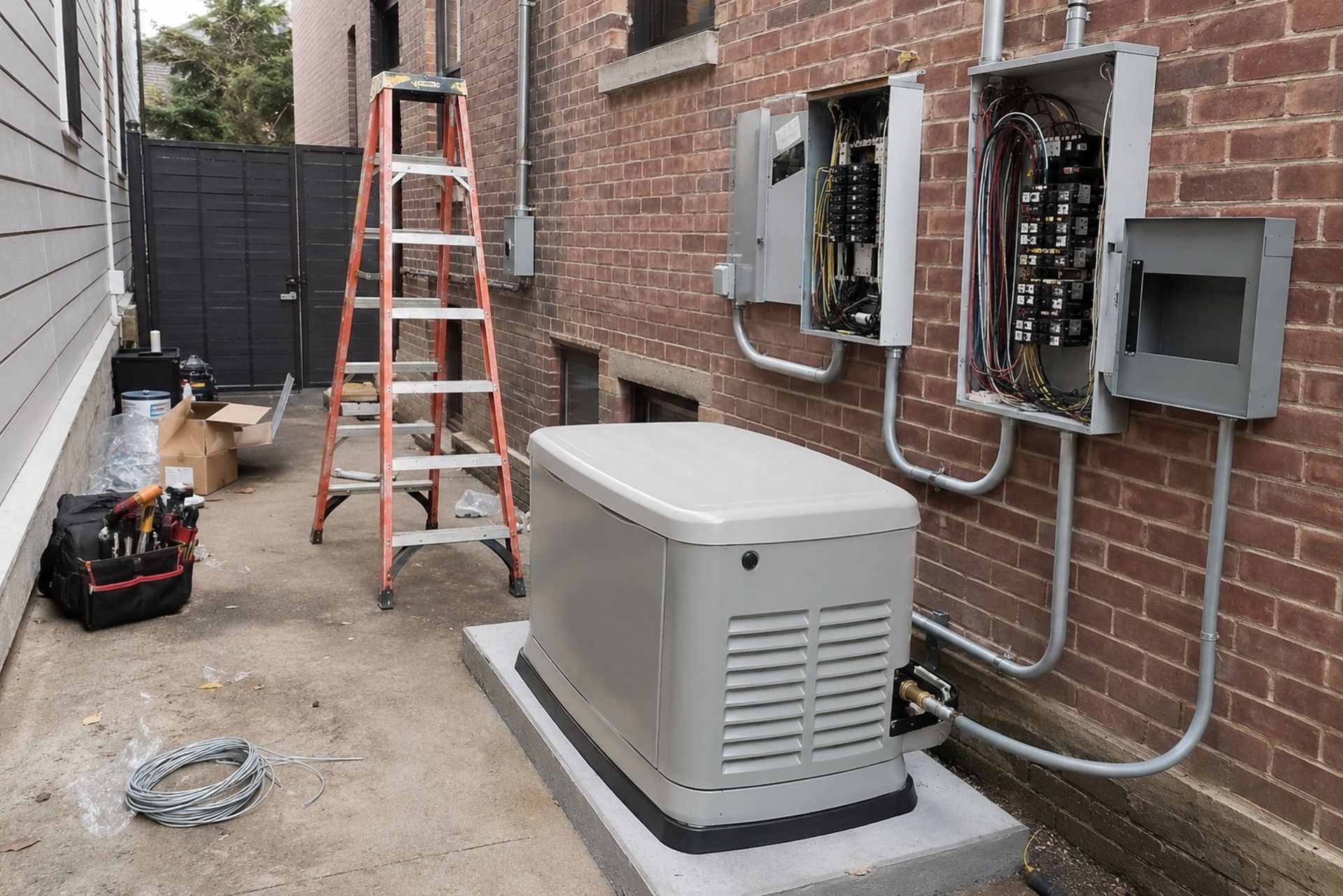
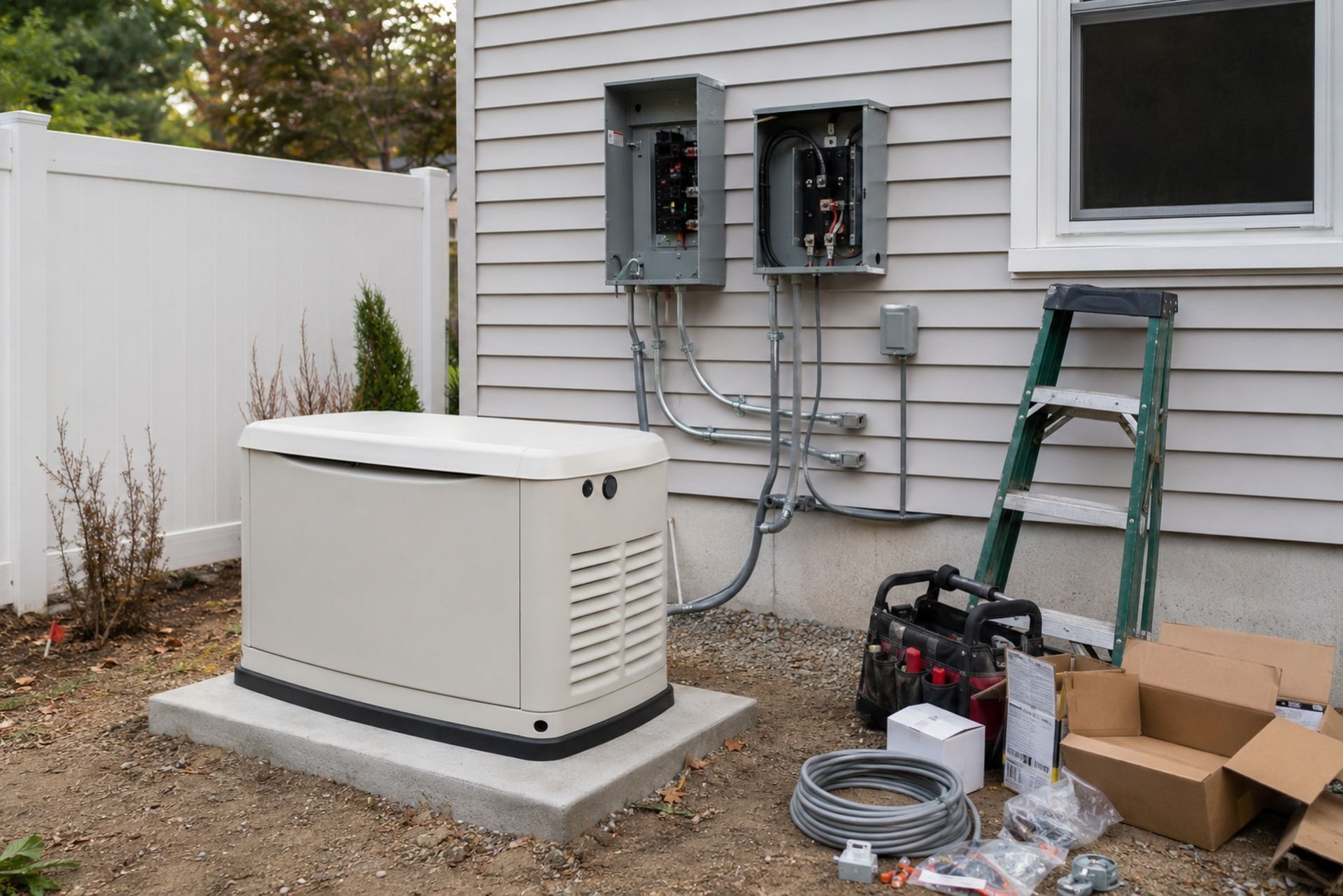
Improper wiring of a transfer switch is one of the most common causes of generator-related fires. If a transfer switch fails to isolate the home's electrical system from the utility grid, it can cause backfeed: a condition that endangers utility workers and can start electrical fires. Claims from these incidents often involve both property damage and bodily injury.
Your GL policy needs to explicitly cover completed operations, because many fire claims arise weeks or months after installation when the generator first activates during a power outage. If completed operations coverage lapses or has a short tail, you're exposed.
Fuel Storage and Environmental Pollution Liability
Natural gas and propane connections are standard for standby generators, and diesel fuel storage is common for larger commercial units. A fuel leak during installation or from a poorly connected gas line can trigger environmental cleanup costs that standard GL policies typically exclude under pollution exclusions. You need a separate pollution liability policy or a contractor's pollution endorsement.
In New York, the Department of Environmental Conservation takes fuel spills seriously. Even a small diesel spill on a residential property can require professional remediation costing $10,000 or more.
Professional Liability for System Design and Sizing
When you recommend a specific generator size for a customer's home or business, you're providing a professional service. If you undersize a system and the client's critical equipment fails during an outage, or if you oversize and the customer overpays by thousands, you can face a professional liability claim. Standard GL doesn't cover errors in professional judgment: you need a separate professional liability (E&O) policy.
This is especially relevant for commercial generator installations where load calculations, fuel consumption estimates, and runtime projections are part of the proposal.
Navigating New York State Licensing and Compliance
New York's licensing structure is fragmented, and the requirements vary dramatically depending on where you're working.
NYC Department of Buildings (DOB) Requirements
Working within the five boroughs means dealing with the NYC DOB, which requires licensed master electricians or special electricians to perform electrical work. Generator installations that involve electrical connections to a building's service panel require permits and inspections. The DOB also requires proof of insurance: typically a certificate of insurance naming the City of New York as additional insured: before issuing permits.
Contractors caught working without proper DOB licensing face fines starting at $5,000 per violation, and your insurance carrier may deny claims arising from unlicensed work.
County-Specific Electrician Licensing and Bonds
Outside NYC, licensing requirements vary by county. Nassau and Suffolk counties on Long Island have their own licensing boards and require separate electrician licenses. Westchester, Rockland, and other Hudson Valley counties each have different rules. Some municipalities require surety bonds in addition to insurance.
The key takeaway: before you bid a job in a new jurisdiction, verify the local licensing and bonding requirements. Your insurance policy won't protect you if you're operating without the required credentials.
Understanding Carrier Appetite and Policy Exclusions
Not every insurance company wants to write generator installer policies in New York. The state's legal environment makes many carriers cautious, and understanding which markets are open to your trade is half the battle.
Preferred Markets for Mechanical and Electrical Trades
| Factor | Standard Market | Specialty Market (e.g., Joule Pro) |
|---|---|---|
| Trade expertise | Generalist underwriting | Electrical trade-specific |
| Scaffold Law knowledge | Limited | Built into pricing models |
| Coverage breadth | Basic GL, may exclude key risks | Full contractor stack with endorsements |
| Carrier appetite | Often declines NY electrical | Actively writes NY electrical contractors |
| Claims handling | Generic adjusters | Adjusters familiar with trade claims |
Most large national carriers have pulled back from writing New York contractor accounts, especially for trades with electrical and fire exposure. Specialty programs that focus exclusively on electrical contractors maintain relationships with carriers that still have appetite for this class. Joule Pro, for example, works with underwriters who understand the difference between a residential generator hookup and a commercial paralleling switchgear installation: and price accordingly.
Common NY Labor Law (Action Over) Exclusions
One of the most dangerous exclusions in New York contractor policies is the Labor Law exclusion, sometimes called the "action over" exclusion. Here's how it works: a GC or property owner gets sued under Labor Law 240 or 241 for your employee's injury, then turns around and sues you for contribution or indemnification. If your policy contains an action over exclusion, your carrier won't defend or pay that claim.
Many standard policies include this exclusion by default in New York. You need to specifically request that it be removed or buy back coverage, which some carriers won't do at any price. This is one of the biggest reasons New York contractors need a broker who specializes in the trades.
Strategic Risk Management and Premium Optimization
Insurance costs in New York are high, but there are real strategies to bring premiums down without cutting coverage.
Safety Protocols for Gas Line and Electrical Tie-ins
Carriers look favorably on contractors who document their safety programs. For generator installers, that means written protocols for gas leak testing, electrical lockout/tagout procedures, and proper grounding verification. Keeping OSHA 10 or OSHA 30 certifications current for your crew can also help at renewal.
Track your safety record and present it to your agent before renewal. A three-year claims-free history with documented safety protocols can move your account from a high-risk tier to a preferred one.
Contractual Risk Transfer and Subcontractor Certificates
If you use subcontractors for gas line work, trenching, or concrete pad installation, require them to carry their own GL, workers' comp, and auto policies with your company listed as additional insured. This is contractual risk transfer, and it's one of the most effective ways to protect your own loss history.
Always collect certificates of insurance before subs start work: not after. A single uninsured sub who gets hurt on your job site can blow up your experience modification rate for three years.
FAQ
Do I need pollution liability insurance for residential generator installations? Yes. Standard GL policies exclude pollution-related claims, and even a small propane or diesel leak during installation can trigger cleanup costs your regular policy won't cover.
Can I work in NYC with an upstate electrician's license? No. NYC requires its own master or special electrician license issued by the DOB. An upstate license doesn't transfer.
What's an "action over" exclusion and why should I care? It's a policy exclusion that removes coverage when a GC or property owner sues you for contribution after a Labor Law injury claim. In New York, this exclusion can leave you completely unprotected in some of the most expensive lawsuits you'll face.
How much GL coverage do I really need? Most commercial job sites require $2 million per occurrence. Residential-only contractors can sometimes get by with $1 million, but higher limits are always safer in New York's legal environment.
Does my commercial auto policy cover stolen generators on my truck? Usually not. You need inland marine coverage for tools and equipment in transit or stored on job sites.
Your Next Steps
Getting generator installer insurance right in New York requires more than filling out an online quote form. The state's legal environment, fragmented licensing system, and trade-specific risks demand a carrier and broker who understand electrical contractor exposures at a granular level. Review your current policies for action over exclusions, pollution gaps, and completed operations limits. If your agent can't explain how the Scaffold Law affects your GL premium, it's time to talk to someone who can. Joule Pro specializes in exactly this kind of coverage for licensed electrical contractors: reach out for a policy review before your next renewal catches you off guard.

Founder & CEO
The Force Behind the Program
About the Author:
Michael Fusco.
Fusco Orsini & Associates
Joule Pro exists because Mike Fusco saw electrical contractors getting boilerplate insurance — and built a program designed for the way the trade actually works.
Mike is the CEO and co-founder of Fusco Orsini & Associates, the San Diego–based independent agency he launched in 2010. Under his leadership FOA has grown into a nationwide partner serving clients across 31 states, with a personal, client-first approach to commercial insurance and risk.
With over 20 years in insurance and risk management, he specializes in tailored programs spanning general liability, workers' compensation, surety bonding, and employee benefits — helping owners confidently manage risk and pursue growth.
Mike holds a B.S. in Business from the University of Maryland — Robert H. Smith School of Business, and the Certified Insurance Counselor (CIC) designation, held by fewer than 3% of insurance professionals nationwide.
What Our Clients Say
Trusted by Electrical Contractors Across the Country.
5.0
★★★★★
Google reviews
Core Commercial Coverage
Business Insurance for Electrical Contractors.
The fundamentals — written, structured, and priced for electrical risk. Each line is reviewed annually by an underwriter who only writes our trade.
01
General Liability
Premises & completed-operations coverage with electrical-specific endorsements and full pollution carve-back options.
02
Workers' Compensation
Class-code optimization, experience-mod review, and return-to-work programs designed for energized-work exposures.
03
Commercial Auto
Fleet, hired & non-owned auto, and tools-in-transit coverage written for service vans and bucket trucks.
04
Tools & Equipment
Scheduled and blanket coverage for tools, test equipment, scissor lifts, and contractor's equipment on-site or in-transit.
05
Surety Bonds
Bid, performance, and payment bonds — single-job and aggregate programs for commercial & public-works contracts.
06
Commercial Property
Layered limits up to $50M with carrier panels covering your shop, warehouse, yard, and on-premises tools, materials, and equipment.
Who We Serve
Electrical Contractors We Specialize In.
From $5M service shops to $250M industrial primes — every Joule Pro program is shaped to the contractor's revenue mix and project profile.
01 / Industrial
Commercial & Industrial Electrical Contractors
High-voltage, substation, and plant electrical work. Pollution, builder's risk, and large-deductible WC programs.
02 / Service
Service & Residential Electrical Contractors
Service-call shops, panel upgrades, and EV charging installers. Auto-fleet, GL, and tool-coverage programs.
03 / Low-Voltage
Specialty & Low-Voltage Contractors
Data, fire-alarm, security, and BMS controls. Cyber, professional liability, and follow-form excess.
Frequently Asked Questions
Common
Questions From
Electrical Contractors.
What size electrical contractors do you write?
Joule Pro is built for licensed electrical firms from roughly $2M in revenue to $250M+. Below $2M we typically refer to our small-business desk; above $250M we underwrite individually with our industrial practice team.
Do I need to be licensed in multiple states?
No. We license you wherever you work. Joule Pro is admitted in 31 states and our compliance team handles multi-state filings, prevailing-wage endorsements, and certificate-of-insurance requirements.
How is Joule Pro different from a generic contractor program?
Generic programs use a contractor's questionnaire that treats you like a roofer. We use forms written for energized work, arc-flash exposures, and design-build risk — and our carriers price accordingly.
What does the claims process actually look like?
Every Joule Pro client is assigned a named claims advocate at bind. They take the FNOL, set strategy with your assigned attorney, and serve as your single point of contact through close.
Can you bond large public-works contracts?
Yes. Through our surety partners we write single-job bonds up to $75M and aggregate programs to $300M, with expedited turnarounds for school district, federal, and DOT work.
What happens at renewal?
Your producer and claims advocate jointly run a renewal review 90 days out — covering loss trends, exposure changes, and market alternatives — so renewal day is a confirmation, not a surprise.
From the Blog
Insights for Electrical Contractors.
Risk briefings, claim post-mortems, and program updates — written by our underwriters and risk engineers.


Get Started
Get a Quote on a Program Built Around Your Trade.
A 30-minute discovery call is the only commitment. You'll leave with a written gap analysis of your current program — yours to keep, whether you bind with us or not.