
Business Insurance
New York EV Charger Installer Insurance
★★★★★ 150+ Five-Star Reviews · Google & Facebook
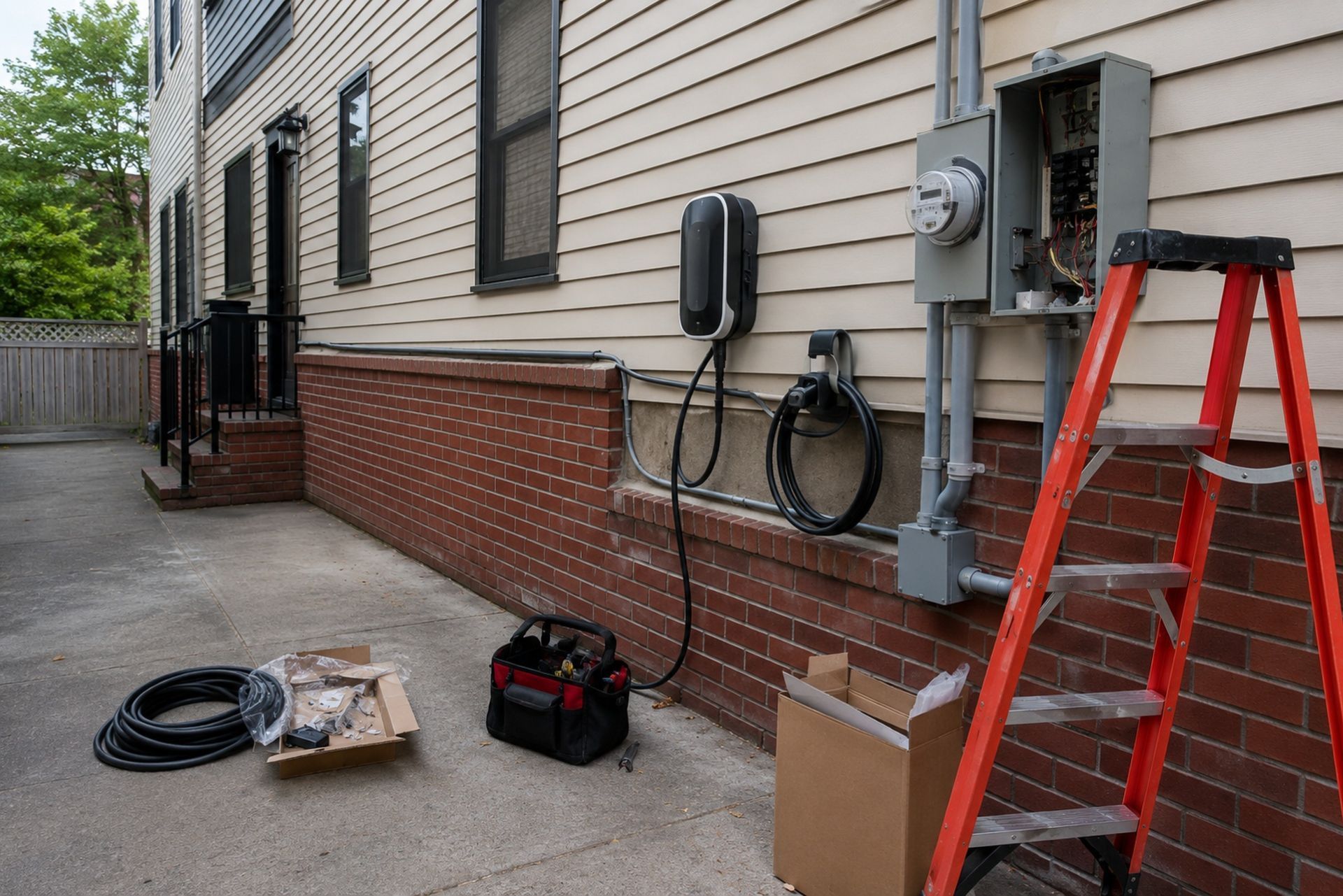
New York's aggressive push toward electrification has created a surge of opportunity for licensed electrical contractors, but it's also introduced a category of risk that most insurance programs weren't built to handle. Between high-voltage DC systems, lithium-ion battery storage, networked charging stations, and the sheer density of New York construction environments, EV charger installation sits at a unique intersection of electrical work, technology, and infrastructure. If you're an electrical contractor adding EV charging to your service mix, or if it's already your primary revenue stream, your insurance program needs to reflect the specific exposures this work creates. A standard electrician's policy won't cut it. This guide covers the coverage types, trade-specific hazards, state licensing requirements, and carrier appetite that New York EV charger installers need to understand before binding a policy or bidding a project.
Navigating the New York EV Infrastructure Insurance Landscape
New York State has committed billions to EV infrastructure through 2030, and the regulatory framework around who can install this equipment is tightening alongside the investment. For electrical contractors, that creates both a barrier to entry and a competitive advantage: if you hold the right licenses and carry the right insurance, you're positioned to capture work that less-prepared competitors can't touch.
The Growing Demand for Licensed Installers in NY
The state's goal of 1 million zero-emission vehicles on the road by 2030 has driven a massive buildout of both residential and commercial charging infrastructure. Utility incentive programs from Con Edison, National Grid, and NYSEG are subsidizing Level 2 and DC fast charger installations across the five boroughs and upstate markets. That demand means more projects, but it also means more scrutiny. Property owners, general contractors, and fleet operators are increasingly requiring proof of both proper licensing and adequate insurance before awarding EV charger installation contracts. If your certificates of insurance don't reflect the scope of work you're performing, you're losing bids or, worse, working exposed.
State-Specific Regulatory Requirements for Contractors
New York doesn't issue a statewide electrical license. Instead, licensing is handled at the municipal level, which creates a patchwork of requirements depending on where you're working. New York City requires a master electrician license from the DOB, while Westchester, Nassau, and Suffolk counties each have their own licensing boards. Upstate municipalities vary widely. What's consistent across all jurisdictions is the permitting and inspection process: EV charger installations require electrical permits, and inspectors are increasingly familiar with NEC Article 625 requirements for electric vehicle supply equipment. Your insurance carrier will want to see that you're pulling permits and working within your license scope. Contractors who skip permits or work outside their licensed territory create underwriting red flags that can result in policy cancellations or claim denials.

By: Michael Fusco
President of Joule Pro
INDEX
Joule Pro is a specialty insurance and risk program of Fusco Orsini & Associates Insurance Services, built exclusively for electrical contractors and licensed in 31 states.
We work with electrical firms across the country — from California, Texas, Florida, New York, and coast to coast — placing General Liability, Workers' Compensation, Commercial Auto, Inland Marine, Surety Bonds, Excess Liability, and full specialty coverage stacks for commercial, industrial, service, residential, and low-voltage electrical contractors. Joule Pro is not a separate licensed entity. It is a dedicated program structure inside Fusco Orsini, giving electrical contractors access to specialty carriers, in-house claims advocacy, and trade-specific risk engineering under one program.
Core Insurance Policies for NY EV Charger Installers
Getting the right coverage stack matters more than getting the cheapest premium. A gap in your program can cost you a six-figure claim or a contract you can't win.
General Liability and Completed Operations Coverage
General liability is your foundation, but the completed operations component is where EV charger work gets interesting. Most property damage from charger installations doesn't happen during the install: it happens weeks or months later when a wiring defect causes an arc fault, a charging unit overheats, or a panel connection fails. Completed operations coverage responds to those post-project claims. In New York, where property values are among the highest in the country, a single fire originating from a faulty charger installation in a parking garage or residential building can generate claims well into seven figures. Make sure your GL policy includes completed operations with limits that match the project values you're pursuing. A $1M/$2M policy might be fine for residential work, but commercial and municipal projects in the New York metro area routinely require $2M/$4M or higher.
Workers' Compensation and New York Disability Benefits
New York has some of the strictest workers' compensation requirements in the country. Every employer, even those with a single employee, must carry workers' comp. The state also requires statutory disability benefits (DBL) and paid family leave (PFL) coverage, which are separate from workers' comp but often bundled by carriers. For EV charger installers specifically, the exposure profile is elevated. The average workers' compensation lost-time claim for EV installation work runs approximately $36,400, driven largely by electrical injuries and arc flash burns during panel upgrades and high-voltage DC connections. New York's workers' comp rates for electrical classification codes already rank among the highest nationally, and carriers are paying close attention to whether your crews have arc flash training and proper PPE protocols.
Professional Liability for Electrical Design and Engineering
If your scope includes any design work, load calculations, or engineering recommendations for EV charging systems, you need professional liability coverage. This is separate from your GL policy and responds to claims alleging errors in your professional judgment: an undersized panel, an incorrect load calculation, or a design recommendation that leads to equipment failure. Many electrical contractors don't think they need this coverage, but the line between "installation" and "design" blurs quickly on EV projects, especially when you're specifying equipment or recommending electrical service upgrades.
Managing Trade-Specific Risks and High-Voltage Hazards
EV charger installation carries risks that standard electrical work doesn't. The combination of DC power systems, battery storage, and networked technology creates a hazard profile that requires specific risk management strategies.
Mitigating Fire and Property Damage During Installation
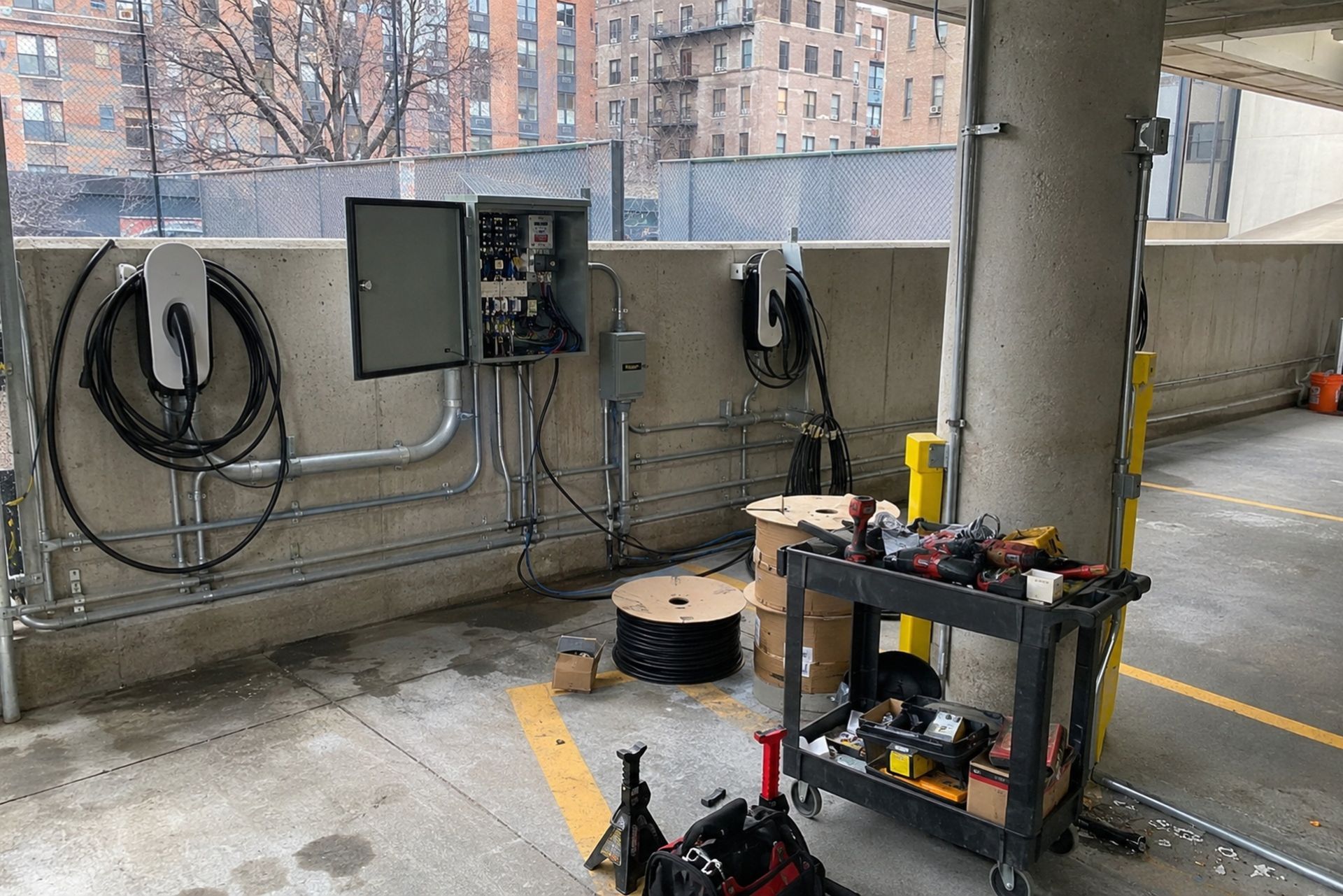
DC fast chargers operate at 200-1000V DC, which is a fundamentally different risk profile than standard 120/240V AC residential work. Arc faults in DC systems don't self-extinguish the way AC arcs do, making fire risk significantly higher during installation and throughout the life of the equipment. Contractors working on Level 3 DC fast charger installations should carry higher completed operations limits and ensure their policies don't exclude DC power systems. Risk mitigation steps that carriers want to see include thermal imaging of connections before energizing, torque verification on all terminations, and documented testing protocols. Joule Pro works with specialty markets that understand these exposures and can structure policies that don't penalize contractors for doing high-voltage DC work, provided safety protocols are documented and followed.
Cyber Liability for Smart Chargers and Networked Stations
This is the coverage gap most EV charger installers don't see coming. Modern EV charging stations are networked devices that process payment data, connect to building management systems, and communicate with utility demand-response programs. If a charger you installed is compromised and customer payment data is exposed, or if a network vulnerability you introduced during installation leads to a building system breach, you could face a cyber liability claim. Cyber liability policies for contractors are relatively inexpensive, typically $1,000-$3,000 annually for reasonable limits, but they're not included in standard GL or professional liability policies. As more municipalities and commercial property owners require cybersecurity protocols for connected infrastructure, this coverage is becoming a practical necessity rather than a nice-to-have.
Understanding Carrier Appetite and Underwriting in New York
Not every insurance carrier wants to write EV charger installation work, and the ones that do have specific preferences about what types of projects and contractors they'll cover.
Preferred Risks: Residential vs. Commercial Public Stations
Carrier appetite breaks down roughly along project type. Most standard market carriers are comfortable with residential Level 2 charger installations: a 240V circuit from the panel to the garage, maybe a small panel upgrade. The risk profile is familiar and the claim severity is manageable. Commercial and public DC fast charging stations are a different story. These projects involve higher voltages, more complex electrical systems, greater property damage exposure, and potential third-party injury claims from public users. Specialty carriers and excess and surplus lines markets are more likely to write this class of business. Joule Pro's underwriter relationships include markets that specifically target electrical contractors performing commercial EV infrastructure work, which means you're not trying to convince a generalist carrier to understand your trade.
| Factor | Residential Level 2 | Commercial/Public DC Fast Charging |
|---|---|---|
| Typical Voltage | 240V AC | 200-1000V DC |
| Carrier Appetite | Standard markets | Specialty/E&S markets |
| GL Limits Required | $1M/$2M | $2M/$4M or higher |
| Completed Ops Concern | Moderate | High |
| Cyber Exposure | Low | Moderate to High |
| Premium Range | $2,500-$5,000/yr | $6,000-$15,000+/yr |
Factors Affecting Premiums: Experience and Safety Protocols
Underwriters evaluating EV charger installers in New York look at several specific factors beyond standard electrical contractor criteria. Your years of experience with EV-specific installations matter: a contractor who has completed 200 charger installs without a claim is a very different risk than one bidding their first project. Safety training documentation, particularly OSHA electrical safety standards compliance and NFPA 70E arc flash training, directly impacts your premium. Carriers also look at your subcontractor management practices, your permit compliance history, and whether you carry proper inland marine coverage for the expensive charging equipment in your possession during installation. A $50,000 DC fast charger sitting in your truck or on a job site needs to be covered under your tools and equipment or inland marine policy, not just the property owner's builder's risk.
Strategic Steps for Securing Comprehensive Coverage
Getting the right insurance program for EV charger installation work in New York requires more than filling out an online application. Start by documenting your EV-specific experience: project lists, training certificates, safety protocols, and loss history. Separate your revenue by project type, because carriers want to know what percentage of your work is residential Level 2 versus commercial DC fast charging. Make sure your New York workers' compensation classification codes accurately reflect the work your crews are performing, because misclassification can void coverage when you need it most.
Work with a producer who specializes in electrical contractor insurance rather than a generalist broker who writes every trade. Joule Pro exists specifically for this purpose: a specialty program built for licensed electrical contractors, backed by Fusco Orsini & Associates Insurance Services (CA Lic. 0H16057, NPN 15979499), with direct producer access for quotes, proposals, and policy questions. The difference between a specialty producer and a generalist is the difference between a carrier that understands your work and one that declines you at renewal because they didn't realize what EV charger installation actually involves.
Frequently Asked Questions
Do I need separate insurance for EV charger installation, or does my electrician's policy cover it? Your existing electrical contractor policy may cover basic Level 2 residential installs, but DC fast charger work, cyber exposures, and professional liability for design work typically require endorsements or separate policies.
What GL limits do most commercial EV projects in New York require? Most commercial and municipal contracts require $2M per occurrence and $4M aggregate, though some larger projects specify $5M or higher, often requiring an umbrella policy.
Is cyber liability really necessary for an electrical contractor? If you're installing networked charging stations that process payments or connect to building systems, yes. A data breach originating from equipment you installed can create liability that your GL policy won't cover.
How does New York's lack of a statewide electrical license affect my insurance? Carriers verify that you hold the appropriate local license for each jurisdiction where you work. Working outside your licensed area can result in claim denials, so keep your license documentation current and share it with your producer.
What's the biggest coverage mistake EV charger installers make? Underestimating completed operations exposure. Most EV-related property damage claims emerge months after installation, and contractors with inadequate completed operations limits face out-of-pocket costs that can threaten their business.

Founder & CEO
The Force Behind the Program
About the Author:
Michael Fusco.
Fusco Orsini & Associates
Joule Pro exists because Mike Fusco saw electrical contractors getting boilerplate insurance — and built a program designed for the way the trade actually works.
Mike is the CEO and co-founder of Fusco Orsini & Associates, the San Diego–based independent agency he launched in 2010. Under his leadership FOA has grown into a nationwide partner serving clients across 31 states, with a personal, client-first approach to commercial insurance and risk.
With over 20 years in insurance and risk management, he specializes in tailored programs spanning general liability, workers' compensation, surety bonding, and employee benefits — helping owners confidently manage risk and pursue growth.
Mike holds a B.S. in Business from the University of Maryland — Robert H. Smith School of Business, and the Certified Insurance Counselor (CIC) designation, held by fewer than 3% of insurance professionals nationwide.
What Our Clients Say
Trusted by Electrical Contractors Across the Country.
5.0
★★★★★
Google reviews
Core Commercial Coverage
Business Insurance for Electrical Contractors.
The fundamentals — written, structured, and priced for electrical risk. Each line is reviewed annually by an underwriter who only writes our trade.
01
General Liability
Premises & completed-operations coverage with electrical-specific endorsements and full pollution carve-back options.
02
Workers' Compensation
Class-code optimization, experience-mod review, and return-to-work programs designed for energized-work exposures.
03
Commercial Auto
Fleet, hired & non-owned auto, and tools-in-transit coverage written for service vans and bucket trucks.
04
Tools & Equipment
Scheduled and blanket coverage for tools, test equipment, scissor lifts, and contractor's equipment on-site or in-transit.
05
Surety Bonds
Bid, performance, and payment bonds — single-job and aggregate programs for commercial & public-works contracts.
06
Commercial Property
Layered limits up to $50M with carrier panels covering your shop, warehouse, yard, and on-premises tools, materials, and equipment.
Who We Serve
Electrical Contractors We Specialize In.
From $5M service shops to $250M industrial primes — every Joule Pro program is shaped to the contractor's revenue mix and project profile.
01 / Industrial
Commercial & Industrial Electrical Contractors
High-voltage, substation, and plant electrical work. Pollution, builder's risk, and large-deductible WC programs.
02 / Service
Service & Residential Electrical Contractors
Service-call shops, panel upgrades, and EV charging installers. Auto-fleet, GL, and tool-coverage programs.
03 / Low-Voltage
Specialty & Low-Voltage Contractors
Data, fire-alarm, security, and BMS controls. Cyber, professional liability, and follow-form excess.
Frequently Asked Questions
Common
Questions From
Electrical Contractors.
What size electrical contractors do you write?
Joule Pro is built for licensed electrical firms from roughly $2M in revenue to $250M+. Below $2M we typically refer to our small-business desk; above $250M we underwrite individually with our industrial practice team.
Do I need to be licensed in multiple states?
No. We license you wherever you work. Joule Pro is admitted in 31 states and our compliance team handles multi-state filings, prevailing-wage endorsements, and certificate-of-insurance requirements.
How is Joule Pro different from a generic contractor program?
Generic programs use a contractor's questionnaire that treats you like a roofer. We use forms written for energized work, arc-flash exposures, and design-build risk — and our carriers price accordingly.
What does the claims process actually look like?
Every Joule Pro client is assigned a named claims advocate at bind. They take the FNOL, set strategy with your assigned attorney, and serve as your single point of contact through close.
Can you bond large public-works contracts?
Yes. Through our surety partners we write single-job bonds up to $75M and aggregate programs to $300M, with expedited turnarounds for school district, federal, and DOT work.
What happens at renewal?
Your producer and claims advocate jointly run a renewal review 90 days out — covering loss trends, exposure changes, and market alternatives — so renewal day is a confirmation, not a surprise.
From the Blog
Insights for Electrical Contractors.
Risk briefings, claim post-mortems, and program updates — written by our underwriters and risk engineers.


Get Started
Get a Quote on a Program Built Around Your Trade.
A 30-minute discovery call is the only commitment. You'll leave with a written gap analysis of your current program — yours to keep, whether you bind with us or not.