
Business Insurance
Master Electrician Insurance
★★★★★ 150+ Five-Star Reviews · Google & Facebook
A single wiring error on a commercial job can trigger a fire, a lawsuit, and a six-figure claim before the week is out. Master electricians face risks that most general contractors never encounter: arc flash injuries, code violation allegations, and liability for systems installed years ago. If your insurance program wasn't designed for the electrical trade, you're carrying gaps you probably don't know about. This guide covers the full coverage stack that master electricians need, from general liability and workers' comp to tools, commercial auto, and the trade-specific hazards that keep experienced contractors up at night. Whether you're a solo operator pulling permits or running a crew of twenty journeymen, understanding exactly what your policies do and don't cover is the difference between surviving a bad claim and shutting your doors.
The Importance of Specialized Insurance for Master Electricians
Why Standard Business Policies Aren't Enough
A generic business insurance policy treats an electrician the same way it treats a landscaper or a house painter. That's a problem. Standard commercial general liability forms often exclude or sublimit coverage for completed operations, which is where most electrical claims actually land: a panel you wired six months ago that causes a fire. They also tend to cap tool coverage at laughably low amounts, sometimes $5,000 or less, when your meter kit alone costs more than that.
Trade-specific programs underwrite the actual risks you face. They account for high-voltage exposure, the cost of rework after a code violation, and the liability tail that follows every installation. Joule Pro, for instance, builds its coverage stack exclusively for licensed electrical contractors, which means underwriters who understand the difference between residential service work and industrial controls aren't lumping you in with general handyman operations.
Licensing Requirements and State Compliance
Most states require master electricians to carry minimum insurance limits before issuing or renewing a license. California mandates general liability and workers' comp for any contractor with employees. Texas requires proof of insurance for licensing in many municipalities. Florida ties your license directly to your insurance status, and a lapse can trigger automatic suspension.
Beyond licensing, general contractors and property owners increasingly require $1M/$2M general liability limits and additional insured endorsements before they'll let you on a jobsite. If your policy can't produce compliant certificates within 24 hours, you're losing bids. State requirements shift frequently, so working with a producer who tracks electrical trade regulations across jurisdictions saves real headaches.
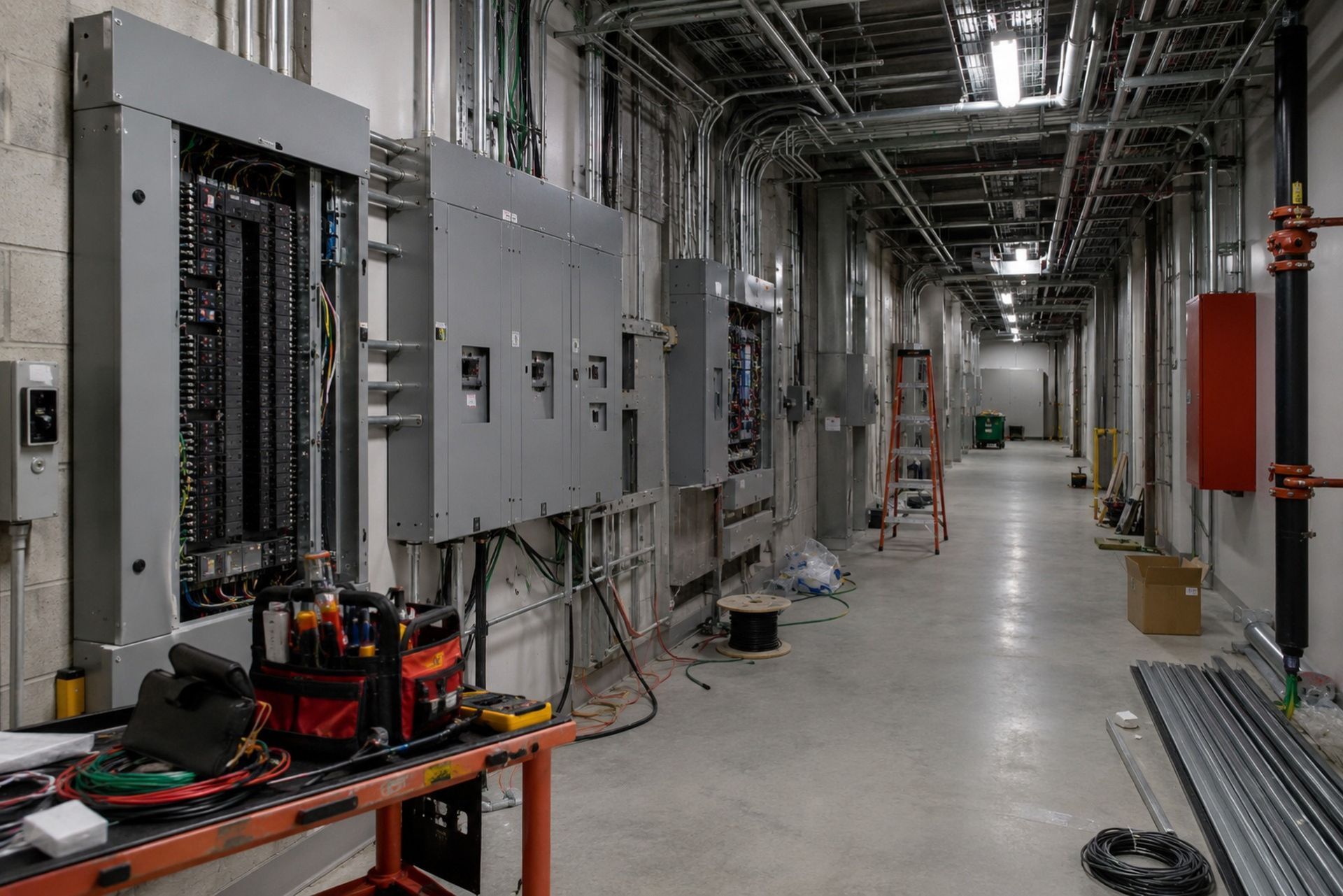

By: Michael Fusco
President of Joule Pro
INDEX
The Importance of Specialized Insurance for Master Electricians
Core Liability Protections for Electrical Contractors
Protecting Your Assets: Tools, Equipment, and Vehicles
Workforce and Business Continuity Coverage
Mitigating Trade-Specific Risks and High-Voltage Hazards
Joule Pro is a specialty insurance and risk program of Fusco Orsini & Associates Insurance Services, built exclusively for electrical contractors and licensed in 31 states.
We work with electrical firms across the country — from California, Texas, Florida, New York, and coast to coast — placing General Liability, Workers' Compensation, Commercial Auto, Inland Marine, Surety Bonds, Excess Liability, and full specialty coverage stacks for commercial, industrial, service, residential, and low-voltage electrical contractors. Joule Pro is not a separate licensed entity. It is a dedicated program structure inside Fusco Orsini, giving electrical contractors access to specialty carriers, in-house claims advocacy, and trade-specific risk engineering under one program.
Core Liability Protections for Electrical Contractors
General Liability: Protecting Against Third-Party Claims
General liability is the foundation. It covers bodily injury and property damage claims from third parties: a homeowner who trips over your cord, a fire caused by work in progress, damage to a client's existing wiring during a panel upgrade. The national average for a standard $1M/$2M general liability policy for electrical contractors runs about $379 per month, though your actual rate depends on revenue, payroll, claims history, and the type of work you perform.
One thing most electricians overlook: your GL policy's "products-completed operations" aggregate is separate from your general aggregate. If you exhaust one, the other still applies. Make sure both limits are adequate for your volume of completed work, because that's where the expensive claims come from.
Professional Liability and Errors & Omissions (E&O)
If you design electrical systems, specify equipment, or provide engineering-adjacent services, GL won't cover a claim alleging your design was faulty. That's a professional liability exposure. E&O insurance responds when a client claims your professional judgment or recommendations caused them financial harm, even if no physical damage occurred.
This matters most for master electricians doing design-build work, energy audits, or EV charging station planning. A miscalculated load analysis that forces a $40,000 service upgrade is an E&O claim, not a GL claim.
Completed Operations and Product Liability
Completed operations coverage protects you after you leave the jobsite. A connection fails, a breaker trips repeatedly, a fire starts in a wall cavity months later: these claims hit your completed operations coverage. Most electrical liability claims are completed operations claims, which is why carriers scrutinize this exposure carefully.
Product liability applies if you manufacture, assemble, or modify electrical components. Even installing a third-party product can create product liability exposure if the installation itself is alleged to have caused the failure.
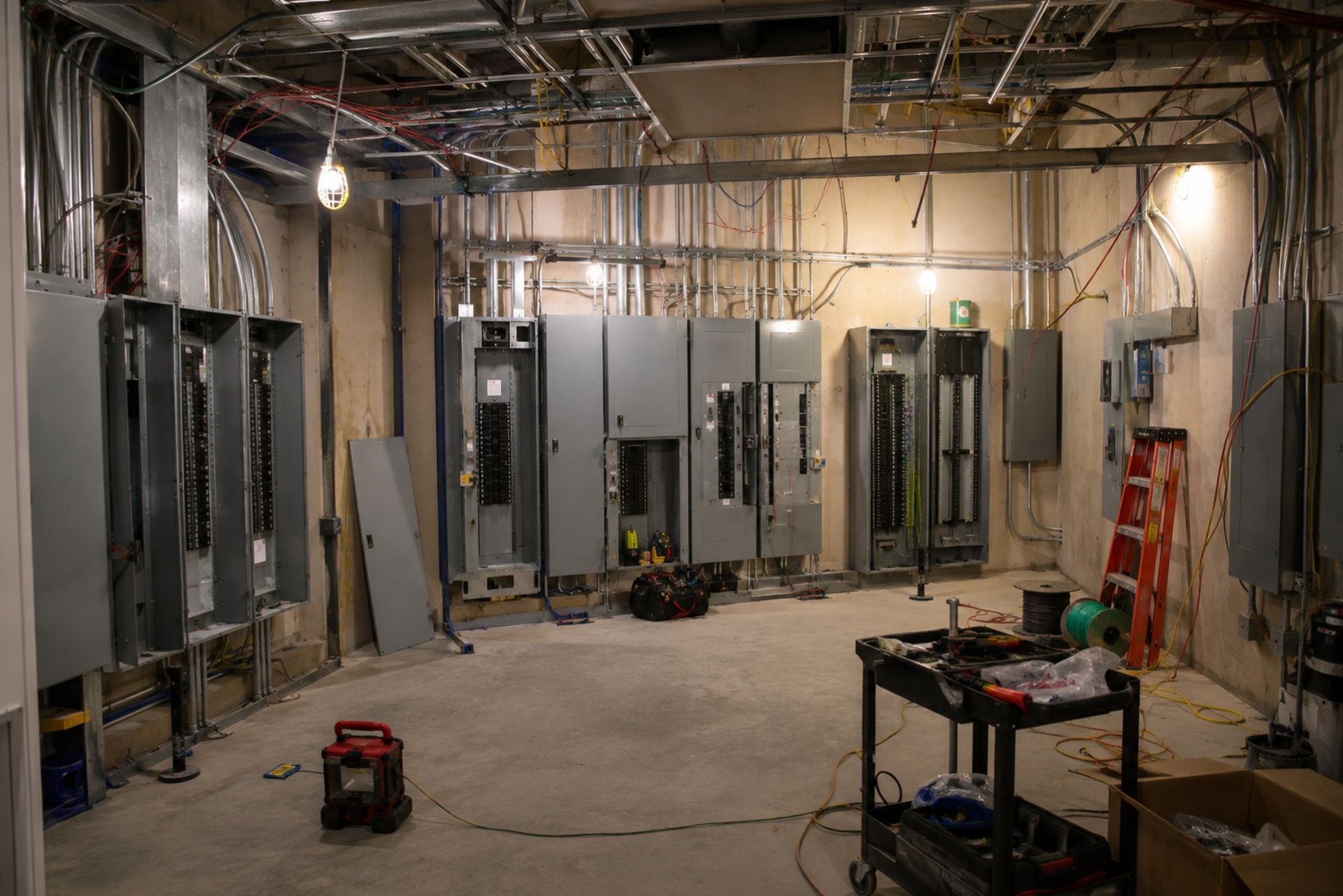
Protecting Your Assets: Tools, Equipment, and Vehicles
Inland Marine Insurance for Mobile Tools and Gear
Your tools travel with you. A standard property policy covers items at a fixed location, but inland marine insurance covers tools, testing equipment, and materials in transit or stored at jobsites. A quality inland marine policy covers theft, fire, vandalism, and accidental damage for items that move between locations.
Think about what's in your van right now: oscilloscopes, meggers, benders, power tools, wire stock. Replacing everything after a theft could easily cost $15,000 to $30,000. Inland marine premiums are modest relative to the replacement value, typically 1-3% of the total insured amount annually.
Commercial Auto Insurance for Work Vans and Trucks
Personal auto policies exclude vehicles used for business purposes, and a work van loaded with tools and materials is clearly a commercial vehicle. Commercial auto insurance covers liability, collision, and comprehensive damage for vehicles titled to your business or used regularly for work.
| Coverage Type | What It Covers | Why Electricians Need It |
|---|---|---|
| Liability | Damage/injury you cause to others | Required by law; protects against lawsuits |
| Collision | Damage to your vehicle in an accident | Keeps your van on the road after a wreck |
| Comprehensive | Theft, vandalism, weather damage | Protects tool-loaded vans from break-ins |
| Hired & Non-Owned Auto | Vehicles you rent or employees' personal cars used for work | Covers liability gaps when crews use personal vehicles |
If your employees ever drive their own cars to jobsites or supply houses, hired and non-owned auto coverage fills a gap that could otherwise leave you exposed.
Workforce and Business Continuity Coverage
Workers' Compensation for Journeymen and Apprentices
Electrical work consistently ranks among the most dangerous construction trades, with electrocution being one of OSHA's "Fatal Four" hazards. Workers' comp covers medical expenses, lost wages, and rehabilitation for employees injured on the job. Nearly every state requires it as soon as you hire your first employee, and some states require it even for sole proprietors in the construction trades.
Rates vary dramatically by state and classification code. Electricians typically fall under NCCI class code 5190, and your experience modification rate (EMR) directly affects your premium. An EMR below 1.0 means you're safer than average and pay less. Above 1.0, and you're paying a surcharge. Investing in safety training and incident documentation pays real dividends here.
Business Interruption and Income Protection
A fire at your shop, a major vehicle accident, or a liability claim that sidelines your operations can halt revenue for weeks or months. Business interruption insurance replaces lost income and covers continuing expenses like rent, loan payments, and payroll during the downtime.
This coverage is often overlooked by smaller shops, but consider what happens if your primary work vehicle is totaled and you can't get to jobs for three weeks. That lost revenue doesn't pause your overhead.
Mitigating Trade-Specific Risks and High-Voltage Hazards
Pollution Liability and Hazardous Material Handling
Electrical work can involve exposure to PCBs in older transformers, asbestos in legacy panel enclosures, and lead paint in pre-1978 buildings. Standard GL policies contain absolute pollution exclusions, meaning any claim involving a pollutant is denied outright. A separate pollution liability policy fills this gap.
If you do any retrofit, demolition, or renovation work in older commercial or industrial buildings, pollution liability isn't optional. A single asbestos exposure claim can generate defense costs exceeding $100,000 before the case even reaches trial.
Cyber Liability for Smart Home and Industrial Systems
Master electricians increasingly install and configure networked systems: smart panels, building automation, industrial SCADA controls, and EV charging networks. If a system you installed gets breached and exposes client data or disrupts operations, you could face a cyber liability claim.
Cyber liability insurance covers data breach response costs, business interruption from cyber events, and third-party claims alleging your installation created the vulnerability. As more electrical work involves IoT-connected devices in 2026, this exposure is growing faster than most contractors realize.
Optimizing Your Coverage and Managing Premium Costs
How to Bundle with a Business Owner's Policy (BOP)
A BOP bundles general liability, commercial property, and business interruption into a single policy, usually at a lower combined premium than buying each separately. For smaller electrical shops doing under $5M in revenue, a BOP can be the most cost-effective foundation.
The catch: not all BOPs are created equal. Some exclude contractor classifications entirely, and others cap completed operations coverage at levels too low for electrical work. A program like Joule Pro, backed by Fusco Orsini & Associates Insurance Services, structures BOPs specifically for electrical contractors, so the endorsements and sublimits actually match your risk profile.
Risk Management Strategies to Lower Insurance Rates
Your premium isn't fixed. Carriers reward contractors who actively reduce risk:
- Maintain a formal safety program with documented toolbox talks and incident reporting
- Keep your EMR below 1.0 through aggressive return-to-work programs
- Use background checks and drug testing for new hires
- Install GPS tracking and dashcams in commercial vehicles
- Document every job with photos, permits, and inspection sign-offs
These steps don't just lower premiums. They also make claims easier to defend when they do happen. A well-documented job file is your best evidence in a completed operations dispute.
Frequently Asked Questions
How much does insurance for a master electrician typically cost? Costs vary widely based on state, revenue, payroll, and claims history. General liability alone averages around $379/month for a $1M/$2M policy, but your total program cost depends on which coverages you need.
Do I need workers' comp if I'm a sole proprietor with no employees? It depends on your state. Some states exempt sole proprietors, while others require it for all construction trade license holders. Many general contractors also require it before they'll subcontract work to you.
What's the difference between general liability and professional liability? General liability covers bodily injury and property damage. Professional liability covers financial losses caused by your professional advice, design errors, or recommendations, even when no physical damage occurs.
Does my personal auto insurance cover my work van? Almost certainly not. Personal auto policies exclude regular business use, and insurers routinely deny claims when they discover a vehicle was being used commercially.
Can I get all my coverages from one provider? Yes. Specialty programs for electrical contractors bundle GL, workers' comp, commercial auto, inland marine, and other coverages into a coordinated program, which also simplifies certificate management.
Your Next Steps
The right insurance program for a master electrician isn't a collection of random policies from different carriers. It's a coordinated coverage stack built around the specific ways electrical work generates claims. From completed operations liability that follows you for years after a job to inland marine coverage for the tools in your van tonight, every piece matters.
If you're unsure whether your current program has gaps, Joule Pro offers direct access to licensed producers who specialize in electrical contractor insurance, not a chatbot, not a generic quote engine. Reach out for a coverage review, and bring your current policies. The gaps are usually in the details nobody reads until a claim hits.

Founder & CEO
The Force Behind the Program
About the Author:
Michael Fusco.
Fusco Orsini & Associates
Joule Pro exists because Mike Fusco saw electrical contractors getting boilerplate insurance — and built a program designed for the way the trade actually works.
Mike is the CEO and co-founder of Fusco Orsini & Associates, the San Diego–based independent agency he launched in 2010. Under his leadership FOA has grown into a nationwide partner serving clients across 31 states, with a personal, client-first approach to commercial insurance and risk.
With over 20 years in insurance and risk management, he specializes in tailored programs spanning general liability, workers' compensation, surety bonding, and employee benefits — helping owners confidently manage risk and pursue growth.
Mike holds a B.S. in Business from the University of Maryland — Robert H. Smith School of Business, and the Certified Insurance Counselor (CIC) designation, held by fewer than 3% of insurance professionals nationwide.
What Our Clients Say
Trusted by Electrical Contractors Across the Country.
5.0
★★★★★
Google reviews
Core Commercial Coverage
Business Insurance for Electrical Contractors.
The fundamentals — written, structured, and priced for electrical risk. Each line is reviewed annually by an underwriter who only writes our trade.
01
General Liability
Premises & completed-operations coverage with electrical-specific endorsements and full pollution carve-back options.
02
Workers' Compensation
Class-code optimization, experience-mod review, and return-to-work programs designed for energized-work exposures.
03
Commercial Auto
Fleet, hired & non-owned auto, and tools-in-transit coverage written for service vans and bucket trucks.
04
Tools & Equipment
Scheduled and blanket coverage for tools, test equipment, scissor lifts, and contractor's equipment on-site or in-transit.
05
Surety Bonds
Bid, performance, and payment bonds — single-job and aggregate programs for commercial & public-works contracts.
06
Commercial Property
Layered limits up to $50M with carrier panels covering your shop, warehouse, yard, and on-premises tools, materials, and equipment.
Who We Serve
Electrical Contractors We Specialize In.
From $5M service shops to $250M industrial primes — every Joule Pro program is shaped to the contractor's revenue mix and project profile.
01 / Industrial
Commercial & Industrial Electrical Contractors
High-voltage, substation, and plant electrical work. Pollution, builder's risk, and large-deductible WC programs.
02 / Service
Service & Residential Electrical Contractors
Service-call shops, panel upgrades, and EV charging installers. Auto-fleet, GL, and tool-coverage programs.
03 / Low-Voltage
Specialty & Low-Voltage Contractors
Data, fire-alarm, security, and BMS controls. Cyber, professional liability, and follow-form excess.
Frequently Asked Questions
Common
Questions From
Electrical Contractors.
What size electrical contractors do you write?
Joule Pro is built for licensed electrical firms from roughly $2M in revenue to $250M+. Below $2M we typically refer to our small-business desk; above $250M we underwrite individually with our industrial practice team.
Do I need to be licensed in multiple states?
No. We license you wherever you work. Joule Pro is admitted in 31 states and our compliance team handles multi-state filings, prevailing-wage endorsements, and certificate-of-insurance requirements.
How is Joule Pro different from a generic contractor program?
Generic programs use a contractor's questionnaire that treats you like a roofer. We use forms written for energized work, arc-flash exposures, and design-build risk — and our carriers price accordingly.
What does the claims process actually look like?
Every Joule Pro client is assigned a named claims advocate at bind. They take the FNOL, set strategy with your assigned attorney, and serve as your single point of contact through close.
Can you bond large public-works contracts?
Yes. Through our surety partners we write single-job bonds up to $75M and aggregate programs to $300M, with expedited turnarounds for school district, federal, and DOT work.
What happens at renewal?
Your producer and claims advocate jointly run a renewal review 90 days out — covering loss trends, exposure changes, and market alternatives — so renewal day is a confirmation, not a surprise.
From the Blog
Insights for Electrical Contractors.
Risk briefings, claim post-mortems, and program updates — written by our underwriters and risk engineers.


Get Started
Get a Quote on a Program Built Around Your Trade.
A 30-minute discovery call is the only commitment. You'll leave with a written gap analysis of your current program — yours to keep, whether you bind with us or not.