Business Insurance
Florida Generator Installer Insurance
★★★★★ 150+ Five-Star Reviews · Google & Facebook
General liability and completed operations coverage form the foundation of any generator installer's insurance program. Without these two pieces in place, you're exposed to the most common and most expensive claims in the trade.
Florida's generator installation market has exploded over the past five years. Between an aging power grid, increasingly intense hurricane seasons, and a residential construction boom that shows no signs of slowing, electrical contractors specializing in standby and portable generator systems are busier than ever. But that demand comes with a unique risk profile that most general insurance programs don't understand well. Getting the right insurance coverage for generator installation work in Florida requires knowing the trade-specific exposures, the state's licensing framework, and which carriers actually want to write this class of business. This guide breaks down what Florida generator contractors need to protect their operations, stay compliant, and avoid the coverage gaps that sink businesses after a single bad claim.
Essential Insurance Coverages for Florida Generator Installers
General Liability and Products-Completed Operations
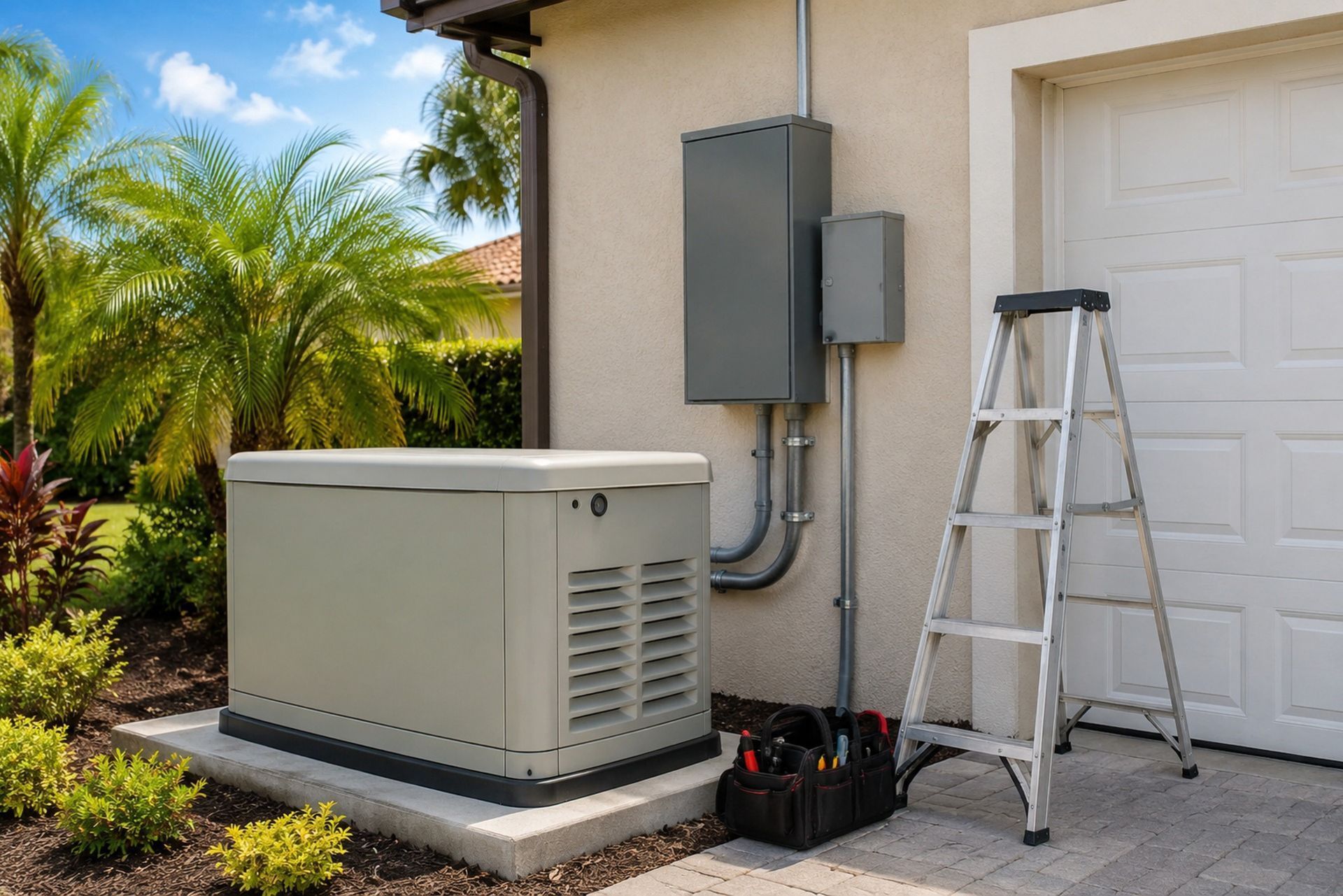
General liability is the foundation of any contractor's insurance program, but for generator installers, the products-completed operations piece is where the real action happens. Most claims don't occur during the installation itself. They happen weeks or months later when something fails: a transfer switch malfunctions, a gas line connection leaks, or a unit vibrates loose from its mounting pad.
Your GL policy's products-completed operations coverage responds to bodily injury or property damage caused by your completed work. In Florida, where generators run hard during storm season, the failure window is compressed and the stakes are high. A generator that backfeeds into the grid can injure a utility worker. A poorly secured unit can shift during a Category 3 hurricane and damage the home it was supposed to protect.
Standard GL limits of $1M per occurrence and $2M aggregate are typical starting points, but many commercial and HOA contracts in South Florida require $2M/$4M or higher. Umbrella policies fill that gap, and they're relatively affordable for contractors with clean loss histories.
Professional Liability for Load Calculations and System Design
Here's something most generator installers overlook: if you're sizing generators, performing load calculations, or recommending system configurations, you're providing a professional service. Standard GL policies exclude professional errors. If you spec a 22kW unit for a home that actually needs 38kW, and the homeowner's HVAC system burns out during an outage because the generator was overloaded, that's a professional liability claim.
Professional liability (sometimes called errors and omissions) covers the financial loss your client suffers from your incorrect advice or design work. Premiums for electrical contractors typically run between $1,500 and $4,000 annually depending on revenue and scope of services. It's a small price compared to a single design-error lawsuit.
Inland Marine Coverage for High-Value Equipment in Transit
A single whole-home standby generator can cost $5,000 to $15,000 wholesale. If you're running three or four installations per week, you might have $30,000 to $60,000 in equipment sitting on a truck or staged at a job site at any given time. Your commercial auto policy covers the truck. Your GL covers the job site to some extent. But neither adequately covers the generators, transfer switches, and accessories in transit or temporary storage.
Inland marine insurance fills this gap. It covers tools, equipment, and materials while they're being transported or stored at locations you don't own. Programs like those offered through Joule Pro bundle inland marine with other contractor coverages, which simplifies the process and often reduces the total cost compared to buying standalone policies.

By: Michael Fusco
President of Joule Pro
INDEX
Essential Insurance Coverages for Florida Generator Installers
Mitigating Trade-Specific Risks in the Florida Market
Navigating Florida State Licensing and Insurance Compliance
Understanding Carrier Appetite for Generator Contractors
Strategies for Securing Competitive Rates and Comprehensive Protection
Joule Pro is a specialty insurance and risk program of Fusco Orsini & Associates Insurance Services, built exclusively for electrical contractors and licensed in 31 states.
We work with electrical firms across the country — from California, Texas, Florida, New York, and coast to coast — placing General Liability, Workers' Compensation, Commercial Auto, Inland Marine, Surety Bonds, Excess Liability, and full specialty coverage stacks for commercial, industrial, service, residential, and low-voltage electrical contractors. Joule Pro is not a separate licensed entity. It is a dedicated program structure inside Fusco Orsini, giving electrical contractors access to specialty carriers, in-house claims advocacy, and trade-specific risk engineering under one program.
Mitigating Trade-Specific Risks in the Florida Market
Addressing Severe Weather and Hurricane-Related Liabilities
Florida generator contractors face a paradox: the same storms that drive demand also create the highest-risk working conditions. Post-hurricane installations happen fast, often under pressure from desperate homeowners and with supply chains stretched thin. Corners get cut. Permits get skipped. Temporary installations become permanent.
From an insurance standpoint, hurricane-related work amplifies every exposure. Wind-driven debris can damage staged equipment. Flooding at job sites creates electrical hazards. And the post-storm rush often means using subcontractors you haven't fully vetted. Each of these scenarios can trigger claims that test your coverage limits.
One practical step: maintain a hurricane preparedness protocol that includes securing staged inventory, documenting all installations with photos and permits, and verifying that any subcontractors carry their own insurance. Underwriters look favorably on contractors who can demonstrate formal risk management practices.
Risks of Improper Installation: Fire, Carbon Monoxide, and Backfeeding
The three nightmare scenarios for generator installers are fire, carbon monoxide poisoning, and utility backfeeding. Each one can result in serious injury or death, and each one generates six- and seven-figure claims.
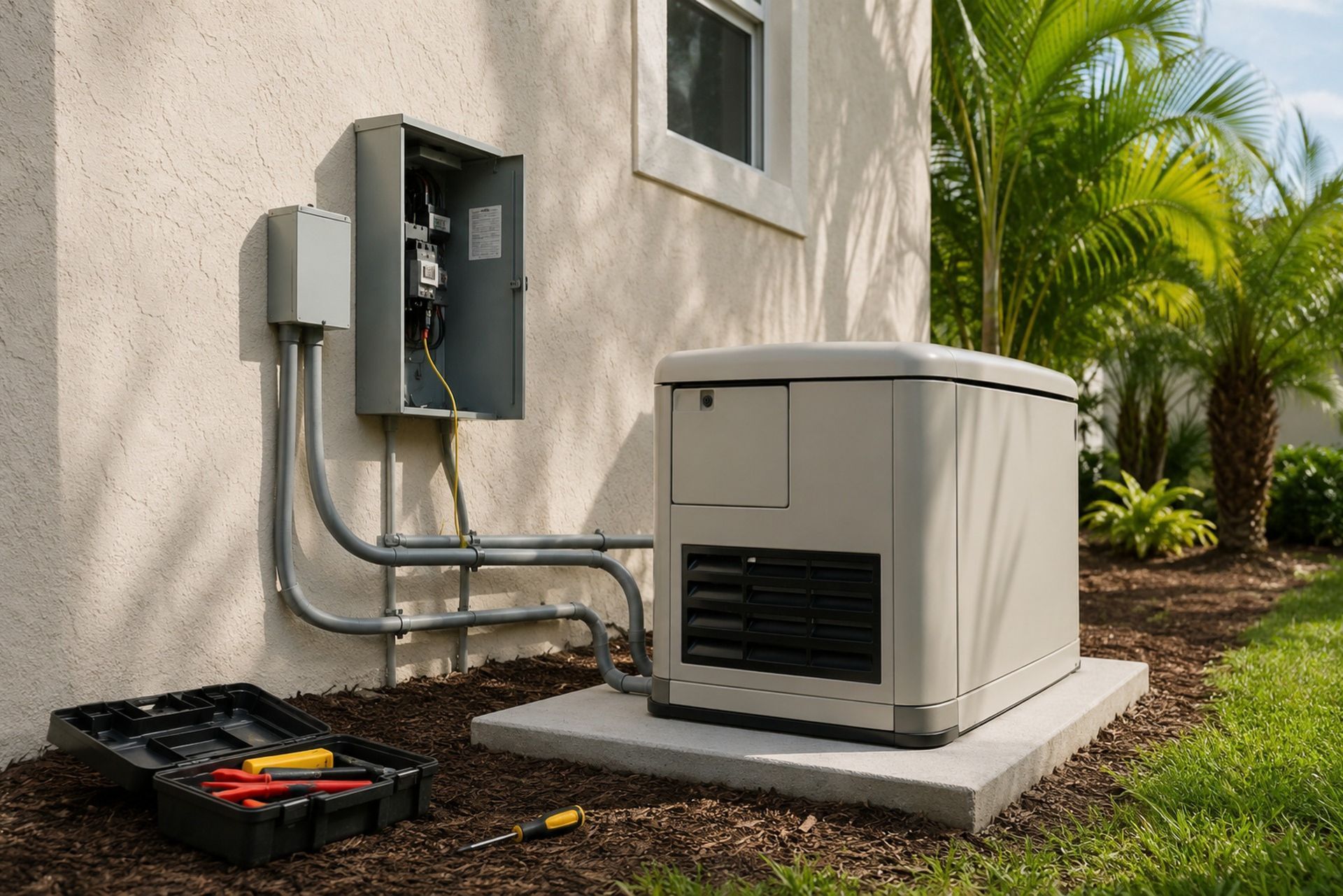
Fire claims typically stem from improper fuel line connections or inadequate clearance between the generator and combustible materials. Carbon monoxide incidents happen most often with portable generators placed too close to occupied spaces, but whole-home units with failed exhaust systems are also a concern. Backfeeding occurs when a generator feeds power back into the utility grid through an improperly installed or bypassed transfer switch, potentially electrocuting utility workers restoring power.
These aren't hypothetical risks. They're the claims that make underwriters nervous about generator contractors and the reason your installation documentation matters so much. Keeping detailed records of every transfer switch installation, fuel connection inspection, and CO detector verification creates a defense file that can save you in litigation.
Navigating Florida State Licensing and Insurance Compliance
DBPR Requirements for Electrical and Plumbing Subcontractors
Florida's Department of Business and Professional Regulation (DBPR) oversees contractor licensing, and generator installation touches multiple license categories. Electrical work requires a licensed electrical contractor (EC) or registered electrical contractor (ER). If the installation involves gas line connections for natural gas or propane generators, a plumbing contractor license may also be required.
The DBPR requires that all licensed contractors maintain general liability insurance, and many local jurisdictions add their own insurance requirements for permit issuance. If you're subcontracting the gas line work to a plumber, you need to verify their license and insurance status before they step on your job site. A subcontractor's lapsed policy becomes your problem when a claim hits.
Working with a specialty insurance provider that understands the electrical trade's licensing structure helps here. Joule Pro, for instance, is built specifically for licensed electrical contractors and understands how Florida's DBPR requirements intersect with insurance compliance, which saves time during audits and renewals.
Florida Workers' Compensation Exemptions and Requirements
Florida allows corporate officers and LLC members to exempt themselves from workers' compensation coverage, but the rules are specific. Corporate officers in the construction industry can exempt themselves only if they own at least 10% of the company, and each company is limited to three officer exemptions. Sole proprietors and partners can also exempt themselves.
The good news for Florida contractors is that workers' comp rates have been trending downward statewide, with a 6.9% decrease effective January 2026. That said, generator installation work still carries meaningful comp exposure. Lifting heavy units, working with high-voltage connections, and operating in Florida's heat all contribute to injury frequency. Even if you personally exempt out, any W-2 employees must be covered, and general contractors will verify your comp status before letting you on their sites.
Understanding Carrier Appetite for Generator Contractors
Preferred Risks: Residential vs. Industrial Installations
Not all generator work looks the same to an underwriter. Residential standby generator installations, typically in the 7kW to 48kW range, are generally considered favorable risks. The work is predictable, the equipment is standardized, and the exposure per job is manageable.
| Factor | Residential Installations | Commercial/Industrial Installations |
|---|---|---|
| Typical Generator Size | 7kW - 48kW | 100kW - 2,000kW+ |
| Average Job Value | $8,000 - $25,000 | $50,000 - $500,000+ |
| Carrier Appetite | Strong - most markets | Limited - specialty markets |
| Key Underwriting Concern | Transfer switch installation | Paralleling, fuel storage, load management |
| Typical GL Premium Range | $3,000 - $8,000/year | $10,000 - $30,000+/year |
Industrial and large commercial generator work, especially projects involving paralleling switchgear, large diesel fuel storage, or critical facility backup systems (hospitals, data centers), narrows the carrier pool significantly. Fewer markets want this exposure, and those that do charge accordingly.
Factors Influencing Premiums and Underwriting Approval
Underwriters evaluating generator contractors focus on several key factors: years in business, claims history, annual revenue, percentage of residential vs. commercial work, and whether you use subcontractors. A five-year-old company doing $1.5M in residential generator installations with no claims is an easy write. A two-year-old company doing $3M in mixed commercial and industrial work with a prior fire claim is a hard placement.
Other factors that affect your premium include your safety program documentation, whether you pull permits consistently, and your employee training records. Carriers want to see that you're running a professional operation, not just chasing revenue.
Specialty programs designed for electrical contractors typically offer better terms than generalist markets because the underwriters understand the risk. That's the advantage of working with a provider like Joule Pro: their carrier relationships are built around electrical trade work, so they can match your specific operation to the right market.
Strategies for Securing Competitive Rates and Comprehensive Protection
The most effective way to lower your insurance costs as a Florida generator contractor is to make yourself easy to underwrite. That means maintaining clean loss runs, pulling permits on every job, documenting your installations thoroughly, and keeping your licensing current with the DBPR.
Bundle your coverages where possible. A package that includes GL, inland marine, commercial auto, and workers' comp through a single program almost always costs less than piecing together individual policies from different carriers. It also eliminates coverage gaps between policies, which is where many contractors get burned.
Start your renewal process 90 days before expiration. This gives your agent time to market your account to multiple carriers and negotiate the best terms. Waiting until the last minute limits your options and often results in higher premiums or forced placements in surplus lines markets.
FAQ
Do I need a separate license to install generators in Florida? Generator installation typically falls under your electrical contractor (EC or ER) license. Gas line connections require a separate plumbing license or a licensed subcontractor.
How much does general liability insurance cost for Florida generator installers? Residential-focused contractors generally pay between $3,000 and $8,000 per year. Commercial and industrial work pushes premiums significantly higher.
Is professional liability insurance required for generator contractors? It's not legally required in most cases, but if you're performing load calculations or system design, you're exposed to professional errors claims that your GL policy won't cover.
Can I exempt myself from workers' compensation in Florida? Yes, if you're a corporate officer owning at least 10% of the company, up to three officers per company. Sole proprietors and partners can also exempt themselves.
What's the biggest coverage gap for generator contractors? Products-completed operations limits that are too low. A single backfeeding incident or fire claim can easily exceed $1M, and many contractors carry minimum limits.
Your Next Steps
Generator installation insurance in Florida isn't something you can afford to get wrong. The combination of hurricane exposure, high-value equipment, and life-safety risks around electrical and gas connections means your coverage needs to be specific and thorough. Work with a specialty provider that understands the electrical trade, keep your documentation tight, and treat your insurance program as a business asset rather than a grudge purchase. If you're ready to get a quote tailored to your generator installation operation, reach out to the team at Joule Pro for a coverage review built around how your business actually works.

Founder & CEO
The Force Behind the Program
About the Author:
Michael Fusco.
Fusco Orsini & Associates
Joule Pro exists because Mike Fusco saw electrical contractors getting boilerplate insurance — and built a program designed for the way the trade actually works.
Mike is the CEO and co-founder of Fusco Orsini & Associates, the San Diego–based independent agency he launched in 2010. Under his leadership FOA has grown into a nationwide partner serving clients across 31 states, with a personal, client-first approach to commercial insurance and risk.
With over 20 years in insurance and risk management, he specializes in tailored programs spanning general liability, workers' compensation, surety bonding, and employee benefits — helping owners confidently manage risk and pursue growth.
Mike holds a B.S. in Business from the University of Maryland — Robert H. Smith School of Business, and the Certified Insurance Counselor (CIC) designation, held by fewer than 3% of insurance professionals nationwide.
What Our Clients Say
Trusted by Electrical Contractors Across the Country.
5.0
★★★★★
Google reviews
Core Commercial Coverage
Business Insurance for Electrical Contractors.
The fundamentals — written, structured, and priced for electrical risk. Each line is reviewed annually by an underwriter who only writes our trade.
01
General Liability
Premises & completed-operations coverage with electrical-specific endorsements and full pollution carve-back options.
02
Workers' Compensation
Class-code optimization, experience-mod review, and return-to-work programs designed for energized-work exposures.
03
Commercial Auto
Fleet, hired & non-owned auto, and tools-in-transit coverage written for service vans and bucket trucks.
04
Tools & Equipment
Scheduled and blanket coverage for tools, test equipment, scissor lifts, and contractor's equipment on-site or in-transit.
05
Surety Bonds
Bid, performance, and payment bonds — single-job and aggregate programs for commercial & public-works contracts.
06
Commercial Property
Layered limits up to $50M with carrier panels covering your shop, warehouse, yard, and on-premises tools, materials, and equipment.
Who We Serve
Electrical Contractors We Specialize In.
From $5M service shops to $250M industrial primes — every Joule Pro program is shaped to the contractor's revenue mix and project profile.
01 / Industrial
Commercial & Industrial Electrical Contractors
High-voltage, substation, and plant electrical work. Pollution, builder's risk, and large-deductible WC programs.
02 / Service
Service & Residential Electrical Contractors
Service-call shops, panel upgrades, and EV charging installers. Auto-fleet, GL, and tool-coverage programs.
03 / Low-Voltage
Specialty & Low-Voltage Contractors
Data, fire-alarm, security, and BMS controls. Cyber, professional liability, and follow-form excess.
Frequently Asked Questions
Common
Questions From
Electrical Contractors.
What size electrical contractors do you write?
Joule Pro is built for licensed electrical firms from roughly $2M in revenue to $250M+. Below $2M we typically refer to our small-business desk; above $250M we underwrite individually with our industrial practice team.
Do I need to be licensed in multiple states?
No. We license you wherever you work. Joule Pro is admitted in 31 states and our compliance team handles multi-state filings, prevailing-wage endorsements, and certificate-of-insurance requirements.
How is Joule Pro different from a generic contractor program?
Generic programs use a contractor's questionnaire that treats you like a roofer. We use forms written for energized work, arc-flash exposures, and design-build risk — and our carriers price accordingly.
What does the claims process actually look like?
Every Joule Pro client is assigned a named claims advocate at bind. They take the FNOL, set strategy with your assigned attorney, and serve as your single point of contact through close.
Can you bond large public-works contracts?
Yes. Through our surety partners we write single-job bonds up to $75M and aggregate programs to $300M, with expedited turnarounds for school district, federal, and DOT work.
What happens at renewal?
Your producer and claims advocate jointly run a renewal review 90 days out — covering loss trends, exposure changes, and market alternatives — so renewal day is a confirmation, not a surprise.
From the Blog
Insights for Electrical Contractors.
Risk briefings, claim post-mortems, and program updates — written by our underwriters and risk engineers.


Get Started
Get a Quote on a Program Built Around Your Trade.
A 30-minute discovery call is the only commitment. You'll leave with a written gap analysis of your current program — yours to keep, whether you bind with us or not.