
Business Insurance
Tools and Equipment Insurance For Electricians in Ohio
★★★★★ 150+ Five-Star Reviews · Google & Facebook
A single stolen Fluke 1760 power quality analyzer can set an Ohio electrician back $15,000 or more. Toss in a van full of Knipex hand tools, a thermal imaging camera, and a couple of cordless drill kits, and you're looking at a loss that could stall your business for weeks. Most commercial auto policies won't cover tools inside the vehicle, and a standard general liability policy definitely won't. That gap is exactly why tools and equipment insurance exists, and why every Ohio electrician needs to understand how it works, what the state expects, and which carriers actually want to write this coverage for the electrical trade. Getting this right means knowing your coverage limits, understanding Ohio-specific requirements, and finding a carrier with genuine appetite for insuring electricians. This guide breaks all of that down in practical terms, whether you're a one-person residential shop or running a crew of 20 on industrial projects across Franklin County.
Understanding Tools and Equipment Insurance for Ohio Electricians
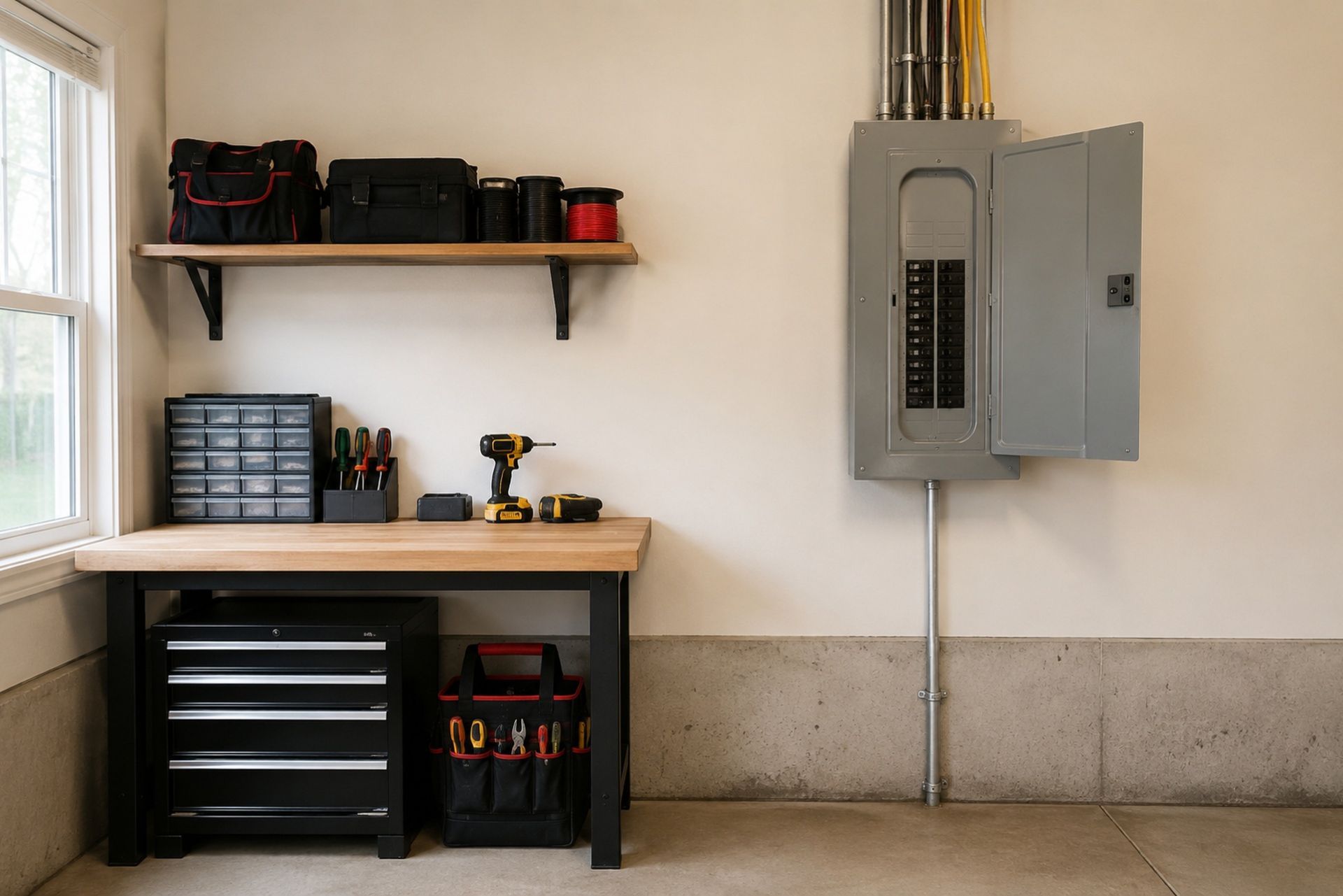
Tools and equipment insurance is a specific type of property coverage designed for assets that move from job site to job site. Unlike coverage for a building or office contents, this policy follows your gear wherever it goes: in your van, on a rooftop in Toledo, or locked in a job-site trailer overnight. For electricians, the covered property typically includes hand tools, power tools, diagnostic equipment, conduit benders, wire pullers, and sometimes even materials in transit.
The policy can be written as a standalone inland marine policy or added as an endorsement to a broader contractor's package. Either way, the goal is the same: protect the tools you depend on from theft, fire, vandalism, and accidental damage.
Inland Marine Insurance vs. General Liability
These two coverages solve completely different problems, and confusing them is one of the most common mistakes I see. General liability covers third-party bodily injury and property damage, meaning if you accidentally damage a client's wall or someone trips over your extension cord, GL responds. It does nothing for your own tools.
Inland marine insurance, on the other hand, covers your property while it's in transit or at temporary locations. The name sounds odd for an electrician, but it originates from maritime cargo insurance and has evolved to cover any mobile business property. If your wire strippers get stolen from a job site or your oscilloscope falls off a ladder, inland marine is the policy that pays.
| Feature | General Liability | Inland Marine (Tools & Equipment) |
|---|---|---|
| Covers your tools | No | Yes |
| Covers third-party injury | Yes | No |
| Covers property in transit | No | Yes |
| Required by most GCs | Yes | Often yes |
| Typical annual premium | $800 - $3,500+ | $200 - $1,200+ |
The Importance of Protecting Mobile Assets in Transit
Ohio electricians spend most of their working hours away from a fixed location. Your tools ride in a van, sit on scaffolding, or get left in a gang box on an active construction site. Each of those scenarios introduces risk that a standard property policy won't touch because standard property policies assume your stuff stays in one place.
A 2025 National Equipment Register report found that
construction tool theft costs the industry roughly $1 billion annually, with hand tools and power tools among the most frequently targeted items. Ohio's urban corridors, including Columbus, Cleveland, and Cincinnati, consistently rank among areas with higher rates of job-site theft. Protecting mobile assets isn't optional: it's a basic cost of doing business.

By: Michael Fusco
President of Joule Pro
INDEX
Joule Pro is a specialty insurance and risk program of Fusco Orsini & Associates Insurance Services, built exclusively for electrical contractors and licensed in 31 states.
We work with electrical firms across the country — from California, Texas, Florida, New York, and coast to coast — placing General Liability, Workers' Compensation, Commercial Auto, Inland Marine, Surety Bonds, Excess Liability, and full specialty coverage stacks for commercial, industrial, service, residential, and low-voltage electrical contractors. Joule Pro is not a separate licensed entity. It is a dedicated program structure inside Fusco Orsini, giving electrical contractors access to specialty carriers, in-house claims advocacy, and trade-specific risk engineering under one program.
Ohio State Requirements and Licensing Impacts
Ohio doesn't have a single blanket mandate requiring every electrician to carry tools and equipment insurance. But the regulatory and contractual environment in the state effectively makes it necessary for most licensed contractors.
OCILB Regulations and Proof of Insurance
The Ohio Construction Industry Licensing Board governs electrical contractors across the state. As of January 1, 2026, Ohio's HB 614 requires all electricians performing residential remodeling to register with the OCILB, expanding the board's oversight beyond new construction. While the OCILB primarily mandates general liability insurance for licensure, many electricians discover that their GL carrier or the board's application process strongly encourages broader coverage, including inland marine.
Some Ohio municipalities layer on their own requirements. Cleveland, for example, has historically required additional proof of insurance for permit-based electrical work. If you're pulling permits in multiple jurisdictions, check local requirements carefully.
Contractual Mandates from Ohio General Contractors
Here's where the rubber meets the road. Even if the state doesn't explicitly require tools and equipment coverage, Ohio general contractors frequently do. Large GCs operating on commercial and industrial projects often include inland marine insurance in their subcontractor agreements. They want to know that if your tools are stolen from their job site, you won't be filing a claim against their builder's risk policy.
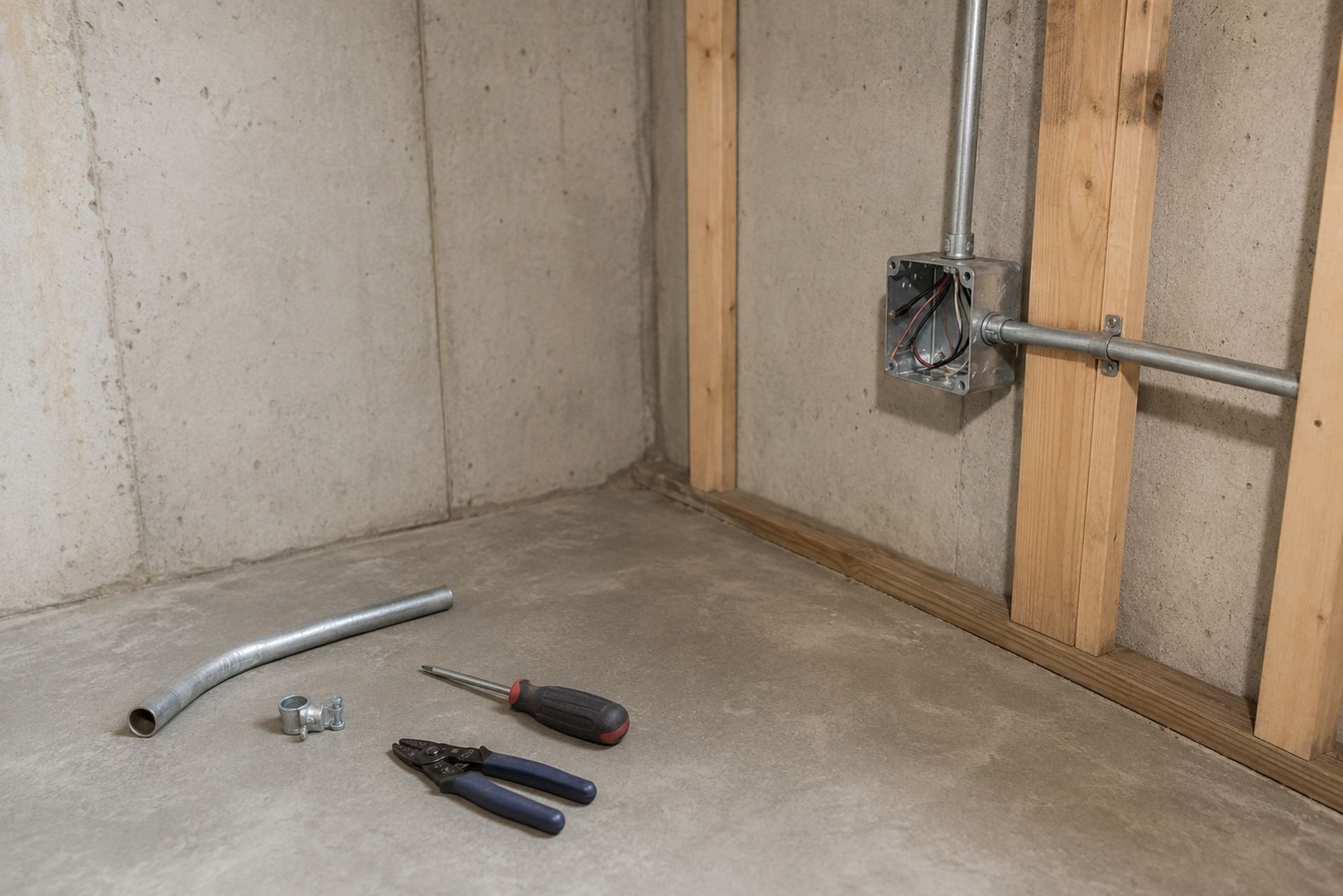
I've seen subcontract agreements from major Ohio GCs that specify minimum inland marine limits of $25,000 to $50,000. If you can't provide a certificate of insurance showing that coverage, you don't get the job. It's that straightforward.
Setting Appropriate Coverage Limits and Deductibles
Choosing the right limit isn't about picking a round number and hoping for the best. It requires an honest inventory of what you own and what it would cost to replace everything tomorrow.
Calculating Replacement Cost vs. Actual Cash Value
This distinction matters more than most electricians realize. A replacement cost policy pays what it costs to buy a new equivalent tool. An actual cash value (ACV) policy deducts depreciation, meaning your three-year-old Megger insulation tester might only pay out at 40-50% of its original price.
Replacement cost premiums run slightly higher, but the difference in a claim payout can be dramatic. For a $10,000 tool inventory, the annual premium difference between RCV and ACV might only be $50-$100. That's a no-brainer for most shops.
Determining Blanket Limits for Hand Tools
Blanket coverage applies a single limit to a category of tools without listing each item individually. This works well for hand tools, basic power tools, and consumable equipment where individual values are relatively low but the aggregate adds up fast.
Most Ohio electricians carrying a well-stocked van need a blanket limit between $5,000 and $15,000 for hand tools alone. If you've got multiple vans or crews, multiply accordingly. A common mistake is underinsuring: electricians estimate their tool value at $3,000 when the actual replacement cost is closer to $8,000. Do a real count.
Scheduled Equipment Coverage for Specialized Testing Gear
High-value items like power quality analyzers, thermal cameras, and cable fault locators should be individually scheduled on the policy. Scheduling means each item is listed by description, serial number, and agreed value. This eliminates disputes at claim time and often removes the deductible for scheduled items.
If you own any single piece of equipment worth more than $2,500, schedule it. The underwriter will want a receipt or appraisal, but the protection is worth the paperwork.
Carrier Appetite and Underwriting for the Electrical Trade
Not every insurance carrier wants to write tools and equipment coverage for electricians. Carrier appetite varies significantly based on the type of electrical work you perform, your claims history, and your geographic concentration within Ohio.
Preferred Carriers for Residential vs. Industrial Electricians
Residential electricians generally find broader carrier appetite because the perceived risk is lower. Smaller tool inventories, fewer high-value instruments, and less exposure to large-scale job-site theft make residential shops attractive to a wide range of carriers.
Industrial and commercial electricians face a tighter market. Carriers worry about higher tool values, exposure to heavy construction sites, and the complexity of scheduled equipment. Specialty programs like Joule Pro exist specifically to address this gap: because we focus exclusively on licensed electrical contractors, our underwriter relationships are built around the actual risk profile of the trade rather than a generic contractor classification.
Factors Influencing Premiums in the Ohio Market
Several variables drive your premium in Ohio:
- Total insured value of tools and equipment
- Claims history over the past three to five years
- Storage practices (locked van, secured shop, open truck bed)
- Number of employees with tool access
- Type of electrical work (residential, commercial, industrial, utility)
- Deductible selection (higher deductible equals lower premium)
Ohio's overall property crime rate has been declining in recent years, which helps keep inland marine premiums relatively competitive compared to states with higher theft rates. That said, urban areas like Cuyahoga County still see elevated risk, and carriers price accordingly.
Exclusions and Risk Mitigation Strategies
Every tools and equipment policy has exclusions, and understanding them before you file a claim saves enormous frustration.
Common Policy Exclusions: Wear, Tear, and Mysterious Disappearance
Standard exclusions include normal wear and tear, gradual deterioration, and mechanical breakdown. Your drill motor burning out after years of use isn't a covered loss. Neither is rust, corrosion, or damage from improper maintenance.
The exclusion that catches the most electricians off guard is "mysterious disappearance." If a tool simply goes missing and you can't point to a specific theft event, many policies won't pay. Some carriers offer mysterious disappearance coverage as an add-on, and it's worth asking about, especially if you run multiple crews where tool accountability gets complicated.
Earthquake and flood are also typically excluded unless specifically endorsed. Ohio isn't earthquake country, but flooding along the Ohio River corridor and Lake Erie shoreline is a real concern for electricians storing tools in low-lying shops.
Best Practices for Tool Inventory and Documentation
Good documentation is the single best thing you can do to ensure a smooth claim. Keep a spreadsheet or use an inventory app that tracks every tool by description, brand, model, serial number, purchase date, and cost. Update it quarterly.
Photograph your tools and store images in the cloud. Engrave or etch a unique identifier on high-value items. If theft occurs, a police report combined with a detailed inventory makes the claims process dramatically faster. Joule Pro recommends this practice to every client because we've seen firsthand how a well-documented claim gets resolved in days while a poorly documented one drags on for months.
Securing the Right Policy for an Ohio Electrical Business
Getting tools and equipment coverage right comes down to three things: knowing what you own, understanding what Ohio's regulatory and contractual environment demands, and working with a carrier that genuinely understands the electrical trade.
Don't settle for a generic contractor policy from an agent who writes plumbers and roofers with the same form. The electrical trade has specific risk characteristics, from the high value of diagnostic instruments to the unique exposures of working in energized environments, and your insurance should reflect that.
If you're an Ohio electrician shopping for coverage or reviewing an existing policy, reach out to Joule Pro for a quote tailored to your operation. We work with specialty markets that have real appetite for the electrical trade, and every policy is handled by a licensed insurance professional who understands what you actually do for a living.
Frequently Asked Questions
Does Ohio law require electricians to carry tools and equipment insurance? No state statute mandates it specifically, but OCILB licensing and most general contractor agreements effectively make it necessary for working electricians.
How much does inland marine insurance cost for an Ohio electrician? Typical premiums range from $200 to $1,200 per year depending on total insured value, deductible, and claims history.
Will my commercial auto policy cover tools stolen from my van? Usually not, or only up to a very small sublimit (often $1,000-$2,500). A separate inland marine policy is the proper coverage.
What's the difference between blanket and scheduled coverage? Blanket coverage applies one limit to a category of tools. Scheduled coverage lists individual high-value items with agreed values and often waives the deductible per item.
Can I bundle tools and equipment insurance with my general liability? Yes, many carriers offer a contractor's package that includes GL, inland marine, and other coverages. Bundling often reduces total premium.

Founder & CEO
The Force Behind the Program
About the Author:
Michael Fusco.
Fusco Orsini & Associates
Joule Pro exists because Mike Fusco saw electrical contractors getting boilerplate insurance — and built a program designed for the way the trade actually works.
Mike is the CEO and co-founder of Fusco Orsini & Associates, the San Diego–based independent agency he launched in 2010. Under his leadership FOA has grown into a nationwide partner serving clients across 31 states, with a personal, client-first approach to commercial insurance and risk.
With over 20 years in insurance and risk management, he specializes in tailored programs spanning general liability, workers' compensation, surety bonding, and employee benefits — helping owners confidently manage risk and pursue growth.
Mike holds a B.S. in Business from the University of Maryland — Robert H. Smith School of Business, and the Certified Insurance Counselor (CIC) designation, held by fewer than 3% of insurance professionals nationwide.
What Our Clients Say
Trusted by Electrical Contractors Across the Country.
5.0
★★★★★
Google reviews
Core Commercial Coverage
Business Insurance for Electrical Contractors.
The fundamentals — written, structured, and priced for electrical risk. Each line is reviewed annually by an underwriter who only writes our trade.
01
General Liability
Premises & completed-operations coverage with electrical-specific endorsements and full pollution carve-back options.
02
Workers' Compensation
Class-code optimization, experience-mod review, and return-to-work programs designed for energized-work exposures.
03
Commercial Auto
Fleet, hired & non-owned auto, and tools-in-transit coverage written for service vans and bucket trucks.
04
Tools & Equipment
Scheduled and blanket coverage for tools, test equipment, scissor lifts, and contractor's equipment on-site or in-transit.
05
Surety Bonds
Bid, performance, and payment bonds — single-job and aggregate programs for commercial & public-works contracts.
06
Commercial Property
Layered limits up to $50M with carrier panels covering your shop, warehouse, yard, and on-premises tools, materials, and equipment.
Who We Serve
Electrical Contractors We Specialize In.
From $5M service shops to $250M industrial primes — every Joule Pro program is shaped to the contractor's revenue mix and project profile.
01 / Industrial
Commercial & Industrial Electrical Contractors
High-voltage, substation, and plant electrical work. Pollution, builder's risk, and large-deductible WC programs.
02 / Service
Service & Residential Electrical Contractors
Service-call shops, panel upgrades, and EV charging installers. Auto-fleet, GL, and tool-coverage programs.
03 / Low-Voltage
Specialty & Low-Voltage Contractors
Data, fire-alarm, security, and BMS controls. Cyber, professional liability, and follow-form excess.
Frequently Asked Questions
Common
Questions From
Electrical Contractors.
What size electrical contractors do you write?
Joule Pro is built for licensed electrical firms from roughly $2M in revenue to $250M+. Below $2M we typically refer to our small-business desk; above $250M we underwrite individually with our industrial practice team.
Do I need to be licensed in multiple states?
No. We license you wherever you work. Joule Pro is admitted in 31 states and our compliance team handles multi-state filings, prevailing-wage endorsements, and certificate-of-insurance requirements.
How is Joule Pro different from a generic contractor program?
Generic programs use a contractor's questionnaire that treats you like a roofer. We use forms written for energized work, arc-flash exposures, and design-build risk — and our carriers price accordingly.
What does the claims process actually look like?
Every Joule Pro client is assigned a named claims advocate at bind. They take the FNOL, set strategy with your assigned attorney, and serve as your single point of contact through close.
Can you bond large public-works contracts?
Yes. Through our surety partners we write single-job bonds up to $75M and aggregate programs to $300M, with expedited turnarounds for school district, federal, and DOT work.
What happens at renewal?
Your producer and claims advocate jointly run a renewal review 90 days out — covering loss trends, exposure changes, and market alternatives — so renewal day is a confirmation, not a surprise.
From the Blog
Insights for Electrical Contractors.
Risk briefings, claim post-mortems, and program updates — written by our underwriters and risk engineers.


Get Started
Get a Quote on a Program Built Around Your Trade.
A 30-minute discovery call is the only commitment. You'll leave with a written gap analysis of your current program — yours to keep, whether you bind with us or not.