
Business Insurance
Workers Compensation Insurance
★★★★★ 150+ Five-Star Reviews · Google & Facebook
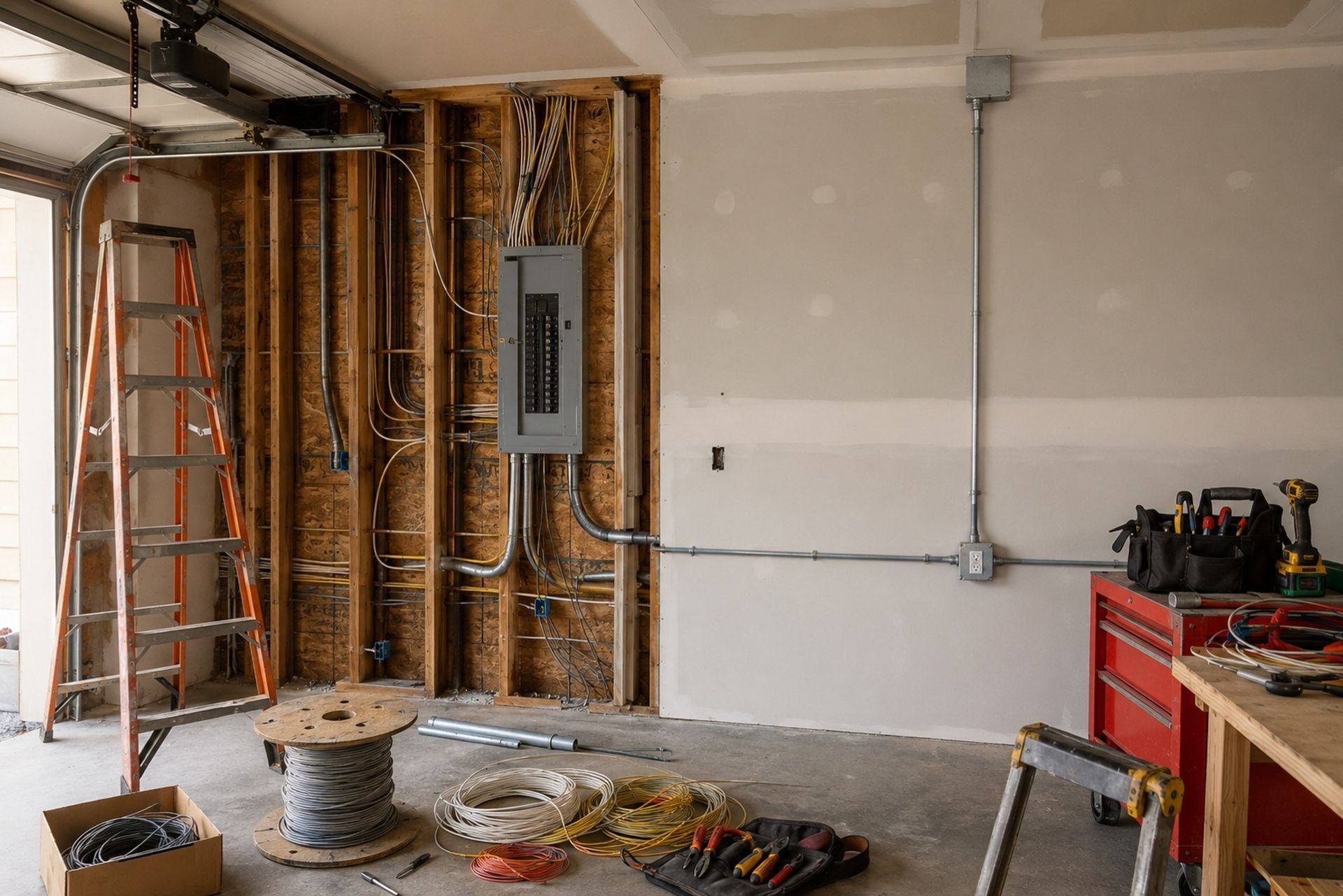
A single arc flash incident can change everything for an electrical contracting business. One moment a journeyman is pulling wire through a commercial panel, and the next, they're facing third-degree burns, months of recovery, and a stack of medical bills that would bankrupt most small companies. Workers compensation insurance exists precisely for situations like this, and for electrical contractors specifically, the stakes are higher than in almost any other construction trade. This guide covers what every electrical contractor needs to know about workers comp: coverage limits, exclusions that catch people off guard, real claims scenarios, and how to keep premiums from spiraling out of control. Whether you run a two-person residential shop or a 50-person commercial operation, understanding these details isn't optional. It's the difference between surviving a serious workplace injury and closing your doors.
The Essential Role of Workers Compensation for Electrical Contractors
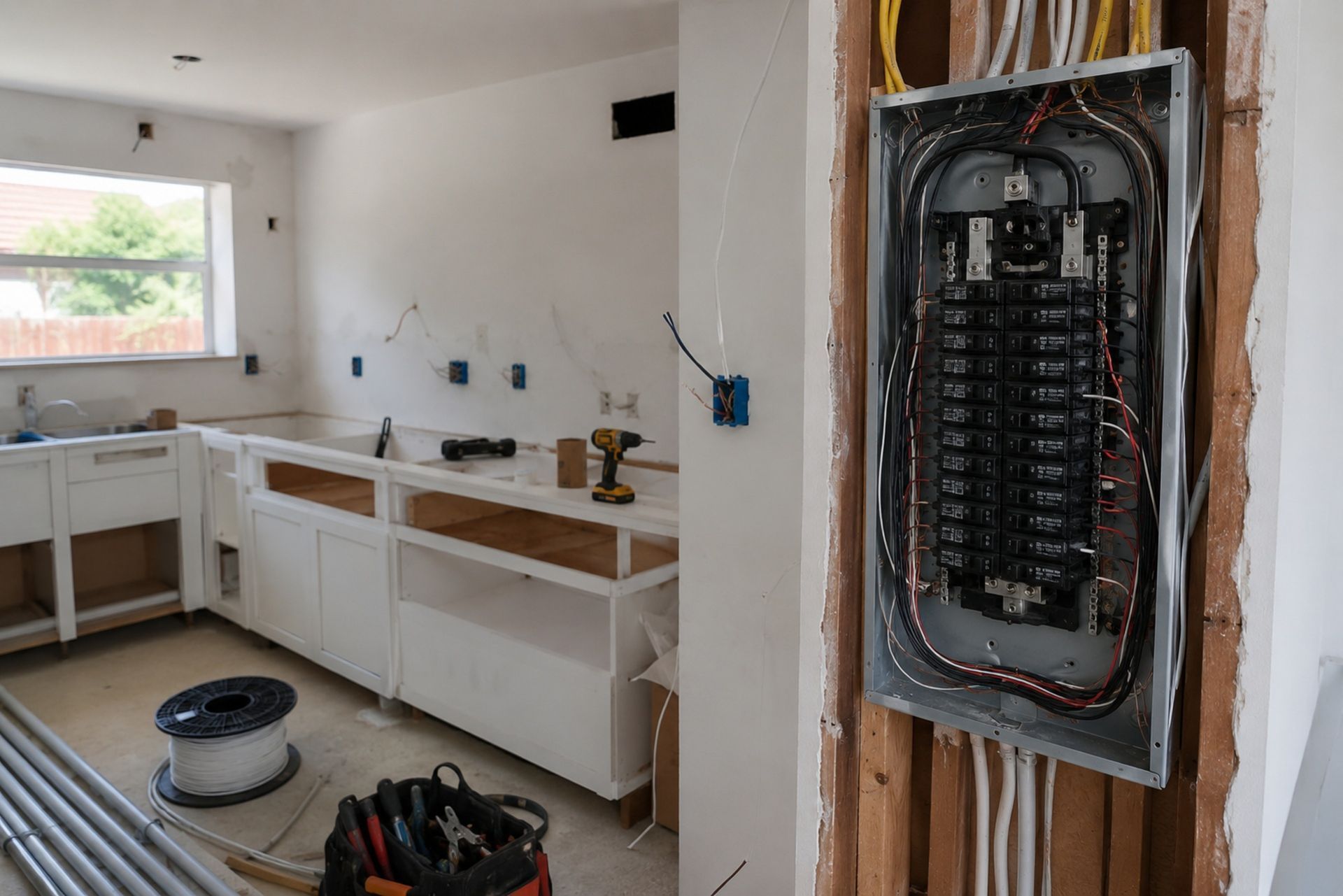
Workers compensation is the financial backbone that protects both your employees and your business when injuries happen on the job. For electrical contractors, the exposure is constant: live circuits, confined spaces, heights, and heavy equipment are all part of a normal Tuesday. The policy pays for an injured worker's medical treatment and lost wages while shielding your company from lawsuits related to workplace injuries.
Legal Requirements and State Mandates
Nearly every state requires employers to carry workers comp once they hit a certain employee threshold. Some states, like California, mandate coverage the moment you hire your first employee. Others set the bar at three, four, or five workers. Texas remains the notable exception, where coverage is technically optional, though going without it exposes you to direct lawsuits with no cap on damages.
The penalties for non-compliance are steep. In many states, operating without required coverage is a criminal offense that can result in fines of $1,000 per day or more, plus personal liability for the business owner. State auditors actively investigate construction and electrical contractors because the injury rates in these trades make enforcement a priority.
Risk Profile of the Electrical Trade
Electrical work consistently ranks among the most dangerous construction specialties. The Bureau of Labor Statistics reports that electricians face fatal injury rates well above the national average for all occupations, driven primarily by electrocution, falls, and arc flash events. This elevated risk profile directly affects how insurers price policies. Your workers comp premiums reflect the statistical likelihood that someone on your crew will file a claim, and for electricians, that likelihood is significant. Insurers assign classification codes based on the type of work performed, and electrical codes carry some of the highest base rates in the construction industry.

By: Michael Fusco
President of Joule Pro
INDEX
The Essential Role of Workers Compensation for Electrical Contractors
Understanding Coverage Limits and Benefits
Common Policy Exclusions for Electricians
Claims Examples in the Electrical Industry
Managing Premiums and Audit Requirements
Best Practices for Risk Mitigation and Safety
Joule Pro is a specialty insurance and risk program of Fusco Orsini & Associates Insurance Services, built exclusively for electrical contractors and licensed in 31 states.
We work with electrical firms across the country — from California, Texas, Florida, New York, and coast to coast — placing General Liability, Workers' Compensation, Commercial Auto, Inland Marine, Surety Bonds, Excess Liability, and full specialty coverage stacks for commercial, industrial, service, residential, and low-voltage electrical contractors. Joule Pro is not a separate licensed entity. It is a dedicated program structure inside Fusco Orsini, giving electrical contractors access to specialty carriers, in-house claims advocacy, and trade-specific risk engineering under one program.
Understanding Coverage Limits and Benefits
Workers comp benefits are structured around a few core categories, each with its own rules and limits that vary by state. Knowing what's covered, and how much, helps you set realistic expectations for both yourself and your employees.
Medical Expenses and Rehabilitation
Workers comp covers all reasonable and necessary medical treatment related to a workplace injury. This includes emergency room visits, surgeries, prescription medications, physical therapy, and ongoing rehabilitation. There's generally no dollar cap on medical benefits in most states, which is a critical distinction from health insurance. If a worker suffers severe electrical burns requiring skin grafts and months of occupational therapy, the policy covers the full cost. The trade-off is that the injured worker must typically use physicians within the employer's or insurer's approved network, depending on the state.
Wage Replacement and Disability Benefits
When an injured electrician can't work, wage replacement benefits kick in, usually at about two-thirds of their average weekly wage, subject to state maximums. In North Carolina, for example, the maximum weekly wage replacement benefit has increased to $1,446 for 2026, which gives you a sense of the upper boundary. Most states structure disability payments into four categories: temporary total, temporary partial, permanent total, and permanent partial. Each has different duration limits and calculation methods.
| Disability Type | What It Covers | Typical Duration |
|---|---|---|
| Temporary Total | Worker cannot perform any job duties | Until maximum medical improvement |
| Temporary Partial | Worker returns to light duty at reduced pay | Varies by state, often 300-500 weeks max |
| Permanent Total | Worker permanently unable to work | Lifetime in most states |
| Permanent Partial | Permanent impairment but can still work | Based on impairment rating schedule |
Employer Liability Limits
Every workers comp policy includes an employer liability section, often called Part B. This covers situations where an injured employee sues outside the normal workers comp system, such as claims involving third-party actions or dual-capacity situations. Standard policies typically include limits of $100,000 per accident, $500,000 aggregate for disease claims, and $100,000 per employee for disease. Many electrical contractors should consider increasing these limits, especially if they work on large commercial or industrial projects where general contractors require higher thresholds.
Common Policy Exclusions for Electricians
Not every workplace incident triggers coverage. Understanding exclusions prevents ugly surprises when a claim gets denied.
Intentional Injuries and Substance Abuse
If an employee intentionally injures themselves or another worker, workers comp won't pay. Self-inflicted injuries and injuries resulting from horseplay fall outside coverage in most states. Substance abuse is the bigger issue for electrical contractors. An electrician who tests positive for drugs or alcohol after an injury may have their claim denied or benefits reduced, depending on state law. Some states allow a full denial, while others reduce benefits by 50%. This is one reason post-accident drug testing protocols matter so much: they protect both the employer and the integrity of the claims process.
Off-Duty Activities and Commuting
Injuries that happen during a worker's commute to and from the job site are almost universally excluded. The "coming and going" rule means that workers comp coverage begins when the employee arrives at the work location and ends when they leave. There are exceptions: if you provide a company vehicle, require employees to transport tools, or direct them to stop at a supply house on the way to a job, the lines blur. These gray areas generate a surprising number of disputed claims in the electrical trade, where crews often travel between multiple job sites daily.
Claims Examples in the Electrical Industry
Real-world claims illustrate why workers comp coverage matters and how the system works in practice.
Arc Flash and Electrocution Scenarios
Arc flash injuries are among the most expensive claims in the electrical trade. A journeyman working on a 480-volt commercial panel experiences an arc flash that causes second and third-degree burns across 30% of their body. The resulting medical costs, including burn unit treatment, multiple surgeries, and months of rehabilitation, can easily exceed $500,000. The worker may also qualify for permanent partial disability benefits if scarring or nerve damage limits their future earning capacity. These are the claims that make workers comp essential, not optional.
Electrocution claims, while less common than arc flash, carry the highest fatality rates. Non-fatal electrocution injuries often involve cardiac complications, neurological damage, and extended recovery periods that push total claim costs into six figures.
Falls from Ladders or Scaffolding
Electricians spend significant time working at heights, and falls remain one of the most frequent injury types. A typical scenario: an electrician falls eight feet from a ladder while pulling wire through ceiling joists, fracturing their wrist and tearing a rotator cuff. Medical costs might run $40,000 to $80,000, with 12 to 16 weeks of temporary total disability benefits on top. Falls from scaffolding on commercial projects tend to be more severe, with spinal injuries and traumatic brain injuries driving claim costs into the hundreds of thousands.
Managing Premiums and Audit Requirements
Your workers comp premium isn't a fixed number. It fluctuates based on payroll, claims history, and how accurately your policy reflects your actual operations.
The Impact of Experience Modifier Rates (EMR)
Your EMR is the single most influential factor in your premium calculation after classification codes. It compares your company's claims history to the average for your industry. An EMR of 1.0 means you're average. Below 1.0, and you're getting a discount. Above 1.0, and you're paying a surcharge. A company with an EMR of 1.3 pays 30% more than a company with an EMR of 1.0 for the same payroll. Specialty programs like Joule Pro work with underwriters who understand electrical trade risk profiles, which means your EMR is evaluated in proper context rather than lumped in with general construction.
Classification Codes for Electrical Work
Insurers assign NCCI classification codes (or state-specific equivalents) to categorize the type of work your employees perform. Electrical wiring within buildings typically falls under code 5190, while outside line construction carries code 7539, which has a significantly higher base rate. Misclassification is one of the most common and costly mistakes electrical contractors make. If your office manager is classified under the same code as your field electricians, you're overpaying. A producer who specializes in electrical contractor insurance, like the team at Joule Pro backed by Fusco Orsini & Associates, can audit your classifications and correct errors before your next renewal.
Preparing for Annual Payroll Audits
Every workers comp policy is subject to an annual audit where the insurer verifies your actual payroll against the estimates used to calculate your premium. If your payroll grew beyond what you estimated, you'll owe additional premium. If it shrank, you'll get a refund. Keep clean payroll records broken down by classification code throughout the year. Separate overtime pay from regular pay in your records, since most states allow you to exclude the overtime premium portion from auditable payroll. This single step can save electrical contractors thousands of dollars annually.
Best Practices for Risk Mitigation and Safety
The most effective way to control workers comp costs is to prevent injuries in the first place. A formal safety program that includes regular toolbox talks, documented training on NFPA 70E arc flash standards, and consistent enforcement of PPE requirements will reduce both the frequency and severity of claims over time. Pair this with a return-to-work program that brings injured employees back on modified duty as quickly as medically appropriate, and you'll see your EMR trend downward within two to three years.
Conduct regular job site safety audits and document everything. When an injury does occur, report it to your insurer within 24 hours. Delayed reporting increases claim costs by 30% to 50% on average because it allows minor injuries to become major ones without proper medical intervention.
Your Next Steps as an Electrical Contractor
Workers compensation coverage for electricians isn't just a regulatory checkbox. It's a financial safety net that protects your crew, your business, and your ability to bid on future projects. The key factors that determine your success with workers comp are accurate classification codes, a strong safety culture, clean payroll records, and a relationship with a producer who actually understands electrical trade risks.
If you're unsure whether your current policy is structured correctly or you're paying more than you should, reach out to Joule Pro for a coverage review. Having a specialist evaluate your classifications, EMR, and policy structure can uncover savings and close gaps you didn't know existed.
FAQ
How much does workers comp cost for electricians? Rates vary by state, classification code, and your EMR, but most electrical contractors pay between $5 and $15 per $100 of payroll for field electricians. Office staff rates are much lower, typically under $1 per $100.
Can I exclude myself as an owner from workers comp? Many states allow sole proprietors and corporate officers to opt out, but doing so means you have no coverage if you're injured on the job. Some general contractors also require proof that all workers, including owners, are covered before allowing you on site.
What happens if I underreport payroll? Your annual audit will catch the discrepancy, and you'll owe back premium plus potential penalties. Repeated underreporting can result in policy cancellation and difficulty finding coverage.
Does workers comp cover subcontractors? Generally no, but if your subcontractors don't carry their own coverage, your insurer may add their payroll to your policy and charge you accordingly. Always collect certificates of insurance from every sub before they start work.
How long does an injury claim stay on my record? Claims typically affect your EMR for three years from the policy period in which they occurred. A single large claim can increase your premiums significantly over that entire window.

Founder & CEO
The Force Behind the Program
About the Author:
Michael Fusco.
Fusco Orsini & Associates
Joule Pro exists because Mike Fusco saw electrical contractors getting boilerplate insurance — and built a program designed for the way the trade actually works.
Mike is the CEO and co-founder of Fusco Orsini & Associates, the San Diego–based independent agency he launched in 2010. Under his leadership FOA has grown into a nationwide partner serving clients across 31 states, with a personal, client-first approach to commercial insurance and risk.
With over 20 years in insurance and risk management, he specializes in tailored programs spanning general liability, workers' compensation, surety bonding, and employee benefits — helping owners confidently manage risk and pursue growth.
Mike holds a B.S. in Business from the University of Maryland — Robert H. Smith School of Business, and the Certified Insurance Counselor (CIC) designation, held by fewer than 3% of insurance professionals nationwide.
What Our Clients Say
Trusted by Electrical Contractors Across the Country.
5.0
★★★★★
Google reviews
Core Commercial Coverage
Business Insurance for Electrical Contractors.
The fundamentals — written, structured, and priced for electrical risk. Each line is reviewed annually by an underwriter who only writes our trade.
01
General Liability
Premises & completed-operations coverage with electrical-specific endorsements and full pollution carve-back options.
02
Workers' Compensation
Class-code optimization, experience-mod review, and return-to-work programs designed for energized-work exposures.
03
Commercial Auto
Fleet, hired & non-owned auto, and tools-in-transit coverage written for service vans and bucket trucks.
04
Tools & Equipment
Scheduled and blanket coverage for tools, test equipment, scissor lifts, and contractor's equipment on-site or in-transit.
05
Surety Bonds
Bid, performance, and payment bonds — single-job and aggregate programs for commercial & public-works contracts.
06
Commercial Property
Layered limits up to $50M with carrier panels covering your shop, warehouse, yard, and on-premises tools, materials, and equipment.
Who We Serve
Electrical Contractors We Specialize In.
From $5M service shops to $250M industrial primes — every Joule Pro program is shaped to the contractor's revenue mix and project profile.
01 / Industrial
Commercial & Industrial Electrical Contractors
High-voltage, substation, and plant electrical work. Pollution, builder's risk, and large-deductible WC programs.
02 / Service
Service & Residential Electrical Contractors
Service-call shops, panel upgrades, and EV charging installers. Auto-fleet, GL, and tool-coverage programs.
03 / Low-Voltage
Specialty & Low-Voltage Contractors
Data, fire-alarm, security, and BMS controls. Cyber, professional liability, and follow-form excess.
Frequently Asked Questions
Common
Questions From
Electrical Contractors.
What size electrical contractors do you write?
Joule Pro is built for licensed electrical firms from roughly $2M in revenue to $250M+. Below $2M we typically refer to our small-business desk; above $250M we underwrite individually with our industrial practice team.
Do I need to be licensed in multiple states?
No. We license you wherever you work. Joule Pro is admitted in 31 states and our compliance team handles multi-state filings, prevailing-wage endorsements, and certificate-of-insurance requirements.
How is Joule Pro different from a generic contractor program?
Generic programs use a contractor's questionnaire that treats you like a roofer. We use forms written for energized work, arc-flash exposures, and design-build risk — and our carriers price accordingly.
What does the claims process actually look like?
Every Joule Pro client is assigned a named claims advocate at bind. They take the FNOL, set strategy with your assigned attorney, and serve as your single point of contact through close.
Can you bond large public-works contracts?
Yes. Through our surety partners we write single-job bonds up to $75M and aggregate programs to $300M, with expedited turnarounds for school district, federal, and DOT work.
What happens at renewal?
Your producer and claims advocate jointly run a renewal review 90 days out — covering loss trends, exposure changes, and market alternatives — so renewal day is a confirmation, not a surprise.
From the Blog
Insights for Electrical Contractors.
Risk briefings, claim post-mortems, and program updates — written by our underwriters and risk engineers.


Get Started
Get a Quote on a Program Built Around Your Trade.
A 30-minute discovery call is the only commitment. You'll leave with a written gap analysis of your current program — yours to keep, whether you bind with us or not.