
Business Insurance
EV Charger Installer Insurance
★★★★★ 150+ Five-Star Reviews · Google & Facebook
A single miswired Level 2 charger can cause a house fire, a liability claim, and a revoked contractor license - all from one job. As EV adoption surges past 10 million registered vehicles in the U.S. in 2026, electrical contractors adding charger installation to their service mix face risks that generic insurance policies were never designed to cover. High-voltage DC fast chargers, lithium-ion battery proximity, networked smart systems, and residential garage work all create exposures that sit outside traditional electrical contracting. This guide breaks down the specific insurance coverages EV charger installers need: general liability, workers comp, tools and equipment, commercial auto, and the trade-specific risks unique to this fast-growing sector. If you're a licensed electrician expanding into EV work, understanding these coverage layers isn't optional. It's how you protect your business, your crew, and your license.
The Growing Importance of Specialized Insurance for EV Installers
The EV charging infrastructure buildout is one of the largest electrical contracting opportunities in a generation. Federal incentives, state mandates, and private investment are driving demand for both residential and commercial installations. But with that demand comes a risk profile that looks nothing like wiring a panel upgrade or installing recessed lighting. Insurers are paying attention, and contractors who don't carry the right coverage are getting shut out of commercial bids and municipal projects.
Risk Profiles for Residential vs. Commercial Projects
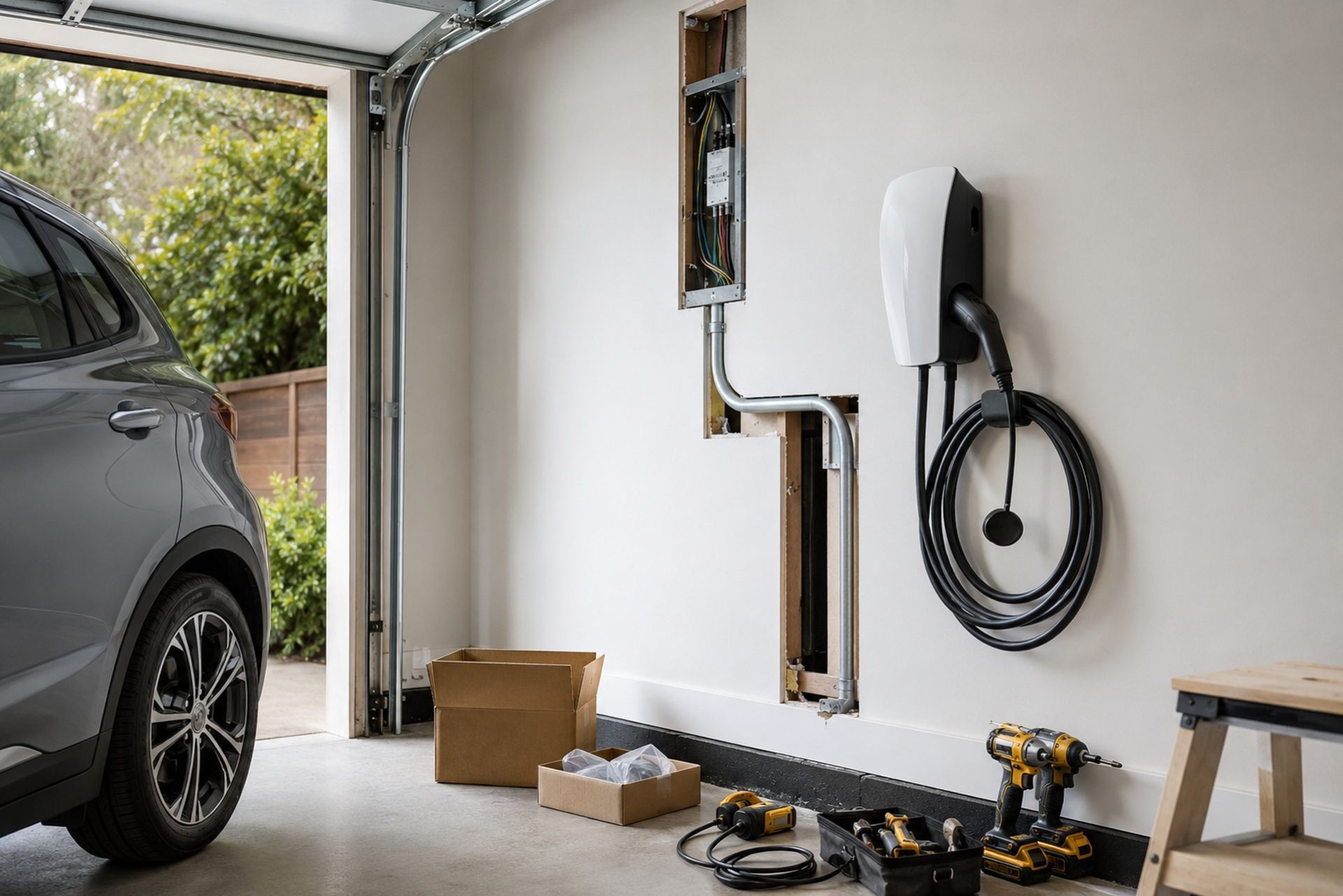
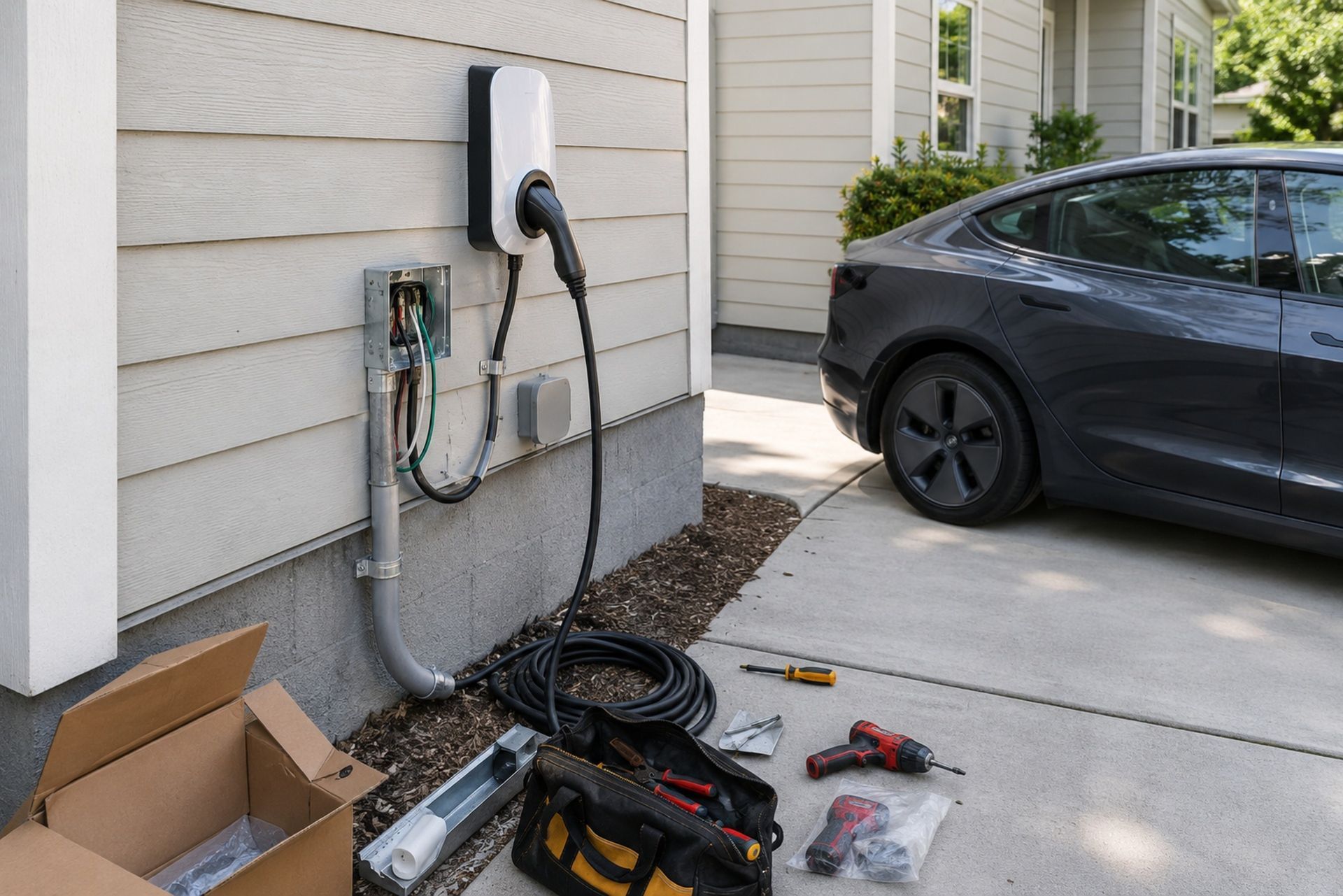
Residential EV charger installs - typically Level 2 units in garages or driveways - carry property damage exposure that's concentrated around a homeowner's most valuable asset. A faulty installation that damages a home's electrical system or, worse, starts a fire can generate claims well into six figures. The homeowner's insurer will subrogate against your general liability policy, and if your coverage is inadequate, you're personally on the hook.
Commercial projects scale that risk dramatically. Installing DC fast chargers at fleet depots, retail locations, or multi-unit housing involves higher voltages, more complex electrical infrastructure, and multiple stakeholders. A single commercial charger installation gone wrong can disrupt business operations, triggering not just property damage claims but also loss-of-income claims from the property owner. Your insurance needs to reflect the project size you're actually bidding on.
Compliance with National and Local Electrical Codes
NEC 2023 (Article 625) governs EV charging equipment installation, and most jurisdictions have adopted or are adopting these standards. Non-compliance doesn't just risk failed inspections - it can void your insurance coverage entirely. Most general liability policies include exclusions for work that violates applicable codes. If an inspector finds your installation didn't meet local amendments to NEC requirements and a claim arises, your carrier may deny it. Staying current on code changes isn't just good practice; it's an insurance prerequisite.

By: Michael Fusco
President of Joule Pro
INDEX
Joule Pro is a specialty insurance and risk program of Fusco Orsini & Associates Insurance Services, built exclusively for electrical contractors and licensed in 31 states.
We work with electrical firms across the country — from California, Texas, Florida, New York, and coast to coast — placing General Liability, Workers' Compensation, Commercial Auto, Inland Marine, Surety Bonds, Excess Liability, and full specialty coverage stacks for commercial, industrial, service, residential, and low-voltage electrical contractors. Joule Pro is not a separate licensed entity. It is a dedicated program structure inside Fusco Orsini, giving electrical contractors access to specialty carriers, in-house claims advocacy, and trade-specific risk engineering under one program.
Core Liability Protections for Electrical Contractors
Liability coverage forms the foundation of any contractor's insurance program, but EV installers need to understand the distinction between general liability and professional liability. They cover different things, and gaps between them are where contractors get burned.
General Liability: Protecting Against Property Damage and Injury
Commercial general liability (CGL) covers third-party bodily injury and property damage arising from your operations. If a customer trips over your cable run during an install, or if a charger you mounted falls off a wall and damages a vehicle, CGL responds. Most commercial contracts require $1 million per occurrence and $2 million aggregate minimums.
Here's what catches contractors off guard: CGL policies often include a "completed operations" component, which covers claims arising after you've finished the job and left the site. For EV charger work, this is critical. A wiring defect that causes a fire six months after installation falls under completed operations. Make sure your policy includes this coverage with adequate limits - some cheaper policies cap it or exclude it entirely.
Professional Liability and Errors & Omissions
If your company designs charging layouts, specifies equipment, or provides engineering consultation alongside installation, you need professional liability (E&O) coverage. CGL won't cover a claim alleging that you recommended the wrong charger model for a client's electrical capacity, or that your load calculation was incorrect and caused chronic breaker trips.
E&O claims in the EV space are increasing as more contractors offer turnkey design-build services. A program like Joule Pro, built specifically for licensed electrical contractors, can help you identify where your general liability ends and your professional liability exposure begins - a distinction that generalist insurance agencies often miss.
Safeguarding Your Workforce and Physical Assets
People and equipment are your two biggest operational investments. Protecting both requires specific coverage types that work together.
Workers Compensation for High-Voltage Electrical Work
Workers comp is mandatory in nearly every state for contractors with employees, and the rates for electrical work reflect the inherent danger. While workers' compensation claim frequency declined by 8% in 2024, the severity of medical and indemnity claims rose by 6%, meaning each claim costs more even as fewer occur. For EV charger installers working with 480V three-phase systems and DC fast charging equipment, the injury potential is significant: arc flash burns, electrical shock, and falls from ladders during wall-mount installations.
Your experience modification rate (EMR) directly affects your premium. An EMR above 1.0 signals higher-than-average claims history and can price you out of competitive bids. Investing in documented safety programs, regular toolbox talks, and proper PPE protocols keeps your EMR down and your premiums manageable.
Inland Marine Insurance for Specialized Testing Tools
EV charger installation requires expensive diagnostic and testing equipment: megohm meters, thermal imaging cameras, EVSE testing units, power quality analyzers. Standard property insurance covers tools at your shop or office, but inland marine insurance covers them in transit and on job sites - which is where they spend most of their life.
A single stolen or damaged power quality analyzer can cost $3,000 to $8,000 to replace. Inland marine policies cover scheduled tools at agreed-upon values, so you're not fighting depreciation calculations after a loss. If your crews carry $15,000 or more in tools per van, this coverage pays for itself after one incident.
Commercial Auto Coverage for Fleet and Service Vans
Your service vans are mobile workshops. Commercial auto insurance covers liability and physical damage for vehicles used in business operations. Personal auto policies explicitly exclude commercial use, so if a tech driving a company van causes an accident on the way to a job, a personal policy won't pay.
| Coverage Type | What It Covers | Typical Limit |
|---|---|---|
| Liability | Bodily injury/property damage to others | $1M combined single limit |
| Collision | Damage to your vehicle from an accident | Actual cash value or agreed value |
| Comprehensive | Theft, vandalism, weather damage | Actual cash value or agreed value |
| Hired & Non-Owned Auto | Employees using personal vehicles for work | $1M combined single limit |
| Uninsured Motorist | Accidents with uninsured drivers | Varies by state |
Don't overlook hired and non-owned auto coverage. If a technician uses their personal truck to pick up parts and causes an accident, your business can be named in the lawsuit.
Managing Trade-Specific Risks in the EV Sector
EV charger installation introduces hazards that traditional electrical work doesn't. Two areas deserve special attention: fire liability and cyber exposure.
Fire Hazard and Battery Thermal Runaway Liability
Thermal runaway - when a lithium-ion battery enters an uncontrollable self-heating cycle - is a real risk in EV charging environments. While the charger itself isn't the battery, improper installation can create conditions that stress vehicle batteries or cause electrical fires at the charging point. Overloaded circuits, inadequate ventilation around charging equipment, and improper grounding are all installation-related factors that can contribute to fire incidents.
Your CGL policy needs to explicitly cover fire damage arising from completed electrical work. Some carriers add exclusions for work involving lithium-ion battery systems or high-voltage DC equipment. Read your policy language carefully, or better yet, work with a specialty program that understands these exposures. Joule Pro's underwriter relationships are built around electrical trade risks, which means your policy won't contain surprise exclusions that a generalist carrier might include.
Cyber Liability for Smart Chargers and Networked Stations
Most commercial EV chargers are networked devices connected to payment systems, energy management platforms, and sometimes building automation systems. If a charger you installed is compromised due to a configuration error or unsecured network connection, you could face liability for data breaches affecting payment card information.
Cyber liability coverage is increasingly relevant for contractors who configure networked charging stations. Even if you're not an IT company, your installation work touches connected systems. A basic cyber liability policy can cover breach notification costs, forensic investigation, and legal defense if a client alleges your work contributed to a security incident.
Customizing Your Policy and Controlling Premium Costs
Insurance isn't one-size-fits-all, and the cheapest policy is rarely the best value. Understanding what drives your premium helps you make smarter decisions.
Factors That Influence Insurance Rates for Installers
Carriers evaluate several variables when pricing your policy:
- Annual revenue and payroll (higher numbers mean higher premiums)
- Types of work performed (DC fast charger installs are rated higher than Level 2 residential)
- Claims history and EMR
- Number of employees and subcontractor usage
- Geographic location and state regulatory requirements
- Safety program documentation and training records
A contractor doing $2 million in annual revenue with a clean claims history and documented safety program will pay significantly less per dollar of coverage than a contractor with the same revenue and two open claims.
Strategies for Risk Mitigation and Safety Documentation
Carriers reward contractors who demonstrate proactive risk management. Specific steps that can lower your premiums include maintaining OSHA 10 or OSHA 30 certifications for all field staff, implementing written safety programs specific to high-voltage work, conducting regular vehicle inspections and driver training, and documenting every job with photos, permits, and inspection sign-offs.
This documentation also protects you in claims. When a homeowner alleges faulty installation two years after the fact, having timestamped photos of your work, signed inspection reports, and permit records can be the difference between a denied claim and a successful defense.
Your Next Steps
EV charger installation is a high-growth, high-margin service line for electrical contractors, but the risk profile demands insurance coverage that matches the work. General liability, workers comp, commercial auto, inland marine, and trade-specific endorsements for fire and cyber exposure all play a role in a complete protection strategy. Gaps in any one area can expose your business to claims that wipe out years of profit.
If you're expanding into EV work or already doing it without reviewing your coverage, now is the time. Joule Pro specializes in building insurance programs for licensed electrical contractors - including the specific endorsements that EV charger installers need. Reach out to a licensed producer who understands your trade, not a generalist who treats you like every other contractor.
Frequently Asked Questions
Does my existing electrical contractor insurance cover EV charger installations? It depends on your policy language. Many standard policies don't explicitly address high-voltage DC work or networked charging systems. Review your exclusions or have a specialty producer audit your coverage.
How much does EV charger installer insurance typically cost? Premiums vary widely based on revenue, claims history, and project types. A small residential-focused operation might pay $3,000 to $6,000 annually for a basic GL policy, while a commercial installer could pay $10,000 or more.
Do I need separate coverage for residential and commercial EV projects? Not necessarily separate policies, but your coverage limits and endorsements should reflect the highest-risk work you perform. Commercial projects typically require higher limits and broader completed operations coverage.
Is cyber liability insurance really necessary for charger installers? If you install or configure networked chargers with payment processing, yes. Even a minor data breach can cost $50,000 or more in notification and legal expenses.
What happens if I use subcontractors for EV installations? You need to verify their insurance certificates and ensure your own policy covers subcontractor-related claims. Many carriers require you to collect certificates of insurance before subs start work on your jobs.

Founder & CEO
The Force Behind the Program
About the Author:
Michael Fusco.
Fusco Orsini & Associates
Joule Pro exists because Mike Fusco saw electrical contractors getting boilerplate insurance — and built a program designed for the way the trade actually works.
Mike is the CEO and co-founder of Fusco Orsini & Associates, the San Diego–based independent agency he launched in 2010. Under his leadership FOA has grown into a nationwide partner serving clients across 31 states, with a personal, client-first approach to commercial insurance and risk.
With over 20 years in insurance and risk management, he specializes in tailored programs spanning general liability, workers' compensation, surety bonding, and employee benefits — helping owners confidently manage risk and pursue growth.
Mike holds a B.S. in Business from the University of Maryland — Robert H. Smith School of Business, and the Certified Insurance Counselor (CIC) designation, held by fewer than 3% of insurance professionals nationwide.
What Our Clients Say
Trusted by Electrical Contractors Across the Country.
5.0
★★★★★
Google reviews
Core Commercial Coverage
Business Insurance for Electrical Contractors.
The fundamentals — written, structured, and priced for electrical risk. Each line is reviewed annually by an underwriter who only writes our trade.
01
General Liability
Premises & completed-operations coverage with electrical-specific endorsements and full pollution carve-back options.
02
Workers' Compensation
Class-code optimization, experience-mod review, and return-to-work programs designed for energized-work exposures.
03
Commercial Auto
Fleet, hired & non-owned auto, and tools-in-transit coverage written for service vans and bucket trucks.
04
Tools & Equipment
Scheduled and blanket coverage for tools, test equipment, scissor lifts, and contractor's equipment on-site or in-transit.
05
Surety Bonds
Bid, performance, and payment bonds — single-job and aggregate programs for commercial & public-works contracts.
06
Commercial Property
Layered limits up to $50M with carrier panels covering your shop, warehouse, yard, and on-premises tools, materials, and equipment.
Who We Serve
Electrical Contractors We Specialize In.
From $5M service shops to $250M industrial primes — every Joule Pro program is shaped to the contractor's revenue mix and project profile.
01 / Industrial
Commercial & Industrial Electrical Contractors
High-voltage, substation, and plant electrical work. Pollution, builder's risk, and large-deductible WC programs.
02 / Service
Service & Residential Electrical Contractors
Service-call shops, panel upgrades, and EV charging installers. Auto-fleet, GL, and tool-coverage programs.
03 / Low-Voltage
Specialty & Low-Voltage Contractors
Data, fire-alarm, security, and BMS controls. Cyber, professional liability, and follow-form excess.
Frequently Asked Questions
Common
Questions From
Electrical Contractors.
What size electrical contractors do you write?
Joule Pro is built for licensed electrical firms from roughly $2M in revenue to $250M+. Below $2M we typically refer to our small-business desk; above $250M we underwrite individually with our industrial practice team.
Do I need to be licensed in multiple states?
No. We license you wherever you work. Joule Pro is admitted in 31 states and our compliance team handles multi-state filings, prevailing-wage endorsements, and certificate-of-insurance requirements.
How is Joule Pro different from a generic contractor program?
Generic programs use a contractor's questionnaire that treats you like a roofer. We use forms written for energized work, arc-flash exposures, and design-build risk — and our carriers price accordingly.
What does the claims process actually look like?
Every Joule Pro client is assigned a named claims advocate at bind. They take the FNOL, set strategy with your assigned attorney, and serve as your single point of contact through close.
Can you bond large public-works contracts?
Yes. Through our surety partners we write single-job bonds up to $75M and aggregate programs to $300M, with expedited turnarounds for school district, federal, and DOT work.
What happens at renewal?
Your producer and claims advocate jointly run a renewal review 90 days out — covering loss trends, exposure changes, and market alternatives — so renewal day is a confirmation, not a surprise.
From the Blog
Insights for Electrical Contractors.
Risk briefings, claim post-mortems, and program updates — written by our underwriters and risk engineers.


Get Started
Get a Quote on a Program Built Around Your Trade.
A 30-minute discovery call is the only commitment. You'll leave with a written gap analysis of your current program — yours to keep, whether you bind with us or not.