Business Insurance
Florida Solar Installer Insurance
★★★★★ 150+ Five-Star Reviews · Google & Facebook
Florida's solar installation market is booming, and with it comes a unique set of insurance headaches that most general contractors never face. Between hurricane season, rooftop work at height, high-value inverter equipment, and a state regulatory environment that doesn't mess around, getting properly insured as a solar contractor here requires more than a standard business owner's policy. If you're a licensed solar installer operating in Florida, the coverage decisions you make today will determine whether a single claim wipes you out or becomes a manageable business event. This guide breaks down the trade-specific risks, state licensing requirements, and carrier appetite that shape solar installer insurance in Florida, so you can build a coverage stack that actually protects your business.
Navigating the Florida Solar Insurance Landscape
The Intersection of Solar Installation and Florida State Mandates
Florida treats solar installation as a regulated trade, not a side hustle. The state requires specific contractor licensing, proof of insurance, and compliance with building codes that have been tightened repeatedly since Hurricane Andrew. If you're pulling permits for rooftop PV systems, you need to carry insurance that satisfies both the Florida Department of Business and Professional Regulation (DBPR) and the local building departments where you work.
The state's insurance requirements aren't suggestions. Operating without proper coverage can result in license suspension, fines, and personal liability exposure that pierces any corporate protections you've set up. Florida also requires workers' compensation for any contractor with one or more employees, with no exceptions for small crews. The combination of licensing mandates and insurance minimums means you can't afford to guess at what you need.
Why General Liability Isn't Enough for Specialized Solar Trades
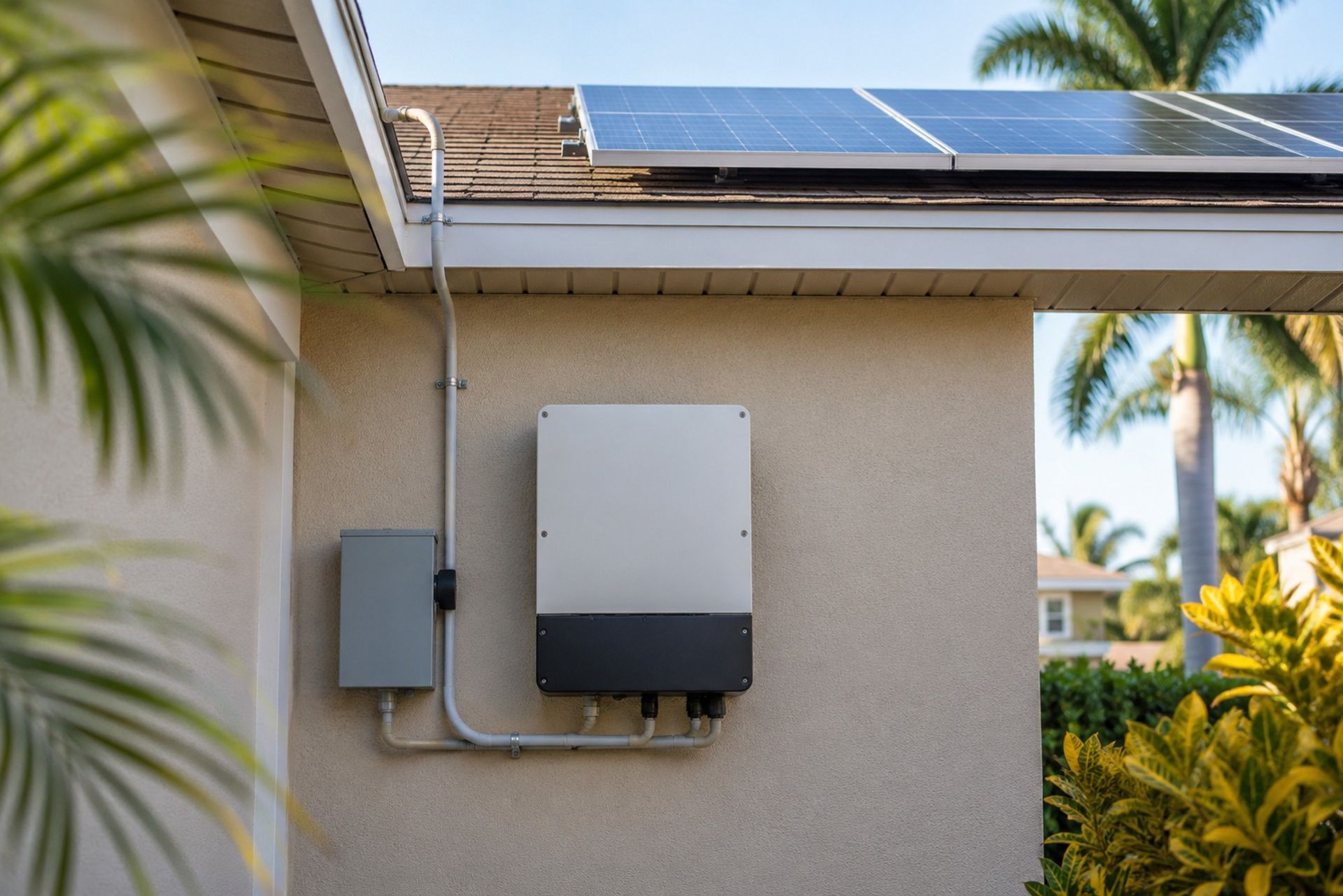
A standard general liability policy covers slip-and-fall scenarios and basic property damage. That's a starting point, not a finish line. Solar installation introduces exposures that generic GL policies either exclude or severely limit: electrical faults causing fires, roof penetrations leading to water damage months after installation, and equipment failure from improper wiring.
Most general liability forms don't adequately cover completed operations for solar arrays, meaning a claim filed a year after your crew leaves a jobsite could fall outside your coverage. Electrical arcing, DC power hazards, and inverter malfunctions create liability scenarios that a standard policy wasn't designed to handle. This is exactly why specialty insurance programs built for electrical contractors exist: they understand the difference between a general contractor hanging drywall and a licensed solar installer working with high-voltage DC systems on a roof.

By: Michael Fusco
President of Joule Pro
INDEX
Navigating the Florida Solar Insurance Landscape
Essential Coverage Pillars for Florida Solar Contractors
Addressing Florida-Specific Risks and Environmental Hazards
State Licensing and Insurance Proof Requirements
Understanding Carrier Appetite and Underwriting Trends
Joule Pro is a specialty insurance and risk program of Fusco Orsini & Associates Insurance Services, built exclusively for electrical contractors and licensed in 31 states.
We work with electrical firms across the country — from California, Texas, Florida, New York, and coast to coast — placing General Liability, Workers' Compensation, Commercial Auto, Inland Marine, Surety Bonds, Excess Liability, and full specialty coverage stacks for commercial, industrial, service, residential, and low-voltage electrical contractors. Joule Pro is not a separate licensed entity. It is a dedicated program structure inside Fusco Orsini, giving electrical contractors access to specialty carriers, in-house claims advocacy, and trade-specific risk engineering under one program.
Essential Coverage Pillars for Florida Solar Contractors
General Liability and Completed Operations for Solar Arrays
Your GL policy needs to include completed operations coverage that extends well beyond the installation date. Solar arrays have a 25-year expected lifespan, and defective installation claims can surface years later. A fire caused by a faulty junction box connection or a roof leak from improperly sealed penetrations can generate six-figure claims.
Make sure your policy covers both premises and operations (what happens while you're on the job) and products-completed operations (what happens after you leave). The per-occurrence limit should be at least $1 million, with a $2 million aggregate. Many commercial and utility-scale project owners require even higher limits, often $5 million or more through umbrella or excess liability policies.
Workers' Compensation Compliance in High-Risk Environments
Solar installation is classified as high-risk work. Your crews are on rooftops, handling electrical components, and exposed to Florida's heat. Workers' comp is mandatory in Florida for construction employers with one or more employees, and the penalties for non-compliance include stop-work orders and daily fines of $1,000.
The good news: Florida's Office of Insurance Regulation approved a 6.9% average decrease in workers' compensation rates effective January 1, 2025, which has carried forward into 2026 rate filings. That said, your actual premium depends on your experience modification rate (EMR), payroll, and class codes. Solar installers typically fall under class codes like 5538 (sheet metal work) or 5190 (electrical wiring), both of which carry elevated rates. Keeping a clean loss history is the single most effective way to control these costs.
Inland Marine Insurance for High-Value Equipment and Transit
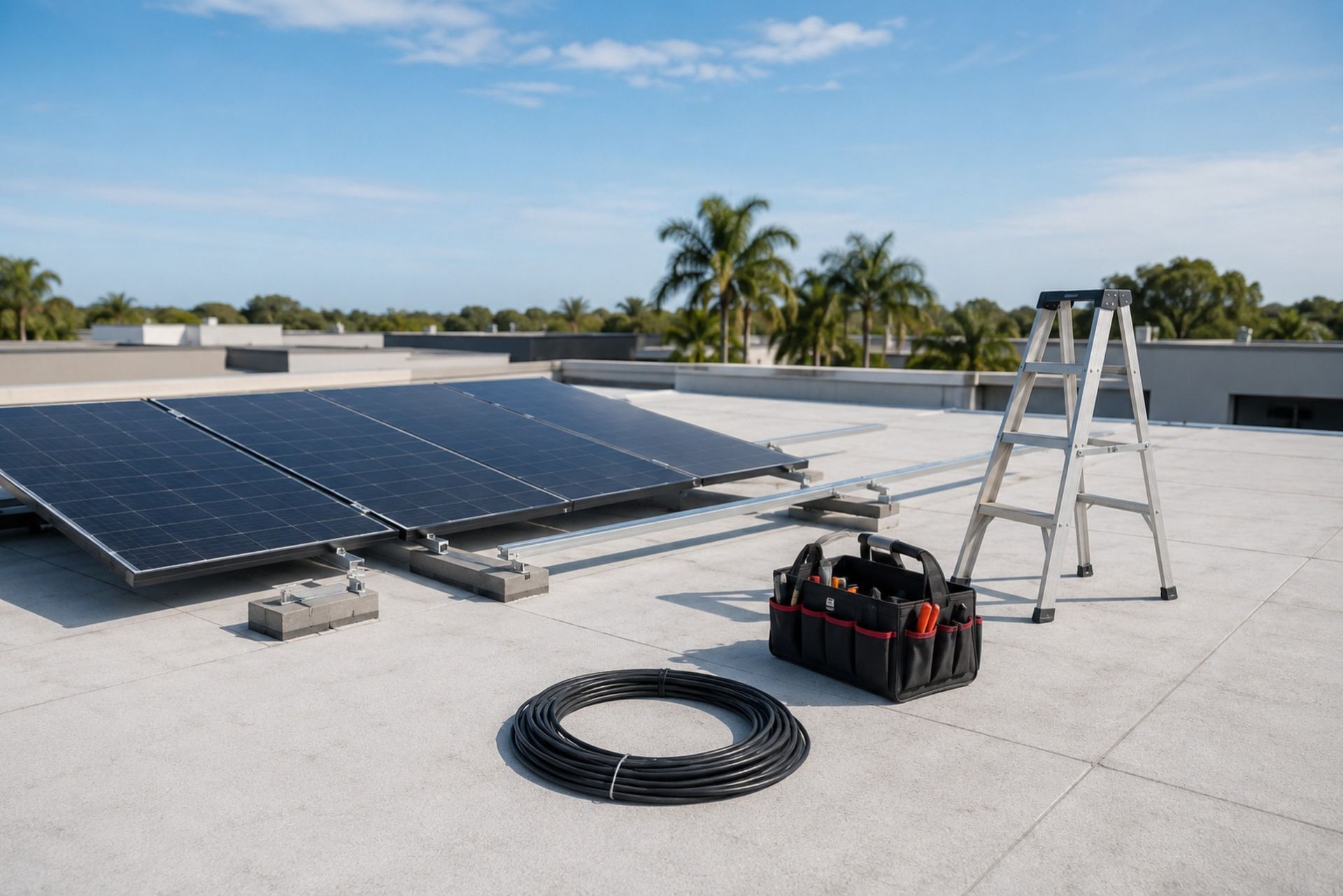
Solar panels, inverters, racking systems, and specialized tools don't sit in a warehouse all day. They travel between your shop, the supply house, and the jobsite. Standard property insurance doesn't cover equipment in transit or stored at temporary locations. That's where inland marine insurance fills the gap.
A typical residential solar job involves $15,000 to $40,000 in materials on-site at any given time. Commercial jobs can easily exceed $200,000. If a trailer full of panels gets stolen from a jobsite overnight or a storm damages materials staged on a roof, inland marine covers the loss. Programs like Joule Pro, which is built specifically for licensed electrical contractors, include tools and equipment coverage as part of a full contractor coverage stack, so you're not piecing together separate policies from different carriers.
Addressing Florida-Specific Risks and Environmental Hazards
Windstorm and Hurricane Exposure for Rooftop Installations
Florida averages more hurricane landfalls than any other state, and rooftop solar arrays are directly in the crosshairs. A poorly secured array can become a projectile in high winds, damaging neighboring properties and creating massive liability claims. Even if your installation meets code, a Category 3 storm can test every mounting point.
Your GL policy needs to address windstorm liability, and your installation practices need to exceed minimum code requirements. Many carriers now require documentation of mounting torque specifications, wind load calculations, and third-party inspection reports before they'll underwrite Florida solar contractors. If you can't demonstrate that your installations meet or exceed the Florida Building Code's high-velocity hurricane zone (HVHZ) standards, you'll struggle to find coverage at any price.
Roof Integrity and Water Intrusion Liabilities
Here's the claim type that keeps solar contractors up at night: water intrusion. Every rooftop solar installation involves penetrating the roof membrane, and Florida's torrential rains will find any weakness. A single improperly sealed lag bolt can cause thousands of dollars in interior water damage, and homeowners are quick to file claims.
Water intrusion claims often trigger both your GL policy and the homeowner's insurance, leading to subrogation actions where the homeowner's carrier comes after you. These claims are frequent enough that some carriers have added specific water intrusion exclusions or sub-limits to their solar contractor policies. Read your policy carefully, and make sure your completed operations coverage doesn't carve out this exact scenario.
State Licensing and Insurance Proof Requirements
Florida DBPR Requirements for Solar (CV) and Electrical (EC) Licenses
Florida requires solar contractors to hold either a Certified Solar Contractor (CV) license or a Certified Electrical Contractor (EC) license to perform solar installations. The DBPR oversees both license types, and each requires proof of insurance as a condition of licensure.
| Requirement | CV License (Solar) | EC License (Electrical) |
|---|---|---|
| Issuing Body | Florida DBPR | Florida DBPR |
| GL Minimum | $300,000 per occurrence | $300,000 per occurrence |
| Workers' Comp | Required with 1+ employees | Required with 1+ employees |
| Continuing Education | 14 hours biennially | 14 hours biennially |
| Financial Responsibility | Required | Required |
Both license types require you to maintain active insurance and report any lapses to the DBPR. A coverage gap, even for a few days, can trigger disciplinary action.
Certificates of Insurance (COI) for Municipal Permitting
Every Florida municipality requires a COI before issuing building permits for solar installations. The COI must list the municipality or project owner as an additional insured, and it must reflect your current coverage limits. Delays in obtaining COIs are one of the most common reasons solar projects stall.
Working with a specialty insurance provider that understands contractor COI workflows makes a real difference here. Joule Pro, for instance, provides direct producer access where a licensed insurance professional handles quotes, binders, and certificates, rather than forcing you through a self-serve portal that can't accommodate non-standard additional insured requests. When you need a COI turned around in 24 hours to keep a project on schedule, that direct relationship matters.
Understanding Carrier Appetite and Underwriting Trends
Standard vs. Surplus Lines: Where to Find Coverage
Most standard market carriers have limited appetite for Florida solar contractors. The combination of hurricane exposure, rooftop work, and electrical hazards puts this class of business outside the comfort zone of many admitted carriers. That pushes a significant portion of Florida solar contractor insurance into the surplus lines market.
Surplus lines carriers operate with more underwriting flexibility but typically charge higher premiums. The tradeoff is access to coverage that standard carriers simply won't offer. A specialty program that maintains relationships with both admitted and surplus lines underwriters can often find better terms than a generalist broker shopping the open market. Carrier appetite for Florida solar work fluctuates with hurricane activity, so having multiple market options is critical.
Factors Influencing Premiums for Florida Solar Businesses
Your premium is driven by several factors: annual revenue, payroll, number of employees, loss history, years in business, and the specific types of projects you take on. Commercial and utility-scale work carries higher premiums than residential installations. Your geographic concentration matters too: contractors working primarily in coastal counties pay more than those operating inland.
Experience modification rates play an outsized role. An EMR above 1.0 signals higher-than-average claims, and some carriers won't write you at all above 1.2. Investing in safety programs, documented training, and OSHA compliance can pull your EMR down over time and open doors to better-priced markets.
Risk Management Strategies to Secure Lower Rates
The most effective way to reduce insurance costs isn't shopping for the cheapest policy. It's reducing the risk profile that carriers see when they underwrite your business. Start with documented safety programs that include fall protection protocols, electrical safety training, and heat illness prevention, all of which are critical for Florida solar work.
Require subcontractors to carry their own insurance and verify their coverage before they set foot on your jobsite. A single uninsured sub can blow up your loss history. Use written contracts with indemnification clauses on every project, residential or commercial.
Maintain detailed project documentation: photos of completed installations, torque specifications, roof penetration sealant records, and inspection reports. When a claim surfaces two years after installation, this documentation is your best defense. Carriers reward contractors who demonstrate professional risk management with better rates and broader coverage terms.
FAQ
Do I need both a solar (CV) license and an electrical (EC) license to install solar panels in Florida? No, either license qualifies you to perform solar installations. However, the EC license allows you to perform a broader range of electrical work beyond solar.
What happens if my insurance lapses while I hold an active Florida contractor license? The DBPR can suspend or revoke your license. Most carriers notify the DBPR of cancellations, so a lapse is unlikely to go unnoticed.
Can I get solar contractor insurance through a standard market carrier in Florida? Some admitted carriers write this class, but most Florida solar contractors end up in the surplus lines market due to hurricane and rooftop exposure. A specialty program with multiple carrier relationships gives you the best shot at competitive pricing.
How much does general liability insurance cost for a Florida solar contractor? Premiums vary widely, but a small residential solar installer with $500,000 in annual revenue typically pays between $5,000 and $15,000 per year for GL coverage, depending on loss history and location.
Does my inland marine policy cover panels damaged by a hurricane at the jobsite? Most inland marine policies cover weather-related damage to materials in transit or at temporary locations. Check your policy for named-storm exclusions, which some Florida policies include.
Your Next Steps
Getting solar installer insurance right in Florida isn't about finding the cheapest quote. It's about building a coverage program that matches the actual risks your business faces: hurricane exposure, rooftop liability, high-value equipment, and a regulatory environment that demands compliance. The contractors who invest time in understanding their coverage, maintaining clean loss histories, and working with specialty insurance providers consistently come out ahead. If you're a licensed solar or electrical contractor looking for a coverage program designed specifically for your trade, reach out to Joule Pro for a quote from a licensed professional who understands the risks you face every day on Florida rooftops.

Founder & CEO
The Force Behind the Program
About the Author:
Michael Fusco.
Fusco Orsini & Associates
Joule Pro exists because Mike Fusco saw electrical contractors getting boilerplate insurance — and built a program designed for the way the trade actually works.
Mike is the CEO and co-founder of Fusco Orsini & Associates, the San Diego–based independent agency he launched in 2010. Under his leadership FOA has grown into a nationwide partner serving clients across 31 states, with a personal, client-first approach to commercial insurance and risk.
With over 20 years in insurance and risk management, he specializes in tailored programs spanning general liability, workers' compensation, surety bonding, and employee benefits — helping owners confidently manage risk and pursue growth.
Mike holds a B.S. in Business from the University of Maryland — Robert H. Smith School of Business, and the Certified Insurance Counselor (CIC) designation, held by fewer than 3% of insurance professionals nationwide.
What Our Clients Say
Trusted by Electrical Contractors Across the Country.
5.0
★★★★★
Google reviews
Core Commercial Coverage
Business Insurance for Electrical Contractors.
The fundamentals — written, structured, and priced for electrical risk. Each line is reviewed annually by an underwriter who only writes our trade.
01
General Liability
Premises & completed-operations coverage with electrical-specific endorsements and full pollution carve-back options.
02
Workers' Compensation
Class-code optimization, experience-mod review, and return-to-work programs designed for energized-work exposures.
03
Commercial Auto
Fleet, hired & non-owned auto, and tools-in-transit coverage written for service vans and bucket trucks.
04
Tools & Equipment
Scheduled and blanket coverage for tools, test equipment, scissor lifts, and contractor's equipment on-site or in-transit.
05
Surety Bonds
Bid, performance, and payment bonds — single-job and aggregate programs for commercial & public-works contracts.
06
Commercial Property
Layered limits up to $50M with carrier panels covering your shop, warehouse, yard, and on-premises tools, materials, and equipment.
Who We Serve
Electrical Contractors We Specialize In.
From $5M service shops to $250M industrial primes — every Joule Pro program is shaped to the contractor's revenue mix and project profile.
01 / Industrial
Commercial & Industrial Electrical Contractors
High-voltage, substation, and plant electrical work. Pollution, builder's risk, and large-deductible WC programs.
02 / Service
Service & Residential Electrical Contractors
Service-call shops, panel upgrades, and EV charging installers. Auto-fleet, GL, and tool-coverage programs.
03 / Low-Voltage
Specialty & Low-Voltage Contractors
Data, fire-alarm, security, and BMS controls. Cyber, professional liability, and follow-form excess.
Frequently Asked Questions
Common
Questions From
Electrical Contractors.
What size electrical contractors do you write?
Joule Pro is built for licensed electrical firms from roughly $2M in revenue to $250M+. Below $2M we typically refer to our small-business desk; above $250M we underwrite individually with our industrial practice team.
Do I need to be licensed in multiple states?
No. We license you wherever you work. Joule Pro is admitted in 31 states and our compliance team handles multi-state filings, prevailing-wage endorsements, and certificate-of-insurance requirements.
How is Joule Pro different from a generic contractor program?
Generic programs use a contractor's questionnaire that treats you like a roofer. We use forms written for energized work, arc-flash exposures, and design-build risk — and our carriers price accordingly.
What does the claims process actually look like?
Every Joule Pro client is assigned a named claims advocate at bind. They take the FNOL, set strategy with your assigned attorney, and serve as your single point of contact through close.
Can you bond large public-works contracts?
Yes. Through our surety partners we write single-job bonds up to $75M and aggregate programs to $300M, with expedited turnarounds for school district, federal, and DOT work.
What happens at renewal?
Your producer and claims advocate jointly run a renewal review 90 days out — covering loss trends, exposure changes, and market alternatives — so renewal day is a confirmation, not a surprise.
From the Blog
Insights for Electrical Contractors.
Risk briefings, claim post-mortems, and program updates — written by our underwriters and risk engineers.


Get Started
Get a Quote on a Program Built Around Your Trade.
A 30-minute discovery call is the only commitment. You'll leave with a written gap analysis of your current program — yours to keep, whether you bind with us or not.