
Business Insurance
General Liability Insurance For Electricians
★★★★★ 150+ Five-Star Reviews · Google & Facebook
A single electrical fire claim can cost a contractor $50,000 or more before legal fees even enter the picture. If you're a licensed electrician running your own business, general liability insurance isn't optional: it's the foundation everything else sits on. This guide covers the coverage limits, exclusions, and real claims scenarios that electrical contractors actually need to understand before signing a policy. Most electricians know they need GL coverage, but few take the time to understand what their policy actually does (and doesn't) protect them from. That gap in knowledge is where expensive surprises live. Whether you're a solo operator pulling permits for residential panel upgrades or managing a crew on commercial tenant improvement projects, the specifics of your liability policy matter more than most contractors realize. The wrong coverage limits, an overlooked exclusion, or a lapsed certificate can turn a routine claim into a business-ending event. Small electrical contracting businesses typically pay between $540 and $1,500 per year for a standard $1 million/$2 million general liability policy, which is a modest cost compared to the financial exposure of going without one.
Core Components of General Liability for Electrical Contractors
General liability insurance for electricians covers three primary categories of risk. Understanding each one helps you identify gaps before they become problems.
Bodily Injury and Property Damage Coverage
This is the core of any GL policy. If a homeowner trips over your tool bag and breaks a wrist, or if your work causes water damage to a finished ceiling, bodily injury and property damage coverage responds. It pays for medical bills, repair costs, and legal defense if you're sued. For electricians specifically, the property damage side tends to generate the most claims. You're working inside walls, above ceilings, and near flammable materials every day. A misplaced drill bit that hits a water line or a fixture installation that damages drywall: these are the everyday risks your GL policy is designed to handle.
Products and Completed Operations Protection
Here's where things get interesting for electrical contractors. Completed operations coverage protects you after you've finished a job and left the site. If a panel you installed six months ago causes an issue, this portion of your policy responds. Many electricians underestimate this exposure. Electrical work has a long tail of risk: wiring faults, overloaded circuits, and connection failures can show up months or even years after installation. Your GL policy's products-completed operations coverage is what stands between you and a lawsuit filed long after you cashed the final check.
Personal and Advertising Injury Liability
This component covers claims like defamation, slander, or copyright infringement in your advertising. It's less common in the electrical trade, but it does come up. If a competitor claims you made false statements about their business or you inadvertently use copyrighted images on your website, this coverage applies. It's a small piece of the policy, but it rounds out your protection.

By: Michael Fusco
President of Joule Pro
INDEX
Core Components of General Liability for Electrical Contractors
Determining Appropriate Coverage Limits and Deductibles
Common Policy Exclusions Electricians Must Identify
Real-World Claims Examples in the Electrical Trade
Factors Influencing Insurance Premiums for Electricians
Joule Pro is a specialty insurance and risk program of Fusco Orsini & Associates Insurance Services, built exclusively for electrical contractors and licensed in 31 states.
We work with electrical firms across the country — from California, Texas, Florida, New York, and coast to coast — placing General Liability, Workers' Compensation, Commercial Auto, Inland Marine, Surety Bonds, Excess Liability, and full specialty coverage stacks for commercial, industrial, service, residential, and low-voltage electrical contractors. Joule Pro is not a separate licensed entity. It is a dedicated program structure inside Fusco Orsini, giving electrical contractors access to specialty carriers, in-house claims advocacy, and trade-specific risk engineering under one program.
Determining Appropriate Coverage Limits and Deductibles
Per Occurrence vs. Aggregate Limits
Most GL policies use two limit structures. The per-occurrence limit is the maximum your insurer will pay for any single claim. The aggregate limit is the total they'll pay across all claims during the policy period (usually 12 months). A standard policy structure looks like $1 million per occurrence and $2 million aggregate.
| Limit Type | Standard Amount | What It Covers |
|---|---|---|
| Per Occurrence | $1,000,000 | Maximum payout for a single claim |
| General Aggregate | $2,000,000 | Total payout across all claims in the policy period |
| Products-Completed Ops Aggregate | $2,000,000 | Total payout for completed work claims |
| Personal & Advertising Injury | $1,000,000 | Per-person limit for non-physical injury claims |
Contractual Requirements for Residential and Commercial Work
General contractors and property owners almost always require specific insurance limits before you set foot on a jobsite. Commercial work frequently demands $2 million per occurrence or higher, and some projects require umbrella policies on top of your base GL. Residential GCs are typically satisfied with $1 million/$2 million, but don't assume. Read every subcontract before signing. If your current limits don't match the contract requirements, a specialty program like Joule Pro can help you find the right coverage structure without overpaying for limits you don't need on every job.
Common Policy Exclusions Electricians Must Identify
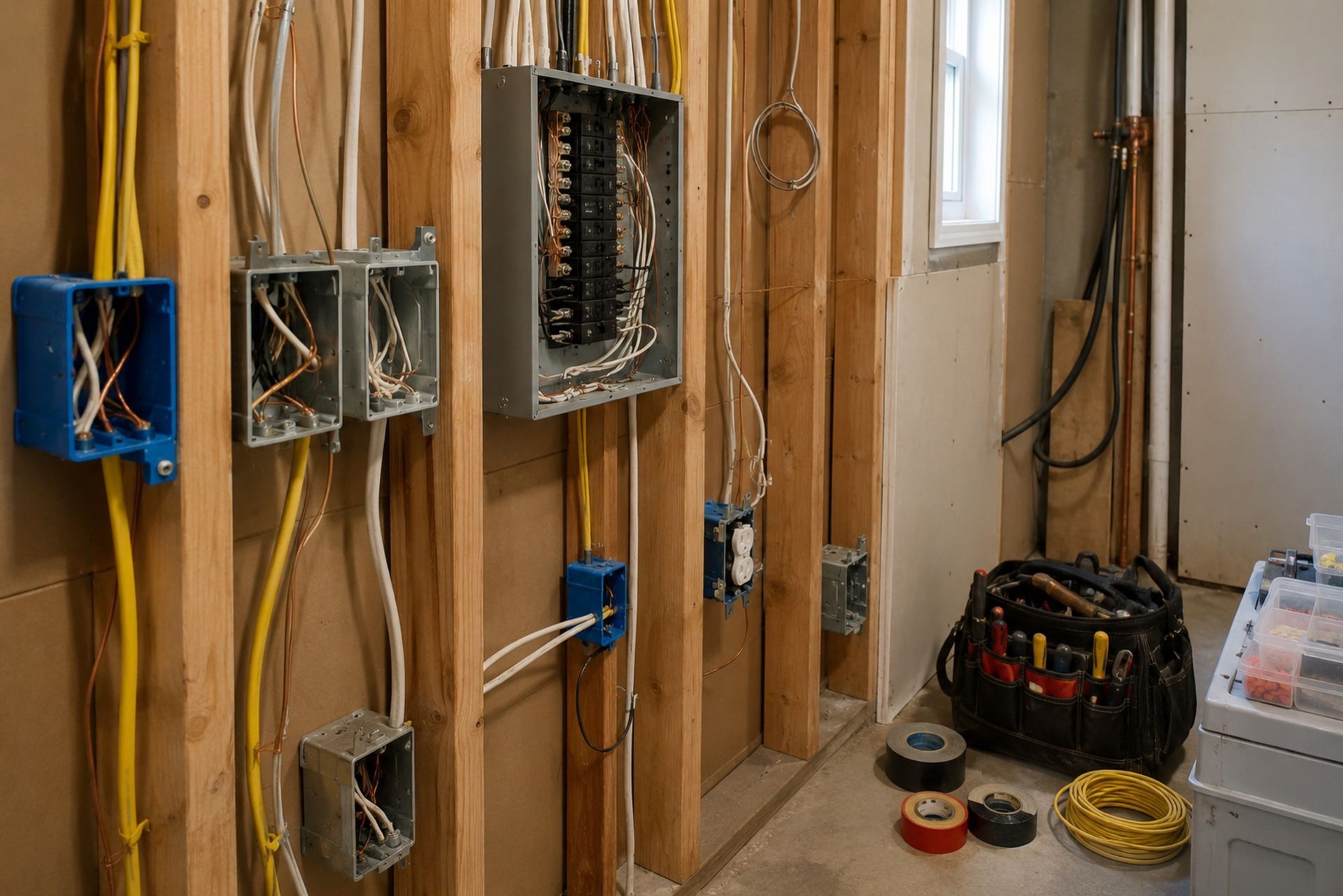
Every GL policy has exclusions, and the ones that affect electricians most are often buried in endorsements and fine print.
Workmanship and Faulty Installation Limitations
Your GL policy does not pay to redo your own faulty work. If you wire a subpanel incorrectly and it needs to be torn out and reinstalled, that cost comes out of your pocket. What the policy does cover is the resulting damage: if that faulty subpanel causes a fire that damages the homeowner's kitchen, the fire damage is covered. The cost to rewire the panel is not. This distinction catches a lot of contractors off guard. Understanding the difference between faulty workmanship and resulting damage is critical for setting realistic expectations about what your policy will and won't do.
Professional Liability and Errors & Omissions Gaps
If you provide design-build services or make engineering recommendations, your GL policy likely won't cover claims arising from those professional services. That requires a separate professional liability or errors and omissions policy. Electricians who spec equipment, design lighting plans, or consult on energy efficiency projects carry this exposure. If a design recommendation leads to a system failure, your general liability insurer will point to the professional services exclusion and decline the claim.
Pollution and Hazardous Material Restrictions
Standard GL policies exclude pollution-related claims. For electricians, this matters more than you might think. If you disturb asbestos-containing materials during a panel upgrade in an older building, or if transformer work leads to a PCB release, the pollution exclusion applies. Some pollution liability endorsements can be added to your GL policy, but they're limited. Large-scale environmental exposure typically requires a standalone pollution policy.
Real-World Claims Examples in the Electrical Trade
Abstract coverage descriptions only go so far. Here's what claims actually look like for working electricians.
Scenario: Electrical Fires and Property Damage
A journeyman electrician installs a new 200-amp service panel in a single-family home. Three months later, a loose connection at the main breaker causes arcing, which ignites insulation inside the wall cavity. The resulting fire causes $85,000 in damage to the home. The homeowner's insurance company pays the claim and then subrogate against the electrician's GL policy. The products-completed operations coverage responds, covering the $85,000 in property damage plus $22,000 in legal defense costs. The cost to replace the panel itself: about $3,500: is excluded as faulty workmanship. Electrical fire claims are among the most common and costly property damage claims in the trade.
Scenario: Third-Party Injuries on Active Jobsites
During a commercial tenant improvement, an electrician leaves a floor-mounted junction box uncovered during lunch break. A drywall installer trips over it and fractures his ankle. The injured worker's employer files a claim against the electrical contractor for failing to maintain a safe work area. The GL policy's bodily injury coverage pays the medical costs ($18,000) and settles the claim for an additional $35,000. Total payout: $53,000 plus defense costs. This kind of claim happens more often than fires, and it's a reminder that jobsite housekeeping is both a safety issue and an insurance issue.
Factors Influencing Insurance Premiums for Electricians
Your GL premium isn't pulled from thin air. Insurers look at several factors: your annual revenue, payroll, number of employees, type of work (residential vs. commercial vs. industrial), claims history, years in business, and geographic location. High-voltage or industrial work carries higher premiums than residential service calls. A clean claims history over three to five years can significantly reduce your rates. One of the biggest premium drivers is your classification code. Electrical contractors fall under different NCCI codes depending on the type of work performed, and being misclassified can mean overpaying by thousands annually. Working with a specialty producer like Joule Pro, which focuses exclusively on electrical contractors, helps ensure your classification and rating are accurate from day one.
Best Practices for Risk Management and Policy Maintenance
The Importance of Certificates of Insurance (COI)
A certificate of insurance is proof that your coverage is active and meets specific limits. You'll need to produce COIs constantly: for GCs, property managers, building departments, and clients. Keep your COI process organized. Know your policy number, limits, and additional insured endorsement details by heart. Delays in producing a COI can cost you a job. Most specialty insurers can issue COIs within 24 hours, and some programs offer same-day turnaround. If your current provider takes a week to issue a certificate, that's a sign you're working with the wrong agency.
Annual Audits and Updating Payroll Estimates
GL policies for contractors are auditable. At the end of your policy period, your insurer compares the payroll and revenue estimates you provided at binding against your actual numbers. If your business grew and actual payroll exceeded your estimate, you'll owe additional premium. If you overestimated, you'll get a return. The key is keeping your estimates realistic throughout the year. If you land a big contract mid-term that significantly increases your payroll, notify your agent. Updating your estimates proactively prevents a painful audit bill at renewal. Joule Pro handles mid-term adjustments for electrical contractors regularly: it's one of those small details that separates a specialty program from a generalist agency.
Frequently Asked Questions
Does general liability cover my tools if they're stolen from a jobsite? No. GL covers third-party bodily injury and property damage. Tool theft is covered under an inland marine or tools and equipment policy.
Do I need GL insurance if I only do side jobs? Yes. Any electrical work you perform for compensation exposes you to liability. One claim without insurance could wipe out your personal assets.
Is workers comp the same as general liability? They're completely different. Workers comp covers injuries to your employees. GL covers injuries or damage to third parties: clients, bystanders, and other contractors.
Can I get general liability insurance with a prior claim on my record? Usually yes, though your premium will be higher. Specialty insurers familiar with the electrical trade are more likely to offer competitive terms than generalist carriers.
How quickly can I get a GL policy? Many specialty programs can bind coverage within one to three business days once your application is complete.
Making the Right Choice for Your Electrical Business
General liability insurance is the single most important policy in your coverage stack as an electrical contractor. It protects your business from the claims that happen most often: property damage from completed work, jobsite injuries to third parties, and the legal costs that come with both. Get your limits right, understand your exclusions, and work with a producer who actually knows the electrical trade. The difference between a generalist policy and one built specifically for your risks shows up the moment you need to file a claim.

Founder & CEO
The Force Behind the Program
About the Author:
Michael Fusco.
Fusco Orsini & Associates
Joule Pro exists because Mike Fusco saw electrical contractors getting boilerplate insurance — and built a program designed for the way the trade actually works.
Mike is the CEO and co-founder of Fusco Orsini & Associates, the San Diego–based independent agency he launched in 2010. Under his leadership FOA has grown into a nationwide partner serving clients across 31 states, with a personal, client-first approach to commercial insurance and risk.
With over 20 years in insurance and risk management, he specializes in tailored programs spanning general liability, workers' compensation, surety bonding, and employee benefits — helping owners confidently manage risk and pursue growth.
Mike holds a B.S. in Business from the University of Maryland — Robert H. Smith School of Business, and the Certified Insurance Counselor (CIC) designation, held by fewer than 3% of insurance professionals nationwide.
What Our Clients Say
Trusted by Electrical Contractors Across the Country.
5.0
★★★★★
Google reviews
Core Commercial Coverage
Business Insurance for Electrical Contractors.
The fundamentals — written, structured, and priced for electrical risk. Each line is reviewed annually by an underwriter who only writes our trade.
01
General Liability
Premises & completed-operations coverage with electrical-specific endorsements and full pollution carve-back options.
02
Workers' Compensation
Class-code optimization, experience-mod review, and return-to-work programs designed for energized-work exposures.
03
Commercial Auto
Fleet, hired & non-owned auto, and tools-in-transit coverage written for service vans and bucket trucks.
04
Tools & Equipment
Scheduled and blanket coverage for tools, test equipment, scissor lifts, and contractor's equipment on-site or in-transit.
05
Surety Bonds
Bid, performance, and payment bonds — single-job and aggregate programs for commercial & public-works contracts.
06
Commercial Property
Layered limits up to $50M with carrier panels covering your shop, warehouse, yard, and on-premises tools, materials, and equipment.
Who We Serve
Electrical Contractors We Specialize In.
From $5M service shops to $250M industrial primes — every Joule Pro program is shaped to the contractor's revenue mix and project profile.
01 / Industrial
Commercial & Industrial Electrical Contractors
High-voltage, substation, and plant electrical work. Pollution, builder's risk, and large-deductible WC programs.
02 / Service
Service & Residential Electrical Contractors
Service-call shops, panel upgrades, and EV charging installers. Auto-fleet, GL, and tool-coverage programs.
03 / Low-Voltage
Specialty & Low-Voltage Contractors
Data, fire-alarm, security, and BMS controls. Cyber, professional liability, and follow-form excess.
Frequently Asked Questions
Common
Questions From
Electrical Contractors.
What size electrical contractors do you write?
Joule Pro is built for licensed electrical firms from roughly $2M in revenue to $250M+. Below $2M we typically refer to our small-business desk; above $250M we underwrite individually with our industrial practice team.
Do I need to be licensed in multiple states?
No. We license you wherever you work. Joule Pro is admitted in 31 states and our compliance team handles multi-state filings, prevailing-wage endorsements, and certificate-of-insurance requirements.
How is Joule Pro different from a generic contractor program?
Generic programs use a contractor's questionnaire that treats you like a roofer. We use forms written for energized work, arc-flash exposures, and design-build risk — and our carriers price accordingly.
What does the claims process actually look like?
Every Joule Pro client is assigned a named claims advocate at bind. They take the FNOL, set strategy with your assigned attorney, and serve as your single point of contact through close.
Can you bond large public-works contracts?
Yes. Through our surety partners we write single-job bonds up to $75M and aggregate programs to $300M, with expedited turnarounds for school district, federal, and DOT work.
What happens at renewal?
Your producer and claims advocate jointly run a renewal review 90 days out — covering loss trends, exposure changes, and market alternatives — so renewal day is a confirmation, not a surprise.
From the Blog
Insights for Electrical Contractors.
Risk briefings, claim post-mortems, and program updates — written by our underwriters and risk engineers.


Get Started
Get a Quote on a Program Built Around Your Trade.
A 30-minute discovery call is the only commitment. You'll leave with a written gap analysis of your current program — yours to keep, whether you bind with us or not.