Business Insurance
Solar Installer Insurance
★★★★★ 150+ Five-Star Reviews · Google & Facebook
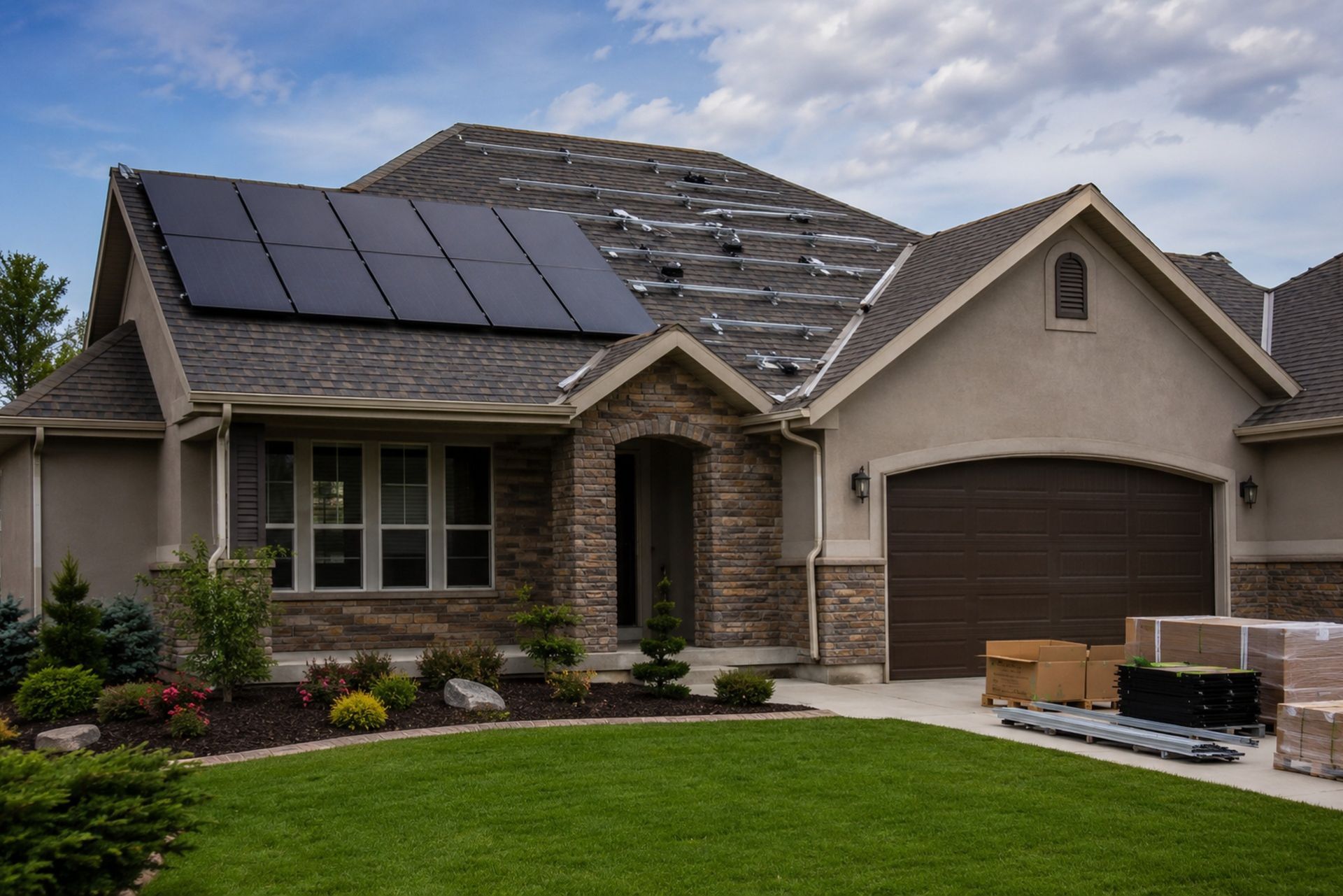
A single roof-mounted solar panel weighs around 40 pounds. A residential installation might involve 20 to 30 of them, hauled up ladders and bolted to rafters by crews working alongside live electrical systems and unpredictable weather. One slip, one crossed wire, one panel that slides off a truck bed in transit: that's all it takes to turn a profitable job into a six-figure liability claim. Solar installation sits at the intersection of electrical work, roofing, and heavy equipment transport, which means the risk profile is broader than most contractors expect. If you're a licensed electrical contractor expanding into solar, or already running a solar crew, your insurance coverage needs to reflect the full scope of what can go wrong. This guide to solar installer insurance breaks down the core policies you need: general liability, workers' comp, tools and equipment coverage, commercial auto, and the trade-specific risks that generic policies often miss. Getting this right isn't just about compliance. It's about protecting the business you've built.
Essential Liability Protection for Solar Professionals
Every solar installation project exposes your company to claims from property owners, bystanders, and even neighboring properties. The liability exposure starts the moment your crew pulls up to a job site and doesn't end when they drive away. A solid liability foundation typically includes both general liability and professional liability, each covering distinct types of claims that solar contractors face regularly.
General Liability for Third-Party Property Damage and Bodily Injury
General liability (GL) is the baseline policy every solar contractor needs before signing a single contract. It covers third-party bodily injury and property damage: think a homeowner tripping over equipment left on their driveway, or a panel falling off a roof and damaging a car parked below. Most commercial GL policies for solar installers carry limits of $1 million per occurrence and $2 million aggregate, though larger commercial projects often require higher limits.
One common mistake is assuming your GL policy automatically covers subcontractors. It usually doesn't, unless you've specifically added that endorsement. If you hire a subcontractor to handle trenching or electrical tie-ins and they cause damage, you could be on the hook. Always verify sub coverage and require certificates of insurance before they set foot on your job site.
Professional Liability and Errors & Omissions for Design Flaws
If your company handles system design, energy production estimates, or engineering calculations, professional liability (also called errors and omissions, or E&O) becomes essential. A GL policy won't cover a claim that your system was undersized, that your wiring design caused chronic inverter failures, or that your energy production projections fell short of what the customer was promised.
E&O claims in solar tend to surface months or even years after installation. A system that underperforms during its first full summer, a design that violates updated NEC codes, or a permitting error that delays interconnection: these are the kinds of professional mistakes that trigger lawsuits. Policies typically start around $1,500 to $3,000 annually for small to mid-size installers, depending on revenue and project volume.

By: Michael Fusco
President of Joule Pro
INDEX
Essential Liability Protection for Solar Professionals
Protecting Your Workforce and Physical Assets
Commercial Auto and Fleet Management Requirements
Mitigating Trade-Specific Risks and Environmental Hazards
Factors Influencing Solar Insurance Premiums and Costs
Joule Pro is a specialty insurance and risk program of Fusco Orsini & Associates Insurance Services, built exclusively for electrical contractors and licensed in 31 states.
We work with electrical firms across the country — from California, Texas, Florida, New York, and coast to coast — placing General Liability, Workers' Compensation, Commercial Auto, Inland Marine, Surety Bonds, Excess Liability, and full specialty coverage stacks for commercial, industrial, service, residential, and low-voltage electrical contractors. Joule Pro is not a separate licensed entity. It is a dedicated program structure inside Fusco Orsini, giving electrical contractors access to specialty carriers, in-house claims advocacy, and trade-specific risk engineering under one program.
Protecting Your Workforce and Physical Assets
Your people and your equipment are the two assets that keep jobs moving. Losing either one to an uninsured incident can stall operations for weeks.
Workers' Compensation for High-Altitude and Electrical Hazards
Solar installation ranks among the higher-risk trades for workers' comp purposes. Your crews work at heights, handle heavy panels, operate power tools on rooftops, and connect systems to live electrical panels. Falls from roofs remain the leading cause of serious injury in the solar trade, and electrical burns or shocks are a close second.
Workers' comp is mandatory in nearly every state, and the classification codes for solar installers (often falling under electrical wiring or roofing codes) carry elevated rates. Expect to pay between $8 and $15 per $100 of payroll depending on your state, claims history, and safety programs. Companies with strong safety records and documented training programs can often negotiate better rates. Joule Pro works specifically with licensed electrical contractors and understands how proper classification can prevent you from being lumped into a higher-risk category than your actual work warrants.
Inland Marine Insurance for Tools and Solar Panels in Transit
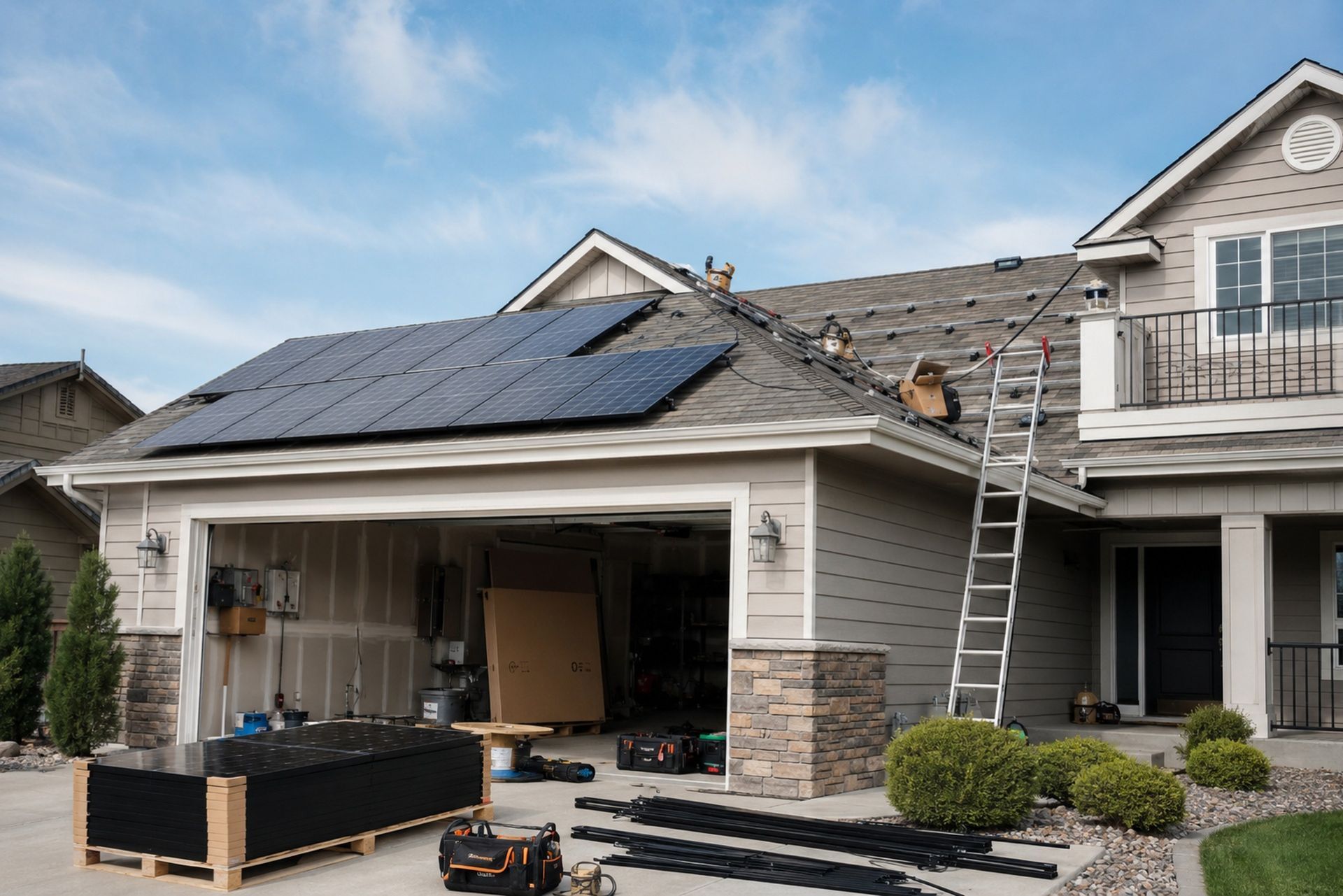
Standard commercial property insurance covers tools and equipment at your shop or office. But what about the $30,000 worth of panels, inverters, and racking sitting in your truck bed on the way to a job? Or the specialized testing equipment your crew carries from site to site? That's where inland marine insurance comes in.
Inland marine covers property in transit and at temporary locations, which describes almost everything a solar installer owns. A single pallet of panels can cost $8,000 to $15,000, and theft from job sites and vehicles is more common than most contractors want to admit. Policies are typically written on a scheduled or blanket basis, and premiums are relatively affordable: often 1% to 3% of the total insured value annually.
Commercial Auto and Fleet Management Requirements
Your vehicles are on the road every day, often loaded with heavy, expensive cargo. Standard personal auto policies won't cover commercial use, and the gaps can be enormous.
Coverage for Service Trucks and Specialized Equipment Trailers
Commercial auto insurance covers your company-owned vehicles, including the cargo inside them. For solar installers, this means service trucks, box trucks, flatbeds, and the trailers used to haul panels and racking to job sites. If one of your trucks is involved in an accident while carrying $20,000 in solar equipment, your commercial auto policy should cover both the vehicle damage and the cargo loss, provided you've structured the policy correctly.
One detail that trips up contractors: trailers often need to be specifically scheduled on the policy. An unscheduled trailer might not be covered, even if it's hitched to an insured truck at the time of the accident. Make sure every trailer, lift gate, and piece of mounted equipment is listed.
Hired and Non-Owned Auto Liability for Employee Vehicles
If any of your employees ever use their personal vehicles for work purposes, even just running to a supply house for parts, you need hired and non-owned auto (HNOA) coverage. Without it, an accident in an employee's personal car during work hours could result in a claim against your company that your commercial auto policy won't touch.
HNOA is an inexpensive endorsement, usually just a few hundred dollars per year, but the protection it provides is significant. This is especially relevant for smaller solar companies where crew members might drive their own trucks to job sites.
Mitigating Trade-Specific Risks and Environmental Hazards
Solar installation carries risks that don't fit neatly into standard policy categories. These are the exposures that generic insurance agents often overlook.
Pollution Liability for Battery Storage and Hazardous Materials
Battery energy storage systems (BESS) are increasingly bundled with solar installations, and they introduce a pollution liability exposure that most GL policies explicitly exclude. Lithium-ion batteries can leak electrolytes, emit toxic fumes during thermal runaway events, or contaminate soil if improperly stored or disposed of. A pollution liability policy covers cleanup costs, third-party bodily injury from contamination, and legal defense expenses.
Even without battery storage, solar installers handle materials that can trigger pollution claims: lead-based solder on older panel types, coolant from equipment, and chemical cleaning agents. If your company installs or services battery systems, pollution liability isn't optional. It's a gap that could bankrupt a small contractor.
Completed Operations Coverage for Long-Term System Performance
Your GL policy's completed operations coverage protects you after you've finished a job and left the site. For solar installers, this is critical because problems often don't appear until months or years later. A roof leak caused by improper flashing around panel mounts, an electrical fire traced back to a faulty connection, or water damage from compromised roofing membranes: these claims all fall under completed operations.
Most standard GL policies include completed operations, but the limits and exclusions vary widely. Review your policy carefully to ensure it covers the full warranty period you offer customers. Some policies cap completed operations coverage at a shorter timeframe than your workmanship warranty.
Factors Influencing Solar Insurance Premiums and Costs
Several factors determine what you'll actually pay for solar installer insurance coverage. Commercial insurance premiums fell by an average of 1.2% in Q1 2026, marking the first overall market decline in years, but solar-specific rates depend heavily on your individual risk profile.
| Factor | Lower Premium | Higher Premium |
|---|---|---|
| Claims history | No claims in 3+ years | Multiple open or recent claims |
| Annual revenue | Under $1M | Over $5M |
| Work type | Residential ground-mount only | Commercial rooftop + BESS |
| Safety program | Documented OSHA training, fall protection | No formal program |
| Employee count | 1-5 employees | 20+ employees |
| State | Lower-cost comp states | CA, NY, or other high-cost states |
Your experience modification rate (EMR) for workers' comp is one of the biggest levers you have. An EMR below 1.0 signals a safer-than-average operation and directly reduces your premium. Investing in safety training, proper fall protection equipment, and documented procedures pays for itself through lower insurance costs over time.
Strategic Steps to Securing Comprehensive Coverage
Start by auditing your current policies against the specific risks outlined above. Most solar contractors discover at least one or two significant gaps when they do this exercise honestly. Common blind spots include missing inland marine coverage for panels in transit, no pollution liability despite installing battery systems, and trailers that were never added to the commercial auto policy.
Work with a specialty insurance provider that understands electrical and solar trade risks. Generalist agents often default to standard contractor packages that miss the nuances of solar work. Joule Pro, backed by Fusco Orsini & Associates Insurance Services, builds coverage specifically for licensed electrical contractors and can structure policies that address the full range of solar installation exposures, from rooftop falls to completed operations claims years down the road.
Get multiple quotes, but don't choose on price alone. Compare policy exclusions, sub-limits, and endorsements side by side. A cheaper policy that excludes completed operations or caps tool coverage at $10,000 isn't actually saving you money: it's just deferring risk to your balance sheet.
Frequently Asked Questions
How much does solar installer insurance cost per year? Most small to mid-size solar installers pay between $8,000 and $25,000 annually for a full coverage package, depending on revenue, crew size, and claims history.
Do I need separate insurance for battery storage installations? Yes. Standard GL policies typically exclude pollution-related claims, and battery systems introduce contamination risks that require a standalone pollution liability policy.
Can my general liability policy cover my subcontractors? Not automatically. You'll need a specific endorsement, and you should always require subcontractors to carry their own GL and workers' comp policies with certificates naming you as additional insured.
What's the difference between inland marine and commercial property insurance? Commercial property covers items at a fixed location like your warehouse. Inland marine covers tools, equipment, and materials while they're being transported or stored at temporary job sites.
Is workers' comp required even if I only have one or two employees? In most states, yes. Requirements vary by state, but the financial exposure from a single serious rooftop fall makes workers' comp essential regardless of the legal minimum.
Your Next Move
Solar installer insurance isn't a single policy: it's a stack of coverages that work together to protect against the specific hazards your crews face every day. The right combination of general liability, workers' comp, commercial auto, inland marine, and trade-specific endorsements keeps your business running even when something goes wrong on a job site. Don't wait for a claim to find out what your policy doesn't cover. Reach out to Joule Pro for a coverage review tailored to your solar installation operations, and make sure your insurance matches the real risks your business carries.

Founder & CEO
The Force Behind the Program
About the Author:
Michael Fusco.
Fusco Orsini & Associates
Joule Pro exists because Mike Fusco saw electrical contractors getting boilerplate insurance — and built a program designed for the way the trade actually works.
Mike is the CEO and co-founder of Fusco Orsini & Associates, the San Diego–based independent agency he launched in 2010. Under his leadership FOA has grown into a nationwide partner serving clients across 31 states, with a personal, client-first approach to commercial insurance and risk.
With over 20 years in insurance and risk management, he specializes in tailored programs spanning general liability, workers' compensation, surety bonding, and employee benefits — helping owners confidently manage risk and pursue growth.
Mike holds a B.S. in Business from the University of Maryland — Robert H. Smith School of Business, and the Certified Insurance Counselor (CIC) designation, held by fewer than 3% of insurance professionals nationwide.
What Our Clients Say
Trusted by Electrical Contractors Across the Country.
5.0
★★★★★
Google reviews
Core Commercial Coverage
Business Insurance for Electrical Contractors.
The fundamentals — written, structured, and priced for electrical risk. Each line is reviewed annually by an underwriter who only writes our trade.
01
General Liability
Premises & completed-operations coverage with electrical-specific endorsements and full pollution carve-back options.
02
Workers' Compensation
Class-code optimization, experience-mod review, and return-to-work programs designed for energized-work exposures.
03
Commercial Auto
Fleet, hired & non-owned auto, and tools-in-transit coverage written for service vans and bucket trucks.
04
Tools & Equipment
Scheduled and blanket coverage for tools, test equipment, scissor lifts, and contractor's equipment on-site or in-transit.
05
Surety Bonds
Bid, performance, and payment bonds — single-job and aggregate programs for commercial & public-works contracts.
06
Commercial Property
Layered limits up to $50M with carrier panels covering your shop, warehouse, yard, and on-premises tools, materials, and equipment.
Who We Serve
Electrical Contractors We Specialize In.
From $5M service shops to $250M industrial primes — every Joule Pro program is shaped to the contractor's revenue mix and project profile.
01 / Industrial
Commercial & Industrial Electrical Contractors
High-voltage, substation, and plant electrical work. Pollution, builder's risk, and large-deductible WC programs.
02 / Service
Service & Residential Electrical Contractors
Service-call shops, panel upgrades, and EV charging installers. Auto-fleet, GL, and tool-coverage programs.
03 / Low-Voltage
Specialty & Low-Voltage Contractors
Data, fire-alarm, security, and BMS controls. Cyber, professional liability, and follow-form excess.
Frequently Asked Questions
Common
Questions From
Electrical Contractors.
What size electrical contractors do you write?
Joule Pro is built for licensed electrical firms from roughly $2M in revenue to $250M+. Below $2M we typically refer to our small-business desk; above $250M we underwrite individually with our industrial practice team.
Do I need to be licensed in multiple states?
No. We license you wherever you work. Joule Pro is admitted in 31 states and our compliance team handles multi-state filings, prevailing-wage endorsements, and certificate-of-insurance requirements.
How is Joule Pro different from a generic contractor program?
Generic programs use a contractor's questionnaire that treats you like a roofer. We use forms written for energized work, arc-flash exposures, and design-build risk — and our carriers price accordingly.
What does the claims process actually look like?
Every Joule Pro client is assigned a named claims advocate at bind. They take the FNOL, set strategy with your assigned attorney, and serve as your single point of contact through close.
Can you bond large public-works contracts?
Yes. Through our surety partners we write single-job bonds up to $75M and aggregate programs to $300M, with expedited turnarounds for school district, federal, and DOT work.
What happens at renewal?
Your producer and claims advocate jointly run a renewal review 90 days out — covering loss trends, exposure changes, and market alternatives — so renewal day is a confirmation, not a surprise.
From the Blog
Insights for Electrical Contractors.
Risk briefings, claim post-mortems, and program updates — written by our underwriters and risk engineers.


Get Started
Get a Quote on a Program Built Around Your Trade.
A 30-minute discovery call is the only commitment. You'll leave with a written gap analysis of your current program — yours to keep, whether you bind with us or not.