Business Insurance
Casper, WY Electrician Insurance
★★★★★ 150+ Five-Star Reviews · Google & Facebook
Underwriting Preferences for Residential vs. Industrial Projects
Running an electrical contracting business in Casper means dealing with a unique mix of challenges you won't find in most other Wyoming cities. Between the wind that rips through Natrona County at 50+ mph, the oil and gas infrastructure dotting the surrounding plains, and a local permitting process that demands specific proof of coverage, getting your insurance right isn't optional: it's survival. Most electricians I've talked to in the Casper area have at least one story about a claim that caught them off guard, whether it was a wind-damaged service panel or a liability dispute on an oilfield project. This guide to electrician insurance in Casper covers the coverage types you actually need, the local permitting and bonding requirements that trip people up, city-specific risks that affect your premiums, and which carriers are writing policies for electrical contractors in this market. If you're a licensed electrician operating anywhere in Natrona County, this is the stuff that keeps your business protected and your license active.
Essential Insurance Coverage for Casper Electrical Contractors
The coverage stack for a Casper electrician looks different from what a contractor in Cheyenne or Sheridan might carry. Your exposure profile shifts based on the type of work you do, how many employees you have, and whether you're pulling permits for residential rewires or wiring compressor stations outside of town.
General Liability and Professional Indemnity
General liability is the foundation. It covers third-party bodily injury and property damage claims: think a homeowner tripping over your cable run or a fire sparked by faulty installation. Most Casper general contractors require their electrical subs to carry at least $1 million per occurrence and $2 million aggregate before stepping foot on a jobsite.
Professional indemnity, sometimes called errors and omissions coverage, is a different animal. It protects you when your design work or system recommendations cause a financial loss. If you spec the wrong panel for a commercial build and the owner has to rip it out, that's a professional liability claim, not a general liability one. A lot of electricians skip this coverage and regret it later.
One thing to keep in mind: general liability policies for electricians often include a "products-completed operations" component. This covers claims that arise after you've finished the job and left the site, which is where a surprising number of electrical claims originate.
Workers' Compensation Requirements in Wyoming
Wyoming handles workers' comp differently than most states. The state runs a monopolistic fund through the Wyoming Department of Workforce Services, meaning you can't buy workers' comp from a private carrier. Every employer in the state must participate. Wyoming implemented an average 6.5% decrease in workers' compensation industry base rates for the 2024 calendar year, which has helped bring costs down slightly for contractors.
Even sole proprietors should think carefully about opting in. If you get hurt on a jobsite and don't have coverage, you're absorbing the full cost of medical bills and lost income. The state fund calculates premiums based on your payroll and classification code, so electrical contractors pay rates that reflect the inherent risk of the trade.
Inland Marine and Tool Coverage for Mobile Crews
Your tools and equipment travel with you. A standard commercial property policy only covers items at a fixed location, which is useless when your wire pullers, meters, and conduit benders are on a trailer headed to a job in Mills or Evansville. Inland marine insurance covers tools, equipment, and materials in transit or at temporary jobsites.
For a typical Casper electrical crew, tool replacement costs can easily run $15,000 to $40,000. Theft from job trailers and work trucks is a real problem, especially on remote oilfield sites where nobody's watching overnight. Joule Pro structures inland marine coverage specifically for electrical contractors, covering everything from hand tools to specialty testing equipment without the gaps you'd find in a generic contractor policy.

By: Michael Fusco
President of Joule Pro
INDEX
Joule Pro is a specialty insurance and risk program of Fusco Orsini & Associates Insurance Services, built exclusively for electrical contractors and licensed in 31 states.
We work with electrical firms across the country — from California, Texas, Florida, New York, and coast to coast — placing General Liability, Workers' Compensation, Commercial Auto, Inland Marine, Surety Bonds, Excess Liability, and full specialty coverage stacks for commercial, industrial, service, residential, and low-voltage electrical contractors. Joule Pro is not a separate licensed entity. It is a dedicated program structure inside Fusco Orsini, giving electrical contractors access to specialty carriers, in-house claims advocacy, and trade-specific risk engineering under one program.
Electrician Insurance By City
Electrician Insurance Coverage
Navigating Casper Permitting and Licensing Insurance Bonds
City of Casper Licensing and Bond Requirements
The City of Casper requires electrical contractors to hold a valid license before performing any electrical work within city limits. Part of that licensing process involves posting a surety bond. The bond amount varies, but it typically runs between $5,000 and $25,000 depending on your license classification.
This bond isn't insurance: it's a guarantee to the city and its residents that you'll perform work according to code. If you don't, a claim can be filed against your bond. You'll need to work with a surety company or a specialty program like Joule Pro that understands contractor bonding to get this in place before your license application is approved.
Proof of Insurance for Electrical Permit Issuance
Pulling an electrical permit in Casper requires showing current proof of insurance. The city's building department typically wants to see a certificate of insurance listing the City of Casper as a certificate holder, with minimum general liability limits clearly stated.
Here's where contractors get tripped up: certificates expire, and if your insurance lapses even briefly, the city can hold your permits. Keep your certificate of insurance current and make sure your agent sends updated certificates directly to the building department when policies renew. A specialty producer who works exclusively with electrical contractors will handle this automatically, saving you the headache of chasing paperwork during busy seasons.
Addressing City-Specific Risks in Central Wyoming
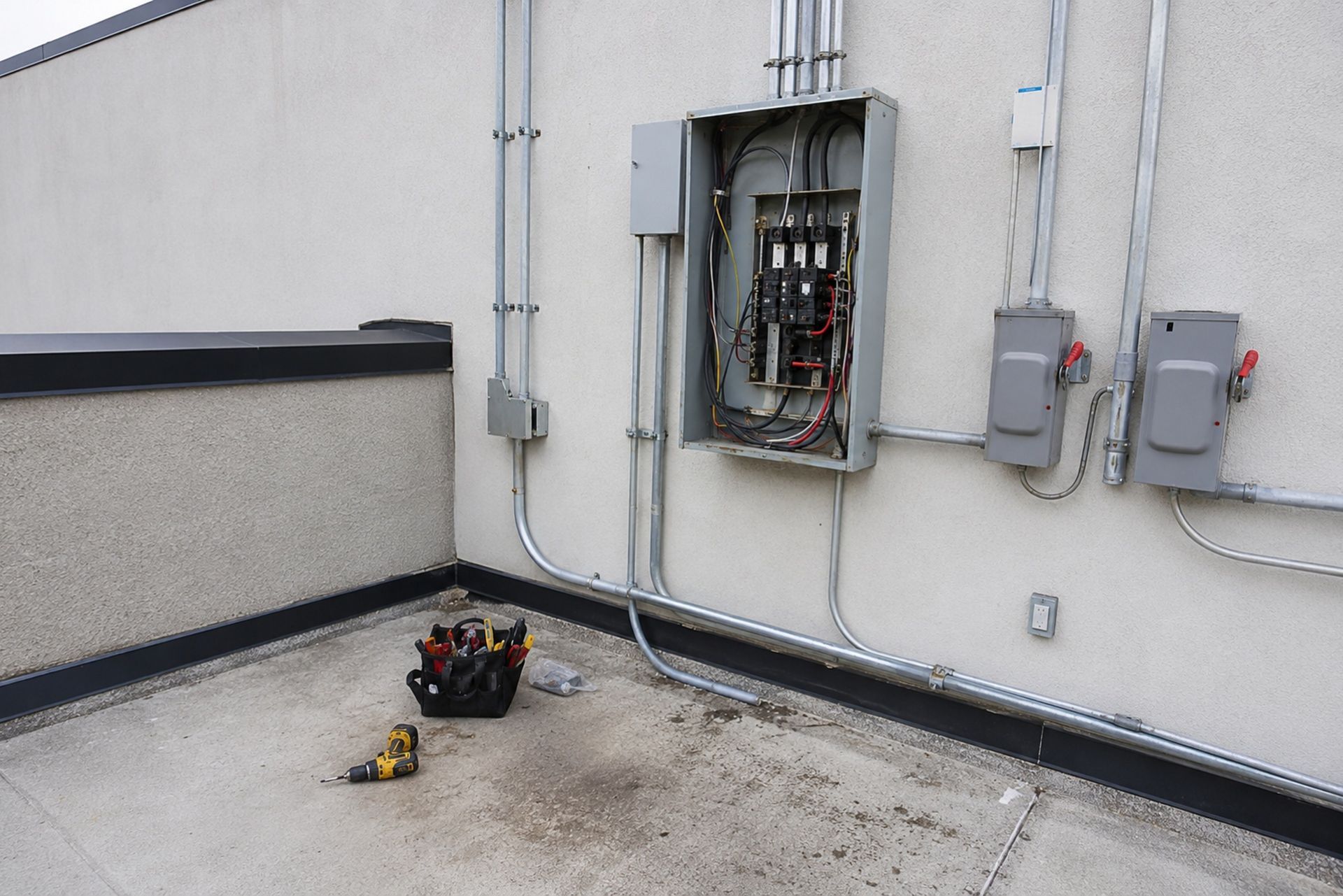
Mitigating High-Wind and Severe Weather Property Damage
Casper sits in one of the windiest corridors in the lower 48. Sustained winds of 30-40 mph are routine, and gusts exceeding 70 mph hit the area multiple times per year. For electricians, this creates specific exposures: exterior panel installations, rooftop solar work, and overhead service connections are all vulnerable to wind damage during and after installation.
Claims related to wind damage tend to spike between March and June. If you're installing exterior equipment, your general liability policy needs to account for completed operations claims where wind damages work you've already finished. Make sure your policy doesn't exclude weather-related property damage, because some standard forms do.
Hail is the other big one. A severe hailstorm can destroy conduit runs, outdoor fixtures, and equipment you've staged at a jobsite. Your inland marine coverage should explicitly include weather perils, not just theft and collision.
Risks Associated with Oil and Gas Industry Support
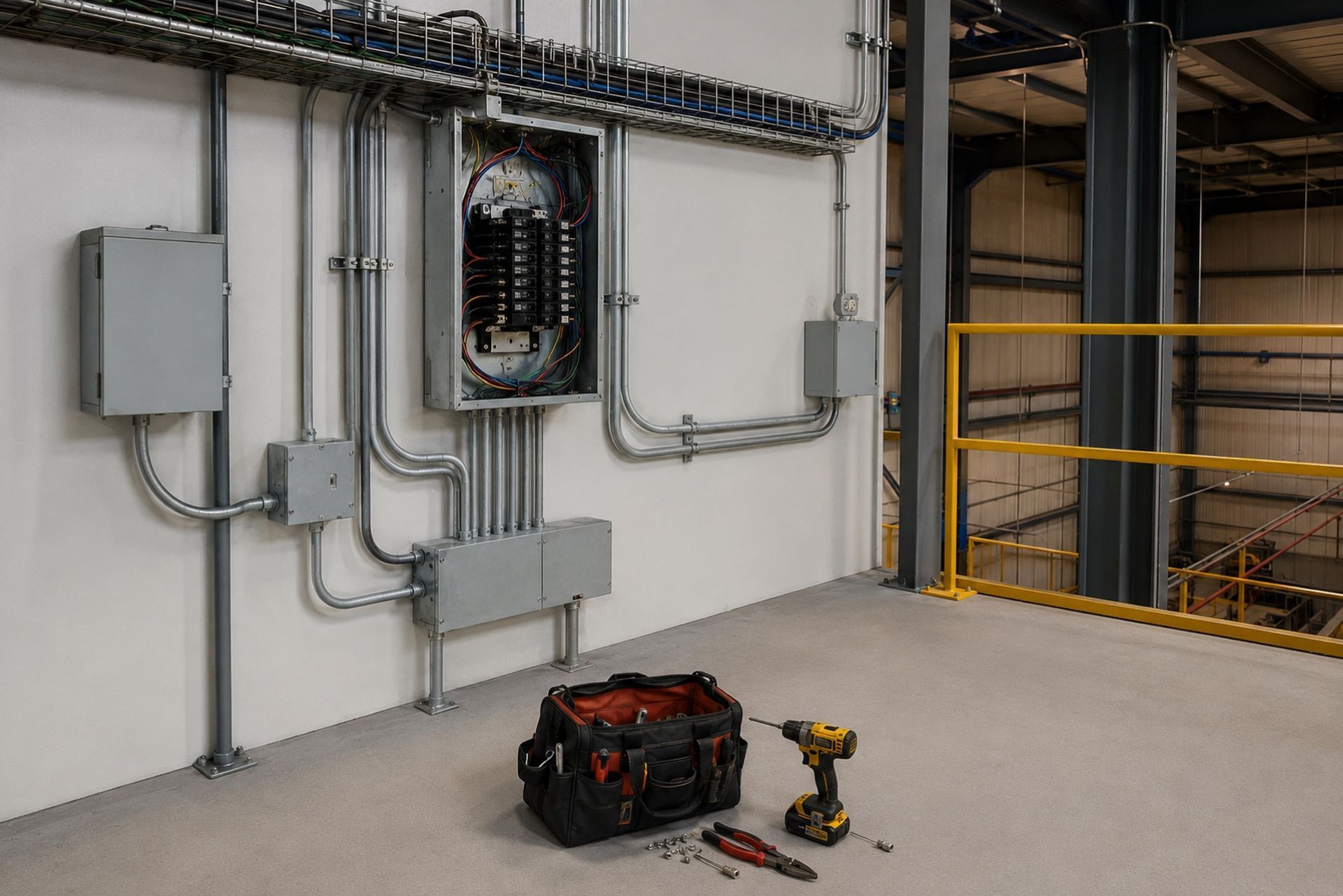
Casper's economy is deeply tied to oil and gas. Many electrical contractors in Natrona County earn a significant portion of their revenue wiring pump jacks, compressor stations, and processing facilities. This work carries higher risk than residential or light commercial jobs, and insurers know it.
Oil and gas electrical work often involves hazardous locations (Class I, Division 1 and 2 environments), which means any incident can result in catastrophic claims. Your general liability policy needs to be endorsed for this type of work, and many standard policies exclude it entirely. If you're doing oilfield electrical work without confirming your policy covers it, you're essentially uninsured for your highest-risk jobs.
Pollution liability is another consideration. Electrical failures at oil and gas sites can trigger spills or releases, and you could be named in a pollution claim even if the root cause wasn't your installation. A pollution liability endorsement or standalone policy fills this gap.
Carrier Appetite and Market Trends in Natrona County
Preferred Insurers for Residential vs. Industrial Electricians
Carrier appetite for Casper electricians splits along a clear line: residential work is easy to place, and industrial or oilfield work is not. Most standard market carriers will write a residential electrician in Casper without hesitation, offering competitive rates and broad coverage terms.
Industrial and oilfield electrical contractors face a tighter market. Many national carriers either decline this class of business or attach restrictive exclusions. Specialty programs that focus on the electrical trade maintain relationships with surplus lines carriers and specialty admitted markets willing to write these risks. Joule Pro, for example, works with underwriters who specifically understand the electrical trade's risk profile, including oilfield exposures, and can offer coverage that a generalist agency simply can't access.
| Coverage Type | Residential Electrician | Industrial/Oilfield Electrician |
|---|---|---|
| General Liability | Residential Electrician | Limited availability, specialty markets preferred |
| Workers' Comp | Wyoming State Fund (mandatory) | Wyoming State Fund (mandatory) |
| Inland Marine | Standard terms, lower limits | Higher limits needed, broader perils |
| Pollution Liability | Rarely needed | Strongly recommended |
| Umbrella/Excess | Easy to place, $1M-$5M | Harder to place, $5M+ often required |
Factors Influencing Local Premium Rates
Several factors push Casper electrician premiums up or down. Your claims history is the biggest driver: even one large claim in the past five years can double your premium. Revenue size matters too, since most general liability policies are rated on gross receipts.
The type of work you perform has an outsized impact. A contractor doing 80% residential rewires will pay significantly less than one doing 80% oilfield work, even at the same revenue level. Your safety program, employee training documentation, and subcontractor management practices also influence what underwriters are willing to offer.
Wyoming's relatively small population and limited carrier competition mean you have fewer options than contractors in Denver or Salt Lake City. That said, the state's business-friendly regulatory environment and lower litigation costs help keep base rates reasonable compared to neighboring states with higher claim frequency.
Optimizing Your Policy for Maximum Protection
Getting the right insurance in place for your Casper electrical business isn't a one-time event. Review your coverage annually, especially if your revenue mix shifts between residential and industrial work. A policy that was perfect two years ago might have dangerous gaps today if you've started taking oilfield contracts.
Bundle your coverages where possible. Carrying general liability, commercial auto, inland marine, and an umbrella policy through a single specialty program typically costs less than piecing together individual policies from different carriers. It also eliminates coverage gaps between policies, which is where claims fall through.
Work with a producer who knows the electrical trade specifically. A generalist agent might get you a policy, but they're unlikely to catch the exclusions and sublimits that matter most for your work. Joule Pro, backed by Fusco Orsini & Associates Insurance Services (CA Lic. 0H16057), provides direct access to a licensed professional who understands the specific exposures Casper electricians face: from wind damage to oilfield liability.
If you're due for a policy review or you're shopping for better coverage, reach out to a specialty electrical contractor insurance program and get a quote tailored to your actual operations, not a generic template.
Frequently Asked Questions
Do I need pollution liability insurance as a Casper electrician? If you do any oil and gas related electrical work, yes. Electrical failures at energy sites can trigger pollution claims, and standard GL policies exclude pollution events.
Can I buy workers' comp from a private insurer in Wyoming? No. Wyoming operates a monopolistic state fund, so all workers' comp coverage must be purchased through the Wyoming Department of Workforce Services.
How much does general liability cost for a Casper electrician? Residential electricians typically pay $1,200 to $3,500 annually for $1M/$2M limits. Industrial and oilfield electricians can expect $5,000 to $15,000 or more depending on revenue and claims history.
What bond do I need to get my Casper electrical license? The City of Casper requires a surety bond, usually between $5,000 and $25,000, as part of the contractor licensing process.
Does my insurance need to cover completed operations?
Absolutely. Many electrical claims arise after you've left the jobsite. Products-completed operations coverage is essential and should be included in your GL policy, not added as an afterthought.

Founder & CEO
The Force Behind the Program
About the Author:
Michael Fusco.
Fusco Orsini & Associates
Joule Pro exists because Mike Fusco saw electrical contractors getting boilerplate insurance — and built a program designed for the way the trade actually works.
Mike is the CEO and co-founder of Fusco Orsini & Associates, the San Diego–based independent agency he launched in 2010. Under his leadership FOA has grown into a nationwide partner serving clients across 31 states, with a personal, client-first approach to commercial insurance and risk.
With over 20 years in insurance and risk management, he specializes in tailored programs spanning general liability, workers' compensation, surety bonding, and employee benefits — helping owners confidently manage risk and pursue growth.
Mike holds a B.S. in Business from the University of Maryland — Robert H. Smith School of Business, and the Certified Insurance Counselor (CIC) designation, held by fewer than 3% of insurance professionals nationwide.
Trusted by Electrical Contractors Across the Country.
Select your state for electrical contractor insurance. Get requirements, cost ranges, and more information for your business.
Alabama
Arkansas
Louisiana
Kentucky
New Hampshire
Vermont
Rhode Island
Massachusetts
N. Dakota
S. Dakota
Oklahoma
Delaware
What Our Clients Say
Trusted by Electrical Contractors Across the Country.
5.0
★★★★★
Google reviews
Core Commercial Coverage
Business Insurance for Electrical Contractors.
The fundamentals — written, structured, and priced for electrical risk. Each line is reviewed annually by an underwriter who only writes our trade.
01
General Liability
Premises & completed-operations coverage with electrical-specific endorsements and full pollution carve-back options.
02
Workers' Compensation
Class-code optimization, experience-mod review, and return-to-work programs designed for energized-work exposures.
03
Commercial Auto
Fleet, hired & non-owned auto, and tools-in-transit coverage written for service vans and bucket trucks.
04
Tools & Equipment
Scheduled and blanket coverage for tools, test equipment, scissor lifts, and contractor's equipment on-site or in-transit.
05
Surety Bonds
Bid, performance, and payment bonds — single-job and aggregate programs for commercial & public-works contracts.
06
Commercial Property
Layered limits up to $50M with carrier panels covering your shop, warehouse, yard, and on-premises tools, materials, and equipment.
Who We Serve
Electrical Contractors We Specialize In.
From $5M service shops to $250M industrial primes — every Joule Pro program is shaped to the contractor's revenue mix and project profile.
01 / Industrial
Commercial & Industrial Electrical Contractors
High-voltage, substation, and plant electrical work. Pollution, builder's risk, and large-deductible WC programs.
02 / Service
Service & Residential Electrical Contractors
Service-call shops, panel upgrades, and EV charging installers. Auto-fleet, GL, and tool-coverage programs.
03 / Low-Voltage
Specialty & Low-Voltage Contractors
Data, fire-alarm, security, and BMS controls. Cyber, professional liability, and follow-form excess.
Frequently Asked Questions
Common
Questions From
Electrical Contractors.
What size electrical contractors do you write?
Joule Pro is built for licensed electrical firms from roughly $2M in revenue to $250M+. Below $2M we typically refer to our small-business desk; above $250M we underwrite individually with our industrial practice team.
Do I need to be licensed in multiple states?
No. We license you wherever you work. Joule Pro is admitted in 31 states and our compliance team handles multi-state filings, prevailing-wage endorsements, and certificate-of-insurance requirements.
How is Joule Pro different from a generic contractor program?
Generic programs use a contractor's questionnaire that treats you like a roofer. We use forms written for energized work, arc-flash exposures, and design-build risk — and our carriers price accordingly.
What does the claims process actually look like?
Every Joule Pro client is assigned a named claims advocate at bind. They take the FNOL, set strategy with your assigned attorney, and serve as your single point of contact through close.
Can you bond large public-works contracts?
Yes. Through our surety partners we write single-job bonds up to $75M and aggregate programs to $300M, with expedited turnarounds for school district, federal, and DOT work.
What happens at renewal?
Your producer and claims advocate jointly run a renewal review 90 days out — covering loss trends, exposure changes, and market alternatives — so renewal day is a confirmation, not a surprise.
From the Blog
Insights for Electrical Contractors.
Risk briefings, claim post-mortems, and program updates — written by our underwriters and risk engineers.


Get Started
Get a Quote on a Program Built Around Your Trade.
A 30-minute discovery call is the only commitment. You'll leave with a written gap analysis of your current program — yours to keep, whether you bind with us or not.