
Business Insurance
Long Beach, CA Electrician Insurance
★★★★★ 150+ Five-Star Reviews · Google & Facebook
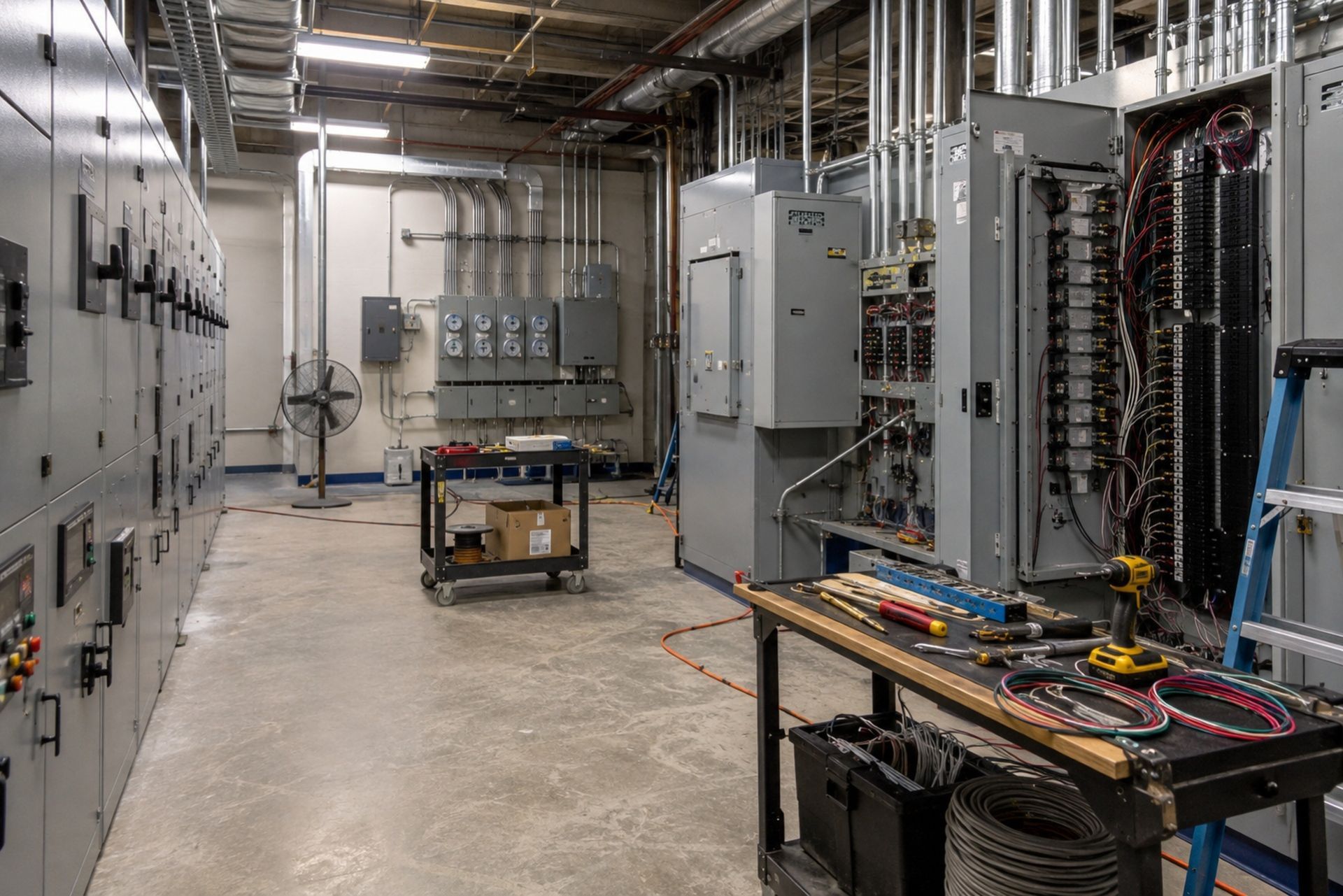
Long Beach sits at the intersection of heavy industrial port operations, dense urban development, and a coastline that eats through wiring faster than most contractors expect. If you're a licensed electrician working anywhere from the Signal Hill oil fields to the Belmont Shore bungalows, your insurance needs look different from a contractor in Bakersfield or Sacramento. The salt air alone changes the risk profile. Add in a city that's aggressively permitting new construction, a port complex generating billions in infrastructure projects, and an older housing stock full of knob-and-tube surprises, and you've got a market that demands specialized coverage. This guide breaks down what Long Beach electricians actually need: the policies, the local risks, the carriers willing to write your class code, and the permitting requirements that tie it all together. Whether you're a solo C-10 holder or running a crew of 30, understanding electrician insurance in Long Beach means understanding the city itself.
Navigating the Long Beach Electrical Contracting Landscape
Long Beach isn't just another Southern California suburb. It's the second-largest city in Los Angeles County with its own development services department, its own permitting quirks, and a construction market shaped by the Port of Long Beach, one of the busiest container ports in the Western Hemisphere. Electrical contractors working here face a regulatory environment that moves fast and expects compliance yesterday.
The city has been on a building tear. Mixed-use developments along the waterfront, EV charging infrastructure mandated by state law, and seismic retrofit projects on older commercial buildings all create demand for licensed electricians. But every one of those project types carries distinct insurance implications, from the liability exposure on a high-rise conduit run to the workers' comp risks of retrofitting a 1920s warehouse.
Meeting Long Beach Development Services Insurance Requirements
Long Beach Development Services requires proof of insurance before issuing electrical permits. You'll typically need to show a general liability policy with minimum limits of $1 million per occurrence and $2 million aggregate, plus active workers' compensation coverage if you have any employees. The city adopted Ordinance ORD-25-0019, incorporating the 2025 California Electrical Code effective January 2026, which means inspectors are enforcing updated standards on everything from arc-fault protection to energy storage systems.
Missing or inadequate insurance documentation will stall your permit. I've seen contractors lose project timelines because their certificate of insurance listed the wrong additional insured or had expired coverage dates. Keep your COIs current and confirm that your carrier can issue same-day certificates when a general contractor or project owner demands one.
Aligning Coverage with C-10 License Regulations in California
Your C-10 electrical contractor license from the CSLB requires you to carry a contractor's bond of at least $25,000 and either an exemption from workers' comp or active coverage. But the bond isn't insurance: it protects consumers, not you. The real protection comes from your liability and workers' comp policies.
California also requires that your insurance carrier report any policy cancellations directly to the CSLB. If your general liability lapses, your license can be suspended. Joule Pro works specifically with electrical contractors to prevent these gaps, ensuring policy renewals and carrier communications stay aligned with CSLB reporting requirements. That kind of trade-specific attention matters when your license is your livelihood.

By: Michael Fusco
President of Joule Pro
INDEX
Joule Pro is a specialty insurance and risk program of Fusco Orsini & Associates Insurance Services, built exclusively for electrical contractors and licensed in 31 states.
We work with electrical firms across the country — from California, Texas, Florida, New York, and coast to coast — placing General Liability, Workers' Compensation, Commercial Auto, Inland Marine, Surety Bonds, Excess Liability, and full specialty coverage stacks for commercial, industrial, service, residential, and low-voltage electrical contractors. Joule Pro is not a separate licensed entity. It is a dedicated program structure inside Fusco Orsini, giving electrical contractors access to specialty carriers, in-house claims advocacy, and trade-specific risk engineering under one program.
Electrician Insurance By City
Electrician Insurance Coverage
Essential Insurance Policies for Long Beach Electricians
General Liability for Coastal and Urban Project Risks
General liability is the foundation. It covers third-party bodily injury, property damage, and completed operations claims. In Long Beach, completed operations coverage is especially critical because electrical failures can cause fires or electrocution months or years after you finish a job.
Coastal projects add another layer. Salt air corrosion can degrade connections, and if a panel you installed fails due to environmental exposure, you could face a completed operations claim. Urban density raises the stakes too: a fire caused by faulty wiring in a downtown mixed-use building affects more people and generates larger claims than the same incident in a rural setting.
| Coverage Type | Typical Limits for Long Beach | Typical Limits for Long Beach |
|---|---|---|
| General Liability | Third-party injury, property damage, completed ops | $1M/$2M minimum; $2M/$4M recommended |
| Workers' Compensation | Employee injuries, medical costs, lost wages | Statutory (CA required) |
| Inland Marine | Tools, equipment, materials in transit or on-site | $25K-$150K depending on inventory |
| Commercial Auto | Work vehicles, third-party auto liability | $1M combined single limit |
| Professional Liability | Design errors, consulting mistakes | $1M/$1M for design-build firms |
Workers' Compensation and State Disability Compliance
California has some of the highest workers' comp rates in the country, and electrical work sits in a higher-risk classification. Your experience modification rate (EMR) directly affects your premium, so maintaining a strong safety record isn't just good practice: it's a financial strategy.
The state also mandates State Disability Insurance (SDI) contributions, which are separate from workers' comp. Don't confuse the two. SDI covers non-work-related illness or injury, while workers' comp covers on-the-job incidents. Both are mandatory, and both get audited.
One common mistake: sole proprietors who assume they don't need workers' comp. If you're a one-person shop, you can file an exemption with the CSLB. But the moment you hire a helper, even a part-time apprentice, you need active coverage before they start work.
Inland Marine Insurance for Mobile Tools and Equipment
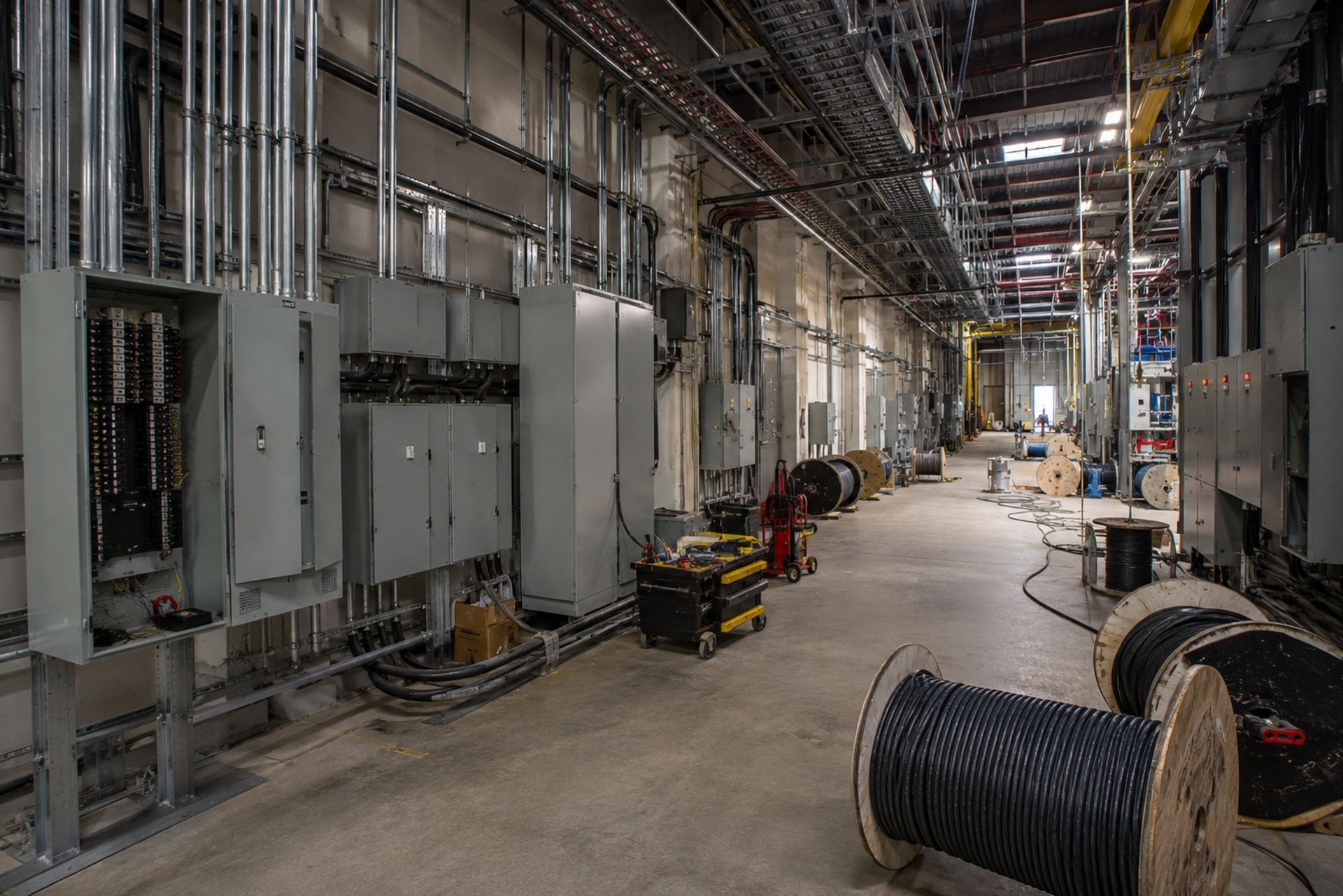
Your van full of meters, benders, fish tapes, and power tools represents tens of thousands of dollars. Standard commercial property policies often exclude tools in transit or stored at job sites. Inland marine fills that gap.
Long Beach has higher-than-average vehicle break-in rates in certain industrial corridors near the port. If your work van gets hit overnight while parked near a job site on Anaheim Street, inland marine covers the stolen tools. Your auto policy covers the vehicle damage. Without both, you're absorbing a loss that could easily reach $15,000 to $30,000.
Mitigating City-Specific Risks in the Port City
Corrosion and Environmental Hazards in Waterfront Properties
Salt spray corrosion is a real and persistent problem within a few miles of the Long Beach coastline. Electrical panels, conduit, junction boxes, and grounding systems all degrade faster in marine environments. If you're installing or maintaining electrical systems in waterfront properties along Ocean Boulevard or in the marina area, you need to specify marine-grade materials and document your choices.
Why does this matter for insurance? Because if a claim arises from corrosion-related failure, your carrier will examine whether you followed best practices. Using standard galvanized conduit instead of stainless steel or PVC-coated alternatives in a saltwater environment could give an insurer grounds to dispute coverage. Documentation protects you as much as the right policy does.
Environmental hazards near the port also include exposure to diesel particulate and chemical residues. Workers' comp claims related to respiratory issues or chemical exposure are more common in port-adjacent industrial zones, and your policy needs to account for that exposure.
Working with Historic Architecture in the East Village and Belmont Shore
The East Village Arts District and Belmont Shore contain hundreds of structures built before modern electrical codes existed. Rewiring a 1930s Craftsman bungalow means dealing with knob-and-tube wiring, ungrounded outlets, and panels that haven't been touched in decades. The fire risk during renovation is real, and the liability exposure is significant.
Historic properties also come with preservation requirements. Damaging original plaster, woodwork, or architectural details during an electrical upgrade can trigger property damage claims that fall under your general liability policy. Some carriers are skittish about writing coverage for contractors who regularly work on pre-war structures, so your choice of insurer matters.
Carrier Appetite and Market Trends for Southern California
Preferred Carriers for Residential vs. Industrial Electrical Work
Not every insurance carrier wants to write electrical contractor policies, and the ones that do often have strong preferences about what type of work you perform. Residential rewiring is generally easier to place than industrial controls work at a port facility or solar panel installation on commercial rooftops.
Carriers assess your class code, annual revenue, payroll, claims history, and the specific types of projects you take on. A contractor doing primarily residential service calls in Lakewood or Los Altos will find more carrier options than one doing high-voltage industrial work at the port terminals. Joule Pro maintains relationships with specialty markets that specifically underwrite electrical contractors, including those doing higher-risk industrial and commercial work that generalist agencies struggle to place.
The Impact of Local Litigation Trends on Premium Rates
Los Angeles County is one of the most litigious jurisdictions in the United States, and Long Beach sits right in the middle of it. Nuclear verdicts and social inflation have pushed liability premiums upward across all contractor classes, but electrical contractors feel it acutely because fire and electrocution claims generate large jury awards.
The practical impact: expect to pay 15-25% more for general liability in Long Beach compared to less litigious California markets like the Central Valley. Carriers price this in, and some have pulled out of LA County entirely for certain trade classes. Working with a producer who understands carrier appetite for your specific situation saves you from wasting weeks on applications that will get declined.
Optimizing Your Insurance Portfolio for Business Growth
Securing Bid and Performance Bonds for City Contracts
Long Beach regularly issues RFPs for electrical work on city buildings, streetlight systems, and port infrastructure. Winning these contracts requires bid bonds and performance bonds, which aren't insurance policies but are often obtained through your insurance broker.
Your bonding capacity depends on your financial statements, credit history, work-in-progress, and insurance program. A well-structured insurance portfolio with clean loss runs actually improves your bonding capacity. Surety companies want to see that you're managing risk properly before they guarantee your performance on a $500,000 city contract.
Professional Liability for Electrical Design and Consulting
If you do any design-build work or provide consulting services, standard general liability won't cover errors in your designs or specifications. Professional liability, sometimes called errors and omissions coverage, fills that gap. A miscalculated load analysis that causes a system failure is a professional liability claim, not a general liability one.
This coverage is increasingly important as more Long Beach electricians move into EV charging station design, solar integration, and energy management consulting. The design component of these services creates exposure that your GL policy explicitly excludes.
Frequently Asked Questions
How much does general liability insurance cost for electricians in Long Beach? Expect to pay between $2,500 and $6,000 annually for a $1M/$2M policy, depending on your revenue, claims history, and the type of work you perform. Industrial and commercial contractors pay more than residential-only shops.
Do I need insurance to pull an electrical permit in Long Beach? Yes. Long Beach Development Services requires proof of general liability and workers' compensation (if you have employees) before issuing permits.
Can I get insurance if I've had prior claims? Yes, though your options narrow. Specialty programs like Joule Pro work with carriers that consider contractors with claims history, though your premiums will reflect the added risk.
Is inland marine insurance required by law? No, but it's strongly recommended. Your commercial auto policy won't cover stolen tools, and replacing a full van of equipment out of pocket can cost $20,000 or more.
What's the difference between a contractor's bond and general liability insurance? Your $25,000 CSLB bond protects consumers if you fail to perform. General liability protects you and third parties from injury and property damage claims. They serve completely different purposes.
Your Next Steps
Long Beach rewards electricians who understand both the technical demands and the business infrastructure required to operate here. The right insurance program isn't just a compliance checkbox: it's what keeps you bidding on bigger projects, surviving claims without going under, and maintaining your C-10 license without interruption.
Start by reviewing your current policies against the coverage types outlined above. If you're carrying minimum limits or working with a generalist agency that doesn't understand electrical trade risks, you're likely overpaying for coverage that has gaps. Reach out to Joule Pro for a coverage review built around your specific Long Beach operations: the local risks, the carrier relationships, and the policy structures that actually protect electrical contractors.

Founder & CEO
The Force Behind the Program
About the Author:
Michael Fusco.
Fusco Orsini & Associates
Joule Pro exists because Mike Fusco saw electrical contractors getting boilerplate insurance — and built a program designed for the way the trade actually works.
Mike is the CEO and co-founder of Fusco Orsini & Associates, the San Diego–based independent agency he launched in 2010. Under his leadership FOA has grown into a nationwide partner serving clients across 31 states, with a personal, client-first approach to commercial insurance and risk.
With over 20 years in insurance and risk management, he specializes in tailored programs spanning general liability, workers' compensation, surety bonding, and employee benefits — helping owners confidently manage risk and pursue growth.
Mike holds a B.S. in Business from the University of Maryland — Robert H. Smith School of Business, and the Certified Insurance Counselor (CIC) designation, held by fewer than 3% of insurance professionals nationwide.
What Our Clients Say
Trusted by Electrical Contractors Across the Country.
5.0
★★★★★
Google reviews
Core Commercial Coverage
Business Insurance for Electrical Contractors.
The fundamentals — written, structured, and priced for electrical risk. Each line is reviewed annually by an underwriter who only writes our trade.
01
General Liability
Premises & completed-operations coverage with electrical-specific endorsements and full pollution carve-back options.
02
Workers' Compensation
Class-code optimization, experience-mod review, and return-to-work programs designed for energized-work exposures.
03
Commercial Auto
Fleet, hired & non-owned auto, and tools-in-transit coverage written for service vans and bucket trucks.
04
Tools & Equipment
Scheduled and blanket coverage for tools, test equipment, scissor lifts, and contractor's equipment on-site or in-transit.
05
Surety Bonds
Bid, performance, and payment bonds — single-job and aggregate programs for commercial & public-works contracts.
06
Commercial Property
Layered limits up to $50M with carrier panels covering your shop, warehouse, yard, and on-premises tools, materials, and equipment.
Who We Serve
Electrical Contractors We Specialize In.
From $5M service shops to $250M industrial primes — every Joule Pro program is shaped to the contractor's revenue mix and project profile.
01 / Industrial
Commercial & Industrial Electrical Contractors
High-voltage, substation, and plant electrical work. Pollution, builder's risk, and large-deductible WC programs.
02 / Service
Service & Residential Electrical Contractors
Service-call shops, panel upgrades, and EV charging installers. Auto-fleet, GL, and tool-coverage programs.
03 / Low-Voltage
Specialty & Low-Voltage Contractors
Data, fire-alarm, security, and BMS controls. Cyber, professional liability, and follow-form excess.
Frequently Asked Questions
Common
Questions From
Electrical Contractors.
What size electrical contractors do you write?
Joule Pro is built for licensed electrical firms from roughly $2M in revenue to $250M+. Below $2M we typically refer to our small-business desk; above $250M we underwrite individually with our industrial practice team.
Do I need to be licensed in multiple states?
No. We license you wherever you work. Joule Pro is admitted in 31 states and our compliance team handles multi-state filings, prevailing-wage endorsements, and certificate-of-insurance requirements.
How is Joule Pro different from a generic contractor program?
Generic programs use a contractor's questionnaire that treats you like a roofer. We use forms written for energized work, arc-flash exposures, and design-build risk — and our carriers price accordingly.
What does the claims process actually look like?
Every Joule Pro client is assigned a named claims advocate at bind. They take the FNOL, set strategy with your assigned attorney, and serve as your single point of contact through close.
Can you bond large public-works contracts?
Yes. Through our surety partners we write single-job bonds up to $75M and aggregate programs to $300M, with expedited turnarounds for school district, federal, and DOT work.
What happens at renewal?
Your producer and claims advocate jointly run a renewal review 90 days out — covering loss trends, exposure changes, and market alternatives — so renewal day is a confirmation, not a surprise.
From the Blog
Insights for Electrical Contractors.
Risk briefings, claim post-mortems, and program updates — written by our underwriters and risk engineers.


Get Started
Get a Quote on a Program Built Around Your Trade.
A 30-minute discovery call is the only commitment. You'll leave with a written gap analysis of your current program — yours to keep, whether you bind with us or not.