
Business Insurance
South Portland, ME Electrician Insurance
★★★★★ 150+ Five-Star Reviews · Google & Facebook
South Portland sits at the intersection of old New England charm and modern commercial development, which creates a unique set of challenges for electricians working across the city. Between the salt air rolling off Casco Bay, aging residential stock in neighborhoods like Willard Beach and Meetinghouse Hill, and a growing number of commercial projects along the Maine Mall corridor, electrical contractors here face risks that generic insurance policies simply don't account for. This guide to electrician insurance in South Portland covers the local permitting process, city-specific hazards, and which carriers actually want to write policies for Maine electrical contractors - so you can stop guessing and start making informed decisions about your coverage.
If you're a one-truck operation or running a crew of ten, the fundamentals are the same: you need a coverage stack that reflects the actual work you do and the specific risks of doing it in Cumberland County. The details matter more than most contractors realize, and a gap in your policy can cost you a job, a license, or worse. Here's what you need to know heading into 2026.
Core Insurance Requirements for South Portland Electrical Contractors
General Liability and Property Damage Limits
Most general contractors and property managers in the South Portland area require electricians to carry at least $1 million per occurrence and $2 million aggregate in general liability coverage. That's the baseline to get on a bid list. Some larger commercial projects - particularly those tied to the city's ongoing redevelopment efforts near the waterfront - push that to $5 million, typically achieved through an umbrella or excess liability policy.
General liability covers third-party bodily injury and property damage claims. Think: a homeowner trips over your cord and breaks a wrist, or you accidentally damage a client's finished floor while pulling wire. What it doesn't cover is faulty workmanship itself - that's a common misconception. If your wiring causes a fire, your GL policy covers the damage to the client's property, but not the cost to redo your own work.
One thing to keep in mind: completed operations coverage is critical for electricians. Claims often surface months or even years after you finish a job. Make sure your policy includes this, and confirm it doesn't sunset after a short period.
Maine Workers' Compensation Compliance for Small Crews
Maine requires workers' compensation insurance for any employer, and the threshold is straightforward: if you have employees, you need it. Sole proprietors and partners can elect to exclude themselves, but subcontractors working under you without their own coverage will often be treated as your employees by the state. That's a costly surprise during an audit.
Workers' comp rates in Maine are set by classification codes, and electricians typically fall under NCCI code 5190. Rates have remained relatively stable in recent years, but your experience modification rate (your "mod") can push premiums up or down significantly. A clean safety record matters here - not just ethically, but financially.
If you're running a small crew of two or three, don't assume you can skip this. The Maine Workers' Compensation Board actively investigates uninsured employers, and penalties include fines and potential criminal charges.
Commercial Auto for Service Vans and Equipment Trailers
Your personal auto policy won't cover a vehicle used for business purposes. Period. If you're driving a van with your company name on it, loaded with tools and materials, you need a commercial auto policy. This covers liability if you cause an accident, as well as physical damage to your own vehicle.
Pay attention to hired and non-owned auto coverage, especially if employees occasionally use their personal vehicles for work errands. If a crew member causes an accident while picking up supplies in their own car, you could be on the hook. Equipment trailers also need to be scheduled on your policy - they're easy to overlook and expensive to replace.

By: Michael Fusco
President of Joule Pro
INDEX
Joule Pro is a specialty insurance and risk program of Fusco Orsini & Associates Insurance Services, built exclusively for electrical contractors and licensed in 31 states.
We work with electrical firms across the country — from California, Texas, Florida, New York, and coast to coast — placing General Liability, Workers' Compensation, Commercial Auto, Inland Marine, Surety Bonds, Excess Liability, and full specialty coverage stacks for commercial, industrial, service, residential, and low-voltage electrical contractors. Joule Pro is not a separate licensed entity. It is a dedicated program structure inside Fusco Orsini, giving electrical contractors access to specialty carriers, in-house claims advocacy, and trade-specific risk engineering under one program.
Electrician Insurance By City
Electrician Insurance Coverage
Navigating South Portland Permitting and Bonding
City of South Portland Planning and Development Standards
South Portland's Planning and Development Department oversees electrical permits, and the city has been actively modernizing its process. The city reduced building permit processing times by three weeks through a departmental reorganization and is transitioning to new online permitting software as of the 2025 fiscal year. That's good news for contractors who've dealt with delays in the past.
Electrical work in South Portland requires permits for most projects beyond basic fixture swaps. The city follows the Maine Uniform Building and Energy Code (MUBEC), which adopts the NEC with state-specific amendments. Inspections are mandatory, and failed inspections create delays that can trigger liquidated damages on commercial contracts. Your insurance should account for the financial exposure that comes with project delays - particularly if you're bonded on the job.
Surety Bonds and Licensing Requirements
Maine requires electricians to hold a state license issued by the Electricians' Examining Board, and South Portland enforces this at the permit level. You'll need to show proof of licensure when pulling permits. Some municipal and commercial contracts also require surety bonds - typically performance and payment bonds ranging from $5,000 to $50,000 depending on the project scope.
Surety bonds aren't insurance in the traditional sense. They're a guarantee that you'll complete the work as contracted. If you default, the surety company pays the project owner and then comes after you for reimbursement. Your bonding capacity depends on your financial statements, credit history, and track record. Newer contractors often struggle here, which is where working with a specialty program like Joule Pro can help - we maintain relationships with surety markets that understand electrical contractors specifically.
Mitigating Local Risks: From Coastal Weather to Historic Properties
Coastal Exposure and Inland Marine Coverage for Tools
South Portland's coastal location means salt air corrosion, nor'easters, and the occasional ice storm that knocks out power across entire neighborhoods. Emergency service calls spike during these events, and so does your risk exposure. Working in storm-damaged buildings introduces hazards that don't exist on a normal Tuesday.
Inland marine coverage protects your tools and equipment whether they're on a job site, in your van, or in transit. A standard property policy only covers items at your listed business location. If a storm floods your van overnight or someone breaks into your trailer at a job site on Broadway, inland marine is what pays to replace your gear. For most South Portland electricians, tool inventories run between $15,000 and $75,000 - that's a significant out-of-pocket loss without proper coverage.
Renovation Risks in Older South Portland Residential Districts
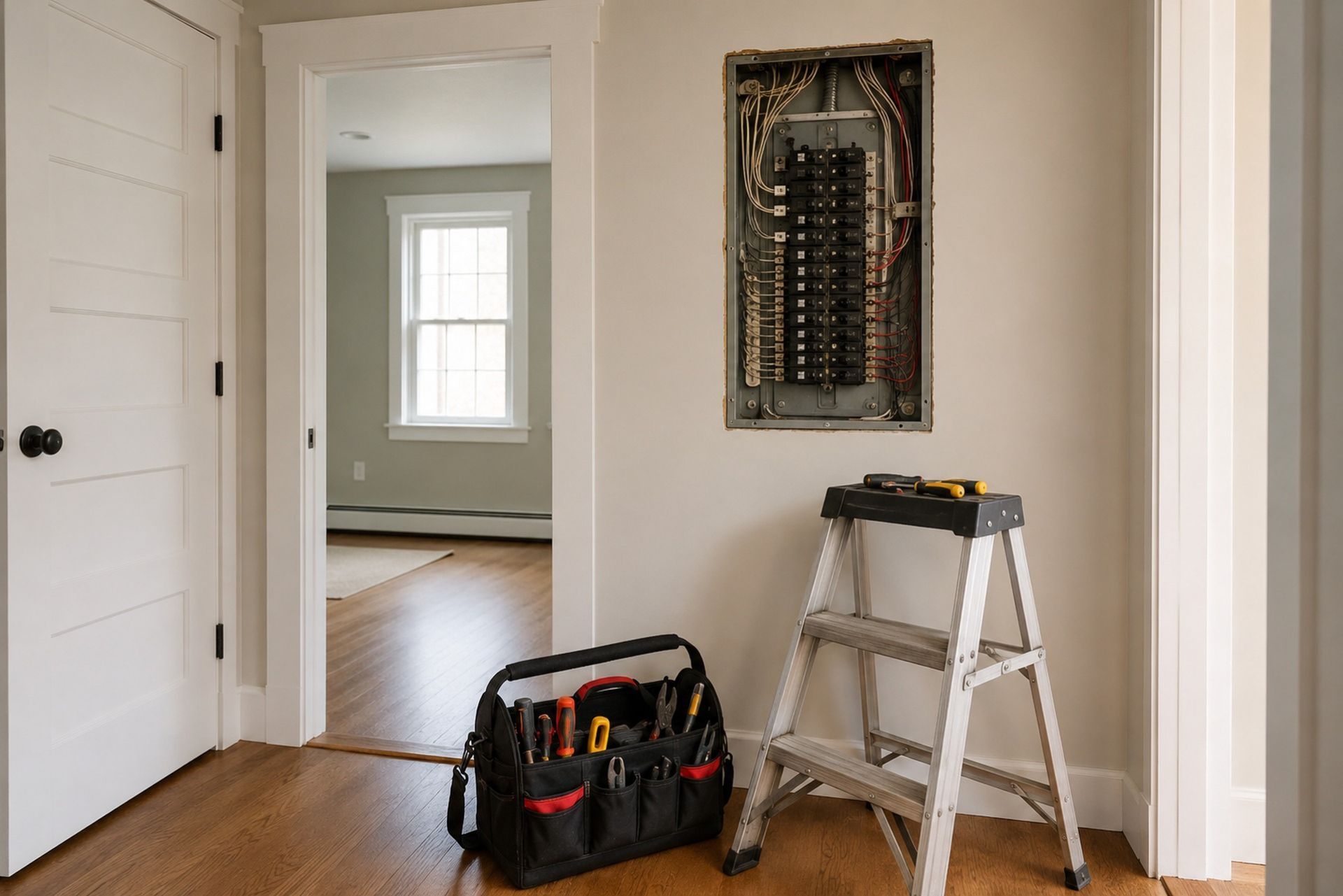
Neighborhoods like Knightville and Willard Beach are full of homes built in the early 1900s. Rewiring these properties is bread-and-butter work for local electricians, but it comes with specific risks: knob-and-tube removal, asbestos-containing materials in walls and ceilings, lead paint disturbance, and outdated panels that don't meet current code.
If you disturb asbestos during a rewire and a homeowner files a claim, your standard GL policy may exclude pollution-related claims. You may need a pollution liability endorsement to fill that gap. The same applies to lead paint exposure. These aren't theoretical risks in South Portland - they're Tuesday afternoon realities for anyone doing residential renovation work in the older parts of the city.
Carrier Appetite and Market Trends in Cumberland County
Preferred Carriers for Maine Tradesmen
Not every insurance carrier wants to write policies for electricians. The risk profile - fire, electrocution, property damage - makes some carriers cautious. In Maine, the carriers with consistent appetite for electrical contractor risks include regional mutuals and specialty surplus lines markets that understand trade-specific exposures.
| Coverage Type | Typical Carrier Appetite | Common Limits |
|---|---|---|
| General Liability | Moderate to strong among specialty carriers | $1M/$2M standard |
| Workers' Comp | Strong in Maine's assigned risk and voluntary markets | Statutory limits |
| Commercial Auto | Widely available | $1M CSL common |
| Inland Marine | Strong among specialty programs | $25K-$150K scheduled |
| Typical Carrier Appetite | Limited: specialty markets preferred | $1M/$1M typical |
Joule Pro works specifically with underwriters who have appetite for electrical trade risks, which means faster quoting, fewer declinations, and endorsements tailored to how electricians actually work. A generalist agent might get you a policy, but they're less likely to know which carriers will non-renew you after a single claim.
Factors Influencing Local Premium Rates
Your premium isn't just a function of your revenue and payroll. In South Portland, several local factors affect what you'll pay. Proximity to the coast can increase property-related premiums. Your claims history over the past five years weighs heavily. The types of work you perform - residential rewires versus new commercial construction - carry different risk profiles and different rates.
Maine's workers' compensation rates are influenced by statewide loss data, but your individual mod factor is the biggest variable you can control. A mod below 1.0 means you're paying less than average; above 1.0 and you're paying a surcharge. Investing in safety training and documented protocols isn't just smart practice - it directly reduces your insurance costs over time.
Tailoring Your Policy for Growth and Compliance
Professional Liability and Errors & Omissions for Designers
If your scope of work includes any design-build electrical work, system design, or engineering recommendations, you need professional liability coverage (also called errors and omissions). Standard GL policies explicitly exclude professional services. A design flaw in a lighting control system or an undersized panel recommendation can result in a claim that your general liability policy won't touch.
This coverage is especially relevant for South Portland electricians working on energy efficiency retrofits and solar installations, where design responsibility often falls on the installing contractor. The E&O market for electricians is thin, so working with a program that has established relationships with professional liability underwriters saves time and frustration.
Annual Policy Audits and Certificate Management
Every workers' comp and general liability policy undergoes an annual audit. The carrier compares your estimated payroll and revenue at policy inception against your actual numbers. If you grew faster than expected, you'll owe additional premium. If you shrank, you might get a refund. Either way, keeping clean payroll records organized by classification code throughout the year prevents audit surprises.
Certificate management is the other administrative headache most contractors underestimate. General contractors, property managers, and municipalities all want certificates of insurance - often with specific additional insured endorsements and primary/non-contributory language. Missing or incorrect certificates can hold up project starts. Having a dedicated insurance professional handle these requests, rather than chasing them yourself, keeps projects moving.
Your Next Steps
Getting the right insurance coverage for your South Portland electrical business isn't about buying the cheapest policy you can find. It's about building a coverage program that matches your actual risk profile: the coastal exposure, the older homes, the permitting requirements, and the specific types of work you perform in Cumberland County.
Start by reviewing your current policies against the coverage types outlined above. Look for gaps in inland marine, pollution liability, and professional liability if you do any design work. Check your workers' comp mod and make sure your classification codes are accurate.
If you want a coverage review from someone who specializes exclusively in electrical contractor insurance, reach out to Joule Pro. We build programs specifically for licensed electricians, and we know which carriers have appetite for your type of work in Maine. A 15-minute conversation can identify gaps that might otherwise cost you thousands.
Frequently Asked Questions
Do I need insurance to pull an electrical permit in South Portland? Yes. The city requires proof of licensure and most commercial projects require certificates of insurance before permits are issued.
How much does general liability cost for a small electrical contractor in Maine? Expect roughly $1,200 to $3,500 annually for a solo operator or small crew, depending on your revenue, claims history, and scope of work.
Does my homeowner's policy cover tools stolen from my work van? No. Homeowner's policies typically exclude business property. You need an inland marine or tools and equipment policy for that coverage.
Can I avoid workers' comp if I only use subcontractors? Only if those subcontractors carry their own workers' comp policies. Otherwise, Maine may treat them as your employees and you'll be liable for coverage.
What's the difference between general liability and professional liability for electricians? General liability covers physical injury and property damage. Professional liability covers financial losses caused by your professional advice, designs, or recommendations.

Founder & CEO
The Force Behind the Program
About the Author:
Michael Fusco.
Fusco Orsini & Associates
Joule Pro exists because Mike Fusco saw electrical contractors getting boilerplate insurance — and built a program designed for the way the trade actually works.
Mike is the CEO and co-founder of Fusco Orsini & Associates, the San Diego–based independent agency he launched in 2010. Under his leadership FOA has grown into a nationwide partner serving clients across 31 states, with a personal, client-first approach to commercial insurance and risk.
With over 20 years in insurance and risk management, he specializes in tailored programs spanning general liability, workers' compensation, surety bonding, and employee benefits — helping owners confidently manage risk and pursue growth.
Mike holds a B.S. in Business from the University of Maryland — Robert H. Smith School of Business, and the Certified Insurance Counselor (CIC) designation, held by fewer than 3% of insurance professionals nationwide.
Trusted by Electrical Contractors Across the Country.
Select your state for electrical contractor insurance. Get requirements, cost ranges, and more information for your business.
Alabama
Arkansas
Louisiana
Kentucky
New Hampshire
Vermont
Rhode Island
Massachusetts
N. Dakota
S. Dakota
Oklahoma
Delaware
What Our Clients Say
Trusted by Electrical Contractors Across the Country.
5.0
★★★★★
Google reviews
Core Commercial Coverage
Business Insurance for Electrical Contractors.
The fundamentals — written, structured, and priced for electrical risk. Each line is reviewed annually by an underwriter who only writes our trade.
01
General Liability
Premises & completed-operations coverage with electrical-specific endorsements and full pollution carve-back options.
02
Workers' Compensation
Class-code optimization, experience-mod review, and return-to-work programs designed for energized-work exposures.
03
Commercial Auto
Fleet, hired & non-owned auto, and tools-in-transit coverage written for service vans and bucket trucks.
04
Tools & Equipment
Scheduled and blanket coverage for tools, test equipment, scissor lifts, and contractor's equipment on-site or in-transit.
05
Surety Bonds
Bid, performance, and payment bonds — single-job and aggregate programs for commercial & public-works contracts.
06
Commercial Property
Layered limits up to $50M with carrier panels covering your shop, warehouse, yard, and on-premises tools, materials, and equipment.
Who We Serve
Electrical Contractors We Specialize In.
From $5M service shops to $250M industrial primes — every Joule Pro program is shaped to the contractor's revenue mix and project profile.
01 / Industrial
Commercial & Industrial Electrical Contractors
High-voltage, substation, and plant electrical work. Pollution, builder's risk, and large-deductible WC programs.
02 / Service
Service & Residential Electrical Contractors
Service-call shops, panel upgrades, and EV charging installers. Auto-fleet, GL, and tool-coverage programs.
03 / Low-Voltage
Specialty & Low-Voltage Contractors
Data, fire-alarm, security, and BMS controls. Cyber, professional liability, and follow-form excess.
Frequently Asked Questions
Common
Questions From
Electrical Contractors.
What size electrical contractors do you write?
Joule Pro is built for licensed electrical firms from roughly $2M in revenue to $250M+. Below $2M we typically refer to our small-business desk; above $250M we underwrite individually with our industrial practice team.
Do I need to be licensed in multiple states?
No. We license you wherever you work. Joule Pro is admitted in 31 states and our compliance team handles multi-state filings, prevailing-wage endorsements, and certificate-of-insurance requirements.
How is Joule Pro different from a generic contractor program?
Generic programs use a contractor's questionnaire that treats you like a roofer. We use forms written for energized work, arc-flash exposures, and design-build risk — and our carriers price accordingly.
What does the claims process actually look like?
Every Joule Pro client is assigned a named claims advocate at bind. They take the FNOL, set strategy with your assigned attorney, and serve as your single point of contact through close.
Can you bond large public-works contracts?
Yes. Through our surety partners we write single-job bonds up to $75M and aggregate programs to $300M, with expedited turnarounds for school district, federal, and DOT work.
What happens at renewal?
Your producer and claims advocate jointly run a renewal review 90 days out — covering loss trends, exposure changes, and market alternatives — so renewal day is a confirmation, not a surprise.
From the Blog
Insights for Electrical Contractors.
Risk briefings, claim post-mortems, and program updates — written by our underwriters and risk engineers.


Get Started
Get a Quote on a Program Built Around Your Trade.
A 30-minute discovery call is the only commitment. You'll leave with a written gap analysis of your current program — yours to keep, whether you bind with us or not.