
Business Insurance
Toledo, OH Electrician Insurance
★★★★★ 150+ Five-Star Reviews · Google & Facebook
Underwriting Preferences for Residential vs. Industrial Projects
Running an electrical contracting business in Toledo means dealing with a specific set of challenges you won't find in Columbus, Cincinnati, or even nearby Bowling Green. Between the city's aging housing stock, its industrial corridors along the Maumee River, and a permitting process that trips up even experienced contractors, the insurance picture here is distinct. Getting the right coverage for your Toledo-based electrical business isn't just about checking a box for your license renewal: it's about protecting yourself against the risks that actually show up on your jobsites. This guide breaks down the essential policies, local permitting and bonding requirements, regional hazards, and which carriers are actually writing policies for electricians in northwest Ohio right now. If you've been shopping for coverage with a generalist agent who doesn't understand the electrical trade, you're probably overpaying or underinsured, maybe both.
Essential Insurance Policies for Toledo Electrical Contractors
General Liability and Property Damage Coverage
General liability (GL) is the foundation of every electrician's insurance program. It covers third-party bodily injury and property damage claims, which in the electrical trade means things like a customer tripping over your cord, a fire caused by faulty wiring, or water damage from cutting into a pipe you didn't know was there. For most Toledo electricians, a $1M per occurrence / $2M aggregate GL policy is the baseline, and many commercial clients and general contractors require it before you step foot on their site.
One thing that catches Toledo contractors off guard: your GL policy likely excludes damage to your own work. If you install a panel and it fails, the cost to redo it comes out of your pocket unless you carry a completed operations endorsement. This is especially relevant in Toledo, where older homes often present surprises behind the walls that can complicate even straightforward jobs.
Workers' Compensation Requirements in Ohio
Ohio is a monopolistic workers' comp state, meaning you buy your policy through the Ohio Bureau of Workers' Compensation (BWC), not a private carrier. Every electrical contractor with one or more employees must carry workers' comp, and the BWC takes compliance seriously. Penalties for operating without coverage include fines up to $750 per day and potential criminal charges.
The classification code for electricians (NCCI code 5190) carries moderate-to-high rates because of the inherent dangers of the trade: electrical shock, falls from ladders, burns. Your experience modification rate (EMR) directly impacts your premium. An EMR above 1.0 means you're paying more than the industry average, while a score below 1.0 earns you discounts. Toledo contractors who invest in documented safety programs and maintain clean loss histories can see significant savings over time.
Commercial Auto and Inland Marine Protection
Your work trucks and vans need commercial auto coverage, not personal auto policies. Personal policies exclude vehicles used for business purposes, and if you're hauling tools, materials, or employees to jobsites, you're exposed. A typical commercial auto policy for a small Toledo electrical shop runs between $2,500 and $6,000 annually per vehicle, depending on driving records and vehicle types.
Inland marine insurance is the policy that covers your tools and equipment while they're in transit or on a jobsite. Standard property policies only cover items at your business location. If someone breaks into your van overnight and steals $15,000 in meters, wire pullers, and power tools, inland marine is what pays the claim. Programs like Joule Pro bundle this coverage into a contractor-specific package designed for electricians, which simplifies the process and often provides better terms than piecing together individual policies.

By: Michael Fusco
President of Joule Pro
INDEX
Essential Insurance Policies for Toledo Electrical Contractors
Navigating Toledo's Local Permitting and Bonding Requirements
Managing Regional Risks: From Historic Homes to Industrial Sites
Carrier Appetite and Underwriting in the Northwest Ohio Market
Strategies for Reducing Insurance Costs and Improving Safety Ratings
Joule Pro is a specialty insurance and risk program of Fusco Orsini & Associates Insurance Services, built exclusively for electrical contractors and licensed in 31 states.
We work with electrical firms across the country — from California, Texas, Florida, New York, and coast to coast — placing General Liability, Workers' Compensation, Commercial Auto, Inland Marine, Surety Bonds, Excess Liability, and full specialty coverage stacks for commercial, industrial, service, residential, and low-voltage electrical contractors. Joule Pro is not a separate licensed entity. It is a dedicated program structure inside Fusco Orsini, giving electrical contractors access to specialty carriers, in-house claims advocacy, and trade-specific risk engineering under one program.
Electrician Insurance By City
Electrician Insurance Coverage
Navigating Toledo's Local Permitting and Bonding Requirements
Compliance with the City of Toledo Division of Building Inspection
Toledo requires electrical permits for virtually all wiring work, and the city's Division of Building Inspection enforces this consistently. The minimum fee for an electrical permit in Toledo is $75.00, while commercial base fees start at $100.00 and scale up based on the scope of work. Skipping permits isn't just a code violation: it can void your insurance coverage if a claim arises from unpermitted work.
The city requires contractors to hold a valid Ohio electrical license and register with the Division of Building Inspection before pulling permits. Inspections are required at rough-in and final stages, and the city has been known to enforce correction orders aggressively, particularly in commercial projects. Keeping your permits current and your inspection records clean directly affects your insurability.
Securing License and Permit Bonds for Lucas County
Toledo and Lucas County require electrical contractors to carry a surety bond, typically in the $5,000 to $10,000 range, as a condition of licensure. This bond guarantees that you'll comply with local codes and regulations. It's not insurance: if the bond pays out on a claim, you owe the surety company back.
The cost of your bond depends on your credit score and business financials. Contractors with strong credit can expect to pay 1% to 3% of the bond amount annually, while those with credit issues may pay 5% to 10%. A specialty program like Joule Pro can often help electricians secure bonds alongside their insurance package, streamlining the process and ensuring nothing falls through the cracks during renewal season.
Managing Regional Risks: From Historic Homes to Industrial Sites
Liability Risks in Toledo's Aging Residential Infrastructure
Toledo's housing stock is old. The city has over 80,000 residential structures, and a significant percentage were built before 1960. That means knob-and-tube wiring, outdated panels (Federal Pacific and Zinsco are still common), asbestos-wrapped conductors, and aluminum branch circuits. Every one of these conditions increases your liability exposure.
Rewiring a 1940s bungalow in the Old West End or a Tudor in Ottawa Hills isn't the same as wiring new construction. You're more likely to encounter lead paint, asbestos, and structural surprises that can lead to property damage claims or even environmental liability. Your GL policy needs to account for these exposures, and you should confirm that your policy doesn't exclude work on structures over a certain age: some carriers impose these restrictions quietly.
Documenting pre-existing conditions with photos before starting work is one of the simplest ways to protect yourself. If a homeowner claims you caused damage that was already there, your documentation becomes your defense.
Environmental and Safety Hazards in Industrial Corridor Projects
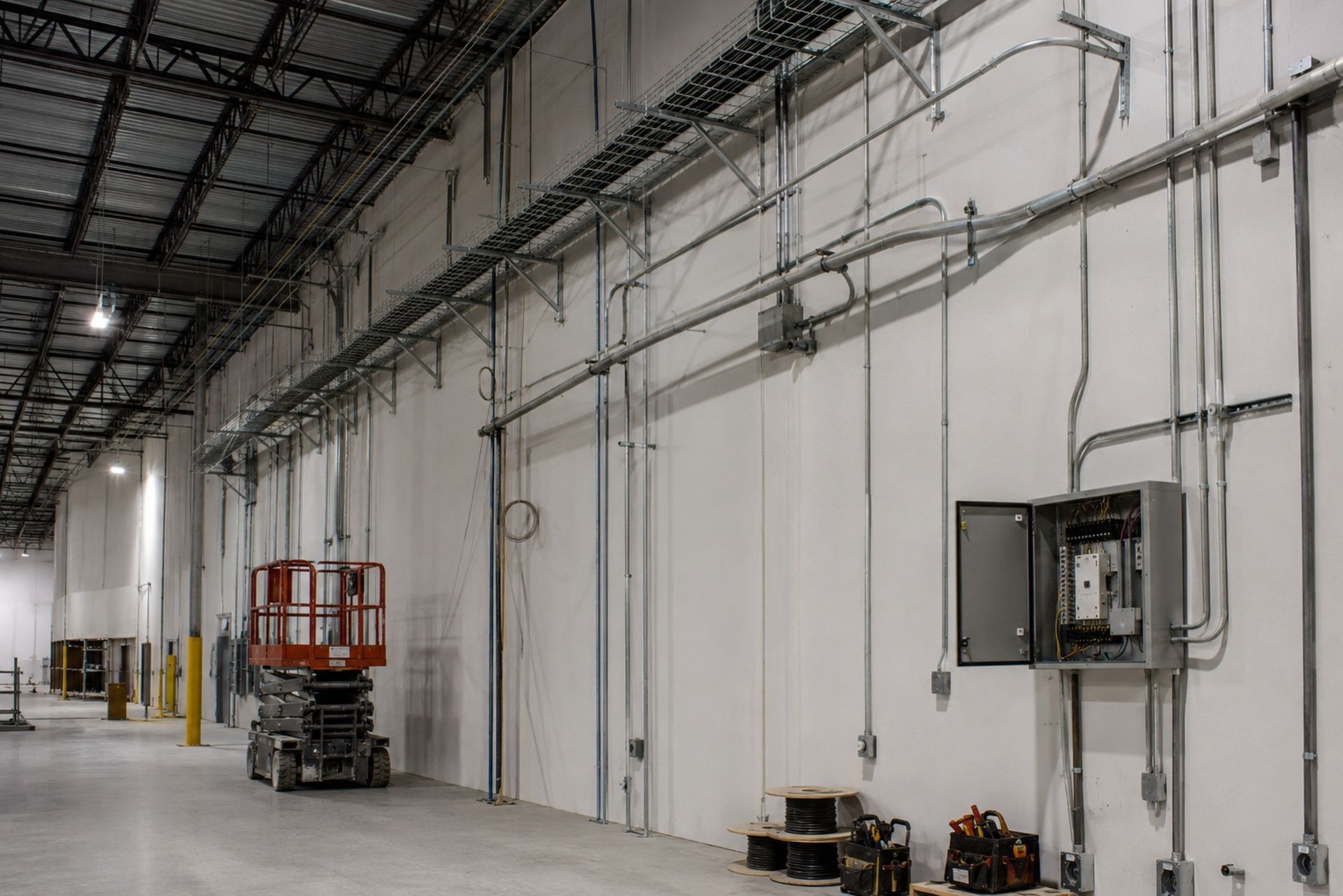
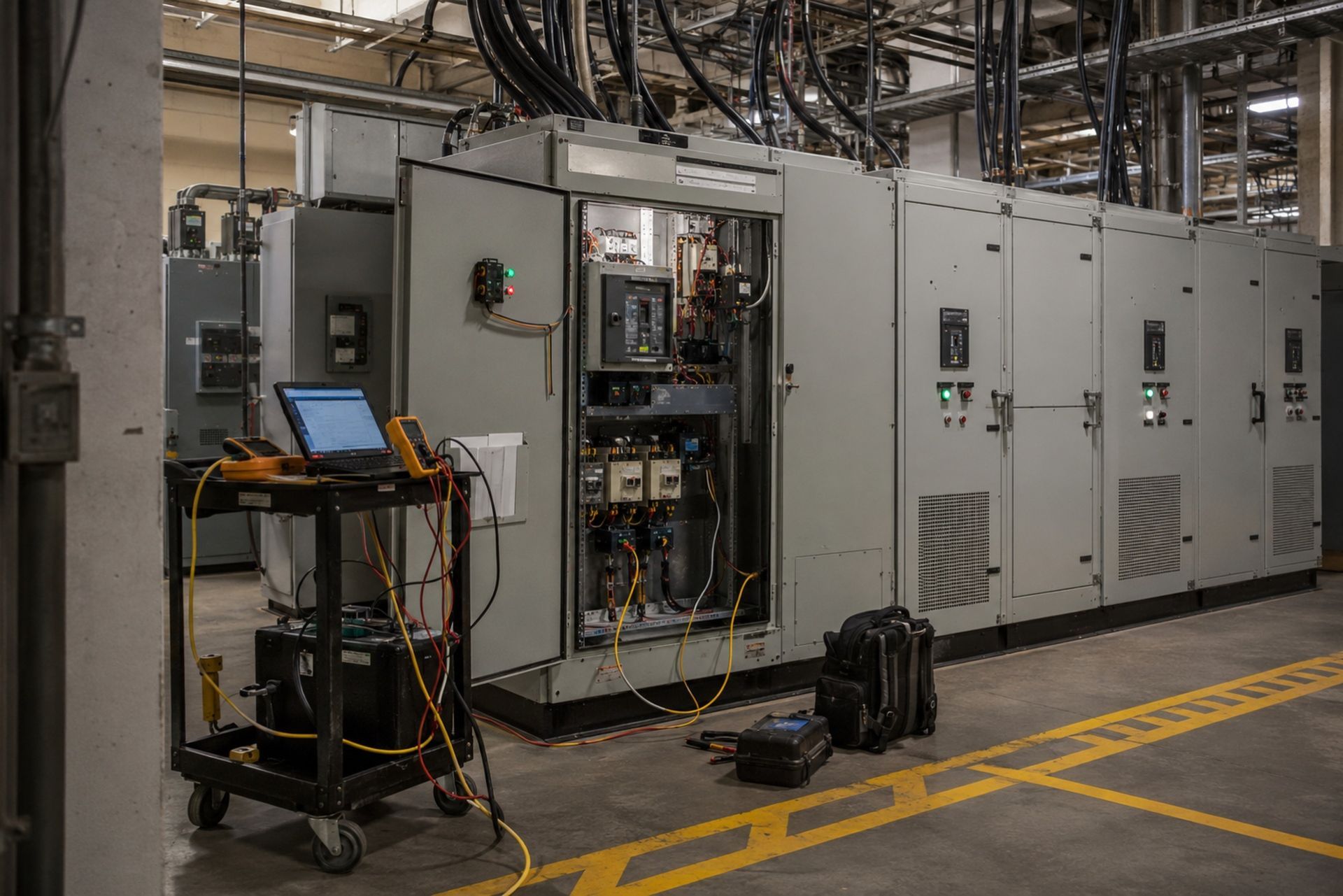
Toledo's industrial base along the Maumee River and in the east side corridor includes glass manufacturing, automotive suppliers, and chemical processing facilities. Electrical work in these environments carries elevated risks: exposure to hazardous materials, confined space entry, and the potential for catastrophic property damage if something goes wrong in a production facility.
Contractors working in industrial settings typically need higher GL limits, often $2M or more per occurrence, plus umbrella or excess liability coverage. Some industrial clients require pollution liability endorsements, especially if you're working near chemical storage or processing areas. The Toledo-Lucas County Health Department maintains records on environmental hazards that can help you assess risk before bidding on a project.
These jobs pay well, but the insurance costs are real. Make sure your premiums are factored into your bids, not absorbed as overhead.
Carrier Appetite and Underwriting in the Northwest Ohio Market
Preferred Carriers for Residential vs. Industrial Projects
Not every insurance carrier wants to write electrician policies, and carrier appetite in northwest Ohio has shifted in recent years. Some national carriers have pulled back from the skilled trades market after heavy losses, while others have tightened their underwriting criteria. The carriers still active in the Toledo market for electrical contractors include a mix of regional mutuals and specialty program administrators.
What matters most is finding a carrier that understands electrical trade risks specifically. A generalist carrier that writes policies for restaurants, retail shops, and electricians all on the same form is going to miss important coverage details. Specialty programs built exclusively for licensed electrical contractors, like the one offered through Joule Pro, tend to provide broader coverage terms and fewer exclusions because the underwriters actually understand the trade.
Factors Influencing Premium Rates in the 419 Area Code
Your premium is determined by several factors: annual revenue, payroll, number of employees, claims history, types of work performed, and your EMR. Toledo-specific factors also play a role. Carriers look at the weather patterns in northwest Ohio, including ice storms and wind events that can cause surge demand for emergency electrical work and increase claim frequency.
| Factor | Lower Premium | Higher Premium |
|---|---|---|
| Claims History | No claims in 3+ years | Multiple claims or open litigation |
| EMR | Below 0.85 | Above 1.2 |
| Work Type | Residential service/repair | Industrial, high-voltage |
| Revenue | Under $500K | Over $2M |
| Safety Program | Written, documented, enforced | None or informal |
| Subcontractor Use | Minimal, with COIs on file | Heavy, without tracking |
Contractors who perform mostly residential service work will pay less than those doing industrial or high-voltage projects. That said, a clean loss history is the single biggest factor in keeping your rates competitive.
Strategies for Reducing Insurance Costs and Improving Safety Ratings
The fastest way to lower your insurance costs is to lower your EMR, and that starts with a real safety program. Not a binder collecting dust on a shelf: an active, documented program with regular toolbox talks, job hazard analyses, and incident tracking. The Ohio BWC offers group rating programs that can reduce your workers' comp premiums by 20% to 50% if you qualify.
Other practical moves: raise your deductibles if your cash flow can handle it, bundle your policies under a single program to avoid coverage gaps, and review your certificates of insurance annually to make sure your limits still match your contract requirements. Require certificates from every subcontractor you hire: if they're uninsured and get hurt on your job, the claim lands on your policy.
Get your agent to run a loss analysis every year. If you're paying for coverage you don't need, or missing coverage you do, that review pays for itself.
Frequently Asked Questions
Do I need insurance to pull an electrical permit in Toledo? Yes. The City of Toledo requires proof of insurance and a valid surety bond before issuing electrical permits. Your GL certificate must be current.
How much does general liability insurance cost for a Toledo electrician? Most small to mid-size electrical contractors in the Toledo area pay between $2,500 and $7,000 annually for GL coverage, depending on revenue, work type, and claims history.
Can I use my personal auto policy for my work van? No. Personal auto policies exclude business use. If you're driving to jobsites or hauling tools, you need a commercial auto policy.
What happens if I work without a permit in Toledo? You risk fines, stop-work orders, and your insurance carrier may deny any claim arising from unpermitted work.
Is workers' comp required if I'm a sole proprietor with no employees? Sole proprietors in Ohio can exempt themselves from workers' comp, but many general contractors and commercial clients require it regardless. Carrying coverage also protects you personally if you're injured on the job.
Your Next Steps
Getting electrician insurance right in Toledo means understanding the local permitting process, recognizing the risks unique to northwest Ohio's housing stock and industrial base, and working with a carrier that actually wants to write your policy. Don't settle for a generic business policy that wasn't designed for the electrical trade. Reach out to a specialty program like Joule Pro that works exclusively with licensed electrical contractors and can match you with the right coverage stack for your specific operation. A 15-minute conversation with a licensed producer who knows the trade is worth more than hours spent comparing quotes online from carriers that don't understand what you do every day.

Founder & CEO
The Force Behind the Program
About the Author:
Michael Fusco.
Fusco Orsini & Associates
Joule Pro exists because Mike Fusco saw electrical contractors getting boilerplate insurance — and built a program designed for the way the trade actually works.
Mike is the CEO and co-founder of Fusco Orsini & Associates, the San Diego–based independent agency he launched in 2010. Under his leadership FOA has grown into a nationwide partner serving clients across 31 states, with a personal, client-first approach to commercial insurance and risk.
With over 20 years in insurance and risk management, he specializes in tailored programs spanning general liability, workers' compensation, surety bonding, and employee benefits — helping owners confidently manage risk and pursue growth.
Mike holds a B.S. in Business from the University of Maryland — Robert H. Smith School of Business, and the Certified Insurance Counselor (CIC) designation, held by fewer than 3% of insurance professionals nationwide.
Trusted by Electrical Contractors Across the Country.
Select your state for electrical contractor insurance. Get requirements, cost ranges, and more information for your business.
Alabama
Arkansas
Louisiana
Kentucky
New Hampshire
Vermont
Rhode Island
Massachusetts
N. Dakota
S. Dakota
Oklahoma
Delaware
What Our Clients Say
Trusted by Electrical Contractors Across the Country.
5.0
★★★★★
Google reviews
Core Commercial Coverage
Business Insurance for Electrical Contractors.
The fundamentals — written, structured, and priced for electrical risk. Each line is reviewed annually by an underwriter who only writes our trade.
01
General Liability
Premises & completed-operations coverage with electrical-specific endorsements and full pollution carve-back options.
02
Workers' Compensation
Class-code optimization, experience-mod review, and return-to-work programs designed for energized-work exposures.
03
Commercial Auto
Fleet, hired & non-owned auto, and tools-in-transit coverage written for service vans and bucket trucks.
04
Tools & Equipment
Scheduled and blanket coverage for tools, test equipment, scissor lifts, and contractor's equipment on-site or in-transit.
05
Surety Bonds
Bid, performance, and payment bonds — single-job and aggregate programs for commercial & public-works contracts.
06
Commercial Property
Layered limits up to $50M with carrier panels covering your shop, warehouse, yard, and on-premises tools, materials, and equipment.
Who We Serve
Electrical Contractors We Specialize In.
From $5M service shops to $250M industrial primes — every Joule Pro program is shaped to the contractor's revenue mix and project profile.
01 / Industrial
Commercial & Industrial Electrical Contractors
High-voltage, substation, and plant electrical work. Pollution, builder's risk, and large-deductible WC programs.
02 / Service
Service & Residential Electrical Contractors
Service-call shops, panel upgrades, and EV charging installers. Auto-fleet, GL, and tool-coverage programs.
03 / Low-Voltage
Specialty & Low-Voltage Contractors
Data, fire-alarm, security, and BMS controls. Cyber, professional liability, and follow-form excess.
Frequently Asked Questions
Common
Questions From
Electrical Contractors.
What size electrical contractors do you write?
Joule Pro is built for licensed electrical firms from roughly $2M in revenue to $250M+. Below $2M we typically refer to our small-business desk; above $250M we underwrite individually with our industrial practice team.
Do I need to be licensed in multiple states?
No. We license you wherever you work. Joule Pro is admitted in 31 states and our compliance team handles multi-state filings, prevailing-wage endorsements, and certificate-of-insurance requirements.
How is Joule Pro different from a generic contractor program?
Generic programs use a contractor's questionnaire that treats you like a roofer. We use forms written for energized work, arc-flash exposures, and design-build risk — and our carriers price accordingly.
What does the claims process actually look like?
Every Joule Pro client is assigned a named claims advocate at bind. They take the FNOL, set strategy with your assigned attorney, and serve as your single point of contact through close.
Can you bond large public-works contracts?
Yes. Through our surety partners we write single-job bonds up to $75M and aggregate programs to $300M, with expedited turnarounds for school district, federal, and DOT work.
What happens at renewal?
Your producer and claims advocate jointly run a renewal review 90 days out — covering loss trends, exposure changes, and market alternatives — so renewal day is a confirmation, not a surprise.
From the Blog
Insights for Electrical Contractors.
Risk briefings, claim post-mortems, and program updates — written by our underwriters and risk engineers.


Get Started
Get a Quote on a Program Built Around Your Trade.
A 30-minute discovery call is the only commitment. You'll leave with a written gap analysis of your current program — yours to keep, whether you bind with us or not.