Business Insurance
Ann Arbor, MI Electrician Insurance
★★★★★ 150+ Five-Star Reviews · Google & Facebook
Running an electrical contracting business in Ann Arbor means dealing with a unique mix of challenges you won't find in most Michigan cities. Between century-old homes in the Old West Side, strict University of Michigan vendor requirements, and a building department that takes compliance seriously, your insurance needs here are specific. This guide to electrician insurance in Ann Arbor covers everything from the policies you actually need to the carriers willing to write them, along with the local permitting quirks that catch contractors off guard. If you're a licensed electrician working anywhere in Washtenaw County, getting your coverage right isn't optional: it's the difference between winning contracts and watching them go to someone else. General liability insurance for small electrical shops with one to five employees in 2026 averages between $600 and $1,200 annually, but Ann Arbor's particular risk profile can push those numbers around depending on the work you do and where you do it.
Essential Insurance Policies for Ann Arbor Electrical Contractors
General Liability and Property Damage Coverage
General liability is the foundation of every electrical contractor's insurance program. It covers third-party bodily injury, property damage, and completed operations claims: the stuff that keeps you up at night after a job wraps up. In Ann Arbor, where you're often working in occupied residential properties or busy commercial spaces near downtown, the exposure is real.
A typical GL policy for an electrician carries $1 million per occurrence and $2 million aggregate limits. That said, many general contractors and property managers in the Ann Arbor area require you to carry higher limits, sometimes $2 million per occurrence. You can bridge that gap with an umbrella or excess liability policy rather than buying a richer base policy.
One thing most electricians underestimate is completed operations coverage. If you wire a panel in a home on Geddes Avenue and a fire starts six months later, your completed operations coverage responds. Without it, you're personally on the hook. This is especially critical in Ann Arbor's older housing stock where existing wiring conditions can complicate new installations.
Michigan Workers' Compensation Requirements
Michigan law requires workers' compensation insurance for virtually all employers, including electrical contractors with even one employee. The state does not mess around with this: operating without workers' comp can result in fines up to $1,000 per day and even criminal misdemeanor charges. Sole proprietors and LLC members can technically exempt themselves, but doing so is risky if you ever get injured on a job.
Workers' comp rates in Michigan are classified by trade and risk level, and electrical work falls into a moderate-to-high risk category. Expect to pay roughly $5 to $12 per $100 of payroll depending on your specific classification code and experience modification rate. If you've had claims in the past three years, your mod rate goes up, and so do your premiums.
A clean safety record matters enormously here. Contractors who invest in regular safety training and maintain low claim frequency can see their mod rate drop below 1.0, which directly reduces annual premium costs.
Commercial Auto and Inland Marine for Tool Protection
Your work van full of meters, conduit benders, and wire spools represents tens of thousands of dollars in equipment. A standard personal auto policy won't cover any of it if you're using the vehicle for business purposes. Commercial auto insurance is essential for any electrician who drives to job sites, which is basically all of you.
Inland marine insurance (sometimes called a tools and equipment floater) protects your gear while it's in transit, on a job site, or stored in your vehicle overnight. This matters in Ann Arbor, where tool theft from vehicles parked near downtown or campus-area job sites isn't uncommon. A good inland marine policy covers replacement cost, not depreciated value, so you're not stuck buying used replacements after a loss.
Programs like Joule Pro bundle these coverages together specifically for electrical contractors, which simplifies the process and often results in better pricing than buying each policy separately from different carriers.

By: Michael Fusco
President of Joule Pro
INDEX
Joule Pro is a specialty insurance and risk program of Fusco Orsini & Associates Insurance Services, built exclusively for electrical contractors and licensed in 31 states.
We work with electrical firms across the country — from California, Texas, Florida, New York, and coast to coast — placing General Liability, Workers' Compensation, Commercial Auto, Inland Marine, Surety Bonds, Excess Liability, and full specialty coverage stacks for commercial, industrial, service, residential, and low-voltage electrical contractors. Joule Pro is not a separate licensed entity. It is a dedicated program structure inside Fusco Orsini, giving electrical contractors access to specialty carriers, in-house claims advocacy, and trade-specific risk engineering under one program.
Electrician Insurance By City
Electrician Insurance Coverage
Navigating City of Ann Arbor Permitting and Bond Requirements
Meeting Building Department Insurance Minimums
The City of Ann Arbor Building Department requires electrical contractors to hold an active license and carry proof of insurance before pulling permits. The minimum insurance requirements include general liability coverage, and you'll need to provide a certificate of insurance (COI) naming the city as an additional insured on certain projects.
Here's where contractors get tripped up: the city's requirements can differ from what your insurance agent assumes. Ann Arbor's building department has been known to reject COIs that don't match their exact formatting or endorsement requirements. Before you start any permitted work, confirm with your agent that your COI meets the city's specific standards. A rejected certificate can delay your project start by days.
The permitting process itself requires you to submit plans for review on most electrical work beyond basic repairs. Inspections are mandatory, and inspectors in Ann Arbor have a reputation for being thorough. Having proper insurance documentation ready before you even apply for a permit saves you headaches down the line.
License Bonds and Compliance for Local Projects
Michigan electrical contractors need a state license issued through the Bureau of Construction Codes, and Ann Arbor enforces this strictly. On top of the state license, you may need to register with the city and provide a surety bond as part of your licensing requirements. Bond amounts vary, but they typically range from $5,000 to $25,000 depending on your license class.
A surety bond isn't insurance: it's a guarantee that you'll perform your work according to code and local regulations. If you fail to do so and a claim is made against your bond, the surety company pays the claimant but then comes after you for reimbursement. Think of it as a line of credit backed by your personal guarantee.
Keeping your bond, license, and insurance all current and aligned is a compliance task that too many contractors neglect until renewal time. Set calendar reminders 60 days before each expiration date so you're never caught operating without valid documentation.
Mitigating Local Risks in Washtenaw County
Historic District Renovations and Old Wiring Hazards
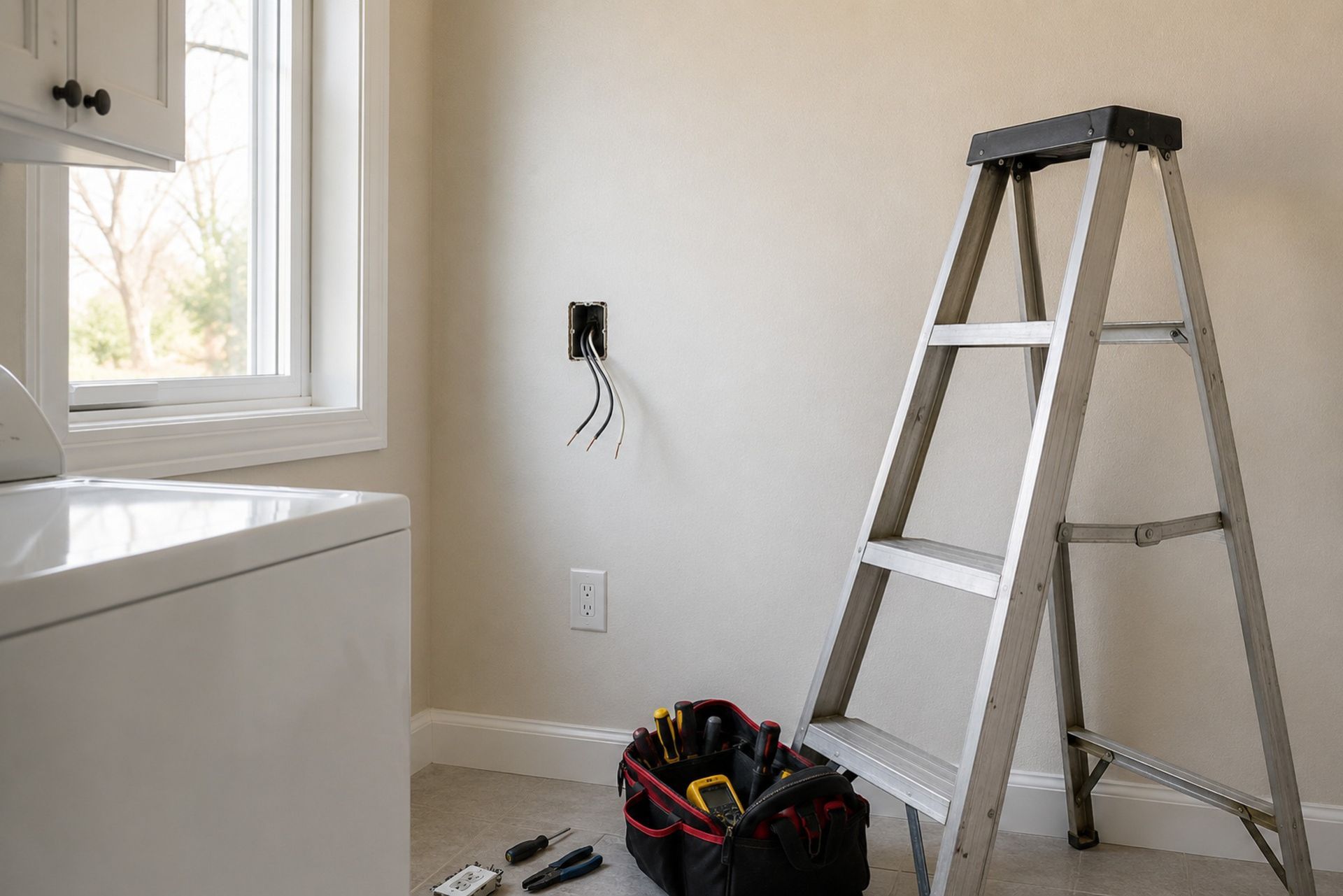
Ann Arbor has multiple historic districts, including the Old West Side, the Burns Park area, and portions of downtown. Working on homes built in the early 1900s means encountering knob-and-tube wiring, cloth-insulated conductors, and panels that predate modern safety standards. These conditions dramatically increase your liability exposure.
When you open up a wall in a 1920s bungalow and find knob-and-tube wiring intertwined with blown-in insulation, the fire risk is significant. Your insurance policy needs to account for this kind of work. Some carriers exclude or limit coverage for work involving pre-existing hazardous wiring conditions, so read your policy carefully.
The Ann Arbor Historic District Commission also imposes restrictions on exterior modifications, which can affect how you route conduit or install exterior fixtures. Violating historic district guidelines can lead to fines and forced remediation: costs your insurance won't cover. Document everything before you start work, including photos of existing conditions, to protect yourself if a claim arises later.
University of Michigan Vendor Insurance Standards
The University of Michigan is the largest employer in the Ann Arbor area, and landing a contract with the university can be a major revenue stream for local electrical contractors. But U-M's vendor insurance requirements are among the strictest you'll encounter anywhere.
The university typically requires $5 million in combined general liability limits, workers' compensation coverage, commercial auto liability, and professional liability in some cases. You'll also need to name the Regents of the University of Michigan as an additional insured with primary and non-contributory language. These aren't negotiable.
Many standard commercial insurance policies can't accommodate these requirements without endorsements or restructuring. Working with a specialty program like Joule Pro, which understands contractor-specific endorsement needs, can make the difference between qualifying for university work and getting passed over. The contracts are worth the effort: U-M spends hundreds of millions annually on facility maintenance and construction.
Carrier Appetite and Market Trends for Michigan Electricians
Top Rated Carriers for Ann Arbor Trade Contractors
Not every insurance carrier wants to write electrical contractor policies. The risk profile: fire, electrocution, property damage: makes some carriers cautious. In Michigan, the carriers with the strongest appetite for electrical trade work include a mix of national and regional players.
| Factor | Standard Market Carriers | Specialty/Surplus Lines |
|---|---|---|
| Typical GL Limits | $1M/$2M | $1M/$2M or higher |
| Appetite for Resi Electrical | Moderate | Strong |
| Appetite for Commercial/Industrial | Limited | Strong |
| Historic Renovation Work | Often excluded | Available with conditions |
| Pricing | Competitive for clean risks | Higher, but broader coverage |
| Underwriting Speed | 1-2 weeks | 3-5 business days (specialty programs) |
Specialty programs designed for electrical contractors tend to offer broader coverage terms and faster underwriting because their underwriters understand the trade. A generalist carrier might decline you for doing panel upgrades in older homes, while a specialty market sees that as routine electrical work and prices it accordingly.
Factors Influencing Premium Costs in the 734 Area Code
Your premium in Ann Arbor depends on several factors beyond just your revenue and payroll. Claims history is the biggest driver: even one significant liability claim in the past five years can increase your premium by 20% to 40%. Your experience modification rate for workers' comp plays a similar role.
The type of work you perform matters too. Residential service calls carry lower premiums than commercial new construction or industrial maintenance. If you do a mix, your carrier will rate each classification separately. Ann Arbor's proximity to Detroit also influences pricing, as regional loss data affects how carriers price risk across southeastern Michigan.
Your subcontractor management practices can also impact your rates. If you regularly hire subs without verifying their insurance, carriers view that as an uncontrolled risk. Requiring COIs from every subcontractor before they step on your job site is a simple habit that keeps your premiums lower and your coverage intact.
Strategic Steps to Securing Comprehensive Coverage
Getting the right insurance package for your Ann Arbor electrical business isn't something you should rush through during a lunch break. Start by auditing your current operations: what types of work do you perform, what's your annual revenue, how many employees and subs do you use, and what contracts are you pursuing? These details determine the coverage structure you need.
Next, work with a producer who specializes in electrical contractor insurance rather than a generalist who also writes restaurant policies and homeowners coverage. The difference in policy terms, pricing, and claims handling is significant. Joule Pro, backed by Fusco Orsini & Associates Insurance Services, focuses exclusively on licensed electrical contractors and has underwriter relationships built around the specific risks of your trade.
Get your documentation organized before requesting quotes. Carriers want to see your state license, loss runs from the past five years, a list of your operations by classification, and your safety program documentation. Having this ready speeds up the quoting process and signals to underwriters that you run a professional operation.
Finally, review your coverage annually: not just at renewal. If you pick up a university contract, expand into commercial work, or hire additional employees mid-year, your existing policy may need adjustments. A gap in coverage discovered after a claim is the most expensive lesson in the business.
FAQ
Do I need insurance just to pull an electrical permit in Ann Arbor? Yes. The City of Ann Arbor Building Department requires proof of insurance before issuing electrical permits. You'll need a valid COI that meets their specific formatting requirements.
Can I use my personal auto policy for my work van? No. Personal auto policies exclude business use. If you're driving to job sites, you need a commercial auto policy to be covered.
What insurance do I need to work at the University of Michigan? U-M typically requires $5 million in combined GL limits, workers' comp, commercial auto, and additional insured endorsements naming the Regents of the University of Michigan.
How much does general liability cost for a small electrical shop in Ann Arbor? For a one-to-five person shop, expect to pay between $600 and $1,200 annually for standard GL coverage, though historic renovation work or higher limits can push that number up.
Is a surety bond the same as insurance? No. A bond guarantees your performance to the obligee (usually the city or state). If a claim is paid, the surety company will seek reimbursement from you. Insurance pays claims on your behalf without requiring repayment.

Founder & CEO
The Force Behind the Program
About the Author:
Michael Fusco.
Fusco Orsini & Associates
Joule Pro exists because Mike Fusco saw electrical contractors getting boilerplate insurance — and built a program designed for the way the trade actually works.
Mike is the CEO and co-founder of Fusco Orsini & Associates, the San Diego–based independent agency he launched in 2010. Under his leadership FOA has grown into a nationwide partner serving clients across 31 states, with a personal, client-first approach to commercial insurance and risk.
With over 20 years in insurance and risk management, he specializes in tailored programs spanning general liability, workers' compensation, surety bonding, and employee benefits — helping owners confidently manage risk and pursue growth.
Mike holds a B.S. in Business from the University of Maryland — Robert H. Smith School of Business, and the Certified Insurance Counselor (CIC) designation, held by fewer than 3% of insurance professionals nationwide.
Trusted by Electrical Contractors Across the Country.
Select your state for electrical contractor insurance. Get requirements, cost ranges, and more information for your business.
Alabama
Arkansas
Louisiana
Kentucky
New Hampshire
Vermont
Rhode Island
Massachusetts
N. Dakota
S. Dakota
Oklahoma
Delaware
What Our Clients Say
Trusted by Electrical Contractors Across the Country.
5.0
★★★★★
Google reviews
Core Commercial Coverage
Business Insurance for Electrical Contractors.
The fundamentals — written, structured, and priced for electrical risk. Each line is reviewed annually by an underwriter who only writes our trade.
01
General Liability
Premises & completed-operations coverage with electrical-specific endorsements and full pollution carve-back options.
02
Workers' Compensation
Class-code optimization, experience-mod review, and return-to-work programs designed for energized-work exposures.
03
Commercial Auto
Fleet, hired & non-owned auto, and tools-in-transit coverage written for service vans and bucket trucks.
04
Tools & Equipment
Scheduled and blanket coverage for tools, test equipment, scissor lifts, and contractor's equipment on-site or in-transit.
05
Surety Bonds
Bid, performance, and payment bonds — single-job and aggregate programs for commercial & public-works contracts.
06
Commercial Property
Layered limits up to $50M with carrier panels covering your shop, warehouse, yard, and on-premises tools, materials, and equipment.
Who We Serve
Electrical Contractors We Specialize In.
From $5M service shops to $250M industrial primes — every Joule Pro program is shaped to the contractor's revenue mix and project profile.
01 / Industrial
Commercial & Industrial Electrical Contractors
High-voltage, substation, and plant electrical work. Pollution, builder's risk, and large-deductible WC programs.
02 / Service
Service & Residential Electrical Contractors
Service-call shops, panel upgrades, and EV charging installers. Auto-fleet, GL, and tool-coverage programs.
03 / Low-Voltage
Specialty & Low-Voltage Contractors
Data, fire-alarm, security, and BMS controls. Cyber, professional liability, and follow-form excess.
Frequently Asked Questions
Common
Questions From
Electrical Contractors.
What size electrical contractors do you write?
Joule Pro is built for licensed electrical firms from roughly $2M in revenue to $250M+. Below $2M we typically refer to our small-business desk; above $250M we underwrite individually with our industrial practice team.
Do I need to be licensed in multiple states?
No. We license you wherever you work. Joule Pro is admitted in 31 states and our compliance team handles multi-state filings, prevailing-wage endorsements, and certificate-of-insurance requirements.
How is Joule Pro different from a generic contractor program?
Generic programs use a contractor's questionnaire that treats you like a roofer. We use forms written for energized work, arc-flash exposures, and design-build risk — and our carriers price accordingly.
What does the claims process actually look like?
Every Joule Pro client is assigned a named claims advocate at bind. They take the FNOL, set strategy with your assigned attorney, and serve as your single point of contact through close.
Can you bond large public-works contracts?
Yes. Through our surety partners we write single-job bonds up to $75M and aggregate programs to $300M, with expedited turnarounds for school district, federal, and DOT work.
What happens at renewal?
Your producer and claims advocate jointly run a renewal review 90 days out — covering loss trends, exposure changes, and market alternatives — so renewal day is a confirmation, not a surprise.
From the Blog
Insights for Electrical Contractors.
Risk briefings, claim post-mortems, and program updates — written by our underwriters and risk engineers.


Get Started
Get a Quote on a Program Built Around Your Trade.
A 30-minute discovery call is the only commitment. You'll leave with a written gap analysis of your current program — yours to keep, whether you bind with us or not.