
Business Insurance
Warren, MI Electrician Insurance
★★★★★ 150+ Five-Star Reviews · Google & Facebook
Warren sits at the crossroads of Michigan's industrial past and its tech-driven future, and that combination creates a unique risk profile for electricians working in the city. Whether you're wiring a new EV charging station at the GM Tech Center or rewiring a 1950s bungalow in a flood-prone neighborhood, the insurance you carry has to match the actual hazards you face on the ground. This isn't a generic coverage overview: it's a guide to electrician insurance in Warren, MI, built around the city-specific risks, permitting quirks, and carrier appetite that shape what you'll pay and what you'll need.
Most electrical contractors in Macomb County know they need general liability and workers' comp. Fewer understand how Warren's aging housing stock, its concentration of automotive manufacturing, and its flooding exposure change the math on what coverages to prioritize. The city's moderate flooding profile, where 20.2% of properties - over 11,000 locations - face flood risk, means water damage claims are a real concern, not a hypothetical. That reality alone should shape how you structure your policy.
Getting the right coverage in this market also means understanding which carriers actually want to write electrician policies in Michigan and which ones will quote you but make claims painful. Carrier appetite matters more than most contractors realize, and it varies significantly by trade and geography. This guide covers all of it: the core requirements, local permitting bonds, specialized coverages, market trends, and cost-saving strategies that actually work.
Core Insurance Requirements for Electrical Contractors in Warren
General Liability and Property Damage Limits
General liability is the foundation of any electrician's insurance program. In Warren, most general contractors and property managers require you to carry at least $1 million per occurrence and $2 million aggregate before you set foot on a jobsite. Some commercial projects, especially those connected to the automotive supply chain, push that to $5 million through umbrella or excess liability policies.
The property damage component deserves extra attention here. Warren's housing stock includes thousands of homes built between 1940 and 1970, many with outdated electrical panels, aluminum wiring, or knob-and-tube remnants. Working on these older systems increases your completed operations exposure significantly. A fire that starts six months after you finished a panel upgrade traces back to your work, and your GL policy's completed operations coverage is what responds.
One common mistake: buying the cheapest GL policy without checking whether it includes a broad form property damage endorsement. That endorsement covers damage to property you're working on, not just property nearby. If you accidentally short-circuit a homeowner's HVAC system while upgrading their panel, you want that coverage in place.
Michigan Workers' Compensation Compliance
Michigan law requires workers' compensation for any employer with one or more employees, including part-time and seasonal workers. There's no exception for small electrical shops. The state classifies electricians under NCCI code 5190, and rates in Macomb County have been relatively stable through 2025-2026, though your experience modification factor can swing your premium by 25% or more in either direction.
Sole proprietors can technically opt out of workers' comp, but doing so creates a gap that many general contractors won't accept. If you're subcontracting on commercial jobs in Warren, expect the GC to require a workers' comp certificate regardless of your legal obligation.
Commercial Auto for Mobile Service Fleets
Most Warren electricians operate service vans loaded with tools, materials, and diagnostic equipment. A personal auto policy won't cover a vehicle used for business purposes, and if you're hauling a trailer with a wire puller or a generator, you need commercial auto with adequate liability limits.
Hired and non-owned auto coverage is another piece that gets overlooked. If an employee runs an errand in their personal vehicle and causes an accident, your business can be named in the lawsuit. This endorsement fills that gap for a relatively small premium add-on.

By: Michael Fusco
President of Joule Pro
INDEX
Joule Pro is a specialty insurance and risk program of Fusco Orsini & Associates Insurance Services, built exclusively for electrical contractors and licensed in 31 states.
We work with electrical firms across the country — from California, Texas, Florida, New York, and coast to coast — placing General Liability, Workers' Compensation, Commercial Auto, Inland Marine, Surety Bonds, Excess Liability, and full specialty coverage stacks for commercial, industrial, service, residential, and low-voltage electrical contractors. Joule Pro is not a separate licensed entity. It is a dedicated program structure inside Fusco Orsini, giving electrical contractors access to specialty carriers, in-house claims advocacy, and trade-specific risk engineering under one program.
Electrician Insurance By City
Electrician Insurance Coverage
Navigating City of Warren Permitting and Licensing Bonds
Division of Building Inspections Registration Requirements
Warren's Division of Building Inspections handles electrical permits and contractor registration. You'll need a valid Michigan electrical license, proof of insurance meeting the city's minimum requirements, and registration with the city before pulling permits. The city requires separate permits for residential and commercial electrical work, and inspections are scheduled through the division directly.
One thing that trips up newer contractors: Warren enforces permit requirements more consistently than some neighboring cities in Macomb County. Unpermitted work discovered during a home sale or insurance claim can create liability headaches that follow you for years. Keep your registration current and pull permits for every job, even the ones that feel minor.
Surety Bonds for Residential and Commercial Projects
Michigan requires electrical contractors to carry a surety bond, and Warren may require additional bonding depending on the project scope. Surety bonds protect the property owner and the city if you fail to complete work according to code or abandon a project.
Bond amounts typically range from $5,000 to $25,000 for standard electrical work. Your bond premium is based on your personal credit score and financial history, usually running 1-3% of the bond amount annually. Contractors with credit scores above 700 generally qualify for the lowest rates. If your credit is below 600, expect to pay more or post collateral.
Local Risk Factors and Specialized Coverage Needs
Industrial Electrical Risks in the Tech and Automotive Sector
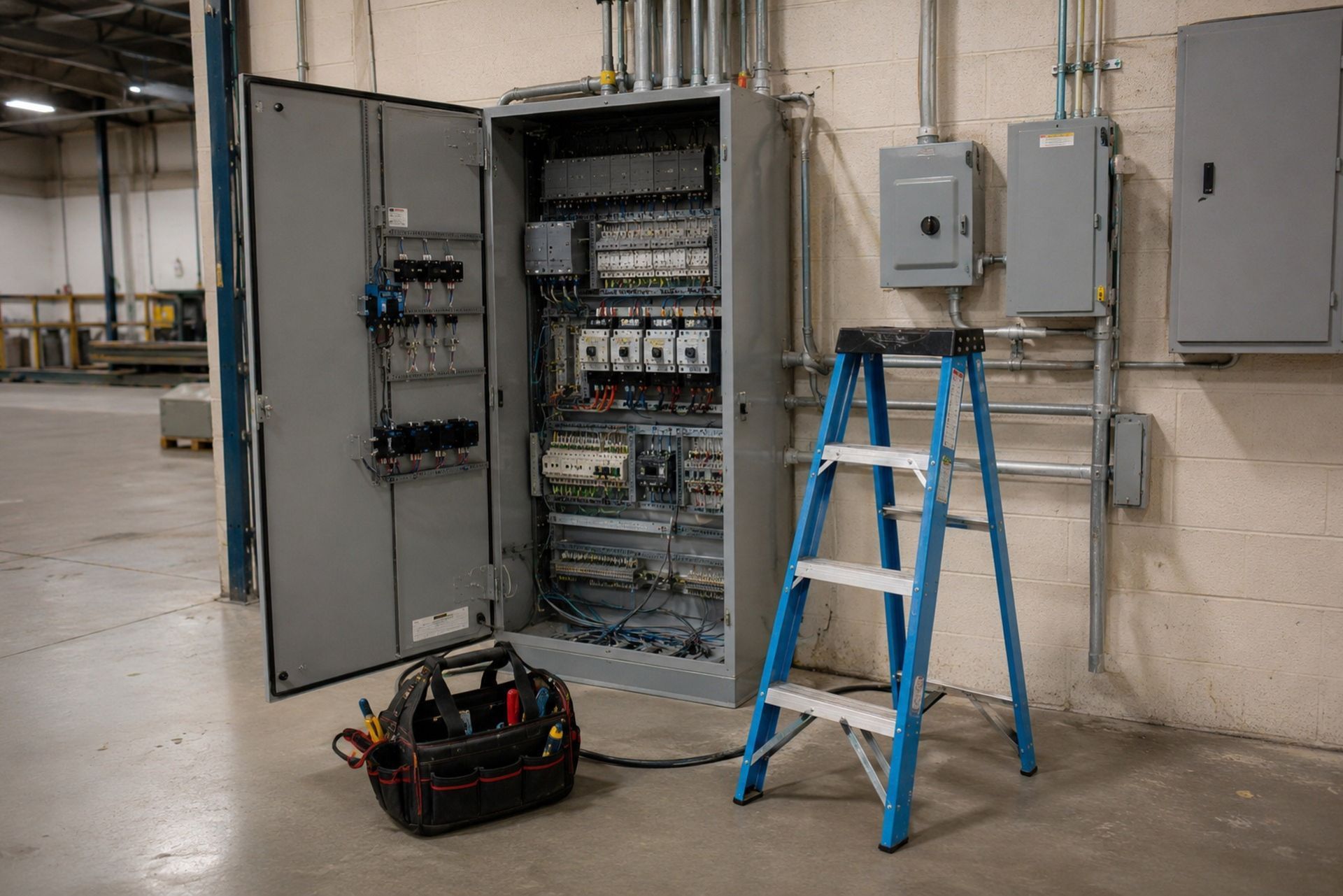
Warren is home to the U.S. Army's TACOM facility, the GM Technical Center, and dozens of automotive suppliers. Electrical contractors working in these facilities face exposures that residential electricians never encounter: high-voltage switchgear, programmable logic controllers, arc flash hazards, and classified area wiring for paint booths and chemical storage.
These industrial jobs often require higher insurance limits and specific endorsements. Pollution liability is one that catches contractors off guard: if your work causes a release of stored chemicals or triggers a fire suppression system that contaminates a facility, standard GL won't cover the cleanup costs. A separate pollution liability policy, even a contractor's pollution liability endorsement, fills this gap.
Joule Pro works with specialty markets that understand these industrial electrical exposures, which means your policy is structured for the actual work you're doing rather than a generic contractor template that leaves gaps in coverage.
Inland Marine Insurance for Specialized Testing Tools
Your tools and equipment aren't covered by a standard GL or property policy while they're in your van or on a jobsite. Inland marine insurance covers tools, testing equipment, and materials in transit or at temporary locations. For Warren electricians, this is especially relevant because thermal imaging cameras, power quality analyzers, and meggars can easily represent $15,000-$30,000 in equipment value.
Inland marine policies typically cover theft, damage, and loss on a replacement cost basis. The premium is modest relative to the value protected, usually running $300-$800 annually for $25,000-$50,000 in coverage. Given the rate of tool theft from work vans in the metro Detroit area, this coverage pays for itself the first time you need it.
Professional Liability for Design-Build Services
If you provide any design services, specify equipment, or offer energy audits, you need professional liability (errors and omissions) coverage. Standard GL excludes claims arising from professional services, so a design error that leads to a system failure or code violation falls outside your general liability policy entirely.
This coverage is increasingly relevant for Warren electricians involved in EV charging infrastructure, solar panel integration, or building automation systems. The design component of these projects creates exposure that pure installation work doesn't.
Carrier Appetite and Market Trends in Macomb County
Top Rated Carriers for Michigan Trade Contractors
Not every insurance carrier wants to write electrician policies, and the ones that do vary widely in their appetite for different types of electrical work. Some carriers are comfortable with residential service work but decline anything involving industrial controls or high-voltage systems. Others specifically target commercial and industrial electrical contractors but won't write residential.
In the Michigan market, carriers with strong appetite for electrical trades include several regional and national players that specialize in contractor programs. The key differentiator isn't just price: it's claims handling. A carrier that understands electrical trade claims will resolve a completed operations claim faster and more fairly than a generalist carrier that writes everything from restaurants to retail stores.
This is where working with a specialty program like Joule Pro makes a measurable difference. Because the program is built exclusively for licensed electrical contractors, the underwriter relationships are with carriers that actually want your business and understand your risk profile.
Impact of Local Litigation Trends on Premium Costs
Michigan's legal environment affects what you pay for insurance. The state has seen increasing litigation costs in construction defect and personal injury cases, and Macomb County courts have produced several significant verdicts against trade contractors in recent years. These trends push carriers to raise rates or tighten underwriting standards.
One specific trend worth watching: claims related to arc flash injuries and electrical fires in older commercial buildings. As Warren's industrial and commercial building stock ages, the frequency of these claims is climbing, and carriers are responding by scrutinizing the types of work electricians perform in pre-1980 buildings.
Strategies for Reducing Insurance Costs Without Sacrificing Protection
Safety Programs and MIOSHA Compliance Discounts
Michigan's Occupational Safety and Health Administration (MIOSHA) offers consultation programs that help contractors identify and correct workplace hazards. Participating in these programs, and documenting your safety training, can earn premium discounts from many carriers. A formal written safety program with documented toolbox talks, PPE requirements, and incident reporting procedures signals to underwriters that you're a lower risk.
Your experience modification rate is the single biggest lever for controlling workers' comp costs. Every claim drives that mod rate up, so investing in safety training and proper PPE pays dividends for three full years after each claim-free period.
Bundling Policy Coverages for Small Electrical Businesses
Packaging your GL, commercial auto, inland marine, and property coverage with a single carrier typically saves 10-15% compared to buying each policy separately. A business owner's policy (BOP) bundles GL and property coverage and often includes business interruption insurance at a lower combined premium.
For small electrical shops in Warren with fewer than ten employees, bundling through a specialty program designed for the electrical trade ensures you're getting coverages that actually match your exposures. Generic business insurance packages often include coverages you don't need while excluding endorsements you do.
| Coverage Type | Typical Limit | Annual Premium Range | Who Needs It |
|---|---|---|---|
| General Liability | $1M/$2M | $1,200 - $3,500 | All electricians |
| Workers' Compensation | Statutory | $2,500 - $8,000+ | Any employer with 1+ employees |
| Commercial Auto | $1M CSL | $1,800 - $4,500 | Contractors with work vehicles |
| Inland Marine | $25K - $100K | $300 - $800 | Anyone with portable tools/equipment |
| Professional Liability | $1M/$1M | $800 - $2,000 | Design-build contractors |
Your Next Steps
Getting the right insurance for electrical work in Warren means matching your coverage to the specific risks you face: older buildings, industrial facilities, flood-prone properties, and an active litigation environment. Don't settle for a generic contractor policy that wasn't designed for your trade.
Start by reviewing your current coverage against the requirements outlined here. If you're carrying minimum limits on a policy designed for general contractors, you likely have gaps that could cost you significantly in a claim. Joule Pro's team of licensed insurance professionals can review your current program and identify those gaps, with quotes and proposals handled directly by people who understand the electrical trade. Reach out for a coverage review and see how a specialty program compares to what you're carrying now.
FAQ
Do I need separate insurance for residential and commercial electrical work in Warren? Not necessarily separate policies, but your GL policy needs to cover both scopes of work. Some carriers restrict coverage to one or the other, so confirm your policy language includes both residential and commercial operations.
How much does general liability insurance cost for a Warren electrician? Most solo operators or small shops pay between $1,200 and $3,500 annually for a $1M/$2M policy. Your rate depends on revenue, payroll, claims history, and the types of electrical work you perform.
Can I use my personal auto insurance for my work van? No. Personal auto policies exclude vehicles used for business purposes. If you're in an accident while driving to a job, your personal insurer will likely deny the claim.
What happens if I work without a permit in Warren? Unpermitted work can void your insurance coverage for claims arising from that job, expose you to city fines, and create liability if the work is later found defective during a home inspection or insurance audit.
Is pollution liability really necessary for electricians? For residential service work, probably not. For industrial work in manufacturing facilities, chemical plants, or automotive facilities in Warren, it's a coverage gap that could result in six-figure cleanup costs landing on your balance sheet.

Founder & CEO
The Force Behind the Program
About the Author:
Michael Fusco.
Fusco Orsini & Associates
Joule Pro exists because Mike Fusco saw electrical contractors getting boilerplate insurance — and built a program designed for the way the trade actually works.
Mike is the CEO and co-founder of Fusco Orsini & Associates, the San Diego–based independent agency he launched in 2010. Under his leadership FOA has grown into a nationwide partner serving clients across 31 states, with a personal, client-first approach to commercial insurance and risk.
With over 20 years in insurance and risk management, he specializes in tailored programs spanning general liability, workers' compensation, surety bonding, and employee benefits — helping owners confidently manage risk and pursue growth.
Mike holds a B.S. in Business from the University of Maryland — Robert H. Smith School of Business, and the Certified Insurance Counselor (CIC) designation, held by fewer than 3% of insurance professionals nationwide.
Trusted by Electrical Contractors Across the Country.
Select your state for electrical contractor insurance. Get requirements, cost ranges, and more information for your business.
Alabama
Arkansas
Louisiana
Kentucky
New Hampshire
Vermont
Rhode Island
Massachusetts
N. Dakota
S. Dakota
Oklahoma
Delaware
What Our Clients Say
Trusted by Electrical Contractors Across the Country.
5.0
★★★★★
Google reviews
Core Commercial Coverage
Business Insurance for Electrical Contractors.
The fundamentals — written, structured, and priced for electrical risk. Each line is reviewed annually by an underwriter who only writes our trade.
01
General Liability
Premises & completed-operations coverage with electrical-specific endorsements and full pollution carve-back options.
02
Workers' Compensation
Class-code optimization, experience-mod review, and return-to-work programs designed for energized-work exposures.
03
Commercial Auto
Fleet, hired & non-owned auto, and tools-in-transit coverage written for service vans and bucket trucks.
04
Tools & Equipment
Scheduled and blanket coverage for tools, test equipment, scissor lifts, and contractor's equipment on-site or in-transit.
05
Surety Bonds
Bid, performance, and payment bonds — single-job and aggregate programs for commercial & public-works contracts.
06
Commercial Property
Layered limits up to $50M with carrier panels covering your shop, warehouse, yard, and on-premises tools, materials, and equipment.
Who We Serve
Electrical Contractors We Specialize In.
From $5M service shops to $250M industrial primes — every Joule Pro program is shaped to the contractor's revenue mix and project profile.
01 / Industrial
Commercial & Industrial Electrical Contractors
High-voltage, substation, and plant electrical work. Pollution, builder's risk, and large-deductible WC programs.
02 / Service
Service & Residential Electrical Contractors
Service-call shops, panel upgrades, and EV charging installers. Auto-fleet, GL, and tool-coverage programs.
03 / Low-Voltage
Specialty & Low-Voltage Contractors
Data, fire-alarm, security, and BMS controls. Cyber, professional liability, and follow-form excess.
Frequently Asked Questions
Common
Questions From
Electrical Contractors.
What size electrical contractors do you write?
Joule Pro is built for licensed electrical firms from roughly $2M in revenue to $250M+. Below $2M we typically refer to our small-business desk; above $250M we underwrite individually with our industrial practice team.
Do I need to be licensed in multiple states?
No. We license you wherever you work. Joule Pro is admitted in 31 states and our compliance team handles multi-state filings, prevailing-wage endorsements, and certificate-of-insurance requirements.
How is Joule Pro different from a generic contractor program?
Generic programs use a contractor's questionnaire that treats you like a roofer. We use forms written for energized work, arc-flash exposures, and design-build risk — and our carriers price accordingly.
What does the claims process actually look like?
Every Joule Pro client is assigned a named claims advocate at bind. They take the FNOL, set strategy with your assigned attorney, and serve as your single point of contact through close.
Can you bond large public-works contracts?
Yes. Through our surety partners we write single-job bonds up to $75M and aggregate programs to $300M, with expedited turnarounds for school district, federal, and DOT work.
What happens at renewal?
Your producer and claims advocate jointly run a renewal review 90 days out — covering loss trends, exposure changes, and market alternatives — so renewal day is a confirmation, not a surprise.
From the Blog
Insights for Electrical Contractors.
Risk briefings, claim post-mortems, and program updates — written by our underwriters and risk engineers.


Get Started
Get a Quote on a Program Built Around Your Trade.
A 30-minute discovery call is the only commitment. You'll leave with a written gap analysis of your current program — yours to keep, whether you bind with us or not.