
Business Insurance
Mount Vernon, NY Electrician Insurance
★★★★★ 150+ Five-Star Reviews · Google & Facebook
Mount Vernon sits at a unique crossroads: a dense, aging city just north of the Bronx with a mix of pre-war residential stock, active commercial corridors, and new mixed-use development pushing into every available lot. For electricians working here, the insurance picture is shaped by factors you won't find in a generic New York State guide: specific permit fee structures, Westchester County licensing layers, and carrier underwriting attitudes that shift based on the type of work and neighborhood you're operating in. This is a practical coverage guide for Mount Vernon electricians, covering local permitting requirements, the city-specific risks that affect your policies, and which insurers actually want to write your business. If you've been quoted sky-high premiums or had an application declined, the reasons probably trace back to one of the issues below.
Navigating Mount Vernon's Electrical Licensing and Insurance Requirements
Mount Vernon enforces its own building code and permitting process, but your license credentials flow through Westchester County. That dual layer trips up contractors who assume a state license alone covers them. Understanding both sets of rules is essential before you pull a single permit or bind a policy.
Westchester County Licensing Standards for Mount Vernon Contractors
Westchester County requires electrical contractors to hold a valid county license, which involves passing a trade exam, documenting field experience, and maintaining active insurance. The county periodically audits licensees, and lapsed insurance is one of the fastest ways to get your license suspended. Mount Vernon's Building Department cross-references county license status when reviewing permit applications, so there's no way to slip through the cracks.
One thing that catches newer contractors off guard: Westchester's licensing board wants to see both general liability and workers' compensation certificates on file, even if you're a sole proprietor with no employees. New York State treats sole-prop electricians differently than many other states, and the workers' comp requirement has specific exemptions you need to formally apply for rather than simply ignore.
Surety Bonds and Liability Minimums for City Permits
Electrical permit fees in Mount Vernon include a $125 filing fee plus $10 per $1,000 of estimated project cost for residential work. Commercial jobs carry higher per-thousand rates. Beyond the fee, the city requires proof of liability insurance and, for certain project types, a surety bond.
The surety bond requirement typically applies to larger commercial and municipal contracts. Bond amounts vary by project scope, but $10,000 to $50,000 is a common range for mid-size electrical work in the city. Your general liability policy needs to meet a minimum of $1 million per occurrence and $2 million aggregate to satisfy most Mount Vernon permit requirements. Some general contractors and property managers in the area demand higher limits, especially on mixed-use projects near South Fourth Avenue and Gramatan Avenue, where construction activity has picked up significantly since 2024.

By: Michael Fusco
President of Joule Pro
INDEX
Navigating Mount Vernon's Electrical Licensing and Insurance Requirements
Essential Insurance Coverages for Mount Vernon Electricians
Mitigating Local Risks: From Historic Homes to South Fourth Avenue Commercial Hubs
Carrier Appetite and Market Trends in the Westchester Region
Joule Pro is a specialty insurance and risk program of Fusco Orsini & Associates Insurance Services, built exclusively for electrical contractors and licensed in 31 states.
We work with electrical firms across the country — from California, Texas, Florida, New York, and coast to coast — placing General Liability, Workers' Compensation, Commercial Auto, Inland Marine, Surety Bonds, Excess Liability, and full specialty coverage stacks for commercial, industrial, service, residential, and low-voltage electrical contractors. Joule Pro is not a separate licensed entity. It is a dedicated program structure inside Fusco Orsini, giving electrical contractors access to specialty carriers, in-house claims advocacy, and trade-specific risk engineering under one program.
Electrician Insurance By City
Electrician Insurance Coverage
Essential Insurance Coverages for Mount Vernon Electricians
Getting the right coverage stack matters more here than in suburban Westchester towns. The density of Mount Vernon's building stock, the age of its infrastructure, and New York's aggressive labor laws all increase your exposure.
General Liability and Property Damage Protection
General liability is your foundation. It covers third-party bodily injury and property damage claims: think a homeowner tripping over your equipment, or an accidental fire caused by a wiring error. In Mount Vernon, property damage claims tend to run higher than the Westchester average because so many structures share walls, floors, and ceilings with adjacent units. A fire that starts in one apartment can spread to three or four others before the FDNY arrives.
Your GL policy should include completed operations coverage, which protects you after the job is done. A significant percentage of electrical liability claims stem from work that was finished weeks or months earlier: a connection fails, an arc fault occurs, and suddenly you're facing a six-figure claim. Joule Pro structures GL policies specifically for electrical contractors, which means completed operations coverage is baked into the program rather than treated as an afterthought.
Workers' Compensation Compliance in New York State
New York has some of the strictest workers' comp requirements in the country. Every employer must carry coverage, and the penalties for non-compliance include criminal charges, not just fines. The New York Workers' Compensation Board actively investigates uninsured employers and can shut down your business operations.
Rates for electricians in New York are classified under NCCI code 5190, and premiums reflect the state's high medical costs and generous benefit structure. Expect to pay between $8 and $15 per $100 of payroll depending on your experience modification rate and claims history. A clean loss history over three to five years can meaningfully reduce your mod rate, which is the single biggest lever you have for controlling comp costs.
Commercial Auto and Inland Marine for Mobile Equipment
If you're running service calls across Mount Vernon's tight residential streets or hauling materials to job sites, commercial auto insurance is non-negotiable. Personal auto policies exclude vehicles used for business, and a denied claim after a collision on South Fourth Avenue would leave you covering damages out of pocket.
Inland marine coverage protects your tools, equipment, and materials in transit or stored at job sites. Electricians routinely carry $15,000 to $50,000 worth of equipment in their vans: wire, meters, panel components, power tools. A single vehicle break-in or theft from a job site can wipe out that inventory. Inland marine policies from specialty programs like Joule Pro are designed to cover contractor equipment specifically, with fewer exclusions than generic property policies.
| Coverage Type | What It Protects | Typical Limit Range | Required by Law? |
|---|---|---|---|
| General Liability | Third-party injury, property damage | $1M/$2M | No, but required for permits |
| Workers' Compensation | Employee injuries on the job | Statutory | Yes, in New York |
| Commercial Auto | Business vehicle accidents | $500K - $1M | Yes, for registered vehicles |
| Inland Marine | Tools, equipment in transit/on-site | $15K - $100K | No |
| Surety Bond | Contract performance guarantee | $10K - $50K | Varies by project |
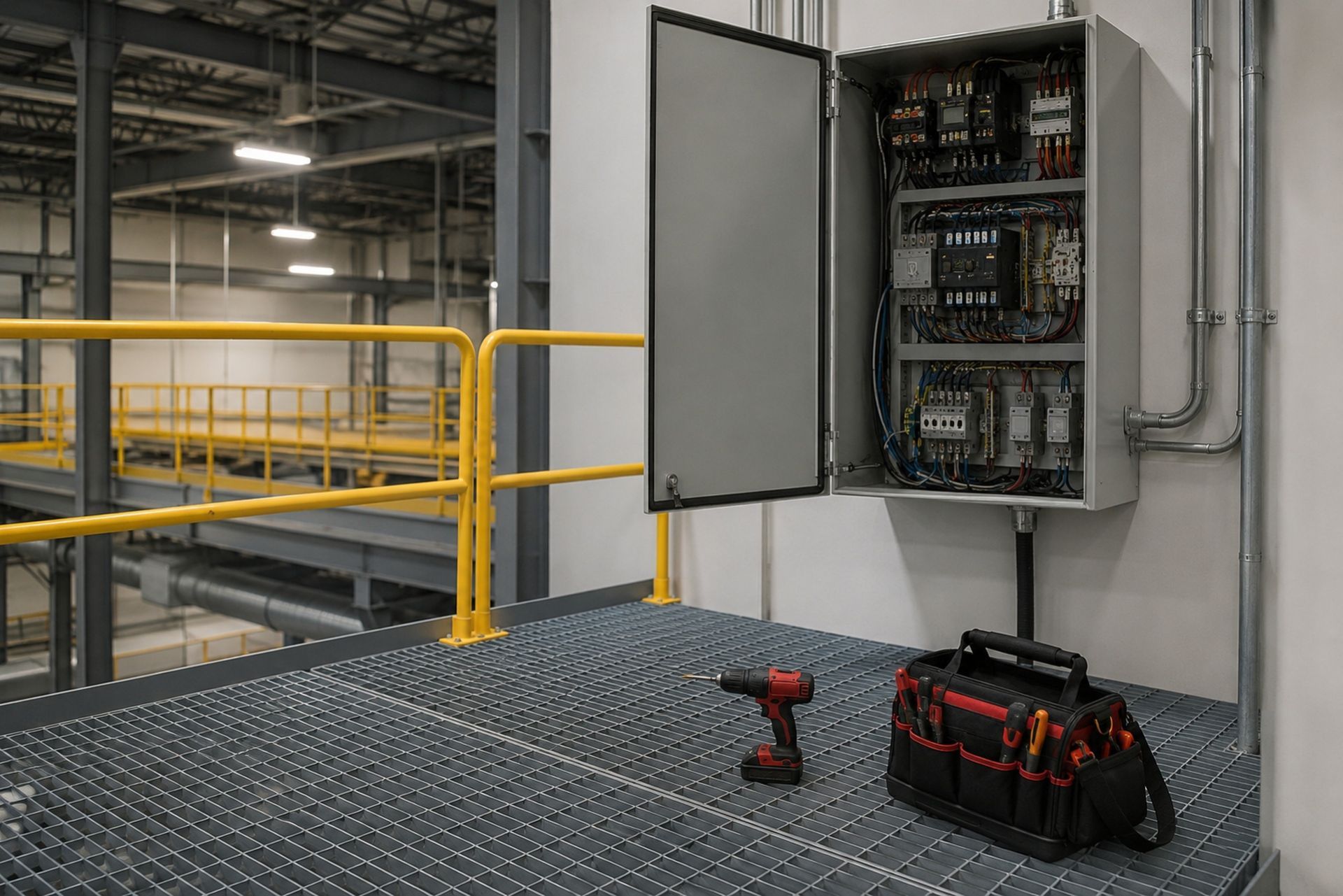
Mitigating Local Risks: From Historic Homes to South Fourth Avenue Commercial Hubs
Mount Vernon's geography and building stock create insurance risks that are distinctly different from those in neighboring Yonkers or New Rochelle. Carriers pay attention to where and what type of work you're doing.
Addressing Aging Infrastructure and Wiring in Fleetwood and Heights Districts
The Fleetwood and Chester Heights neighborhoods are full of homes built between 1910 and 1950. Many still have knob-and-tube or early Romex wiring, and panel upgrades in these homes are a bread-and-butter job for local electricians. The risk profile is real: working on aging systems increases the chance of discovering hidden hazards mid-project, and any fire that occurs after your work can trigger a liability investigation.
Carriers want to see that you're documenting pre-existing conditions before starting work. Photographing the original wiring, noting code violations you didn't create, and getting signed acknowledgments from homeowners about the scope of your work are all practices that protect you if a claim arises. Insurers who specialize in electrical contractor coverage understand these scenarios and price accordingly, while generalist carriers often just decline the risk.
High-Density Residential and Mixed-Use Development Hazards
New construction and renovation projects along Gramatan Avenue and near the Mount Vernon West Metro-North station involve multi-story, multi-unit buildings. The liability exposure on these jobs is exponentially higher than single-family residential work. A wiring defect in a 40-unit building creates 40 potential claimants, and New York courts have shown a strong tendency to hold contractors liable under Labor Law Section 240, even when the general contractor or property owner shares fault.
Working on scaffolding, in mechanical rooms, and around other active trades increases your injury exposure too. Your workers' comp and GL policies both need to account for this type of work, and you should confirm that your policy doesn't contain exclusions for multi-story or new construction projects.
Carrier Appetite and Market Trends in the Westchester Region
Not every insurance company wants to write electrician policies in Westchester County. Understanding carrier appetite saves you time and helps you avoid applications that go nowhere.
Preferred Insurers for Small vs. Large Scale Electrical Firms
Small electrical shops with one to five employees and mostly residential work tend to find coverage through regional carriers and specialty programs. These insurers understand the trade and can offer competitive rates because they've built their books around contractor risks. Joule Pro, for example, works with underwriters who specifically focus on electrical contractors, which means faster quoting and fewer surprise exclusions.
Larger firms doing commercial and industrial work need carriers with higher capacity and broader endorsement options. The appetite among national carriers for Westchester-based electrical contractors has tightened since 2024, partly due to rising claim severity in the New York metro area. Firms with annual revenue above $2 million may need to work with surplus lines carriers or specialty E&S markets to get adequate limits.
The Impact of New York Labor Laws on Insurance Premiums
New York's Labor Law Sections 200, 240, and 241 create what the insurance industry calls "absolute liability" for falls and certain construction-site injuries. This means property owners and contractors can be held liable regardless of fault, which drives up claim costs and, by extension, premiums.
For Mount Vernon electricians, this translates to GL premiums that are 20% to 40% higher than electricians doing identical work in states without comparable labor laws. Your experience mod, safety program documentation, and claims history are the main tools for keeping those premiums in check. Carriers reward contractors who can demonstrate formal safety training, regular toolbox talks, and incident reporting procedures.
Optimizing Coverage and Reducing Annual Premium Costs
The fastest way to reduce your insurance spend is to work with a producer who knows electrical contractor risks inside and out, rather than a generalist agent who writes policies for restaurants and retail stores on the same day. Specialty programs negotiate rates based on trade-specific loss data, and they know which carriers are actively looking for electrician business in the Westchester market.
Bundle your GL, workers' comp, commercial auto, and inland marine with one program where possible. Carriers offer package discounts, and a single point of contact for all your policies means fewer gaps and less administrative headache. Keep your loss runs clean, invest in safety training, and document everything on the job site: these three habits will do more for your premium than shopping five random carriers every renewal.
If you're a Mount Vernon electrician looking for coverage that actually fits your work, reach out to Joule Pro for a quote. Their team handles everything through a licensed producer, so you're talking to someone who understands your trade from the first call.
Frequently Asked Questions
Do I need workers' comp insurance if I'm a sole proprietor with no employees in Mount Vernon? New York requires workers' comp for most businesses, but sole proprietors without employees can apply for a formal exemption through the Workers' Compensation Board. You'll still need proof of that exemption to pull permits.
How much does general liability insurance cost for an electrician in Mount Vernon? Most small electrical contractors in the area pay between $2,500 and $6,000 annually for a $1M/$2M GL policy. Rates depend on your revenue, number of employees, and claims history.
Can I use my personal auto insurance for my work van? No. Personal auto policies exclude business use. If you're hauling tools or driving to job sites, you need a commercial auto policy or your claim will be denied.
Why are my insurance premiums higher in New York than other states? New York's Labor Law Sections 240 and 241 create strict liability for construction-related injuries, which increases claim payouts and drives up premiums across the board for contractors.
What's the difference between inland marine and a standard property policy? Inland marine covers tools and equipment that move between locations or sit at temporary job sites. Standard property policies typically only cover items at a fixed business location.

Founder & CEO
The Force Behind the Program
About the Author:
Michael Fusco.
Fusco Orsini & Associates
Joule Pro exists because Mike Fusco saw electrical contractors getting boilerplate insurance — and built a program designed for the way the trade actually works.
Mike is the CEO and co-founder of Fusco Orsini & Associates, the San Diego–based independent agency he launched in 2010. Under his leadership FOA has grown into a nationwide partner serving clients across 31 states, with a personal, client-first approach to commercial insurance and risk.
With over 20 years in insurance and risk management, he specializes in tailored programs spanning general liability, workers' compensation, surety bonding, and employee benefits — helping owners confidently manage risk and pursue growth.
Mike holds a B.S. in Business from the University of Maryland — Robert H. Smith School of Business, and the Certified Insurance Counselor (CIC) designation, held by fewer than 3% of insurance professionals nationwide.
Trusted by Electrical Contractors Across the Country.
Select your state for electrical contractor insurance. Get requirements, cost ranges, and more information for your business.
Alabama
Arkansas
Louisiana
Kentucky
New Hampshire
Vermont
Rhode Island
Massachusetts
N. Dakota
S. Dakota
Oklahoma
Delaware
What Our Clients Say
Trusted by Electrical Contractors Across the Country.
5.0
★★★★★
Google reviews
Core Commercial Coverage
Business Insurance for Electrical Contractors.
The fundamentals — written, structured, and priced for electrical risk. Each line is reviewed annually by an underwriter who only writes our trade.
01
General Liability
Premises & completed-operations coverage with electrical-specific endorsements and full pollution carve-back options.
02
Workers' Compensation
Class-code optimization, experience-mod review, and return-to-work programs designed for energized-work exposures.
03
Commercial Auto
Fleet, hired & non-owned auto, and tools-in-transit coverage written for service vans and bucket trucks.
04
Tools & Equipment
Scheduled and blanket coverage for tools, test equipment, scissor lifts, and contractor's equipment on-site or in-transit.
05
Surety Bonds
Bid, performance, and payment bonds — single-job and aggregate programs for commercial & public-works contracts.
06
Commercial Property
Layered limits up to $50M with carrier panels covering your shop, warehouse, yard, and on-premises tools, materials, and equipment.
Who We Serve
Electrical Contractors We Specialize In.
From $5M service shops to $250M industrial primes — every Joule Pro program is shaped to the contractor's revenue mix and project profile.
01 / Industrial
Commercial & Industrial Electrical Contractors
High-voltage, substation, and plant electrical work. Pollution, builder's risk, and large-deductible WC programs.
02 / Service
Service & Residential Electrical Contractors
Service-call shops, panel upgrades, and EV charging installers. Auto-fleet, GL, and tool-coverage programs.
03 / Low-Voltage
Specialty & Low-Voltage Contractors
Data, fire-alarm, security, and BMS controls. Cyber, professional liability, and follow-form excess.
Frequently Asked Questions
Common
Questions From
Electrical Contractors.
What size electrical contractors do you write?
Joule Pro is built for licensed electrical firms from roughly $2M in revenue to $250M+. Below $2M we typically refer to our small-business desk; above $250M we underwrite individually with our industrial practice team.
Do I need to be licensed in multiple states?
No. We license you wherever you work. Joule Pro is admitted in 31 states and our compliance team handles multi-state filings, prevailing-wage endorsements, and certificate-of-insurance requirements.
How is Joule Pro different from a generic contractor program?
Generic programs use a contractor's questionnaire that treats you like a roofer. We use forms written for energized work, arc-flash exposures, and design-build risk — and our carriers price accordingly.
What does the claims process actually look like?
Every Joule Pro client is assigned a named claims advocate at bind. They take the FNOL, set strategy with your assigned attorney, and serve as your single point of contact through close.
Can you bond large public-works contracts?
Yes. Through our surety partners we write single-job bonds up to $75M and aggregate programs to $300M, with expedited turnarounds for school district, federal, and DOT work.
What happens at renewal?
Your producer and claims advocate jointly run a renewal review 90 days out — covering loss trends, exposure changes, and market alternatives — so renewal day is a confirmation, not a surprise.
From the Blog
Insights for Electrical Contractors.
Risk briefings, claim post-mortems, and program updates — written by our underwriters and risk engineers.


Get Started
Get a Quote on a Program Built Around Your Trade.
A 30-minute discovery call is the only commitment. You'll leave with a written gap analysis of your current program — yours to keep, whether you bind with us or not.