
Business Insurance
Gresham, OR Electrician Insurance
★★★★★ 150+ Five-Star Reviews · Google & Facebook
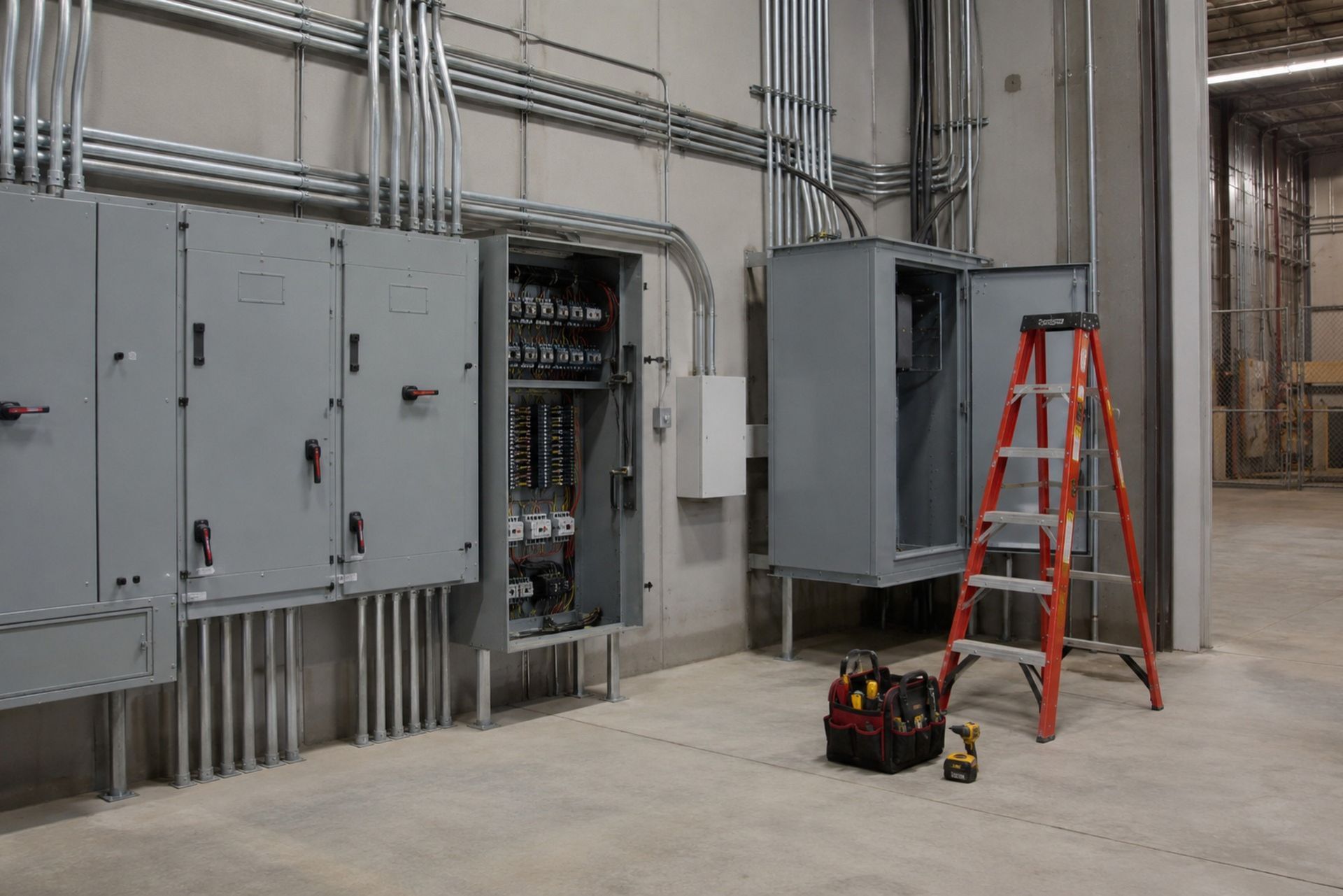
Underwriting Preferences for Residential vs. Industrial Projects
Running an electrical contracting business in Gresham means dealing with a specific set of challenges that contractors in Portland proper or the suburbs of Beaverton don't always share. Between the city's rapid residential growth east of the I-205 corridor, its aging commercial infrastructure near downtown, and the weather patterns that roll through the Columbia River Gorge, Gresham electricians face a risk profile that generic insurance advice simply doesn't address. This guide covers the insurance essentials for Gresham electricians: the coverage you actually need, the local permitting requirements that affect your policies, the city-specific risks that underwriters care about, and which carriers have real appetite for electrical trade work in Multnomah County. Whether you're a one-truck residential shop or a growing commercial outfit, getting this right protects everything you've built.
Navigating Gresham's Electrical Landscape and Insurance Essentials
Gresham's construction market has shifted noticeably over the past few years. The city's Pleasant Valley and Springwater neighborhoods continue to see residential development, while older commercial zones along Burnside Road and Powell Boulevard generate steady rewiring and panel upgrade work. That mix of new construction and retrofit projects creates a diverse risk profile for local electricians, and your insurance needs to reflect both.
The foundation of any electrical contractor's coverage in Oregon starts with understanding what the state requires and then building from there based on the actual work you perform.
Oregon CCB Licensing and Mandatory Insurance Limits
Oregon's Construction Contractors Board sets the floor for insurance requirements, and those minimums vary by license type. Commercial General (Level 1) contractors must carry a $2 million aggregate general liability limit, while Residential Specialty contractors need a minimum of $500,000. These aren't suggestions: the CCB will suspend your license if your coverage lapses, and they verify it directly with your carrier.
Most Gresham electricians working on both residential and light commercial projects hold a General Journeyman license and operate under a Commercial General contractor license. That means the $2 million aggregate is your baseline. Many general contractors and property managers in the area require even higher limits, often $3 million or $5 million aggregate, before they'll sub you onto a project.
General Liability: Protecting Against Property Damage and Bodily Injury
General liability is the policy that responds when a homeowner trips over your extension cord, when a faulty installation causes a fire, or when your work damages someone else's property. For electricians, the claims that actually happen tend to involve water damage from cutting into pipes during rough-in work, fire damage from arc faults, and third-party injuries on job sites.
A standard GL policy for a Gresham electrical contractor typically runs between $2,500 and $6,000 annually for a small shop, depending on revenue, payroll, and the type of work performed. High-voltage or industrial work pushes premiums higher. The key is making sure your policy includes completed operations coverage, which protects you after the job is done: a fire that starts six months after you finished wiring a kitchen is still your problem without it.

By: Michael Fusco
President of Joule Pro
INDEX
Navigating Gresham's Electrical Landscape and Insurance Essentials
Aligning Coverage with Gresham Permitting and Local Regulations
Addressing City-Specific Risks for Gresham Contractors
Carrier Appetite and Finding the Right Policy in Multnomah County
Specialized Add-Ons: Workers' Comp and Professional Liability
Optimizing Your Insurance Portfolio for Long-Term Business Growth
Joule Pro is a specialty insurance and risk program of Fusco Orsini & Associates Insurance Services, built exclusively for electrical contractors and licensed in 31 states.
We work with electrical firms across the country — from California, Texas, Florida, New York, and coast to coast — placing General Liability, Workers' Compensation, Commercial Auto, Inland Marine, Surety Bonds, Excess Liability, and full specialty coverage stacks for commercial, industrial, service, residential, and low-voltage electrical contractors. Joule Pro is not a separate licensed entity. It is a dedicated program structure inside Fusco Orsini, giving electrical contractors access to specialty carriers, in-house claims advocacy, and trade-specific risk engineering under one program.
Electrician Insurance By City
Electrician Insurance Coverage
Aligning Coverage with Gresham Permitting and Local Regulations
City of Gresham Permit Requirements for Residential and Commercial Jobs
Gresham requires electrical permits for most work beyond simple fixture replacements. The city's Community Development Department handles permit applications, and inspections are conducted through a combination of city inspectors and the state's Building Codes Division. Residential service upgrades, new circuits, and panel replacements all require permits, as do any commercial electrical installations.
Here's where insurance intersects with permitting: if you perform unpermitted work and something goes wrong, your general liability carrier may deny the claim based on a policy exclusion for work that violates local codes. This is one of the most common coverage gaps electricians discover too late. Always pull permits, always get inspections, and keep copies of your inspection approvals with your project files.
Surety Bonds and Performance Guarantees for City Contracts
The CCB requires a surety bond of $20,000 for Commercial General contractors and $15,000 for Residential Specialty contractors. These bonds protect consumers and project owners if you fail to complete work or violate the terms of your contract. They're separate from your insurance policies but often purchased through the same agency.
For Gresham city contracts or larger commercial projects in the area, you may need performance bonds and payment bonds that run 1% to 3% of the contract value. Your bonding capacity depends on your financial statements, credit history, and track record. A specialty program like Joule Pro, which works exclusively with electrical contractors, can often connect you with surety markets that understand the electrical trade's financial rhythms better than generalist agencies.
Addressing City-Specific Risks for Gresham Contractors
Inland Marine Coverage for Tools in Transit and High-Theft Areas
Tool theft is a real and persistent problem for Gresham electricians. Certain areas along the 82nd Avenue corridor and near transit stops have higher rates of vehicle break-ins and job site theft. Your commercial auto policy does not cover tools stolen from your van. Your general liability policy doesn't either.
Inland marine coverage, sometimes called a tools and equipment floater, is what protects your meters, wire pullers, benders, and diagnostic equipment. A solid inland marine policy covers:
- Tools stolen from locked vehicles or job sites
- Equipment damaged during transit
- Rented or borrowed equipment (with the right endorsement)
- Items stored at your shop or warehouse
For most small electrical shops, inland marine coverage runs $500 to $1,500 per year depending on the total value of tools insured. Given that a single Fluke meter can cost $500 and a good wire puller runs over $2,000, the math on this coverage is straightforward.
Environmental and Weather-Related Risks in the Pacific Northwest
Gresham sits at the western end of the Columbia River Gorge, which means it catches wind events and ice storms that the rest of the metro area sometimes avoids. The December 2024 ice storm that knocked out power across East Multnomah County is a recent reminder of how quickly weather can create both demand surges and risk spikes for electricians.
Storm-related work, including emergency panel replacements, generator installations, and temporary power setups, carries higher risk because of the time pressure and working conditions involved. Make sure your GL policy doesn't exclude emergency or after-hours work, and confirm that your workers' comp covers employees during storm response. These are the kinds of policy nuances that a specialty electrical contractor program will catch but a generalist agent might miss.
Carrier Appetite and Finding the Right Policy in Multnomah County
Top-Rated Carriers for Small and Mid-Sized Electrical Shops
Not every insurance carrier wants to write electrical contractor policies. The fire risk associated with electrical work makes some carriers cautious, while others have built specific programs around the trade. Here's a general comparison of what you'll find in the Gresham market:
| Factor | Generalist Carrier | Specialty Electrical Program |
|---|---|---|
| Underwriting knowledge | Basic trade classification | Understands voltage levels, project types |
| Completed operations | Often sublimited | Full limits typically included |
| Inland marine | May require separate policy | Bundled with GL package |
| Premium competitiveness | Moderate | Often better for clean accounts |
| Claims handling | General adjusters | Adjusters familiar with electrical claims |
Joule Pro works with specialty markets and underwriters who specifically understand electrical trade risks, which often translates to better coverage terms and more competitive pricing for contractors with clean loss histories. Having a direct producer relationship means you're not filling out online forms and hoping for the best: you're working with someone who knows the difference between residential service work and industrial controls.
Factors Influencing Premiums: Experience, Scope, and Safety Records
Your premium isn't just about revenue and payroll. Carriers look at several factors specific to your operation:
- Years in business (three-plus years gets you better rates)
- Loss history over the past five years
- Types of work performed (residential vs. commercial vs. industrial)
- Maximum project size
- Safety programs and training documentation
- Subcontractor management practices
A Gresham electrician doing $800,000 in annual revenue with residential and light commercial work, three employees, and a clean loss history might expect to pay $4,000 to $7,000 for a GL policy. Add workers' comp, commercial auto, and inland marine, and a full coverage stack typically runs $15,000 to $25,000 annually.
Specialized Add-Ons: Workers' Comp and Professional Liability
Oregon Workers' Compensation Compliance for Growing Teams
Oregon law requires workers' compensation coverage for virtually all employees, with very limited exceptions for sole proprietors with no employees. The state's workers' compensation requirements are enforced aggressively: penalties for non-compliance can reach $250 per day per uninsured employee.
For electrical contractors, workers' comp classification codes matter. Electricians typically fall under NCCI code 5190 for electrical wiring, which carries a base rate that reflects the physical risks of the trade. Your actual premium depends on your experience modification rate, or e-mod, which compares your claims history to other electrical contractors of similar size. A clean safety record can push your e-mod below 1.0, saving you thousands annually.
Errors and Omissions (E&O) for Electrical Design and Consulting
If your Gresham operation includes any design-build work, electrical consulting, or energy auditing, you need errors and omissions coverage. Standard GL policies exclude professional services, so a mistake in your electrical design that causes a system failure or code violation wouldn't be covered without E&O.
This coverage is especially relevant for electricians involved in EV charging station design, solar integration consulting, or energy efficiency assessments: all growing service lines in the Gresham market. E&O policies for small electrical consultants typically cost $1,200 to $3,000 per year.
Optimizing Your Insurance Portfolio for Long-Term Business Growthstions
Getting insurance right isn't a one-time event. As your Gresham electrical business grows, your coverage needs change. Adding employees triggers workers' comp obligations. Taking on larger commercial projects may require higher GL limits or umbrella policies. Expanding into specialty work like solar or EV infrastructure introduces new coverage needs.
Review your policies annually, ideally 90 days before renewal so you have time to shop the market. Document your safety program, keep your loss runs clean, and maintain organized records of permits and inspections. These habits don't just reduce risk: they make you more attractive to the carriers that offer the best terms.
If you're looking for a coverage review from people who actually understand the electrical trade, Joule Pro specializes in building insurance programs for licensed electrical contractors. A direct conversation with a licensed producer who knows the difference between a 200-amp residential panel swap and a 480-volt commercial distribution project can save you both money and headaches.
FAQ
Do I need insurance to pull an electrical permit in Gresham? Yes. The City of Gresham requires a valid CCB license, and the CCB requires active general liability insurance to maintain that license. No insurance means no license, which means no permits.
How much does general liability cost for a small Gresham electrical shop? Most one-to-three person shops doing residential and light commercial work pay between $2,500 and $6,000 per year, depending on revenue and loss history.
Is inland marine coverage really necessary if I lock my van? Absolutely. Locked vehicle theft is one of the most common claims for electrical contractors, and neither your auto nor GL policy covers stolen tools.
Can I use my personal auto insurance for my work van? No. Personal auto policies exclude vehicles used for business purposes. You need a commercial auto policy, and your carrier needs to know the vehicle is used for electrical contracting work.
What happens if my insurance lapses with the CCB?
The CCB will suspend your license, typically within 30 days of the lapse. Reinstatement requires proof of new coverage and may involve additional fees.

Founder & CEO
The Force Behind the Program
About the Author:
Michael Fusco.
Fusco Orsini & Associates
Joule Pro exists because Mike Fusco saw electrical contractors getting boilerplate insurance — and built a program designed for the way the trade actually works.
Mike is the CEO and co-founder of Fusco Orsini & Associates, the San Diego–based independent agency he launched in 2010. Under his leadership FOA has grown into a nationwide partner serving clients across 31 states, with a personal, client-first approach to commercial insurance and risk.
With over 20 years in insurance and risk management, he specializes in tailored programs spanning general liability, workers' compensation, surety bonding, and employee benefits — helping owners confidently manage risk and pursue growth.
Mike holds a B.S. in Business from the University of Maryland — Robert H. Smith School of Business, and the Certified Insurance Counselor (CIC) designation, held by fewer than 3% of insurance professionals nationwide.
Trusted by Electrical Contractors Across the Country.
Select your state for electrical contractor insurance. Get requirements, cost ranges, and more information for your business.
Alabama
Arkansas
Louisiana
Kentucky
New Hampshire
Vermont
Rhode Island
Massachusetts
N. Dakota
S. Dakota
Oklahoma
Delaware
What Our Clients Say
Trusted by Electrical Contractors Across the Country.
5.0
★★★★★
Google reviews
Core Commercial Coverage
Business Insurance for Electrical Contractors.
The fundamentals — written, structured, and priced for electrical risk. Each line is reviewed annually by an underwriter who only writes our trade.
01
General Liability
Premises & completed-operations coverage with electrical-specific endorsements and full pollution carve-back options.
02
Workers' Compensation
Class-code optimization, experience-mod review, and return-to-work programs designed for energized-work exposures.
03
Commercial Auto
Fleet, hired & non-owned auto, and tools-in-transit coverage written for service vans and bucket trucks.
04
Tools & Equipment
Scheduled and blanket coverage for tools, test equipment, scissor lifts, and contractor's equipment on-site or in-transit.
05
Surety Bonds
Bid, performance, and payment bonds — single-job and aggregate programs for commercial & public-works contracts.
06
Commercial Property
Layered limits up to $50M with carrier panels covering your shop, warehouse, yard, and on-premises tools, materials, and equipment.
Who We Serve
Electrical Contractors We Specialize In.
From $5M service shops to $250M industrial primes — every Joule Pro program is shaped to the contractor's revenue mix and project profile.
01 / Industrial
Commercial & Industrial Electrical Contractors
High-voltage, substation, and plant electrical work. Pollution, builder's risk, and large-deductible WC programs.
02 / Service
Service & Residential Electrical Contractors
Service-call shops, panel upgrades, and EV charging installers. Auto-fleet, GL, and tool-coverage programs.
03 / Low-Voltage
Specialty & Low-Voltage Contractors
Data, fire-alarm, security, and BMS controls. Cyber, professional liability, and follow-form excess.
Frequently Asked Questions
Common
Questions From
Electrical Contractors.
What size electrical contractors do you write?
Joule Pro is built for licensed electrical firms from roughly $2M in revenue to $250M+. Below $2M we typically refer to our small-business desk; above $250M we underwrite individually with our industrial practice team.
Do I need to be licensed in multiple states?
No. We license you wherever you work. Joule Pro is admitted in 31 states and our compliance team handles multi-state filings, prevailing-wage endorsements, and certificate-of-insurance requirements.
How is Joule Pro different from a generic contractor program?
Generic programs use a contractor's questionnaire that treats you like a roofer. We use forms written for energized work, arc-flash exposures, and design-build risk — and our carriers price accordingly.
What does the claims process actually look like?
Every Joule Pro client is assigned a named claims advocate at bind. They take the FNOL, set strategy with your assigned attorney, and serve as your single point of contact through close.
Can you bond large public-works contracts?
Yes. Through our surety partners we write single-job bonds up to $75M and aggregate programs to $300M, with expedited turnarounds for school district, federal, and DOT work.
What happens at renewal?
Your producer and claims advocate jointly run a renewal review 90 days out — covering loss trends, exposure changes, and market alternatives — so renewal day is a confirmation, not a surprise.
From the Blog
Insights for Electrical Contractors.
Risk briefings, claim post-mortems, and program updates — written by our underwriters and risk engineers.


Get Started
Get a Quote on a Program Built Around Your Trade.
A 30-minute discovery call is the only commitment. You'll leave with a written gap analysis of your current program — yours to keep, whether you bind with us or not.