
Business Insurance
Hillsboro, OR Electrician Insurance
★★★★★ 150+ Five-Star Reviews · Google & Facebook
Underwriting Preferences for Residential vs. Industrial Projects
Hillsboro sits at the heart of Oregon's Silicon Forest, where electricians wire everything from suburban tract homes to multibillion-dollar semiconductor fabrication plants. That range of work creates a unique insurance profile you won't find in most Oregon cities. A residential rewire in the Orenco Station neighborhood carries a completely different risk than pulling cable through a cleanroom at one of the tech campuses along NE Shute Road. If you're a licensed electrical contractor working in or around Hillsboro, your coverage needs to reflect the actual jobs you're bidding on, the permits the city requires, and the carriers willing to write your class of work. This guide breaks down the coverage essentials, local permitting and bonding requirements, region-specific hazards, and which insurers have appetite for Hillsboro electricians in 2026.
Essential Insurance Coverages for Hillsboro Electrical Contractors
General Liability and Property Damage Requirements
General liability is the foundation of every electrician's insurance program, and in Hillsboro, most general contractors and property managers require a minimum of $1 million per occurrence and $2 million aggregate before you set foot on a jobsite. Some of the larger tech campus projects demand $5 million or more, often met through an umbrella or excess policy.
What catches electricians off guard is the property damage exposure. A faulty panel installation that causes a fire in a finished commercial space can generate a six-figure claim before anyone even discusses business interruption losses. Your GL policy needs to include completed operations coverage, which protects you after you've finished the work and left the site. Skipping this endorsement is one of the most common mistakes we see among newer contractors.
Products and completed operations claims tend to surface months or even years after a job wraps. In Oregon, the statute of limitations for property damage is six years, so your policy needs to remain active and adequate long after you've moved on to other projects.
Workers' Compensation Laws in Oregon
Oregon requires workers' compensation for virtually all employers, including electrical contractors with even one employee. The state does not allow an LLC member or corporate officer to automatically exempt themselves without filing specific paperwork with the Oregon Department of Consumer and Business Services. Getting this wrong can result in fines of up to $250 per day of noncompliance.
Electricians fall under class code 5190, which carries a relatively high base rate due to the inherent hazards of the trade: electrical burns, falls from ladders, and arc flash injuries. Your experience modification rate (EMR) plays a huge role in what you actually pay. An EMR below 1.0 signals a strong safety record and can save you thousands annually, while a modifier above 1.0 after a string of claims will push premiums up fast.
One thing to keep in mind: sole proprietors in Oregon can elect to cover themselves under a workers' comp policy, and doing so is often required by general contractors before they'll add you to a project.
Inland Marine Insurance for Tools and Mobile Equipment
Your van full of Fluke meters, conduit benders, wire pullers, and power tools represents a serious investment. A standard commercial auto policy covers the vehicle itself but typically excludes the contents. Inland marine insurance fills that gap, covering tools and equipment whether they're on a jobsite, in transit, or locked in your truck overnight.
Hillsboro has seen a rise in tool theft from construction sites, particularly in the rapidly developing areas near the Tanasbourne and AmberGlen neighborhoods. A solid inland marine policy should cover theft, accidental damage, and loss with minimal deductibles. Programs like those offered through Joule Pro bundle inland marine with your other contractor coverages, which simplifies the process and often reduces total cost compared to buying standalone policies from separate carriers.

By: Michael Fusco
President of Joule Pro
INDEX
Joule Pro is a specialty insurance and risk program of Fusco Orsini & Associates Insurance Services, built exclusively for electrical contractors and licensed in 31 states.
We work with electrical firms across the country — from California, Texas, Florida, New York, and coast to coast — placing General Liability, Workers' Compensation, Commercial Auto, Inland Marine, Surety Bonds, Excess Liability, and full specialty coverage stacks for commercial, industrial, service, residential, and low-voltage electrical contractors. Joule Pro is not a separate licensed entity. It is a dedicated program structure inside Fusco Orsini, giving electrical contractors access to specialty carriers, in-house claims advocacy, and trade-specific risk engineering under one program.
Electrician Insurance By City
Electrician Insurance Coverage
Navigating Hillsboro Permitting and City Compliance
Bonding Requirements for Washington County and Local Municipalities
Oregon House Bill 2922 increased minimum surety bond requirements by $5,000, meaning residential specialty bonds now start at $20,000 for many electrical contractors. Washington County may impose additional bonding requirements depending on the scope and value of the project. Municipal contracts in Hillsboro, especially those tied to public infrastructure or school district work, frequently require performance and payment bonds equal to the full contract value.
Your surety bond is not insurance: it's a guarantee that you'll fulfill your contractual obligations. But your insurance agent and your bonding company need to be in sync. A carrier that understands the electrical trade can issue certificates and endorsements that align with what the City of Hillsboro's permitting office actually requests, saving you the back-and-forth that eats up days during bid season.
Aligning Insurance Limits with City of Hillsboro Permit Applications
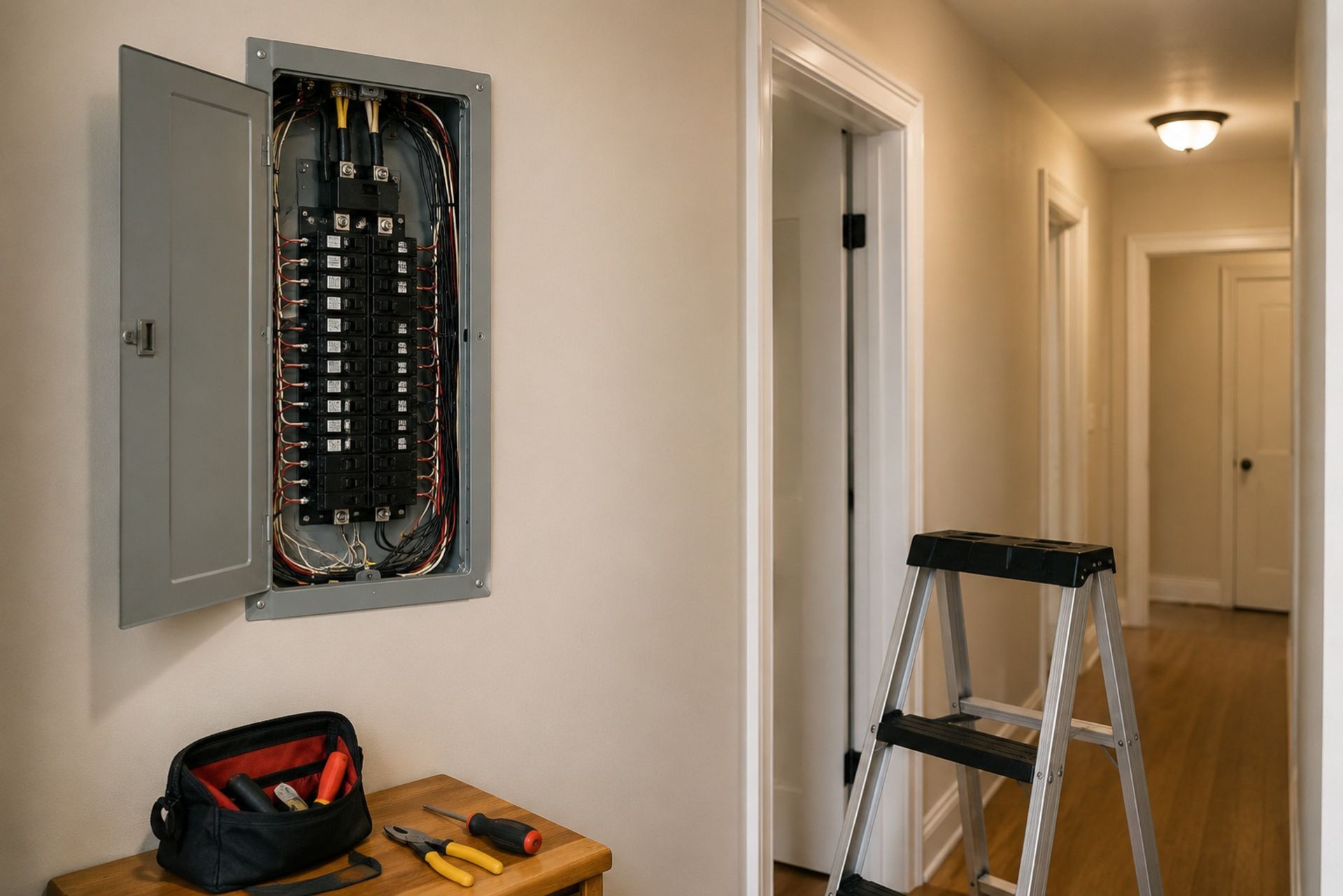
The City of Hillsboro's building division requires proof of insurance as part of the electrical permit application process. Standard requirements include a certificate of insurance showing general liability limits, workers' comp coverage, and the city listed as a certificate holder. Some larger commercial permits also require additional insured status for the city.
Getting your certificate language wrong delays permits. The most common issue? Certificates that list incorrect policy effective dates or that fail to include the required additional insured endorsement. Working with a specialty program like Joule Pro, which handles insurance exclusively for electrical contractors, means your certificates are formatted correctly the first time. That sounds minor until you're three days from a project start date and your permit is stuck in review because of a paperwork error.
Addressing Region-Specific Risks in the Silicon Forest
High-Value Commercial Risks: Data Centers and Tech Facilities
Hillsboro is home to some of the largest data center campuses on the West Coast. Intel, Synopsys, and multiple hyperscale cloud providers operate facilities where a single electrical fault can cause millions in downtime. Electricians working inside these buildings face heightened liability exposure that standard GL policies may not adequately cover.
Data center operators typically require contractors to carry professional liability (errors and omissions) coverage in addition to standard GL. They also frequently require pollution liability endorsements due to the presence of battery backup systems and diesel generators. If you're bidding on this type of work, your insurance program needs to be built for it from the start, not patched together with endorsements after you've already won the contract.
The carrier writing your policy matters here. Not every insurer understands the exposure profile of high-voltage work in mission-critical facilities, and a generalist agent may not know which markets will even quote this class of work.
Environmental and Weather-Related Hazards in the Willamette Valley
The Willamette Valley's wet climate creates persistent moisture-related risks for electrical installations. Corrosion, ground fault issues, and water intrusion into panels are common sources of callbacks and claims. Winter ice storms, like the ones that hit the Portland metro area in recent years, can down power lines and create emergency service calls where electricians work in hazardous conditions under time pressure.
Flood risk is another consideration. Parts of Hillsboro near Rock Creek and the Tualatin River sit within FEMA-designated flood zones. If you store tools or materials in a shop or warehouse in these areas, a standard property policy won't cover flood damage. You'll need a separate flood policy or a specific endorsement.
Wildfire smoke events, which have become a recurring issue in Oregon summers, can also trigger air quality shutdowns on outdoor jobsites. Lost workdays from smoke events aren't typically covered by insurance, but business interruption coverage tied to a qualifying event can offset some of the financial impact.
Carrier Appetite and Market Trends for Oregon Electricians
Preferred Carriers for Residential vs. Industrial Electrical Work
Carrier appetite varies significantly based on the type of electrical work you perform. Residential electricians doing panel upgrades, EV charger installations, and new construction wiring generally have access to a broad market. Multiple carriers actively compete for this business in Oregon, keeping premiums relatively stable.
Industrial and commercial electricians, especially those working in data centers or doing high-voltage work above 480V, face a much tighter market. Fewer carriers are willing to write these risks, and those that do often require detailed loss runs, safety programs, and proof of employee training.
| Factor | Generalist Carrier | Specialty Electrical Program |
|---|---|---|
| Underwriting knowledge | Basic trade classification | Understands voltage levels, project types |
| Completed operations | Often sublimited | Full limits typically included |
| Inland marine | May require separate policy | Bundled with GL package |
| Premium competitiveness | Moderate | Often better for clean accounts |
| Claims handling | General adjusters | Adjusters familiar with electrical claims |
Factors Influencing Premium Rates in the Portland Metro Area
Your premiums in the Hillsboro area are shaped by several factors beyond just your revenue and payroll. Claims history is the biggest driver: even a single liability claim over $50,000 can increase your renewal by 15-25%. The type of work matters too. An electrician doing exclusively residential service calls will pay a fraction of what a contractor wiring industrial control systems pays.
Geographic density plays a role as well. The Portland metro area, including Hillsboro, has a higher concentration of contractors competing for work, which means more insurers are willing to write policies here compared to rural parts of Oregon. That competition generally works in your favor on pricing, but only if you're shopping through a producer who has relationships with the right specialty markets. Joule Pro maintains direct underwriter relationships tailored to the electrical trade, which gives Hillsboro electricians access to carriers that generalist brokers may not even know exist.
Optimizing Your Coverage Strategy and Maintaining Compliance
Keeping your insurance program aligned with your actual operations is an ongoing process, not a once-a-year renewal task. As your Hillsboro electrical business grows, your coverage needs shift. Adding employees changes your workers' comp exposure. Bidding on a data center project might require you to increase your umbrella limits from $2 million to $10 million within a week. Buying a new service van triggers a commercial auto update.
The smartest approach is to work with a producer who specializes in electrician insurance and understands both Oregon regulations and the specific risks of the Hillsboro market. A generalist agent might get you a policy, but they're unlikely to catch the gaps that matter most: missing completed operations coverage, inadequate tool coverage, or a surety bond that doesn't meet the latest Washington County requirements.
Review your certificates of insurance quarterly, not just at renewal. Make sure every active project has current, accurate documentation on file. And if you're expanding into commercial or industrial work, have that conversation with your insurance advisor before you submit the bid, not after you've won it.
FAQ
Do I need insurance to pull an electrical permit in Hillsboro? Yes. The City of Hillsboro requires proof of general liability and workers' compensation (if you have employees) as part of the permit application. You'll also need an active Oregon electrical license and surety bond.
How much does general liability cost for an electrician in Hillsboro? Residential electricians typically pay between $1,200 and $3,500 annually for a $1M/$2M policy. Commercial and industrial contractors can expect $4,000 to $12,000 or more depending on revenue, claims history, and the type of work performed.
Can I use my personal auto insurance for my work van? No. Personal auto policies exclude vehicles used for business purposes. You need a commercial auto policy that covers your vehicle, and a separate inland marine policy to cover the tools and equipment inside it.
What's the difference between a surety bond and insurance? A surety bond guarantees you'll fulfill your contractual and licensing obligations. If you don't, the bonding company pays the claim and then comes after you for reimbursement. Insurance, by contrast, pays claims on your behalf without requiring repayment.
Does Joule Pro write policies for Oregon electricians?
Yes. Joule Pro is a specialty insurance program built exclusively for licensed electrical contractors, operated by Fusco Orsini & Associates Insurance Services (CA Lic. 0H16057, NPN 15979499). They handle quotes, proposals, and policy placement through licensed producers with direct access to specialty carriers.

Founder & CEO
The Force Behind the Program
About the Author:
Michael Fusco.
Fusco Orsini & Associates
Joule Pro exists because Mike Fusco saw electrical contractors getting boilerplate insurance — and built a program designed for the way the trade actually works.
Mike is the CEO and co-founder of Fusco Orsini & Associates, the San Diego–based independent agency he launched in 2010. Under his leadership FOA has grown into a nationwide partner serving clients across 31 states, with a personal, client-first approach to commercial insurance and risk.
With over 20 years in insurance and risk management, he specializes in tailored programs spanning general liability, workers' compensation, surety bonding, and employee benefits — helping owners confidently manage risk and pursue growth.
Mike holds a B.S. in Business from the University of Maryland — Robert H. Smith School of Business, and the Certified Insurance Counselor (CIC) designation, held by fewer than 3% of insurance professionals nationwide.
Trusted by Electrical Contractors Across the Country.
Select your state for electrical contractor insurance. Get requirements, cost ranges, and more information for your business.
Alabama
Arkansas
Louisiana
Kentucky
New Hampshire
Vermont
Rhode Island
Massachusetts
N. Dakota
S. Dakota
Oklahoma
Delaware
What Our Clients Say
Trusted by Electrical Contractors Across the Country.
5.0
★★★★★
Google reviews
Core Commercial Coverage
Business Insurance for Electrical Contractors.
The fundamentals — written, structured, and priced for electrical risk. Each line is reviewed annually by an underwriter who only writes our trade.
01
General Liability
Premises & completed-operations coverage with electrical-specific endorsements and full pollution carve-back options.
02
Workers' Compensation
Class-code optimization, experience-mod review, and return-to-work programs designed for energized-work exposures.
03
Commercial Auto
Fleet, hired & non-owned auto, and tools-in-transit coverage written for service vans and bucket trucks.
04
Tools & Equipment
Scheduled and blanket coverage for tools, test equipment, scissor lifts, and contractor's equipment on-site or in-transit.
05
Surety Bonds
Bid, performance, and payment bonds — single-job and aggregate programs for commercial & public-works contracts.
06
Commercial Property
Layered limits up to $50M with carrier panels covering your shop, warehouse, yard, and on-premises tools, materials, and equipment.
Who We Serve
Electrical Contractors We Specialize In.
From $5M service shops to $250M industrial primes — every Joule Pro program is shaped to the contractor's revenue mix and project profile.
01 / Industrial
Commercial & Industrial Electrical Contractors
High-voltage, substation, and plant electrical work. Pollution, builder's risk, and large-deductible WC programs.
02 / Service
Service & Residential Electrical Contractors
Service-call shops, panel upgrades, and EV charging installers. Auto-fleet, GL, and tool-coverage programs.
03 / Low-Voltage
Specialty & Low-Voltage Contractors
Data, fire-alarm, security, and BMS controls. Cyber, professional liability, and follow-form excess.
Frequently Asked Questions
Common
Questions From
Electrical Contractors.
What size electrical contractors do you write?
Joule Pro is built for licensed electrical firms from roughly $2M in revenue to $250M+. Below $2M we typically refer to our small-business desk; above $250M we underwrite individually with our industrial practice team.
Do I need to be licensed in multiple states?
No. We license you wherever you work. Joule Pro is admitted in 31 states and our compliance team handles multi-state filings, prevailing-wage endorsements, and certificate-of-insurance requirements.
How is Joule Pro different from a generic contractor program?
Generic programs use a contractor's questionnaire that treats you like a roofer. We use forms written for energized work, arc-flash exposures, and design-build risk — and our carriers price accordingly.
What does the claims process actually look like?
Every Joule Pro client is assigned a named claims advocate at bind. They take the FNOL, set strategy with your assigned attorney, and serve as your single point of contact through close.
Can you bond large public-works contracts?
Yes. Through our surety partners we write single-job bonds up to $75M and aggregate programs to $300M, with expedited turnarounds for school district, federal, and DOT work.
What happens at renewal?
Your producer and claims advocate jointly run a renewal review 90 days out — covering loss trends, exposure changes, and market alternatives — so renewal day is a confirmation, not a surprise.
From the Blog
Insights for Electrical Contractors.
Risk briefings, claim post-mortems, and program updates — written by our underwriters and risk engineers.


Get Started
Get a Quote on a Program Built Around Your Trade.
A 30-minute discovery call is the only commitment. You'll leave with a written gap analysis of your current program — yours to keep, whether you bind with us or not.