Business Insurance
Nashville, TN Electrician Insurance
★★★★★ 150+ Five-Star Reviews · Google & Facebook
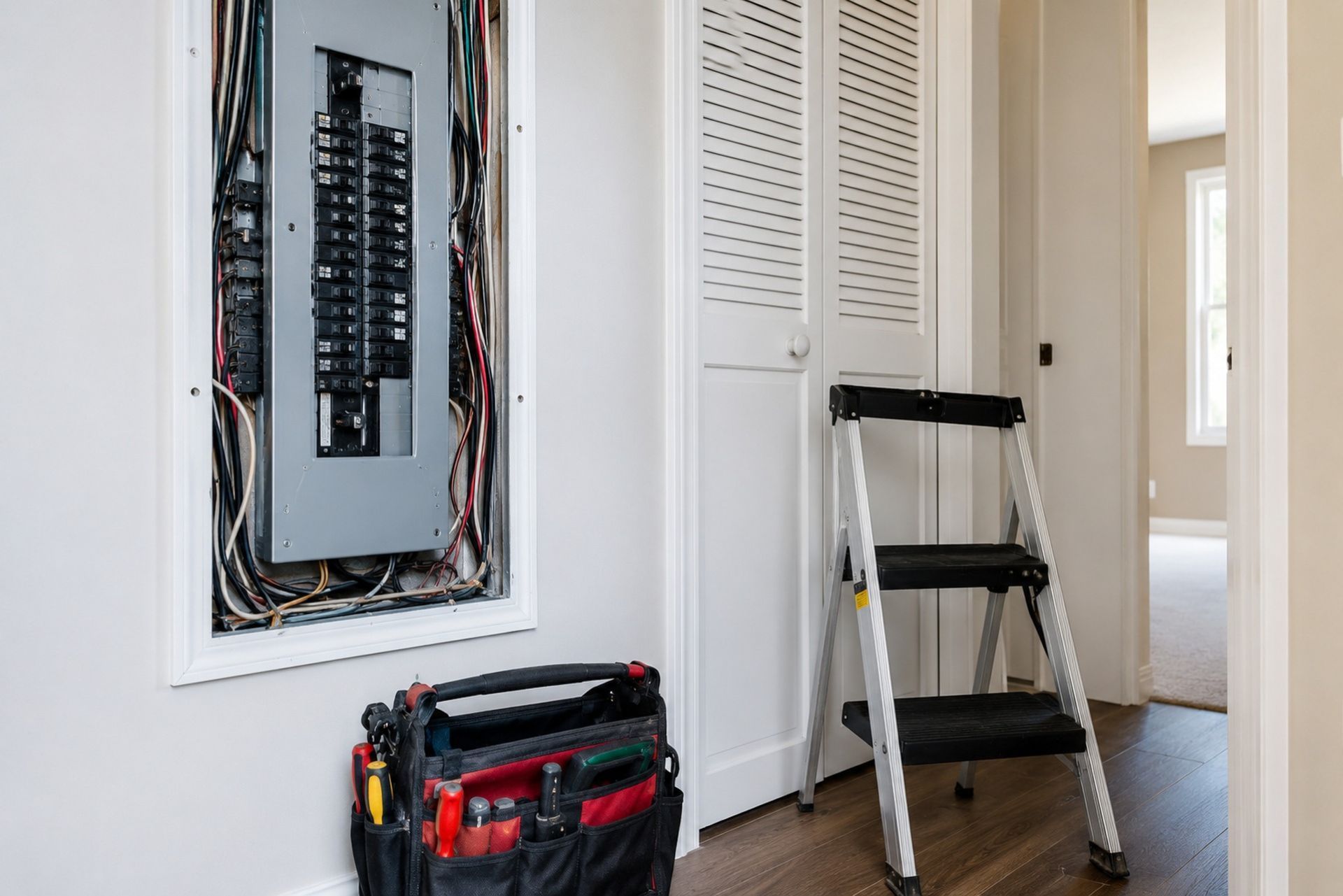
Underwriting Preferences for Residential vs. Industrial Projects
Nashville's construction boom shows no signs of slowing down. Between the steady stream of mixed-use developments in the Gulch, new residential builds pushing into Antioch and Hermitage, and the constant demand for rewiring in East Nashville's aging housing stock, licensed electricians here have more work than they can handle. But more work also means more exposure, and the wrong insurance setup can cost you a job, a license, or worse. This guide covers everything Nashville electricians need to know about insurance coverage, from the specific policies required to stay legal, to the local permitting quirks that affect your bonding, to which carriers actually want to write electrical trade risks in Middle Tennessee. Whether you're a sole proprietor running residential service calls or managing a 20-person commercial crew, getting your coverage stack right is non-negotiable. The stakes are real: one uninsured water damage claim from a botched panel install, one workers' comp audit gone sideways, and you're looking at five- or six-figure problems. Here's how to avoid them.
Core Insurance Requirements for Nashville Electrical Contractors
Nashville electrical contractors face a specific set of insurance requirements driven by both Tennessee state law and the expectations of general contractors and property owners across Davidson County. Getting these wrong doesn't just create legal exposure; it can disqualify you from bidding on jobs entirely.
General Liability and Property Damage Limits
Most general contractors in the Nashville metro require their electrical subs to carry at least $1 million per occurrence and $2 million aggregate in commercial general liability (CGL). That's the baseline. For larger commercial projects, especially anything tied to Metro Nashville government contracts or major developers like Giarratana or Bristol Development Group, you'll often see requirements bumped to $2 million per occurrence.
Your CGL policy covers third-party bodily injury and property damage. Think: a homeowner trips over your cord and breaks a wrist, or your crew accidentally damages existing wiring and causes a fire. These aren't hypothetical scenarios. Electrical contractors generate some of the highest-frequency property damage claims in the trades, and Nashville's tight lot construction means you're often working inches from finished surfaces and neighboring structures.
One thing to keep in mind: your CGL should include completed operations coverage. If a connection you made fails six months later and causes damage, completed operations is what responds. Not every policy includes adequate limits here, so read the endorsements carefully.
Tennessee Workers' Compensation Mandates
Tennessee requires workers' compensation insurance for any employer with five or more employees, including part-time and temporary workers. The penalties for non-compliance are stiff: fines up to $10,000 and potential criminal charges for willful violations. Even if you have fewer than five employees, many GCs in Nashville won't let you on a jobsite without a workers' comp policy or a valid exemption certificate.
Electrical work carries elevated risk classifications. Your experience modification rate (EMR) directly affects your premium and your ability to win bids. An EMR above 1.0 signals higher-than-average claims history, and some Nashville GCs set a hard ceiling at 1.2 before they'll even consider you. Joule Pro works with specialty markets that understand electrical trade classifications and can help contractors with borderline EMRs find coverage without resorting to the state's assigned risk pool.
Commercial Auto for Mobile Service Fleets
If you're running service vans across Nashville, you need commercial auto coverage. Personal auto policies exclude vehicles used for business purposes, and Tennessee's minimum liability limits of 25/50/15 are dangerously low for a contractor. Most Nashville electricians should carry at least $1 million in combined single limit coverage.
Your commercial auto policy should also include hired and non-owned auto coverage for situations where employees use personal vehicles for work errands. This is a coverage gap that catches a lot of small shops off guard.

By: Michael Fusco
President of Joule Pro
INDEX
Joule Pro is a specialty insurance and risk program of Fusco Orsini & Associates Insurance Services, built exclusively for electrical contractors and licensed in 31 states.
We work with electrical firms across the country — from California, Texas, Florida, New York, and coast to coast — placing General Liability, Workers' Compensation, Commercial Auto, Inland Marine, Surety Bonds, Excess Liability, and full specialty coverage stacks for commercial, industrial, service, residential, and low-voltage electrical contractors. Joule Pro is not a separate licensed entity. It is a dedicated program structure inside Fusco Orsini, giving electrical contractors access to specialty carriers, in-house claims advocacy, and trade-specific risk engineering under one program.
Electrician Insurance By City
Electrician Insurance Coverage
Navigating Metro Nashville Permitting and Bonding
Nashville's permitting process has its own rhythm, and your insurance and bonding requirements are tightly connected to your ability to pull permits and maintain your license.
Metro Department of Codes and Building Safety Compliance
The Metro Nashville Department of Codes and Building Safety oversees all electrical permits in Davidson County. The minimum fee for an electrical permit starts at $75.00, with additional component costs layered on top: $10 for distribution panels, $6 per circuit, and various fees for specific installations. These costs add up fast on larger jobs.
Nashville requires that all electrical work be performed by or under the supervision of a licensed electrician, and the permitting process verifies your license status and insurance documentation. Letting your insurance lapse, even briefly, can freeze your ability to pull permits and stall active projects.
Surety Bonds vs. Liability Insurance for Licensing
There's a common misconception among newer contractors that a surety bond and liability insurance serve the same purpose. They don't. A surety bond protects the public and the licensing authority if you fail to meet your contractual or legal obligations. Liability insurance protects you and third parties from physical damage and injury claims.
Tennessee's State Board of Licensing Contractors requires a surety bond for contractors working on projects above $25,000. The bond amount scales with your license classification. You need both the bond and your insurance policies active simultaneously to maintain compliance. Letting either lapse creates a licensing problem that can take weeks to resolve.
| Requirement | Surety Bond | General Liability Insurance |
|---|---|---|
| Protects | Public/licensing authority | Contractor and third parties |
| Required for | License maintenance | Jobsite access, contracts |
| Typical Amount | $10,000-$25,000+ | $1M/$2M per occurrence/aggregate |
| Triggered by | Contractual/legal failure | Bodily injury or property damage |
| Renewable | Annually | Annually |
Addressing Nashville-Specific Risks and Environmental Factors
Nashville's geography, building stock, and weather patterns create risks that don't apply in every market. Your insurance program should account for them.
Inland Marine Coverage for High-Value Equipment Theft
Tool and equipment theft is a persistent problem across Nashville jobsites. Conduit benders, wire pullers, testing equipment, and especially copper wire are frequent targets. Your CGL policy does not cover your own tools and equipment; that's what inland marine (also called tools and equipment coverage) is for.
A typical inland marine policy for a Nashville electrician might cover $25,000 to $150,000 in tools and equipment, with coverage extending to items stored in your van, on the jobsite, or in transit. Given the volume of after-hours theft reported at Nashville construction sites, especially in rapidly developing areas like North Nashville and Madison, this coverage pays for itself after a single incident. Joule Pro includes inland marine as part of its full contractor coverage stack, which means you're not cobbling together separate policies from different carriers.
Historical Home Renovations and Professional Liability
Nashville's historic neighborhoods, including Germantown, 12 South, and Lockeland Springs, present unique electrical challenges. Rewiring a 100-year-old home with knob-and-tube wiring requires specialized knowledge, and the liability exposure is significant. One mistake can mean a fire in a structure worth $800,000 or more.
Professional liability (errors and omissions) coverage protects you if your design recommendations or installation methods are alleged to have caused a loss. This is separate from your CGL, which covers physical damage but not professional errors in judgment or design. If you're doing any design-build electrical work, especially in Nashville's historic districts where code compliance intersects with preservation requirements, professional liability is essential.
Nashville also sits squarely in a flood-prone region. The 2010 flood caused over $2 billion in damage, and flash flooding remains a recurring risk across the Cumberland River basin. If your shop, warehouse, or stored equipment sits in a flood zone, standard property policies won't cover flood damage. You'll need a separate flood policy.
Analyzing Carrier Appetite for Middle Tennessee Trades
Not every insurance carrier wants to write electrical contractors, and the ones that do often have very specific preferences about what types of electrical work they'll cover.
Preferred Carriers for Residential vs. Commercial Electricians
Carrier appetite varies significantly based on whether you do primarily residential service work, new residential construction, or commercial/industrial projects. Residential service electricians are generally the easiest to place: lower limits, simpler operations, and predictable claim patterns make them attractive to a wide range of carriers.
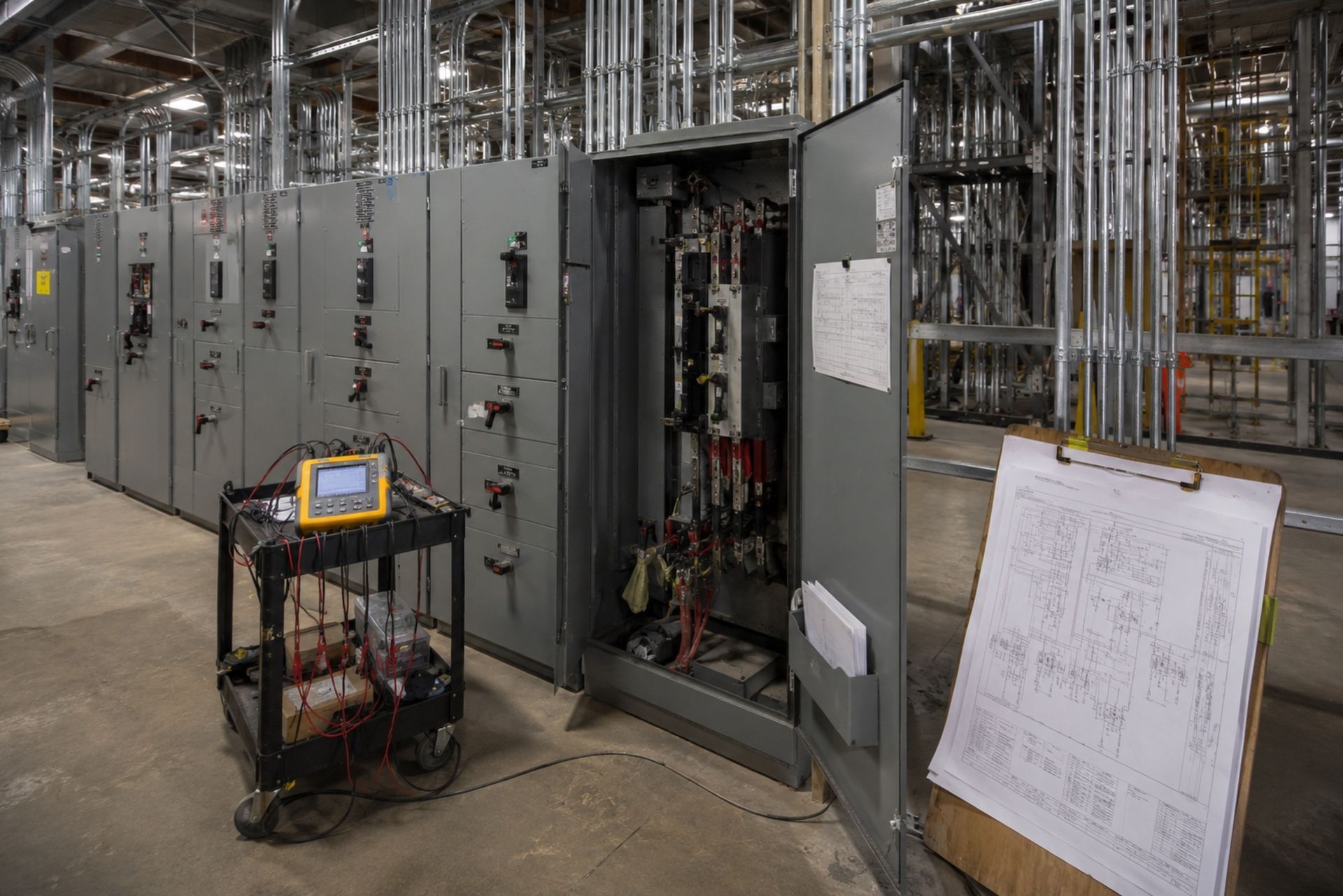
Commercial and industrial electricians face more scrutiny. Carriers want to see safety programs, documented training, clean loss histories, and organized subcontractor management. If you're doing work above 40 feet, working with high-voltage systems, or handling fire alarm installations, the pool of willing carriers shrinks considerably. This is where working with a specialty program like Joule Pro matters: their underwriter relationships are built specifically around electrical trade risks, so they know which markets have appetite for your exact scope of work.
Impact of Subcontractor Use on Policy Eligibility
Here's where a lot of Nashville electrical contractors run into trouble. If you regularly use subcontractors, carriers want to see certificates of insurance from every sub, with your company listed as an additional insured. Gaps in subcontractor documentation are one of the top reasons carriers decline to renew electrical contractor policies.
Some carriers won't write you at all if your subcontracted labor exceeds 30-40% of your total revenue. Others will write it but at significantly higher premiums. The key is maintaining organized records and requiring certificates before any sub steps on your jobsite.
Strategic Cost Management and Policy Selection
Smart insurance buying isn't just about finding the cheapest premium. It's about structuring your program to avoid gaps while keeping costs predictable.
Bundling with Business Owner's Policies (BOP)
A Business Owner's Policy bundles your general liability, commercial property, and business income coverage into a single policy, usually at a lower combined premium than buying each separately. For smaller Nashville electrical shops doing under $1 million in annual revenue, a BOP can be an efficient foundation.
That said, a BOP has limitations. It typically won't include workers' comp, commercial auto, or inland marine. And the liability limits in a standard BOP may not satisfy the requirements of Nashville's larger GCs. Think of a BOP as your starting point, not your complete program.
Annual Audits and Maintaining Local Compliance
Most workers' comp and general liability policies are subject to annual premium audits. The carrier compares your actual payroll and revenue against the estimates you provided at policy inception. If your business grew faster than expected, you'll owe additional premium. If it shrank, you'll get a return.
The mistake many Nashville electricians make is ignoring the audit or providing incomplete records. This triggers estimated audits, which almost always come in higher than actual numbers would justify. Keep clean payroll records broken down by job classification, track subcontractor payments separately, and respond to audit requests promptly.
Your Next Steps
Getting electrician insurance right in Nashville means understanding the local permitting requirements, knowing which risks are specific to Middle Tennessee, and working with carriers that actually want to insure electrical contractors. The difference between a generic insurance policy and one built for your trade shows up at claim time, and by then it's too late to fix.
If you're a licensed Nashville electrician looking for coverage that matches how you actually work, reach out to Joule Pro. Their team specializes exclusively in electrical contractor insurance and can put together a program that covers your general liability, workers' comp, commercial auto, tools, and inland marine without the runaround you'd get from a generalist agency.
Frequently Asked Questions
Do I need insurance to pull an electrical permit in Nashville? Yes. Metro Nashville requires proof of valid insurance and an active license before issuing electrical permits. A lapse in coverage can freeze your permitting ability.
How much does general liability insurance cost for Nashville electricians? Premiums typically range from $1,500 to $5,000 annually for small residential shops, scaling up significantly for commercial contractors based on revenue, payroll, and claims history.
Can I use a personal auto policy for my work van? No. Personal auto policies exclude business use. You need a commercial auto policy, and most Nashville GCs require at least $1 million in coverage.
What's the difference between inland marine and property insurance? Property insurance covers items at a fixed location like your shop. Inland marine covers tools and equipment in transit, on jobsites, or stored in vehicles.
Do I need workers' comp if I only have three employees? Tennessee law requires it at five employees, but many GCs and project owners require it regardless. An exemption certificate may satisfy some requirements for smaller crews.

Founder & CEO
The Force Behind the Program
About the Author:
Michael Fusco.
Fusco Orsini & Associates
Joule Pro exists because Mike Fusco saw electrical contractors getting boilerplate insurance — and built a program designed for the way the trade actually works.
Mike is the CEO and co-founder of Fusco Orsini & Associates, the San Diego–based independent agency he launched in 2010. Under his leadership FOA has grown into a nationwide partner serving clients across 31 states, with a personal, client-first approach to commercial insurance and risk.
With over 20 years in insurance and risk management, he specializes in tailored programs spanning general liability, workers' compensation, surety bonding, and employee benefits — helping owners confidently manage risk and pursue growth.
Mike holds a B.S. in Business from the University of Maryland — Robert H. Smith School of Business, and the Certified Insurance Counselor (CIC) designation, held by fewer than 3% of insurance professionals nationwide.
Trusted by Electrical Contractors Across the Country.
Select your state for electrical contractor insurance. Get requirements, cost ranges, and more information for your business.
Alabama
Arkansas
Louisiana
Kentucky
New Hampshire
Vermont
Rhode Island
Massachusetts
N. Dakota
S. Dakota
Oklahoma
Delaware
What Our Clients Say
Trusted by Electrical Contractors Across the Country.
5.0
★★★★★
Google·112 reviews
5.0
Core Commercial Coverage
Business Insurance for Electrical Contractors.
The fundamentals — written, structured, and priced for electrical risk. Each line is reviewed annually by an underwriter who only writes our trade.
01
General Liability
Premises & completed-operations coverage with electrical-specific endorsements and full pollution carve-back options.
02
Workers' Compensation
Class-code optimization, experience-mod review, and return-to-work programs designed for energized-work exposures.
03
Commercial Auto
Fleet, hired & non-owned auto, and tools-in-transit coverage written for service vans and bucket trucks.
04
Tools & Equipment
Scheduled and blanket coverage for tools, test equipment, scissor lifts, and contractor's equipment on-site or in-transit.
05
Surety Bonds
Bid, performance, and payment bonds — single-job and aggregate programs for commercial & public-works contracts.
06
Commercial Property
Layered limits up to $50M with carrier panels covering your shop, warehouse, yard, and on-premises tools, materials, and equipment.
Who We Serve
Electrical Contractors We Specialize In.
From $5M service shops to $250M industrial primes — every Joule Pro program is shaped to the contractor's revenue mix and project profile.
01 / Industrial
Commercial & Industrial Electrical Contractors
High-voltage, substation, and plant electrical work. Pollution, builder's risk, and large-deductible WC programs.
02 / Service
Service & Residential Electrical Contractors
Service-call shops, panel upgrades, and EV charging installers. Auto-fleet, GL, and tool-coverage programs.
03 / Low-Voltage
Specialty & Low-Voltage Contractors
Data, fire-alarm, security, and BMS controls. Cyber, professional liability, and follow-form excess.
Frequently Asked Questions
Common
Questions From
Electrical Contractors.
What size electrical contractors do you write?
Joule Pro is built for licensed electrical firms from roughly $2M in revenue to $250M+. Below $2M we typically refer to our small-business desk; above $250M we underwrite individually with our industrial practice team.
Do I need to be licensed in multiple states?
No. We license you wherever you work. Joule Pro is admitted in 31 states and our compliance team handles multi-state filings, prevailing-wage endorsements, and certificate-of-insurance requirements.
How is Joule Pro different from a generic contractor program?
Generic programs use a contractor's questionnaire that treats you like a roofer. We use forms written for energized work, arc-flash exposures, and design-build risk — and our carriers price accordingly.
What does the claims process actually look like?
Every Joule Pro client is assigned a named claims advocate at bind. They take the FNOL, set strategy with your assigned attorney, and serve as your single point of contact through close.
Can you bond large public-works contracts?
Yes. Through our surety partners we write single-job bonds up to $75M and aggregate programs to $300M, with expedited turnarounds for school district, federal, and DOT work.
What happens at renewal?
Your producer and claims advocate jointly run a renewal review 90 days out — covering loss trends, exposure changes, and market alternatives — so renewal day is a confirmation, not a surprise.
From the Blog
Insights for Electrical Contractors.
Risk briefings, claim post-mortems, and program updates — written by our underwriters and risk engineers.


Get Started
Get a Quote on a Program Built Around Your Trade.
A 30-minute discovery call is the only commitment. You'll leave with a written gap analysis of your current program — yours to keep, whether you bind with us or not.