
Business Insurance
Newport News, VA Electrician Insurance
★★★★★ 150+ Five-Star Reviews · Google & Facebook
Running an electrical contracting business on the Virginia Peninsula means dealing with a unique mix of coastal weather, military-adjacent infrastructure, and a city permitting office that doesn't cut corners. If you're pulling wire in Newport News, your insurance needs look different from an electrician working inland in Richmond or up in Northern Virginia. The proximity to the shipyard, the flood zones that creep into residential neighborhoods, and the sheer volume of government-tied projects all shape what coverage you need and what carriers are willing to write. This guide breaks down the insurance essentials for Newport News electricians: the coverage types that matter most, how local permitting rules affect your policies, the coastal risks that keep underwriters cautious, and which carriers actually have appetite for electrical work in Hampton Roads. Whether you're a solo master electrician or running a crew of twenty, getting this right protects everything you've built.
Navigating the Newport News Electrical Insurance Landscape
Newport News sits in a region where electrical contractors face overlapping regulatory layers and environmental exposures that most inland electricians never think about. Understanding how these factors interact with your insurance program is the difference between being properly protected and discovering a gap after a six-figure claim.
Why Local Electricians Need Specialized Protection
A general business insurance policy from a big-box carrier rarely accounts for the specific risks electricians face. Fire damage from faulty wiring installations, arc flash injuries on job sites, and property damage claims from homeowners are all common in the trade. In Newport News specifically, you're also dealing with saltwater corrosion on outdoor panels, storm-related surge damage, and the possibility of working on aging infrastructure in neighborhoods like Hilton Village or Denbigh that date back decades. A generalist agent might not even ask about these exposures. That's why programs like Joule Pro exist: they're built from the ground up for licensed electrical contractors, with underwriter relationships that understand trade-specific claim patterns rather than lumping you in with general contractors.
Virginia State vs. Newport News City Requirements
Virginia requires electrical contractors to hold a state license through the Department of Professional and Occupational Regulation (DPOR). But Newport News adds its own layer. The city's Codes Compliance and Safety Office requires separate trade permits for electrical work, and contractors must show proof of insurance before pulling those permits. Virginia mandates workers' compensation coverage for any employer with two or more employees, though many Newport News commercial clients and general contractors require it even for solo operators before they'll let you on site. The state does not mandate general liability insurance by law, but try getting a permit or a subcontract without it. In practice, $1 million per occurrence and $2 million aggregate is the floor most project owners expect to see on your certificate of insurance.

By: Michael Fusco
President of Joule Pro
INDEX
Navigating the Newport News Electrical Insurance Landscape
Essential Coverage Types for Newport News Electricians
Local Permitting and Compliance Impacts on Insurance
City-Specific Risks: Coastal Hazards and Infrastructure
Carrier Appetite and Finding Local Providers
Joule Pro is a specialty insurance and risk program of Fusco Orsini & Associates Insurance Services, built exclusively for electrical contractors and licensed in 31 states.
We work with electrical firms across the country — from California, Texas, Florida, New York, and coast to coast — placing General Liability, Workers' Compensation, Commercial Auto, Inland Marine, Surety Bonds, Excess Liability, and full specialty coverage stacks for commercial, industrial, service, residential, and low-voltage electrical contractors. Joule Pro is not a separate licensed entity. It is a dedicated program structure inside Fusco Orsini, giving electrical contractors access to specialty carriers, in-house claims advocacy, and trade-specific risk engineering under one program.
Electrician Insurance By City
Electrician Insurance Coverage
Essential Coverage Types for Newport News Electricians
Getting the right stack of policies isn't about buying everything available. It's about matching your coverage to the work you actually do and the contracts you actually sign.
General Liability and Property Damage
General liability is your foundation. It covers third-party bodily injury and property damage arising from your operations. If you accidentally start a fire while replacing a panel in a Newport News townhome, GL responds. If a homeowner trips over your tool bag, GL responds. Most Newport News commercial projects require a minimum of $1 million per occurrence. Government and military-adjacent contracts near Newport News Shipbuilding often require $2 million or more. Your completed operations coverage matters here too: it protects you after the job is done if your work causes damage weeks or months later.
Workers' Compensation in the Virginia Peninsula
Virginia's workers' comp system is administered through the Virginia Workers' Compensation Commission, and employers with two or more employees must carry coverage. Electrical work carries a relatively high classification code rate because of the inherent injury risk: electrocution, falls from ladders, and repetitive strain injuries are all common. On the Peninsula, where many electricians work in shipyard-adjacent industrial settings, the exposure profile can push premiums higher than residential-only operations. Your experience modification rate (EMR) plays a huge role here. An EMR above 1.0 signals more claims than average and will cost you real money. Keeping a clean safety record isn't just good practice: it directly lowers your premium.
Inland Marine and Tool Coverage
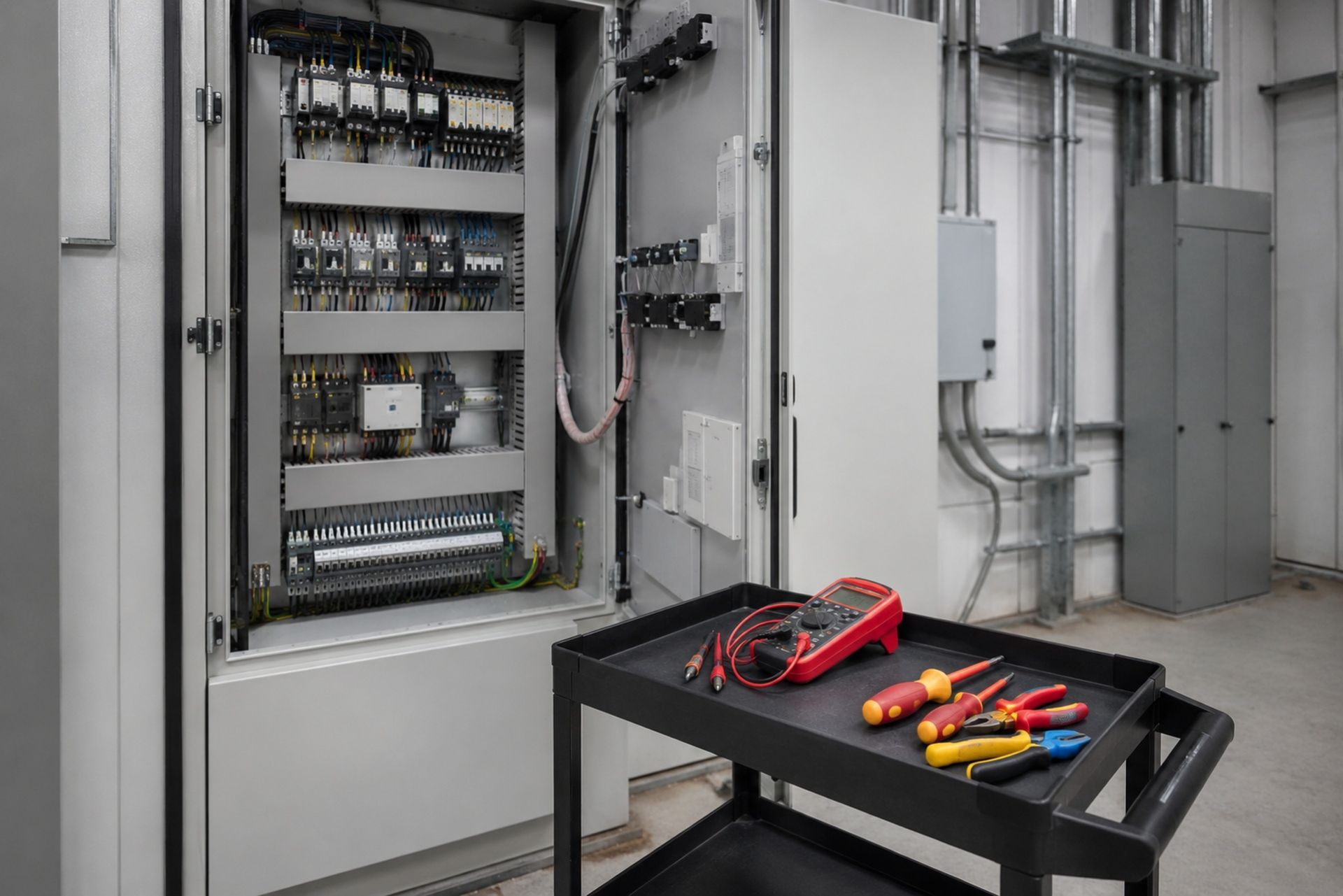
Your tools and equipment travel with you to every job site, and a standard commercial property policy won't cover them once they leave your shop. Inland marine insurance fills that gap. For a Newport News electrician, this might cover wire pullers, conduit benders, multimeters, thermal imaging cameras, and power tools that collectively represent $15,000 to $50,000 or more in value. Theft from work vans is a real problem in the Hampton Roads area, and a single break-in can wipe out tools you need for tomorrow's job. Joule Pro includes inland marine as part of its full contractor coverage stack, which means you're not piecing together separate policies from different carriers and hoping nothing falls through the cracks.
Local Permitting and Compliance Impacts on Insurance
Your insurance and your permits are more connected than most contractors realize. The city of Newport News ties compliance directly to your ability to work legally.
Newport News Codes Compliance and Safety Office Rules
Every electrical project in Newport News requires a permit from the Codes Compliance and Safety Office. The minimum permit fee for any electrical work is $56.10, including the mandatory 2% state surcharge. Inspections are required at rough-in and final stages, and failed inspections can delay projects and increase your liability exposure. From an insurance perspective, unpermitted work is a serious problem. If you perform electrical work without the proper permit and something goes wrong, your general liability carrier may deny the claim entirely. Some policies contain exclusions for work performed in violation of local building codes. Always pull the permit, always schedule the inspection, and keep your documentation organized.
Surety Bonds and Licensing Prerequisites
Newport News requires electrical contractors to maintain a surety bond as part of their licensing. This bond protects the city and your customers if you fail to complete work or violate code requirements. A surety bond is not insurance: it's a guarantee that you'll fulfill your obligations, and if the bonding company pays a claim, they'll come after you to recover the money. Most bonding companies will review your credit history, financial statements, and claims history before issuing a bond. Having clean insurance records and a solid GL policy actually helps your bonding capacity. Think of your insurance and bonding as two sides of the same credibility coin.
City-Specific Risks: Coastal Hazards and Infrastructure
Newport News isn't just any mid-Atlantic city. Its geography and industrial character create insurance exposures that directly affect your premiums and coverage options.
Flood Zones and Storm Surge Considerations
Large portions of Newport News fall within FEMA-designated flood zones, particularly neighborhoods near the James River and along the Warwick River corridor. The city's flood zone maps show significant areas classified as Zone AE, meaning they carry a 1% annual chance of flooding. For electricians, this matters in two ways. First, if you're working on properties in flood zones, the risk of water damage to your completed electrical installations increases. Second, your own shop or storage facility may need separate flood insurance if it sits in a designated zone. Standard commercial property policies exclude flood damage. Hurricane season from June through November brings the highest risk, and carriers pay close attention to your coastal exposure when pricing your policy.
Industrial vs. Residential Risk Profiles in the Shipyard District
Newport News is home to Huntington Ingalls Industries, the largest military shipbuilding operation in the country. Electricians working on or near shipyard contracts face a different risk profile than those wiring new-construction homes in Kiln Creek. Industrial electrical work involves higher voltages, confined spaces, and stricter safety protocols. Your insurance premiums reflect this. A contractor doing exclusively residential service calls might pay $2,500 to $4,000 annually for GL, while a shop handling industrial and commercial work could see premiums of $8,000 to $15,000 or more, depending on payroll and revenue. Carriers want to know your exact work mix before they'll quote, and misrepresenting your operations is a fast track to a denied claim.
Carrier Appetite and Finding Local Providers
Not every insurance company wants to write electrical contractor risk, and fewer still are comfortable with coastal Virginia exposures. Knowing who's actually writing these policies saves you time and frustration.
Top Insurers Writing Electrical Risk in Hampton Roads
Carrier appetite for electricians in the Hampton Roads region varies significantly. Some national carriers restrict coastal writing entirely or apply wind and hail deductibles that make policies impractical. The carriers with consistent appetite for electrical risk in this area tend to be specialty markets: companies that understand trade contractors and price based on your actual operations rather than broad industry averages. Programs like Joule Pro maintain relationships with these specialty underwriters specifically because generalist brokers often can't access them. When you're shopping for coverage, ask whether the carrier has experience with electrical contractors specifically, not just "artisan contractors" as a broad category.
| Coverage Type | Typical Annual Cost (Small Shop) | Typical Annual Cost (Mid-Size) | Key Considerations |
|---|---|---|---|
| General Liability | $2,500 - $4,500 | $6,000 - $15,000 | Work mix and revenue drive pricing |
| Workers' Comp | $3,000 - $7,000 | $10,000 - $30,000+ | EMR and payroll are primary factors |
| Commercial Auto | $1,800 - $4,000 | $5,000 - $12,000 | Fleet size and driver records matter |
| Inland Marine | $500 - $1,500 | $1,500 - $4,000 | Based on total tool/equipment value |
| Surety Bond | $300 - $1,000 | $1,000 - $3,000 | Credit score and financials reviewed |
Factors That Lower Your Newport News Premiums
Your premium isn't set in stone. Several factors within your control can bring costs down meaningfully. Maintaining an EMR below 1.0 through strong safety practices is the single biggest lever. Keeping clean motor vehicle records for anyone driving company vehicles reduces your auto premium. Documenting your safety program: toolbox talks, PPE requirements, and incident reporting procedures: gives underwriters confidence. Bundling your GL, auto, and inland marine with a single program rather than splitting across carriers often unlocks package discounts. And here's one most contractors miss: accurate job classification. If 80% of your work is residential service and 20% is commercial, make sure your policy reflects that split rather than defaulting to the higher-rated classification for all revenue.
Securing Your Newport News Electrical Business Future
Running an electrical business in Newport News means accepting a set of risks that are genuinely different from most other Virginia markets. Coastal weather, industrial exposures, strict city permitting, and a carrier market that can be selective about who they'll write all demand a thoughtful approach to insurance. The contractors who get this right treat their insurance program as a business tool, not just a cost of doing business. They work with specialty providers who understand electrical trade risk, keep their safety records clean, and maintain the documentation that both the city and their carriers require. If you're ready to build or review your coverage program, reach out to a licensed producer who specializes in electrical contractor insurance. Getting a quote from a program designed for your trade is the fastest way to know you're covered properly without overpaying.
Not every insurance carrier wants to write electrical contractor risks in South Florida. The combination of hurricane exposure, active litigation, and high claim severity makes many national carriers cautious. Carrier appetite - meaning which insurers are willing to write your specific type of work in your specific geography - varies significantly between residential and commercial electricians.
Residential electricians typically find more carrier options because the per-project exposure is lower. Commercial electricians, especially those working on high-rises, hospitals, or large-scale renovations, face a tighter market. Specialty carriers and surplus lines markets often provide the best options for commercial electrical contractors in Miami. The key is working with a producer who has established relationships with these specialty markets and can match your risk profile to the right carrier.
Frequently Asked Questions
Do I need insurance to pull an electrical permit in Newport News? Yes. The Codes Compliance and Safety Office requires proof of insurance as part of the permit application process. You'll typically need to show a current certificate of insurance with adequate general liability limits.
How much does electrician insurance cost in the Hampton Roads area? A small residential shop might pay $7,000 to $15,000 annually for a full coverage package including GL, workers' comp, and auto. Larger operations or those doing industrial work can expect significantly higher premiums based on payroll and revenue.
Is workers' compensation required for solo electricians in Virginia? Virginia law requires workers' comp for employers with two or more employees. Solo operators aren't legally required to carry it, but many general contractors and project owners won't let you on site without it.
What's the difference between a surety bond and general liability insurance? A surety bond guarantees you'll fulfill your contractual and code obligations. If the bond pays out, you owe that money back. General liability insurance pays for third-party injury or property damage claims without requiring repayment from you.
Does standard insurance cover flood damage to my electrical shop?
No. Standard commercial property policies exclude flood damage. If your shop is in a FEMA-designated flood zone, you'll need a separate flood insurance policy through the National Flood Insurance Program or a private carrier.

Founder & CEO
The Force Behind the Program
About the Author:
Michael Fusco.
Fusco Orsini & Associates
Joule Pro exists because Mike Fusco saw electrical contractors getting boilerplate insurance — and built a program designed for the way the trade actually works.
Mike is the CEO and co-founder of Fusco Orsini & Associates, the San Diego–based independent agency he launched in 2010. Under his leadership FOA has grown into a nationwide partner serving clients across 31 states, with a personal, client-first approach to commercial insurance and risk.
With over 20 years in insurance and risk management, he specializes in tailored programs spanning general liability, workers' compensation, surety bonding, and employee benefits — helping owners confidently manage risk and pursue growth.
Mike holds a B.S. in Business from the University of Maryland — Robert H. Smith School of Business, and the Certified Insurance Counselor (CIC) designation, held by fewer than 3% of insurance professionals nationwide.
Trusted by Electrical Contractors Across the Country.
Select your state for electrical contractor insurance. Get requirements, cost ranges, and more information for your business.
Alabama
Arkansas
Louisiana
Kentucky
New Hampshire
Vermont
Rhode Island
Massachusetts
N. Dakota
S. Dakota
Oklahoma
Delaware
What Our Clients Say
Trusted by Electrical Contractors Across the Country.
5.0
★★★★★
Google reviews
Core Commercial Coverage
Business Insurance for Electrical Contractors.
The fundamentals — written, structured, and priced for electrical risk. Each line is reviewed annually by an underwriter who only writes our trade.
01
General Liability
Premises & completed-operations coverage with electrical-specific endorsements and full pollution carve-back options.
02
Workers' Compensation
Class-code optimization, experience-mod review, and return-to-work programs designed for energized-work exposures.
03
Commercial Auto
Fleet, hired & non-owned auto, and tools-in-transit coverage written for service vans and bucket trucks.
04
Tools & Equipment
Scheduled and blanket coverage for tools, test equipment, scissor lifts, and contractor's equipment on-site or in-transit.
05
Surety Bonds
Bid, performance, and payment bonds — single-job and aggregate programs for commercial & public-works contracts.
06
Commercial Property
Layered limits up to $50M with carrier panels covering your shop, warehouse, yard, and on-premises tools, materials, and equipment.
Who We Serve
Electrical Contractors We Specialize In.
From $5M service shops to $250M industrial primes — every Joule Pro program is shaped to the contractor's revenue mix and project profile.
01 / Industrial
Commercial & Industrial Electrical Contractors
High-voltage, substation, and plant electrical work. Pollution, builder's risk, and large-deductible WC programs.
02 / Service
Service & Residential Electrical Contractors
Service-call shops, panel upgrades, and EV charging installers. Auto-fleet, GL, and tool-coverage programs.
03 / Low-Voltage
Specialty & Low-Voltage Contractors
Data, fire-alarm, security, and BMS controls. Cyber, professional liability, and follow-form excess.
Frequently Asked Questions
Common
Questions From
Electrical Contractors.
What size electrical contractors do you write?
Joule Pro is built for licensed electrical firms from roughly $2M in revenue to $250M+. Below $2M we typically refer to our small-business desk; above $250M we underwrite individually with our industrial practice team.
Do I need to be licensed in multiple states?
No. We license you wherever you work. Joule Pro is admitted in 31 states and our compliance team handles multi-state filings, prevailing-wage endorsements, and certificate-of-insurance requirements.
How is Joule Pro different from a generic contractor program?
Generic programs use a contractor's questionnaire that treats you like a roofer. We use forms written for energized work, arc-flash exposures, and design-build risk — and our carriers price accordingly.
What does the claims process actually look like?
Every Joule Pro client is assigned a named claims advocate at bind. They take the FNOL, set strategy with your assigned attorney, and serve as your single point of contact through close.
Can you bond large public-works contracts?
Yes. Through our surety partners we write single-job bonds up to $75M and aggregate programs to $300M, with expedited turnarounds for school district, federal, and DOT work.
What happens at renewal?
Your producer and claims advocate jointly run a renewal review 90 days out — covering loss trends, exposure changes, and market alternatives — so renewal day is a confirmation, not a surprise.
From the Blog
Insights for Electrical Contractors.
Risk briefings, claim post-mortems, and program updates — written by our underwriters and risk engineers.


Get Started
Get a Quote on a Program Built Around Your Trade.
A 30-minute discovery call is the only commitment. You'll leave with a written gap analysis of your current program — yours to keep, whether you bind with us or not.