
Business Insurance
Edison, NJ Electrician Insurance
★★★★★ 150+ Five-Star Reviews · Google & Facebook
Edison, NJ, sits at a crossroads of old industrial infrastructure, dense residential neighborhoods, and a rapidly growing commercial corridor along Route 1. For licensed electricians working here, that mix creates a risk profile you won't find in most suburban markets. Aging knob-and-tube wiring in pre-war homes, high-voltage industrial panels at warehouse complexes, and new construction projects all demand different skill sets and different insurance considerations. If you're an electrical contractor operating in Edison or the surrounding Middlesex County area, understanding your coverage needs isn't optional: it's the difference between a sustainable business and one bad claim away from closing. This guide covers the insurance requirements, local permitting rules, city-specific risks, and carrier appetite that Edison electricians need to know in 2026.
Core Insurance Requirements for Edison Electrical Contractors
General Liability and Property Damage Standards
New Jersey sets a clear floor for electrical contractors. Licensed electricians in the state must carry a minimum of $300,000 in general liability insurance, though most commercial clients and general contractors in the Edison area will demand $1 million per occurrence and $2 million aggregate before they'll let you on a job site. That $300,000 minimum might satisfy the state licensing board, but it won't get you past the front door of a Route 1 office build-out or a warehouse renovation in the Raritan Center.
General liability covers third-party bodily injury and property damage: think a client tripping over your cable run, or a fire caused by faulty installation. What it doesn't cover is damage to your own work or professional design errors. Many Edison electricians learn this distinction the hard way after a claim gets denied. If you're doing any work on commercial properties, expect the property owner to require you as an additional insured on their policy, which your carrier needs to endorse.
New Jersey Workers Compensation Mandates
New Jersey requires workers compensation coverage for every employer, with no minimum employee threshold. Even if you hire one part-time helper, you need a policy. The state uses the NCCI classification system, and electrical work typically falls under class codes 5190 (electrical wiring within buildings) or 5183 (electrical power line construction), each carrying different rate multipliers.
For a small Edison shop running two or three journeymen, annual workers comp premiums commonly range from $8,000 to $20,000 depending on payroll size, experience modification rate, and claims history. Your experience mod is the single biggest lever you have on premium cost. One serious injury claim can push that modifier above 1.0 and inflate your premiums for three years. Investing in safety training and documented protocols isn't just good practice: it directly affects your bottom line.
Surety Bonds for Local Licensing
Edison Township and the State of New Jersey both require surety bonds as part of the electrical contractor licensing process. The state mandates a $1,000 surety bond for electrical contractors, which is relatively modest but non-negotiable. Some municipal contracts and larger commercial projects may require performance and payment bonds with limits tied to the contract value, sometimes 100% of the project cost.
Bonding capacity depends on your company's financial statements, credit history, and track record. Newer Edison contractors sometimes struggle to get bonded for larger municipal jobs. Building a relationship with a surety provider early, even for small bonds, establishes the credit history you'll need when bigger opportunities come along.

By: Michael Fusco
President of Joule Pro
INDEX
Core Insurance Requirements for Edison Electrical Contractors
Navigating Edison Township Permitting and Compliance
Localized Risk Factors for Electricians in Edison, NJ
Carrier Appetite and Market Trends in Central Jersey
Specialized Coverage for Specialized Electrical Work
Joule Pro is a specialty insurance and risk program of Fusco Orsini & Associates Insurance Services, built exclusively for electrical contractors and licensed in 31 states.
We work with electrical firms across the country — from California, Texas, Florida, New York, and coast to coast — placing General Liability, Workers' Compensation, Commercial Auto, Inland Marine, Surety Bonds, Excess Liability, and full specialty coverage stacks for commercial, industrial, service, residential, and low-voltage electrical contractors. Joule Pro is not a separate licensed entity. It is a dedicated program structure inside Fusco Orsini, giving electrical contractors access to specialty carriers, in-house claims advocacy, and trade-specific risk engineering under one program.
Electrician Insurance By City
Electrician Insurance Coverage
Navigating Edison Township Permitting and Compliance
Proof of Insurance for UCC Permit Applications
Edison operates under New Jersey's Uniform Construction Code, and the township's construction office requires proof of insurance before issuing electrical permits. You'll need to submit a certificate of insurance showing current general liability coverage, and the township may need to be listed as a certificate holder. Expired certificates or policies with lapsed coverage will stop your permit application cold.
The Edison construction office has gotten stricter about documentation in recent years, partly in response to several unpermitted renovation projects that led to insurance disputes. Keep your certificates of insurance updated and have your agent set up automatic certificate delivery to the township. A program like Joule Pro, which is built specifically for electrical contractors, can handle these certificate requests quickly because the team already understands what municipal offices require.
Meeting Middlesex County Safety Regulations
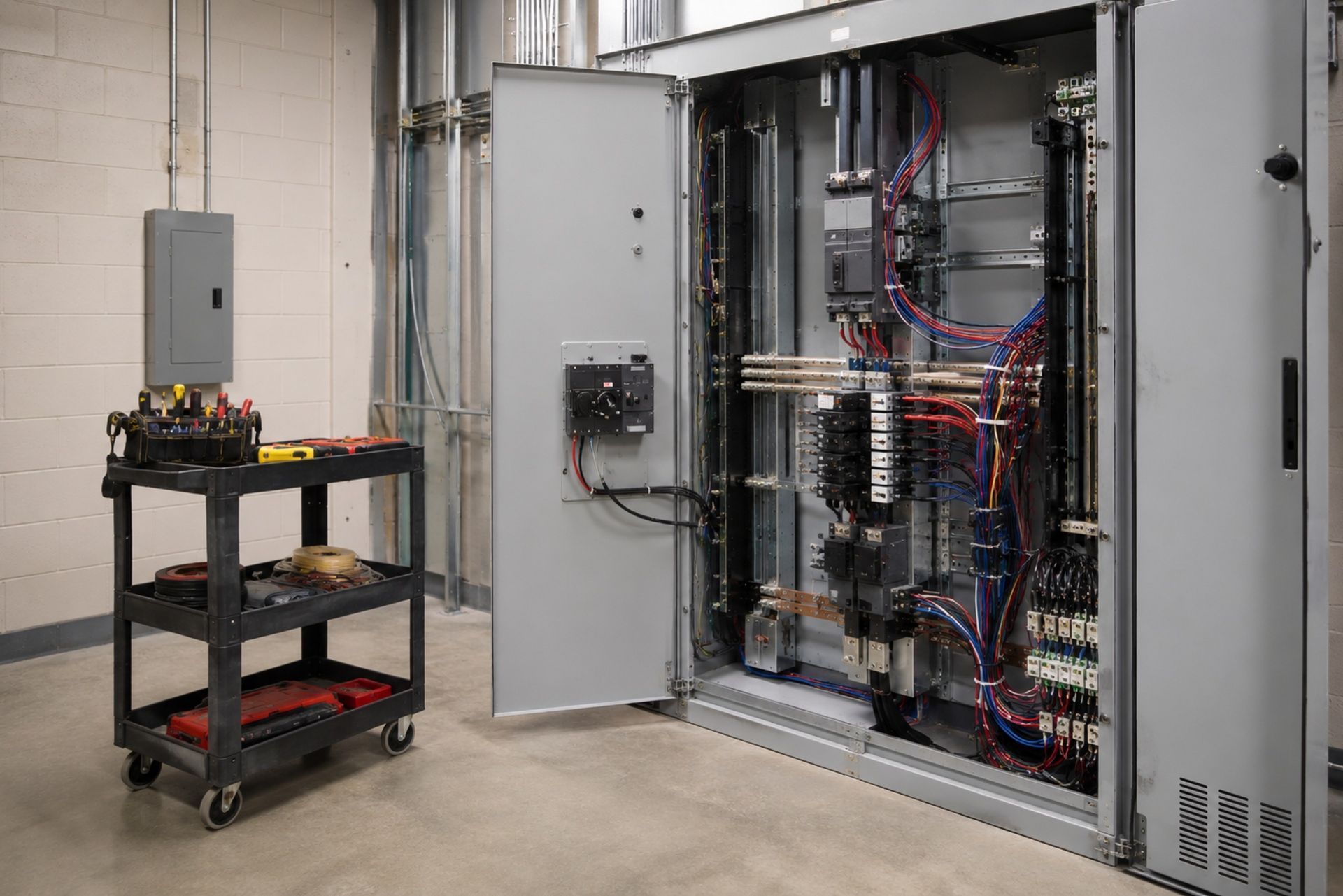
Middlesex County enforces additional safety requirements for certain project types, particularly work involving public buildings, schools, and healthcare facilities. Electricians working on these projects need to demonstrate compliance with OSHA standards and may face more rigorous inspection schedules.
County inspectors in 2026 are paying close attention to arc flash safety compliance and proper lockout/tagout documentation. If your crew works on panels rated 240V or higher, having documented arc flash studies and proper PPE protocols isn't just smart: it's increasingly a condition of passing inspection. Your insurance carrier may also offer premium credits for documented safety programs, so there's a financial incentive to stay ahead of these requirements.
Localized Risk Factors for Electricians in Edison, NJ
Industrial vs. Residential Project Hazards
Edison's economy creates a split personality for electrical contractors. The township has significant industrial zones, including parts of the Raritan Center logistics hub, alongside dense residential neighborhoods with homes dating back to the 1940s and 1950s. Each environment carries distinct risks.
Industrial work means higher voltage systems, more complex panel configurations, and exposure to hazardous materials in older buildings. Claims on industrial projects tend to be larger and more complex. Residential work, on the other hand, involves older wiring systems, asbestos-containing materials in pre-1980 homes, and the constant challenge of working in occupied spaces where a homeowner's property is at risk. Your insurance policy needs to account for both, and carriers will want to know your revenue split between commercial/industrial and residential work when underwriting your account.
Weather-Related Risks and Coastal Proximity
Edison sits about 20 miles from the Atlantic coast, close enough that tropical storms and nor'easters create real exposure. The township experienced significant flooding during Hurricane Ida in 2021, and climate patterns have only intensified storm frequency since then. Electricians doing emergency restoration work after storms face heightened risks: working in wet conditions, dealing with compromised structures, and operating under time pressure.
Flood damage to your own shop, vehicles, or stored equipment is a real concern. Standard commercial property policies exclude flood damage, so a separate flood policy through the NFIP or a private carrier is worth evaluating if your shop or storage facility sits in a FEMA-designated flood zone. Several areas of Edison along the Raritan River fall into these zones.
Carrier Appetite and Market Trends in Central Jersey
Preferred Carriers for Small to Mid-Sized Firms
Not every insurance company wants to write electrical contractor policies. The liability exposure is higher than general contracting, and carriers that don't specialize in the trade often either decline to quote or price policies so aggressively that they're unaffordable. In the Central Jersey market, the carriers with the strongest appetite for electrical contractors tend to be specialty programs and E&S (excess and surplus) markets that understand trade-specific risks.
This is where working with a specialty-focused program matters. Joule Pro maintains relationships with underwriters who specifically write electrical contractor risks, which means better pricing and broader coverage terms than you'd get from a generalist agent shopping your account to carriers unfamiliar with the trade. The difference in premium between a well-placed specialty market and a standard market quote can be 20-30% for the same coverage limits.
Factors Influencing Local Premium Rates
Several factors drive premium pricing for Edison electricians in 2026. Your annual revenue, payroll size, and subcontractor usage are the big three. But carriers also look at your project types (residential vs. commercial vs. industrial), your claims history over the past five years, and whether you do any work involving solar installations or EV charging stations, both of which carry additional risk considerations.
Edison's proximity to New York City also plays a role. Some carriers apply territorial surcharges for contractors who cross into New York for projects, where litigation costs and jury awards run significantly higher than in New Jersey. If you do any cross-border work, disclose it upfront. Getting caught doing undisclosed NYC work after a claim is a fast way to have your policy rescinded.
Specialized Coverage for Specialized Electrical Work
Professional Liability for Design-Build Projects
If your Edison firm handles any design-build work, or if you specify equipment and system layouts rather than just installing what an engineer designed, you need professional liability coverage (sometimes called errors and omissions). Standard general liability policies explicitly exclude claims arising from professional design services.
A design error that leads to an undersized panel, an improperly specified transfer switch, or a code-noncompliant layout can result in significant rework costs and potential third-party claims. Professional liability policies for electrical contractors typically start around $2,500 to $5,000 annually for $1 million in coverage, depending on your revenue and project scope.
Inland Marine Insurance for Tools and Equipment
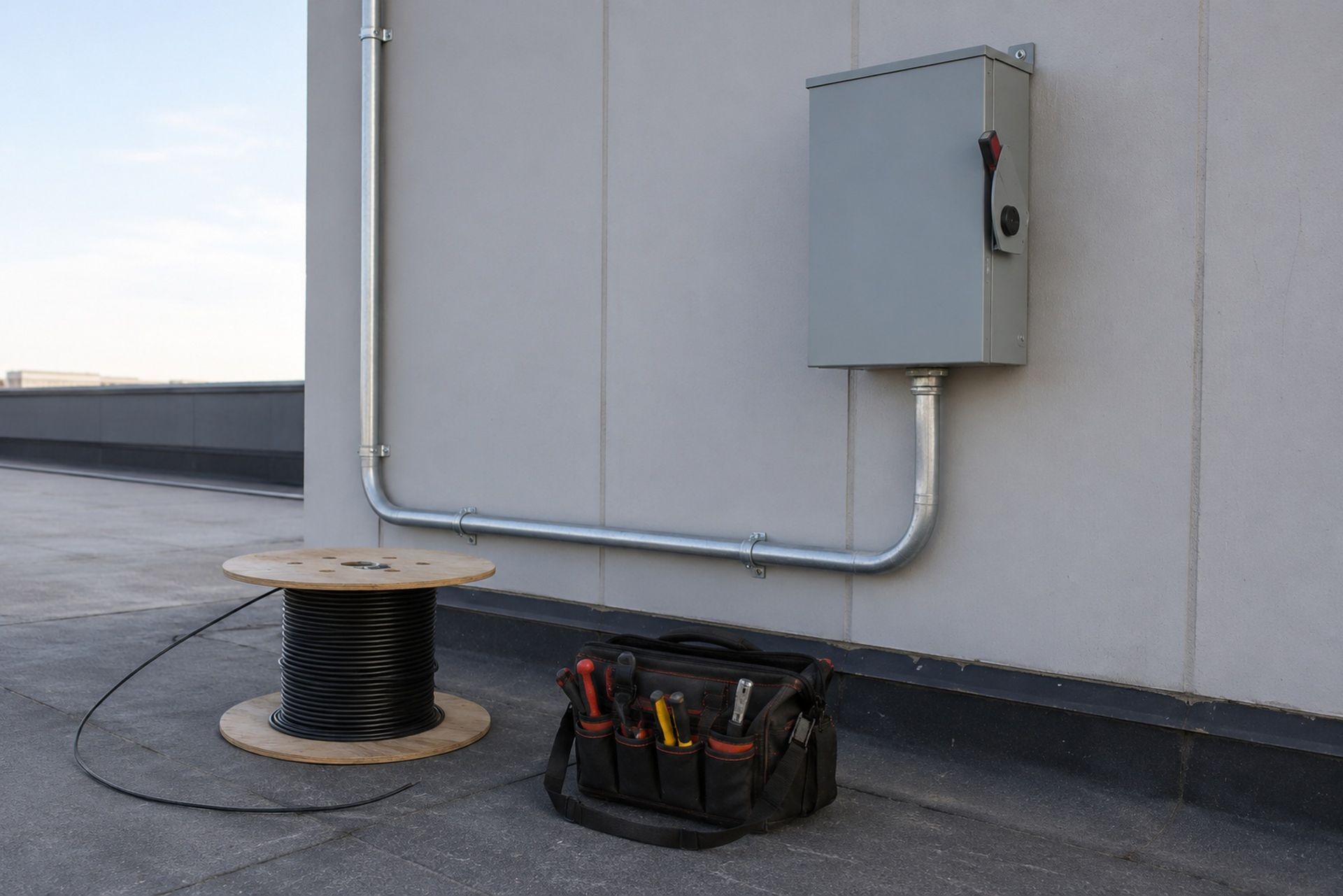
Your tools and diagnostic equipment represent a serious investment. A fully loaded service van can carry $15,000 to $40,000 worth of meters, benders, fish tapes, and power tools. Standard commercial auto policies cover the vehicle itself but not the tools inside it. That's where inland marine coverage fills the gap.
Inland marine policies cover tools and equipment whether they're in your van, on a job site, or in temporary storage. Premiums are typically 2-4% of the total insured value annually. For a $30,000 tool inventory, that's roughly $600 to $1,200 per year: a small price to protect assets that keep your crews productive. Joule Pro includes inland marine as part of its full contractor coverage stack, so it's easy to bundle with your other policies.
Steps to Securing a Comprehensive Edison Insurance Policy
Getting properly insured doesn't need to be a months-long ordeal. Start by gathering your current financials: annual revenue, total payroll, subcontractor costs, and a breakdown of your project types. Pull your experience modification rate from your current workers comp carrier, and compile your claims history for the past five years.
Next, work with a producer who specializes in electrical contractor insurance rather than a generalist agent. The difference in market access and coverage knowledge is substantial. A specialty producer will know which carriers have appetite for your specific risk profile and can negotiate coverage terms that a generalist wouldn't think to request.
Finally, review your policy annually: not just the premium, but the actual coverage terms. As your business grows or shifts into new project types, your insurance needs to keep pace.
| Coverage Type | Minimum Required | Recommended for Edison |
|---|---|---|
| General Liability | $300,000 per occurrence | $1M/$2M aggregate |
| Workers Compensation | Statutory (required with 1+ employees) | Statutory with managed experience mod |
| Commercial Auto | $500,000 combined single limit | $1M combined single limit |
| Inland Marine | Not required | $25,000-$50,000 tool coverage |
| Professional Liability | Not required | $1M if doing design-build |
| Surety Bond | $1,000 state bond | Project-specific as needed |
FAQ
Do I need insurance just to pull an electrical permit in Edison? Yes. The Edison construction office requires a valid certificate of insurance showing current general liability coverage before issuing UCC electrical permits.
How much does general liability cost for a small Edison electrical shop? For a one- to three-person firm doing under $500,000 in annual revenue, expect to pay between $3,000 and $7,000 annually for a $1M/$2M policy, though pricing varies based on project types and claims history.
Can I use my personal auto insurance for my work van? No. Personal auto policies exclude vehicles used for commercial purposes. You need a commercial auto policy, and if you carry tools in the vehicle, you'll want inland marine coverage as well.
What happens if my workers comp experience mod goes above 1.0? Your premiums increase proportionally, and some carriers may decline to renew your policy. A mod of 1.2 means you're paying 20% more than baseline. It takes three years of clean claims history to bring it back down.
Does my general liability policy cover faulty workmanship? Generally, no. GL covers damage caused by your work to other property, but not the cost of redoing your own defective work. That's a business expense, not an insurable loss under most policies.
Your Next Move as an Edison Electrician
The Edison market rewards contractors who treat insurance as a business tool rather than just a cost of doing business. The right coverage protects your assets, qualifies you for better projects, and keeps your license in good standing with the township and state. Whether you're a solo operator pulling residential permits or a mid-sized firm chasing industrial contracts along Route 1, your insurance program should match the work you're actually doing, not just check a box.
If you want a coverage review from people who only work with electrical contractors, reach out to Joule Pro. The team understands Edison's market, the carrier landscape in Central Jersey, and the specific coverage gaps that trip up electricians. A 15-minute conversation can save you thousands on your next renewal or, more importantly, protect you when a claim hits.

Founder & CEO
The Force Behind the Program
About the Author:
Michael Fusco.
Fusco Orsini & Associates
Joule Pro exists because Mike Fusco saw electrical contractors getting boilerplate insurance — and built a program designed for the way the trade actually works.
Mike is the CEO and co-founder of Fusco Orsini & Associates, the San Diego–based independent agency he launched in 2010. Under his leadership FOA has grown into a nationwide partner serving clients across 31 states, with a personal, client-first approach to commercial insurance and risk.
With over 20 years in insurance and risk management, he specializes in tailored programs spanning general liability, workers' compensation, surety bonding, and employee benefits — helping owners confidently manage risk and pursue growth.
Mike holds a B.S. in Business from the University of Maryland — Robert H. Smith School of Business, and the Certified Insurance Counselor (CIC) designation, held by fewer than 3% of insurance professionals nationwide.
Trusted by Electrical Contractors Across the Country.
Select your state for electrical contractor insurance. Get requirements, cost ranges, and more information for your business.
Alabama
Arkansas
Louisiana
Kentucky
New Hampshire
Vermont
Rhode Island
Massachusetts
N. Dakota
S. Dakota
Oklahoma
Delaware
What Our Clients Say
Trusted by Electrical Contractors Across the Country.
5.0
★★★★★
Google reviews
Core Commercial Coverage
Business Insurance for Electrical Contractors.
The fundamentals — written, structured, and priced for electrical risk. Each line is reviewed annually by an underwriter who only writes our trade.
01
General Liability
Premises & completed-operations coverage with electrical-specific endorsements and full pollution carve-back options.
02
Workers' Compensation
Class-code optimization, experience-mod review, and return-to-work programs designed for energized-work exposures.
03
Commercial Auto
Fleet, hired & non-owned auto, and tools-in-transit coverage written for service vans and bucket trucks.
04
Tools & Equipment
Scheduled and blanket coverage for tools, test equipment, scissor lifts, and contractor's equipment on-site or in-transit.
05
Surety Bonds
Bid, performance, and payment bonds — single-job and aggregate programs for commercial & public-works contracts.
06
Commercial Property
Layered limits up to $50M with carrier panels covering your shop, warehouse, yard, and on-premises tools, materials, and equipment.
Who We Serve
Electrical Contractors We Specialize In.
From $5M service shops to $250M industrial primes — every Joule Pro program is shaped to the contractor's revenue mix and project profile.
01 / Industrial
Commercial & Industrial Electrical Contractors
High-voltage, substation, and plant electrical work. Pollution, builder's risk, and large-deductible WC programs.
02 / Service
Service & Residential Electrical Contractors
Service-call shops, panel upgrades, and EV charging installers. Auto-fleet, GL, and tool-coverage programs.
03 / Low-Voltage
Specialty & Low-Voltage Contractors
Data, fire-alarm, security, and BMS controls. Cyber, professional liability, and follow-form excess.
Frequently Asked Questions
Common
Questions From
Electrical Contractors.
What size electrical contractors do you write?
Joule Pro is built for licensed electrical firms from roughly $2M in revenue to $250M+. Below $2M we typically refer to our small-business desk; above $250M we underwrite individually with our industrial practice team.
Do I need to be licensed in multiple states?
No. We license you wherever you work. Joule Pro is admitted in 31 states and our compliance team handles multi-state filings, prevailing-wage endorsements, and certificate-of-insurance requirements.
How is Joule Pro different from a generic contractor program?
Generic programs use a contractor's questionnaire that treats you like a roofer. We use forms written for energized work, arc-flash exposures, and design-build risk — and our carriers price accordingly.
What does the claims process actually look like?
Every Joule Pro client is assigned a named claims advocate at bind. They take the FNOL, set strategy with your assigned attorney, and serve as your single point of contact through close.
Can you bond large public-works contracts?
Yes. Through our surety partners we write single-job bonds up to $75M and aggregate programs to $300M, with expedited turnarounds for school district, federal, and DOT work.
What happens at renewal?
Your producer and claims advocate jointly run a renewal review 90 days out — covering loss trends, exposure changes, and market alternatives — so renewal day is a confirmation, not a surprise.
From the Blog
Insights for Electrical Contractors.
Risk briefings, claim post-mortems, and program updates — written by our underwriters and risk engineers.


Get Started
Get a Quote on a Program Built Around Your Trade.
A 30-minute discovery call is the only commitment. You'll leave with a written gap analysis of your current program — yours to keep, whether you bind with us or not.