Business Insurance
Newark, NJ Electrician Insurance
★★★★★ 150+ Five-Star Reviews · Google & Facebook
Newark's aging infrastructure, dense urban fabric, and booming redevelopment pipeline create a risk profile unlike anywhere else in New Jersey. If you're a licensed electrician working in this city, a generic business insurance policy won't cut it. You need coverage shaped around the realities of pulling wire through century-old rowhouses, working alongside dozens of other trades on mixed-use high-rises, and meeting a permitting office that actually checks your certificates of insurance before issuing a single permit. This guide to electrician insurance in Newark covers the specific coverages, city-specific hazards, carrier preferences, and cost-reduction strategies that matter most for contractors operating here. Whether you run a two-person residential shop or a 40-person industrial crew, the wrong policy - or the wrong carrier - can cost you a contract, a claim, or your license.
Essential Insurance Coverages for Newark Electrical Contractors
General Liability and Property Damage for Urban Job Sites
General liability (GL) is the foundation of every electrician's insurance program, and in Newark, the stakes are higher than in suburban markets. A fire caused by faulty wiring in a multi-family building doesn't just damage one unit: it can displace dozens of tenants and trigger six- or seven-figure claims. Most general contractors and property managers in Newark require a minimum of $1 million per occurrence and $2 million aggregate before you set foot on a job site.
Your GL policy covers third-party bodily injury, property damage, and completed operations claims. Completed operations is the piece many electricians overlook. If a panel you installed last year causes a fire this year, completed operations is what responds. In a city where buildings are packed tightly together and a single incident can cascade into neighboring properties, carrying adequate limits here isn't optional.
Workers' Compensation Requirements in New Jersey
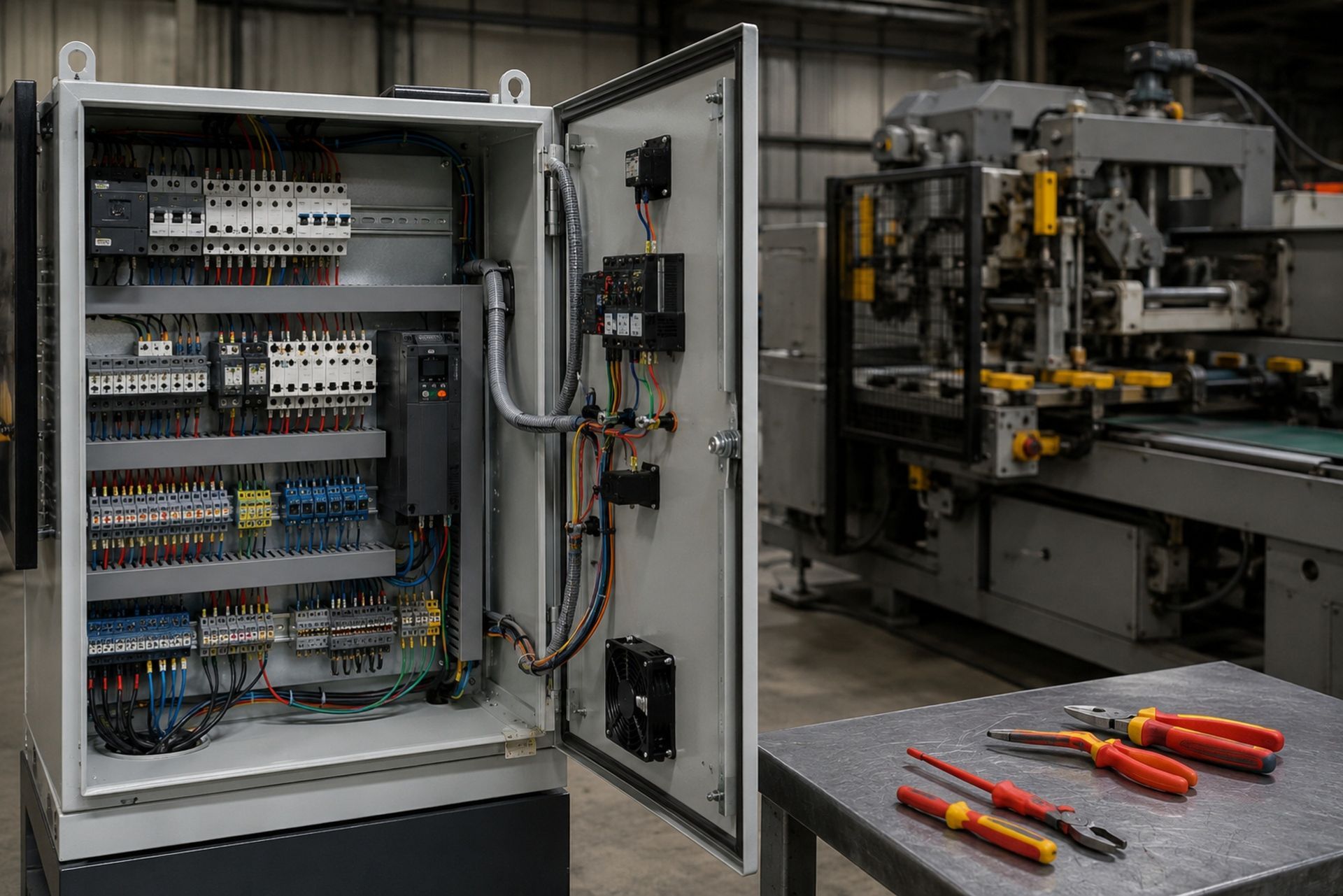
New Jersey mandates workers' compensation for virtually every employer, and the penalties for non-compliance are severe: criminal charges, stop-work orders, and personal liability for medical bills. Electrical work carries classification codes (NCCI code 5190 for most wiremen) that reflect the inherent danger of the trade. The average cost of a workers' comp claim in the electrical industry runs around $863 per claim, but serious electrocution or fall injuries can push individual claims well into six figures.
New Jersey also uses an experience modification rate (EMR) system. Your EMR directly affects your premium: a score above 1.0 means you're paying more than the industry baseline, while a score below 1.0 earns you discounts. Keeping clean safety records and reporting claims promptly are the fastest ways to bring that number down.
Professional Liability and Errors and Omissions for Design-Build Projects
Design-build delivery is increasingly common in Newark's commercial and institutional sectors. If your firm handles any design work, whether specifying panel sizes, laying out conduit routes, or engineering lighting systems, you're exposed to professional liability claims that a standard GL policy won't cover.
Errors and omissions (E&O) insurance fills that gap. It responds when a design deficiency causes financial loss to a client, even if no physical damage occurred. A miscalculated load on a commercial service upgrade, for example, might not cause a fire but could force a costly redesign. E&O policies for electricians typically start around $1,500 to $3,000 annually for small firms, though premiums climb with revenue and project complexity.

By: Michael Fusco
President of Joule Pro
INDEX
Essential Insurance Coverages for Newark Electrical Contractors
Navigating Newark-Specific Risk Factors and Environmental Hazards
Aligning Insurance with Newark Permitting and Licensing Mandates
Understanding Carrier Appetite for New Jersey Electrical Risks
Protecting Mobile Assets: Commercial Auto and Inland Marine
Strategies for Reducing Insurance Costs and Improving Safety Ratings
Joule Pro is a specialty insurance and risk program of Fusco Orsini & Associates Insurance Services, built exclusively for electrical contractors and licensed in 31 states.
We work with electrical firms across the country — from California, Texas, Florida, New York, and coast to coast — placing General Liability, Workers' Compensation, Commercial Auto, Inland Marine, Surety Bonds, Excess Liability, and full specialty coverage stacks for commercial, industrial, service, residential, and low-voltage electrical contractors. Joule Pro is not a separate licensed entity. It is a dedicated program structure inside Fusco Orsini, giving electrical contractors access to specialty carriers, in-house claims advocacy, and trade-specific risk engineering under one program.
Electrician Insurance By City
Electrician Insurance Coverage
Navigating Newark-Specific Risk Factors and Environmental Hazards
Retrofitting Challenges in Newark's Historic Building Stock
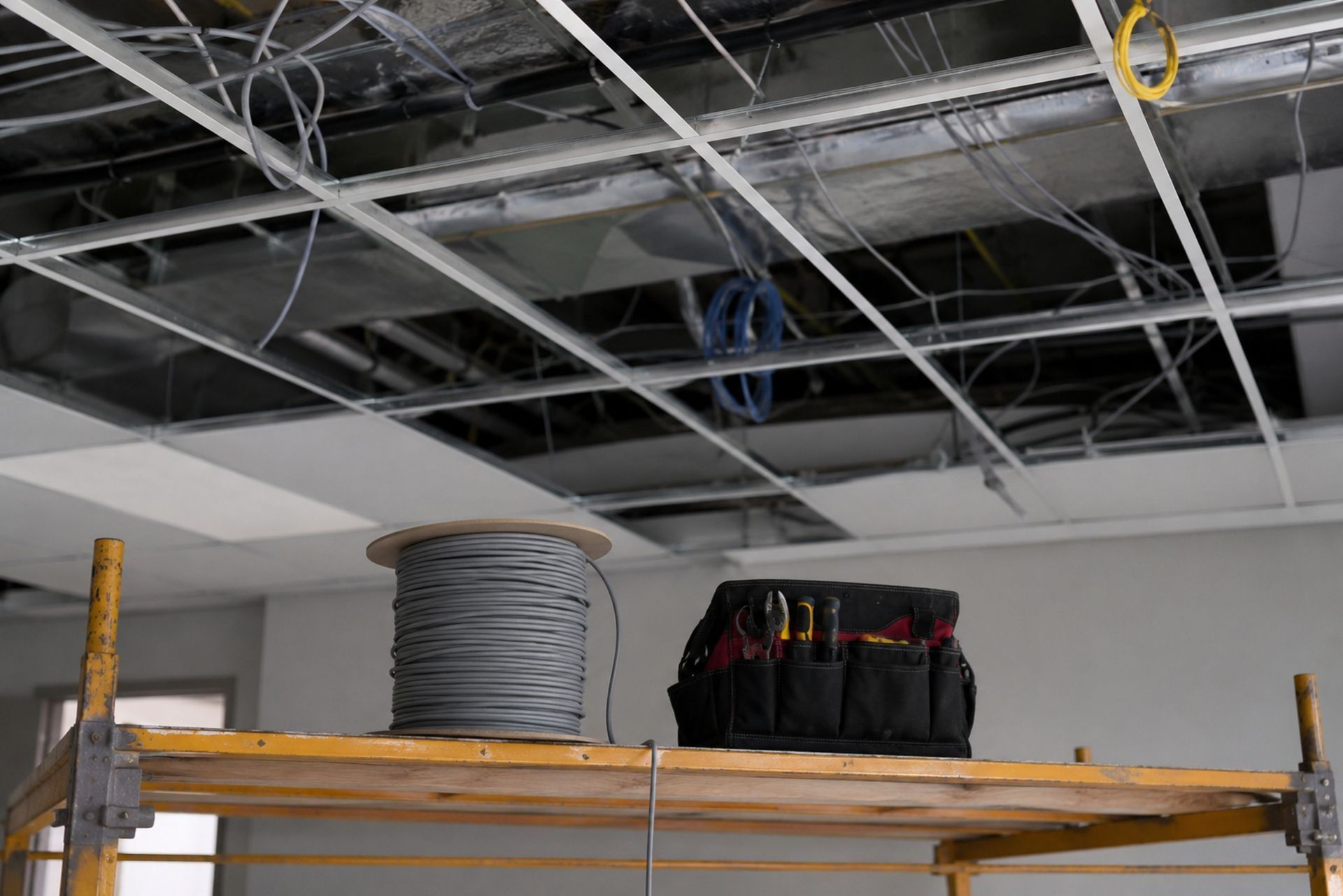
Newark has one of the oldest building inventories in the Northeast. The Ironbound, Forest Hill, and downtown districts are full of structures built before modern electrical codes existed. Knob-and-tube wiring, undersized services, and asbestos-wrapped conduit are common discoveries once walls are opened.
These older buildings create two distinct insurance concerns. First, the probability of accidental damage during retrofit work is significantly higher. Drilling into a plaster wall and hitting a concealed gas line or water pipe is a real scenario, not a hypothetical. Second, if your work triggers the release of asbestos or lead paint, you may face environmental liability claims. Standard GL policies often exclude pollution-related losses, so a pollution liability endorsement or separate environmental policy is worth discussing with your broker.
High-Density Construction and Third-Party Liability Risks
Newark's construction boom, especially around the Prudential Center corridor and the Passaic River waterfront, means electricians frequently work on congested job sites with multiple trades stacked on top of each other. Third-party injury exposure is substantial. A cable tray left unsecured could injure a plumber on the floor below. A temporary power setup that trips a breaker could shut down an elevator with workers inside.
These scenarios generate cross-claims between subcontractors, and the contractor with the weakest insurance position usually absorbs the most cost. Carrying adequate GL limits and confirming your policy includes blanket additional insured endorsements protects you from being the easy target in multi-party litigation.
Aligning Insurance with Newark Permitting and Licensing Mandates
Meeting City of Newark Code Enforcement Insurance Minimums
The City of Newark requires licensed electrical contractors to carry proof of insurance before permits are issued. The typical minimum is $500,000 in general liability, though many project owners and general contractors demand $1 million or more. Newark's Division of Code Enforcement has tightened its verification process in recent years, and expired or insufficient certificates of insurance are a common reason for permit delays.
One practical tip: make sure your insurance carrier or broker can issue certificates of insurance quickly. Joule Pro, for instance, handles COI requests through a direct producer rather than a self-service portal, which means you get accurate certificates that match the specific requirements Newark's code office asks for, without the back-and-forth that delays permits.
Surety Bonds and Performance Bonds for Public Works Projects
Public works projects in Newark, from school renovations to transit infrastructure, require surety bonds. A bid bond guarantees you'll honor your bid price, while a performance bond guarantees you'll complete the work. Payment bonds protect subcontractors and suppliers beneath you.
Bond underwriters look at your financial statements, credit history, work history, and existing insurance program. A well-structured insurance portfolio actually helps your bonding capacity because it signals to sureties that you're managing risk responsibly. Electricians chasing municipal contracts in Newark should build their bonding relationship early, not scramble for it when a bid deadline is 48 hours away.
Understanding Carrier Appetite for New Jersey Electrical Risks
Preferred Carriers for Small Residential Electricians vs. Industrial Firms
Not every insurance company wants to write electricians, and among those that do, appetite varies dramatically. Small residential electricians with annual revenue under $500,000 can often find coverage through standard market carriers. But once you're doing commercial tenant improvements, industrial panel upgrades, or fire alarm installations, you're moving into specialty territory.
Specialty programs like Joule Pro exist precisely because generalist agencies struggle to place electrical contractors with the right carriers. A program built exclusively for licensed electricians maintains relationships with underwriters who understand the trade's nuances: what class codes apply, which operations are higher-hazard, and how to structure policies that don't leave gaps. The difference between a generalist quote and a specialty quote can be 5 to 15 percent in premium savings and significantly better coverage terms.
Factors Influencing Premiums in the Newark Metro Area
Several factors drive your premium in the Newark area specifically. New Jersey's litigation environment is plaintiff-friendly, which pushes liability rates higher than national averages. Newark's urban density increases the severity of potential claims. And the type of work you perform matters enormously: new construction wiring is rated differently than service and repair, which is rated differently than fire alarm or low-voltage work.
Your claims history, EMR, annual revenue, payroll, and subcontractor usage all feed into the premium calculation. Contractors who subcontract heavily without verifying sub insurance often see surcharges or coverage restrictions. Clean loss runs and a documented safety program are the two most powerful tools for keeping premiums manageable.
Protecting Mobile Assets: Commercial Auto and Inland Marine
Tool and Equipment Floaters for High-Theft Urban Areas
Newark's property crime rates make tool theft a real and recurring problem for electrical contractors. A van full of power tools, meters, and wire can represent $15,000 to $50,000 in equipment. Standard commercial auto policies cover the vehicle itself but typically exclude tools and equipment stored inside.
An inland marine policy, often called a tools and equipment floater, covers your gear whether it's in the van, on a job site, or in a temporary storage unit. Given that the U.S. construction equipment theft problem costs the industry an estimated $300 million to $1 billion annually, insuring your mobile assets isn't a luxury. Pair this with commercial auto coverage that includes hired and non-owned auto if your employees ever use personal vehicles for work errands.
| Coverage Type | What It Covers | Typical Newark Minimum |
|---|---|---|
| General Liability | Third-party injury, property damage, completed ops | $1M per occurrence / $2M aggregate |
| Workers' Compensation | Employee injuries, lost wages, medical bills | Statutory (required by NJ law) |
| Commercial Auto | Company vehicles, liability, physical damage | $1M combined single limit |
| Inland Marine | Tools, equipment, materials in transit or on-site | Varies by inventory value |
| Professional Liability (E&O) | Design errors, specification mistakes | $1M per claim (if doing design-build) |
| Surety Bond | Bid, performance, and payment guarantees | Project-dependent |
Strategies for Reducing Insurance Costs and Improving Safety Ratings
The most effective way to lower your insurance costs isn't shopping for the cheapest carrier: it's reducing your risk profile so that good carriers want to write you at competitive rates. Start with a formal safety program. Document toolbox talks, maintain OSHA logs, and enforce PPE requirements. Carriers reward this with lower premiums and broader coverage terms.
Invest in driver training if you operate service vans. Commercial auto claims are the most frequent type of loss for electrical contractors, and a clean MVR report across your fleet makes a measurable difference at renewal. Bundle your policies where possible: a single program that covers GL, workers' comp, commercial auto, and inland marine under one umbrella often costs less than piecing together separate policies from different carriers.
Review your classification codes annually. If your revenue mix shifts from commercial to residential, or from new construction to service work, your codes should reflect that. Misclassified operations lead to overpayment at audit time or, worse, coverage gaps when a claim hits. Working with a specialty producer like Joule Pro, backed by Fusco Orsini & Associates Insurance Services, means someone is watching these details for you year-round.
FAQ
How much does general liability insurance cost for an electrician in Newark? Most small electrical contractors in Newark pay between $2,500 and $6,000 annually for a $1M/$2M GL policy. Rates depend on your revenue, work type, and claims history.
Does Newark require insurance before issuing an electrical permit? Yes. The City of Newark requires proof of general liability insurance, and most projects also require workers' compensation certificates before permits are released.
What's the difference between inland marine and commercial auto coverage? Commercial auto covers your vehicles. Inland marine covers the tools, equipment, and materials inside those vehicles or stored on job sites. You need both.
Can I get bonded and insured through the same program? Many specialty programs coordinate both insurance and surety bonding, which simplifies the process and can improve your bonding capacity.
Your Next Steps
Getting the right insurance coverage in Newark isn't just about checking a box for the permit office. It's about protecting a business you've built in one of the most demanding construction markets in the country. The combination of historic buildings, dense urban sites, aggressive litigation, and strict municipal requirements means your insurance program needs to be as specific as the work you do. Reach out to a specialty electrical contractor insurance provider who understands Newark's unique risk environment, and get a coverage review before your next renewal or your next big bid. The contractors who treat insurance as a strategic asset, not just an expense, are the ones who keep winning work and staying profitable.

Founder & CEO
The Force Behind the Program
About the Author:
Michael Fusco.
Fusco Orsini & Associates
Joule Pro exists because Mike Fusco saw electrical contractors getting boilerplate insurance — and built a program designed for the way the trade actually works.
Mike is the CEO and co-founder of Fusco Orsini & Associates, the San Diego–based independent agency he launched in 2010. Under his leadership FOA has grown into a nationwide partner serving clients across 31 states, with a personal, client-first approach to commercial insurance and risk.
With over 20 years in insurance and risk management, he specializes in tailored programs spanning general liability, workers' compensation, surety bonding, and employee benefits — helping owners confidently manage risk and pursue growth.
Mike holds a B.S. in Business from the University of Maryland — Robert H. Smith School of Business, and the Certified Insurance Counselor (CIC) designation, held by fewer than 3% of insurance professionals nationwide.
Trusted by Electrical Contractors Across the Country.
Select your state for electrical contractor insurance. Get requirements, cost ranges, and more information for your business.
Alabama
Arkansas
Louisiana
Kentucky
New Hampshire
Vermont
Rhode Island
Massachusetts
N. Dakota
S. Dakota
Oklahoma
Delaware
What Our Clients Say
Trusted by Electrical Contractors Across the Country.
5.0
★★★★★
Google reviews
Core Commercial Coverage
Business Insurance for Electrical Contractors.
The fundamentals — written, structured, and priced for electrical risk. Each line is reviewed annually by an underwriter who only writes our trade.
01
General Liability
Premises & completed-operations coverage with electrical-specific endorsements and full pollution carve-back options.
02
Workers' Compensation
Class-code optimization, experience-mod review, and return-to-work programs designed for energized-work exposures.
03
Commercial Auto
Fleet, hired & non-owned auto, and tools-in-transit coverage written for service vans and bucket trucks.
04
Tools & Equipment
Scheduled and blanket coverage for tools, test equipment, scissor lifts, and contractor's equipment on-site or in-transit.
05
Surety Bonds
Bid, performance, and payment bonds — single-job and aggregate programs for commercial & public-works contracts.
06
Commercial Property
Layered limits up to $50M with carrier panels covering your shop, warehouse, yard, and on-premises tools, materials, and equipment.
Who We Serve
Electrical Contractors We Specialize In.
From $5M service shops to $250M industrial primes — every Joule Pro program is shaped to the contractor's revenue mix and project profile.
01 / Industrial
Commercial & Industrial Electrical Contractors
High-voltage, substation, and plant electrical work. Pollution, builder's risk, and large-deductible WC programs.
02 / Service
Service & Residential Electrical Contractors
Service-call shops, panel upgrades, and EV charging installers. Auto-fleet, GL, and tool-coverage programs.
03 / Low-Voltage
Specialty & Low-Voltage Contractors
Data, fire-alarm, security, and BMS controls. Cyber, professional liability, and follow-form excess.
Frequently Asked Questions
Common
Questions From
Electrical Contractors.
What size electrical contractors do you write?
Joule Pro is built for licensed electrical firms from roughly $2M in revenue to $250M+. Below $2M we typically refer to our small-business desk; above $250M we underwrite individually with our industrial practice team.
Do I need to be licensed in multiple states?
No. We license you wherever you work. Joule Pro is admitted in 31 states and our compliance team handles multi-state filings, prevailing-wage endorsements, and certificate-of-insurance requirements.
How is Joule Pro different from a generic contractor program?
Generic programs use a contractor's questionnaire that treats you like a roofer. We use forms written for energized work, arc-flash exposures, and design-build risk — and our carriers price accordingly.
What does the claims process actually look like?
Every Joule Pro client is assigned a named claims advocate at bind. They take the FNOL, set strategy with your assigned attorney, and serve as your single point of contact through close.
Can you bond large public-works contracts?
Yes. Through our surety partners we write single-job bonds up to $75M and aggregate programs to $300M, with expedited turnarounds for school district, federal, and DOT work.
What happens at renewal?
Your producer and claims advocate jointly run a renewal review 90 days out — covering loss trends, exposure changes, and market alternatives — so renewal day is a confirmation, not a surprise.
From the Blog
Insights for Electrical Contractors.
Risk briefings, claim post-mortems, and program updates — written by our underwriters and risk engineers.


Get Started
Get a Quote on a Program Built Around Your Trade.
A 30-minute discovery call is the only commitment. You'll leave with a written gap analysis of your current program — yours to keep, whether you bind with us or not.