
Business Insurance
Elizabeth, NJ Electrician Insurance
★★★★★ 150+ Five-Star Reviews · Google & Facebook
Underwriting Preferences for Residential vs. Industrial Projects
Elizabeth, NJ, sits at the crossroads of heavy industrial infrastructure, aging urban housing stock, and a booming commercial construction market. For electricians working here, that mix creates a risk profile you won't find in most New Jersey suburbs. A single fire claim from faulty wiring in a century-old multifamily building can wipe out a small contractor, and the city's proximity to Port Newark adds industrial exposures that most general insurance agents barely understand. This guide covers the insurance coverage Elizabeth electricians actually need, the local permitting and bonding rules that affect your policies, the city-specific hazards that shape your premiums, and which carriers have a real appetite for writing electrical contractor policies in Union County. Whether you're a solo operator pulling permits in the Elmora neighborhood or running a crew across industrial sites near the port, the right insurance program is the difference between surviving a bad claim and closing your doors.
Essential Insurance Policies for Electricians in Elizabeth
General Liability and Property Damage Coverage
General liability is the foundation of every electrician's insurance program, and in Elizabeth, it carries extra weight. The city's dense mix of residential, commercial, and industrial properties means your exposure to third-party property damage and bodily injury claims is higher than in low-density areas. A standard commercial general liability (CGL) policy covers claims when your work causes damage to someone else's property or injures a third party, but the details matter.
Most Elizabeth electricians need at least $1 million per occurrence and $2 million aggregate in general liability limits. Many general contractors and property managers in the area require $2 million per occurrence before they'll let you on a job site. Under New Jersey law P.L. 2023, c. 237, electricians performing residential home improvements must carry at least $500,000 in liability coverage, so meeting the statutory floor is just the starting point.
One common mistake: buying a general liability policy that excludes completed operations. In electrical work, many claims surface months or years after the job is done. A connection fails, a panel overheats, and suddenly you're facing a property damage claim on a project you finished last year. Make sure your policy includes completed operations coverage, and confirm it extends for at least the statute of repose period.
NJ Statutory Workers' Compensation Requirements
New Jersey requires every employer to carry workers' compensation insurance, with no exceptions for small crews. Even if you have one part-time helper, you need a workers' comp policy. The state imposes penalties for non-compliance, including stop-work orders and personal liability for the business owner.
For electricians, workers' comp classification codes matter. Electrical wiring work typically falls under NCCI class code 5190, which carries a higher base rate than general construction because of the inherent shock, burn, and fall risks. Your experience modification rate (EMR) directly affects your premium: a clean safety record pushes your EMR below 1.0 and saves you real money, while claims push it higher.
Elizabeth-specific note: if you're doing work in industrial facilities near Port Newark, some jobs may require you to carry USL&H (United States Longshore and Harbor Workers' Act) coverage as an endorsement to your workers' comp policy. This isn't something most agents think to mention, but it's required for certain waterfront and port-adjacent work.
Inland Marine and Tools Coverage for Mobile Units
Your tools and equipment travel with you, and a standard commercial property policy won't cover them once they leave your shop. Inland marine insurance fills that gap, covering tools, diagnostic equipment, wire stock, and specialty gear while in transit or on a job site.
For Elizabeth electricians, theft is a real concern. Vans parked overnight in certain neighborhoods get broken into, and losing $15,000 worth of meters, benders, and power tools is a financial hit most small contractors can't absorb. A good inland marine policy covers theft from vehicles, job site theft, and accidental damage. Joule Pro structures inland marine coverage specifically for electrical contractors, which means the policy language actually reflects what's in your van rather than generic contractor equipment lists.

By: Michael Fusco
President of Joule Pro
INDEX
Joule Pro is a specialty insurance and risk program of Fusco Orsini & Associates Insurance Services, built exclusively for electrical contractors and licensed in 31 states.
We work with electrical firms across the country — from California, Texas, Florida, New York, and coast to coast — placing General Liability, Workers' Compensation, Commercial Auto, Inland Marine, Surety Bonds, Excess Liability, and full specialty coverage stacks for commercial, industrial, service, residential, and low-voltage electrical contractors. Joule Pro is not a separate licensed entity. It is a dedicated program structure inside Fusco Orsini, giving electrical contractors access to specialty carriers, in-house claims advocacy, and trade-specific risk engineering under one program.
Electrician Insurance By City
Electrician Insurance Coverage
Navigating Elizabeth City Permitting and Bond Requirements
Meeting New Jersey Electrical Board Licensing Standards
New Jersey regulates electrical contractors at the state level through the Board of Examiners of Electrical Contractors. You need a valid electrical contractor license to pull permits in Elizabeth, and maintaining that license requires proof of insurance. The state board requires current liability insurance documentation as part of your license renewal.
Your license number, insurance certificate, and business registration must all align. Discrepancies between your business entity name on your license and your insurance policy can delay permit approvals. It sounds minor, but Elizabeth's building department has gotten stricter about documentation in recent years.
Local Construction Permit Bonds and City Compliance
Elizabeth requires electrical permits for virtually all wiring work, and the city's construction code office enforces compliance actively. Permit bonds may be required for certain project types, particularly larger commercial and municipal jobs. These bonds guarantee that you'll complete work according to code, and they're separate from your insurance policies.
The city also requires contractors to maintain current certificates of insurance on file. If you're working on a project that involves a general contractor, expect to provide additional insured endorsements naming the GC and the property owner. Having an insurance program that can issue certificates and endorsements quickly matters here: delays in paperwork mean delays in starting work.
City-Specific Risks: From Port Newark to Urban High-Rises
Industrial Electrical Risks in the Port Newark Area
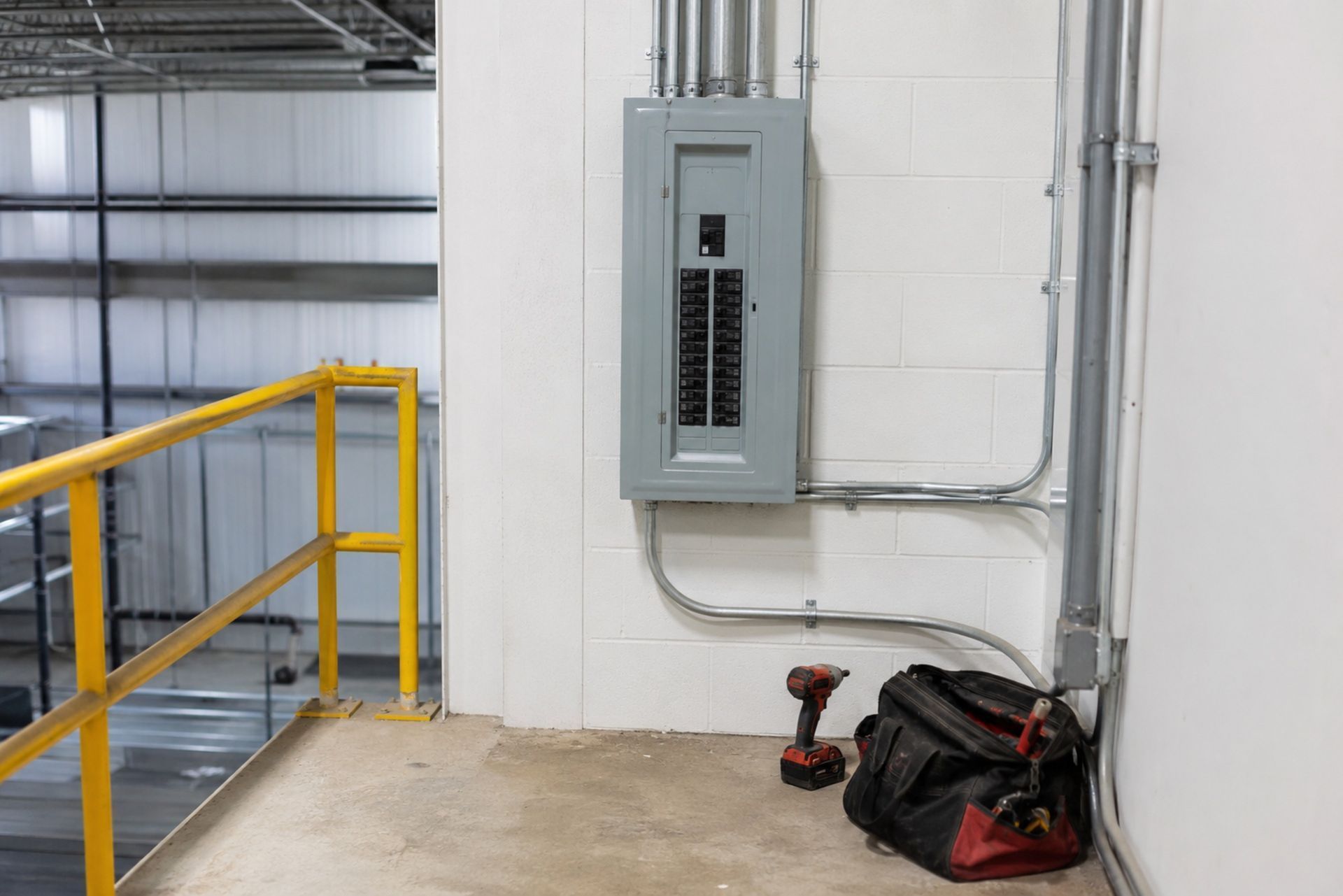
Elizabeth's western edge borders Port Newark-Elizabeth Marine Terminal, one of the busiest container ports on the East Coast. Electrical contractors working in port-adjacent warehouses, distribution centers, and industrial facilities face exposures that differ sharply from residential work. High-voltage systems, hazardous material environments, and heavy machinery create a risk profile that many standard insurance policies aren't designed to handle.
Claims from industrial electrical work tend to be larger and more complex. A wiring failure in a refrigerated warehouse can destroy hundreds of thousands of dollars in perishable goods. An arc flash incident in a manufacturing facility can result in catastrophic injury claims. Your general liability and workers' comp policies need to be structured for these exposures, not just priced for residential panel upgrades.
Carriers that write industrial electrical risks want to see safety programs, proper certifications (OSHA 30, NFPA 70E training), and clean loss histories. If you're doing this type of work, your insurance program needs to reflect it accurately. Misclassifying your operations to save on premiums is a fast way to get a claim denied.
Urban Infrastructure and Historic Building Hazards
Elizabeth has a large stock of pre-war residential and commercial buildings. Rewiring a 1920s multifamily building is fundamentally different from wiring new construction: you're dealing with knob-and-tube remnants, outdated panels, asbestos-wrapped conduit, and structural surprises behind every wall.
The fire risk during and after electrical renovation work in these older buildings is significant. Claims involving fire damage to adjacent units in a multifamily building can quickly exceed $500,000, and the liability chain often leads back to the electrician. Your completed operations coverage is critical here, and your policy limits need to account for the value of the surrounding property, not just the unit you're working in.
Carrier Appetite and Market Trends in Union County
Preferred Carriers for Small to Mid-Sized Contractors
Not every insurance carrier wants to write electrician policies, and fewer still have appetite for the mixed residential-industrial exposure profile common in Elizabeth. Carriers with strong appetite for electrical contractor risks in northern New Jersey include specialty programs that understand trade-specific exposures.
| Factor | Generalist Carrier | Specialty Electrical Program |
|---|---|---|
| Underwriting knowledge | General contractor focus | Electrical trade-specific |
| Completed operations | Often sublimited | Full coverage standard |
| Inland marine | Generic equipment | Electrical tools and gear |
| Certificate turnaround | 3-5 business days | Same-day available |
| Industrial work appetite | Limited or excluded | Written with proper classification |
Joule Pro works with specialty markets and underwriters who specifically write electrical contractor risks, which means your application isn't getting declined because an underwriter doesn't understand the difference between residential service work and industrial installations.
Factors Influencing Premiums for North Jersey Electricians
Several factors drive premium costs for Elizabeth electricians specifically. Your revenue and payroll are the primary rating bases, but the type of work you do matters just as much. A contractor doing $800,000 in residential service work will pay a different rate than one doing $800,000 in industrial installations, even if the revenue is identical.
Your claims history over the past five years is the single biggest factor you can control. Loss runs showing frequency, even small claims, signal higher risk to underwriters. Geographic density also plays a role: operating in an urban environment with tight job sites and older infrastructure carries higher base rates than suburban new construction.
Strategies for Reducing Insurance Costs and Managing Claims
The most effective way to lower your insurance costs is to prevent claims in the first place. That means documented safety programs, regular toolbox talks, proper PPE enforcement, and OSHA-compliant job site practices. Carriers reward contractors who can demonstrate a proactive safety culture with lower premiums and better terms.
Beyond safety, here are practical steps that actually move the needle on your costs:
- Review your classification codes annually to ensure accuracy: paying for industrial rates when you've shifted to residential work wastes money
- Bundle your GL, workers' comp, commercial auto, and inland marine with a single program to access package discounts
- Maintain a clean EMR by managing return-to-work programs for injured employees
- Request higher deductibles on property and inland marine policies if your cash flow supports it
- Work with a producer who has direct underwriter relationships in the electrical contractor space
Joule Pro, backed by Fusco Orsini & Associates Insurance Services (CA Lic. 0H16057), gives Elizabeth electricians direct access to a licensed insurance professional who handles quotes, proposals, and policy binding. That personal service means your coverage is structured correctly from day one, not patched together after a claim reveals gaps.
FAQ
Do I need insurance to pull an electrical permit in Elizabeth? Yes. Elizabeth's construction code office requires proof of current liability insurance, and your New Jersey electrical contractor license also requires insurance documentation for renewal.
What's the minimum liability coverage for residential electrical work in NJ? Under P.L. 2023, c. 237, electricians doing residential home improvements must carry at least $500,000 in general liability coverage. Most commercial jobs require $1-2 million.
Does my general liability policy cover damage discovered after I finish a job? Only if your policy includes completed operations coverage. Many cheaper policies exclude or sublimit this, which is a serious gap for electricians.
Do I need USL&H coverage for port-area work in Elizabeth? Potentially, yes. Work performed at or near Port Newark-Elizabeth Marine Terminal may require a USL&H endorsement on your workers' compensation policy.
How fast can I get a certificate of insurance for a new job? With a specialty program like Joule Pro, same-day certificates and additional insured endorsements are standard. Generalist carriers often take several business days.
Your Next Steps
Getting the right insurance coverage for electrical work in Elizabeth means understanding the specific risks this city presents: from aging residential buildings to industrial port facilities. Generic policies from generalist agents leave gaps that only show up when you file a claim. Work with a specialty program that knows the electrical trade, understands Union County's market, and has the carrier relationships to get your policy written correctly. If you're ready to review your current coverage or get a quote tailored to your Elizabeth operations, reach out to Joule Pro for a conversation with a licensed producer who speaks your language.

Founder & CEO
The Force Behind the Program
About the Author:
Michael Fusco.
Fusco Orsini & Associates
Joule Pro exists because Mike Fusco saw electrical contractors getting boilerplate insurance — and built a program designed for the way the trade actually works.
Mike is the CEO and co-founder of Fusco Orsini & Associates, the San Diego–based independent agency he launched in 2010. Under his leadership FOA has grown into a nationwide partner serving clients across 31 states, with a personal, client-first approach to commercial insurance and risk.
With over 20 years in insurance and risk management, he specializes in tailored programs spanning general liability, workers' compensation, surety bonding, and employee benefits — helping owners confidently manage risk and pursue growth.
Mike holds a B.S. in Business from the University of Maryland — Robert H. Smith School of Business, and the Certified Insurance Counselor (CIC) designation, held by fewer than 3% of insurance professionals nationwide.
Trusted by Electrical Contractors Across the Country.
Select your state for electrical contractor insurance. Get requirements, cost ranges, and more information for your business.
Alabama
Arkansas
Louisiana
Kentucky
New Hampshire
Vermont
Rhode Island
Massachusetts
N. Dakota
S. Dakota
Oklahoma
Delaware
What Our Clients Say
Trusted by Electrical Contractors Across the Country.
5.0
★★★★★
Google reviews
Core Commercial Coverage
Business Insurance for Electrical Contractors.
The fundamentals — written, structured, and priced for electrical risk. Each line is reviewed annually by an underwriter who only writes our trade.
01
General Liability
Premises & completed-operations coverage with electrical-specific endorsements and full pollution carve-back options.
02
Workers' Compensation
Class-code optimization, experience-mod review, and return-to-work programs designed for energized-work exposures.
03
Commercial Auto
Fleet, hired & non-owned auto, and tools-in-transit coverage written for service vans and bucket trucks.
04
Tools & Equipment
Scheduled and blanket coverage for tools, test equipment, scissor lifts, and contractor's equipment on-site or in-transit.
05
Surety Bonds
Bid, performance, and payment bonds — single-job and aggregate programs for commercial & public-works contracts.
06
Commercial Property
Layered limits up to $50M with carrier panels covering your shop, warehouse, yard, and on-premises tools, materials, and equipment.
Who We Serve
Electrical Contractors We Specialize In.
From $5M service shops to $250M industrial primes — every Joule Pro program is shaped to the contractor's revenue mix and project profile.
01 / Industrial
Commercial & Industrial Electrical Contractors
High-voltage, substation, and plant electrical work. Pollution, builder's risk, and large-deductible WC programs.
02 / Service
Service & Residential Electrical Contractors
Service-call shops, panel upgrades, and EV charging installers. Auto-fleet, GL, and tool-coverage programs.
03 / Low-Voltage
Specialty & Low-Voltage Contractors
Data, fire-alarm, security, and BMS controls. Cyber, professional liability, and follow-form excess.
Frequently Asked Questions
Common
Questions From
Electrical Contractors.
What size electrical contractors do you write?
Joule Pro is built for licensed electrical firms from roughly $2M in revenue to $250M+. Below $2M we typically refer to our small-business desk; above $250M we underwrite individually with our industrial practice team.
Do I need to be licensed in multiple states?
No. We license you wherever you work. Joule Pro is admitted in 31 states and our compliance team handles multi-state filings, prevailing-wage endorsements, and certificate-of-insurance requirements.
How is Joule Pro different from a generic contractor program?
Generic programs use a contractor's questionnaire that treats you like a roofer. We use forms written for energized work, arc-flash exposures, and design-build risk — and our carriers price accordingly.
What does the claims process actually look like?
Every Joule Pro client is assigned a named claims advocate at bind. They take the FNOL, set strategy with your assigned attorney, and serve as your single point of contact through close.
Can you bond large public-works contracts?
Yes. Through our surety partners we write single-job bonds up to $75M and aggregate programs to $300M, with expedited turnarounds for school district, federal, and DOT work.
What happens at renewal?
Your producer and claims advocate jointly run a renewal review 90 days out — covering loss trends, exposure changes, and market alternatives — so renewal day is a confirmation, not a surprise.
From the Blog
Insights for Electrical Contractors.
Risk briefings, claim post-mortems, and program updates — written by our underwriters and risk engineers.


Get Started
Get a Quote on a Program Built Around Your Trade.
A 30-minute discovery call is the only commitment. You'll leave with a written gap analysis of your current program — yours to keep, whether you bind with us or not.