
Business Insurance
California Battery Storage Installer Insurance
★★★★★ 150+ Five-Star Reviews · Google & Facebook
California's battery energy storage market has been on a tear. U.S. battery storage capacity has averaged roughly 70% growth over the past three years, and a huge share of that installation work happens in the Golden State. For electrical contractors adding battery storage to their service mix, the revenue opportunity is real, but so is the risk profile. A single thermal runaway event can destroy a home, trigger toxic off-gassing, and generate liability claims that dwarf anything a standard electrician's policy was designed to handle. If you're installing lithium-ion battery systems in California, your insurance needs to keep pace with the technology you're putting on walls and in garages. This piece breaks down the fire and thermal exposure risks, the general liability and completed operations coverage you actually need, realistic policy limits, and what you should expect to pay in 2026. Getting this wrong doesn't just mean a coverage gap: it can mean losing your CSLB license, your business, or both.
The Risk Landscape for California Battery Installers
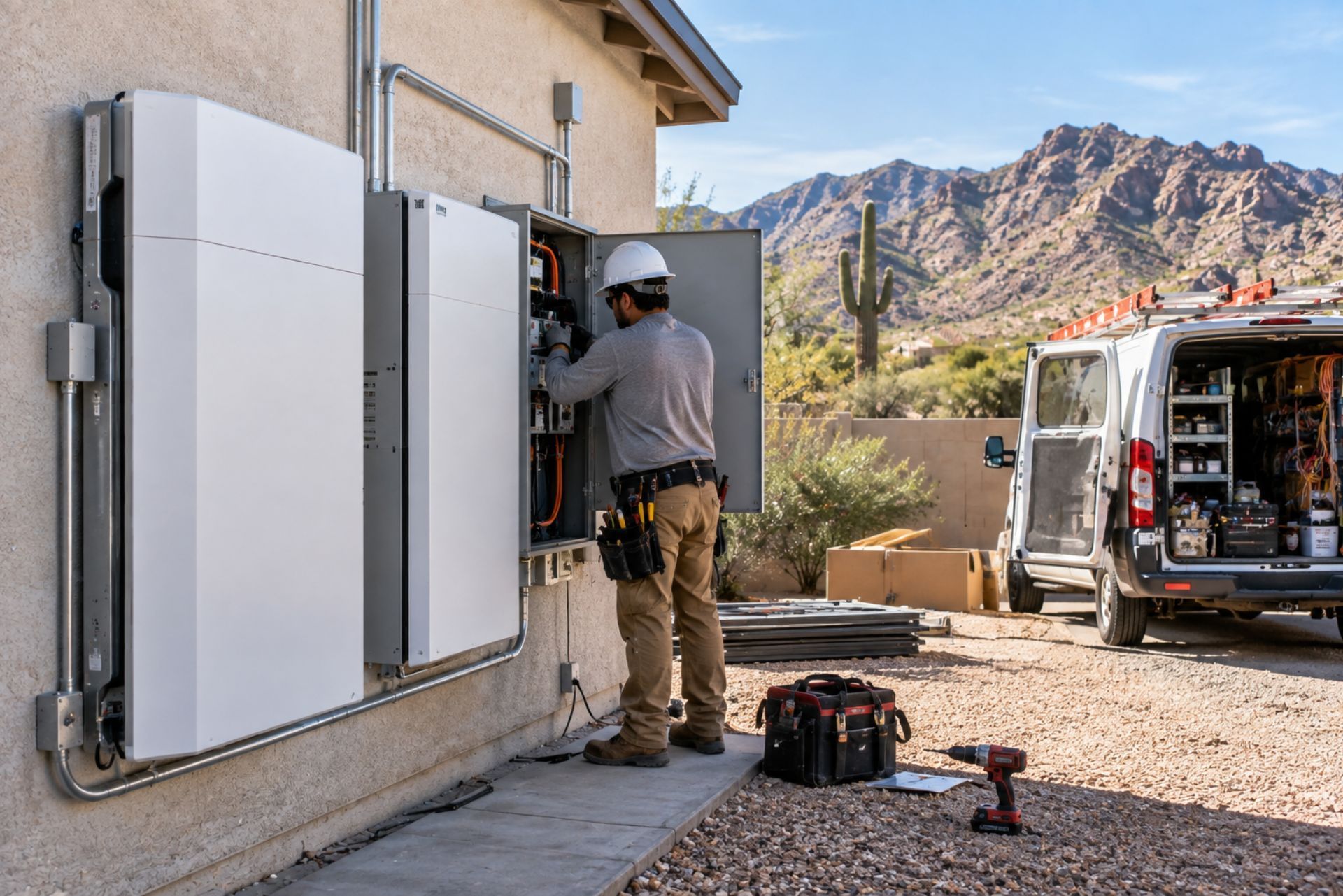
Battery storage installation sits at the intersection of electrical work and chemical energy management, and that combination creates exposures most traditional contractor policies weren't built for. California's aggressive push toward distributed energy storage, driven by NEM 3.0, Title 24 mandates, and utility incentive programs, means more contractors are entering this space every quarter. The problem is that many of them carry insurance designed for panel upgrades and service changes, not for systems that store megajoules of energy in a lithium-ion chemistry prone to catastrophic failure under specific conditions.
The risk isn't theoretical. Residential and commercial battery fires have generated multi-million-dollar claims across the country, and California's dense housing, wildfire zones, and strict air quality regulations amplify the consequences of any incident.
Understanding Thermal Runaway and Fire Exposure
Thermal runaway is the chain reaction that occurs when a lithium-ion cell overheats, causing neighboring cells to overheat in turn. The result is a self-sustaining fire that burns at extreme temperatures, produces toxic gases (including hydrogen fluoride), and is notoriously difficult to extinguish. For installers, the exposure is twofold: a fire during installation (your general liability trigger) and a fire that occurs months or years later due to an installation defect (your completed operations trigger).
The
battery energy storage fire protection market is growing fast precisely because these events are not rare edge cases. Improper torque on connections, inadequate ventilation clearances, incorrect BMS configuration, and even choosing the wrong mounting location can all set the stage for thermal runaway. A single loose terminal that creates resistance heating might not cause a problem for six months, then fail catastrophically on the hottest day of summer.
California-Specific Regulatory and Environmental Factors
California adds layers of complexity that don't exist in most other states. Installers must comply with CEC interconnection rules, local AHJ requirements, and specific battery storage permit requirements that vary by jurisdiction. Fire setback distances, ventilation specifications, and seismic bracing all factor into the installation, and any deviation can create both code violations and insurance coverage disputes.
Wildfire zones present a particular challenge. A battery fire in a WUI (Wildland-Urban Interface) area that spreads beyond the property line could trigger wildfire-related liability, and California's strict liability standards for fire mean the burden of proof falls heavily on the party whose equipment started it. Air quality regulations also mean that toxic off-gassing from a battery fire can generate environmental liability claims separate from property damage.

By: Michael Fusco
President of Joule Pro
INDEX
Joule Pro is a specialty insurance and risk program of Fusco Orsini & Associates Insurance Services, built exclusively for electrical contractors and licensed in 31 states.
We work with electrical firms across the country — from California, Texas, Florida, New York, and coast to coast — placing General Liability, Workers' Compensation, Commercial Auto, Inland Marine, Surety Bonds, Excess Liability, and full specialty coverage stacks for commercial, industrial, service, residential, and low-voltage electrical contractors. Joule Pro is not a separate licensed entity. It is a dedicated program structure inside Fusco Orsini, giving electrical contractors access to specialty carriers, in-house claims advocacy, and trade-specific risk engineering under one program.
Core Coverage: General Liability and Completed Operations
Understanding the distinction between general liability and completed operations isn't optional for battery storage installers: it's the difference between being covered and being bankrupt.
Why Standard GL Often Excludes Battery Fires
A standard general liability policy for electrical contractors typically covers bodily injury and property damage arising from your operations. The catch is that many GL policies written for electricians contain exclusions for work involving chemical energy storage, hazardous materials, or pollution events. A thermal runaway fire produces all three.
Even policies that don't explicitly exclude battery work often have sublimits or exclusions for fire damage that originates from installed products or equipment. Your insurer might cover you if you accidentally drill through a gas line during installation, but deny a claim when the battery system you installed catches fire. This is exactly why electrical contractor insurance needs to be tailored to the actual scope of work you perform, not just your license classification.
A program like Joule Pro exists specifically because generalist agencies often miss these gaps. When your underwriter understands the difference between a Tesla Powerwall and an Enphase IQ battery, your policy is far more likely to address the actual exposures you face.
The Role of Products-Completed Operations Coverage
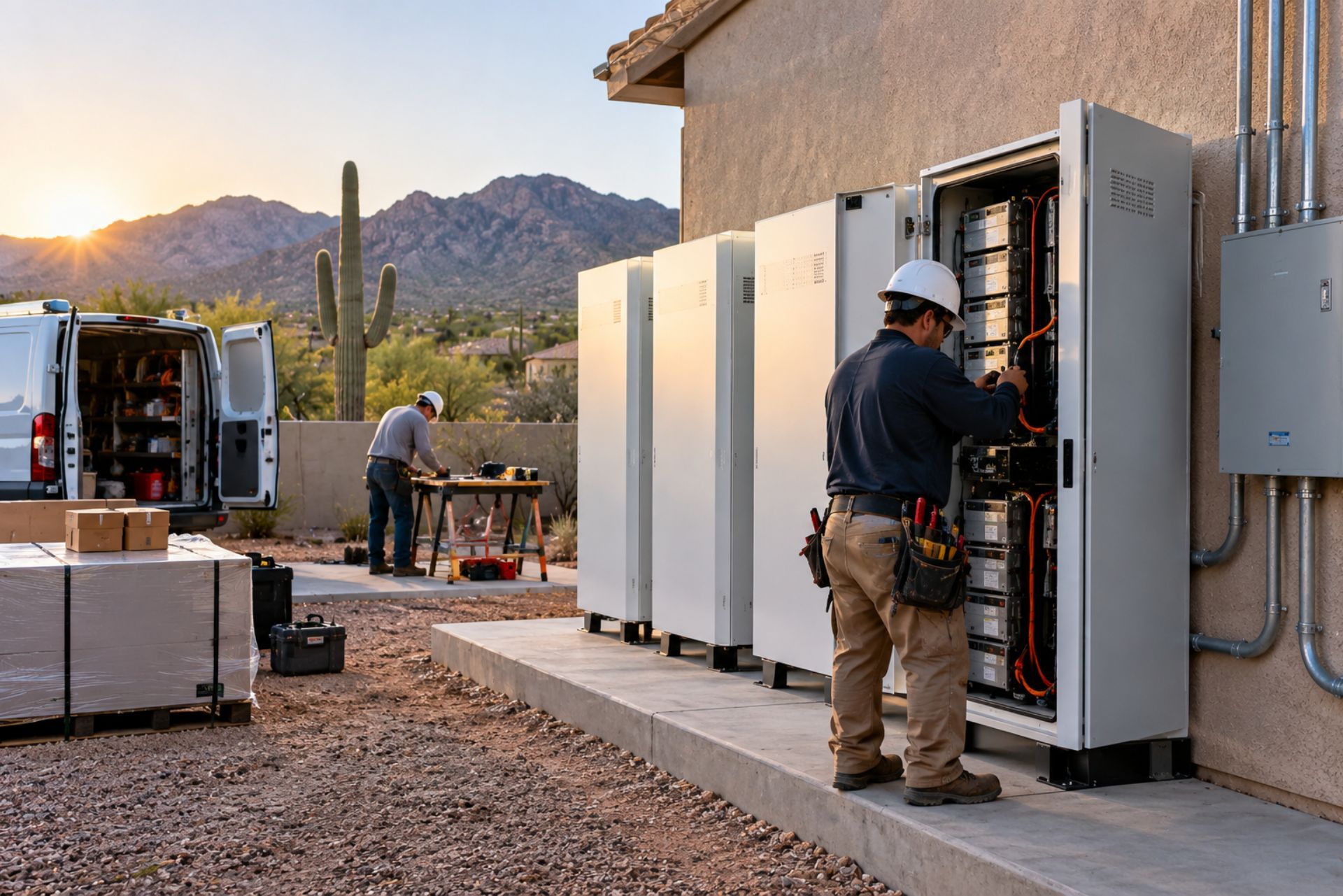
Products-completed operations (PCO) coverage picks up where your general liability during operations leaves off. It covers claims arising from work you've already finished and handed over to the customer. For battery installers, this is arguably the more critical coverage, because most thermal runaway events don't happen while you're on-site. They happen weeks, months, or years later.
PCO coverage responds when a homeowner's battery system fails due to an installation defect and causes a house fire. Without it, you're personally liable for property damage, displacement costs, medical bills, and potentially wrongful death claims. The standard insurance requirements for battery storage projects increasingly specify completed operations coverage with dedicated limits, and many general contractors and utilities now require it before they'll subcontract battery work.
Determining Policy Limits and Estimated Costs
Picking the right limits isn't about choosing the cheapest option. It's about matching your coverage to the realistic worst-case scenario of a battery fire claim.
Factors Influencing Annual Premiums in California
Several variables determine what you'll pay for battery storage installer insurance in California. Your annual revenue, number of employees, claims history, and the types of battery systems you install all play a role. Residential installers working with UL-listed systems from major manufacturers generally pay less than commercial contractors installing custom or less-established brands.
California contractor insurance costs tend to run higher than the national average due to the state's litigation environment and regulatory complexity. That said, there's good news for 2026: renewable energy insurance rates are softening, with well-engineered portfolios seeing premium reductions between high single digits and 25%. Contractors with clean loss histories, documented safety protocols, and manufacturer training certifications are best positioned to benefit from this trend.
Expect annual premiums for a small to mid-size battery installation operation to range from $5,000 to $15,000 or more for a GL/PCO package, depending on revenue and risk factors. Larger operations or those working in high-fire-risk zones will land at the upper end or beyond.
Comparison Table: Standard vs. Specialized Storage Coverage
| Coverage Feature | Standard Electrical GL | Specialized Battery Storage Policy |
|---|---|---|
| General Liability | Included | Included |
| Completed Operations | Often sublimited or excluded for battery work | Full dedicated limits |
| Thermal Runaway / Fire | Frequently excluded or disputed | Explicitly covered |
| Pollution / Toxic Off-Gassing | Excluded | Available via endorsement |
| Per-Occurrence Limit | $1M typical | $1M-$2M, higher available |
| Aggregate Limit | $2M typical | $2M-$5M+ |
| Wildfire Liability | Excluded or sublimited | Available in specialty markets |
| Premium Range (small operation) | $2,500-$6,000/yr | $5,000-$15,000+/yr |
The price difference reflects the actual risk. A standard electrical GL policy might look cheaper on paper, but it leaves you exposed to the exact claims battery work generates.
Mitigating Risk Through Professional Standards
Insurance is your financial backstop, but risk mitigation starts on the job site. Carriers underwriting battery storage work want to see that you're following manufacturer installation guidelines to the letter, maintaining proper documentation (photos, torque specs, commissioning reports), and training your crews on battery-specific hazards. Many insurers now offer premium credits for contractors who hold manufacturer certifications from Tesla, Enphase, or other major brands.
Joule Pro's approach to risk management for electrical contractors includes helping you identify the documentation and safety practices that not only reduce your actual risk but also position you for better rates. A contractor who can demonstrate a formal QA/QC process for every battery installation is a fundamentally different risk than one who wings it.
The top risk management challenges for battery storage in 2026 center on data quality, performance monitoring, and fire prevention. Contractors who invest in post-installation monitoring and maintenance agreements create a paper trail that protects them in the event of a claim.
Common Questions About Battery Installation Insurance
Does my general liability cover thermal runaway damage?
Most standard electrical contractor GL policies do not explicitly cover thermal runaway events. Many contain exclusions for chemical reactions, hazardous materials, or fire originating from installed equipment. You need to read your policy's exclusions carefully or have a specialty broker review them.
How much insurance do I need for CSLB compliance?
California's CSLB requires a minimum of $1 million per occurrence in general liability for most licensed contractors. However, this minimum is rarely sufficient for battery storage work, where a single residential fire claim can exceed $1 million. Most experienced installers carry $2 million per occurrence or higher.
Why are my premiums higher for lithium-ion projects?
Lithium-ion batteries carry inherent fire and chemical exposure risks that traditional electrical work does not. Insurers price this risk accordingly. The good news is that as insurers warm to solar and storage technology, rates are gradually improving for contractors with strong safety records.
Will insurance cover me if a battery fails years after installation?
Only if you have products-completed operations coverage in effect at the time the claim is made. PCO coverage must be maintained continuously. If you let it lapse, you lose protection for past work. This is one of the most common and costly mistakes contractors make.
Do I need separate pollution liability for battery leaks?
In most cases, yes. Standard GL policies exclude pollution events, and a thermal runaway incident produces toxic gases and potentially hazardous residue. A pollution liability endorsement or separate policy covers cleanup costs and third-party bodily injury from toxic exposure.
Protecting Your Business Long-Term
Battery storage installation is one of the fastest-growing segments of electrical contracting in California, and the insurance market is finally catching up to the risk. The contractors who thrive in this space will be the ones who treat insurance not as a checkbox but as a core part of their business strategy: matching their coverage to the actual hazards of the work, maintaining clean documentation, and working with specialty programs that understand the difference between wiring a subpanel and commissioning a 40-kWh lithium-ion system.
If you're expanding into battery storage or already doing the work without confidence in your coverage, now is the time to get a policy review. Joule Pro specializes in insurance for licensed electrical contractors, including the specific endorsements and limits battery storage work demands. Reach out to a licensed producer who can walk through your current policy, identify gaps, and build a coverage program that actually protects you when a lithium-ion cell decides to misbehave.

Founder & CEO
The Force Behind the Program
About the Author:
Michael Fusco.
Fusco Orsini & Associates
Joule Pro exists because Mike Fusco saw electrical contractors getting boilerplate insurance — and built a program designed for the way the trade actually works.
Mike is the CEO and co-founder of Fusco Orsini & Associates, the San Diego–based independent agency he launched in 2010. Under his leadership FOA has grown into a nationwide partner serving clients across 31 states, with a personal, client-first approach to commercial insurance and risk.
With over 20 years in insurance and risk management, he specializes in tailored programs spanning general liability, workers' compensation, surety bonding, and employee benefits — helping owners confidently manage risk and pursue growth.
Mike holds a B.S. in Business from the University of Maryland — Robert H. Smith School of Business, and the Certified Insurance Counselor (CIC) designation, held by fewer than 3% of insurance professionals nationwide.
What Our Clients Say
Trusted by Electrical Contractors Across the Country.
5.0
★★★★★
Google reviews
Core Commercial Coverage
Business Insurance for Electrical Contractors.
The fundamentals — written, structured, and priced for electrical risk. Each line is reviewed annually by an underwriter who only writes our trade.
01
General Liability
Premises & completed-operations coverage with electrical-specific endorsements and full pollution carve-back options.
02
Workers' Compensation
Class-code optimization, experience-mod review, and return-to-work programs designed for energized-work exposures.
03
Commercial Auto
Fleet, hired & non-owned auto, and tools-in-transit coverage written for service vans and bucket trucks.
04
Tools & Equipment
Scheduled and blanket coverage for tools, test equipment, scissor lifts, and contractor's equipment on-site or in-transit.
05
Surety Bonds
Bid, performance, and payment bonds — single-job and aggregate programs for commercial & public-works contracts.
06
Commercial Property
Layered limits up to $50M with carrier panels covering your shop, warehouse, yard, and on-premises tools, materials, and equipment.
Who We Serve
Electrical Contractors We Specialize In.
From $5M service shops to $250M industrial primes — every Joule Pro program is shaped to the contractor's revenue mix and project profile.
01 / Industrial
Commercial & Industrial Electrical Contractors
High-voltage, substation, and plant electrical work. Pollution, builder's risk, and large-deductible WC programs.
02 / Service
Service & Residential Electrical Contractors
Service-call shops, panel upgrades, and EV charging installers. Auto-fleet, GL, and tool-coverage programs.
03 / Low-Voltage
Specialty & Low-Voltage Contractors
Data, fire-alarm, security, and BMS controls. Cyber, professional liability, and follow-form excess.
Frequently Asked Questions
Common
Questions From
Electrical Contractors.
What size electrical contractors do you write?
Joule Pro is built for licensed electrical firms from roughly $2M in revenue to $250M+. Below $2M we typically refer to our small-business desk; above $250M we underwrite individually with our industrial practice team.
Do I need to be licensed in multiple states?
No. We license you wherever you work. Joule Pro is admitted in 31 states and our compliance team handles multi-state filings, prevailing-wage endorsements, and certificate-of-insurance requirements.
How is Joule Pro different from a generic contractor program?
Generic programs use a contractor's questionnaire that treats you like a roofer. We use forms written for energized work, arc-flash exposures, and design-build risk — and our carriers price accordingly.
What does the claims process actually look like?
Every Joule Pro client is assigned a named claims advocate at bind. They take the FNOL, set strategy with your assigned attorney, and serve as your single point of contact through close.
Can you bond large public-works contracts?
Yes. Through our surety partners we write single-job bonds up to $75M and aggregate programs to $300M, with expedited turnarounds for school district, federal, and DOT work.
What happens at renewal?
Your producer and claims advocate jointly run a renewal review 90 days out — covering loss trends, exposure changes, and market alternatives — so renewal day is a confirmation, not a surprise.
From the Blog
Insights for Electrical Contractors.
Risk briefings, claim post-mortems, and program updates — written by our underwriters and risk engineers.


Get Started
Get a Quote on a Program Built Around Your Trade.
A 30-minute discovery call is the only commitment. You'll leave with a written gap analysis of your current program — yours to keep, whether you bind with us or not.