
Business Insurance
Colorado EV Charger Installer Insurance
★★★★★ 150+ Five-Star Reviews · Google & Facebook
Colorado's EV charging infrastructure is expanding fast. The state's retail electric vehicle charging regulations are pushing demand for qualified installers, and with that demand comes real exposure: property damage at a client's home, a tool theft from your work van, or a charger malfunction three months after you finished the job. If you're a licensed electrical contractor installing EV chargers in Colorado, your insurance setup needs to be specific to what you actually do, not some generic small business policy pulled off a shelf. The right coverage protects your livelihood when a $40,000 claim lands on your desk. The wrong coverage, or worse, no coverage at all, can end a business overnight.
This guide breaks down the essential insurance coverages for EV charger installers operating in Colorado:
general liability,
tools and equipment, completed operations,
certificate of insurance requirements, and what you should realistically expect to pay in 2026. Whether you're a
solo installer running a single truck or managing a crew across the Front Range, these are the policies and endorsements that matter most.
Essential Insurance Coverages for Colorado EV Charger Installers
EV charger installation sits at the intersection of
electrical work, construction, and emerging technology. That combination creates a risk profile that standard policies often miss. You're working with high-voltage circuits in
residential garages,
commercial parking structures, and public-facing locations, each with its own liability exposure. A proper insurance stack for this trade covers three core areas: general liability, tools and equipment, and completed operations.
General Liability: Protecting Against Third-Party Claims
General liability is the foundation. It covers bodily injury and property damage claims from third parties, meaning anyone who isn't your employee. Think: you're drilling through a garage wall to run conduit and hit a water line, flooding the homeowner's finished basement. Or a passerby trips over your equipment at a commercial site and breaks a wrist.
A small Colorado electrical contractor typically pays between $700 and $3,000 per year for general liability insurance in 2026, depending on revenue, crew size, and claims history. Most policies carry $1 million per occurrence and $2 million aggregate limits, which is the baseline most general contractors and property managers will accept. If you're doing high-volume commercial work, you may need higher limits or an umbrella policy on top.
One thing many new EV installers overlook: general liability alone doesn't cover faulty workmanship after the job is done. That's a separate coverage, and it's critical for this trade.
Tools and Equipment: Coverage for Mobile Gear and Inventory
Your tools aren't cheap. A quality EVSE testing kit, conduit benders, multimeters, wire pullers, and specialized diagnostic equipment can easily total $15,000 to $30,000 or more. Standard commercial property policies typically don't cover tools that leave your shop, and if you're working out of a truck or van, that's most of your gear.
Inland marine insurance, often called a tools and equipment floater, covers your mobile gear against theft, damage, and loss while in transit or at a job site. Premiums for inland marine coverage generally run between $300 and $1,500 annually for small contractors, depending on the total value insured and your deductible. Some policies cover replacement cost, while cheaper options only pay actual cash value, which factors in depreciation and leaves you short when you need to replace a stolen $4,000 meter.
Joule Pro structures tools and equipment coverage specifically for electrical contractors, which means the underwriting accounts for the type of gear you actually carry rather than treating you like a general handyman.
Completed Operations: Handling Post-Installation Risks
Here's where EV charger work gets interesting from an insurance perspective. A charger you install today might malfunction in six months, causing a garage fire or damaging a client's vehicle. Completed operations coverage, which is technically a subset of your general liability policy, protects you after you've finished a job and left the site.
This coverage matters enormously for EV installers because charging equipment operates continuously, often unattended, and interacts with both the electrical panel and the vehicle. If a connection fails or a circuit isn't properly rated and something goes wrong weeks or months later, the claim falls under completed operations. Without it, you're personally on the hook.
Make sure your policy explicitly includes completed operations and that it isn't excluded or sublimited. Some cheaper general liability policies quietly carve it out, which is a disaster waiting to happen for anyone in the electrical trade.

By: Michael Fusco
President of Joule Pro
INDEX
Joule Pro is a specialty insurance and risk program of Fusco Orsini & Associates Insurance Services, built exclusively for electrical contractors and licensed in 31 states.
We work with electrical firms across the country — from California, Texas, Florida, New York, and coast to coast — placing General Liability, Workers' Compensation, Commercial Auto, Inland Marine, Surety Bonds, Excess Liability, and full specialty coverage stacks for commercial, industrial, service, residential, and low-voltage electrical contractors. Joule Pro is not a separate licensed entity. It is a dedicated program structure inside Fusco Orsini, giving electrical contractors access to specialty carriers, in-house claims advocacy, and trade-specific risk engineering under one program.
Colorado Certificate of Insurance (COI) Requirements
A Certificate of Insurance is a one-page document proving you carry active coverage. It lists your policy types, limits, effective dates, and any additional insureds. In Colorado, you'll need one constantly, and different parties will ask for different things on it.
Meeting State and Local Electrical Contractor Mandates
Colorado doesn't have a single statewide electrical contractor license, but most municipalities and counties require their own permits and licensing, and many of those jurisdictions require proof of insurance as part of the licensing process. Denver, Colorado Springs, Aurora, and most Front Range cities require electrical contractors to carry general liability insurance and provide a COI when applying for or renewing permits.
The state's new retail EV charging regulations also add a layer of compliance for public-facing installations. If you're installing chargers that will be used by the general public, expect additional documentation requirements. Keeping your COI current and accessible saves you from delays that cost real money on active projects.
Why General Contractors and Homeowners Demand a COI
Beyond government requirements, you'll hand out COIs to general contractors, property managers, HOAs, and sometimes individual homeowners. A GC won't let you on their job site without one. Period. They need proof that if you cause damage or someone gets hurt, your insurance responds first, not theirs.
Most GCs require you to name them as an additional insured on your policy, which is a standard endorsement your insurer can add. They'll also want to see completed operations coverage listed, minimum limits of $1M/$2M, and sometimes commercial auto coverage if you're driving onto their site. Joule Pro handles COI requests directly through licensed producers, which means you're not waiting days for a self-serve portal to generate the right document when a GC needs it by morning.
Comparing Coverage Options: Basic vs. Comprehensive
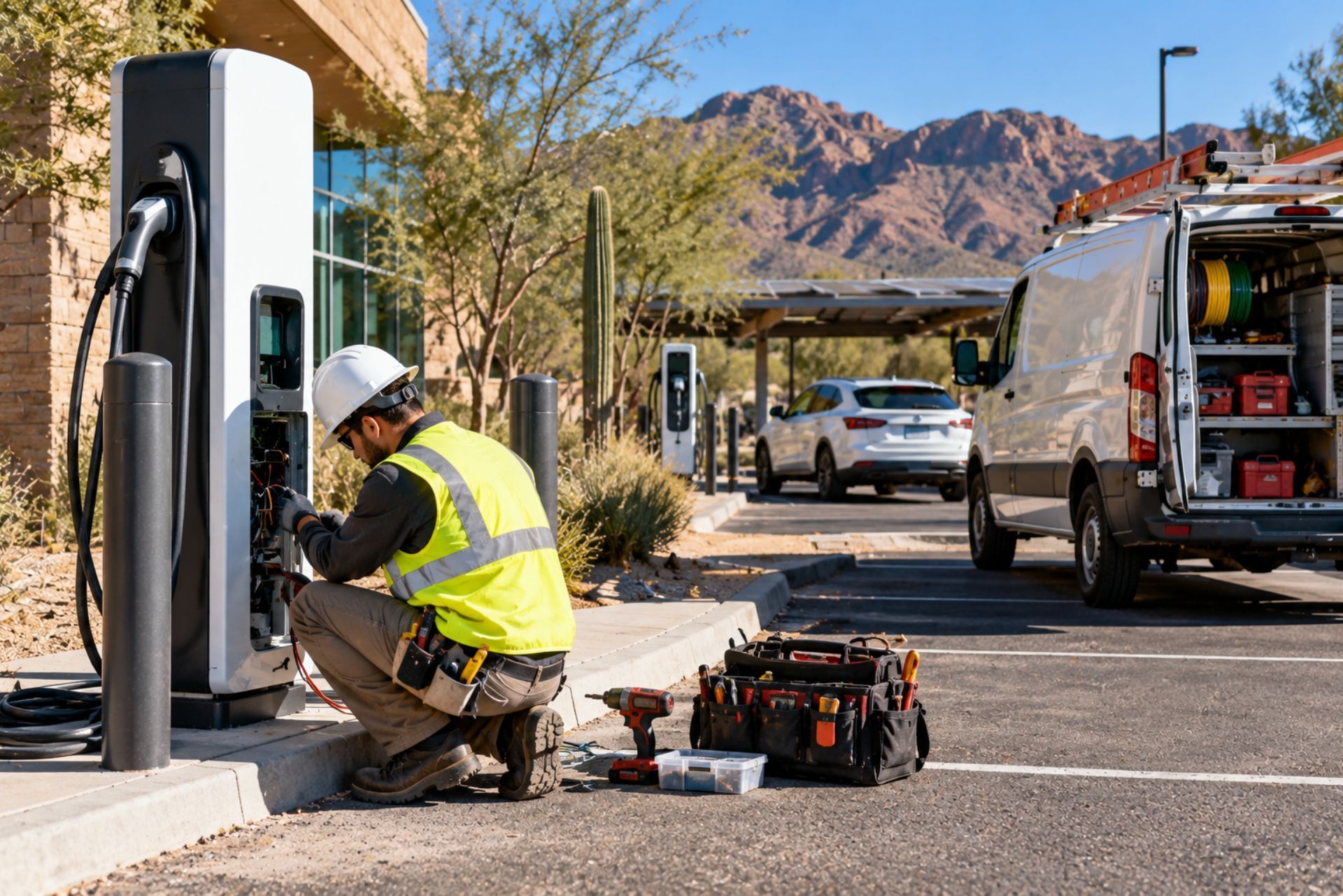
Not every EV installer needs the same policy structure. A solo operator doing residential installs has different exposure than a five-person crew handling commercial fleet charging stations. The table below shows what a basic policy covers versus a more comprehensive setup.
Comparison Table: Liability Limits and Included Protections
| Coverage Feature | Basic Policy | Comprehensive Policy |
|---|---|---|
| General Liability Limit | $500K/$1M | $1M/$2M or high |
| Completed Operations | Often excluded or sublimited | Included at full policy limits |
| Tools & Equipment (Inland Marine) | Not included | $25K-$100K+ coverage |
| Additional Insured Endorsements | Limited or extra cost | Included, multiple parties |
| Commercial Auto | Not included | Included for work vehicle |
| Workers Comp | Not included | Available as part of package |
| COI Turnaround | Self-serve, may take days | Direct producer, same-day typical |
The basic policy might save you $500 a year, but it leaves gaps that a single claim can blow wide open. If you're doing any commercial work or working as a sub under a GC, the comprehensive route isn't optional: it's the cost of doing business.
Estimated Costs and Pricing Factors in Colorado
Insurance pricing for EV charger installers in Colorado varies widely, but there are clear patterns. Your annual spend depends on a handful of factors that underwriters weigh heavily.
How Business Size and Location Influence Premiums
A solo installer with $150,000 in annual revenue and no employees will sit at the lower end of the spectrum. Colorado electrical contractors in that range typically see general liability premiums between $700 and $3,000 per year. Add inland marine for tools ($300-$1,500), commercial auto ($1,200-$3,000), and workers comp if you have employees ($2,000-$8,000+), and your total annual insurance cost could range from $2,500 to $15,000 or more.
Location matters too. Contractors working in Denver and Boulder tend to pay slightly higher premiums than those in rural Colorado, partly due to higher property values and claim frequency in metro areas. Your claims history is the single biggest factor, though: one or two paid claims in the past three years can double your premium.
Ways to Lower Monthly Insurance Expenses
- Pay annually instead of monthly: most carriers offer a 5-10% discount for paying the full premium upfront
- Bundle policies with a single carrier or program: packaging GL, auto, and inland marine together often reduces the total
- Maintain a clean claims record: even one preventable claim stays on your record for three to five years
- Increase your deductible: raising it from $500 to $2,500 can meaningfully lower your premium, but make sure you can absorb that cost if a claim hits
- Work with a specialty program like Joule Pro that understands electrical trade risk: generalist agencies often misclassify your work, which can lead to higher rates or coverage gaps
Common Questions About EV Installer Insurance
FAQ: Does my standard electrical license cover my insurance needs?
No. Your electrical license proves you're qualified to do the work. Insurance is a completely separate requirement. Most Colorado municipalities require both a valid license and proof of insurance before issuing permits.
FAQ: How long does it take to get a Certificate of Insurance?
With a specialty program that has direct producer access, same-day COIs are typical. Some self-serve platforms take 24-72 hours, which can stall a project if a GC needs documentation before you start.
FAQ: What happens if a charger fails months after I install it?
That's exactly what completed operations coverage handles. If a properly insured charger causes property damage or injury after installation, your GL policy's completed operations provision responds to the claim.
FAQ: Are my tools covered if they are stolen from my truck?
Only if you carry inland marine or a tools and equipment floater. Your personal auto policy and basic commercial property policy almost certainly exclude tools stolen from a vehicle. Inland marine premiums are relatively low compared to the replacement cost of specialized electrical equipment.
FAQ: Do I need extra coverage for commercial vs. residential installs?
Usually, yes. Commercial jobs often require higher liability limits ($2M or more), additional insured endorsements for property owners and GCs, and sometimes pollution liability if you're working in parking structures or near sensitive environments. Your insurer should adjust your policy based on the type of work you're actually performing.
Making the Right Choice for Your Business
Getting insurance for EV charger installation work in Colorado isn't about checking a box. It's about building a coverage stack that matches your actual risk: the tools in your truck, the jobs you take, the clients you serve, and what happens after you leave a site. A policy with the right limits, proper completed operations coverage, and fast COI turnaround is what separates a contractor who survives a bad claim from one who doesn't.
If you're installing EV chargers in Colorado and want coverage built specifically for electrical contractors, not retrofitted from a general contractor template, reach out to Joule Pro. Every quote and policy is handled by a licensed insurance professional who understands the electrical trade, backed by Fusco Orsini & Associates Insurance Services. Get the coverage right the first time so you can focus on the work.

Founder & CEO
The Force Behind the Program
About the Author:
Michael Fusco.
Fusco Orsini & Associates
Joule Pro exists because Mike Fusco saw electrical contractors getting boilerplate insurance — and built a program designed for the way the trade actually works.
Mike is the CEO and co-founder of Fusco Orsini & Associates, the San Diego–based independent agency he launched in 2010. Under his leadership FOA has grown into a nationwide partner serving clients across 31 states, with a personal, client-first approach to commercial insurance and risk.
With over 20 years in insurance and risk management, he specializes in tailored programs spanning general liability, workers' compensation, surety bonding, and employee benefits — helping owners confidently manage risk and pursue growth.
Mike holds a B.S. in Business from the University of Maryland — Robert H. Smith School of Business, and the Certified Insurance Counselor (CIC) designation, held by fewer than 3% of insurance professionals nationwide.
What Our Clients Say
Trusted by Electrical Contractors Across the Country.
5.0
★★★★★
Google reviews
Core Commercial Coverage
Business Insurance for Electrical Contractors.
The fundamentals — written, structured, and priced for electrical risk. Each line is reviewed annually by an underwriter who only writes our trade.
01
General Liability
Premises & completed-operations coverage with electrical-specific endorsements and full pollution carve-back options.
02
Workers' Compensation
Class-code optimization, experience-mod review, and return-to-work programs designed for energized-work exposures.
03
Commercial Auto
Fleet, hired & non-owned auto, and tools-in-transit coverage written for service vans and bucket trucks.
04
Tools & Equipment
Scheduled and blanket coverage for tools, test equipment, scissor lifts, and contractor's equipment on-site or in-transit.
05
Surety Bonds
Bid, performance, and payment bonds — single-job and aggregate programs for commercial & public-works contracts.
06
Commercial Property
Layered limits up to $50M with carrier panels covering your shop, warehouse, yard, and on-premises tools, materials, and equipment.
Who We Serve
Electrical Contractors We Specialize In.
From $5M service shops to $250M industrial primes — every Joule Pro program is shaped to the contractor's revenue mix and project profile.
01 / Industrial
Commercial & Industrial Electrical Contractors
High-voltage, substation, and plant electrical work. Pollution, builder's risk, and large-deductible WC programs.
02 / Service
Service & Residential Electrical Contractors
Service-call shops, panel upgrades, and EV charging installers. Auto-fleet, GL, and tool-coverage programs.
03 / Low-Voltage
Specialty & Low-Voltage Contractors
Data, fire-alarm, security, and BMS controls. Cyber, professional liability, and follow-form excess.
Frequently Asked Questions
Common
Questions From
Electrical Contractors.
What size electrical contractors do you write?
Joule Pro is built for licensed electrical firms from roughly $2M in revenue to $250M+. Below $2M we typically refer to our small-business desk; above $250M we underwrite individually with our industrial practice team.
Do I need to be licensed in multiple states?
No. We license you wherever you work. Joule Pro is admitted in 31 states and our compliance team handles multi-state filings, prevailing-wage endorsements, and certificate-of-insurance requirements.
How is Joule Pro different from a generic contractor program?
Generic programs use a contractor's questionnaire that treats you like a roofer. We use forms written for energized work, arc-flash exposures, and design-build risk — and our carriers price accordingly.
What does the claims process actually look like?
Every Joule Pro client is assigned a named claims advocate at bind. They take the FNOL, set strategy with your assigned attorney, and serve as your single point of contact through close.
Can you bond large public-works contracts?
Yes. Through our surety partners we write single-job bonds up to $75M and aggregate programs to $300M, with expedited turnarounds for school district, federal, and DOT work.
What happens at renewal?
Your producer and claims advocate jointly run a renewal review 90 days out — covering loss trends, exposure changes, and market alternatives — so renewal day is a confirmation, not a surprise.
From the Blog
Insights for Electrical Contractors.
Risk briefings, claim post-mortems, and program updates — written by our underwriters and risk engineers.


Get Started
Get a Quote on a Program Built Around Your Trade.
A 30-minute discovery call is the only commitment. You'll leave with a written gap analysis of your current program — yours to keep, whether you bind with us or not.