See How It Works
Virtual power plant programs pay homeowners to let the utility dispatch their battery during grid stress events. Programs like
Tesla's Virtual Power Plant and OhmConnect offer $50-$300 per year depending on the market and frequency of dispatch events. Some utilities in Texas and California are piloting more aggressive VPP compensation that could push annual payments above $500. For contractors, mentioning VPP eligibility during the sales process adds a tangible financial benefit that helps close deals.
Maintenance and Degradation Factors
LFP batteries degrade slower than older NMC chemistry. Most manufacturers guarantee 70-80% capacity retention after 10 years, and real-world data suggests many LFP systems will hold above 85% at that mark. Maintenance is minimal: firmware updates, occasional visual inspections, and ensuring proper ventilation. As an electrical contractor, you should factor degradation into payback calculations. A system producing $1,200 in savings in year one might produce $1,050 by year eight. Using an average annual savings figure across the warranty period gives homeowners a more honest projection.
Will installing batteries increase my liability as a contractor?
What's the typical warranty on a home battery?
Can I install a battery myself?
Should Electrical Contractors Offer Battery Installation Services?
Picture a 400-kWh battery install at a commercial warehouse. Six months after commissioning, a cell module overheats, smoke damages the tenant's inventory, and the building owner's insurer sends a subrogation letter. The letter names your company, your electrical sub, the integrator, and the battery manufacturer. Who pays depends almost entirely on decisions you made before the job started.
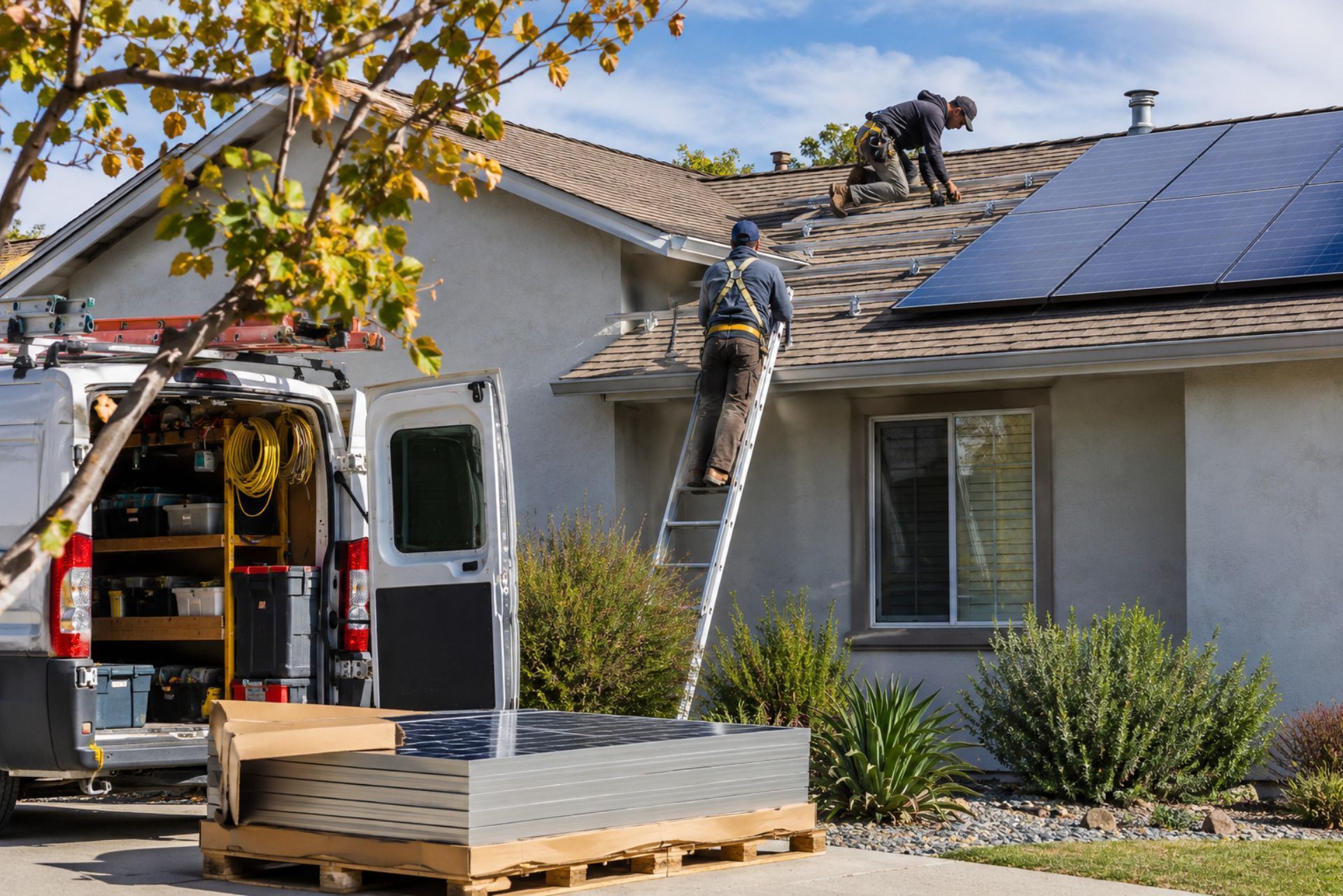
That is the reality for electrical contractors who have moved into solar and storage work. The revenue is real, but so is the exposure. Rooftop arrays put crews at height and on someone else's structure. Battery systems add chemistry, fire codes, and long-tail claims that can surface years after you've cashed the final check.
Getting your liability structure right is not just about
buying more insurance. It means matching policy forms to the actual work you do, writing contracts that put risk where it belongs, and closing the gaps that tend to swallow claims whole. What follows walks through each layer, with attention to the coverage mistakes we see most often from contractors expanding into renewables.
The Evolving Liability Landscape for Solar and Storage
Five years ago, many electrical contractors treated solar as a side line: a few residential arrays a month, mostly handled under their existing general liability policy. That approach no longer holds. Projects are larger, battery attachment rates have climbed sharply, and owners, lenders, and utilities now expect contractors to carry specific, documented coverage before a shovel hits the ground.
Courts and legislatures are paying closer attention too. A notable Eleventh Circuit decision in First Solar v. Zurich held that an insurer may waive its right to apply a higher deductible, such as a $2.5 million flood deductible versus a $100,000 water damage deductible, if it handles the claim under the lower tier without a specific reservation of rights. The practical lesson for contractors: how a claim is classified in the first weeks can swing your out-of-pocket cost by millions, so document everything and push your carrier for clarity early.
Payment practices are drawing scrutiny as well. Starting July 1, 2026, Florida's Section 489.1295 allows licensing sanctions and fines up to $10,000 against contractors who knowingly withhold payment from subcontractors or suppliers. That is a licensing risk, not an insurable one, which shows how liability now extends well past bodily injury and property damage.
Industry standards are tightening alongside the law. SEIA rolled out professional certification programs tied to two new standards covering ethical sales and O&M technician safety: ANSI/SEIA 401-2025 and ANSI/SEIA 301-2025. Expect these to show up in contract requirements and, eventually, in how underwriters evaluate your operation.
General Liability: The Foundation of Contractor Protection
Commercial general liability (CGL) covers bodily injury and property damage to third parties arising from your operations. For a solar contractor, that might be a homeowner tripping over conduit, a dropped rail denting a car, or a roof penetration that leaks into a client's attic. It is the policy every owner and GC will ask about first.
The catch is that a standard CGL form was not written with solar in mind. Many policies carry exclusions or classification limits that quietly restrict coverage for roofing work, work above a certain height, or "energy generation" operations. If your policy is rated under a general electrical class code and you start doing rooftop arrays without telling your carrier, a claim could trigger a misclassification dispute or a flat denial.
Here's what that means for you: read the classifications and exclusions on your declarations page, and confirm in writing that solar installation and battery work are covered operations. Most commercial contracts on solar projects require at least $1 million per occurrence and $2 million aggregate, with larger commercial and utility work often requiring an umbrella on top.
Completed Operations and Product Liability
This is where solar claims get expensive. A large share of losses in this trade show up after the job is finished: a roof leak two winters later, an inverter fire, a ground fault that damages a building's electrical system. Completed operations coverage, part of the products-completed operations aggregate on your CGL, responds to those claims.
Watch three things closely:
- The aggregate limit: A separate products-completed operations aggregate keeps a single bad year of post-job claims from eating your entire policy.
- Duration of coverage: Many contracts require you to maintain completed operations coverage, including additional insured status for the owner, for a set number of years after completion. Lapsing your policy or switching to a form with weaker terms can leave you in breach.
- Product claims: If you supply panels, racking, or batteries, you may be pulled into a product defect suit even when the manufacturer is at fault. Make sure your contracts and supplier agreements include indemnity flowing back to the manufacturer.
Handling Third-Party Property Damage Claims
Roof damage is the single most common third-party claim we see on residential solar. Contractors are often surprised to learn that their own faulty workmanship is typically excluded under the "your work" exclusion, while the resulting damage to the homeowner's ceiling, drywall, and belongings is generally covered.
When a claim comes in, report it immediately, even if you think it's minor and plan to fix it yourself. Late notice is one of the easiest ways to lose coverage. Photograph your work at completion, keep penetration and flashing details in the job file, and never admit fault in writing to the property owner before your carrier weighs in.
Professional Liability and Errors & Omissions
General liability responds to physical damage and injury. It does not cover financial losses caused by bad advice or flawed design. That gap is exactly where professional liability, often called errors and omissions (E&O), comes in.
Many electrical contractors assume they don't need it because they "just install." Look at what your crew actually does on a typical solar job, though. You size the system, pick inverters, select conductor sizes, design the interconnection, estimate production, and sometimes stamp or prepare drawings through an in-house engineer. Each of those is a professional service, and each can generate a claim with no broken glass or injured person anywhere in sight.
A contractors professional liability policy fills that gap. Some carriers offer it as a standalone policy; others bundle it with pollution coverage in a combined form designed for design-build contractors. If you take on design-build or EPC work, ask your agent to compare both structures.
System Design and Performance Guarantee Risks
Production estimates are where clients get burned and where contractors get sued. A homeowner promised 12,000 kWh a year who sees 9,500 may come after you for the gap in savings over the life of their loan. On commercial projects, power purchase agreements and lender requirements can turn a design miss into a six-figure claim.
Be careful with performance guarantees. Most professional liability policies exclude express warranties and guarantees that go beyond the standard of care. If your sales team promises a specific output or payback period in writing, you may be taking on contractual risk your insurance will never touch. Keep production figures labeled as estimates, document assumptions like shading and degradation, and have your contract template reviewed. SEIA's 401-2025 ethical sales standard is a useful benchmark for training salespeople on what they can and can't promise.
Comparing Coverage Needs: General vs. Professional Liability
Contractors frequently ask whether they need both policies. If you do any design, sizing, or engineering, the answer is almost always yes. The two policies respond to very different kinds of losses, and the overlap is smaller than most people assume.
| Factor | General Liability | Professional Liability (E&O) |
|---|---|---|
| What it covers | Bodily injury, property damage | Financial loss from errors in design or advice |
| Typical solar claim | Roof leak damages interior | System underproduces, client loses savings |
| Trigger | Occurrence (when damage happens) | Usually claims-made (when claim is filed) |
| Covers faulty design? | Generally no | Yes, within the standard of care |
| Covers guarantees? | No | Usually excluded |
| Usually required by | Owners, GCs, utilities | Design-build and EPC contracts |
The trigger difference matters more than people realize. Claims-made professional liability only responds if the policy is active when the claim is filed. If you cancel or switch carriers without securing prior acts coverage or an extended reporting period ("tail"), a claim on a system you designed three years ago could fall into a gap with no coverage at all.
One thing to keep in mind: some contractors buy a cheap E&O policy with a low limit just to satisfy a contract checkbox. That rarely holds up when a commercial production shortfall lands on your desk. Size the limit to the largest project you're designing, not the smallest.
Managing Risks Unique to Battery Energy Storage Systems (BESS)
Battery work changes your risk profile more than any other part of solar. Panels are mostly glass, aluminum, and wire. Lithium-ion storage brings stored energy, chemical hazards, stricter fire codes, and a claims history that underwriters are still learning to price.
Valuations show how seriously the market treats this. In 2026, annual property insurance for utility-scale battery projects typically runs between 0.3% and 1.2% of total project value. That sits with the owner, but it signals how insurers view the hazard, and contractors on those jobs get scrutinized accordingly. Expect questions on your BESS experience, certifications, and commissioning procedures before you get a quote.
On residential and light commercial jobs, the biggest exposure usually comes from installation details: clearances, location, ventilation, and adherence to the manufacturer's installation manual and local fire code. Deviating from the manual, even for a good reason, hands both the manufacturer and your carrier an argument against paying.
Thermal Runaway and Fire Suppression Liability
Thermal runaway is the scenario that keeps underwriters up at night. A single failing cell can heat neighboring cells, release flammable gas, and cause a fire that is very difficult to extinguish. If that fire starts in a garage and spreads to a home, the loss can easily exceed a typical $1 million per-occurrence limit.
Your defense starts long before any fire. Document that the unit was installed per the manufacturer's specs and the adopted code, that clearances and detection requirements were met, and that commissioning tests were completed and recorded. If your job includes fire detection or suppression design, that pulls in professional liability as well. Carry umbrella limits that reflect the realistic worst case, not the average job.
Environmental Concerns and Hazardous Materials
Batteries contain electrolytes and metals that become a contamination issue after a fire, a crushed module, or an improper disposal. Cleanup of soil or groundwater after a battery fire is typically excluded under the standard pollution exclusion on a CGL policy.
The same applies to decommissioning and removal work. If you haul damaged or end-of-life batteries, you may be handling regulated hazardous waste. Confirm transport and disposal requirements with your vendor and local authorities, and make sure you have contractors pollution liability in place before taking on removal jobs.
Workers' Compensation and Subcontractor Management
Falls from roofs, electrical shocks, and heat illness drive most serious injuries on solar jobs. Workers' comp is mandatory for employers in nearly every state, but the details matter for solar contractors in ways they often miss.
Classification is the first issue. Rooftop solar installation is frequently rated differently from general electrical wiring, and some states treat it closer to roofing for comp purposes. If your payroll is split between service work and rooftop installs, make sure your payroll is assigned correctly. An audit that reclassifies installers into a higher-rated code can produce a surprise bill well after the policy year ends.
Safety programs pay off directly here. A documented fall protection plan, regular training, and a clean loss history keep your experience modification rate down, which lowers premiums and helps you qualify for bids that set EMR thresholds. SEIA's 301-2025 standard on O&M technician training and safety checks gives you a credible framework to build around if your company also handles maintenance contracts.
Verifying Certificates of Insurance for Subs
If you hire a sub who doesn't carry workers' comp and one of their workers gets hurt, your policy may end up paying for that injury, and your premium audit will charge you for the sub's payroll. The same goes for liability: an uninsured sub's mistake lands on your policy.
Build a simple verification routine:
- Collect a certificate of insurance before any sub sets foot on site.
- Confirm general liability limits meet or exceed your contract requirements.
- Require additional insured status for your company, ideally including completed operations.
- Check that the workers' comp policy is active and covers the right state.
- Get a waiver of subrogation endorsement where your contract requires it.
- Calendar expiration dates and request renewals before they lapse.
A certificate alone doesn't prove coverage, since it's informational. For larger subs, ask for the actual endorsements. And keep pay apps current: in Florida especially, slow-paying subs now carries licensing consequences.
Essential Extensions: Pollution, Cyber, and Auto
Your core policies leave real gaps that solar and storage work tends to expose. Three extensions deserve a serious look.
Contractors pollution liability covers cleanup and third-party claims from contamination your work causes, including battery electrolyte releases and disturbed materials during roof or trenching work. As noted above, a standard CGL won't respond to most of these losses.
Cyber coverage used to feel irrelevant to electricians. That changes once you install monitoring platforms, connect inverters to the internet, and store customer financing data. A compromised monitoring account or a ransomware attack on your office systems can halt operations and trigger notification costs.
Commercial auto is easy to overlook. Your trucks haul ladders, racking, and sometimes batteries to job sites. A personal auto policy won't cover a work vehicle crash, and your fleet may need hired and non-owned auto coverage for employees running errands in their own cars.
Inland Marine Coverage for Equipment in Transit
Panels, inverters, and batteries are expensive and fragile, and they spend a lot of time in trucks, staging yards, and unsecured job sites. Your CGL doesn't cover your own property, and a commercial property policy usually only covers items at your listed locations.
Inland marine fills that gap. A contractors equipment floater covers tools and gear wherever they go, and an installation floater covers materials in transit and on site until the owner accepts the work. Theft of panels from a staged pallet is one of the most common claims in this trade, so check that your limits cover the value of materials on your biggest job, not your average one.
Common Questions About Solar Contractor Insurance
Does my regular electrical contractor policy cover solar work? Not automatically. Many policies limit coverage for roof work or energy generation, so confirm in writing that solar and battery installation are covered operations.
Do I need professional liability if I only install systems someone else designed? If you truly follow another party's stamped design without changes, your exposure is lower. Most installers still size systems or adjust layouts in the field, which counts as design work.
What happens if a battery I installed catches fire years later? Your completed operations coverage would typically respond, provided your policy is still active and the loss isn't excluded. That's why keeping continuous coverage and good installation records matters.
Can I skip workers' comp if I use only subcontractors? Usually not safely. If your subs lack coverage, their injured workers can often claim against your policy, and auditors may charge you for that payroll.
How much general liability do solar contractors usually carry? Many contracts call for $1 million per occurrence and $2 million aggregate. Commercial and utility jobs often require an umbrella policy on top.
Is battery removal and disposal covered by general liability? Contamination from battery materials is usually excluded under the pollution exclusion. You'll need contractors pollution liability for that exposure.
Making the Right Choice for Long-Term Stability
Solid protection for solar and storage contractors comes from layering coverage deliberately: a CGL policy classified correctly for rooftop and battery work, professional liability sized to your design exposure, pollution coverage for battery hazards, and inland marine for the equipment that keeps disappearing from job sites. Contracts and subcontractor controls tie it together by keeping risk with whoever actually created it.
The contractors who get hurt are rarely the ones who skipped insurance entirely. They're the ones whose policy looked fine on paper until a claim exposed an exclusion nobody read.
If you're expanding into renewables or reviewing your current program, Joule Pro works exclusively with licensed electrical contractors and can build out the full stack, from general liability and workers' comp to commercial auto, inland marine, and contractor-specific endorsements. You'll work directly with a licensed producer who understands solar and BESS risk. Reach out for a coverage review before your next storage job, not after the first claim.

By: Michael Fusco
President of Joule Pro
Joule Pro is a specialty insurance and risk program of Fusco Orsini & Associates Insurance Services, built exclusively for electrical contractors and licensed in 31 states.
We work with electrical firms across the country — from California, Texas, Florida, New York, and coast to coast — placing General Liability, Workers' Compensation, Commercial Auto, Inland Marine, Surety Bonds, Excess Liability, and full specialty coverage stacks for commercial, industrial, service, residential, and low-voltage electrical contractors. Joule Pro is not a separate licensed entity. It is a dedicated program structure inside Fusco Orsini, giving electrical contractors access to specialty carriers, in-house claims advocacy, and trade-specific risk engineering under one program.

Founder & CEO
The Force Behind the Program
About the Author:
Michael Fusco.
Fusco Orsini & Associates
Joule Pro exists because Mike Fusco saw electrical contractors getting boilerplate insurance — and built a program designed for the way the trade actually works.
Mike is the CEO and co-founder of Fusco Orsini & Associates, the San Diego–based independent agency he launched in 2010. Under his leadership FOA has grown into a nationwide partner serving clients across 31 states, with a personal, client-first approach to commercial insurance and risk.
With over 20 years in insurance and risk management, he specializes in tailored programs spanning general liability, workers' compensation, surety bonding, and employee benefits — helping owners confidently manage risk and pursue growth.
Mike holds a B.S. in Business from the University of Maryland — Robert H. Smith School of Business, and the Certified Insurance Counselor (CIC) designation, held by fewer than 3% of insurance professionals nationwide.
Recent Posts