
Business Insurance
Commercial EV Fleet Charging Contractor Insurance
★★★★★ 150+ Five-Star Reviews · Google & Facebook
A fleet of electric delivery vans sitting in a depot overnight needs more than just parking spaces: it needs reliable charging infrastructure. And the contractors who install, wire, and commission those charging systems face a risk profile that most general insurance programs don't understand well. Between high-voltage electrical work, expensive equipment, and the contractual demands of fleet operators, EV charging contractors need insurance coverage that's purpose-built for their trade. The global EV insurance market is
projected to reach $100.2 billion in 2026, growing at a 17.3% CAGR, and that growth is pulling contractors into increasingly complex projects with higher stakes. Whether you're wiring Level 2 stations for a municipal bus fleet or deploying DC fast chargers across a logistics network, the insurance you carry determines whether one bad day ends your business or just becomes a manageable claim. Getting coverage right means understanding the specific risks you face, the policies that address them, and the contract requirements that fleet owners will demand before you set foot on their property.
Risk Management for EV Charging Infrastructure Projects
EV charging installation isn't your typical electrical job. The combination of high-amperage circuits, networked software, and heavy equipment creates a risk profile that sits at the intersection of
electrical contracting, IT services, and heavy rigging. Understanding these risks is the first step toward buying insurance that actually protects you.
Electrical Hazards and Fire Risks during Installation
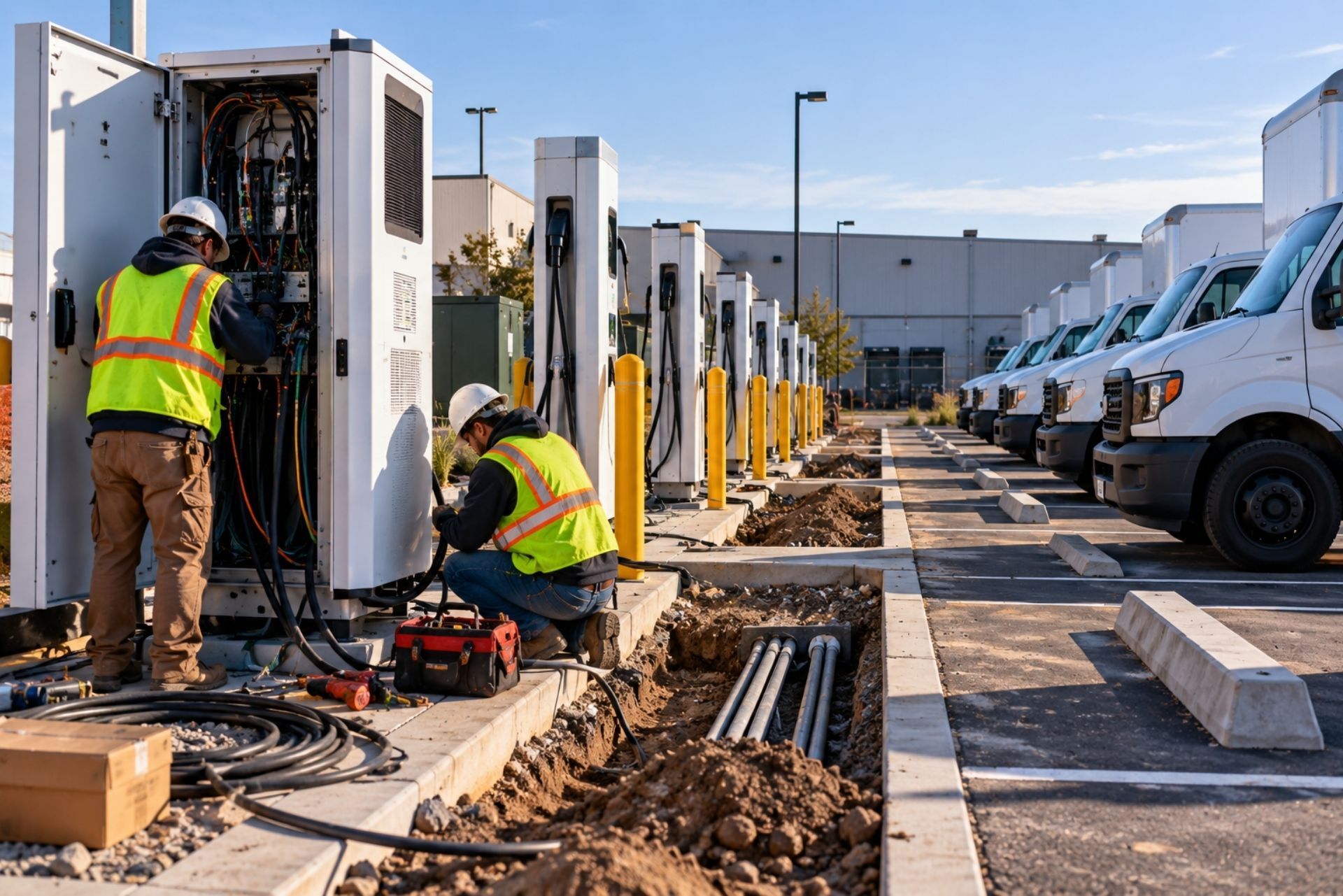
Working with 480-volt three-phase power and DC systems rated at 150 kW or more puts crews in direct contact with serious arc flash and electrocution hazards. OSHA's March 2026 "Electrical Roll Up Initiative" highlighted that
74% of workplace electrical fatalities occur in non-electrical occupations, which means the workers most at risk are often the least prepared. For
licensed electrical contractors, this is a reminder that your training gives you an edge, but it doesn't eliminate the risk. A single arc flash incident at a fleet depot can cause severe burns, property damage, and a liability claim that runs into seven figures.
Software Integration and Cybersecurity Vulnerabilities
Modern fleet charging stations aren't standalone devices. They connect to load management software, utility demand-response programs, and fleet telematics systems. If your installation introduces a software vulnerability or misconfigures a network connection, you could be liable for data breaches or system downtime that costs the fleet operator real money. This is where traditional
general liability policies fall short: they weren't designed to cover technology-related errors.
Equipment Damage during Transport and Rigging
A single DC fast charger can cost $30,000 to $80,000 before installation, according to
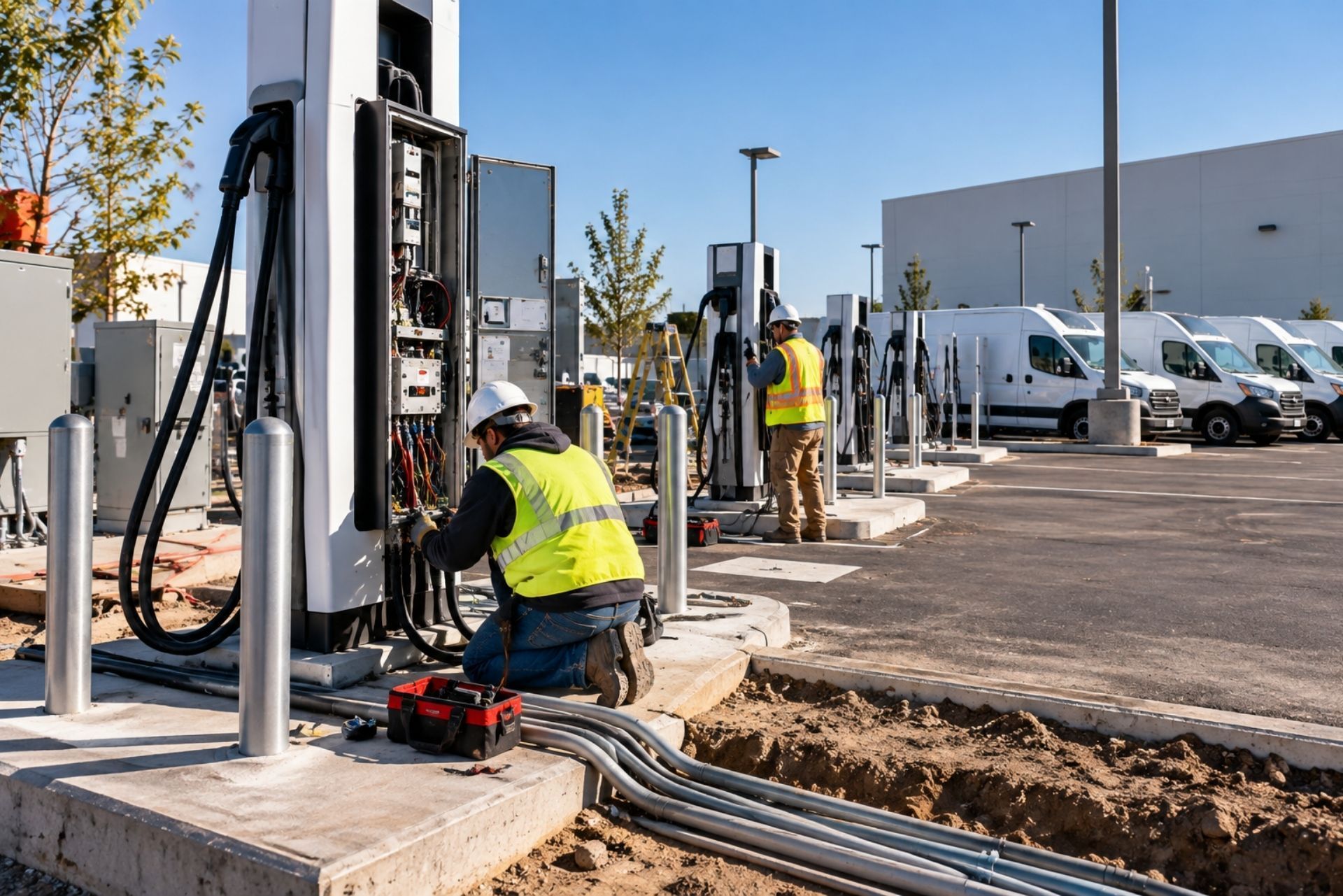
winsparking.com. Moving these units from a warehouse to a job site, then positioning them on concrete pads, involves forklifts, cranes, and flatbed trucks. Damage during transport or rigging is more common than most contractors expect, and your standard
commercial auto policy won't cover equipment that isn't bolted to your truck.

By: Michael Fusco
President of Joule Pro
INDEX
Joule Pro is a specialty insurance and risk program of Fusco Orsini & Associates Insurance Services, built exclusively for electrical contractors and licensed in 31 states.
We work with electrical firms across the country — from California, Texas, Florida, New York, and coast to coast — placing General Liability, Workers' Compensation, Commercial Auto, Inland Marine, Surety Bonds, Excess Liability, and full specialty coverage stacks for commercial, industrial, service, residential, and low-voltage electrical contractors. Joule Pro is not a separate licensed entity. It is a dedicated program structure inside Fusco Orsini, giving electrical contractors access to specialty carriers, in-house claims advocacy, and trade-specific risk engineering under one program.
Essential Insurance Coverages for Fleet Charging Contractors
The insurance needs for EV charging contractors span several policy types. A basic general liability policy is a starting point, but it's only one piece of a much larger puzzle. Here's what a complete coverage stack looks like for contractors in this space.
General Liability vs. Professional Liability (Errors & Omissions)
General liability covers bodily injury and property damage that happens during your work: a trench collapse that injures a bystander, a fire caused by faulty wiring, or water damage from cutting into an existing utility line. Professional liability, on the other hand, covers claims arising from your professional advice or design errors. If you spec the wrong charger capacity for a fleet's duty cycle and the client loses revenue because vehicles can't charge fast enough, that's a professional liability claim. Many fleet charging contracts require both, and they're separate policies.
Pollution Liability for Excavation and Site Prep
Charging station installations often require trenching for conduit runs and sometimes transformer pad work. If your crew hits an unknown underground fuel tank or disturbs contaminated soil, you're looking at environmental cleanup costs that general liability policies typically exclude. Pollution liability fills that gap, and it's increasingly required by fleet operators who've been burned by remediation costs on their own properties.
Inland Marine for High-Value Charging Stations
Inland marine coverage protects equipment and materials in transit or stored at job sites. For EV charging contractors, this is critical. Those expensive charger units, transformers, switchgear panels, and cable assemblies need protection from the moment they leave the distributor until they're installed and energized. Joule Pro's inland marine coverage, for example, is built specifically for electrical contractors who handle high-value components, which is exactly the scenario fleet charging projects create.
Comparison of Coverage Scopes: Basic vs. Comprehensive
Not all insurance programs are created equal. The difference between a basic policy and a comprehensive one can mean the difference between full protection and a devastating coverage gap.
Table: Standard General Liability vs. Specialized Fleet Contractor Packages
| Coverage Area | Standard GL Policy | Specialized Fleet Contractor Package |
|---|---|---|
| Bodily Injury / Property Damage | Included | Included with higher sublimits |
| Completed Operations | Often limited or excluded | Full completed operations tail |
| Tools & Equipment | Not included | Covered via inland marine |
| Pollution / Environmental | Excluded | Available as endorsement or separate policy |
| Professional Liability (E&O) | Not included | Available as add-on |
| Cyber Liability | Not included | Available for smart charging systems |
| Equipment in Transit | Not covered | Covered under inland marine |
| Additional Insured Endorsements | Limited flexibility | Tailored to fleet owner requirements |
The completed operations column deserves special attention. If a charger you installed six months ago causes a fire at a fleet depot, completed operations coverage responds to that claim. Without it, you're uninsured for the most common type of post-installation liability.
Meeting Commercial Contract Requirements
Landing fleet charging contracts means meeting strict insurance requirements before you start work. Fleet operators, property managers, and municipalities all have their own standards, and falling short on any of them can cost you the job.
Navigating Additional Insured Endorsements for Fleet Owners
Almost every commercial fleet contract will require you to name the fleet owner, the property owner, and sometimes the general contractor as additional insureds on your general liability policy. This isn't optional: it's a prerequisite for getting on site. The endorsement extends your liability coverage to protect those parties against claims arising from your work. A specialty program like Joule Pro handles these endorsements routinely because they're standard in electrical contracting. Generalist agencies sometimes struggle with the turnaround time or don't understand which endorsement form the client actually needs, which can delay project starts.
Surety Bonds for Large-Scale Municipal and Private Projects
Municipal fleet charging projects, like those for public transit agencies, typically require bid bonds, performance bonds, and payment bonds. These aren't insurance policies: they're financial guarantees that you'll complete the work as specified. Bonding capacity depends on your company's financial strength, and it's separate from your insurance program. That said, working with an insurance producer who understands bonding for electrical contractors can streamline the process significantly.
Common Questions About EV Charging Contractor Insurance
Contractors new to fleet charging work tend to have the same questions. Here are the ones that come up most often, with straightforward answers.
Do I need special insurance if I only install Level 2 chargers?
Yes. Level 2 chargers still involve 240-volt circuits and often require panel upgrades or new service runs. The liability exposure is real, even if the equipment costs less than DC fast chargers. Your general liability policy needs to reflect electrical contracting work, and you'll still need completed operations coverage.
Does my general liability cover damage to the fleet vehicles?
It can, but only if the damage results directly from your operations. If a crew member backs a trencher into a parked electric bus, that's a general liability claim. But if a charger you installed delivers incorrect voltage and fries a vehicle's onboard charger, that might fall under completed operations or even professional liability depending on the circumstances.
Will my policy cover equipment while it is sitting at the job site?
Standard general liability does not cover your own equipment or materials. You need inland marine or tools and equipment coverage for charger units, cable, switchgear, and other components stored on site. Without it, theft or weather damage to charging equipment—which can exceed $100,000 in total value for a single 150kW installation per winsparking.com—comes out of your pocket.
How much does a typical policy for charging contractors cost?
Premiums vary widely based on your revenue, payroll, claims history, and the specific coverages you need. A small contractor doing $500,000 in annual revenue might pay differently than a firm running $5 million in fleet charging projects. Rather than guessing at a number, the best approach is to work with a producer who specializes in electrical contractor insurance and can build a quote around your actual operations.
Do I need cyber insurance for smart charging software setup?
If you're configuring networked chargers, connecting them to fleet management platforms, or setting up load management systems, cyber liability coverage is worth serious consideration. A misconfiguration that exposes a fleet operator's data or disrupts their charging schedule could generate a claim that your general liability policy won't touch.
Making the Right Choice for Your Fleet Contracts
The EV fleet charging market is pulling licensed electrical contractors into projects with higher contract values, stricter insurance requirements, and more complex risk profiles than traditional commercial electrical work. Getting the right insurance isn't just about checking boxes on a contract: it's about making sure your business survives the claims that inevitably come with high-voltage, high-value installations.
A complete coverage stack for fleet charging contractors includes general liability with completed operations, workers' compensation, commercial auto, inland marine for tools and equipment, and increasingly, professional liability and cyber coverage. Certificates of insurance need to be issued quickly and accurately, with the right additional insured endorsements for each project.
Joule Pro builds insurance programs specifically for licensed electrical contractors, including those expanding into EV charging infrastructure. If you're bidding on fleet charging contracts and need a coverage program that meets the requirements, reach out to a Joule Pro producer who can walk through your specific operations and build a policy package that fits. The work is too specialized and the stakes are too high for a one-size-fits-all approach.

Founder & CEO
The Force Behind the Program
About the Author:
Michael Fusco.
Fusco Orsini & Associates
Joule Pro exists because Mike Fusco saw electrical contractors getting boilerplate insurance — and built a program designed for the way the trade actually works.
Mike is the CEO and co-founder of Fusco Orsini & Associates, the San Diego–based independent agency he launched in 2010. Under his leadership FOA has grown into a nationwide partner serving clients across 31 states, with a personal, client-first approach to commercial insurance and risk.
With over 20 years in insurance and risk management, he specializes in tailored programs spanning general liability, workers' compensation, surety bonding, and employee benefits — helping owners confidently manage risk and pursue growth.
Mike holds a B.S. in Business from the University of Maryland — Robert H. Smith School of Business, and the Certified Insurance Counselor (CIC) designation, held by fewer than 3% of insurance professionals nationwide.
What Our Clients Say
Trusted by Electrical Contractors Across the Country.
5.0
★★★★★
GOOGLE REVIEWS
Core Commercial Coverage
Business Insurance for Electrical Contractors.
The fundamentals — written, structured, and priced for electrical risk. Each line is reviewed annually by an underwriter who only writes our trade.
01
General Liability
Premises & completed-operations coverage with electrical-specific endorsements and full pollution carve-back options.
02
Workers' Compensation
Class-code optimization, experience-mod review, and return-to-work programs designed for energized-work exposures.
03
Commercial Auto
Fleet, hired & non-owned auto, and tools-in-transit coverage written for service vans and bucket trucks.
04
Tools & Equipment
Scheduled and blanket coverage for tools, test equipment, scissor lifts, and contractor's equipment on-site or in-transit.
05
Surety Bonds
Bid, performance, and payment bonds — single-job and aggregate programs for commercial & public-works contracts.
06
Commercial Property
Layered limits up to $50M with carrier panels covering your shop, warehouse, yard, and on-premises tools, materials, and equipment.
Who We Serve
Electrical Contractors We Specialize In.
From $5M service shops to $250M industrial primes — every Joule Pro program is shaped to the contractor's revenue mix and project profile.
01 / Industrial
Commercial & Industrial Electrical Contractors
High-voltage, substation, and plant electrical work. Pollution, builder's risk, and large-deductible WC programs.
02 / Service
Service & Residential Electrical Contractors
Service-call shops, panel upgrades, and EV charging installers. Auto-fleet, GL, and tool-coverage programs.
03 / Low-Voltage
Specialty & Low-Voltage Contractors
Data, fire-alarm, security, and BMS controls. Cyber, professional liability, and follow-form excess.
Frequently Asked Questions
Common
Questions From
Electrical Contractors.
What size electrical contractors do you write?
Joule Pro is built for licensed electrical firms from roughly $2M in revenue to $250M+. Below $2M we typically refer to our small-business desk; above $250M we underwrite individually with our industrial practice team.
Do I need to be licensed in multiple states?
No. We license you wherever you work. Joule Pro is admitted in 31 states and our compliance team handles multi-state filings, prevailing-wage endorsements, and certificate-of-insurance requirements.
How is Joule Pro different from a generic contractor program?
Generic programs use a contractor's questionnaire that treats you like a roofer. We use forms written for energized work, arc-flash exposures, and design-build risk — and our carriers price accordingly.
What does the claims process actually look like?
Every Joule Pro client is assigned a named claims advocate at bind. They take the FNOL, set strategy with your assigned attorney, and serve as your single point of contact through close.
Can you bond large public-works contracts?
Yes. Through our surety partners we write single-job bonds up to $75M and aggregate programs to $300M, with expedited turnarounds for school district, federal, and DOT work.
What happens at renewal?
Your producer and claims advocate jointly run a renewal review 90 days out — covering loss trends, exposure changes, and market alternatives — so renewal day is a confirmation, not a surprise.
From the Blog
Insights for Electrical Contractors.
Risk briefings, claim post-mortems, and program updates — written by our underwriters and risk engineers.


Get Started
Get a Quote on a Program Built Around Your Trade.
A 30-minute discovery call is the only commitment. You'll leave with a written gap analysis of your current program — yours to keep, whether you bind with us or not.