Business Insurance
Standby Power and Generator Contractor Insurance
★★★★★ 150+ Five-Star Reviews · Google & Facebook
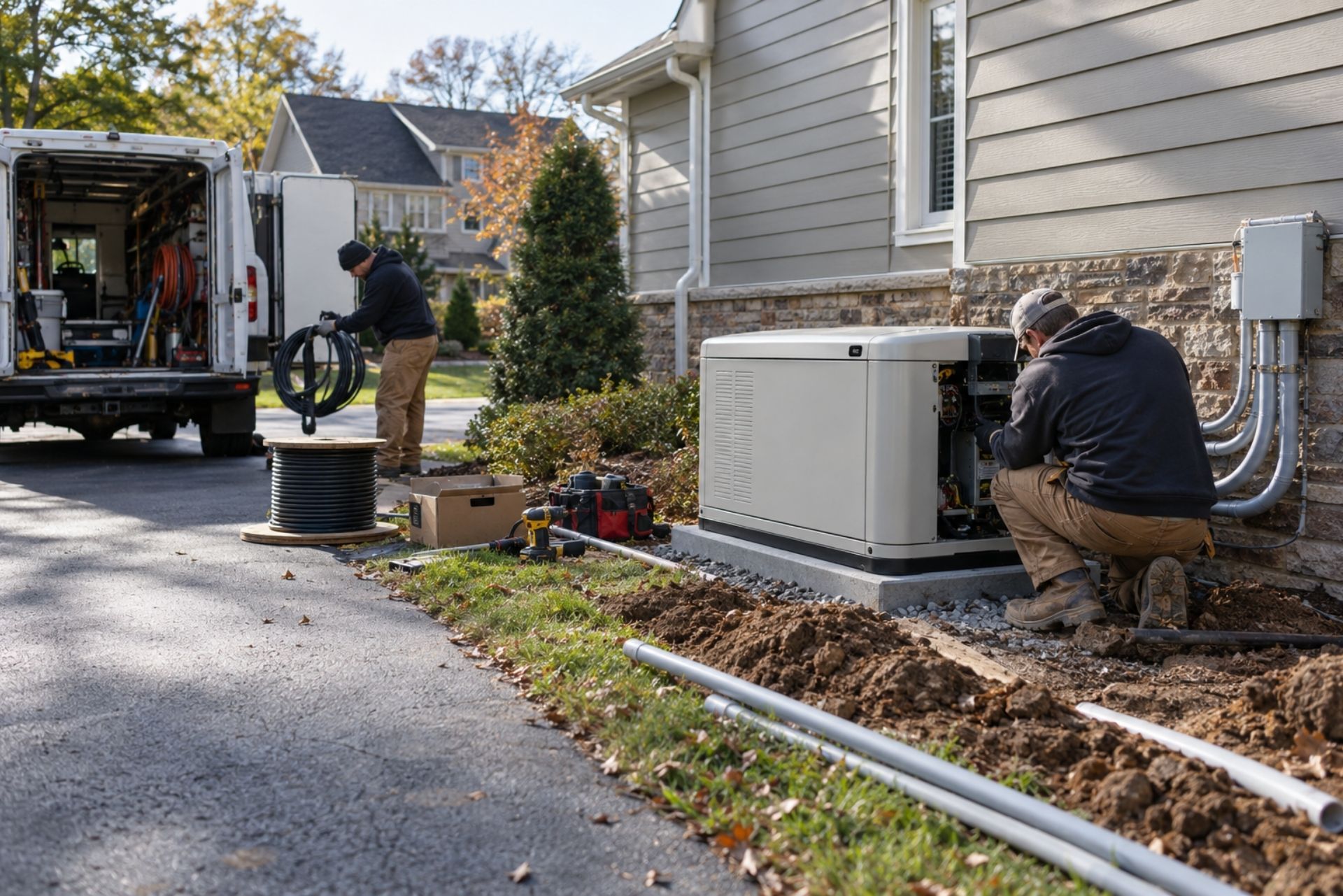
A single generator installation gone wrong can create a chain reaction of liability: fuel spills, electrical fires, failed backup systems during outages, and property damage claims that stack up fast. Standby power and generator contractors face a risk profile that most general insurance programs weren't designed to handle. You're working with high-voltage electrical connections, diesel or natural gas fuel lines, transfer switches that must perform flawlessly under pressure, and equipment worth tens of thousands of dollars sitting on a flatbed truck between jobs.
The right insurance program for this work covers general liability, completed operations, pollution exposure from fuel handling, tools and equipment, commercial auto, and the certificates your clients demand before you set foot on their property. Getting any one of these pieces wrong can leave you exposed to a claim that wipes out years of profit. General liability premiums in the energy sector alone
range from $15,000 to over $150,000 annually, which tells you something about the stakes involved. Here's what you actually need to know about building the right coverage stack.
Core Insurance Policies for Generator and Standby Power Specialists
Generator contractors operate at the intersection of electrical work, mechanical installation, and fuel system management. That combination creates a risk profile that demands more than a basic contractor policy. Each coverage type addresses a different phase of your work, from the moment you arrive on site to years after the generator is commissioned and running.
General Liability for Site Accidents and Property Damage
Your commercial general liability policy is the foundation. It responds when a third party is injured on a job site or when your work damages someone else's property. Think about a technician accidentally backing into a customer's gas meter during a generator pad installation, or a homeowner tripping over conduit runs during a service call.
What catches many generator contractors off guard is the
completed operations component. General contractors in 2026
typically require every subcontractor to carry their own completed-operations tail to prevent the GC from absorbing latent failures. If you install a transfer switch that malfunctions six months later and causes an electrical fire, your completed operations coverage is what responds, not your occurrence-based GL. Make sure your policy includes this coverage and that it extends far enough to match the statute of repose in your state.
Professional Liability for System Design and Load Calculations
If you're sizing generators, performing load calculations, or recommending system configurations, you're providing professional services. A standard GL policy won't cover claims that arise from faulty design or incorrect specifications. Professional liability (sometimes called errors and omissions) fills that gap.
Here's a real scenario: you spec a 22kW generator for a home with a large HVAC system, pool equipment, and a commercial kitchen. The unit can't handle the load during an outage, the homeowner's freezer full of insulin-dependent medication thaws, and now you're facing a claim. That's a professional liability exposure, not a general liability one. The distinction matters.
One thing to watch: insurers have filed
more than 4,000 generative AI exclusions in commercial liability policies as of mid-2026. If you're using AI-powered load calculation tools or design software, confirm your professional liability policy hasn't carved out AI-assisted errors.
Workers' Compensation for Electrical and Mechanical Hazards
Your crew works with live electrical panels, heavy equipment, confined spaces, and fuel systems. Workers' comp isn't optional in most states, and the classification codes for electrical work already carry elevated rates. Generator work adds mechanical lifting hazards, potential burns from exhaust systems, and fuel handling exposure.
Keep your payroll reporting accurate and your safety program documented. Experience modification rates reward contractors who maintain clean loss histories, and a poor mod rate can price you out of competitive bids.

By: Michael Fusco
President of Joule Pro
INDEX
Joule Pro is a specialty insurance and risk program of Fusco Orsini & Associates Insurance Services, built exclusively for electrical contractors and licensed in 31 states.
We work with electrical firms across the country — from California, Texas, Florida, New York, and coast to coast — placing General Liability, Workers' Compensation, Commercial Auto, Inland Marine, Surety Bonds, Excess Liability, and full specialty coverage stacks for commercial, industrial, service, residential, and low-voltage electrical contractors. Joule Pro is not a separate licensed entity. It is a dedicated program structure inside Fusco Orsini, giving electrical contractors access to specialty carriers, in-house claims advocacy, and trade-specific risk engineering under one program.
Comparison of Critical Coverage Types
Table: General Liability vs. Professional Liability
| Feature | General Liability | Professional Liability |
|---|---|---|
| What it covers | Bodily injury, property damage from your operations | Errors in design, specifications, or recommendations |
| Trigger example | Technician drops a panel on a customer's flooring | Undersized generator fails during a power outage |
| Claims basis | Occurrence-based (typically) | Claims-made (typically) |
| Completed operations | Covers faulty workmanship after project completion | Covers design or calculation errors after delivery |
| Required by GCs? | Almost always | Increasingly, especially on commercial projects |
| Typical exclusion to watch | Pollution, professional services | Bodily injury, property damage, AI-generated designs |
Understanding which policy responds to which claim type prevents gaps that can cost you six figures. Many contractors carry both.
Industry-Specific Risks and Specialized Riders
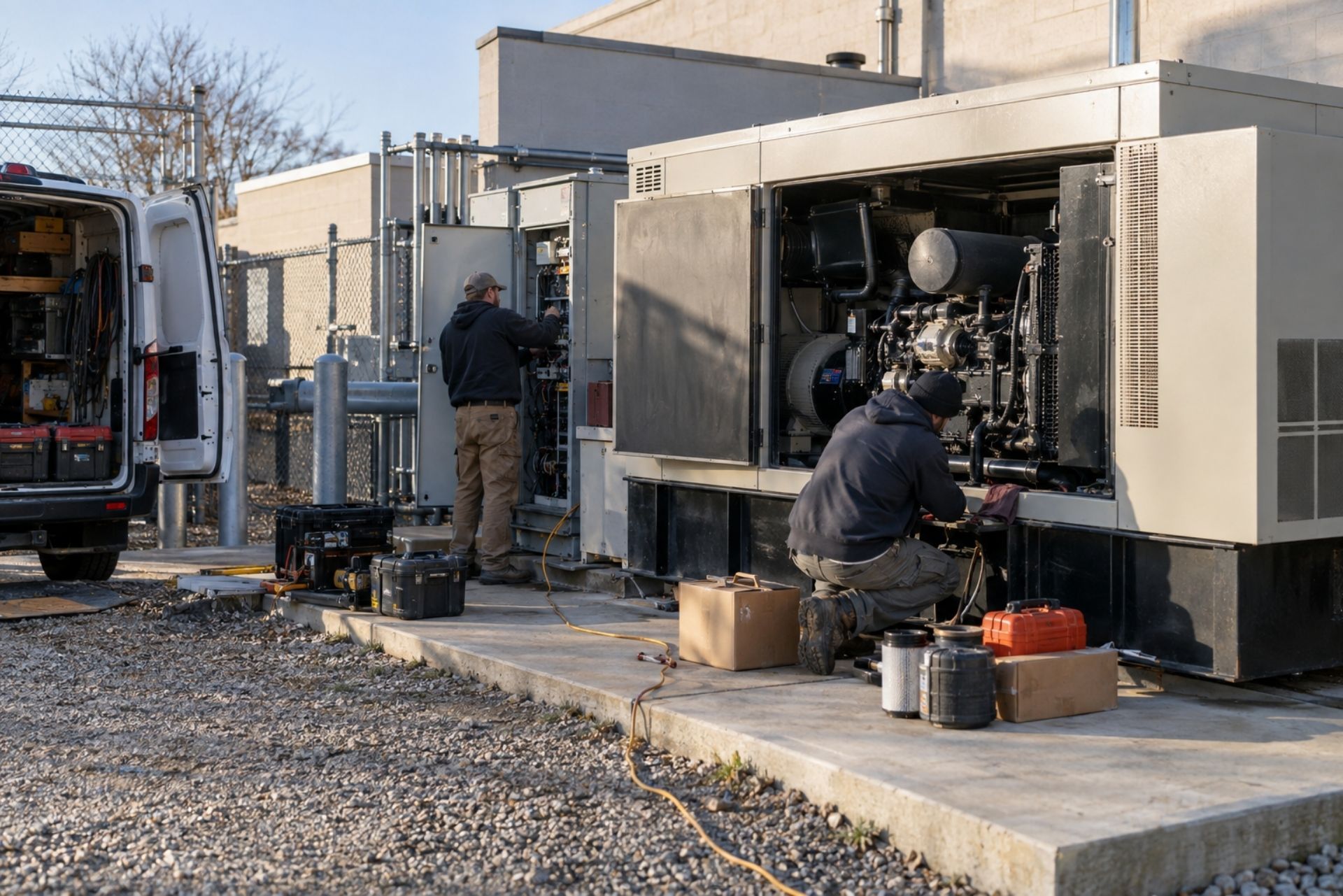
Standard contractor policies often exclude or limit coverage for the specific hazards generator contractors face daily. These riders and specialty policies close those gaps.
Inland Marine for Transporting Units and Specialized Tools
A standby generator sitting on your trailer between the distributor and the job site isn't covered by your commercial auto policy or your GL. Inland marine insurance covers tools, equipment, and materials in transit or temporarily stored at job sites.
The inland marine market in 2026 remains buyer-friendly, though surging equipment values are driving a need for higher limits. Hauling multiple generator units valued at $5,000 to $15,000 each quickly exceeds the low off-premises limits found in standard property policies. [https://www.joule.pro/generator-installer-insurance/new-york] Commercial units run far higher. If you're hauling two or three units at a time plus your load bank testing equipment and specialty tools, your inland marine limits need to reflect that total value. Joule Pro structures inland marine coverage specifically for electrical contractors, accounting for the high-value equipment and specialized tools this trade requires.
Pollution Liability for Fuel Leaks and Hazardous Materials
Generator work involves diesel fuel, natural gas connections, engine oil, and coolant. A standard GL policy almost universally excludes pollution events. If a fuel line ruptures during installation and diesel seeps into a customer's landscaping or, worse, reaches a storm drain, you need a pollution liability policy to respond.
This coverage is especially critical on commercial sites near waterways or in jurisdictions with strict environmental regulations. Cleanup costs alone can reach five or six figures before any third-party claims enter the picture. Pollution liability is often written as a standalone policy or added as an endorsement, and it's one of the most commonly overlooked coverages in this trade.
Installation Floater for High-Value Equipment Awaiting Commissioning
Between delivery and final commissioning, a generator and its associated components (transfer switches, fuel tanks, electrical panels) sit on the customer's property in a vulnerable state. An installation floater covers this equipment during the installation phase, protecting against theft, vandalism, weather damage, and accidental breakage.
Data center projects illustrate the stakes clearly. Data center construction has effectively become two projects in one: power generation and data halls, and contractors on those jobs face liquidated damages ranging from $50,000 to $250,000 per day for schedule delays. Damage to a generator awaiting commissioning doesn't just cost you the equipment: it can trigger delay penalties that dwarf the unit's value.
Determining Your Coverage Limits and Costs
Your coverage limits should reflect three things: the maximum value of equipment you handle at any given time, the contractual requirements of your typical clients, and the realistic worst-case scenario for a claim.
Most general contractors and commercial property owners require $1 million per occurrence and $2 million aggregate on your GL. Some data center and healthcare facility projects demand higher limits, which you can achieve through an umbrella or excess liability policy rather than inflating your primary GL.
Cost depends on your revenue, payroll, claims history, number of vehicles, and the specific types of work you perform. A contractor doing exclusively residential whole-house generators will pay less than one wiring paralleling switchgear for hospital backup systems. Get quotes that reflect your actual scope of work, not a generic electrical contractor classification. Programs like Joule Pro, built exclusively for licensed electrical contractors, can often access specialty markets with rates that reflect your true risk rather than lumping you in with general electricians.
Common Questions About Generator Contractor Insurance
Do I need special insurance if I only do residential installs? Yes. Residential generator work still involves fuel connections, electrical panel modifications, and completed operations exposure. A basic handyman or general contractor policy won't cover these risks adequately. You need contractor-specific GL with completed operations at minimum.
Will my general liability cover a generator that fails during a storm? Probably not. If the failure stems from faulty installation (workmanship), your completed operations coverage may respond. If it stems from a design or sizing error, that's a professional liability claim. If the generator simply fails due to a manufacturer defect, that's the manufacturer's problem, not yours, though you may still get named in the lawsuit.
How does hiring subcontractors affect my insurance premiums? Subcontractor costs typically get included in your premium calculation unless those subs carry their own insurance and you collect certificates proving it. Uninsured sub costs are treated like payroll for rating purposes, which inflates your premium significantly.
Does insurance cover damage to a customer's electrical panel? If your technician damages a panel during a generator tie-in, your GL should cover the repair or replacement as property damage. If the panel fails later because of an improper connection, that falls under completed operations. Either way, you need both coverages active.
Can I get a certificate of insurance quickly for a new contract? Most specialty programs can issue certificates within 24 hours. Working with a producer like Joule Pro, where a licensed insurance professional handles your account directly, typically means faster turnaround than navigating a self-serve portal or waiting in a general agency's queue.
Before You Buy a Policy
The insurance needs of standby power and generator contractors don't fit neatly into a standard electrical contractor program. Between fuel handling, high-value equipment transport, professional design liability, and the completed operations exposure that follows every install, you need a coverage stack built for this specific work.
Start by auditing your current policies against the exposures outlined here. Check whether your GL includes completed operations with adequate limits. Verify that your inland marine reflects the actual value of equipment you transport. Confirm you have pollution coverage if you touch fuel systems. And read the fine print on any AI exclusions if you're using software tools for load calculations or system design.
Joule Pro, backed by Fusco Orsini & Associates Insurance Services (CA Lic. 0H16057), specializes in building these coverage programs for licensed electrical contractors. A conversation with a licensed producer who understands generator work will save you more than any amount of online research. Get your coverage reviewed before your next big contract, not after a claim forces the issue.

Founder & CEO
The Force Behind the Program
About the Author:
Michael Fusco.
Fusco Orsini & Associates
Joule Pro exists because Mike Fusco saw electrical contractors getting boilerplate insurance — and built a program designed for the way the trade actually works.
Mike is the CEO and co-founder of Fusco Orsini & Associates, the San Diego–based independent agency he launched in 2010. Under his leadership FOA has grown into a nationwide partner serving clients across 31 states, with a personal, client-first approach to commercial insurance and risk.
With over 20 years in insurance and risk management, he specializes in tailored programs spanning general liability, workers' compensation, surety bonding, and employee benefits — helping owners confidently manage risk and pursue growth.
Mike holds a B.S. in Business from the University of Maryland — Robert H. Smith School of Business, and the Certified Insurance Counselor (CIC) designation, held by fewer than 3% of insurance professionals nationwide.
What Our Clients Say
Trusted by Electrical Contractors Across the Country.
5.0
★★★★★
GOOGLE REVIEWS
Core Commercial Coverage
Business Insurance for Electrical Contractors.
The fundamentals — written, structured, and priced for electrical risk. Each line is reviewed annually by an underwriter who only writes our trade.
01
General Liability
Premises & completed-operations coverage with electrical-specific endorsements and full pollution carve-back options.
02
Workers' Compensation
Class-code optimization, experience-mod review, and return-to-work programs designed for energized-work exposures.
03
Commercial Auto
Fleet, hired & non-owned auto, and tools-in-transit coverage written for service vans and bucket trucks.
04
Tools & Equipment
Scheduled and blanket coverage for tools, test equipment, scissor lifts, and contractor's equipment on-site or in-transit.
05
Surety Bonds
Bid, performance, and payment bonds — single-job and aggregate programs for commercial & public-works contracts.
06
Commercial Property
Layered limits up to $50M with carrier panels covering your shop, warehouse, yard, and on-premises tools, materials, and equipment.
Who We Serve
Electrical Contractors We Specialize In.
From $5M service shops to $250M industrial primes — every Joule Pro program is shaped to the contractor's revenue mix and project profile.
01 / Industrial
Commercial & Industrial Electrical Contractors
High-voltage, substation, and plant electrical work. Pollution, builder's risk, and large-deductible WC programs.
02 / Service
Service & Residential Electrical Contractors
Service-call shops, panel upgrades, and EV charging installers. Auto-fleet, GL, and tool-coverage programs.
03 / Low-Voltage
Specialty & Low-Voltage Contractors
Data, fire-alarm, security, and BMS controls. Cyber, professional liability, and follow-form excess.
Frequently Asked Questions
Common
Questions From
Electrical Contractors.
What size electrical contractors do you write?
Joule Pro is built for licensed electrical firms from roughly $2M in revenue to $250M+. Below $2M we typically refer to our small-business desk; above $250M we underwrite individually with our industrial practice team.
Do I need to be licensed in multiple states?
No. We license you wherever you work. Joule Pro is admitted in 31 states and our compliance team handles multi-state filings, prevailing-wage endorsements, and certificate-of-insurance requirements.
How is Joule Pro different from a generic contractor program?
Generic programs use a contractor's questionnaire that treats you like a roofer. We use forms written for energized work, arc-flash exposures, and design-build risk — and our carriers price accordingly.
What does the claims process actually look like?
Every Joule Pro client is assigned a named claims advocate at bind. They take the FNOL, set strategy with your assigned attorney, and serve as your single point of contact through close.
Can you bond large public-works contracts?
Yes. Through our surety partners we write single-job bonds up to $75M and aggregate programs to $300M, with expedited turnarounds for school district, federal, and DOT work.
What happens at renewal?
Your producer and claims advocate jointly run a renewal review 90 days out — covering loss trends, exposure changes, and market alternatives — so renewal day is a confirmation, not a surprise.
From the Blog
Insights for Electrical Contractors.
Risk briefings, claim post-mortems, and program updates — written by our underwriters and risk engineers.


Get Started
Get a Quote on a Program Built Around Your Trade.
A 30-minute discovery call is the only commitment. You'll leave with a written gap analysis of your current program — yours to keep, whether you bind with us or not.