
Business Insurance
EV Charging Station Operator Insurance
★★★★★ 150+ Five-Star Reviews · Google & Facebook
A single charger malfunction, a stolen cable, or a vehicle fire can wipe out months of revenue for a charging station operator, and a standard commercial policy likely won't cover any of it. That's the uncomfortable reality facing electrical contractors who install and operate EV charging infrastructure. As more contractors expand from installation into ownership and ongoing operation of charging stations, the insurance gap between what they think they're covered for and what they actually are keeps widening.
The risks are real and growing. German operator EnBW reported
over 900 cases of cable theft across 130-plus locations in a single year, racking up millions in damages. Stateside, operators face similar threats alongside electrical fire liability, payment system breaches, and environmental exposure. Understanding the full scope of coverage you need - property protection,
equipment breakdown,
general liability, vandalism,
business interruption, and the costs involved - is the difference between a sustainable operation and a financial disaster waiting to happen.
Core Insurance Coverages for EV Charging Businesses
Running a charging station means managing risks that most traditional business insurance policies weren't designed to handle. The equipment is expensive, exposed to weather and the public, and connected to both the electrical grid and digital payment networks. That combination demands a layered insurance approach.
General Liability and Physical Damage
General liability is your first line of defense. If a customer trips over a charging cable, gets an electrical shock, or their vehicle catches fire while connected to your charger, your GL policy responds to those bodily injury and property damage claims. But here's where it gets tricky: standard GL policies often exclude damage arising from the specific electrical equipment you operate.
Physical damage coverage protects the chargers themselves. Commercial Level 2 units run between $3,000 and $7,000 installed, while DC Fast Chargers range from $50,000 to $175,000 per unit in 2026. A single DC fast charger destroyed by a storm or vehicle collision represents a serious capital loss. Your property policy needs to specifically schedule this equipment, or you'll find out the hard way that it's excluded.
Cyber Liability for Payment Systems
Every networked charger processes credit card transactions, collects user data, and communicates with cloud-based management platforms. A data breach or ransomware attack doesn't just shut down your stations; it exposes you to notification costs, regulatory fines, and lawsuits from affected customers.
As of January 8, 2026, publicly accessible charging points in the EU must meet EN ISO 15118-1 to -5 standards for secure communication and Plug & Charge functionality. While U.S. requirements differ, the direction is clear: connected chargers need cyber liability coverage that addresses both the payment processing and the IoT vulnerabilities inherent in networked infrastructure.
Business Interruption and Loss of Income
When your chargers go offline, revenue stops immediately. Business interruption coverage replaces the income you'd have earned during the downtime, whether it's caused by a covered property loss, equipment failure, or vandalism. For high-traffic locations, even a week of downtime can mean thousands in lost revenue.
The key detail to watch: your policy's waiting period (the deductible, essentially, measured in hours or days before coverage kicks in) and the covered causes of loss. Some policies only trigger business interruption for named perils, leaving gaps around software failures or grid outages that aren't directly your fault.
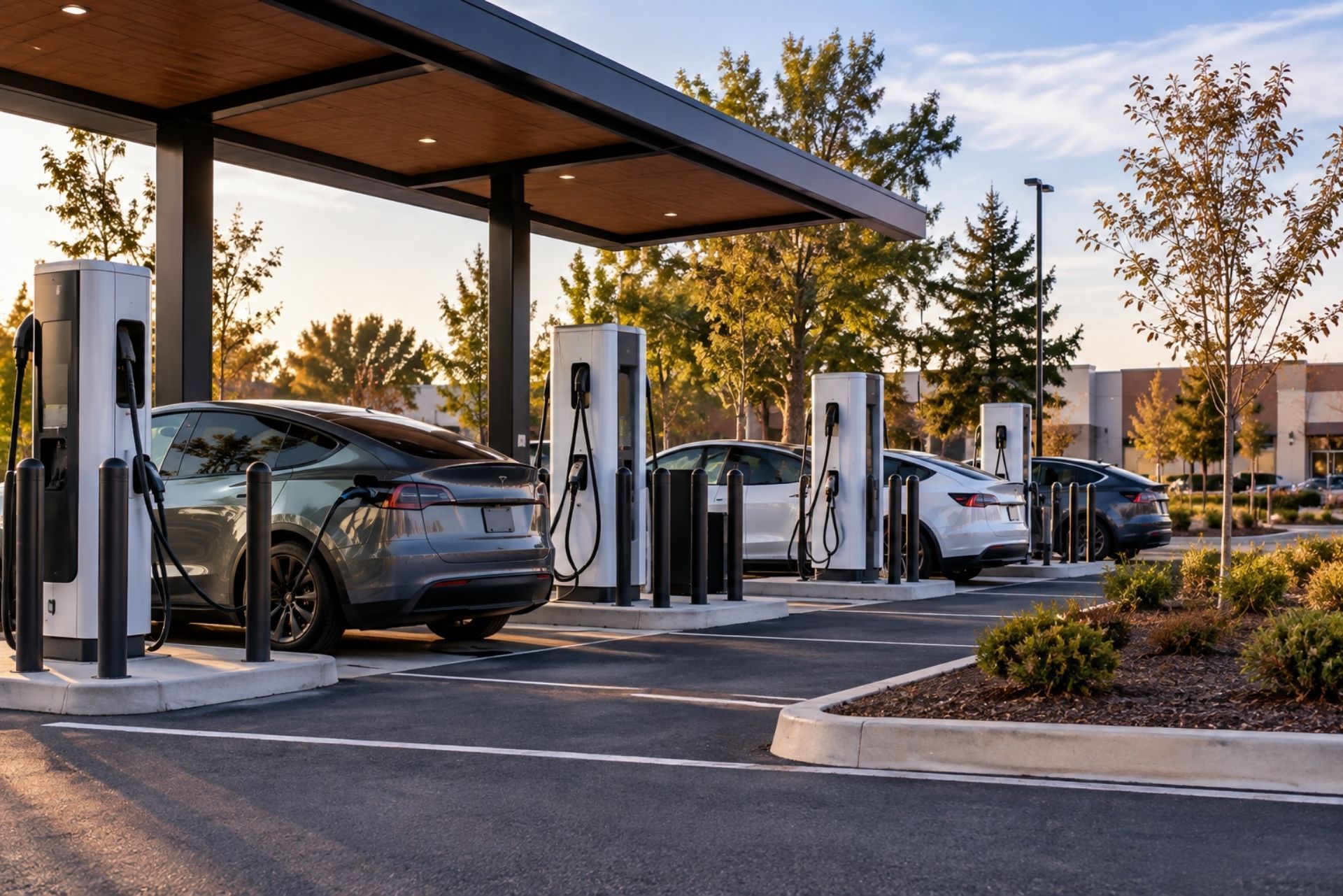

By: Michael Fusco
President of Joule Pro
INDEX
Joule Pro is a specialty insurance and risk program of Fusco Orsini & Associates Insurance Services, built exclusively for electrical contractors and licensed in 31 states.
We work with electrical firms across the country — from California, Texas, Florida, New York, and coast to coast — placing General Liability, Workers' Compensation, Commercial Auto, Inland Marine, Surety Bonds, Excess Liability, and full specialty coverage stacks for commercial, industrial, service, residential, and low-voltage electrical contractors. Joule Pro is not a separate licensed entity. It is a dedicated program structure inside Fusco Orsini, giving electrical contractors access to specialty carriers, in-house claims advocacy, and trade-specific risk engineering under one program.
Comparing Essential vs. Specialized Coverage
Most electrical contractors already carry a Business Owner Policy (BOP) for their contracting operations. The question is whether that BOP extends meaningfully to charging station operations, and the answer is almost always no, at least not without modifications.
Table: Standard Business Owner Policy vs. EV-Specific Riders
| Coverage Area | Standard BOP | EV-Specific Rider/Policy |
|---|---|---|
| General Liability | Covers premises; may exclude charger-related claims | Tailored to EV charging operations and electrical hazards |
| Property/Equipment | Generic business property; chargers may not be scheduled | Scheduled coverage for chargers at replacement cost |
| Cyber Liability | Rarely included | Covers payment processing, IoT device breaches |
| Equipment Breakdown | Sometimes included; often excludes specialized electrical | Covers internal electrical/mechanical failure of chargers |
| Vandalism/Theft | Basic coverage; may cap at low limits | Higher limits reflecting actual charger replacement costs |
| Business Interruption | Tied to covered property loss only | Broader triggers including software outage and grid failure |
| Environmental | Typically excluded | Covers battery coolant leaks, chemical spill cleanup |
A standard BOP might cover a broken window at your office. It probably won't cover a $150,000 DC fast charger destroyed by a grid surge or the cleanup costs if a battery thermal event releases hazardous chemicals at your station. That gap is exactly why EV-specific coverage exists.
Unique Risks Facing Charging Station Operators
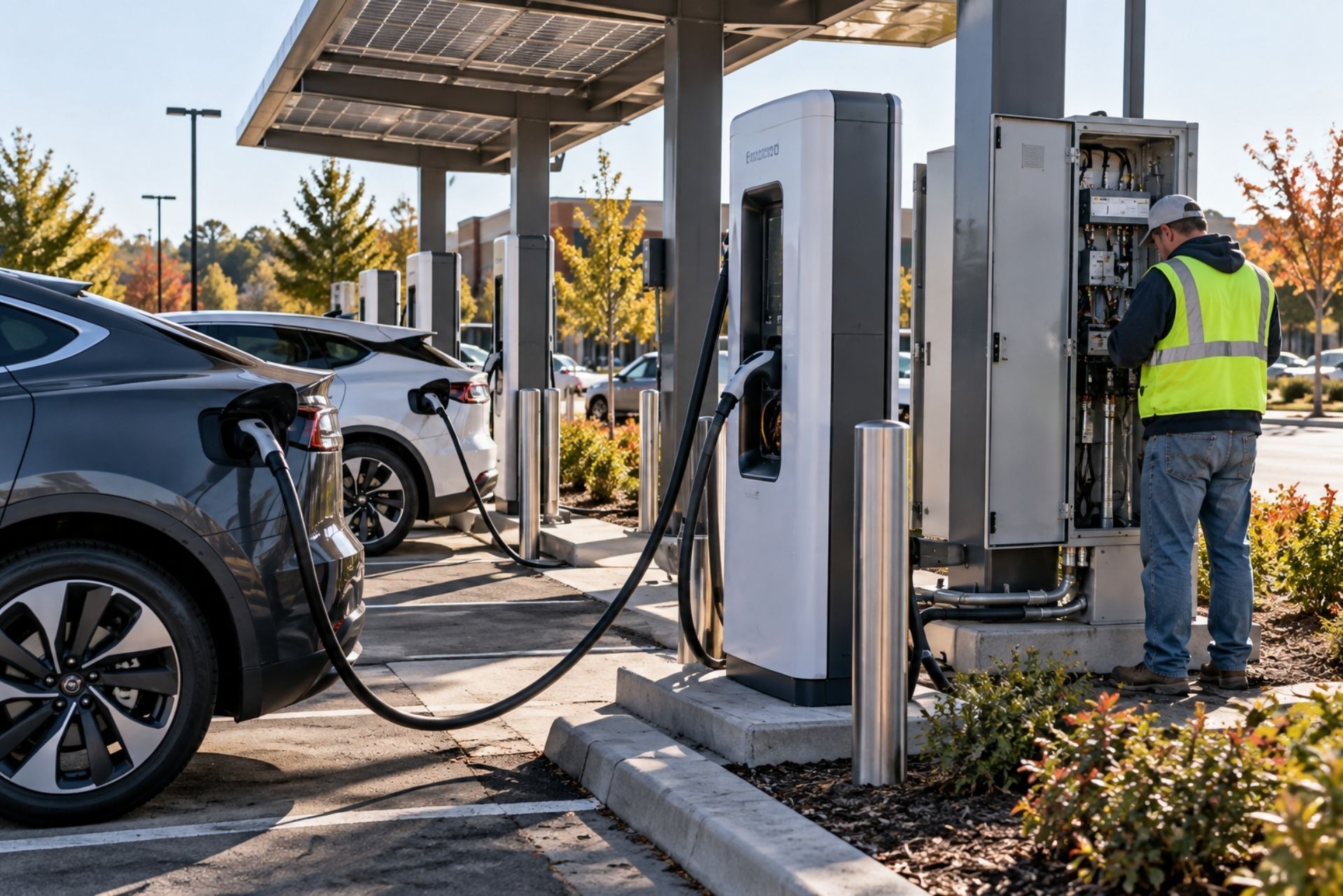
Charging stations sit at the intersection of high-voltage electrical systems, public access, and expensive hardware left outdoors 24/7. That creates a risk profile unlike almost any other business asset an electrical contractor might own.
Hardware Vulnerability: Vandalism and Copper Theft
Copper theft has become an epidemic in the charging industry. The cables connecting chargers to vehicles contain valuable copper, and they're accessible to anyone with a pair of bolt cutters. EnBW's experience in Germany - hundreds of theft incidents driven partly by ideologically motivated vandalism - mirrors what U.S. operators are seeing at scale.
Beyond theft, screens get smashed, connectors get damaged by misuse, and graffiti can render a station unusable. Each incident means repair costs, downtime, and potentially a customer injury claim if damaged equipment creates a hazard. Your insurance needs to account for the frequency of these events, not just individual incidents.
Electrical Fire and Grid Surge Liabilities
High-power DC fast chargers pull enormous amounts of electricity. A faulty connection, failed cooling system, or grid surge can trigger an electrical fire that damages not just your equipment but adjacent property, vehicles, and people. Insurers and risk consultants recommend ensuring EV infrastructure is located a suitable distance from combustible materials, and that kind of site planning directly affects your insurability and premium costs.
If your charger causes a fire that damages a customer's vehicle or spreads to a neighboring building, your liability exposure could easily reach six or seven figures. This is where adequate general liability limits and umbrella coverage become essential.
Environmental Hazards and Chemical Leaks
Some charging stations, particularly those with integrated battery storage systems, contain coolants and chemicals that become environmental hazards if released. A thermal runaway event in a battery storage unit can release toxic fumes and require hazmat cleanup. Environmental liability coverage handles the remediation costs and third-party claims arising from contamination.
Standard property policies almost universally exclude pollution-related losses. You need a separate environmental liability endorsement or standalone policy, especially if your station includes any form of battery energy storage.
Factors That Influence Your Premium Costs
Insurance costs for EV charging operations vary widely. A small installation with two Level 2 chargers in a well-lit parking garage costs far less to insure than a standalone facility with eight DC fast chargers along a rural highway. Understanding what drives your premium helps you manage costs intelligently.
Station Location and Security Measures
Underwriters look closely at where your chargers sit. A station in a monitored parking structure with 24/7 security cameras, good lighting, and controlled access will earn significantly lower premiums than an unmonitored roadside location. Urban areas with higher crime rates also push premiums up.
Investing in bollards, anti-theft cable locks, tamper-resistant enclosures, and surveillance systems does more than protect your equipment. It directly reduces your insurance costs. Many insurers offer premium credits for documented security measures, so keep records of everything you install.
Charger Speed and Power Output Levels
Higher power means higher risk, and insurers price accordingly. A 7 kW Level 2 charger presents a fundamentally different risk profile than a 350 kW DC fast charger. The electrical fire risk, the equipment replacement cost, and the potential severity of a malfunction all scale with power output.
If you operate a mix of charger types, your policy should reflect the specific units at each location. Blanket coverage based on a generic per-unit value often leaves you underinsured on your most expensive equipment and overpaying on your least expensive. Joule Pro works with specialty markets that understand these distinctions, which matters when you're trying to get accurate coverage without overpaying.
Common Questions About EV Station Insurance
FAQ: Does standard property insurance cover EV chargers? Usually not adequately. Most standard property policies either exclude specialized electrical equipment entirely or cap coverage at limits far below replacement cost. You need chargers specifically scheduled on your policy at their actual installed value.
FAQ: What happens if a charger damages a customer's car battery? Your general liability policy should respond to third-party property damage claims, but only if it doesn't exclude charger-related incidents. Some standard GL policies have exclusions for damage arising from the operation of electrical charging equipment. Confirm this with your agent before you have a claim.
FAQ: Do I need extra insurance if I offer free charging? Yes. Free charging doesn't eliminate liability. If someone is injured or their vehicle is damaged at your station, you're exposed regardless of whether you charged them for the service. Your GL and property coverage requirements remain the same.
FAQ: How do I lower my insurance rates for my stations? Install security cameras and anti-theft measures, maintain documented inspection and maintenance schedules, choose well-lit locations with controlled access, and work with an insurer that specializes in electrical trade risks. Bundling your charging station coverage with your existing contractor insurance through a specialty program like Joule Pro can also help, since underwriters who already know your business tend to offer better terms than those writing a one-off policy.
Before You Buy a Policy
Getting the right insurance for EV charging station operations isn't about buying the cheapest policy you can find. It's about making sure the specific, unusual risks of this business are actually covered. Standard commercial policies leave dangerous gaps around equipment breakdown, cyber exposure, environmental liability, and the high replacement costs of modern chargers.
Start by inventorying every charger you own or operate, its installed cost, its power output, and the security measures at each location. Bring that information to an insurance professional who understands the electrical trade, not a generalist who's going to shoehorn your operation into a template BOP. Joule Pro, backed by Fusco Orsini & Associates Insurance Services (CA Lic. 0H16057), specializes in coverage for licensed electrical contractors and can connect you with underwriters who actually know how to price this risk.
The EV charging market is growing fast, and so are the claims. Get your coverage right before you find out what you're missing.

Founder & CEO
The Force Behind the Program
About the Author:
Michael Fusco.
Fusco Orsini & Associates
Joule Pro exists because Mike Fusco saw electrical contractors getting boilerplate insurance — and built a program designed for the way the trade actually works.
Mike is the CEO and co-founder of Fusco Orsini & Associates, the San Diego–based independent agency he launched in 2010. Under his leadership FOA has grown into a nationwide partner serving clients across 31 states, with a personal, client-first approach to commercial insurance and risk.
With over 20 years in insurance and risk management, he specializes in tailored programs spanning general liability, workers' compensation, surety bonding, and employee benefits — helping owners confidently manage risk and pursue growth.
Mike holds a B.S. in Business from the University of Maryland — Robert H. Smith School of Business, and the Certified Insurance Counselor (CIC) designation, held by fewer than 3% of insurance professionals nationwide.
What Our Clients Say
Trusted by Electrical Contractors Across the Country.
5.0
★★★★★
GOOGLE REVIEWS
Core Commercial Coverage
Business Insurance for Electrical Contractors.
The fundamentals — written, structured, and priced for electrical risk. Each line is reviewed annually by an underwriter who only writes our trade.
01
General Liability
Premises & completed-operations coverage with electrical-specific endorsements and full pollution carve-back options.
02
Workers' Compensation
Class-code optimization, experience-mod review, and return-to-work programs designed for energized-work exposures.
03
Commercial Auto
Fleet, hired & non-owned auto, and tools-in-transit coverage written for service vans and bucket trucks.
04
Tools & Equipment
Scheduled and blanket coverage for tools, test equipment, scissor lifts, and contractor's equipment on-site or in-transit.
05
Surety Bonds
Bid, performance, and payment bonds — single-job and aggregate programs for commercial & public-works contracts.
06
Commercial Property
Layered limits up to $50M with carrier panels covering your shop, warehouse, yard, and on-premises tools, materials, and equipment.
Who We Serve
Electrical Contractors We Specialize In.
From $5M service shops to $250M industrial primes — every Joule Pro program is shaped to the contractor's revenue mix and project profile.
01 / Industrial
Commercial & Industrial Electrical Contractors
High-voltage, substation, and plant electrical work. Pollution, builder's risk, and large-deductible WC programs.
02 / Service
Service & Residential Electrical Contractors
Service-call shops, panel upgrades, and EV charging installers. Auto-fleet, GL, and tool-coverage programs.
03 / Low-Voltage
Specialty & Low-Voltage Contractors
Data, fire-alarm, security, and BMS controls. Cyber, professional liability, and follow-form excess.
Frequently Asked Questions
Common
Questions From
Electrical Contractors.
What size electrical contractors do you write?
Joule Pro is built for licensed electrical firms from roughly $2M in revenue to $250M+. Below $2M we typically refer to our small-business desk; above $250M we underwrite individually with our industrial practice team.
Do I need to be licensed in multiple states?
No. We license you wherever you work. Joule Pro is admitted in 31 states and our compliance team handles multi-state filings, prevailing-wage endorsements, and certificate-of-insurance requirements.
How is Joule Pro different from a generic contractor program?
Generic programs use a contractor's questionnaire that treats you like a roofer. We use forms written for energized work, arc-flash exposures, and design-build risk — and our carriers price accordingly.
What does the claims process actually look like?
Every Joule Pro client is assigned a named claims advocate at bind. They take the FNOL, set strategy with your assigned attorney, and serve as your single point of contact through close.
Can you bond large public-works contracts?
Yes. Through our surety partners we write single-job bonds up to $75M and aggregate programs to $300M, with expedited turnarounds for school district, federal, and DOT work.
What happens at renewal?
Your producer and claims advocate jointly run a renewal review 90 days out — covering loss trends, exposure changes, and market alternatives — so renewal day is a confirmation, not a surprise.
From the Blog
Insights for Electrical Contractors.
Risk briefings, claim post-mortems, and program updates — written by our underwriters and risk engineers.


Get Started
Get a Quote on a Program Built Around Your Trade.
A 30-minute discovery call is the only commitment. You'll leave with a written gap analysis of your current program — yours to keep, whether you bind with us or not.