
Business Insurance
Geothermal Heat Pump Installer
Insurance
★★★★★ 150+ Five-Star Reviews · Google & Facebook
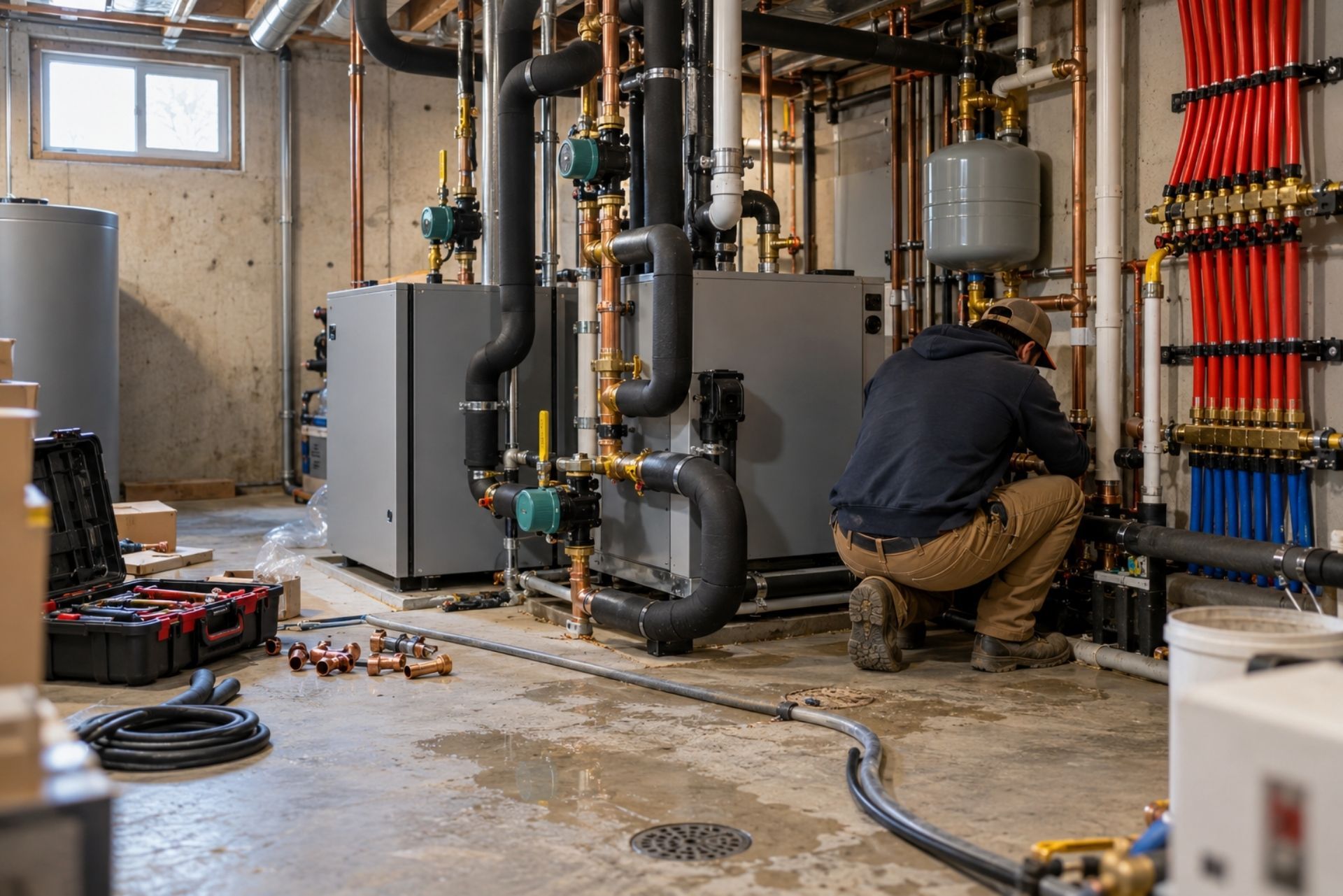
Drilling a 300-foot vertical borehole on a residential property is not the same as wiring a panel. The liability profile shifts dramatically once your crew starts punching into the earth, and the insurance your electrical contracting business already carries probably wasn't built for that kind of exposure. Geothermal heat pump installation sits at the intersection of electrical work, mechanical systems, and underground drilling, which means your coverage needs span general liability, workers' compensation, commercial auto, tools and equipment protection, completed operations, and specific underground and drilling endorsements.
The geothermal market is shifting, too. Federal tax credits for geothermal heat pumps under Sections 25C and 25D
expired at the end of 2025 due to the "One Big Beautiful Bill Act," which collapsed the original IRA timelines. Installers now rely on state-level HEEHRA rebates and utility incentives to keep projects attractive to homeowners. That means tighter margins, more competitive bidding, and zero room for an uninsured loss to wipe out a season's profit. If you're an electrical contractor expanding into geothermal work, getting the right insurance stack in place isn't optional: it's the thing that keeps your business alive when a drill bit hits a water main.
Core Insurance Needs for Geothermal Contractors
Geothermal heat pump installer insurance isn't a single policy. It's a layered stack of coverages, each addressing a different type of risk your crew faces on every job. Missing one layer can leave you exposed to a claim that your other policies explicitly exclude.
General Liability for Site Accidents
General liability is the foundation. It covers third-party bodily injury and property damage that happen on or because of your jobsite. A homeowner trips over your trenching equipment and breaks an ankle? That's a GL claim. Your crew accidentally cracks a neighbor's foundation while compacting soil around a horizontal loop? Also GL.
The catch for geothermal contractors is that standard GL policies often exclude underground work or include sublimits that cap drilling-related claims at a fraction of your aggregate. You need a policy that explicitly includes underground and drilling exposure, not one that buries an exclusion on page 37. Ask your agent to confirm this in writing before you
bind coverage.
Professional Liability and Design Errors
If your company handles system design, loop field sizing, or heat load calculations, you carry professional liability risk. A system that's undersized for the home won't show up as a problem on installation day: it shows up the following January when the homeowner's heating bills are double what you promised.
Professional liability (sometimes called errors and omissions) covers claims arising from faulty design, incorrect specifications, or bad recommendations. Even if you subcontract the engineering, you can still be named in a lawsuit. This coverage is separate from your GL policy and needs its own dedicated limit.
Workers' Compensation for Specialized Labor
Geothermal installation is physically demanding and carries real injury risk. Your crew operates drill rigs, handles heavy piping, works in trenches, and deals with pressurized systems. Workers' comp is mandatory in nearly every state, and the classification codes for drilling and excavation work carry higher rates than standard electrical work.
One mistake contractors make: classifying geothermal crew members under their existing electrical worker comp code to save on premiums. If an auditor catches it (and they will), you'll owe back premiums plus penalties. Worse, a denied claim could expose you to direct lawsuits from injured employees. Get the classification right from day one. Programs like Joule Pro that specialize in
electrical contractor insurance understand these classification nuances and can help you avoid costly audit surprises.

By: Michael Fusco
President of Joule Pro
INDEX
Joule Pro is a specialty insurance and risk program of Fusco Orsini & Associates Insurance Services, built exclusively for electrical contractors and licensed in 31 states.
We work with electrical firms across the country — from California, Texas, Florida, New York, and coast to coast — placing General Liability, Workers' Compensation, Commercial Auto, Inland Marine, Surety Bonds, Excess Liability, and full specialty coverage stacks for commercial, industrial, service, residential, and low-voltage electrical contractors. Joule Pro is not a separate licensed entity. It is a dedicated program structure inside Fusco Orsini, giving electrical contractors access to specialty carriers, in-house claims advocacy, and trade-specific risk engineering under one program.
Protecting Expensive Drilling and Excavation Gear
A single drill rig can cost six figures. The specialized tooling, grout pumps, fusion welders, and pressure testing equipment you haul to every job add up fast. Your standard business property policy covers what's inside your shop. It doesn't cover what's on a trailer headed to a jobsite.
Inland Marine Insurance for Tools in Transit
Inland marine insurance is designed for property that moves. It covers your tools, equipment, and materials while they're in transit, on a jobsite, or stored at a temporary location. For geothermal contractors, this means your drill bits, loop pipe, header assemblies, and diagnostic instruments are covered whether they're in your warehouse or sitting on a customer's lawn.
Pay attention to the valuation method. Actual cash value policies depreciate your equipment, so a five-year-old drill rig might only pay out a fraction of replacement cost. Replacement cost coverage costs more but actually lets you buy a comparable rig after a loss.
Commercial Auto for Heavy-Duty Rigs
Your personal auto policy won't cover a one-ton service truck pulling a drill rig trailer. Commercial auto insurance covers your fleet: service vans, flatbeds, trucks, and trailers used for business purposes. It also covers hired and non-owned vehicles if your employees occasionally use personal vehicles for work errands.
Geothermal contractors often need higher liability limits on their commercial auto policies because of the weight and size of the equipment they tow. A loaded drill rig trailer involved in a highway accident creates a liability exposure that dwarfs a typical fender bender. Make sure your policy limits reflect the actual risk, not just the state minimum.
Managing Risks Specific to Ground Source Systems
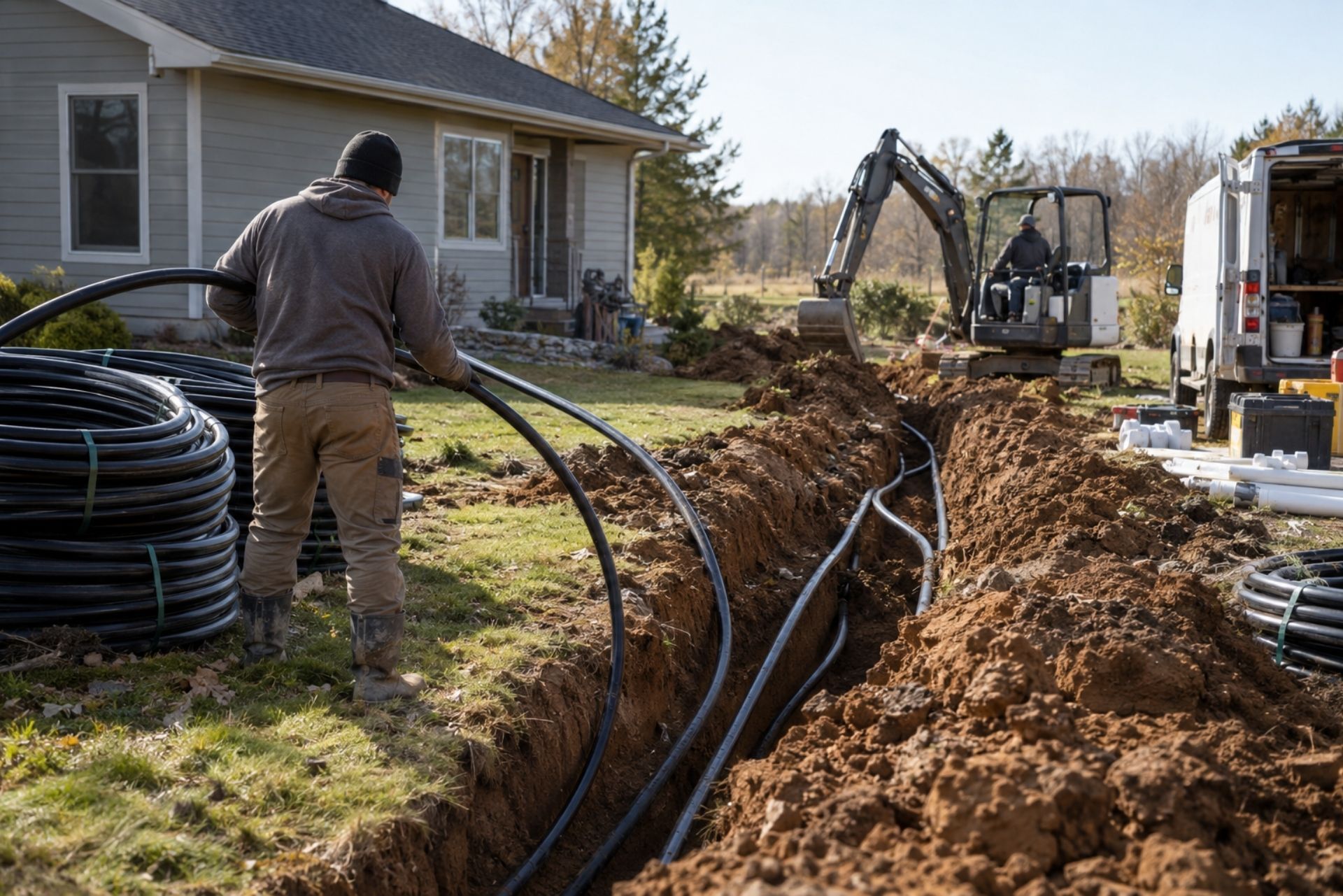
Ground source heat pump installations carry risks that most other electrical or HVAC work simply doesn't. You're altering subsurface conditions, working near buried utilities, and introducing antifreeze solutions into the ground. Each of these creates a distinct insurance exposure.
Pollution Liability and Soil Contamination
Geothermal loop systems typically circulate a water-antifreeze mixture. If a loop ruptures underground, that fluid can contaminate soil or groundwater. Standard GL policies almost universally exclude pollution claims. You need a separate pollution liability policy or a specific endorsement that covers gradual and sudden releases from your installed systems.
The subsurface is unpredictable, and insurance becomes the critical piece of the financing puzzle for geothermal projects precisely because you can't fully confirm conditions until you've already committed resources. A pollution claim from a leaking loop field can easily reach six figures when you factor in environmental remediation, soil testing, and regulatory compliance costs.
Underground Utility Damage Coverage
Hitting a gas line, fiber optic cable, or municipal water main during drilling is every geothermal installer's nightmare. Even with 811 locates and ground-penetrating radar, unmarked or mismarked utilities exist on a surprising number of properties. Underground utility damage coverage protects you when your drill intersects something it shouldn't.
Some GL policies cover this under a "property damage" provision, but many exclude damage to underground utilities specifically. Read your policy carefully. If you see an "underground resources and equipment" exclusion, you need it removed or replaced with affirmative coverage before your next drill job.
Comparing Coverage: General Liability vs. Professional Liability
These two coverages get confused constantly, and the distinction matters. Here's a quick comparison:
| General Liability | Professional Liability | |
|---|---|---|
| What it covers | Third-party bodily injury and property damage | Errors in design, advice, or professional services |
| Typical trigger | Someone gets hurt or property gets damaged on your jobsite | A system you designed or specified fails to perform |
| When claims appear | Usually during the project | Often months or years after installation |
| Example | Drill rig tips over and damages a driveway | Undersized loop field can't heat the home in winter |
| Completed operations | Covers damage from finished work | Does not: that's a separate E&O claim |
| Required by most GCs? | Yes | Sometimes, especially on commercial projects |
Common Questions About Geothermal Insurance
Do I need special insurance for vertical drilling? Yes. Vertical borehole drilling creates underground exposure that most standard GL policies exclude. You need a policy with explicit coverage for drilling operations and underground work, including damage to subsurface structures and utilities.
What happens if a loop leaks after installation? A leaking loop after project completion falls under your completed operations coverage (part of your GL policy) for property damage, and potentially your pollution liability policy if the leak contaminates soil or water. Without both coverages active, you're paying for remediation out of pocket.
Is pollution coverage required by law? It depends on your state and municipality. Some jurisdictions require pollution liability for any contractor performing subsurface work. Even where it's not legally mandated, most general contractors and commercial property owners require it before they'll let you on site.
How much does a basic policy cost for a small crew? Costs vary significantly based on your state, annual revenue, crew size, and claims history. A small geothermal operation with three to five employees can expect to pay meaningfully more than a comparable electrical contractor who doesn't do drilling work, primarily because of the elevated workers' comp classification rates and the need for underground exposure endorsements. Get quotes from a specialty program that understands your trade rather than a generalist agency that will either overprice you or leave gaps.
Will my homeowner's policy cover my home-based business equipment? Almost certainly not. Homeowner's policies exclude business property and business liability. Your drill rig, tools, and work vehicles need commercial coverage: inland marine for tools and equipment, commercial auto for vehicles, and a business property policy or floater for anything stored at your home shop.
What This Means for Your Business
Geothermal heat pump installation is one of the most insurance-intensive specialties an electrical contractor can take on. You're combining the liability of electrical work with the unpredictability of underground drilling and the long-tail risk of completed mechanical systems. Skipping a coverage layer or relying on a generalist policy designed for basic electrical work is how contractors end up writing five- and six-figure checks after a single bad job.
The smart move is to work with a program that already understands the electrical trade and its subspecialties. Joule Pro, backed by Fusco Orsini & Associates Insurance Services (CA Lic. 0H16057), builds coverage stacks for exactly this kind of work: general liability with underground exposure, workers' comp with proper classification codes, commercial auto rated for heavy equipment, inland marine for tools in transit, and the pollution and professional liability endorsements that geothermal work demands.
Get your coverage reviewed before your next drilling project, not after a claim forces the conversation. A licensed producer who knows your trade can spot the gaps a generalist will miss.

Founder & CEO
The Force Behind the Program
About the Author:
Michael Fusco.
Fusco Orsini & Associates
Joule Pro exists because Mike Fusco saw electrical contractors getting boilerplate insurance — and built a program designed for the way the trade actually works.
Mike is the CEO and co-founder of Fusco Orsini & Associates, the San Diego–based independent agency he launched in 2010. Under his leadership FOA has grown into a nationwide partner serving clients across 31 states, with a personal, client-first approach to commercial insurance and risk.
With over 20 years in insurance and risk management, he specializes in tailored programs spanning general liability, workers' compensation, surety bonding, and employee benefits — helping owners confidently manage risk and pursue growth.
Mike holds a B.S. in Business from the University of Maryland — Robert H. Smith School of Business, and the Certified Insurance Counselor (CIC) designation, held by fewer than 3% of insurance professionals nationwide.
What Our Clients Say
Trusted by Electrical Contractors Across the Country.
5.0
★★★★★
GOOGLE REVIEWS
Core Commercial Coverage
Business Insurance for Electrical Contractors.
The fundamentals — written, structured, and priced for electrical risk. Each line is reviewed annually by an underwriter who only writes our trade.
01
General Liability
Premises & completed-operations coverage with electrical-specific endorsements and full pollution carve-back options.
02
Workers' Compensation
Class-code optimization, experience-mod review, and return-to-work programs designed for energized-work exposures.
03
Commercial Auto
Fleet, hired & non-owned auto, and tools-in-transit coverage written for service vans and bucket trucks.
04
Tools & Equipment
Scheduled and blanket coverage for tools, test equipment, scissor lifts, and contractor's equipment on-site or in-transit.
05
Surety Bonds
Bid, performance, and payment bonds — single-job and aggregate programs for commercial & public-works contracts.
06
Commercial Property
Layered limits up to $50M with carrier panels covering your shop, warehouse, yard, and on-premises tools, materials, and equipment.
Who We Serve
Electrical Contractors We Specialize In.
From $5M service shops to $250M industrial primes — every Joule Pro program is shaped to the contractor's revenue mix and project profile.
01 / Industrial
Commercial & Industrial Electrical Contractors
High-voltage, substation, and plant electrical work. Pollution, builder's risk, and large-deductible WC programs.
02 / Service
Service & Residential Electrical Contractors
Service-call shops, panel upgrades, and EV charging installers. Auto-fleet, GL, and tool-coverage programs.
03 / Low-Voltage
Specialty & Low-Voltage Contractors
Data, fire-alarm, security, and BMS controls. Cyber, professional liability, and follow-form excess.
Frequently Asked Questions
Common
Questions From
Electrical Contractors.
What size electrical contractors do you write?
Joule Pro is built for licensed electrical firms from roughly $2M in revenue to $250M+. Below $2M we typically refer to our small-business desk; above $250M we underwrite individually with our industrial practice team.
Do I need to be licensed in multiple states?
No. We license you wherever you work. Joule Pro is admitted in 31 states and our compliance team handles multi-state filings, prevailing-wage endorsements, and certificate-of-insurance requirements.
How is Joule Pro different from a generic contractor program?
Generic programs use a contractor's questionnaire that treats you like a roofer. We use forms written for energized work, arc-flash exposures, and design-build risk — and our carriers price accordingly.
What does the claims process actually look like?
Every Joule Pro client is assigned a named claims advocate at bind. They take the FNOL, set strategy with your assigned attorney, and serve as your single point of contact through close.
Can you bond large public-works contracts?
Yes. Through our surety partners we write single-job bonds up to $75M and aggregate programs to $300M, with expedited turnarounds for school district, federal, and DOT work.
What happens at renewal?
Your producer and claims advocate jointly run a renewal review 90 days out — covering loss trends, exposure changes, and market alternatives — so renewal day is a confirmation, not a surprise.
From the Blog
Insights for Electrical Contractors.
Risk briefings, claim post-mortems, and program updates — written by our underwriters and risk engineers.


Get Started
Get a Quote on a Program Built Around Your Trade.
A 30-minute discovery call is the only commitment. You'll leave with a written gap analysis of your current program — yours to keep, whether you bind with us or not.