
Business Insurance
Heat Pump Installer Insurance
★★★★★ 150+ Five-Star Reviews · Google & Facebook
A single refrigerant leak on a residential mini-split installation can cost you $15,000 before you even get a phone call from the homeowner's attorney. Heat pump work sits at the intersection of electrical, plumbing, and refrigeration risk, and a standard contractor policy almost never covers all three. The industry is shifting fast: new EPA thresholds for refrigerant leak-repair mandates took effect in January 2026, the transition to A2L refrigerants is creating unfamiliar installation variables, and construction insurance markets are tightening underwriting standards across the board. If you're a licensed electrical contractor adding heat pump installations to your service menu, or if you've been doing this work for years without reviewing your coverage, this is the year to get it right. The insurance you need spans
general liability, water and refrigerant damage, completed operations,
tools and equipment,
commercial auto, and
workers' compensation. Each piece covers a different exposure, and missing even one can leave your business dangerously unprotected.
Why Heat Pump Installers Need Specialized Insurance
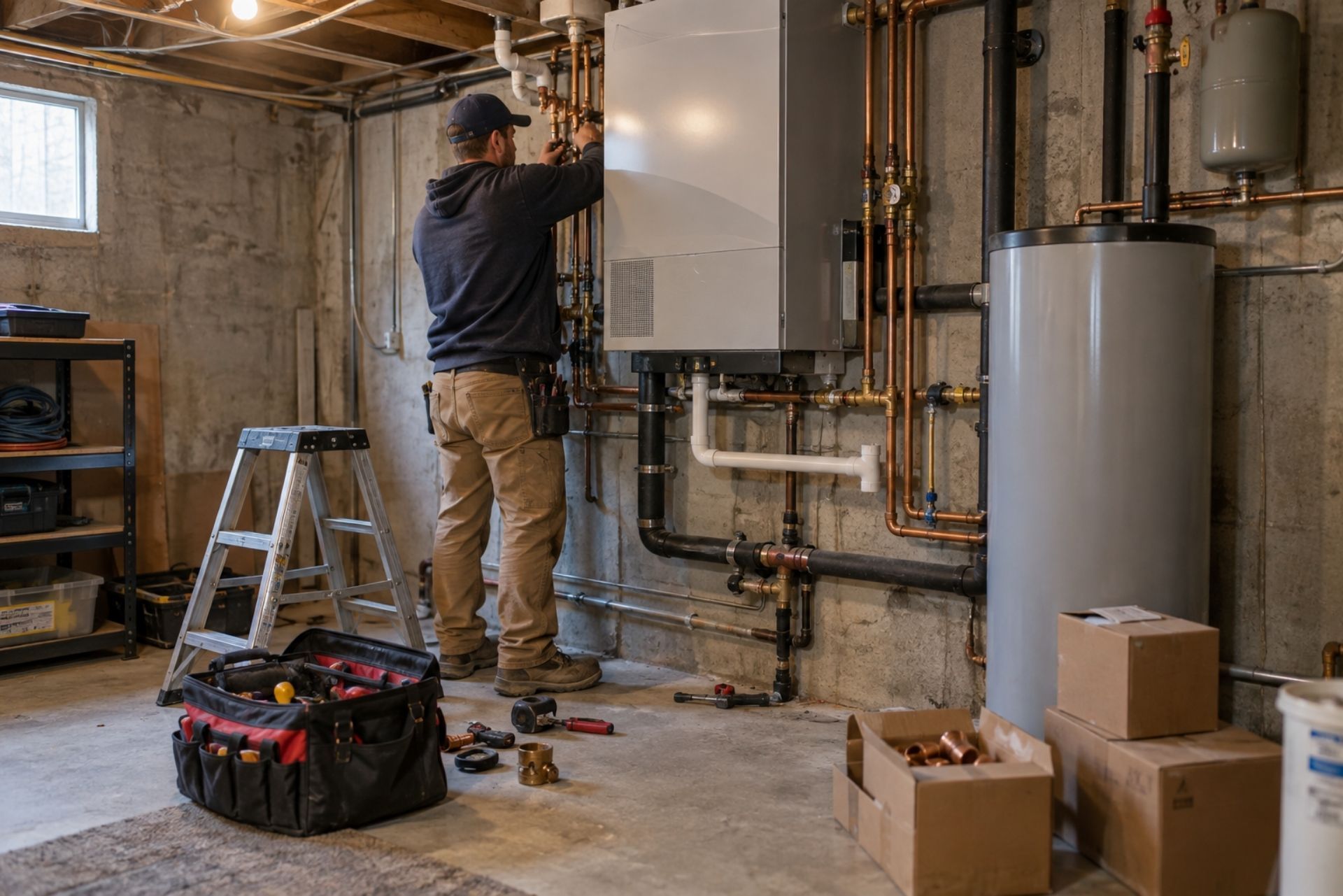
Heat pump installation isn't just wiring a thermostat or running conduit. You're handling pressurized refrigerant, drilling through exterior walls, connecting condensate lines, and working with high-voltage electrical systems, often in
occupied homes. That combination of trades creates a risk profile that generic contractor policies weren't designed to address.
The High Stakes of HVAC and Refrigeration Work
A botched brazing joint can release refrigerant into a home's living space. A condensate line routed without proper pitch can dump water into a finished ceiling for weeks before anyone notices. These aren't hypothetical scenarios: they're the claims that keep insurance adjusters busy.
The stakes got higher in 2026. The
EPA's new 15-pound refrigerant threshold for federal leak-repair mandates means that systems previously exempt from tracking and repair requirements now fall under federal oversight. For installers, this means more documentation, stricter handling protocols, and greater liability exposure if something goes wrong. The transition to
A2L refrigerants with their mild flammability characteristics adds another layer of complexity that your insurance needs to account for.
General Liability: Protecting Against Third-Party Claims
General liability is the foundation of any contractor insurance program, but the details matter. This coverage protects you when a third party, typically a homeowner or property manager, suffers bodily injury or property damage because of your work.
Think about a technician who accidentally drops a compressor through a deck, or a customer who trips over refrigerant lines left across a walkway during installation. General liability covers the resulting medical bills, legal defense, and settlements. Most policies provide $1 million per occurrence and $2 million aggregate, though heat pump installers working on commercial projects may need higher limits.
The catch is that not every general liability policy treats refrigerant-related damage the same way. Some carriers classify it as a pollution event and exclude it entirely. That's why working with a
specialty program like Joule Pro, which is built specifically for licensed electrical contractors, matters: the policy language is written with your actual risks in mind, not a generic contractor template.

By: Michael Fusco
President of Joule Pro
INDEX
Why Heat Pump Installers Need Specialized Insurance
Coverage for Water and Refrigerant Damage
Completed Operations and Professional Risk
Protecting Your Physical Assets and Workforce
Comparison: Standard vs. Specialized Coverage
Common Questions About Heat Pump Insurance
Making the Right Choice for Your Business
Joule Pro is a specialty insurance and risk program of Fusco Orsini & Associates Insurance Services, built exclusively for electrical contractors and licensed in 31 states.
We work with electrical firms across the country — from California, Texas, Florida, New York, and coast to coast — placing General Liability, Workers' Compensation, Commercial Auto, Inland Marine, Surety Bonds, Excess Liability, and full specialty coverage stacks for commercial, industrial, service, residential, and low-voltage electrical contractors. Joule Pro is not a separate licensed entity. It is a dedicated program structure inside Fusco Orsini, giving electrical contractors access to specialty carriers, in-house claims advocacy, and trade-specific risk engineering under one program.
Coverage for Water and Refrigerant Damage
Water and refrigerant are the two substances most likely to generate expensive claims for heat pump installers. Both can cause damage that goes undetected for weeks, and both trigger coverage questions that a standard policy may not answer in your favor.
Managing Condensate and Line Set Leak Risks
Every heat pump produces condensate, and every condensate line is a potential water damage claim. Indoor air handlers, ductless heads mounted on interior walls, and line set penetrations through building envelopes all create pathways for water intrusion. A slow drip behind drywall can produce mold growth and structural damage that costs $20,000 or more to remediate.
Your general liability policy should include coverage for water damage arising from your installation work, but you need to verify that it covers both immediate and gradual damage. Some policies only cover sudden events, which means a slow condensate leak discovered three months after installation might fall into a coverage gap.
Refrigerant Handling and Environmental Liability
Refrigerant releases create a unique liability exposure. The EPA treats certain refrigerants as regulated substances, and the new compliance requirements effective January 2026 expose contractors to potential fines if leak-repair protocols aren't followed. Beyond regulatory penalties, a significant refrigerant release in an enclosed space can create health risks for occupants.
Some general liability policies include a
pollution exclusion that could apply to refrigerant releases. You need either a pollution liability endorsement or confirmation from your carrier that refrigerant handling is covered under your existing policy. This is one of those areas where a conversation with a licensed producer who understands HVAC work, rather than a self-serve quoting portal, can save you from a six-figure gap in coverage.
Completed Operations and Professional Risk
The job isn't done when you leave the site. From an insurance perspective, your liability exposure actually increases after installation because you're no longer there to catch problems early.
Liability After the Job is Finished
Completed operations coverage is the portion of your general liability policy that protects you after you've finished a job and the customer has started using the system. If a heat pump you installed six months ago develops a refrigerant leak that damages the homeowner's hardwood floors, completed operations is the coverage that responds.
This isn't optional for heat pump installers. Many general contractors and property managers require proof of completed operations coverage before they'll let you on a job site. The coverage typically extends for the duration of your policy period and, in some cases, for a specified number of years after project completion.
Errors and Omissions in System Sizing
Here's a claim scenario that surprises a lot of installers: you size a heat pump system based on a Manual J calculation, install it perfectly, and the homeowner's utility bills are $200 a month higher than expected because the calculation was wrong. The system works fine mechanically, but it's the wrong size for the home.
General liability won't cover this because there's no physical damage. This is a professional liability or errors and omissions claim. If you're performing load calculations, making equipment recommendations, or designing system layouts, you need E&O coverage. Not every heat pump installer needs it, but if you're doing turnkey design-build work, the exposure is real.
Protecting Your Physical Assets and Workforce
Your liability to others is only half the picture. You also need to protect the assets that keep your business running: your tools, your vehicles, and your people.
Inland Marine: Insurance for Tools and Equipment
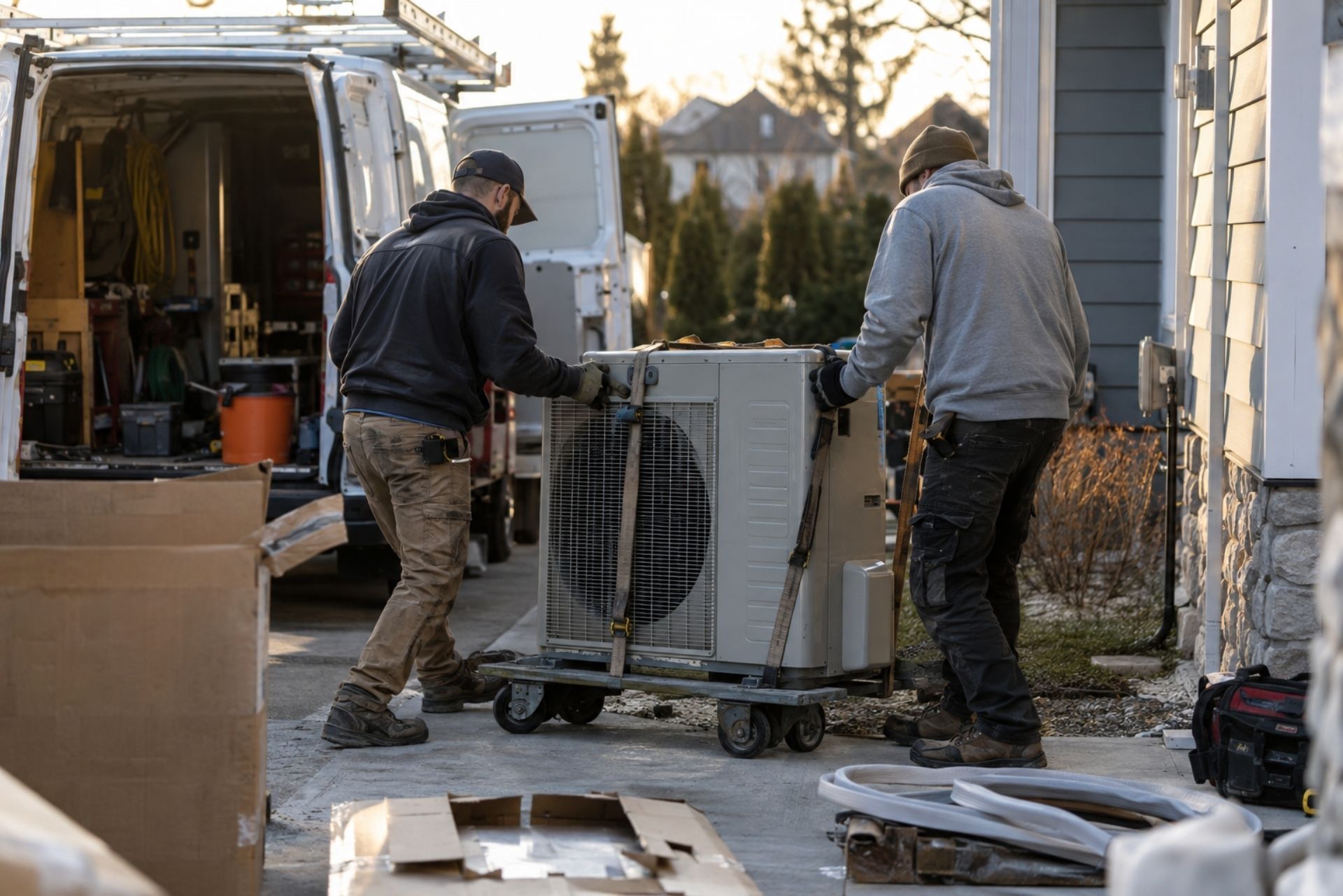
A set of vacuum pumps, manifold gauges, recovery machines, torque wrenches, and a quality flaring tool kit can easily represent $15,000 to $25,000 in value. Standard business property insurance typically covers items at your shop or office, but heat pump installation tools spend most of their life in a van or on a job site.
Inland marine insurance, sometimes called a tools and equipment floater, covers your portable assets wherever they go. It protects against theft, accidental damage, and loss. If someone breaks into your van overnight and takes your recovery machine and vacuum pump, inland marine pays to replace them. Joule Pro includes this coverage as part of its full contractor coverage stack, which means you don't need to piece together separate policies from different carriers.
Commercial Auto for Service Vans and Trucks
Your personal auto policy won't cover a vehicle used for business purposes. If a technician rear-ends someone while driving a company van loaded with refrigerant tanks and copper line sets, you need commercial auto insurance to cover the liability and vehicle damage.
Commercial auto for HVAC contractors should include hired and non-owned auto coverage, which protects you when employees use their personal vehicles for work errands. It should also carry adequate cargo coverage for the equipment and materials you transport daily. HVAC contractor insurance programs typically recommend at least $1 million in combined single-limit liability for commercial vehicles.
Workers' Compensation for HVAC Technicians
Workers' comp is required in nearly every state for businesses with employees, and heat pump installation carries real injury risk. Technicians work on ladders and rooftops, handle pressurized systems, perform brazing with open flames, and lift heavy equipment. Sprains, burns, falls, and repetitive stress injuries are all common.
Workers' compensation covers medical expenses and lost wages for injured employees, and it protects your business from lawsuits related to workplace injuries. Your premium is based on your payroll and your classification code, and HVAC installation work typically carries a higher rate than standard electrical work because of the added physical hazards.
Comparison: Standard vs. Specialized Coverage
| Coverage Area | Standard Contractor Policy | Specialized Heat Pump Installer Policy |
|---|---|---|
| General Liability | Covers basic property damage and bodily injury | Includes refrigerant-specific coverage language |
| Water Damage | May exclude gradual leaks | Covers both sudden and gradual water damage from installations |
| Refrigerant Liability | Often excluded under pollution exclusion | Covered or available via endorsement |
| Completed Operations | Sometimes limited to 1 year | Extended coverage period, higher sublimits |
| Tools & Equipment | Covered only at fixed location | Inland marine covers tools on job sites and in transit |
| Commercial Auto | Basic liability only | Includes cargo, hired/non-owned auto |
| Workers' Comp | Generic classification codes | HVAC-specific class codes with accurate rating |
The difference between these two columns is often the difference between a claim that gets paid and one that gets denied. A specialty program understands the nuances of heat pump work and writes policies accordingly.
Common Questions About Heat Pump Insurance
Do I need separate insurance for heat pump work if I already have an electrical contractor policy? Possibly. Your existing policy may not cover refrigerant handling, water damage from condensate systems, or completed operations on HVAC installations. Review your policy language or ask your producer to confirm.
How much does insurance for heat pump installers typically cost? Annual premiums vary widely based on revenue, payroll, location, and claims history. A small crew doing residential work might pay $5,000 to $12,000 per year for a full coverage package. Commercial work or larger operations cost more.
Does general liability cover refrigerant leaks? Not always. Many standard policies include a pollution exclusion that can apply to refrigerant releases. You need to verify that your policy either excludes refrigerants from the pollution definition or includes a specific endorsement.
What happens if I don't carry workers' comp? In most states, operating without required workers' comp coverage is a misdemeanor that can result in fines, stop-work orders, and personal liability for employee injuries. It can also disqualify you from jobs that require proof of coverage.
Are my tools covered if they're stolen from a job site? Only if you have inland marine or a tools and equipment floater. Your general liability policy doesn't cover your own property, and standard business property insurance typically doesn't cover items away from your premises.
Do I need E&O coverage if I only install systems I didn't design? If you're strictly installing equipment specified by someone else and not making sizing or design recommendations, you likely don't need E&O. But if you're selecting equipment or performing load calculations, you should carry it.
Making the Right Choice for Your Business
Heat pump installation insurance isn't a single policy: it's a coordinated set of coverages that address the specific ways this work can go wrong. General liability protects you from third-party claims. Water and refrigerant damage coverage fills the gaps that standard policies leave open. Completed operations extends your protection past the installation date. Inland marine covers your tools wherever they travel. Commercial auto protects your vehicles and cargo. Workers' comp takes care of your crew.
The 2026 regulatory environment, with new refrigerant rules and tighter insurance market conditions, makes this a particularly important year to review your coverage. A policy that worked fine in 2024 may have gaps that didn't exist before the EPA's threshold changes took effect.
Joule Pro builds insurance programs specifically for licensed electrical contractors doing this kind of work. If you want a coverage review from a licensed producer who actually understands heat pump installation risk, not a chatbot or a generic quoting tool, reach out to the team at Joule Pro and get a proposal tailored to your operation.

Founder & CEO
The Force Behind the Program
About the Author:
Michael Fusco.
Fusco Orsini & Associates
Joule Pro exists because Mike Fusco saw electrical contractors getting boilerplate insurance — and built a program designed for the way the trade actually works.
Mike is the CEO and co-founder of Fusco Orsini & Associates, the San Diego–based independent agency he launched in 2010. Under his leadership FOA has grown into a nationwide partner serving clients across 31 states, with a personal, client-first approach to commercial insurance and risk.
With over 20 years in insurance and risk management, he specializes in tailored programs spanning general liability, workers' compensation, surety bonding, and employee benefits — helping owners confidently manage risk and pursue growth.
Mike holds a B.S. in Business from the University of Maryland — Robert H. Smith School of Business, and the Certified Insurance Counselor (CIC) designation, held by fewer than 3% of insurance professionals nationwide.
What Our Clients Say
Trusted by Electrical Contractors Across the Country.
5.0
★★★★★
Google reviews
Core Commercial Coverage
Business Insurance for Electrical Contractors.
The fundamentals — written, structured, and priced for electrical risk. Each line is reviewed annually by an underwriter who only writes our trade.
01
General Liability
Premises & completed-operations coverage with electrical-specific endorsements and full pollution carve-back options.
02
Workers' Compensation
Class-code optimization, experience-mod review, and return-to-work programs designed for energized-work exposures.
03
Commercial Auto
Fleet, hired & non-owned auto, and tools-in-transit coverage written for service vans and bucket trucks.
04
Tools & Equipment
Scheduled and blanket coverage for tools, test equipment, scissor lifts, and contractor's equipment on-site or in-transit.
05
Surety Bonds
Bid, performance, and payment bonds — single-job and aggregate programs for commercial & public-works contracts.
06
Commercial Property
Layered limits up to $50M with carrier panels covering your shop, warehouse, yard, and on-premises tools, materials, and equipment.
Who We Serve
Electrical Contractors We Specialize In.
From $5M service shops to $250M industrial primes — every Joule Pro program is shaped to the contractor's revenue mix and project profile.
01 / Industrial
Commercial & Industrial Electrical Contractors
High-voltage, substation, and plant electrical work. Pollution, builder's risk, and large-deductible WC programs.
02 / Service
Service & Residential Electrical Contractors
Service-call shops, panel upgrades, and EV charging installers. Auto-fleet, GL, and tool-coverage programs.
03 / Low-Voltage
Specialty & Low-Voltage Contractors
Data, fire-alarm, security, and BMS controls. Cyber, professional liability, and follow-form excess.
Frequently Asked Questions
Common
Questions From
Electrical Contractors.
What size electrical contractors do you write?
Joule Pro is built for licensed electrical firms from roughly $2M in revenue to $250M+. Below $2M we typically refer to our small-business desk; above $250M we underwrite individually with our industrial practice team.
Do I need to be licensed in multiple states?
No. We license you wherever you work. Joule Pro is admitted in 31 states and our compliance team handles multi-state filings, prevailing-wage endorsements, and certificate-of-insurance requirements.
How is Joule Pro different from a generic contractor program?
Generic programs use a contractor's questionnaire that treats you like a roofer. We use forms written for energized work, arc-flash exposures, and design-build risk — and our carriers price accordingly.
What does the claims process actually look like?
Every Joule Pro client is assigned a named claims advocate at bind. They take the FNOL, set strategy with your assigned attorney, and serve as your single point of contact through close.
Can you bond large public-works contracts?
Yes. Through our surety partners we write single-job bonds up to $75M and aggregate programs to $300M, with expedited turnarounds for school district, federal, and DOT work.
What happens at renewal?
Your producer and claims advocate jointly run a renewal review 90 days out — covering loss trends, exposure changes, and market alternatives — so renewal day is a confirmation, not a surprise.
From the Blog
Insights for Electrical Contractors.
Risk briefings, claim post-mortems, and program updates — written by our underwriters and risk engineers.


Get Started
Get a Quote on a Program Built Around Your Trade.
A 30-minute discovery call is the only commitment. You'll leave with a written gap analysis of your current program — yours to keep, whether you bind with us or not.