See How It Works
Virtual power plant programs pay homeowners to let the utility dispatch their battery during grid stress events. Programs like
Tesla's Virtual Power Plant and OhmConnect offer $50-$300 per year depending on the market and frequency of dispatch events. Some utilities in Texas and California are piloting more aggressive VPP compensation that could push annual payments above $500. For contractors, mentioning VPP eligibility during the sales process adds a tangible financial benefit that helps close deals.
Maintenance and Degradation Factors
LFP batteries degrade slower than older NMC chemistry. Most manufacturers guarantee 70-80% capacity retention after 10 years, and real-world data suggests many LFP systems will hold above 85% at that mark. Maintenance is minimal: firmware updates, occasional visual inspections, and ensuring proper ventilation. As an electrical contractor, you should factor degradation into payback calculations. A system producing $1,200 in savings in year one might produce $1,050 by year eight. Using an average annual savings figure across the warranty period gives homeowners a more honest projection.
Will installing batteries increase my liability as a contractor?
What's the typical warranty on a home battery?
Can I install a battery myself?
Should Electrical Contractors Offer Battery Installation Services?
A residential solar crew finishes a 9 kW rooftop install on Friday. Two weeks later, the homeowner calls: water is dripping through a bedroom ceiling right below a lag-bolted rail. The repair estimate covers drywall, insulation, and a section of roof decking. That one call explains why solar insurance is priced the way it is, and why underwriters read your application more closely than a general electrician's.
Solar sits at an awkward spot for insurers. You hold an electrical license, but much of your exposure looks like roofing work: crews on pitched surfaces, penetrations through waterproof membranes, and heavy panels carried up ladders. Carriers price that blend differently, and the final number depends on how your operation is described on paper.
This guide breaks down what solar installer
insurance costs in 2026 across general liability, tools and equipment coverage, and workers comp calculated against payroll. Where supported pricing data exists, you'll see real ranges. Where it doesn't, you'll get the formulas and underwriting logic so you can check a quote yourself instead of taking it on faith.
Solar Installer Insurance Market Trends in 2026
The biggest shift for solar contractors over the past few years has been underwriting scrutiny, not just price. Carriers that once wrote solar under a general electrical class now ask detailed questions: What percentage of your work is rooftop versus ground-mount? Do you do the racking yourself or sub it out? Do you install battery storage? Each answer moves your file into a different risk bucket.
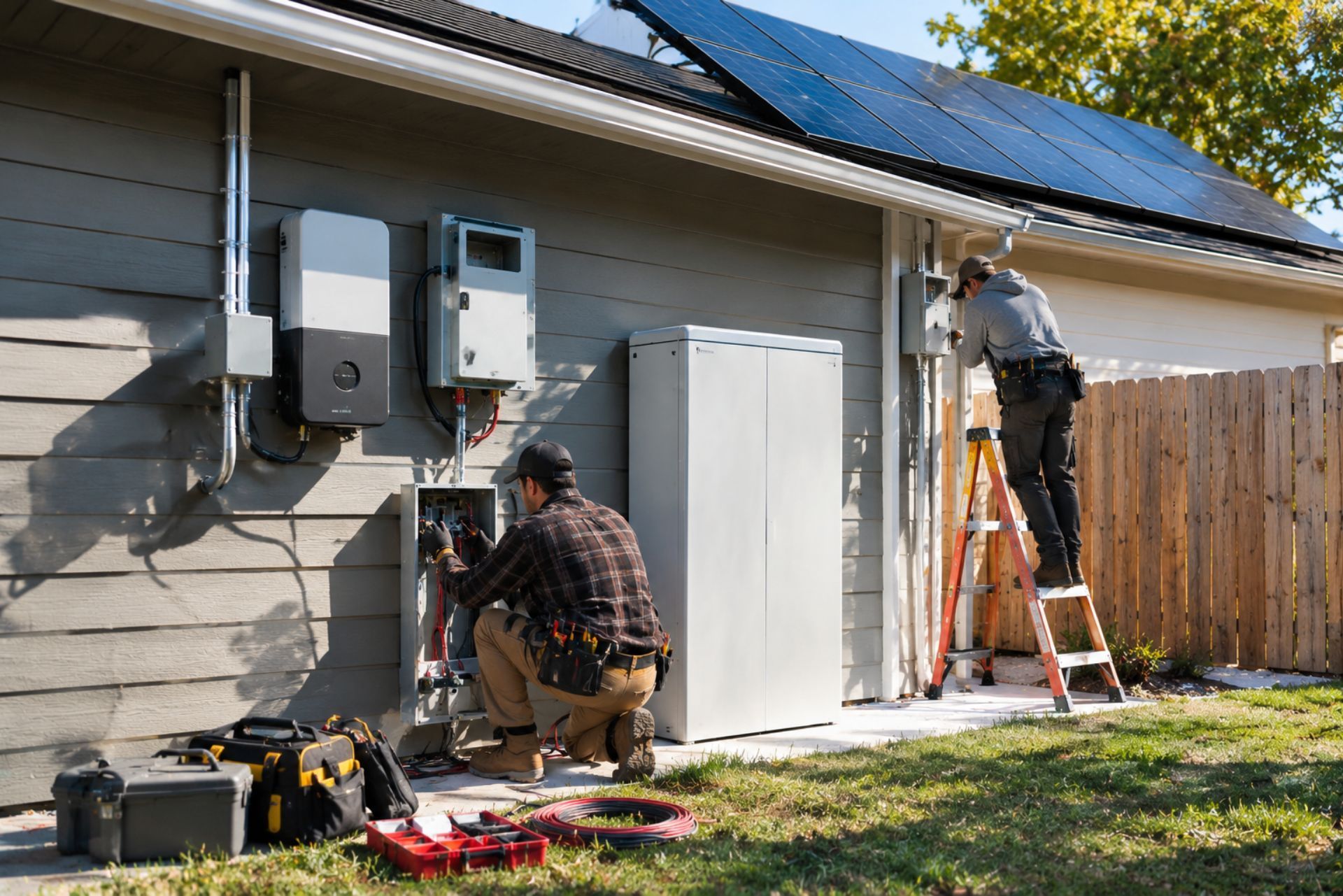
Battery storage deserves its own mention. Many installers now pair panels with home batteries, and some underwriters treat energy storage work as a separate exposure because of thermal runaway and fire risk. If you added batteries to your offering and never told your agent, your policy may not describe your actual operations. That gap tends to surface at claim time, which is the worst moment to find it.
Capacity is the other trend. Fewer carriers want rooftop solar than want standard commercial electrical work. Fewer interested markets generally means less competitive pricing and stricter terms, including exclusions for roofing work, height limits, or subcontractor requirements.
Here's what that means for you: shopping solely on price is riskier in solar than in most trades. Two quotes that look similar can differ in what they exclude. A cheap policy with a roofing exclusion is close to worthless for a crew that spends most of its day on shingles.
Expect underwriters to ask for:
- A revenue split between residential and commercial work
- Rooftop vs. ground-mount percentages
- Whether you install, service, or both
- Subcontractor agreements and certificates of insurance
- Written fall protection and safety programs
- Loss runs from the past three to five years
| Installation Type | Typical Cost Range | What's Involved |
|---|---|---|
| Basic (existing 240V outlet) | $500 - $800 | Plug-in charger, minimal wiring, no panel work |
| Standard (new dedicated circuit) | $1,000 - $1,500 | New 40-50A breaker, short conduit run, mounting |
| Complex (panel upgrade + long run) | $1,800 - $2,500+ | Panel upgrade, 50+ ft conduit, permitting, inspection |
General Liability: Protecting Against Property Damage and Injury
General liability (GL) covers third-party bodily injury and property damage tied to your work. For solar installers, that means the homeowner's roof, the neighbor's car hit by a falling rail, or a delivery driver tripping over conduit you left on a walkway. It doesn't cover your own employees (that's workers comp) or your own tools (that's inland marine).
The policy section most solar contractors overlook is completed operations. The roof leak in the opening scenario happened after the job was finished, so it falls under completed operations coverage, not ongoing operations. Some lower-cost GL policies limit or exclude completed operations for certain trades, and for a solar business, that exclusion removes your most likely claim.
Typical Annual Premiums for Residential vs. Commercial Installers
Small solar installers can expect to pay roughly $674 to $1,152 a year for general liability, with gross sales and trade classification doing most of the work in setting the price. That range reflects smaller operations. As revenue grows, premiums scale with it, since GL is usually rated per $1,000 of sales.
Residential and commercial work price differently, though not always the way people expect. Residential rooftop work tends to generate frequent, smaller claims: leaks, cracked tiles, gutter damage. Commercial projects produce fewer claims, but larger ones, and general contractors often require higher limits, additional insured endorsements, and waivers of subrogation. Those contract requirements can push you into a higher limit tier even if your claim history is clean.
One common mistake: estimating revenue low to save money at binding. GL policies are often audited, and if your actual sales come in higher, you'll owe additional premium at the end of the term, sometimes a sizable bill you didn't budget for.
Common Claims: Roof Leaks and Electrical Fires
Roof leaks are the bread and butter of solar GL claims. Penetrations that weren't flashed properly, sealant that failed after a winter, or a cracked tile no one noticed during install can all lead to interior water damage that turns up weeks or months later. Damage from mold claims can grow the bill, and many GL policies have mold exclusions you should ask about directly.
Electrical fires are less frequent but far more severe. A loose MC4 connector, a poorly torqued lug in a combiner box, or a damaged wire rubbing against racking can arc and ignite. When a fire damages a home, claim values can quickly exceed a $1 million per-occurrence limit, which is why many solar contractors carry an umbrella policy on top of GL.
Workers' Compensation Rates by Payroll and Risk Class
Workers comp is usually the largest insurance expense for a solar installer with employees, and it's also the hardest to estimate without knowing your state and classification. Unlike GL, workers comp is priced against payroll, not revenue. The carrier applies a rate to every $100 of wages in each job classification, then adjusts for your claim history.
That makes classification everything. The same crew, doing the same work, can cost dramatically different amounts depending on whether the payroll is coded as electrical work or roofing work. Rooftop labor generally carries higher rates because falls are among the most expensive injuries in construction.
Understanding the 5506 and 5545 NCCI Class Codes
Solar contractors often hear about codes like 5506 and 5545, and this is where people get burned. Code 5545 is a roofing-type classification used in some jurisdictions, and some carriers apply roofing codes to solar crews who spend most of their time mounting racking on roofs. Code 5506 is generally a street and road construction code under NCCI, not a solar classification, so if it appears on your policy, ask your agent why.
Many states handle solar classification differently. NCCI states often place electrical installation payroll under the electrical wiring classification, while some states with their own rating bureaus, such as California, maintain separate classification rules. Some carriers split solar payroll: licensed electricians doing wiring and interconnection under the electrical code, and racking or panel-mounting crews under a roofing or carpentry code.
One thing to keep in mind: you can't freely choose your code. Classification follows the actual work your employees do, and an auditor will check. What you can do is keep clean payroll records showing which employees did what, so that electrical wiring hours aren't lumped into a higher-rated roofing class by default.
Calculating Costs per $100 of Payroll
The basic formula is simple:
- Take annual payroll for each class code.
- Divide by 100.
- Multiply by that class's rate.
- Multiply by your experience modification rate (MOD).
- Add state fees, assessments, and any premium discounts.
For illustration only, suppose a crew has $300,000 in electrical payroll at a hypothetical rate of $4.00 per $100, and $200,000 in rooftop payroll at a hypothetical rate of $12.00 per $100. That works out to $12,000 plus $24,000, or $36,000 before MOD. With a 0.90 MOD, the premium drops to $32,400; with a 1.20 MOD, it rises to $43,200. Actual rates vary by state and carrier, so request your state's filed rates from your agent rather than relying on these numbers.
Inland Marine: Insuring Tools, Equipment, and Solar Panels in Transit
Your GL policy won't pay when someone steals a trailer full of panels from a job site overnight. That loss falls under inland marine coverage, often sold as a tools and equipment floater or contractor's equipment policy. For solar businesses, it's often the coverage people underbuy, since they think of it as protection for drills and not for the $15,000 worth of modules and inverters sitting in a box truck.
Pricing generally follows the value of what you're insuring. Inland marine for contractors typically runs about 1% of value for scheduled high-value equipment and 4% for unscheduled miscellaneous tools. In practice, small solar contractors often budget between $400 and $1,320 a year for this coverage.
The difference between scheduled and unscheduled items matters more than most people realize. Scheduled equipment is listed individually with a serial number and value: a scissor lift, a telehandler, a thermal imaging camera. Unscheduled tools are covered as a group up to a limit, often with a per-item cap. If you have a $3,000 tool tucked into an unscheduled bucket with a $1,000 per-item limit, you'll eat the difference.
Watch for these policy details:
- Materials in transit: Confirm panels and inverters are covered while on your truck, not only once they're installed.
- Installation floater: Covers materials at the site before the customer accepts the job. Many solar losses happen here.
- Theft from unattended vehicles: Some policies require locked, enclosed vehicles or exclude overnight theft.
- Deductibles: A $1,000 deductible on a $1,500 tool claim leaves little recovery.
- Valuation: Replacement cost pays for a new item; actual cash value subtracts depreciation.
If your trucks carry equipment daily, pair inland marine with commercial auto. Commercial auto for solar businesses typically runs between $1,790 and $3,405 a year, depending on vehicle count and driver records. Auto covers the vehicle and liability; inland marine covers the cargo.
Comparison of Coverage Tiers and Limits
Most solar installers land in one of three broad setups. The right one depends less on your company size and more on the contracts you sign and the type of work you do.
| Coverage | Starter (small residential) | Standard (growing crew) | Commercial-ready |
|---|---|---|---|
| GL per occurrence / aggregate | $1M / $2M | $1M / $2M | $1M / $2M plus umbrella |
| Completed operations | Included, check sublimits | Included at full limit | Full limit, often required by contract |
| Umbrella | None | $1M to $2M | $5M or more |
| Workers comp | Required with employees in most states | Payroll split by class | Waiver of subrogation endorsements |
| Inland marine | Unscheduled tools | Scheduled + unscheduled | Installation floater added |
| Commercial auto | 1 to 2 vehicles | Fleet with driver list | Hired and non-owned auto included |
| Typical buyer | Owner-operator, few employees | 5 to 20 field workers | GC contracts, utility-scale bids |
The jump from starter to standard usually happens when you hire your first non-owner employee or buy a second truck. The jump to commercial-ready often happens all at once, when a general contractor sends a subcontract requiring a $5 million umbrella, primary and noncontributory wording, and a 10-year completed operations tail.
That last clause catches people off guard. Some contracts require you to keep completed operations coverage in force for years after the project ends. If you switch carriers or let a policy lapse, you may be in breach. Read the insurance exhibit of every commercial contract before you bid, not after you win.
Factors That Influence Your Final Premium Price
Two solar companies with the same revenue can receive quotes thousands of dollars apart. The base rates from the tables above are only a starting point; the underwriter's adjustments determine where you actually land. Some of these factors are in your control, and some aren't.
The factors that move pricing most:
- Revenue and payroll: The basis for GL and workers comp respectively
- Rooftop percentage: More roof time means higher workers comp and GL rates
- Battery storage work: May trigger additional underwriting or exclusions
- Subcontractor use: Uninsured subs get added to your payroll at audit
- Years in business: New ventures often pay more or face fewer market options
- Claim history: Frequency matters as much as severity
Geographic Location and State Mandates
Location changes both price and what you're legally required to buy. Workers comp rates are filed state by state, and the same class code can carry very different rates across state lines. Most states require workers comp once you have employees, though thresholds and exemptions vary, and a few states run their own monopolistic state funds, where you must buy coverage directly from the state.
Contractor licensing boards add another layer. Some states require proof of liability insurance or a bond to maintain your license. California, for example, requires licensed contractors with employees to carry workers comp, and the Contractors State License Board checks for it. Local weather also plays a role: hail-prone regions and wildfire zones can affect how carriers view property damage and inland marine exposure.
Safety Records and Experience Modification Rates (MOD)
Your experience modification rate compares your actual workers comp losses to the expected losses for businesses your size in your classification. A 1.00 MOD is average. Below 1.00 earns a credit; above 1.00 adds a surcharge that applies to your entire workers comp premium.
The MOD uses roughly three years of claim data, so one bad fall can follow you for years. Frequency tends to hurt more than a single large claim in many rating formulas, which means a string of small, unreported-to-safety-manager injuries can be worse for your MOD than you'd expect. Return-to-work programs, written fall protection plans, and documented toolbox talks help both prevent claims and show underwriters you take safety seriously.
General contractors pay attention to MOD too. Many commercial projects screen out subcontractors above a certain threshold, so a high MOD can cost you work, not just premium.
Common Questions About Solar Insurance
How much does insurance cost for a small solar company? General liability for small solar installers often runs about $674 to $1,152 a year, inland marine about $400 to $1,320, and commercial auto about $1,790 to $3,405. Workers comp varies most since it depends on your payroll, state, and class codes.
Do I need workers comp if I only use subcontractors? Possibly not for your own crew, but if your subs lack their own coverage, your carrier may add their pay to your payroll at audit. Always collect current certificates of insurance before a sub starts work.
Why is my workers comp so much higher than my GL? Workers comp is based on payroll, and rooftop work carries high injury risk, especially from falls. For many installers with field employees, it's the largest single insurance line item.
Does general liability cover a roof leak after the job is done? Usually, through completed operations coverage, but check for exclusions or sublimits on roofing work and mold. Some budget policies limit exactly the claims solar companies file most.
Are solar panels covered while they're in my truck? Not under GL or a standard auto policy. You need inland marine coverage that includes materials in transit, and ideally an installation floater for materials stored on site.
What happens at a premium audit? After the policy term, the carrier compares your estimated revenue and payroll to your actual numbers. If you underestimated, you'll owe more; if you overestimated, you may get a refund.
Making the Right Choice for Your Solar Business
Solar insurance costs come down to how accurately your policies describe your work. General liability tracks revenue and lives or dies on completed operations coverage. Workers comp follows payroll, and the class codes assigned to your rooftop crews can swing the total more than any other single decision. Inland marine covers the panels, inverters, and tools that general liability never will.
The cheapest quote rarely tells the full story. Before you sign, check for roofing exclusions, battery storage limitations, per-item tool caps, and completed operations sublimits. Keep payroll records split by job duty, and keep your subcontractors' certificates current.
Joule Pro works exclusively with licensed electrical contractors, including solar installers, and builds the full stack in one place: general liability, workers comp, commercial auto, tools and equipment, and inland marine. A licensed producer reviews your operations directly, so your class codes and coverage match the work you actually do. Reach out to Joule Pro for a quote review before your next renewal, and find the gaps before a claim does.

By: Michael Fusco
President of Joule Pro
Joule Pro is a specialty insurance and risk program of Fusco Orsini & Associates Insurance Services, built exclusively for electrical contractors and licensed in 31 states.
We work with electrical firms across the country — from California, Texas, Florida, New York, and coast to coast — placing General Liability, Workers' Compensation, Commercial Auto, Inland Marine, Surety Bonds, Excess Liability, and full specialty coverage stacks for commercial, industrial, service, residential, and low-voltage electrical contractors. Joule Pro is not a separate licensed entity. It is a dedicated program structure inside Fusco Orsini, giving electrical contractors access to specialty carriers, in-house claims advocacy, and trade-specific risk engineering under one program.

Founder & CEO
The Force Behind the Program
About the Author:
Michael Fusco.
Fusco Orsini & Associates
Joule Pro exists because Mike Fusco saw electrical contractors getting boilerplate insurance — and built a program designed for the way the trade actually works.
Mike is the CEO and co-founder of Fusco Orsini & Associates, the San Diego–based independent agency he launched in 2010. Under his leadership FOA has grown into a nationwide partner serving clients across 31 states, with a personal, client-first approach to commercial insurance and risk.
With over 20 years in insurance and risk management, he specializes in tailored programs spanning general liability, workers' compensation, surety bonding, and employee benefits — helping owners confidently manage risk and pursue growth.
Mike holds a B.S. in Business from the University of Maryland — Robert H. Smith School of Business, and the Certified Insurance Counselor (CIC) designation, held by fewer than 3% of insurance professionals nationwide.
Recent Posts