See How It Works
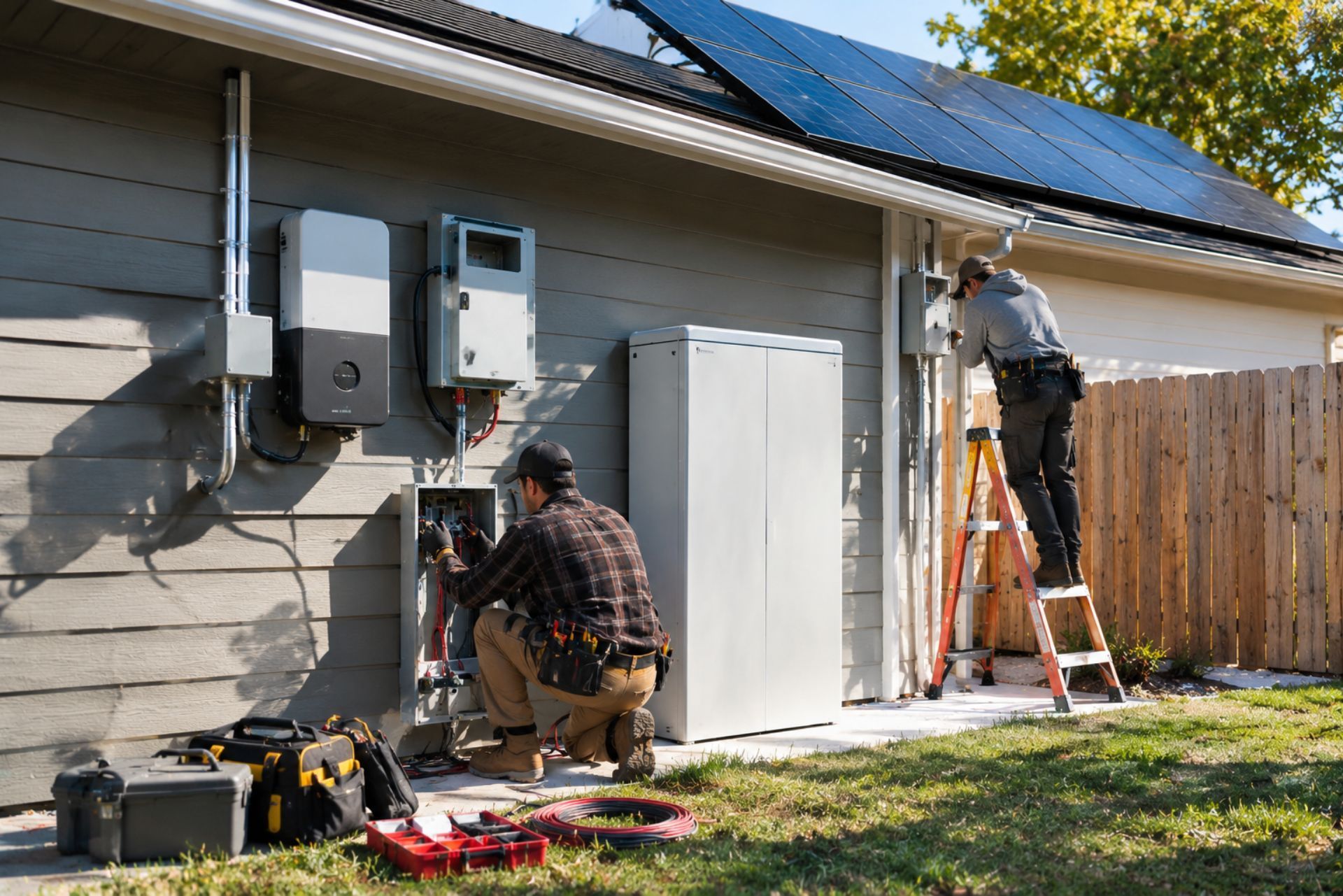
Virtual power plant programs pay homeowners to let the utility dispatch their battery during grid stress events. Programs like
Tesla's Virtual Power Plant and OhmConnect offer $50-$300 per year depending on the market and frequency of dispatch events. Some utilities in Texas and California are piloting more aggressive VPP compensation that could push annual payments above $500. For contractors, mentioning VPP eligibility during the sales process adds a tangible financial benefit that helps close deals.
Maintenance and Degradation Factors
LFP batteries degrade slower than older NMC chemistry. Most manufacturers guarantee 70-80% capacity retention after 10 years, and real-world data suggests many LFP systems will hold above 85% at that mark. Maintenance is minimal: firmware updates, occasional visual inspections, and ensuring proper ventilation. As an electrical contractor, you should factor degradation into payback calculations. A system producing $1,200 in savings in year one might produce $1,050 by year eight. Using an average annual savings figure across the warranty period gives homeowners a more honest projection.
Will installing batteries increase my liability as a contractor?
What's the typical warranty on a home battery?
Can I install a battery myself?
Should Electrical Contractors Offer Battery Installation Services?
A property manager signs off on twelve Level 2 chargers for a parking garage. The GC loves your bid. Then the project stalls for two weeks because your certificate of insurance lists the wrong additional insured and shows a $500,000 aggregate when the contract called for $2 million. That scenario plays out constantly, and it costs electrical contractors real money in delayed starts and lost bids.
EV work has become one of the steadier revenue streams for licensed electricians. It has also become one of the most paperwork-heavy. Property owners, general contractors, HOAs, utilities, and state DOTs all want proof that you can absorb a loss if a charger fails, a cable overheats, or a technician backs a service van into a parked Tesla. Understanding EV charger installer insurance requirements, meaning the GL limits and certificates clients and GCs expect, is now part of winning the job, not something you sort out after the contract arrives.
This guide covers the limits you'll be asked for, how to read and request a clean COI, where general liability stops and other coverage takes over, and how to grow your program without overpaying.
Why EV Charger Installation Requires Specialized Insurance
Installing an EV charger looks like a standard electrical job on paper: a dedicated circuit, a breaker, conduit, and a mounted unit. The risk profile is different, though. You are connecting high-amperage, continuous-load equipment that may run for hours every night, often in garages attached to homes or in parking structures full of vehicles worth $40,000 to $100,000 each. A single bad termination can sit quietly for months before it causes a fire.
That delayed-failure pattern matters to underwriters. Most EV-related claims aren't injuries on the day of installation. They're completed operations claims: the charger was installed in March, the garage fire happened in November, and the homeowner's carrier comes after you through subrogation. If your policy excludes or sublimits completed operations, or if a generalist carrier classified you as a residential handyman, you may find out about the gap at the worst possible moment.
The market has also shifted. The federal 30C tax credit for charger installations expired on June 30, 2026, and the industry is moving from a rush to install toward long-term reliability and maintenance. More of your work will involve service contracts, repairs, and retrofits on equipment you didn't install. That raises questions about whose workmanship caused a failure, which is exactly the kind of dispute that lands on a liability policy.
Then there's the commercial side. DC fast chargers involve three-phase service, transformers, switchgear, and sometimes utility coordination. A mistake there can damage expensive equipment or knock out power to an entire site. Carriers that understand electrical trades price and write this work correctly. Carriers that don't either decline it or bury exclusions in the fine print.
The Standard General Liability Limits Clients and GCs Demand
For most commercial EVSE projects, the market standard is $1 million per occurrence and $2 million aggregate for general liability. You'll see that figure in nearly every subcontract agreement, property management vendor packet, and municipal bid document. If your policy sits below it, you're likely disqualified before anyone looks at your price.
(Note: the line above should read without a link.) For most commercial EVSE projects, the market standard is $1 million per occurrence and $2 million aggregate. That's the baseline. Larger projects push well past it.
Some states also set their own floors. Utah, for example, raised its statutory general liability minimum for licensed contractors effective in 2026, citing the rising cost of electrical litigation. Licensing rules can cap your work in other ways too: in Nevada, a contractor holding a $250,000 monetary license limit cannot bid on large multi-site DC fast-charging packages without upgrading the license and increasing bonding. Check your state board before assuming your current limits and license cover a bigger job.
Commercial vs. Residential Project Requirements
Residential homeowners rarely ask for a COI, but that doesn't mean the requirement disappears. Dealer referral programs, charger manufacturers' certified installer networks, and utility rebate programs often require $1 million per occurrence before they'll send you leads. HOAs add another layer. Homeowners in common interest developments installing private chargers are typically required to carry a $1 million umbrella policy and name the HOA as an additional insured. That obligation sits with the homeowner, but the HOA will often ask the installer for a COI too, and you'll want yours to look clean.
Commercial work is stricter. Expect GCs and property owners to require:
- $1M/$2M general liability at minimum, with completed operations included
- Additional insured status on a primary and non-contributory basis
- Waiver of subrogation in favor of the owner and GC
- $1M to $5M excess or umbrella, depending on project size
- 30-day notice of cancellation language where available
The Role of Excess Liability and Umbrella Policies
Once you move into fleet depots, retail fast-charging sites, or municipal projects, $2 million aggregate stops being enough. Contracts commonly call for an additional $2 million to $5 million in excess coverage sitting above your GL, auto, and employer's liability. An umbrella is the cheapest way to hit those numbers because buying higher primary limits usually costs more per dollar of protection.
One detail people miss: make sure the umbrella "follows form" on your GL, including additional insured status. Some excess policies don't extend AI coverage automatically, and a GC's risk manager will catch that.
Essential Coverage Comparison: GL vs. Professional Liability
General liability covers bodily injury and property damage caused by your work. Professional liability, sometimes called errors and omissions, covers financial loss caused by your advice, design, or specifications, even when nothing physically breaks. EV contractors increasingly need both, because more jobs include load calculations, panel upgrade recommendations, and design-build site layouts.
Picture this: you perform a load calc for a 20-stall workplace charging project and conclude the existing service can handle it with load management. After energization, the system trips constantly and the client has to pay for a service upgrade you said wasn't needed. Nobody got hurt. Nothing burned. Your GL policy likely won't respond, because there's no bodily injury or property damage. That's a professional liability claim.
| Coverage Question | General Liability | Professional Liability |
|---|---|---|
| What it covers | Injury and physical damage | Financial loss from errors in advice or design |
| Typical EV claim | Charger fire damages garage | Undersized service design causes costly rework |
| Required by most GCs? | Almost always | Mainly on design-build jobs |
| Completed operations | Included if not excluded | Not applicable, claims-made basis |
| Typical trigger | Occurrence-based | Claims-made |
If you only install to someone else's stamped drawings, GL may be enough. Once you start sizing services, choosing equipment, or offering design-build packages, ask your agent about adding professional coverage or a contractor's E&O endorsement. Joule Pro can quote these together so your limits and retroactive dates line up instead of leaving gaps between policies.
Decoding the Certificate of Insurance (COI) for Contractors
A certificate of insurance is a one-page snapshot of your coverage, usually on the ACORD 25 form. It doesn't create coverage. It only reports what your policies already say. That distinction matters because GCs have been burned by certificates that promised things the actual policy didn't deliver, so experienced risk managers now ask for the endorsements behind the certificate.
When a GC reviews your COI, they're checking a few things quickly: carrier name and rating, policy numbers and effective dates, per-occurrence and aggregate limits, whether completed operations is shown, umbrella limits, workers comp and auto, and the description of operations box. That last box is where project names, additional insured language, and waivers get referenced.
Federally funded jobs are getting attention again. After the January 23, 2026 ruling in Washington v. U.S. Department of Transportation, the freeze on $5 billion in NEVI funds was vacated. Those projects require performance bonds and specific COIs naming state DOTs as additional insureds, so expect more DOT-specific certificate requests this year.
Naming Additional Insureds and Waiver of Subrogation
Additional insured status extends your policy's protection to another party, typically the owner, GC, and sometimes the property manager or lender. If someone sues the GC over your charger installation, your policy defends them. Most contracts want this on a primary and non-contributory basis, meaning your policy pays first and doesn't seek contribution from theirs.
Waiver of subrogation stops your carrier from suing the GC or owner to recover what it paid on a claim. Both of these require endorsements on your policy. Blanket endorsements, which automatically cover anyone you've agreed in writing to cover, save enormous time. Without them, every new project means a new endorsement request and a delay.
Common Mistakes That Delay Project Approval
These come up again and again:
- Wrong legal entity names. "Smith Properties" versus "Smith Properties Holdings LLC" will get your COI rejected.
- Expired policies. Your renewal is next week and the job runs three months. Send the renewed certificate the day it binds.
- Missing completed operations. Some residential-focused policies limit it. Commercial GCs won't accept that.
- No endorsement copies. The COI says "additional insured" but you can't produce the form. Keep CG 20 10 and CG 20 37 equivalents on file.
- Limits below contract. Read the insurance exhibit before you bid, not after you win.
Protecting Against Fire, Faulty Wiring, and Equipment Damage
Fire is the claim that keeps EV contractors and their underwriters up at night. The usual causes aren't exotic: loose lugs, aluminum conductors without proper terminations, undersized wire for a continuous 80% load, NEMA 14-50 receptacles rated for occasional use running nightly, and backstabbed devices nobody should have used. Many failures trace back to heat buildup at connection points over weeks or months.
Your GL policy handles the third-party damage, meaning the homeowner's garage, the neighbor's car, or the parking deck. It usually won't pay to redo your own faulty work. That's the "your work" exclusion, and it surprises contractors every year. If you terminated a conductor wrong, GL may pay for the burned vehicle but not for you to rip out and reinstall the circuit.
Equipment is another gap. A $60,000 DC fast charger sitting on a jobsite before installation isn't covered by GL at all. You need installation floater or builder's risk coverage for materials and equipment in transit or awaiting install, and inland marine for your own tools, meters, and testers. Joule Pro writes tools and equipment and inland marine alongside GL so contractor-owned gear and customer equipment you're responsible for don't fall between policies.
A few risk controls also pay off at renewal:
- Torque documentation with photos of terminations and torque values recorded
- Commissioning reports for every commercial install
- Manufacturer certification for the brands you install, since warranty disputes often turn into liability disputes
- Written scope stating what you did and didn't touch on service calls
On the maintenance side, NEVI-funded sites must meet a 97% annual uptime standard. If your service contract promises response times tied to that, review the indemnity language carefully. Contractual uptime guarantees can create obligations your insurance won't cover.
Workers Comp and Auto Liability for EV Service Teams
Workers comp is required in nearly every state once you have employees, and GCs won't let an uninsured crew on site. EV work carries the usual electrical hazards: shock and arc flash during tie-ins, ladder falls, trenching for parking lot conduit runs, and back injuries from mounting heavy pedestal units. Commercial EV jobs often involve saw-cutting asphalt and running conduit in active parking lots, which adds struck-by risk from passing vehicles.
Your classification code drives your premium. Electrical contractors generally fall under electrical wiring classifications, and getting coded correctly matters. A carrier that misclassifies your crew can produce a nasty audit bill at year-end. Expect GCs to require employer's liability limits of $1 million each accident, and a waiver of subrogation on the comp policy as well.
Auto liability is the coverage contractors underestimate most. Service vans spend all day in parking garages and lots full of expensive cars, tight turns, and low clearances. Contracts typically require $1 million combined single limit on owned, hired, and non-owned autos. That last piece matters if an employee drives a personal truck to pick up a breaker and hits someone. Your umbrella should sit over auto as well as GL.
For crews running regular maintenance routes on charging networks, commercial auto exposure grows with miles driven. Keep your vehicle schedule current, run MVRs on new hires, and put telematics on trucks if your carrier offers credits. A single at-fault accident with a bad driver can raise your premium for three years.
Answers to Common EV Installer Insurance Questions
Do I need special insurance just to install home EV chargers? Not a separate policy, but your GL should list EV charger installation in your description of operations and include completed operations coverage. A policy written for general residential electrical work may not cover high-load EVSE installs if the carrier didn't know about them.
How much general liability do I need for commercial charging projects? Most clients and GCs expect $1 million per occurrence and $2 million aggregate. Larger fleet or fast-charging jobs often add a $2 million to $5 million umbrella requirement.
How fast can I get a certificate of insurance for a new job? If your policy has blanket additional insured and waiver endorsements, a certificate can often go out the same day. Without blanket wording, each request needs a specific endorsement, which can take days.
Does my GL policy pay to fix my own mistake? Usually not. GL covers damage to other people's property, but the cost of redoing your faulty work generally falls under the "your work" exclusion.
What's different about NEVI or state DOT projects? These jobs typically require performance bonds and certificates naming the state DOT as an additional insured, plus strict uptime performance standards. Read the funding agreement's insurance exhibit before you bid.
Will an HOA ask me for proof of insurance? Often, yes. HOAs typically require the homeowner to carry an umbrella and name the association, and many also ask the installer for a COI before work begins.
Scaling Your Coverage as Your Business Grows
Most EV contractors don't plan their insurance growth. They react to the next contract. That works until a big bid shows up with a $5 million umbrella requirement and a 48-hour deadline. A better approach is to map your coverage to where you want the business to be in 12 to 18 months.
A rough progression looks like this. Early on, residential and small commercial installs need $1M/$2M GL with completed operations, workers comp, commercial auto, and tools coverage. As you add multi-site commercial work, layer in a $2M to $5M umbrella, blanket AI and waiver endorsements, and installation floater coverage for customer equipment. Once you're doing design-build, DC fast charging, or public infrastructure, add professional liability, bonding capacity, and higher excess limits.
The meeting of insurance and licensing deserves attention here. Higher license limits, bonding, and higher insurance limits usually need to move together, and underwriters look at your loss history, financials, and documentation habits when you ask for more. Contractors who keep commissioning reports and torque logs get better terms than those who can't show how they work.
The EV market in 2026 rewards reliability. Clients want installers who show up with a clean COI, the right endorsements already on file, and limits that match the contract the first time. Getting your EV installer insurance in order before the bid, rather than scrambling after the award, is one of the simplest ways to win more work and keep projects moving.
Joule Pro builds programs exclusively for licensed electrical contractors, with GL, workers comp, commercial auto, tools and equipment, inland marine, and contractor-specific endorsements handled by a licensed producer you can actually reach. If your current policy wasn't written with EV work in mind, request a review and quote from Joule Pro before your next big bid lands.

By: Michael Fusco
President of Joule Pro
Joule Pro is a specialty insurance and risk program of Fusco Orsini & Associates Insurance Services, built exclusively for electrical contractors and licensed in 31 states.
We work with electrical firms across the country — from California, Texas, Florida, New York, and coast to coast — placing General Liability, Workers' Compensation, Commercial Auto, Inland Marine, Surety Bonds, Excess Liability, and full specialty coverage stacks for commercial, industrial, service, residential, and low-voltage electrical contractors. Joule Pro is not a separate licensed entity. It is a dedicated program structure inside Fusco Orsini, giving electrical contractors access to specialty carriers, in-house claims advocacy, and trade-specific risk engineering under one program.

Founder & CEO
The Force Behind the Program
About the Author:
Michael Fusco.
Fusco Orsini & Associates
Joule Pro exists because Mike Fusco saw electrical contractors getting boilerplate insurance — and built a program designed for the way the trade actually works.
Mike is the CEO and co-founder of Fusco Orsini & Associates, the San Diego–based independent agency he launched in 2010. Under his leadership FOA has grown into a nationwide partner serving clients across 31 states, with a personal, client-first approach to commercial insurance and risk.
With over 20 years in insurance and risk management, he specializes in tailored programs spanning general liability, workers' compensation, surety bonding, and employee benefits — helping owners confidently manage risk and pursue growth.
Mike holds a B.S. in Business from the University of Maryland — Robert H. Smith School of Business, and the Certified Insurance Counselor (CIC) designation, held by fewer than 3% of insurance professionals nationwide.
Recent Posts