Business Insurance
Energy Efficiency and Performance Contractor
Insurance
★★★★★ 150+ Five-Star Reviews · Google & Facebook
A homeowner files a complaint because the energy retrofit you completed six months ago didn't deliver the savings your audit predicted. The insulation is fine, the ductwork is sealed, and the equipment is running correctly, but the utility bills haven't dropped the way your modeling projected. Now you're facing a demand letter for the cost difference. Your general liability policy? It won't touch this claim. This is the kind of scenario that catches energy efficiency and home performance contractors off guard, and it's exactly why the insurance needs for this trade look different from standard electrical or HVAC work.
The coverage stack for performance contractors spans general liability,
professional liability, completed operations,
tools and equipment protection, commercial auto, and certificates of insurance. Each piece addresses a distinct exposure, and skipping any one of them can leave a serious gap. Whether you're doing whole-home retrofits, participating in rebate programs like the HOMES Rebate Program, or integrating
smart building controls, the risk profile is broader than most contractors realize.
Why Energy Efficiency Contractors Need Specialized Coverage
Energy efficiency work sits at an unusual intersection: it's part construction trade, part consulting, and part performance guarantee. That combination creates exposures that a standard contractor policy wasn't designed to handle. A roofer worries about a leak. An electrician worries about a fire. A home performance contractor worries about all of that, plus the possibility that the work simply doesn't perform as promised.
Risks Unique to Performance-Based Contracting
Rebates under programs like the HOMES Rebate Program are tied specifically to predicted or proven energy savings. If your work qualifies a homeowner for a rebate based on projected savings that never materialize, you could face clawback demands, customer lawsuits, or disqualification from the program itself. That's a financial liability, not a property damage claim, which means it falls outside traditional GL coverage.
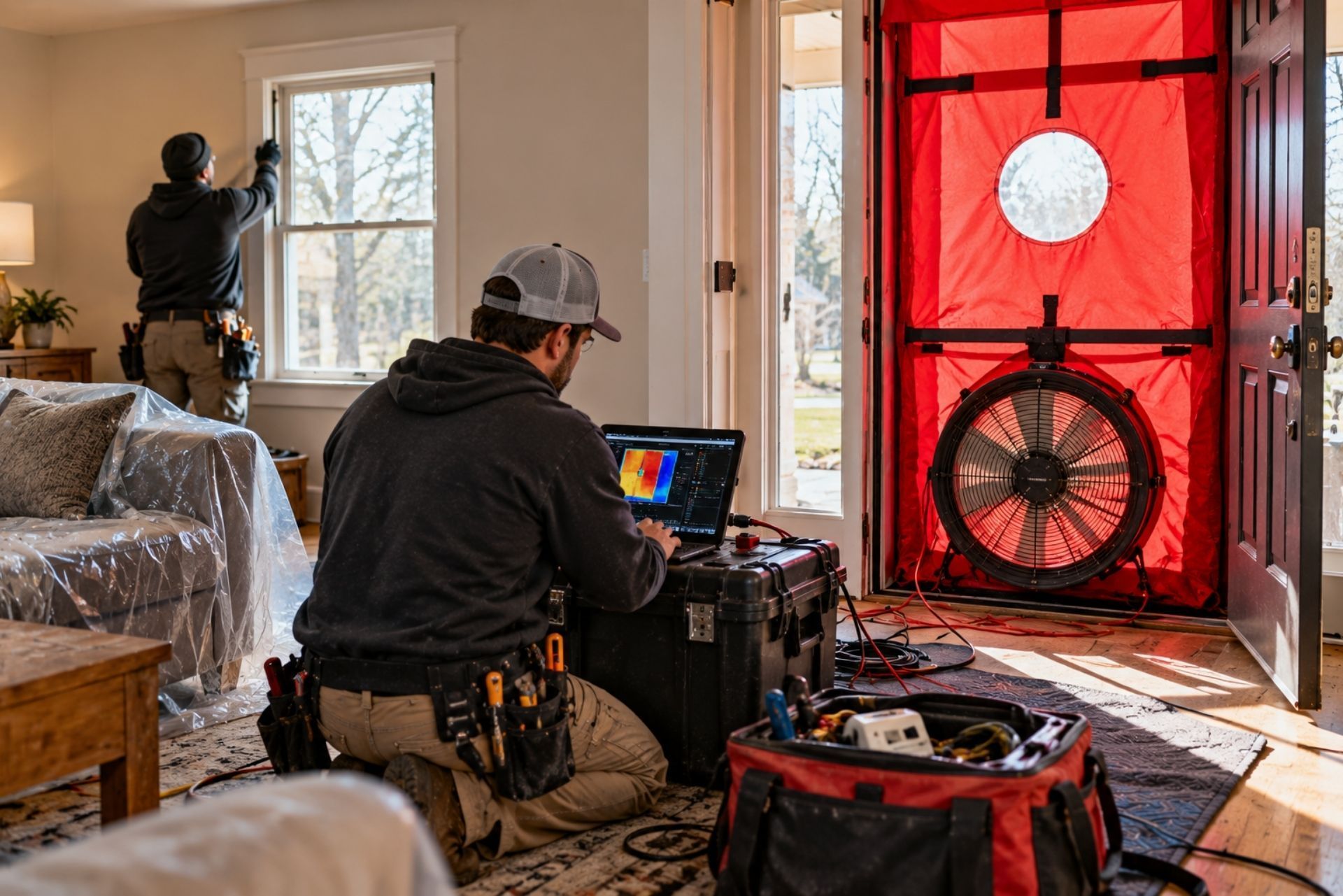
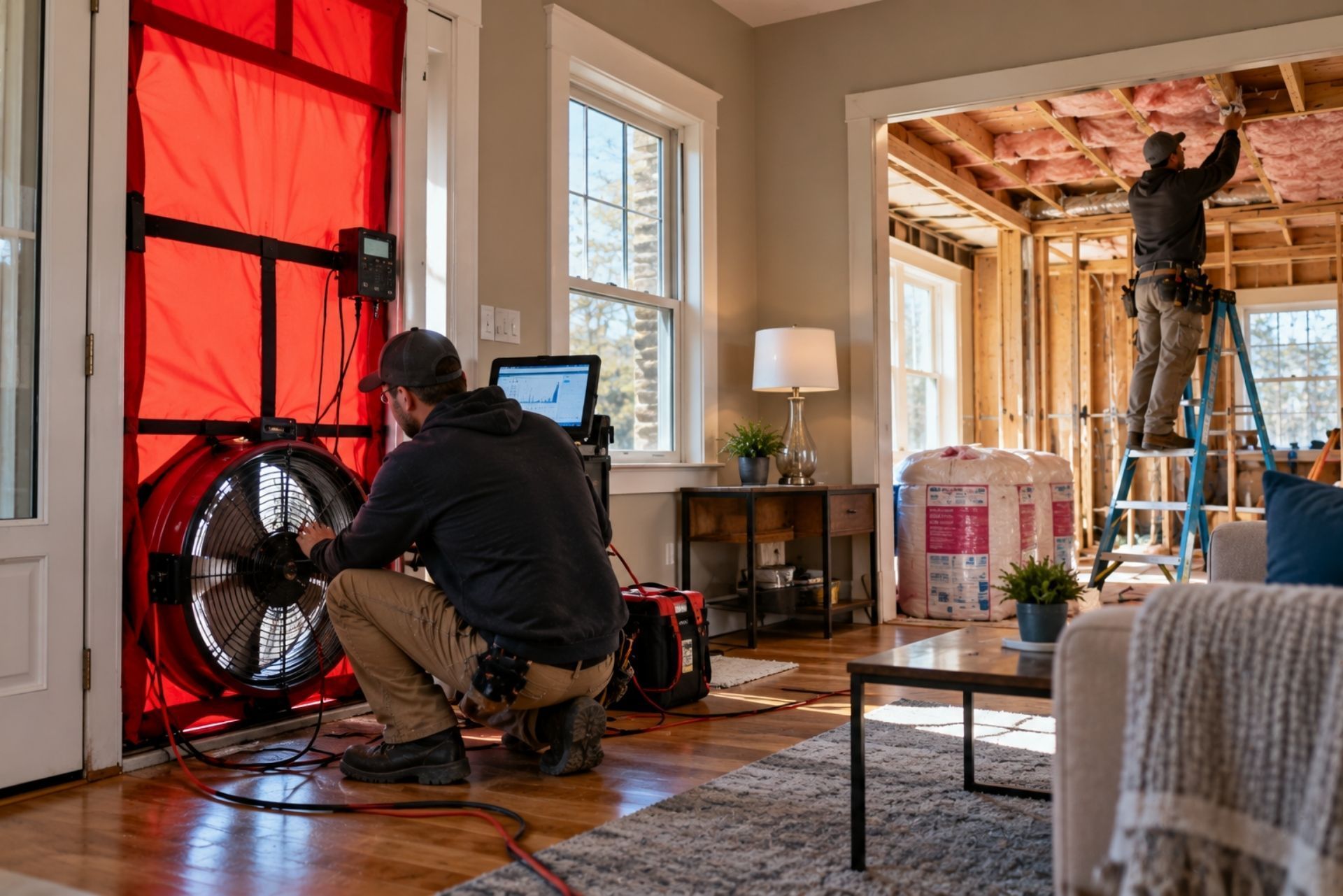
There's also the audit side of the business. If you're running blower door tests, performing Manual J calculations, or modeling energy use with software, you're providing professional opinions. A mistake in your calculations that leads to undersized equipment or inadequate insulation is an errors and omissions exposure, not a construction defect.
The Difference Between Physical Damage and Financial Shortfalls
General liability responds when your work causes bodily injury or property damage: a ceiling collapse from improperly installed insulation, for example, or a fire caused by faulty wiring. Financial shortfalls are a different animal entirely. When a customer claims they were promised 30% energy savings and only got 12%, the damage is economic. No property was harmed. No one was injured. But the contractor is still on the hook, and without professional liability coverage, they're paying out of pocket.

By: Michael Fusco
President of Joule Pro
INDEX
Understanding Commercial Umbrella Insurance for Electrical Contractors
Core Coverage Components and Underlying Policies
Determining Necessary Coverage Limits for Electrical Projects
Common Exclusions and Policy Limitations
Real-World Claims Scenarios in the Electrical Industry
Joule Pro is a specialty insurance and risk program of Fusco Orsini & Associates Insurance Services, built exclusively for electrical contractors and licensed in 31 states.
We work with electrical firms across the country — from California, Texas, Florida, New York, and coast to coast — placing General Liability, Workers' Compensation, Commercial Auto, Inland Marine, Surety Bonds, Excess Liability, and full specialty coverage stacks for commercial, industrial, service, residential, and low-voltage electrical contractors. Joule Pro is not a separate licensed entity. It is a dedicated program structure inside Fusco Orsini, giving electrical contractors access to specialty carriers, in-house claims advocacy, and trade-specific risk engineering under one program.
Core Insurance Policies for Performance Professionals
The right insurance program for energy efficiency contractors isn't a single policy. It's a stack of coverages, each addressing a specific category of risk. Here's how the core pieces fit together.
General Liability vs. Professional Liability (Errors & Omissions)
General liability covers third-party bodily injury and property damage. If a homeowner trips over your equipment or your crew damages a client's flooring during an insulation install, GL responds. Professional liability (E&O) covers claims arising from your professional services: audit errors, incorrect recommendations, flawed energy modeling, or performance guarantees that fall short.
The mistake most contractors make is assuming GL is enough. It's not, especially if any part of your revenue comes from consulting, auditing, or making performance projections. Joule Pro, which specializes in coverage for licensed electrical contractors, sees this gap frequently among contractors who add energy performance services to their existing electrical work. The two policies aren't interchangeable; they cover fundamentally different types of claims.
Pollution Liability for HVAC and Insulation Hazards
Spray foam off-gassing, asbestos disturbance during retrofit work, refrigerant leaks from HVAC equipment: these are all pollution events, and most standard GL policies exclude pollution claims entirely. If you're doing insulation work in older homes or handling refrigerants, a pollution liability endorsement or standalone policy is worth serious consideration. One bad spray foam job that forces a family out of their home for weeks can easily generate a six-figure claim.
Workers' Compensation for High-Risk Installation Sites
Attic work in 140-degree heat, crawlspace access, ladder use, exposure to insulation fibers: the injury potential on energy efficiency job sites is real. Workers' comp is mandatory in nearly every state for contractors with employees, and even solo operators should consider it. Many rebate programs require proof of coverage. Colorado's IRA rebate program, for instance, requires contractors to show a minimum of $1 million in General Liability and $1 million in Workers' Compensation just to participate.
Comparing Coverage: Standard vs. Energy-Specific Policies
Not all contractor insurance is built the same. A policy designed for a general handyman won't address the exposures unique to performance-based contracting. Here's how the two compare.
Comparison Chart: Standard GL vs. Performance Contractor Packages
| Coverage Feature | Standard GL Policy | Performance Contractor Package |
|---|---|---|
| Bodily injury / property damage | Included | Included |
| Completed operations | Often limited | Extended for retrofit work |
| Professional liability (E&O) | Not included | Available as endorsement or standalone |
| Pollution liability | Excluded | Available for spray foam, refrigerants, asbestos |
| Tools and equipment | Separate inland marine policy needed | Bundled or available as add-on |
| Energy savings guarantee claims | Not covered | Covered under E&O |
| Certificate management | Basic | Tailored for rebate program compliance |
The cost difference between these two approaches isn't as dramatic as you might expect. Solo operators in the home performance and HVAC sector can often secure basic coverage for $3,000 to $5,000 annually, though adding E&O and pollution liability will push that higher depending on revenue and claim history.
Understanding Energy Savings Guarantees and E&O
Performance-based contracting means your reputation and your liability are tied to measurable outcomes. That's a fundamentally different risk than traditional trade work, and it demands specific insurance attention.
Insuring Against Failed ROI and Performance Metrics
Managing Liability in Smart Building and IoT Integration
Common Questions About Contractor Insurance
FAQ: Do I need insurance if I only do energy audits?
Yes. Energy audits are professional services, and errors in your recommendations can lead to E&O claims. If a homeowner spends $15,000 on upgrades based on your audit and the results disappoint, you could face a lawsuit even though you never swung a hammer.
FAQ: Will my general liability cover a mold claim?
Almost certainly not. Mold is typically excluded under standard GL policies. If your insulation or air sealing work creates moisture problems that lead to mold growth, you'll need either a pollution liability endorsement or a separate policy to respond.
FAQ: How much does professional liability cost for contractors?
It varies significantly based on your revenue, services offered, and claims history. For small to mid-size HVAC and energy firms, professional liability coverage often requires a budget between $700 and $2,000 annually (https://www.thecontractormatrix.com/contractor-insurance-costs/california). Contractors with higher revenue or performance guarantee exposure will pay more. The good news is that the renewable energy insurance market has been experiencing rate reductions of 20% to 30% for contractors with clean loss histories, and new capacity from insurers aggressively pursuing market share in the green energy sector is keeping premiums competitive.
FAQ: Does insurance cover me if the energy savings don't happen?
Only if you carry professional liability (E&O) coverage that specifically includes performance guarantee claims. Standard GL won't respond to this type of claim because there's no physical damage involved.
FAQ: Can I use one policy for multiple states?
Most commercial policies can cover operations in multiple states, but workers' compensation rules vary by state and may require separate policies or endorsements. Check with your agent about each state where you have active projects.
What This Means for Your Business
The insurance needs of energy efficiency and home performance contractors don't fit neatly into a standard contractor policy. Between performance guarantees, audit liability, pollution exposures, and the growing role of smart building technology, the risk profile is broader than most general contractors face. The coverage stack matters: general liability, professional liability, completed operations, tools and equipment, commercial auto, and proper certificates for rebate program compliance all play a role.
If you're an electrical contractor expanding into energy performance work, or you already run a home performance business, take a hard look at your current coverage. The gaps tend to hide in the places you don't expect: an energy model that oversells savings, a spray foam job that goes wrong, or a smart thermostat integration that creates data exposure. Joule Pro works with licensed electrical contractors to build coverage programs that account for these specific risks, backed by Fusco Orsini & Associates Insurance Services (CA Lic. 0H16057). Talk to a licensed producer who understands your trade before your next renewal, not after your first claim.
Construction site theft doubled between 2024 and 2025, with copper theft spiking 77% due to record commodity prices. If you're storing materials or equipment on job sites, your tools and equipment coverage and inland marine policy should reflect current replacement costs, not what you paid three years ago. Review your limits, tighten your job site security, and make sure your policy keeps pace with what you'd actually need to replace.

Founder & CEO
The Force Behind the Program
About the Author:
Michael Fusco.
Fusco Orsini & Associates
Joule Pro exists because Mike Fusco saw electrical contractors getting boilerplate insurance — and built a program designed for the way the trade actually works.
Mike is the CEO and co-founder of Fusco Orsini & Associates, the San Diego–based independent agency he launched in 2010. Under his leadership FOA has grown into a nationwide partner serving clients across 31 states, with a personal, client-first approach to commercial insurance and risk.
With over 20 years in insurance and risk management, he specializes in tailored programs spanning general liability, workers' compensation, surety bonding, and employee benefits — helping owners confidently manage risk and pursue growth.
Mike holds a B.S. in Business from the University of Maryland — Robert H. Smith School of Business, and the Certified Insurance Counselor (CIC) designation, held by fewer than 3% of insurance professionals nationwide.
What Our Clients Say
Trusted by Electrical Contractors Across the Country.
5.0
★★★★★
GOOGLE REVIEWS
Core Commercial Coverage
Business Insurance for Electrical Contractors.
The fundamentals — written, structured, and priced for electrical risk. Each line is reviewed annually by an underwriter who only writes our trade.
01
General Liability
Premises & completed-operations coverage with electrical-specific endorsements and full pollution carve-back options.
02
Workers' Compensation
Class-code optimization, experience-mod review, and return-to-work programs designed for energized-work exposures.
03
Commercial Auto
Fleet, hired & non-owned auto, and tools-in-transit coverage written for service vans and bucket trucks.
04
Tools & Equipment
Scheduled and blanket coverage for tools, test equipment, scissor lifts, and contractor's equipment on-site or in-transit.
05
Surety Bonds
Bid, performance, and payment bonds — single-job and aggregate programs for commercial & public-works contracts.
06
Commercial Property
Layered limits up to $50M with carrier panels covering your shop, warehouse, yard, and on-premises tools, materials, and equipment.
Who We Serve
Electrical Contractors We Specialize In.
From $5M service shops to $250M industrial primes — every Joule Pro program is shaped to the contractor's revenue mix and project profile.
01 / Industrial
Commercial & Industrial Electrical Contractors
High-voltage, substation, and plant electrical work. Pollution, builder's risk, and large-deductible WC programs.
02 / Service
Service & Residential Electrical Contractors
Service-call shops, panel upgrades, and EV charging installers. Auto-fleet, GL, and tool-coverage programs.
03 / Low-Voltage
Specialty & Low-Voltage Contractors
Data, fire-alarm, security, and BMS controls. Cyber, professional liability, and follow-form excess.
Frequently Asked Questions
Common
Questions From
Electrical Contractors.
What size electrical contractors do you write?
Joule Pro is built for licensed electrical firms from roughly $2M in revenue to $250M+. Below $2M we typically refer to our small-business desk; above $250M we underwrite individually with our industrial practice team.
Do I need to be licensed in multiple states?
No. We license you wherever you work. Joule Pro is admitted in 31 states and our compliance team handles multi-state filings, prevailing-wage endorsements, and certificate-of-insurance requirements.
How is Joule Pro different from a generic contractor program?
Generic programs use a contractor's questionnaire that treats you like a roofer. We use forms written for energized work, arc-flash exposures, and design-build risk — and our carriers price accordingly.
What does the claims process actually look like?
Every Joule Pro client is assigned a named claims advocate at bind. They take the FNOL, set strategy with your assigned attorney, and serve as your single point of contact through close.
Can you bond large public-works contracts?
Yes. Through our surety partners we write single-job bonds up to $75M and aggregate programs to $300M, with expedited turnarounds for school district, federal, and DOT work.
What happens at renewal?
Your producer and claims advocate jointly run a renewal review 90 days out — covering loss trends, exposure changes, and market alternatives — so renewal day is a confirmation, not a surprise.
From the Blog
Insights for Electrical Contractors.
Risk briefings, claim post-mortems, and program updates — written by our underwriters and risk engineers.


Get Started
Get a Quote on a Program Built Around Your Trade.
A 30-minute discovery call is the only commitment. You'll leave with a written gap analysis of your current program — yours to keep, whether you bind with us or not.